2021
ConstructivismКонструктивизм建构主义KonstruktivismusConstructivismeConstructivismoConstrutivismo
An atlas of buildings that tried to reorganize everyday life: clubs, factories, libraries, communal houses, towers, and public machines.Атлас зданий, которые пытались переустроить повседневность: клубы, фабрики, библиотеки, дома-коммуны, башни и общественные машины.一部关于建筑的图集:俱乐部、工厂、图书馆、公社住宅、塔楼和公共机器曾试图重新组织日常生活。Ein Atlas von Gebäuden, die den Alltag neu ordnen wollten: Klubs, Fabriken, Bibliotheken, Kommunalhäuser, Türme und öffentliche Maschinen.Un atlas de bâtiments qui ont tenté de réorganiser le quotidien : clubs, usines, bibliothèques, maisons-communes, tours et machines publiques.Un atlas de edificios que intentaron reorganizar la vida cotidiana: clubes, fábricas, bibliotecas, casas comunales, torres y máquinas públicas.Um atlas de edifícios que tentaram reorganizar a vida cotidiana: clubes, fábricas, bibliotecas, casas comunais, torres e máquinas públicas.
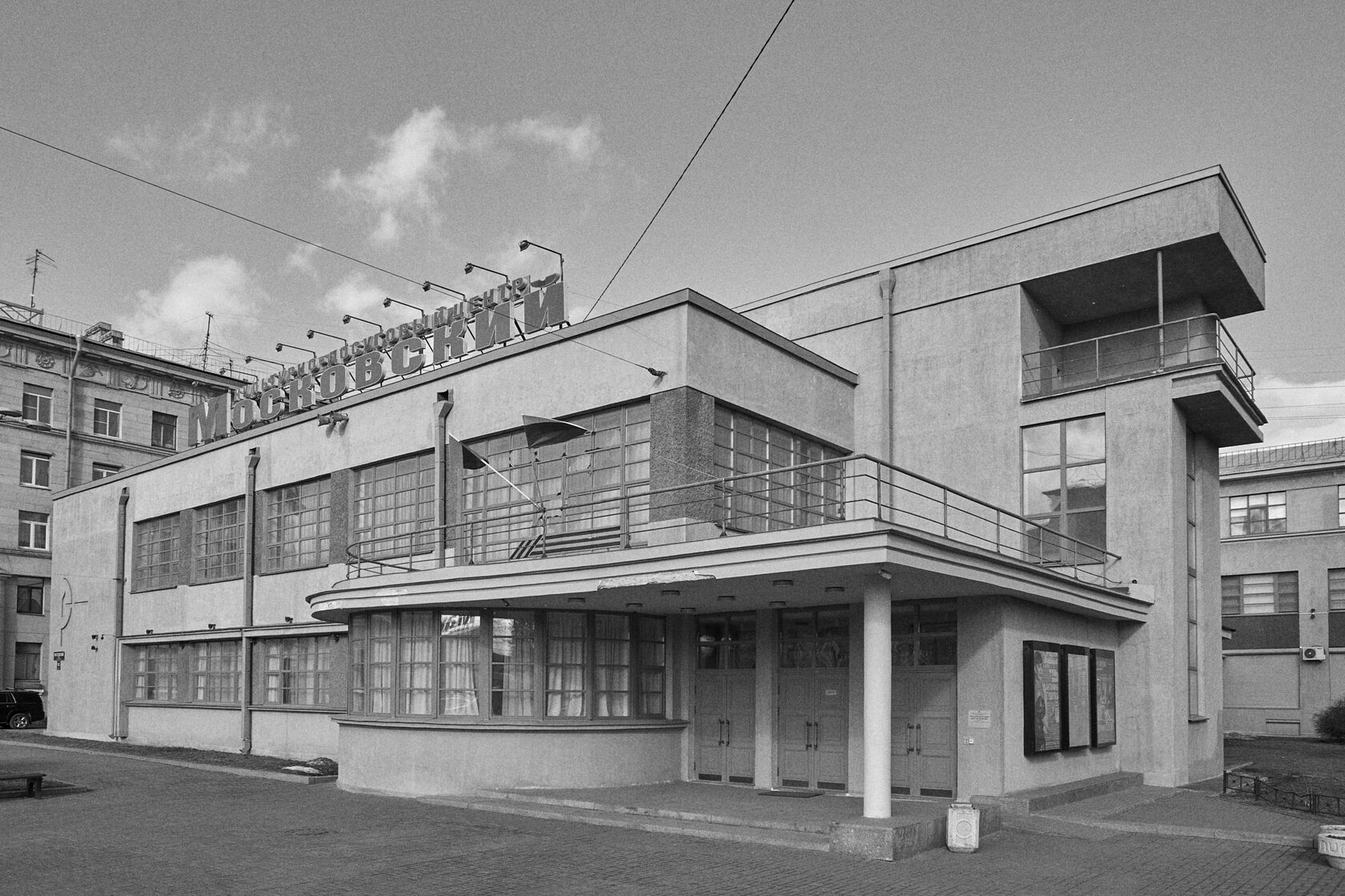
This is not a nostalgic walk through the avant-garde, but a working archive of forms. Constructivism is arranged here by object, city, date, and typology: club, factory-kitchen, communal house, printing plant, tower, garage, clinic. Each building has a record, but the record does not close the image; it gives the photograph something to resist.
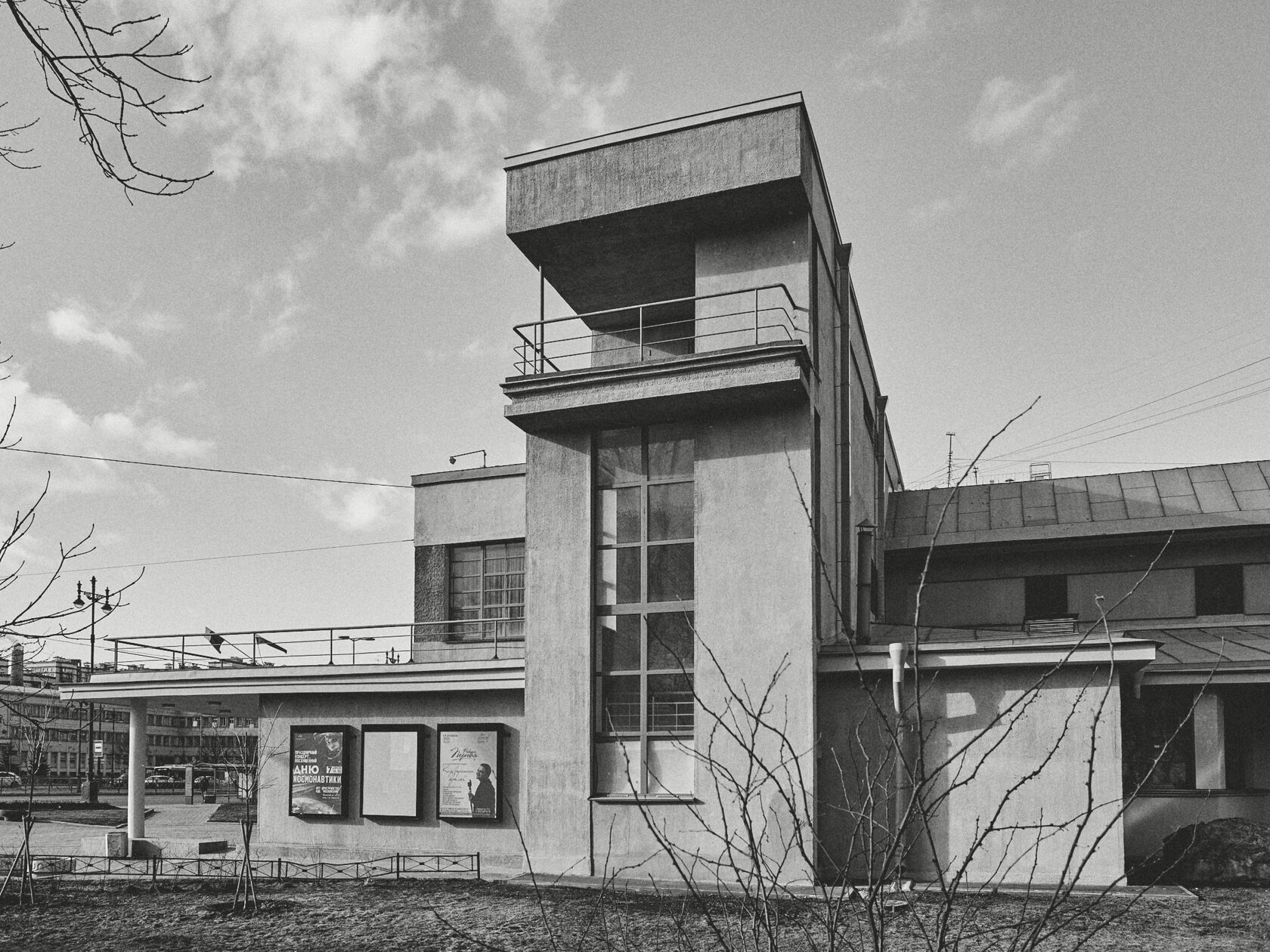
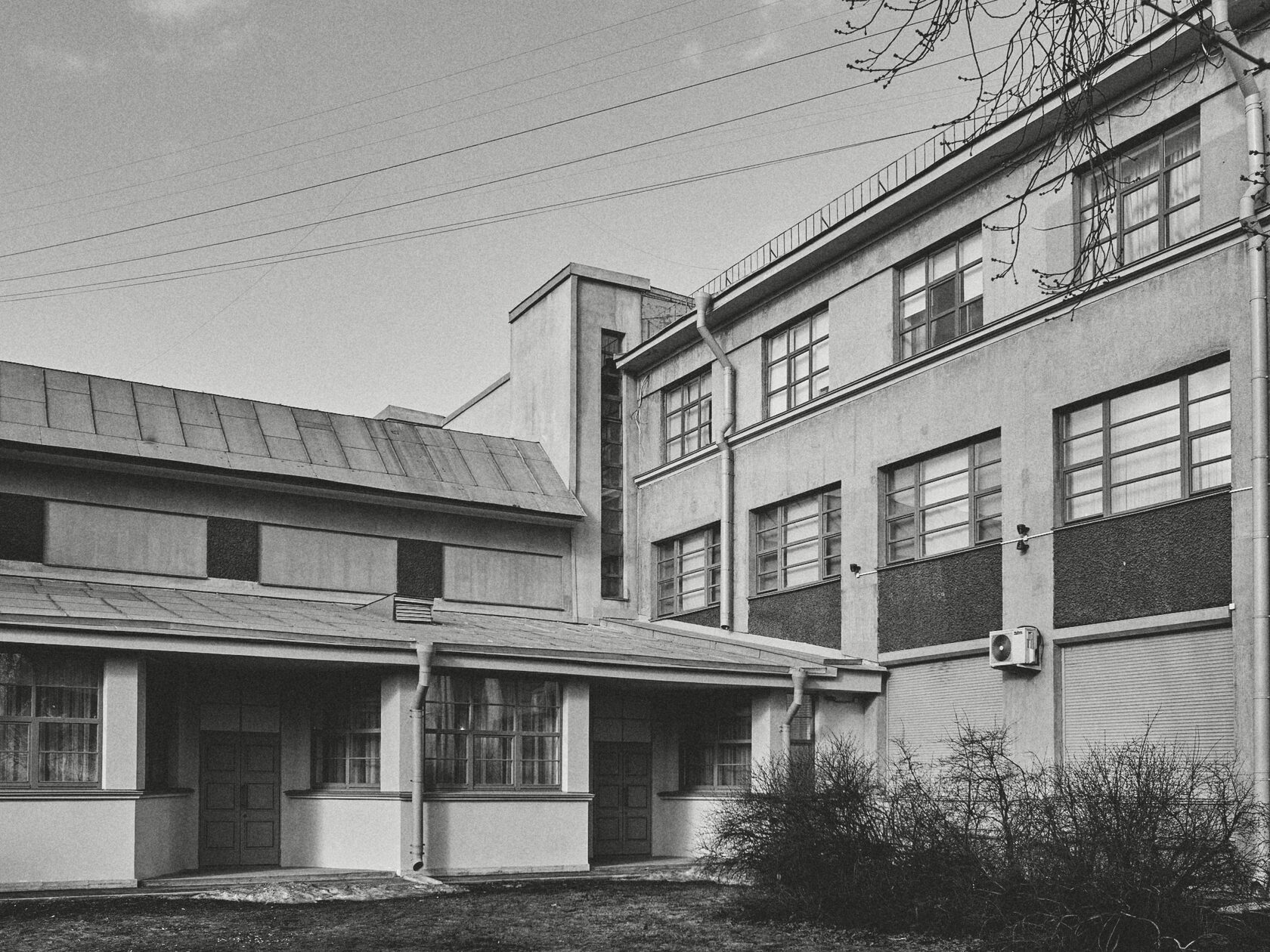
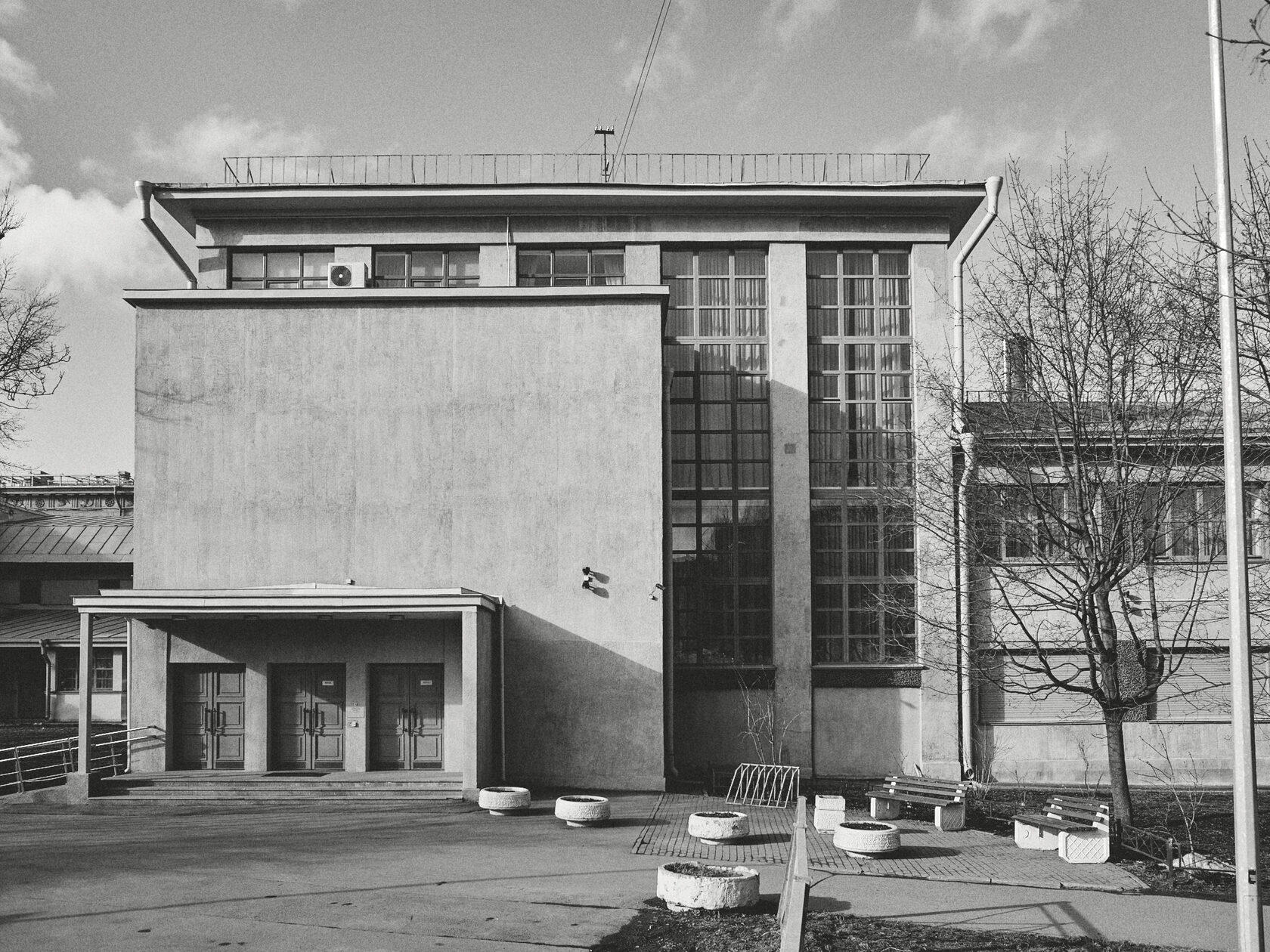
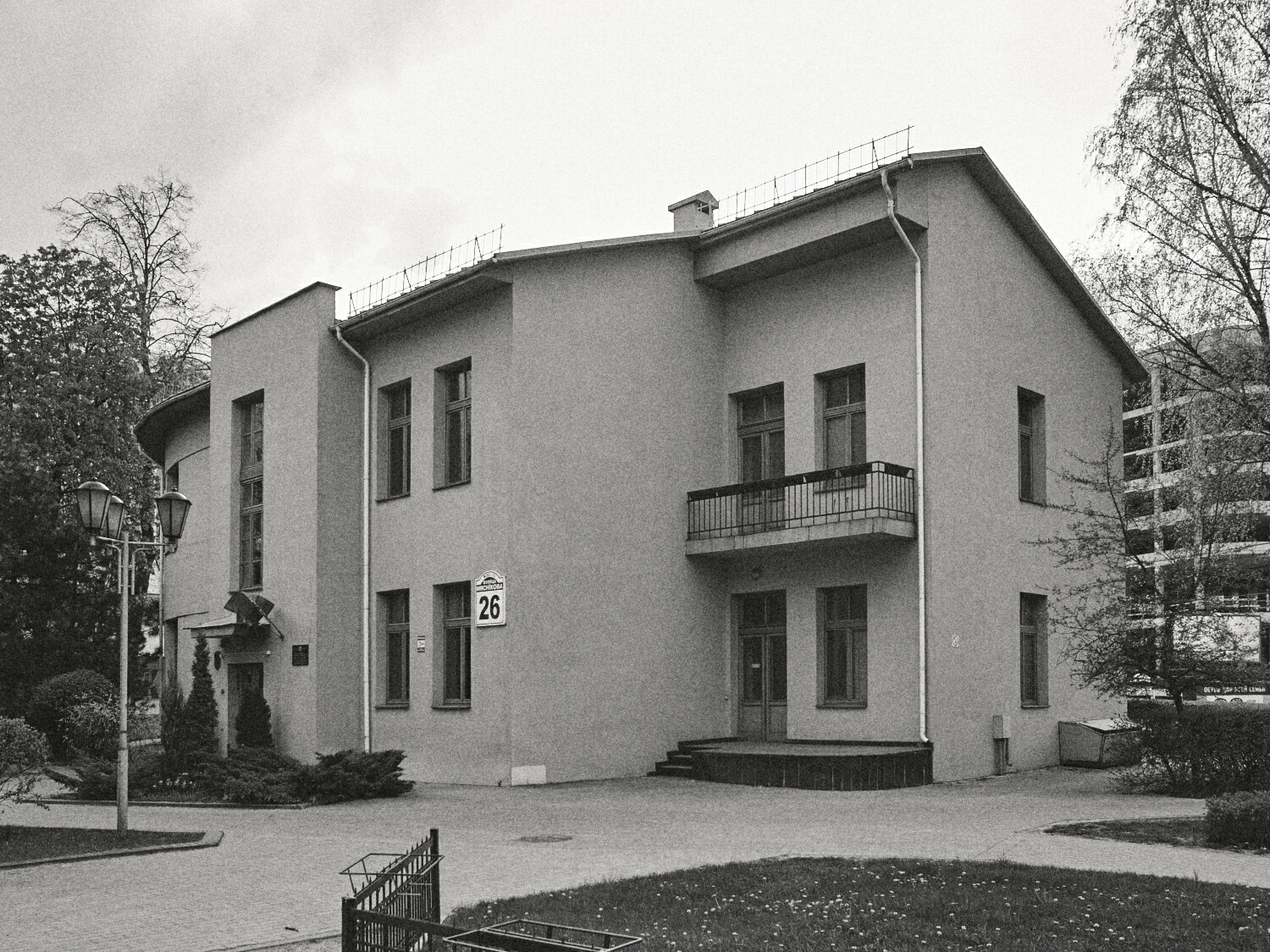
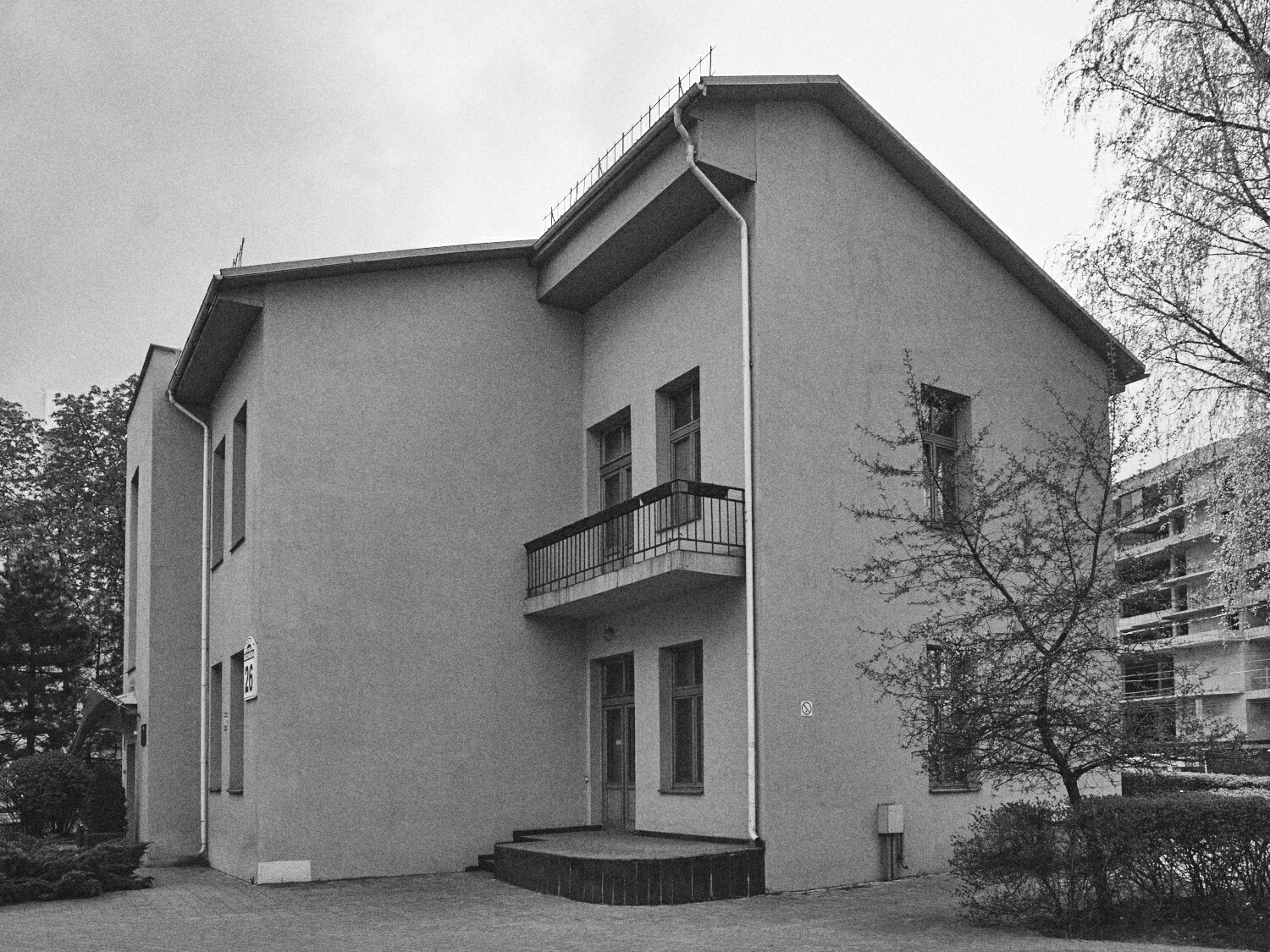
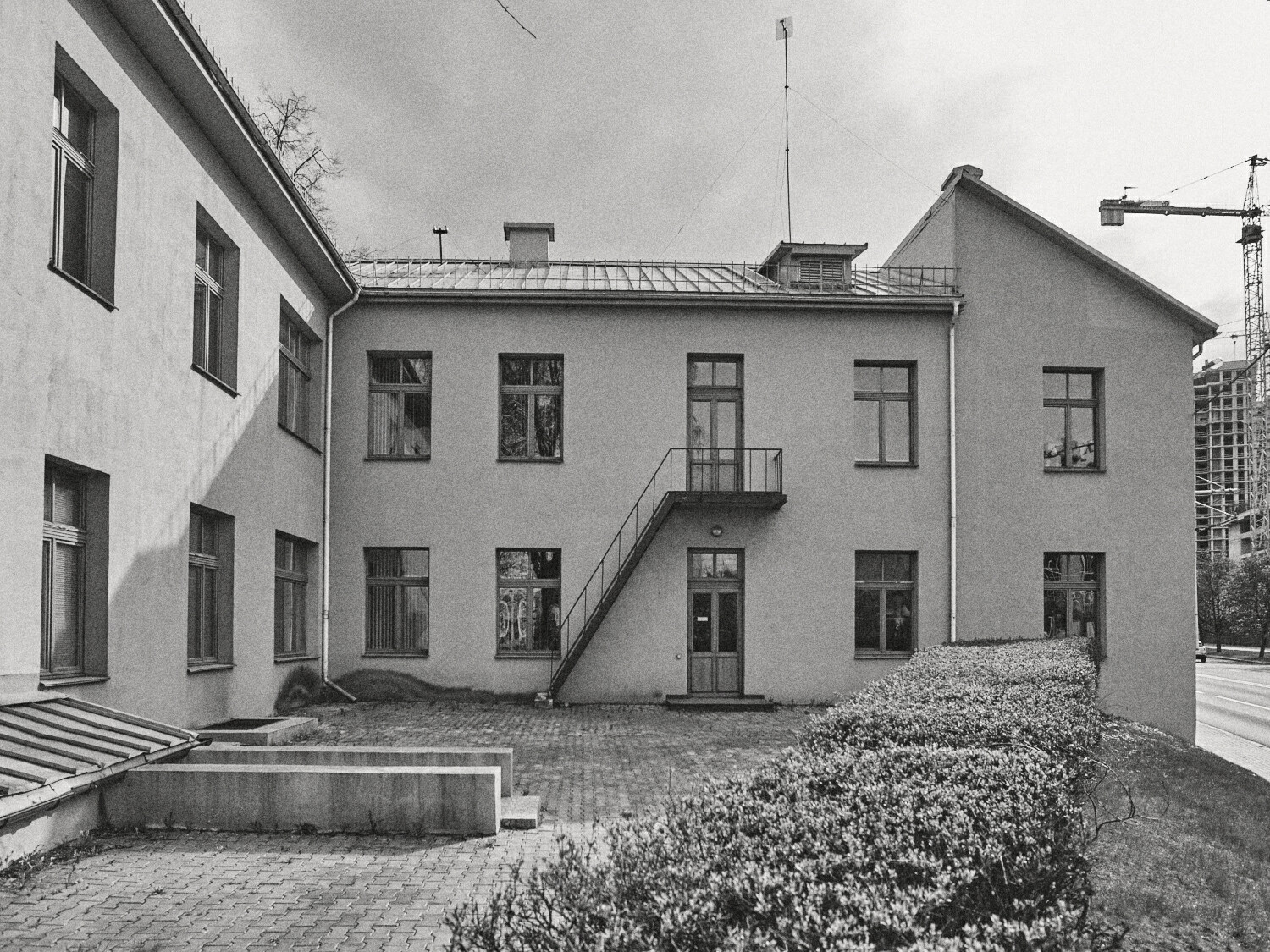
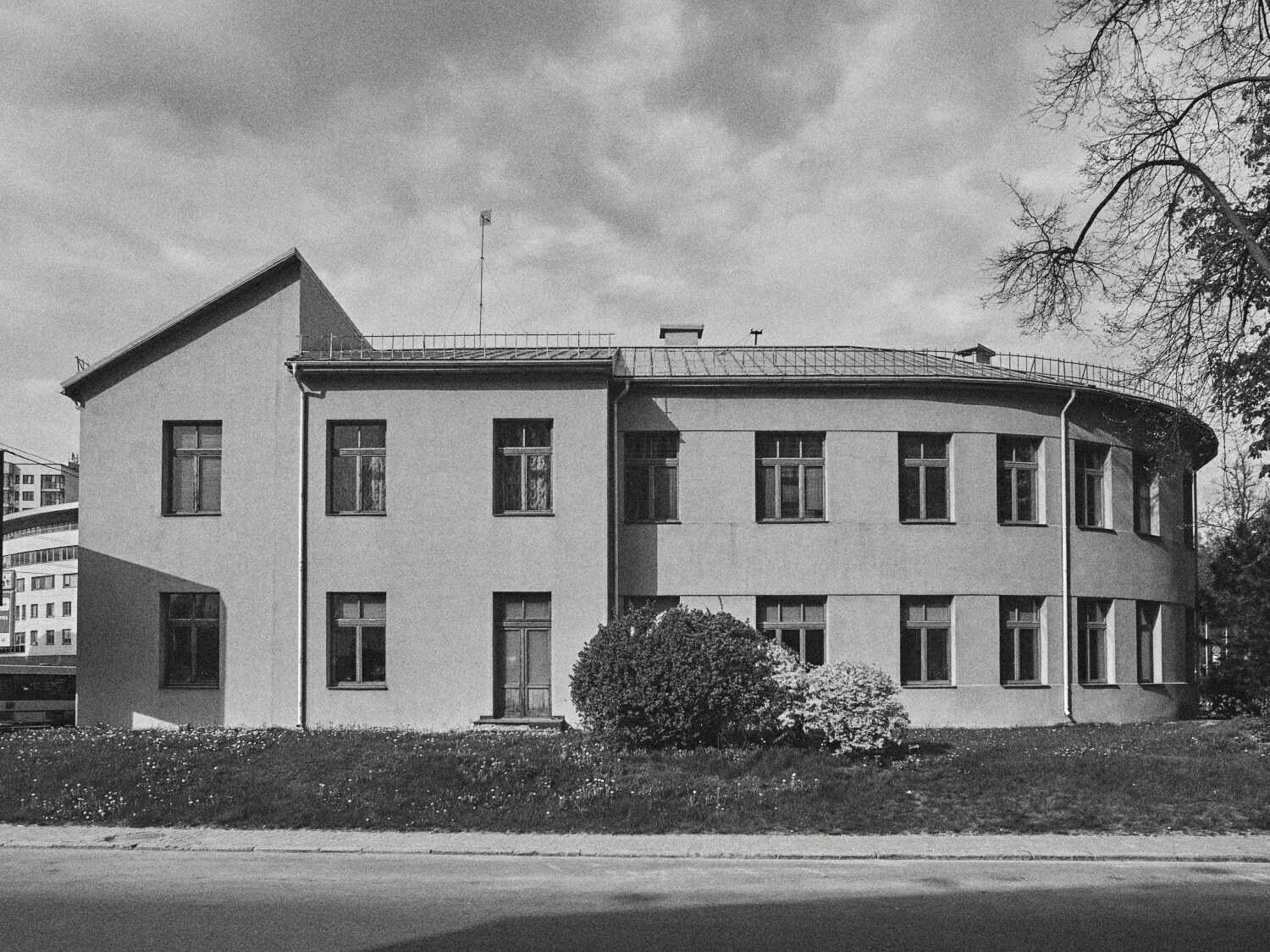
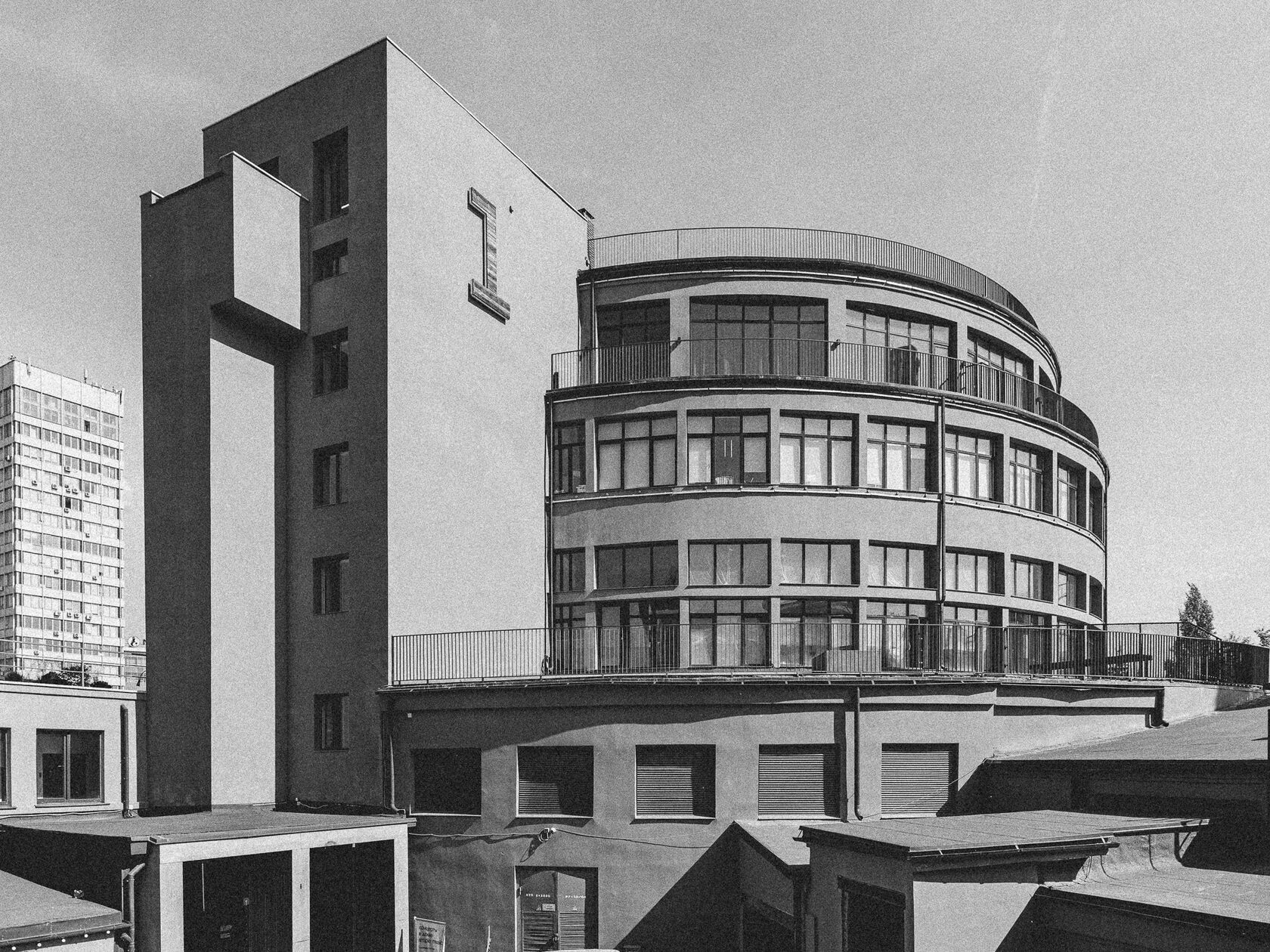
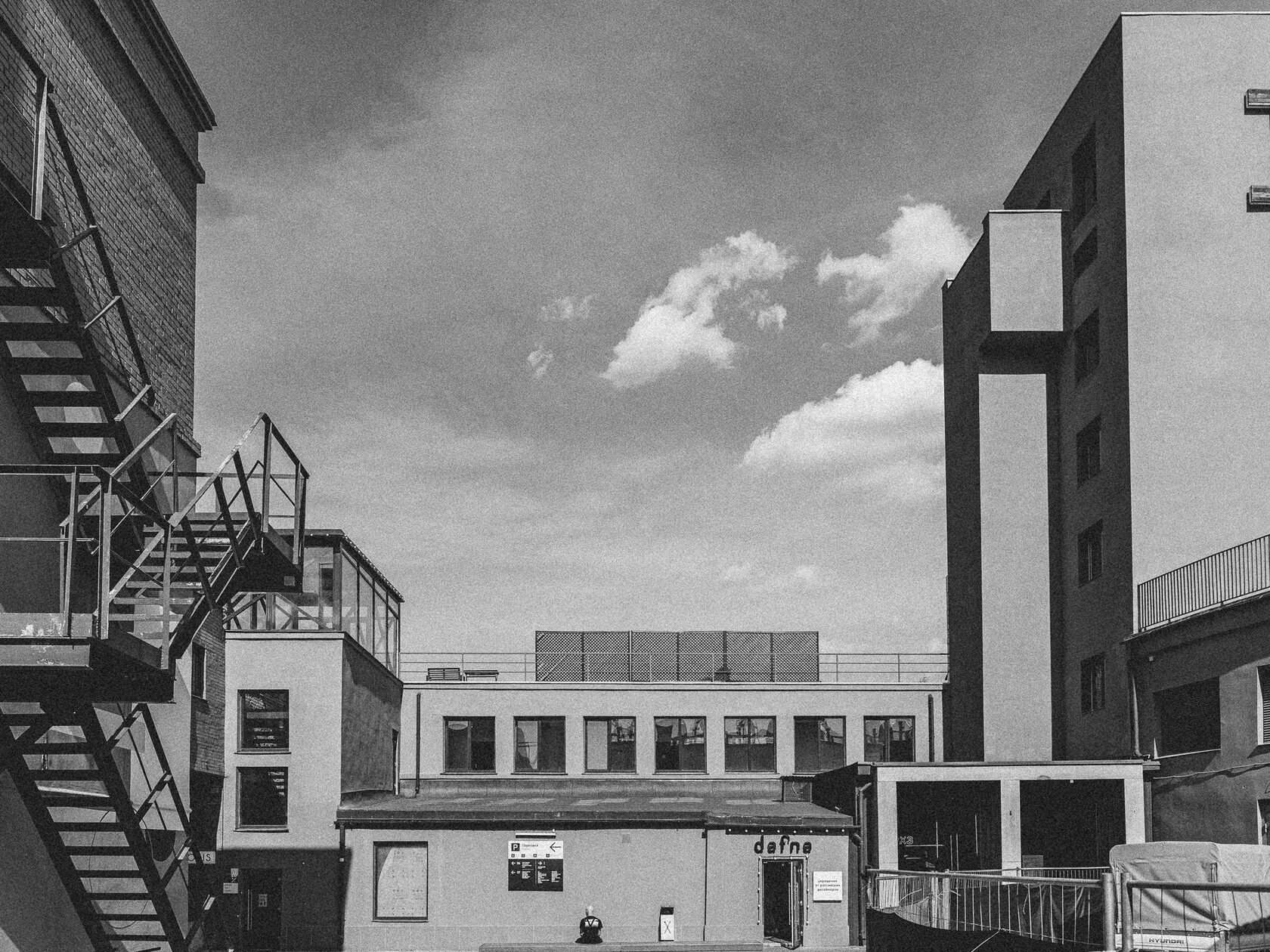
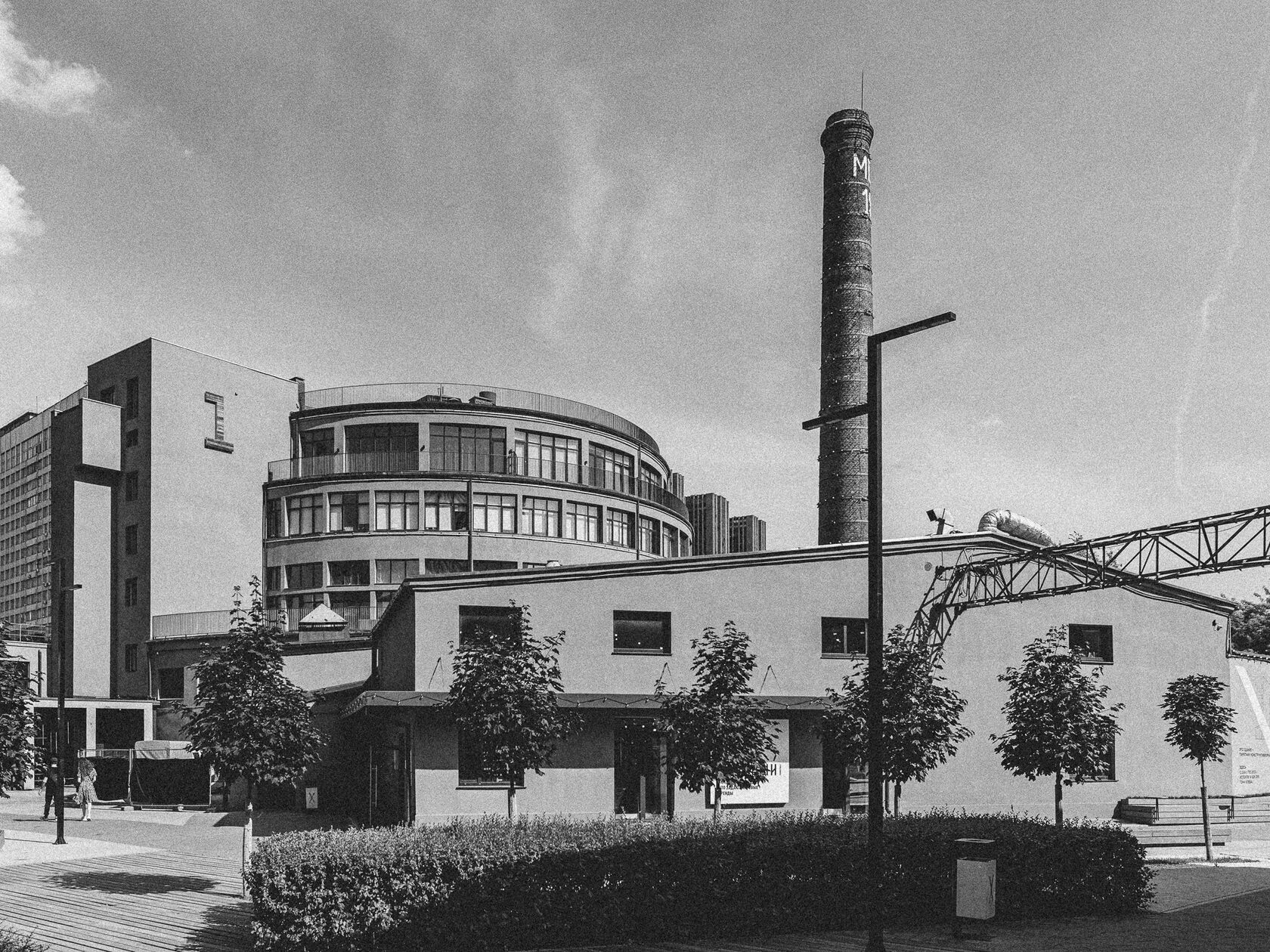
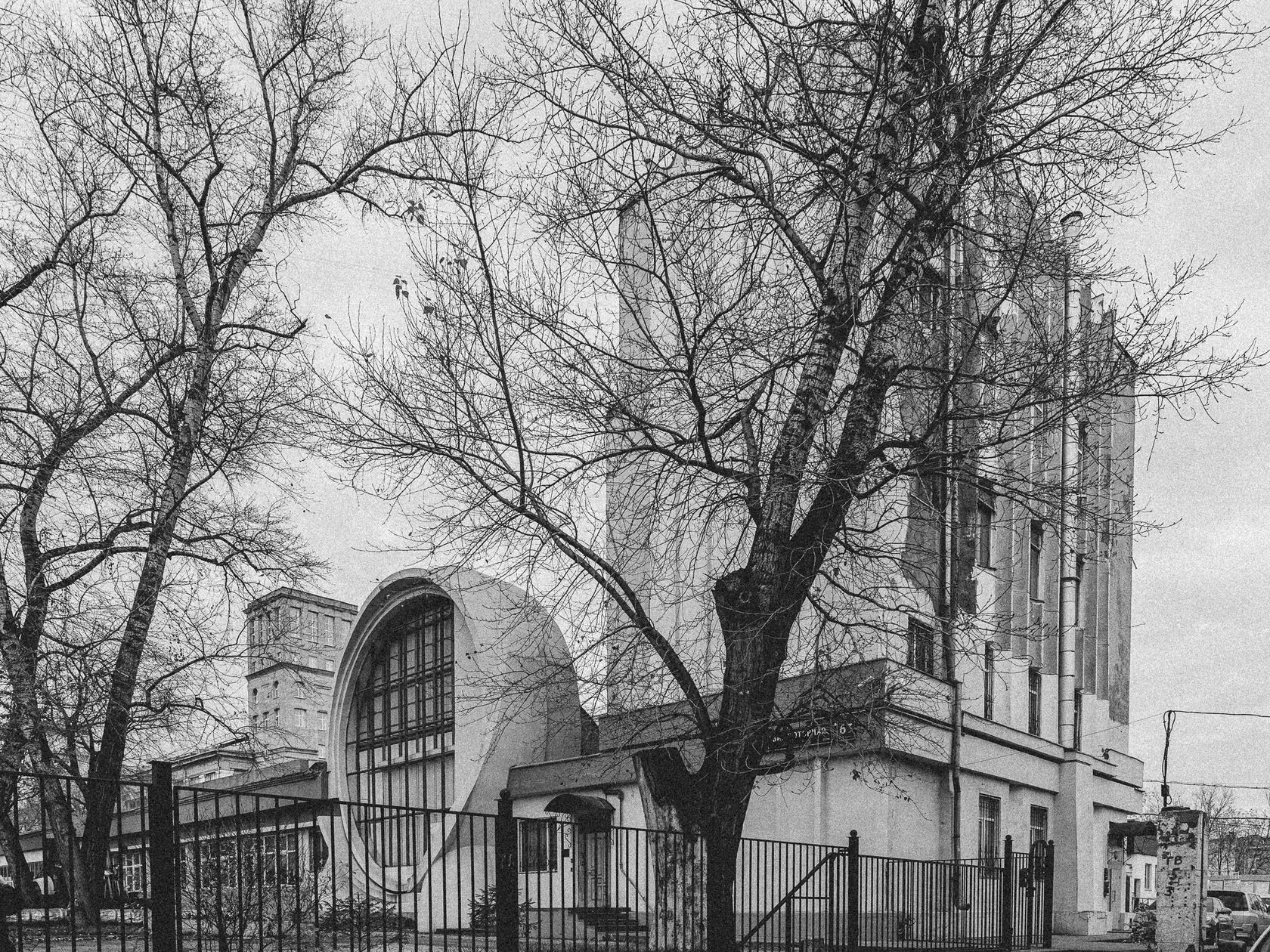
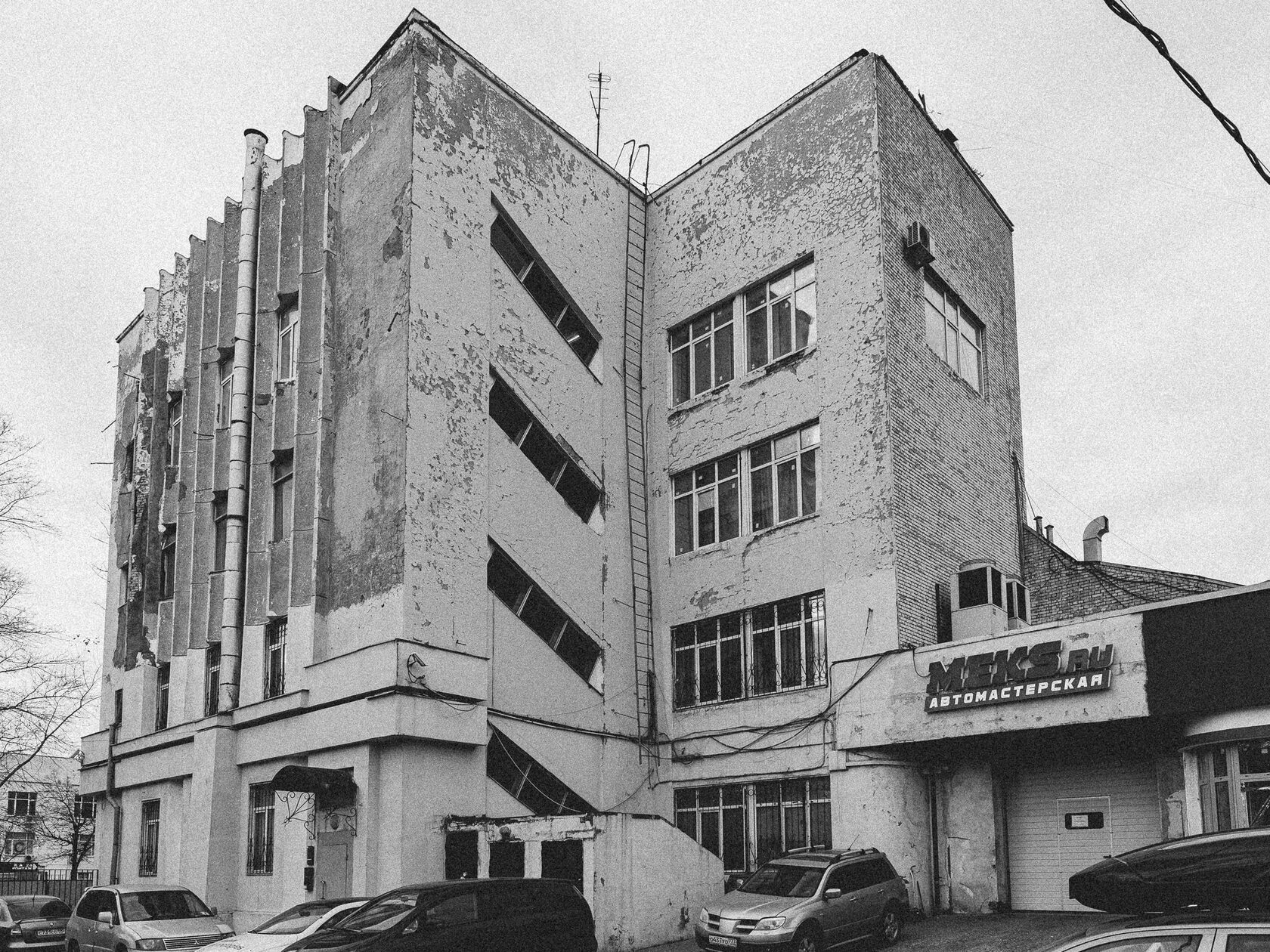
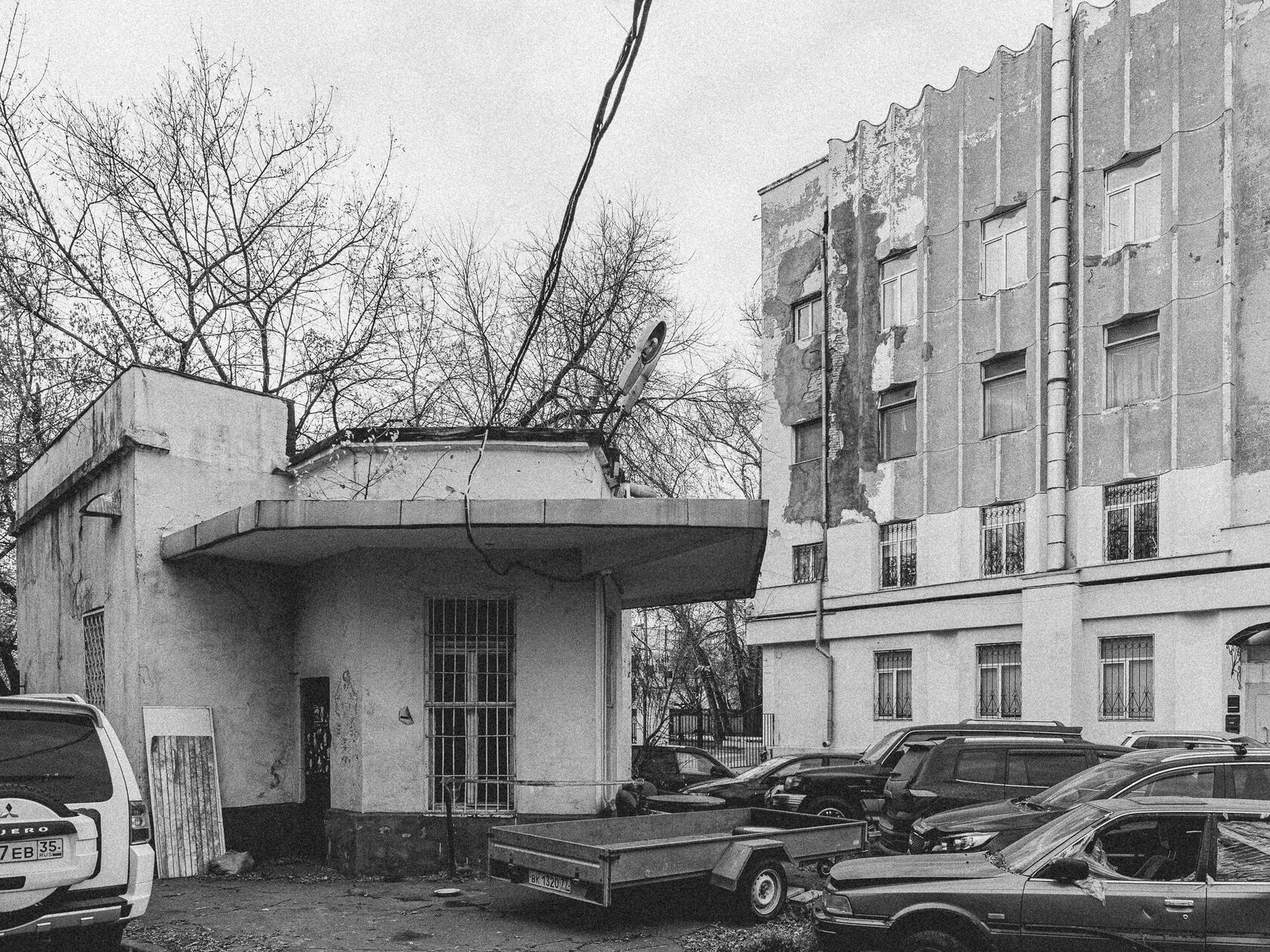
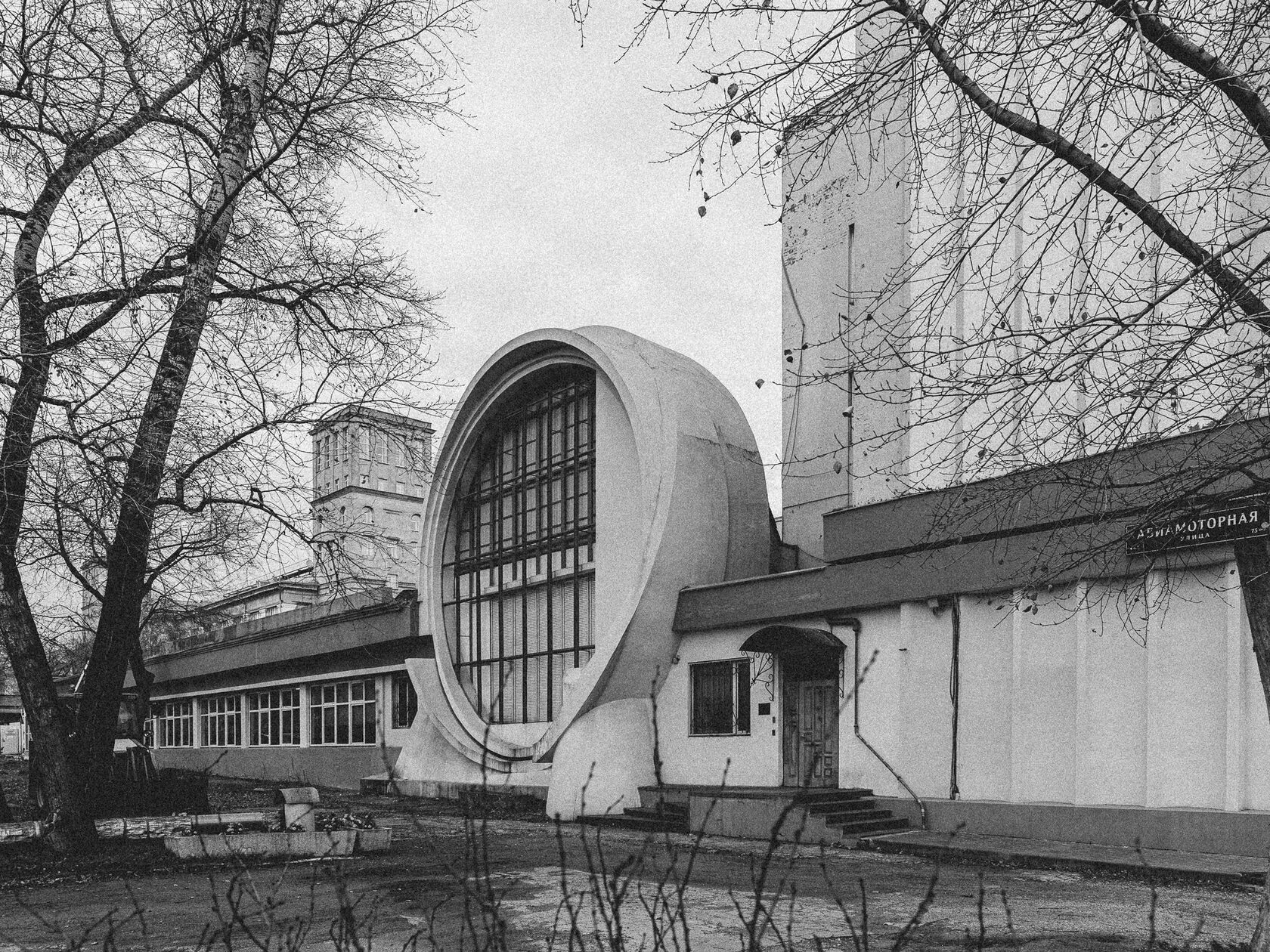
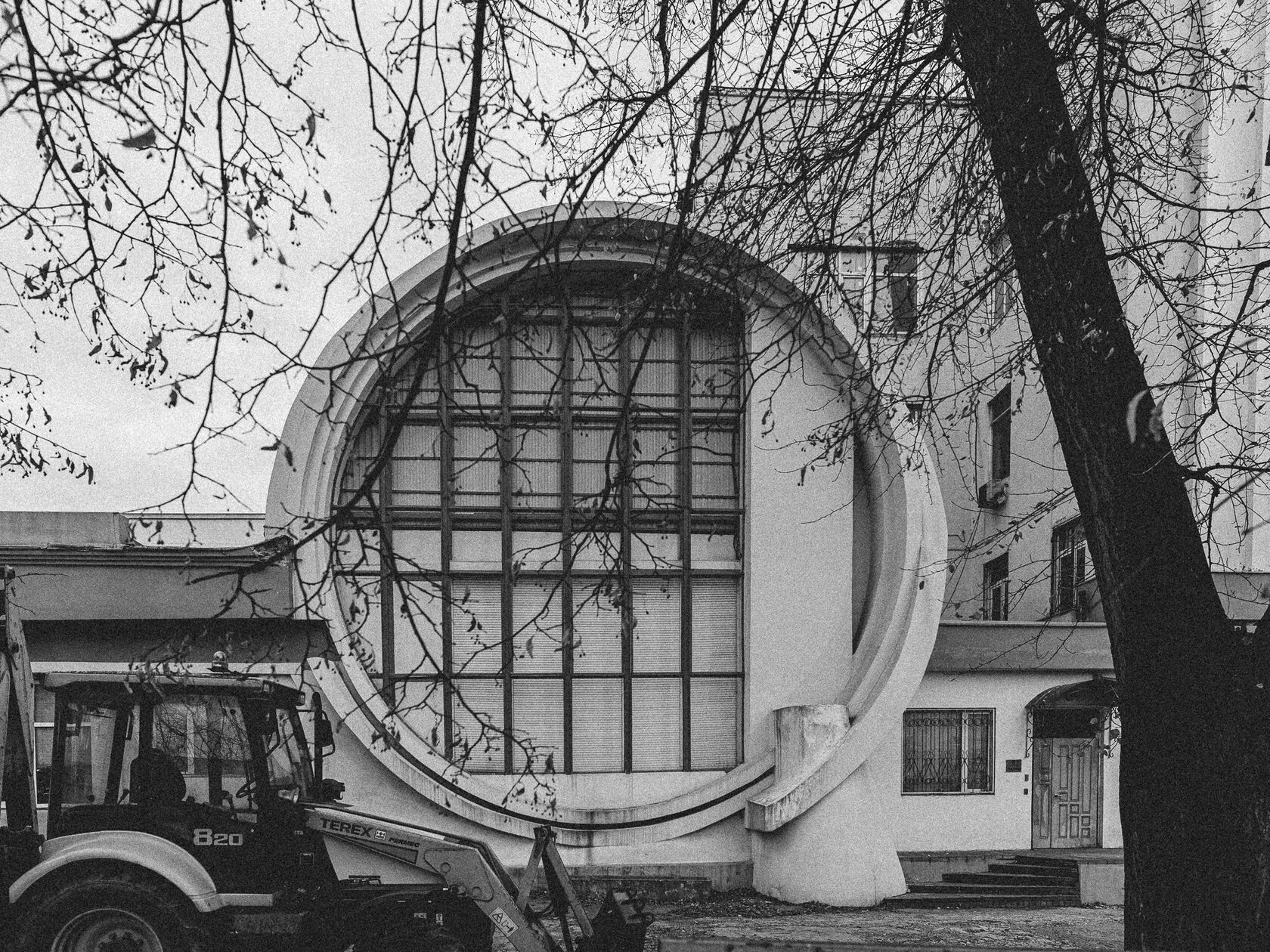
The photographs return to the same distance again and again. A building becomes a type, then the type begins to crack: repairs, weather, signs, additions, trees, parked cars, new doors, old windows. In that repetition the project borrows something from Bernd and Hilla Becher, but keeps the city inside the frame as noise, evidence, and time.
Moscow, Minsk, Kaliningrad, Kazan, Tver, Nizhny Novgorod, Saint Petersburg, and Korolev are not chapters of a travel diary. They are a scattered card index of related ideas. Dates matter here not as museum politeness, but as the pulse of the series: a brief period of the 1920s and 1930s tried to invent a new everyday optics, and the photographs look at how that optics survived.
Это не ностальгическая прогулка по авангарду, а рабочий архив форм. Конструктивизм здесь собран по объектам, городам, датам и типологиям: клуб, фабрика-кухня, дом-коммуна, типография, башня, гараж, поликлиника. У каждого здания есть паспорт, но паспорт не закрывает изображение, а задает ему сопротивление.
Фотографии снова и снова возвращаются к одной дистанции. Здание становится типом, затем тип начинает трескаться: ремонт, погода, вывески, пристройки, деревья, припаркованные машины, новые двери, старые окна. В этом повторе есть родство с Берндом и Хиллой Бехер, только город не вычищен из кадра: он остается шумом, доказательством и временем.
Москва, Минск, Калининград, Казань, Тверь, Нижний Новгород, Санкт-Петербург и Королев здесь не главы дорожного дневника. Это разрозненная картотека родственных идей. Даты важны не как музейная вежливость, а как нерв серии: видно, как короткий период 1920-х и 1930-х пытался придумать новую бытовую оптику — и как эта оптика дожила до сегодняшнего дня.
这不是一次怀旧的先锋派漫步,而是一份仍在运作的形式档案。这里的建构主义按对象、城市、年代和类型排列:俱乐部、工厂厨房、公社住宅、印刷厂、塔楼、车库、诊所。每栋建筑都有档案,但档案并不终结图像;它给照片一个可以抵抗的表面。
这些照片一次又一次回到同一个距离。建筑先成为类型,随后类型开始开裂:维修、天气、招牌、加建、树木、停放的汽车、新门和旧窗。在这种重复里,项目借用了伯恩德与希拉·贝歇夫妇的某种方法,但没有把城市从画面中清理出去:城市仍作为噪音、证据和时间存在。
莫斯科、明斯克、加里宁格勒、喀山、特维尔、下诺夫哥罗德、圣彼得堡和科罗廖夫并不是旅行日记的章节。它们像一组分散的卡片,记录彼此相关的想法。日期在这里不是博物馆式的礼貌,而是系列的脉搏:1920至1930年代曾短暂地试图发明一种新的日常观看方式,而照片观察它如何留存到今天。
Das ist kein nostalgischer Spaziergang durch die Avantgarde, sondern ein arbeitendes Archiv von Formen. Der Konstruktivismus wird hier nach Objekt, Stadt, Datum und Typologie geordnet: Klub, Fabrikküche, Kommunalhaus, Druckerei, Turm, Garage, Klinik. Jedes Gebäude hat einen Eintrag, doch dieser Eintrag schließt das Bild nicht ab; er gibt der Fotografie Widerstand.
Die Fotografien kehren immer wieder zur gleichen Distanz zurück. Ein Gebäude wird zum Typus, dann beginnt der Typus zu reißen: Reparaturen, Wetter, Schilder, Anbauten, Bäume, geparkte Autos, neue Türen, alte Fenster. In dieser Wiederholung leiht sich das Projekt etwas von Bernd und Hilla Becher, lässt die Stadt aber im Bild: als Geräusch, Beweis und Zeit.
Moskau, Minsk, Kaliningrad, Kasan, Twer, Nischni Nowgorod, Sankt Petersburg und Koroljow sind keine Kapitel eines Reisetagebuchs. Sie bilden eine verstreute Kartei verwandter Ideen. Daten zählen hier nicht aus musealer Höflichkeit, sondern als Puls der Serie: Eine kurze Phase der 1920er und 1930er Jahre versuchte, eine neue Optik des Alltags zu erfinden, und die Fotografien sehen nach, wie diese Optik überlebt hat.
Ce n'est pas une promenade nostalgique dans l'avant-garde, mais une archive de formes au travail. Le constructivisme est ici classé par objet, ville, date et typologie : club, fabrique-cuisine, maison-commune, imprimerie, tour, garage, clinique. Chaque bâtiment a sa fiche, mais cette fiche ne ferme pas l'image ; elle donne à la photographie une résistance.
Les photographies reviennent sans cesse à la même distance. Un bâtiment devient un type, puis le type commence à se fissurer : réparations, météo, enseignes, ajouts, arbres, voitures garées, nouvelles portes, vieilles fenêtres. Dans cette répétition, le projet emprunte quelque chose à Bernd et Hilla Becher, mais garde la ville dans le cadre : comme bruit, preuve et temps.
Moscou, Minsk, Kaliningrad, Kazan, Tver, Nijni Novgorod, Saint-Pétersbourg et Korolev ne sont pas des chapitres d'un carnet de voyage. Ce sont les fiches dispersées d'idées parentes. Les dates comptent ici non par politesse muséale, mais comme le pouls de la série : une brève période des années 1920 et 1930 a tenté d'inventer une nouvelle optique du quotidien, et les photographies regardent comment cette optique a survécu.
Esto no es un paseo nostálgico por la vanguardia, sino un archivo de formas en funcionamiento. El constructivismo aparece aquí ordenado por objeto, ciudad, fecha y tipología: club, fábrica-cocina, casa comunal, imprenta, torre, garaje, clínica. Cada edificio tiene una ficha, pero la ficha no cierra la imagen; le da a la fotografía algo contra lo que resistir.
Las fotografías vuelven una y otra vez a la misma distancia. Un edificio se convierte en tipo, y luego el tipo empieza a agrietarse: reparaciones, clima, letreros, añadidos, árboles, coches aparcados, puertas nuevas, ventanas viejas. En esa repetición el proyecto toma algo de Bernd y Hilla Becher, pero conserva la ciudad dentro del encuadre: como ruido, prueba y tiempo.
Moscú, Minsk, Kaliningrado, Kazán, Tver, Nizhni Nóvgorod, San Petersburgo y Koroliov no son capítulos de un diario de viaje. Son una ficha dispersa de ideas emparentadas. Las fechas importan aquí no como cortesía museística, sino como pulso de la serie: un breve período de los años veinte y treinta intentó inventar una nueva óptica de lo cotidiano, y las fotografías miran cómo sobrevivió.
Isto não é um passeio nostálgico pela vanguarda, mas um arquivo de formas em funcionamento. O construtivismo aparece aqui organizado por objeto, cidade, data e tipologia: clube, fábrica-cozinha, casa comunal, gráfica, torre, garagem, clínica. Cada edifício tem uma ficha, mas a ficha não encerra a imagem; ela dá à fotografia algo contra o que resistir.
As fotografias voltam repetidamente à mesma distância. Um edifício torna-se tipo, e então o tipo começa a rachar: reparos, clima, letreiros, acréscimos, árvores, carros estacionados, portas novas, janelas antigas. Nessa repetição, o projeto toma algo de Bernd e Hilla Becher, mas mantém a cidade dentro do quadro: como ruído, prova e tempo.
Moscou, Minsk, Kaliningrado, Kazan, Tver, Níjni Novgorod, São Petersburgo e Korolev não são capítulos de um diário de viagem. São uma cartoteca dispersa de ideias aparentadas. As datas importam aqui não por cortesia museológica, mas como pulso da série: um breve período dos anos 1920 e 1930 tentou inventar uma nova ótica cotidiana, e as fotografias observam como essa ótica sobreviveu.
TypologyТипология类型学TypologieTypologieTipologíaTipologia
The New LifeНовый быт新生活Das neue LebenLa vie nouvelleLa nueva vidaA nova vida
Repeated distance, frontal attention, visible surface.Одна дистанция, прямой взгляд, видимая поверхность.重复的距离、正面的观看、可见的表面。Wiederholte Distanz, frontaler Blick, sichtbare Oberfläche.Distance répétée, regard frontal, surface visible.Distancia repetida, mirada frontal, superficie visible.Distância repetida, olhar frontal, superfície visível. Buildings first as instruments, then as memory.Здания сначала как инструменты, потом как память.建筑先是工具,后来成为记忆。Gebäude zuerst als Instrumente, dann als Erinnerung.Des bâtiments d'abord comme instruments, puis comme mémoire.Edificios primero como instrumentos, después como memoria.Edifícios primeiro como instrumentos, depois como memória.MinskМинск明斯克MinskMinskMinskMinsk
Buildings in MinskЗдания: Минск建筑: 明斯克Bauten in MinskBâtiments à MinskEdificios en MinskEdifícios em Minsk
State Library of the BSSR named after Vladimir LeninГосударственная библиотека БССР имени Владимира Ленина白俄罗斯苏维埃社会主义共和国弗拉基米尔·列宁国家图书馆Staatsbibliothek der BSSR, benannt nach Wladimir LeninBibliothèque d'État de la RSS de Biélorussie Vladimir LénineBiblioteca Estatal de la RSS de Bielorrusia Vladimir LeninBiblioteca Estatal da RSS da Bielorrússia Vladimir Lenin
This building turns knowledge and print into architecture: storage, circulation, facade, and public address become one restrained machine. In the sequence it reads less as a monument than as a device for producing a new visual order.Это здание переводит знание и печать в архитектурную форму: хранение, движение, фасад и публичное обращение собраны в сдержанную машину. В серии оно читается не как памятник, а как устройство для производства нового визуального порядка.这座建筑把知识和印刷转化为建筑:存储、流线、立面和公共姿态被收进一台克制的机器。它在系列中不像纪念碑,更像生产新视觉秩序的装置。Dieses Gebäude übersetzt Wissen und Druck in Architektur: Lagerung, Bewegung, Fassade und öffentliche Ansprache werden zu einer zurückhaltenden Maschine. In der Serie wirkt es weniger wie ein Denkmal als wie ein Apparat zur Herstellung einer neuen visuellen Ordnung.Ce bâtiment traduit le savoir et l'impression en architecture : stockage, circulation, façade et adresse publique se rassemblent dans une machine contenue. Dans la série, il se lit moins comme un monument que comme un dispositif de production d'un nouvel ordre visuel.Este edificio convierte el conocimiento y la imprenta en arquitectura: almacenamiento, circulación, fachada y dirección pública se reúnen en una máquina contenida. En la serie se lee menos como monumento que como dispositivo para producir un nuevo orden visual.Este edifício transforma conhecimento e impressão em arquitetura: armazenamento, circulação, fachada e endereço público se reúnem numa máquina contida. Na série, lê-se menos como monumento do que como dispositivo para produzir uma nova ordem visual.
Belarusian Radio and Television Transmitting CenterПередающий центр Белорусского радио и телевидения白俄罗斯广播电视发射中心Sendezentrum des belarussischen Rundfunks und FernsehensCentre de transmission de la radio et télévision biélorusseCentro transmisor de radio y televisión de BielorrusiaCentro transmissor de rádio e televisão da Bielorrússia
This is architecture of transmission. Its form is tied to measuring, broadcasting, watching, or sending: an almost invisible infrastructure made visible through volume, rhythm, and a precise position in the city.Это архитектура передачи. Ее форма связана с измерением, вещанием, наблюдением или сигналом: почти невидимая инфраструктура становится видимой через объем, ритм и точное положение в городе.这是传输的建筑。它的形式与测量、广播、观察或发送有关:几乎不可见的基础设施通过体量、节奏和在城市中的精确位置变得可见。Das ist Architektur der Übertragung. Ihre Form ist mit Messen, Senden, Beobachten oder Signalisieren verbunden: beinahe unsichtbare Infrastruktur wird durch Volumen, Rhythmus und eine präzise Lage in der Stadt sichtbar.C'est une architecture de transmission. Sa forme est liée à la mesure, à la diffusion, à l'observation ou au signal : une infrastructure presque invisible devient visible par le volume, le rythme et une position précise dans la ville.Es arquitectura de transmisión. Su forma se vincula con medir, emitir, observar o enviar: una infraestructura casi invisible se vuelve visible mediante volumen, ritmo y una posición precisa en la ciudad.É arquitetura de transmissão. Sua forma se liga a medir, transmitir, observar ou sinalizar: uma infraestrutura quase invisível torna-se visível por volume, ritmo e posição precisa na cidade.
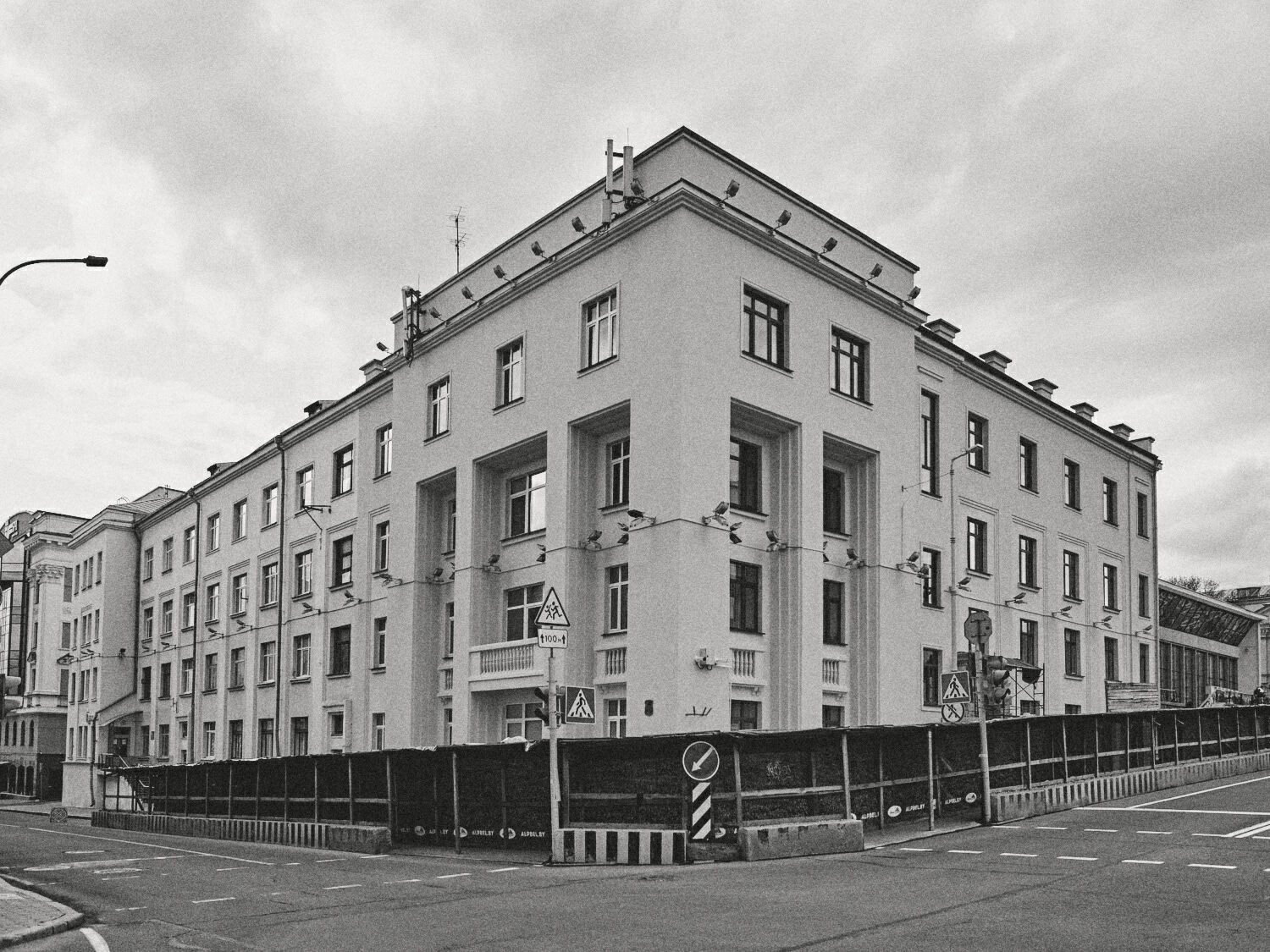
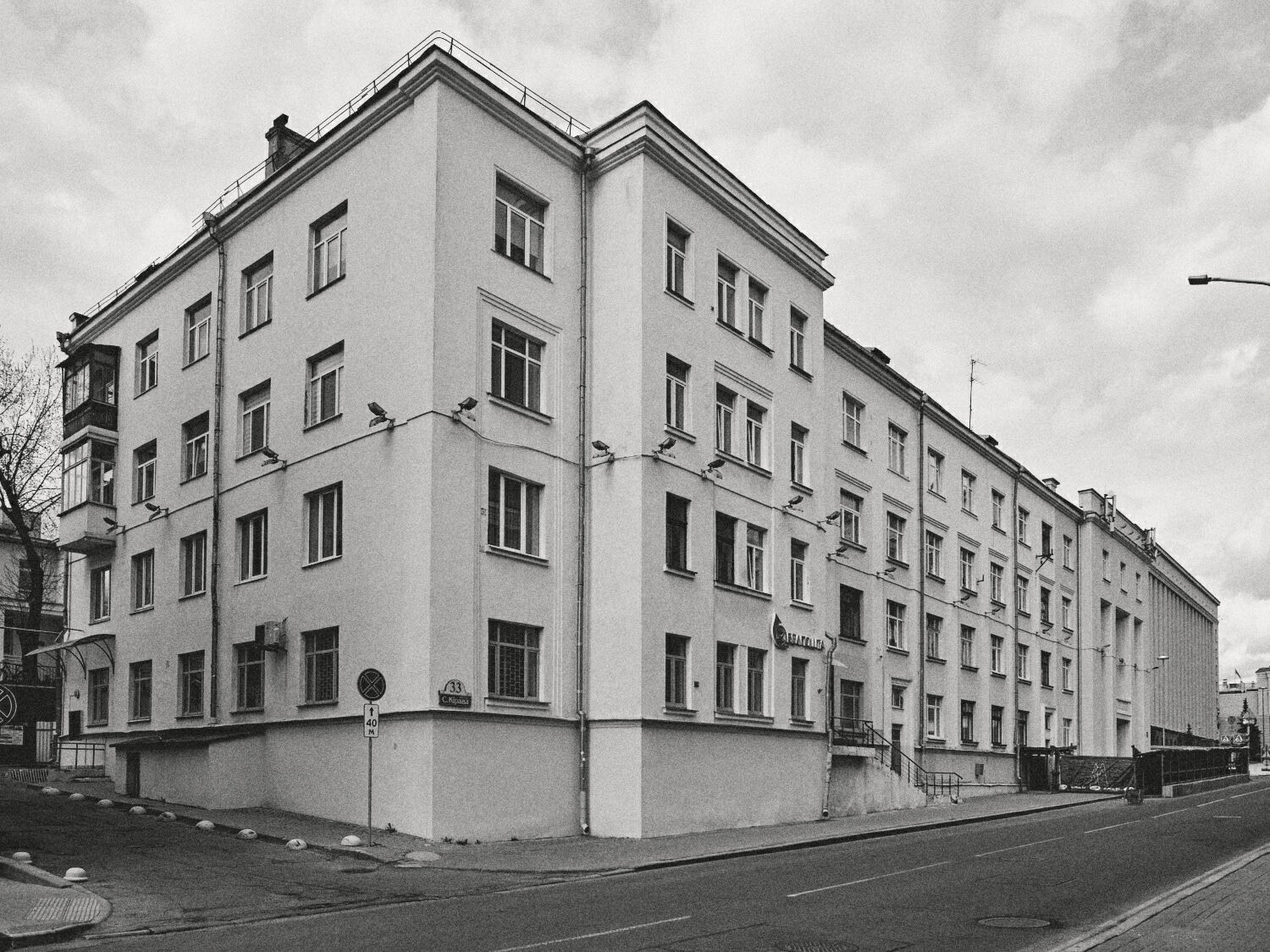
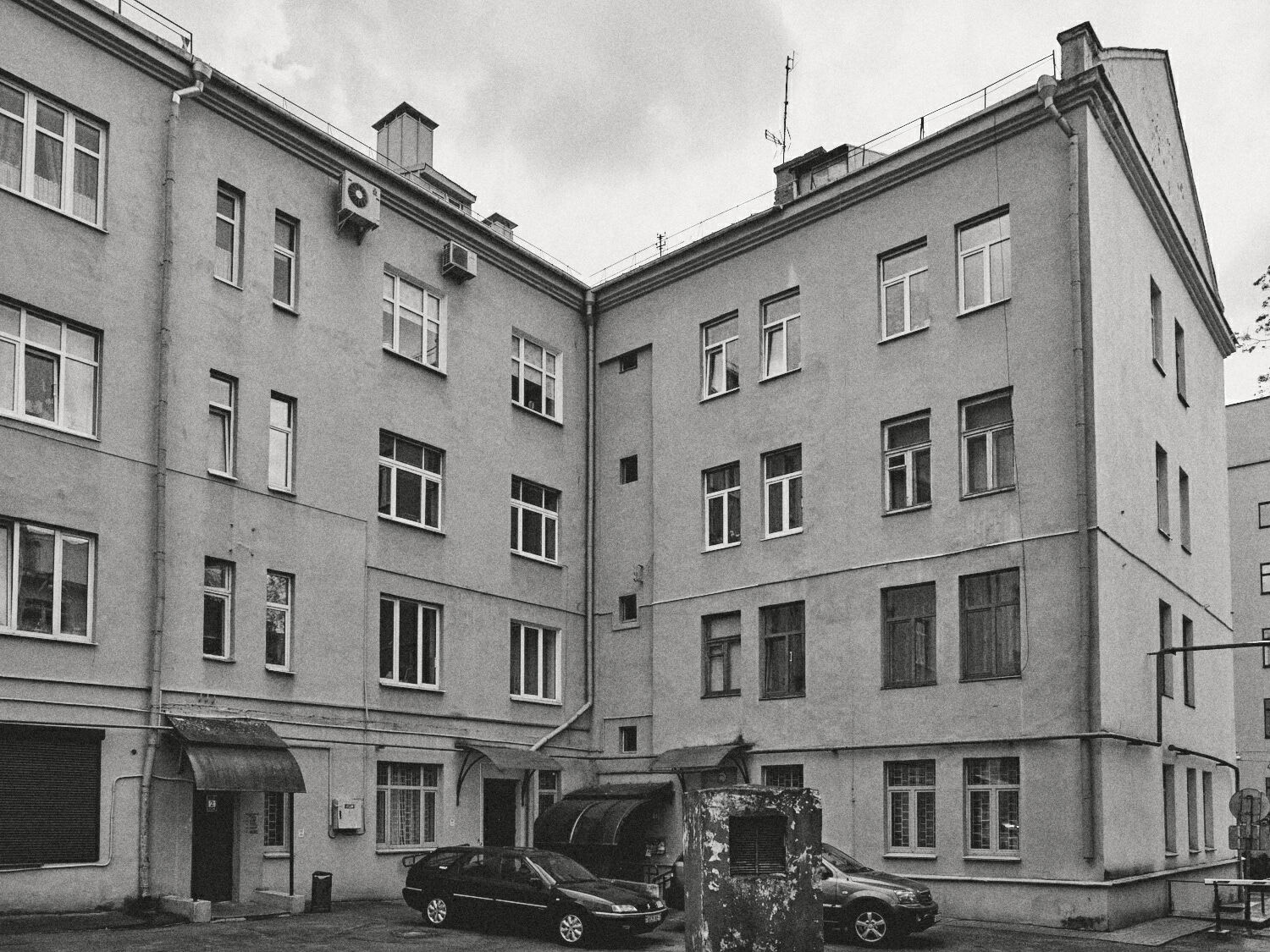
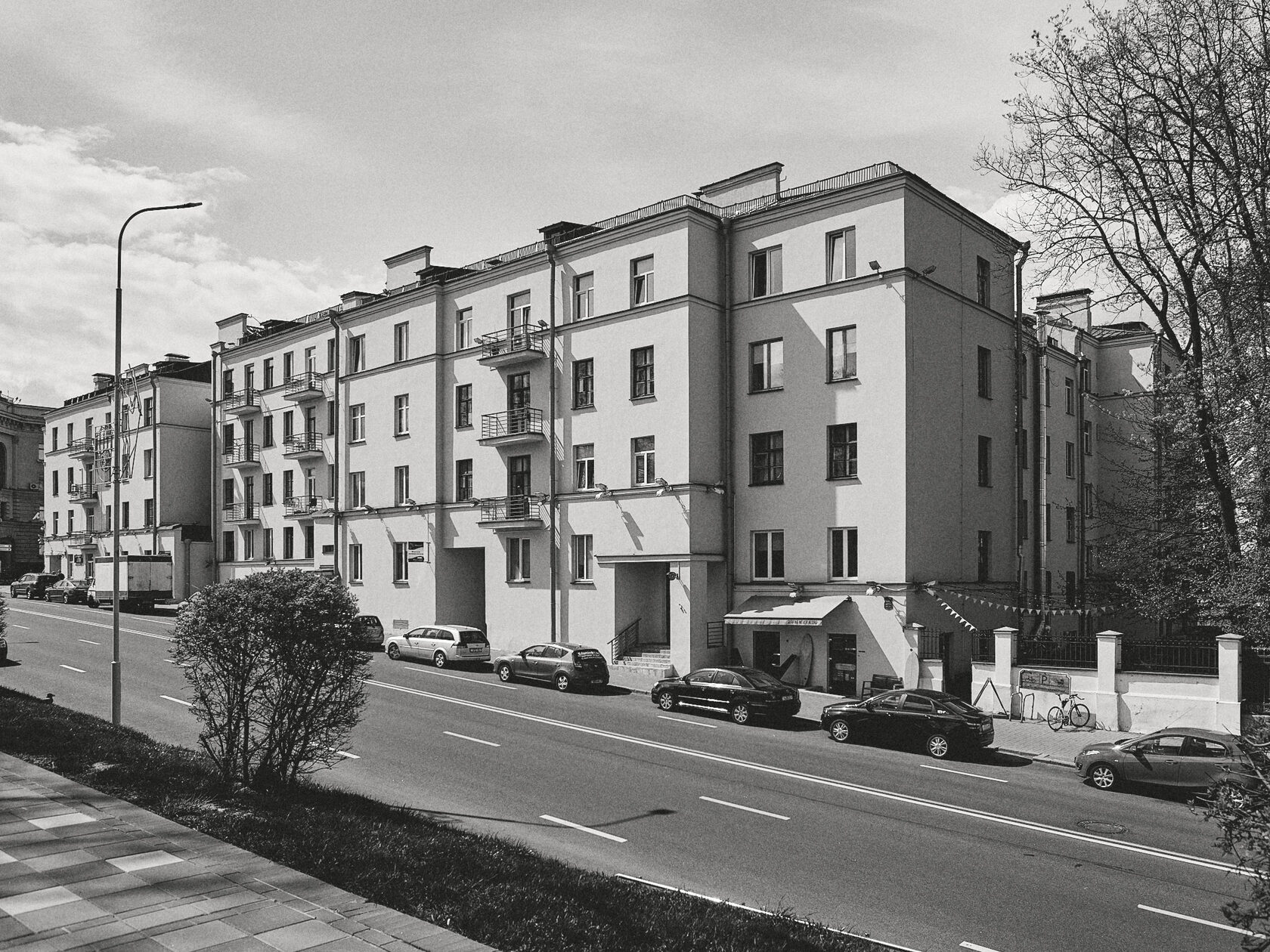
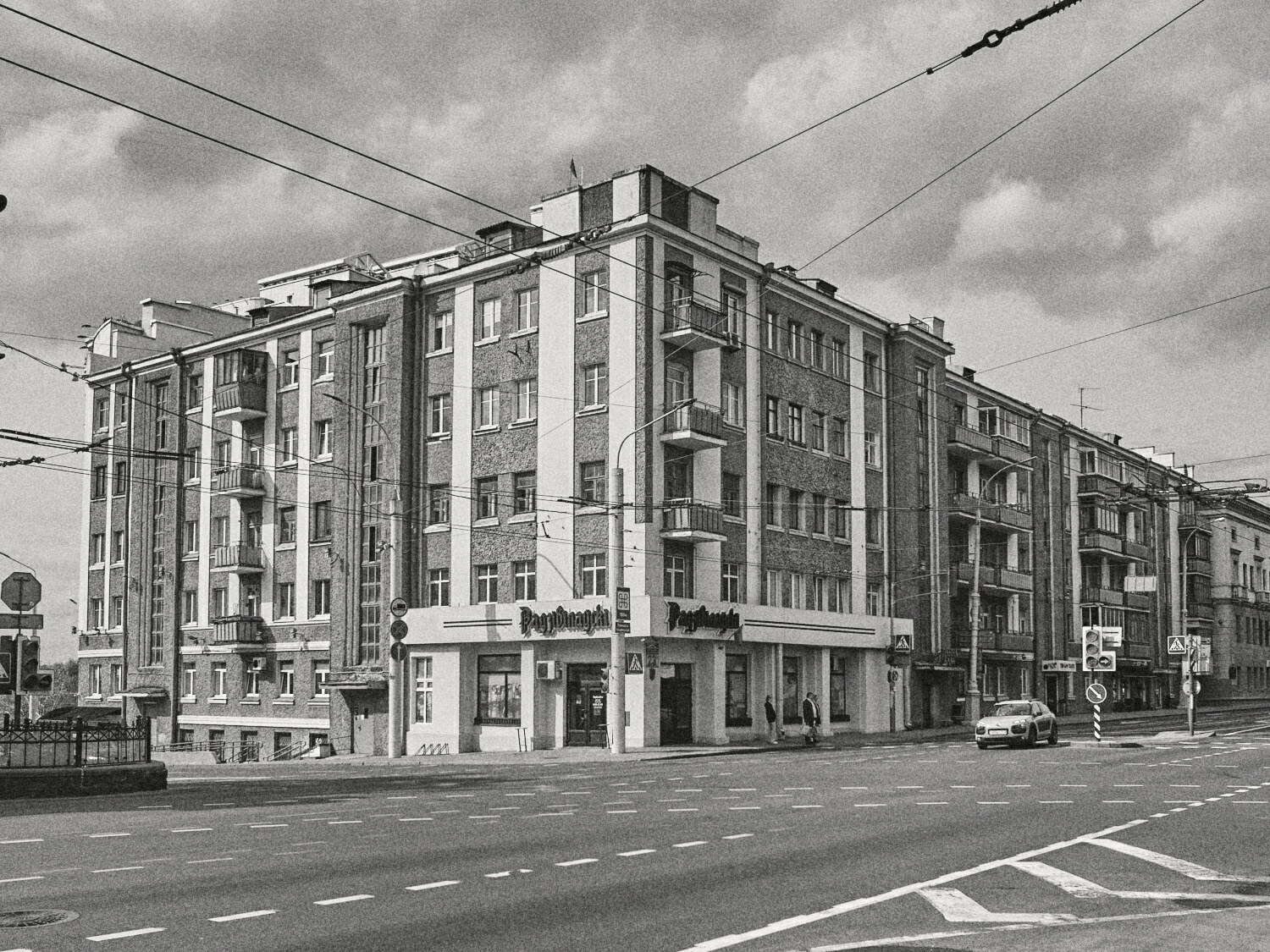
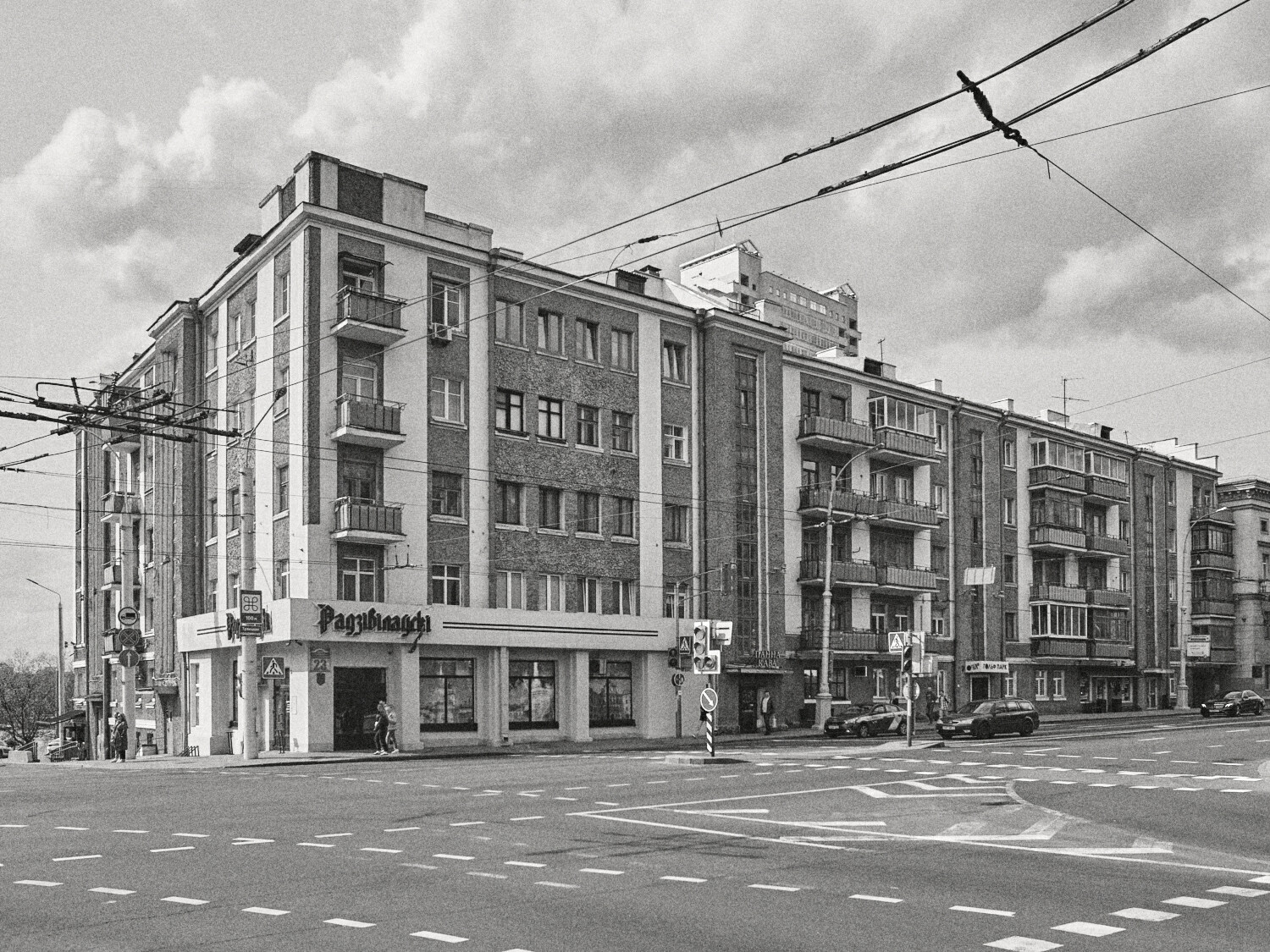
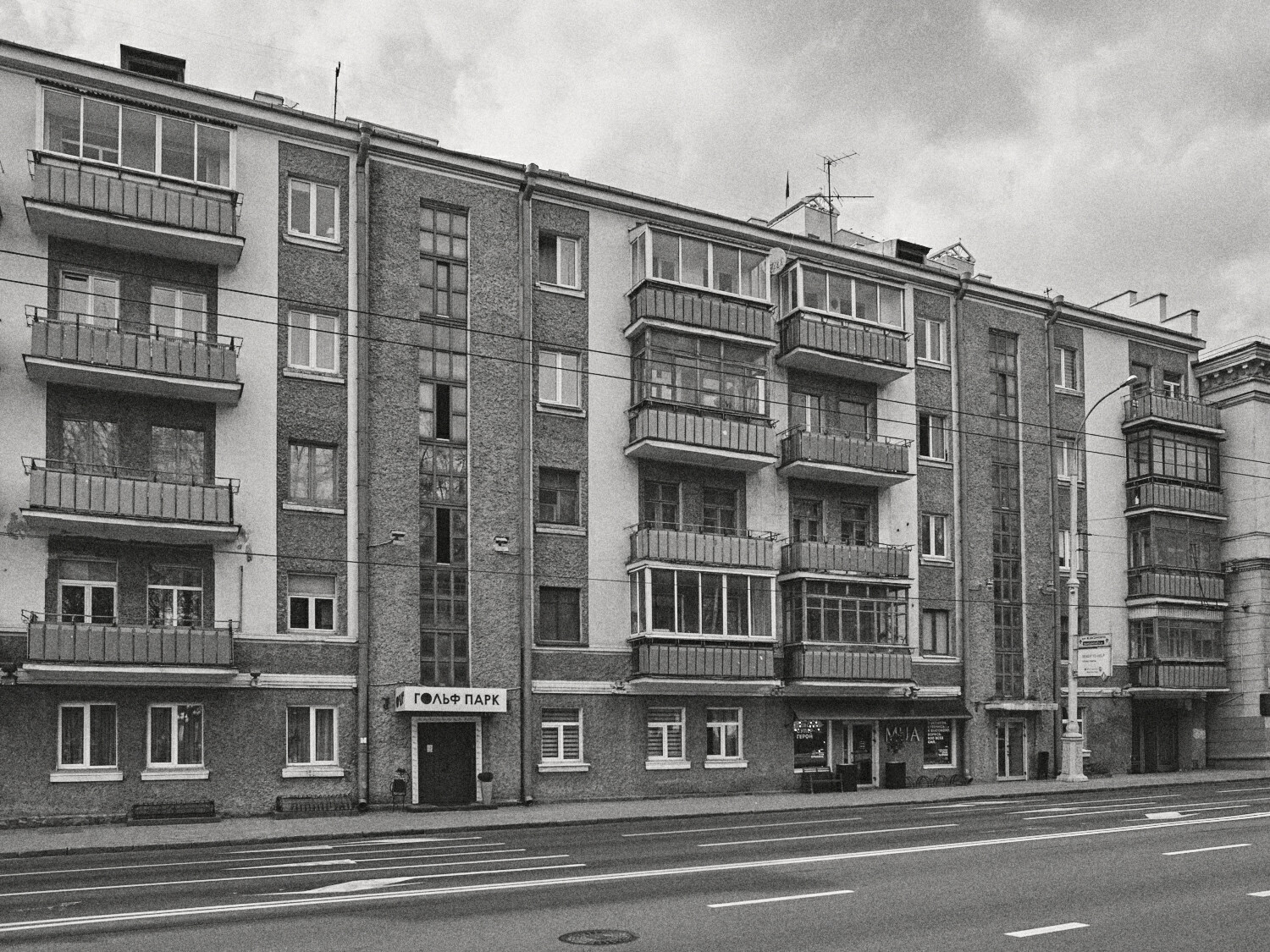
Residential buildingЖилой дом住宅楼WohnhausImmeuble d'habitationEdificio residencialEdifício residencial
The image keeps the central constructivist question close to the ground: how should people live together? Balconies, entrances, shared edges, and later alterations show where an old social model meets private use.Кадр удерживает главный бытовой вопрос конструктивизма: как людям жить вместе? Балконы, входы, общие границы и поздние изменения показывают место, где старая социальная модель сталкивается с частным использованием.画面把建构主义最日常的问题拉回地面:人们该如何共同生活?阳台、入口、共享边界和后来的改动,显示出旧的社会模型如何与私人使用相遇。Das Bild hält die zentrale Alltagsfrage des Konstruktivismus nahe am Boden: Wie sollen Menschen zusammenleben? Balkone, Eingänge, gemeinsame Kanten und spätere Veränderungen zeigen, wo ein altes Sozialmodell auf private Nutzung trifft.L'image garde au ras du sol la question centrale du constructivisme : comment vivre ensemble ? Balcons, entrées, limites partagées et transformations ultérieures montrent l'endroit où un ancien modèle social rencontre l'usage privé.La imagen mantiene cerca del suelo la pregunta central del constructivismo: ¿cómo deben vivir juntas las personas? Balcones, entradas, bordes compartidos y alteraciones posteriores muestran dónde un viejo modelo social se encuentra con el uso privado.A imagem mantém rente ao chão a pergunta central do construtivismo: como as pessoas devem viver juntas? Varandas, entradas, limites compartilhados e alterações posteriores mostram onde um antigo modelo social encontra o uso privado.
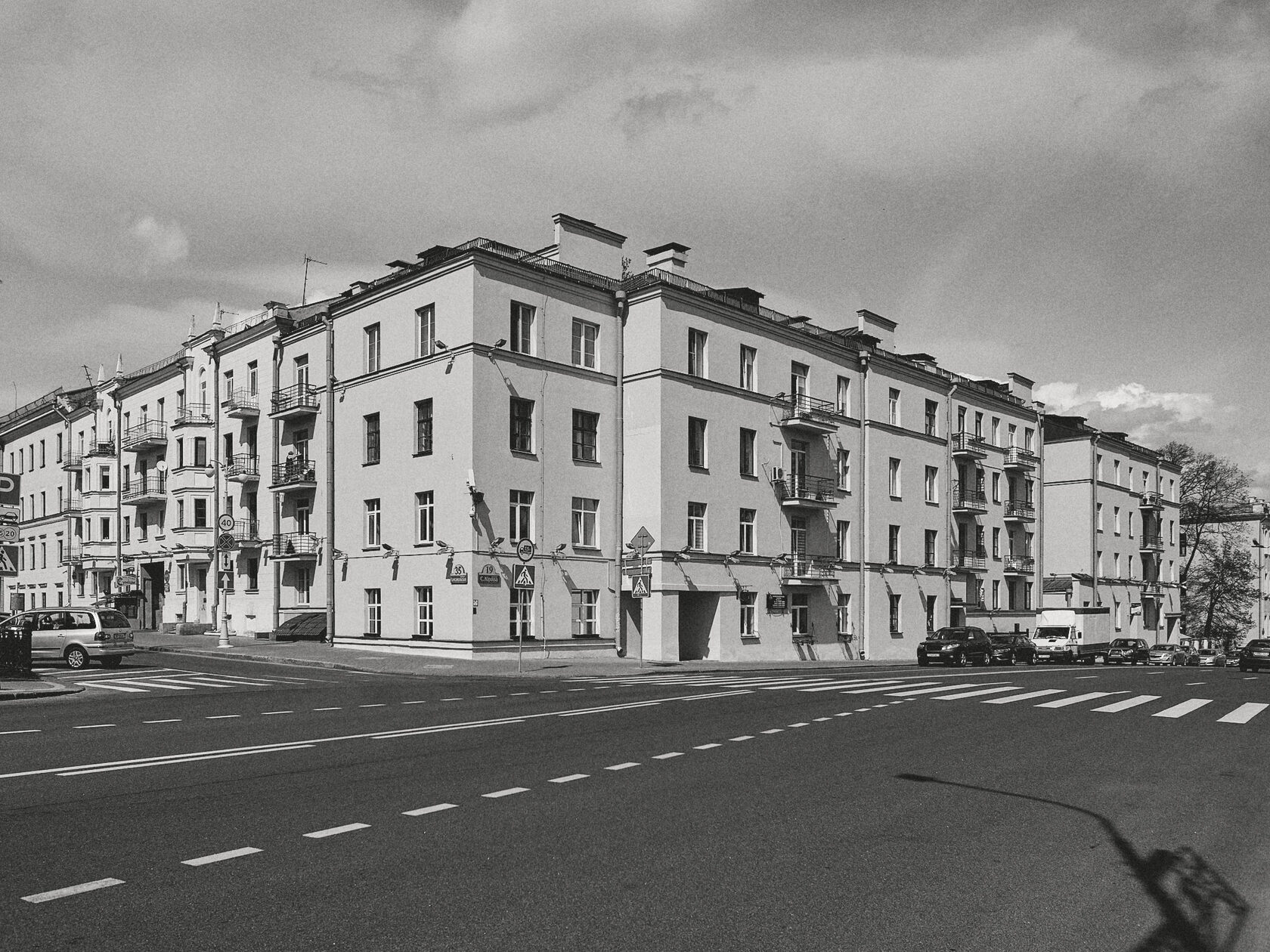
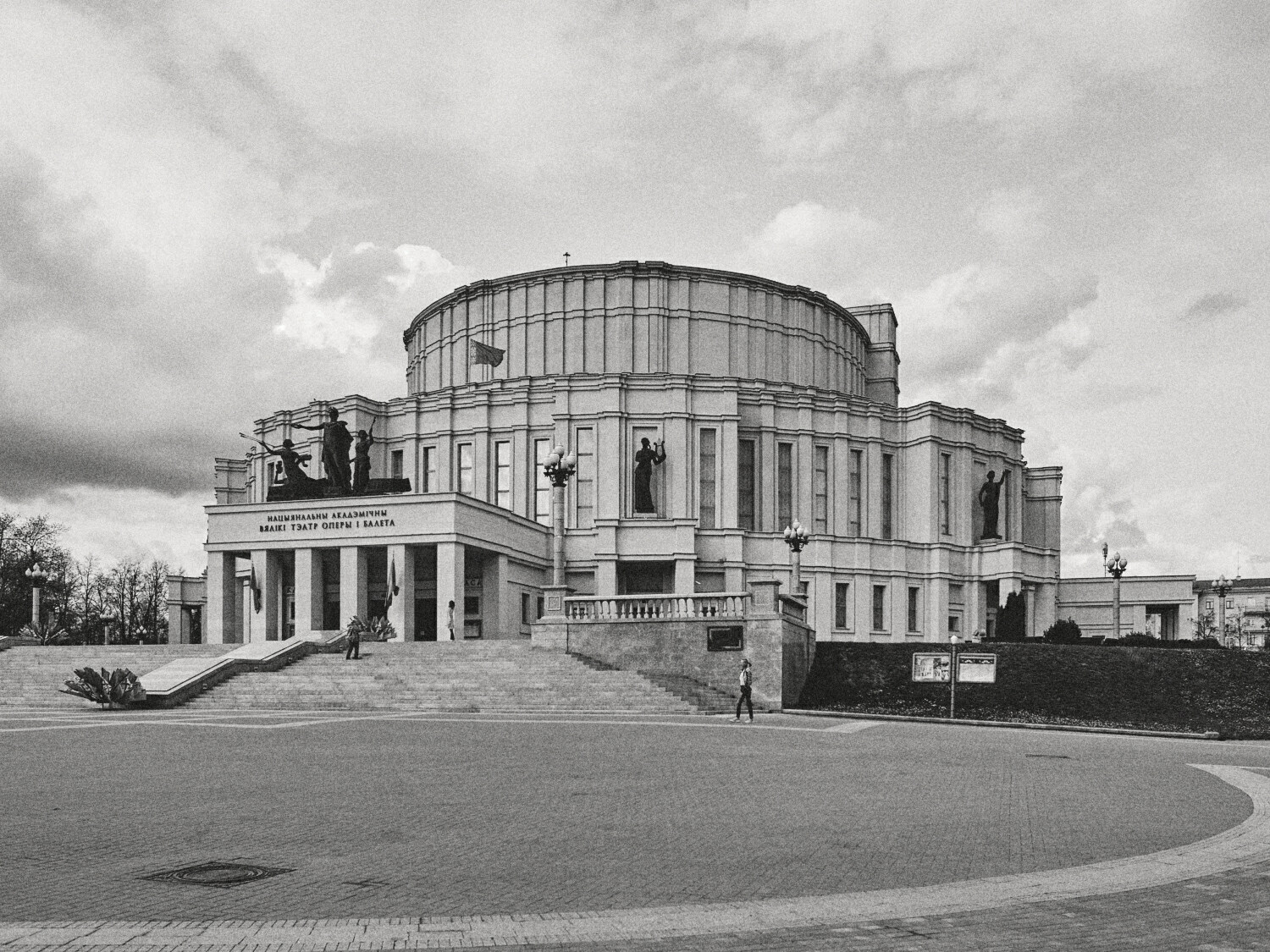
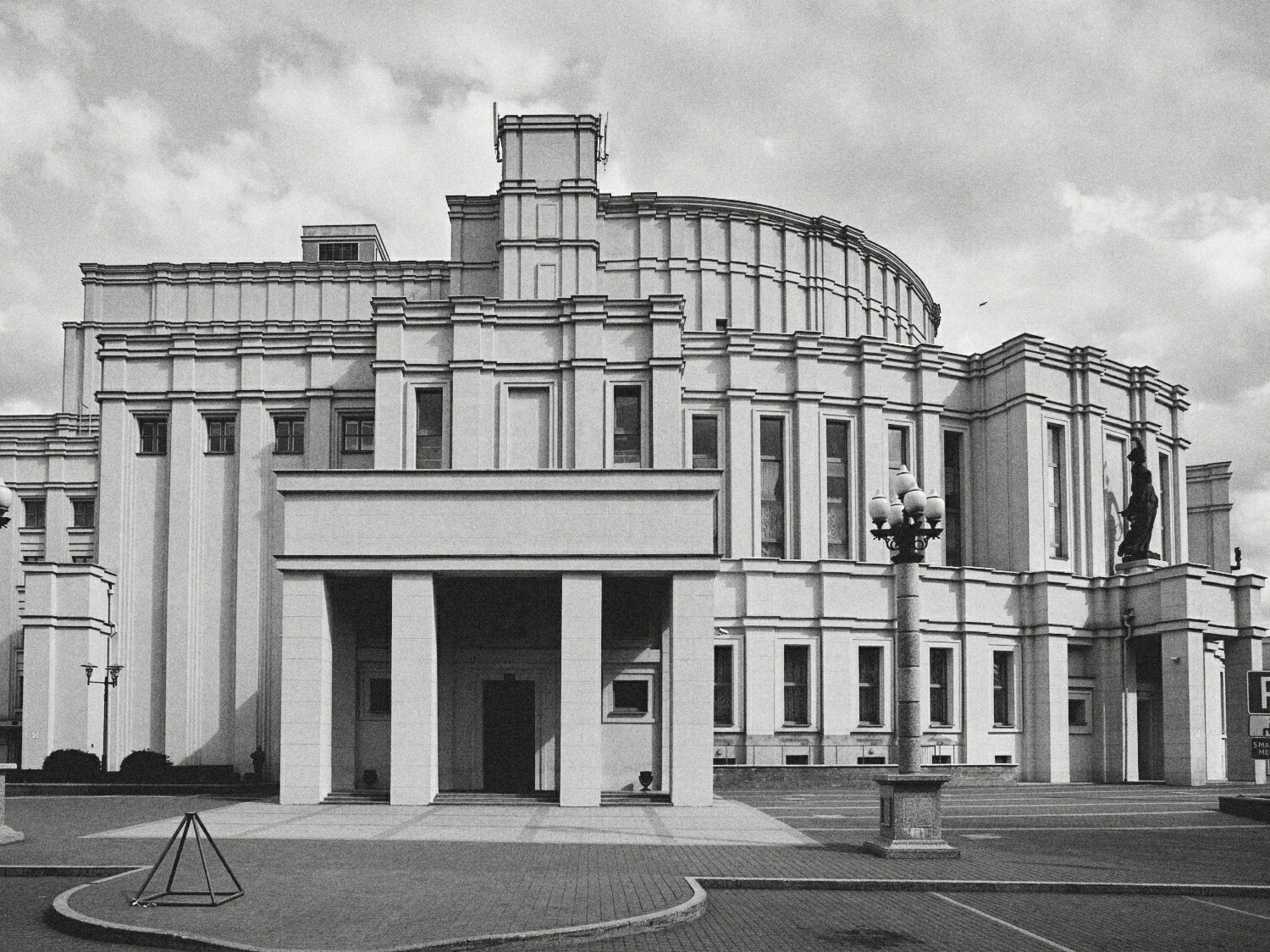
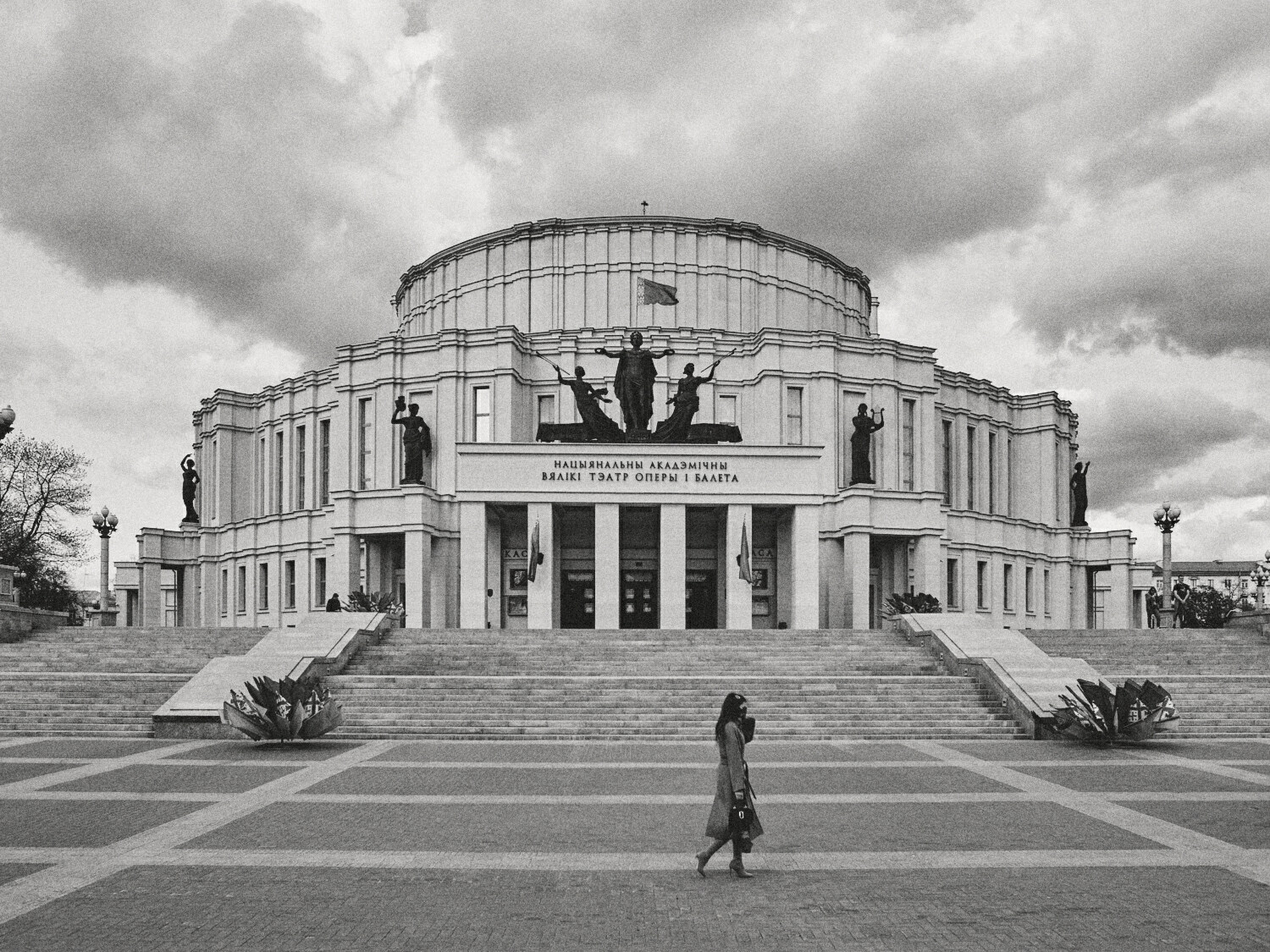
State Opera and Ballet Theater of the BSSRГосударственный театр оперы и балета БССР白俄罗斯苏维埃社会主义共和国国家歌剧与芭蕾剧院Staatliches Opern- und Balletttheater der BSSRThéâtre d'État d'opéra et de ballet de la RSS de BiélorussieTeatro Estatal de Ópera y Ballet de la RSS de BielorrusiaTeatro Estatal de Ópera e Ballet da RSS da Bielorrússia
The building is photographed as a public interior turned outward. The facade carries the promise of assembly: lectures, rehearsals, meetings, cinema, theatre, music, and the belief that culture could be organized as part of everyday life.Здание снято как общественный интерьер, вывернутый наружу. Фасад удерживает обещание собрания: лекции, репетиции, встречи, кино, театр, музыку и веру в то, что культуру можно встроить в повседневность.这座建筑被拍成向外翻开的公共室内。立面保存着集会的承诺:讲座、排练、会议、电影、戏剧、音乐,以及文化可以被编入日常生活的信念。Das Gebäude wird als nach außen gekehrtes öffentliches Interieur fotografiert. Die Fassade trägt das Versprechen der Versammlung: Vorträge, Proben, Treffen, Kino, Theater, Musik und den Glauben, Kultur könne Teil des Alltags werden.Le bâtiment est photographié comme un intérieur public retourné vers l'extérieur. La façade porte la promesse du rassemblement : conférences, répétitions, réunions, cinéma, théâtre, musique, et la croyance que la culture pouvait être intégrée au quotidien.El edificio se fotografía como un interior público vuelto hacia fuera. La fachada sostiene la promesa de reunión: conferencias, ensayos, encuentros, cine, teatro, música y la creencia de que la cultura podía organizarse dentro de la vida cotidiana.O edifício é fotografado como um interior público virado para fora. A fachada guarda a promessa da reunião: palestras, ensaios, encontros, cinema, teatro, música e a crença de que a cultura podia ser organizada dentro do cotidiano.
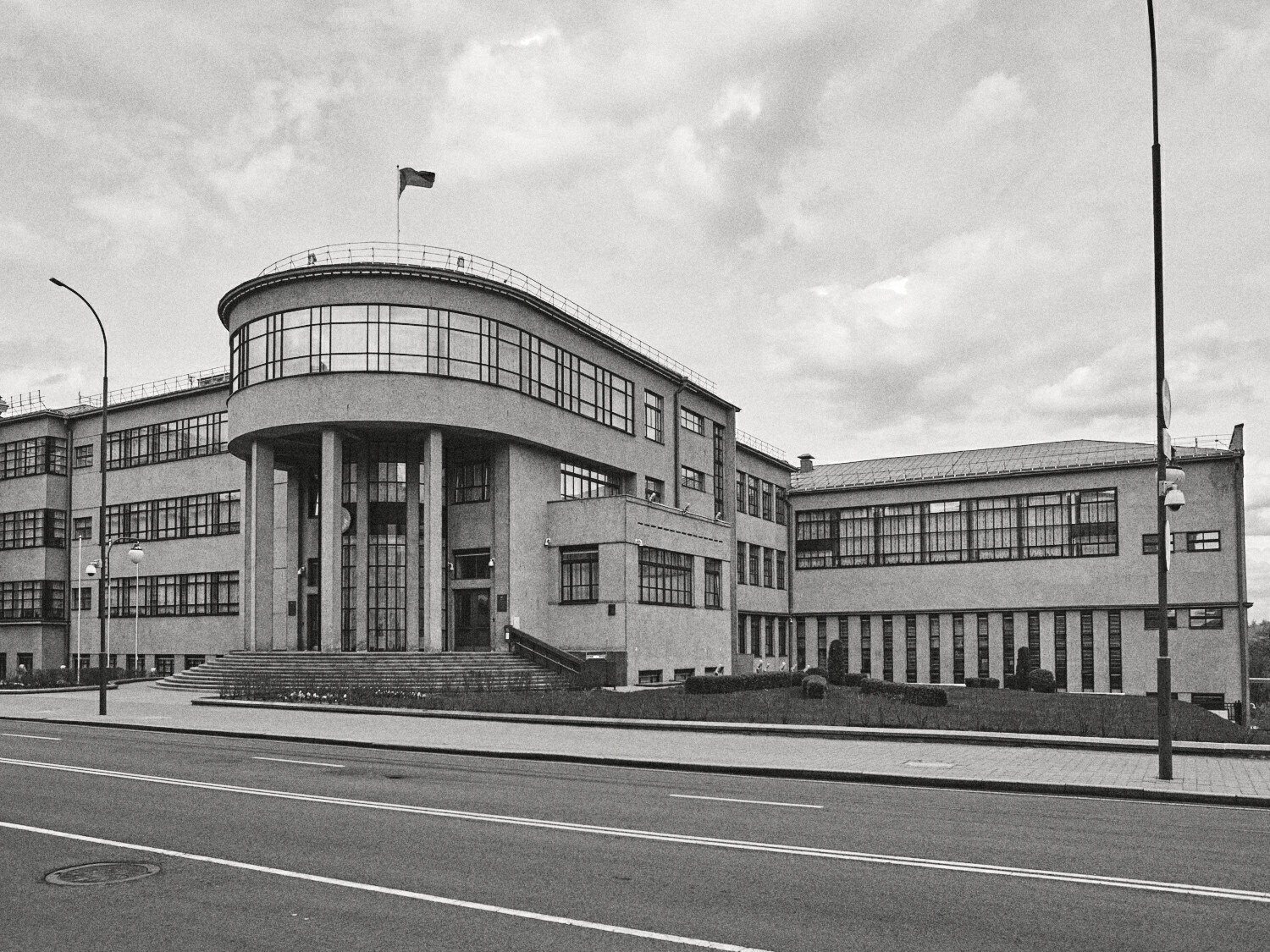
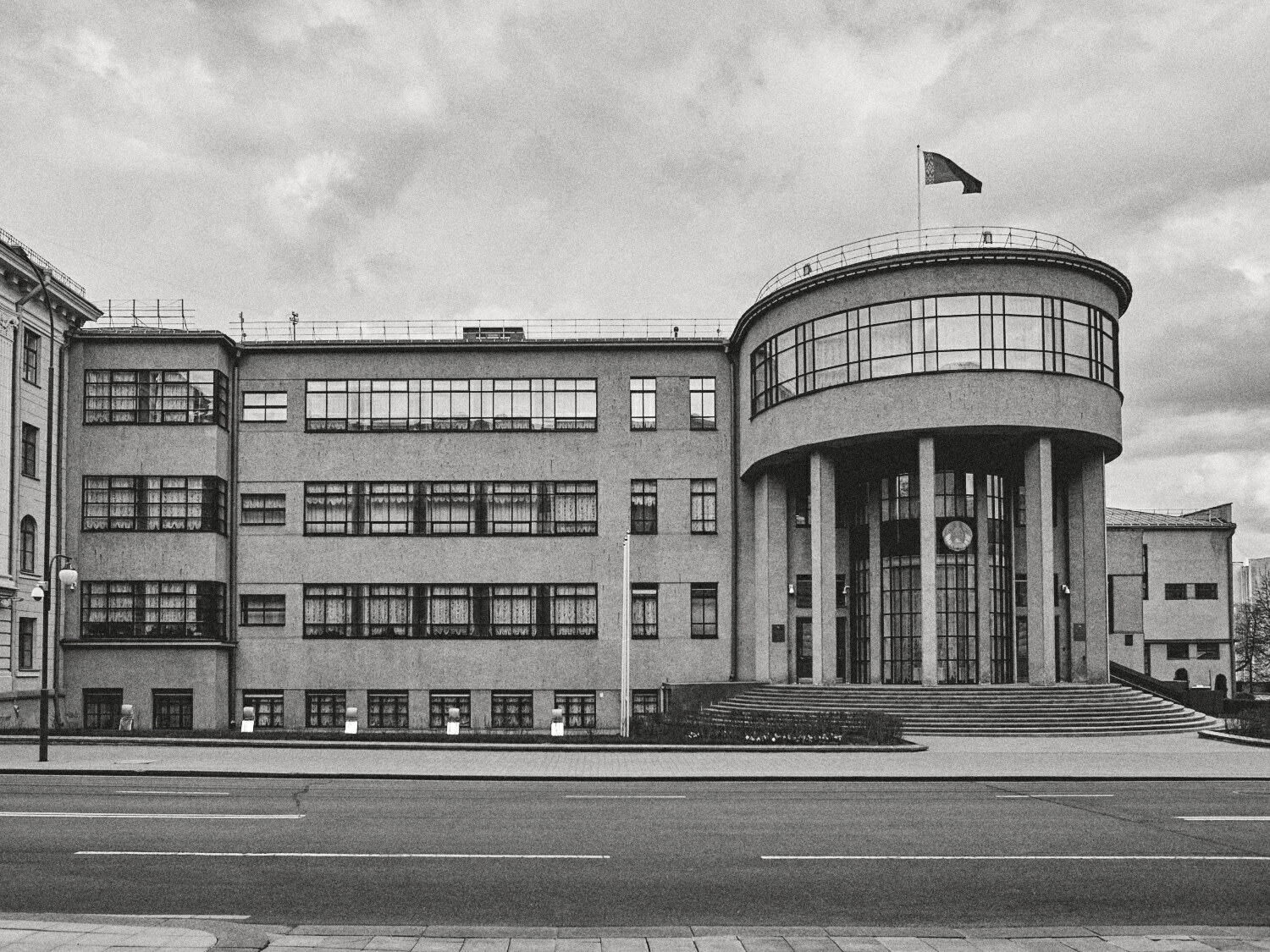
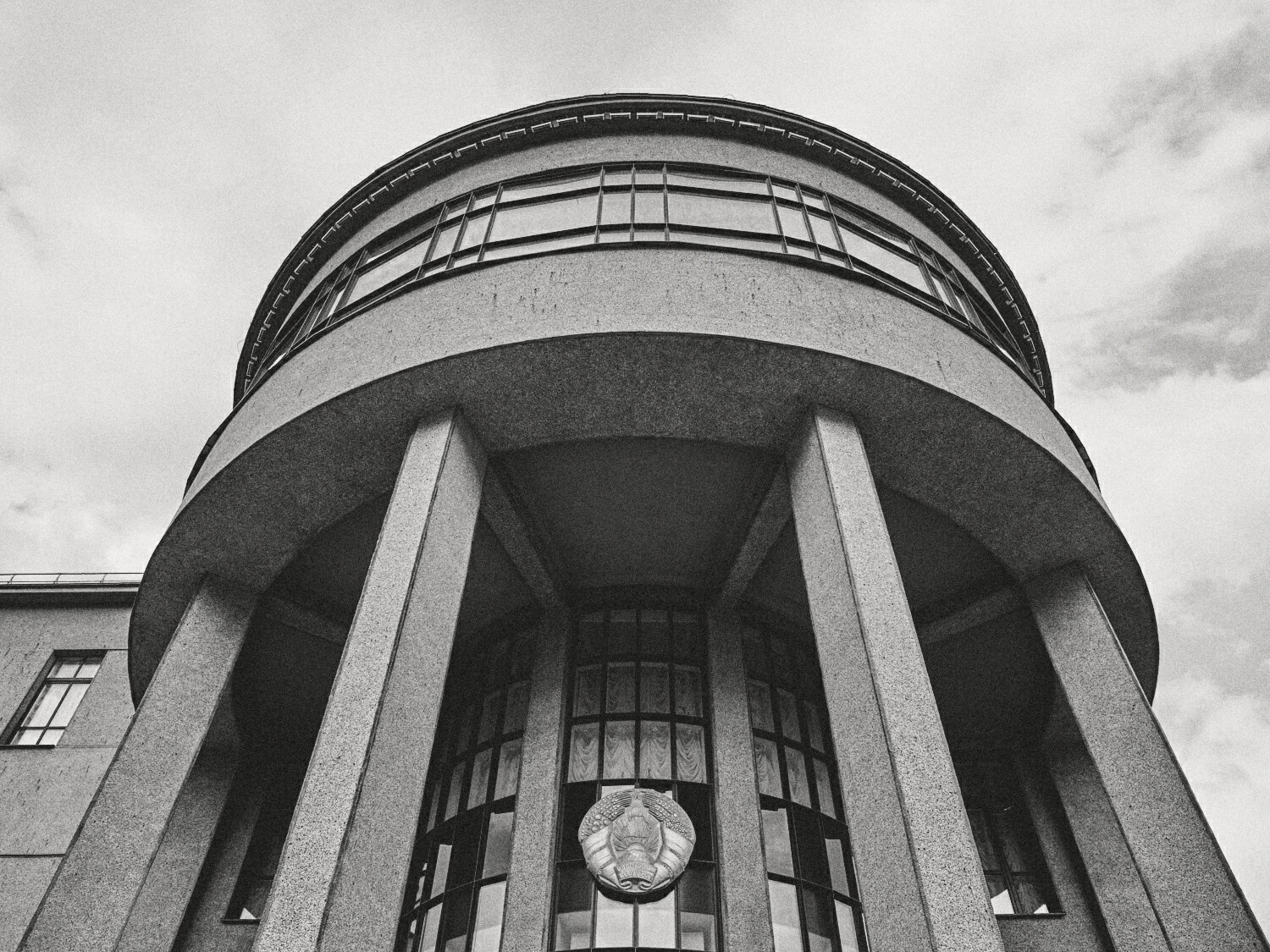
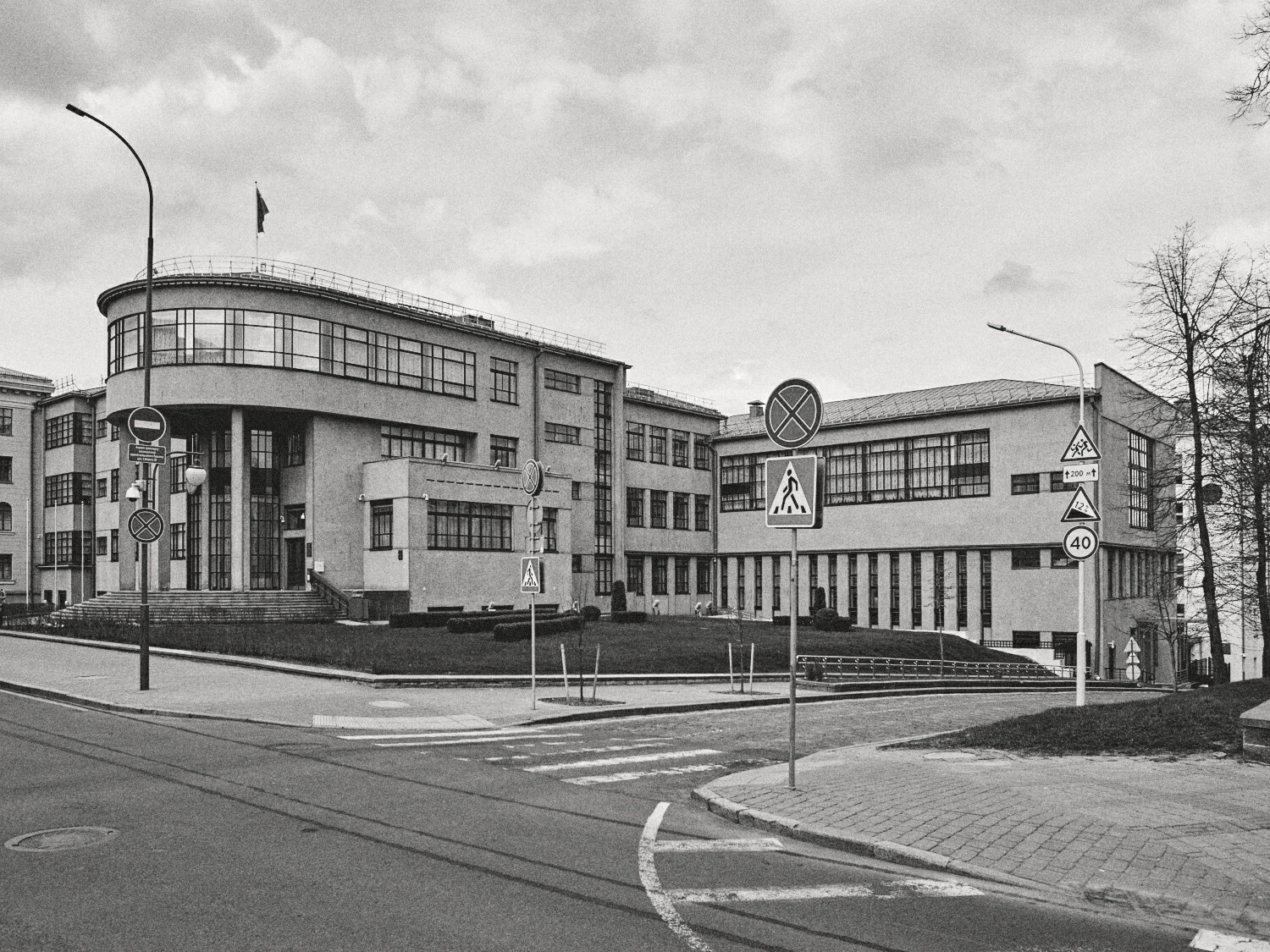
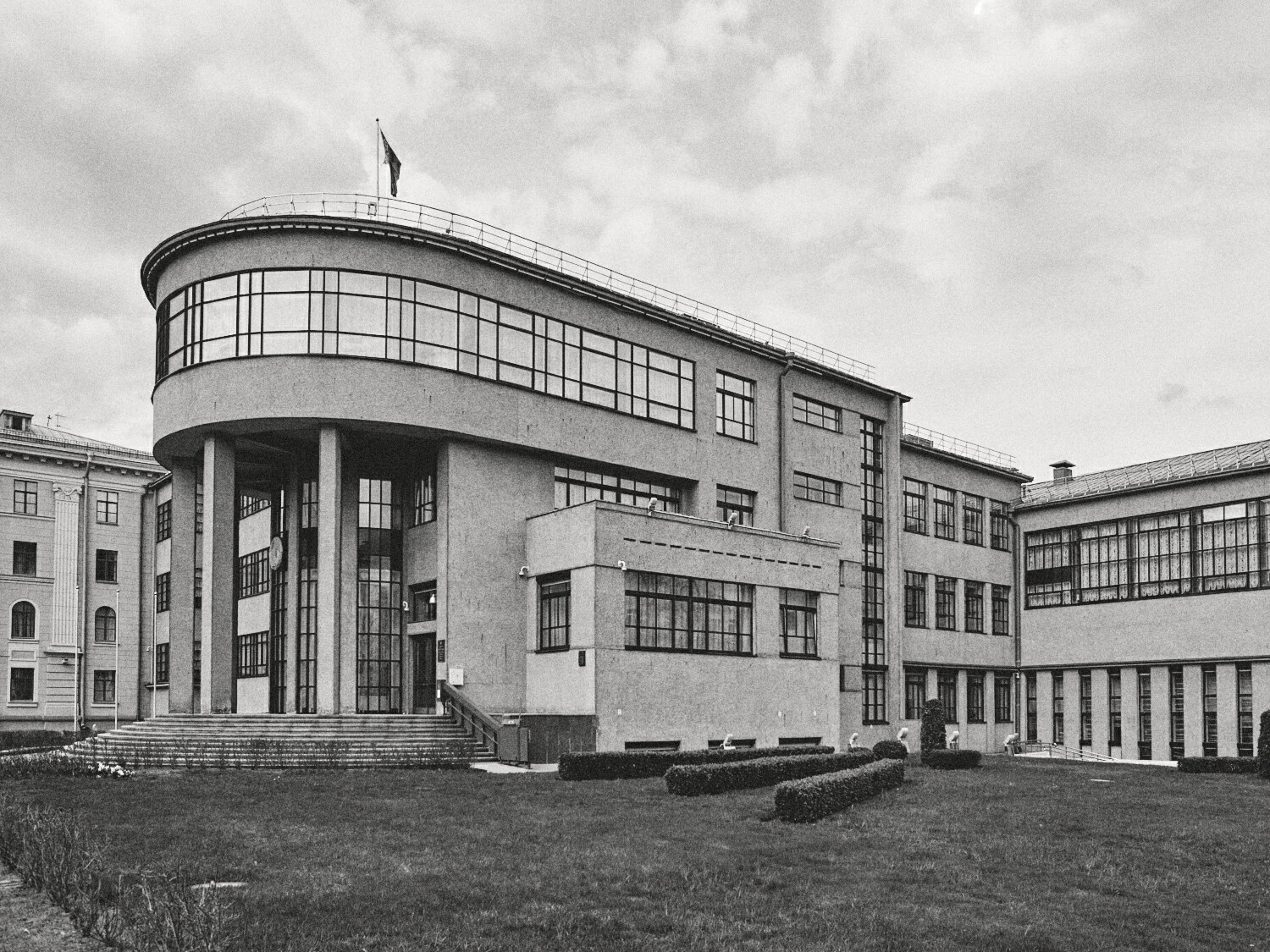
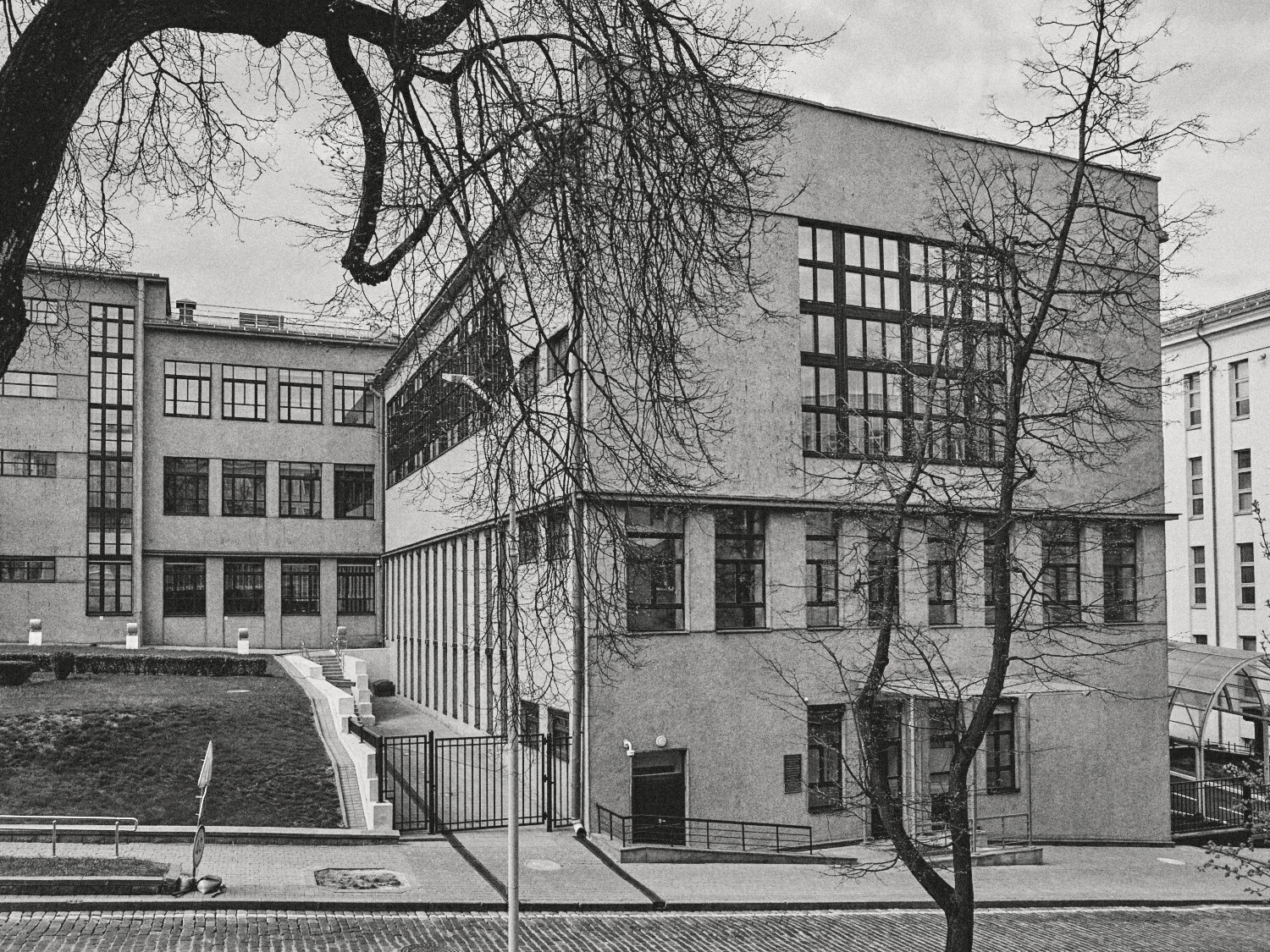
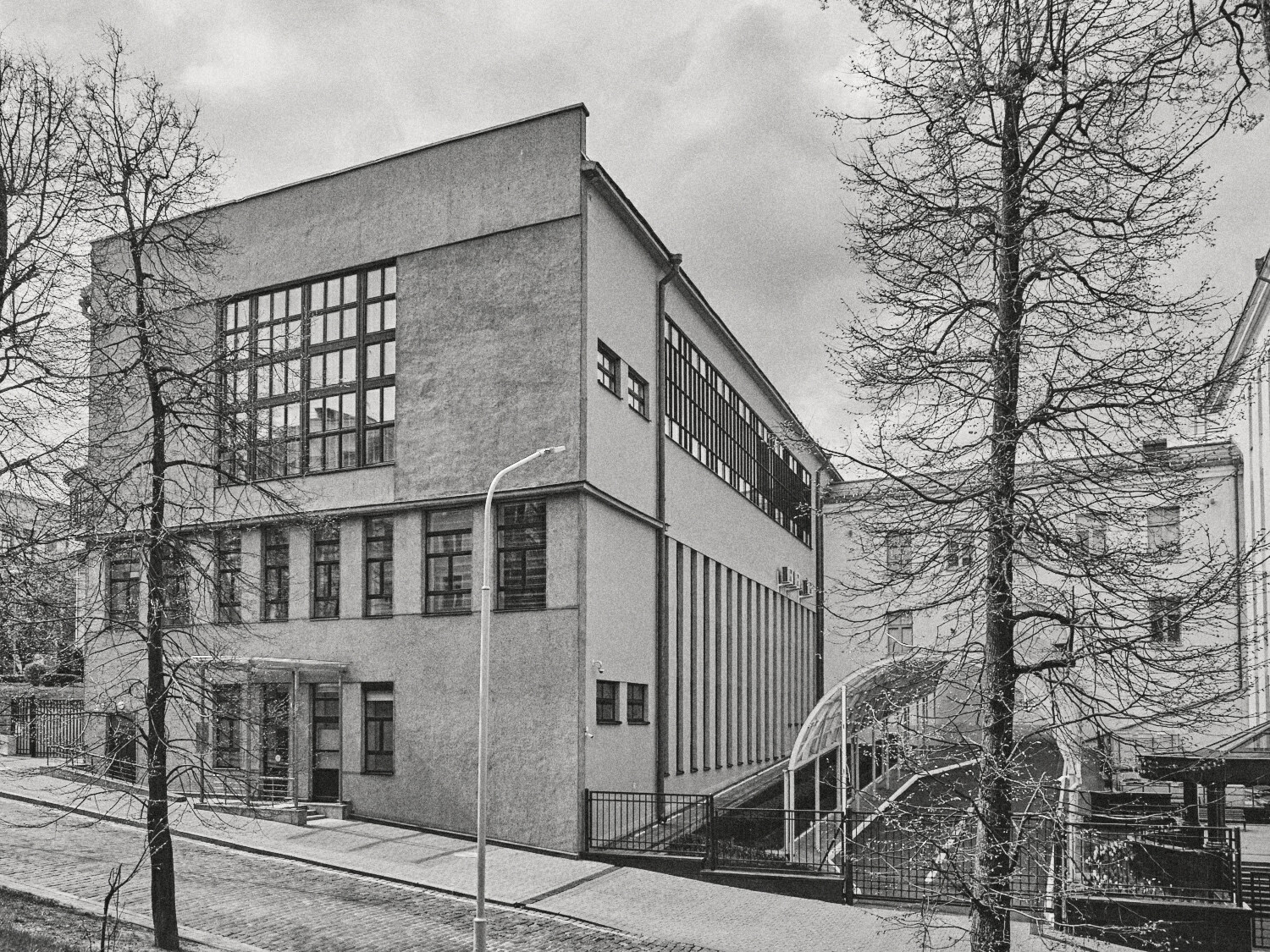
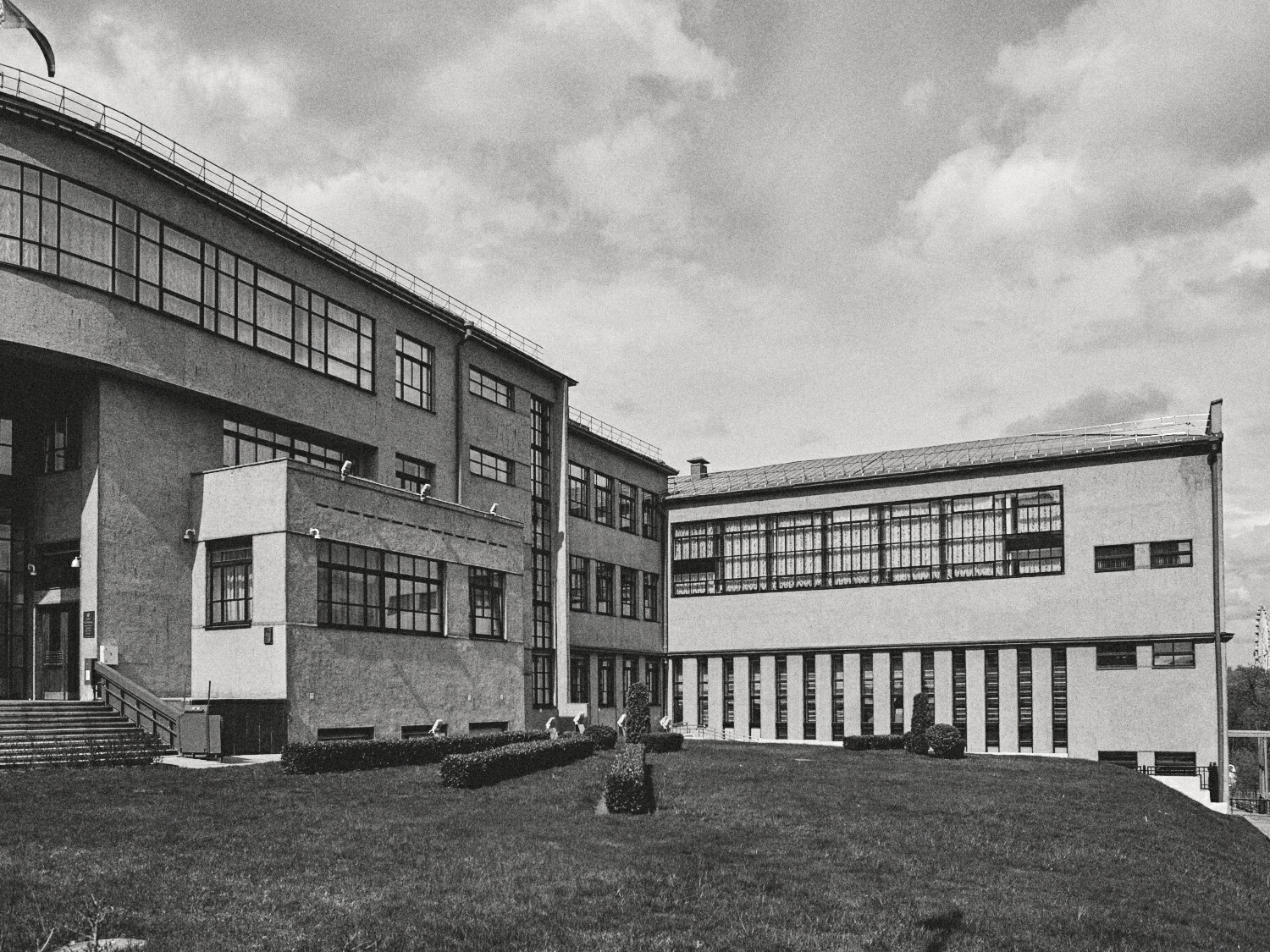
Third House of Soviets ("House of the Dead")Третий Дом Советов / «Дом мертвых»第三苏维埃宫(“死者之家”)Drittes Haus der Sowjets ("Haus der Toten")Troisième Maison des Soviets (« Maison des morts »)Tercera Casa de los Soviets («Casa de los muertos»)Terceira Casa dos Sovietes («Casa dos mortos»)
Here administration becomes form. The geometry is not neutral: it stages authority, planning, and the desire to make a new order visible through walls, windows, and scale.Здесь управление становится формой. Геометрия не нейтральна: она ставит на сцену власть, планирование и желание сделать новый порядок видимым через стены, окна и масштаб.在这里,行政变成了形式。几何并不中立:它把权力、规划以及让新秩序通过墙、窗和尺度变得可见的欲望推上舞台。Hier wird Verwaltung zur Form. Die Geometrie ist nicht neutral: Sie inszeniert Autorität, Planung und den Wunsch, eine neue Ordnung durch Wände, Fenster und Maßstab sichtbar zu machen.Ici, l'administration devient forme. La géométrie n'est pas neutre : elle met en scène l'autorité, la planification et le désir de rendre un nouvel ordre visible par les murs, les fenêtres et l'échelle.Aquí la administración se vuelve forma. La geometría no es neutra: escenifica autoridad, planificación y el deseo de hacer visible un nuevo orden mediante muros, ventanas y escala.Aqui a administração vira forma. A geometria não é neutra: encena autoridade, planejamento e o desejo de tornar uma nova ordem visível por paredes, janelas e escala.
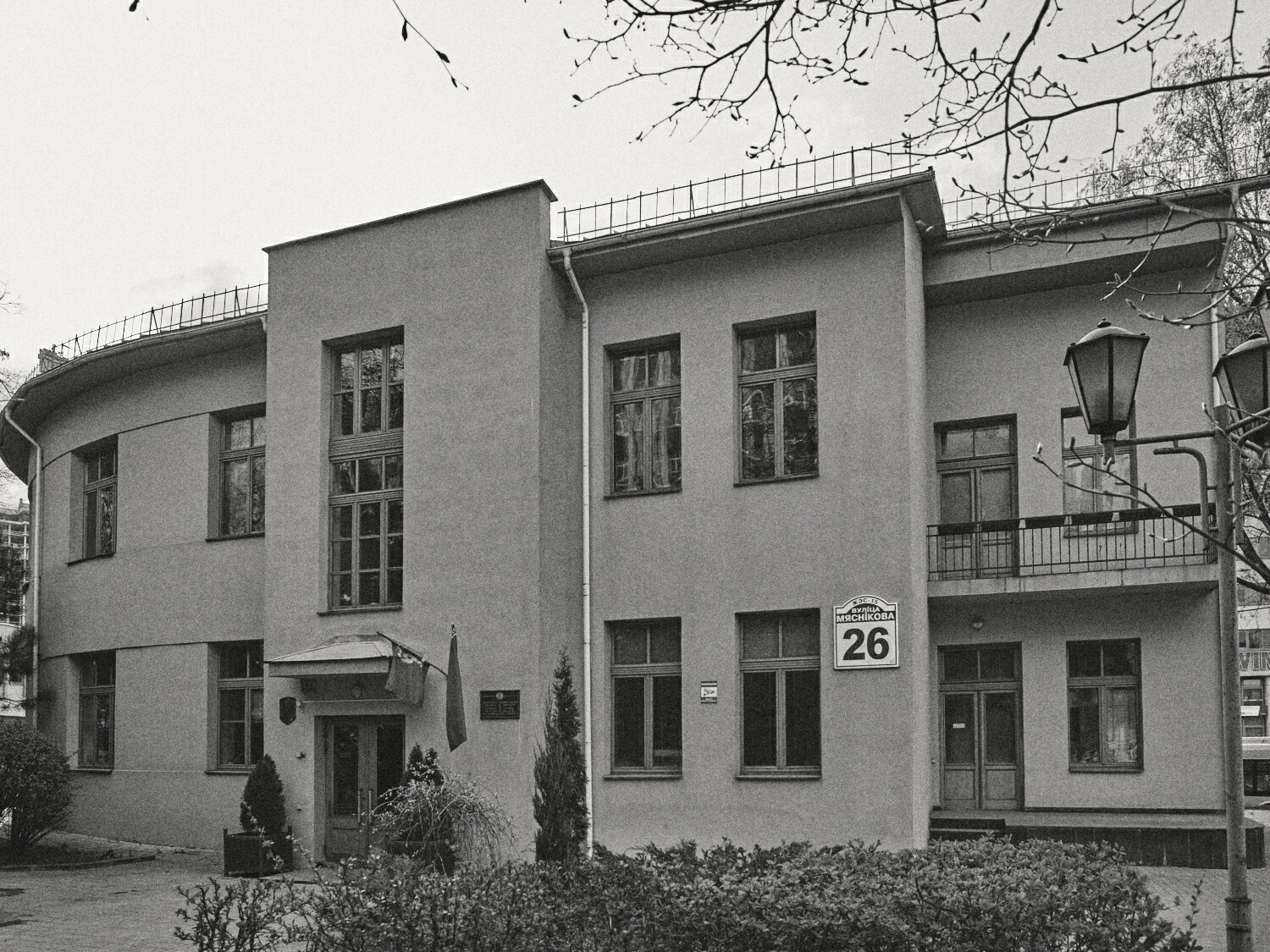
Central Workers' ClinicЦентральная рабочая поликлиника中央工人诊所Zentrale ArbeiterpoliklinikPolyclinique centrale ouvrièrePoliclínica central obreraPoliclínica central dos trabalhadores
This is the social body seen through architecture. Health, hygiene, care, and discipline are not private matters here, but a spatial program: corridors, volumes, entrances, and surfaces arranged for collective maintenance.Это социальное тело, увиденное через архитектуру. Здоровье, гигиена, уход и дисциплина здесь не частное дело, а пространственная программа: коридоры, объемы, входы и поверхности, выстроенные для коллективного обслуживания жизни.这是通过建筑看到的社会身体。健康、卫生、照护和纪律在这里不是私人事务,而是一套空间程序:走廊、体量、入口和表面被组织起来,服务于集体生活的维护。Hier wird der soziale Körper durch Architektur sichtbar. Gesundheit, Hygiene, Fürsorge und Disziplin sind keine privaten Angelegenheiten, sondern ein räumliches Programm: Korridore, Volumen, Eingänge und Oberflächen für kollektive Erhaltung.C'est le corps social vu à travers l'architecture. Santé, hygiène, soin et discipline ne sont pas ici des affaires privées, mais un programme spatial : couloirs, volumes, entrées et surfaces organisés pour l'entretien collectif de la vie.Es el cuerpo social visto a través de la arquitectura. Salud, higiene, cuidado y disciplina no son aquí asuntos privados, sino un programa espacial: pasillos, volúmenes, entradas y superficies organizados para el mantenimiento colectivo de la vida.É o corpo social visto pela arquitetura. Saúde, higiene, cuidado e disciplina não são aqui questões privadas, mas um programa espacial: corredores, volumes, entradas e superfícies organizados para a manutenção coletiva da vida.
Factory-kitchenФабрика-кухня工厂厨房FabrikkücheFabrique-cuisineFábrica-cocinaFábrica-cozinha
The building belongs to the constructivist everyday: food, purchase, production, distribution. Such architecture matters because it does not separate ideology from routine; it places the future inside ordinary actions.Здание принадлежит конструктивистской повседневности: еда, покупка, производство, распределение. Такая архитектура важна именно потому, что не отделяет идеологию от рутины, а помещает будущее внутрь обычных действий.这座建筑属于建构主义的日常:食物、购买、生产、分配。它重要,正因为它不把意识形态同惯例分开,而是把未来放进普通动作之中。Das Gebäude gehört zum konstruktivistischen Alltag: Essen, Einkauf, Produktion, Verteilung. Solche Architektur ist wichtig, weil sie Ideologie nicht von Routine trennt, sondern die Zukunft in gewöhnliche Handlungen legt.Le bâtiment appartient au quotidien constructiviste : manger, acheter, produire, distribuer. Cette architecture importe précisément parce qu'elle ne sépare pas l'idéologie de la routine ; elle place l'avenir dans les gestes ordinaires.El edificio pertenece a la vida cotidiana constructivista: comida, compra, producción, distribución. Esta arquitectura importa porque no separa ideología y rutina; coloca el futuro dentro de acciones ordinarias.O edifício pertence ao cotidiano construtivista: comida, compra, produção, distribuição. Essa arquitetura importa porque não separa ideologia de rotina; coloca o futuro dentro de ações comuns.
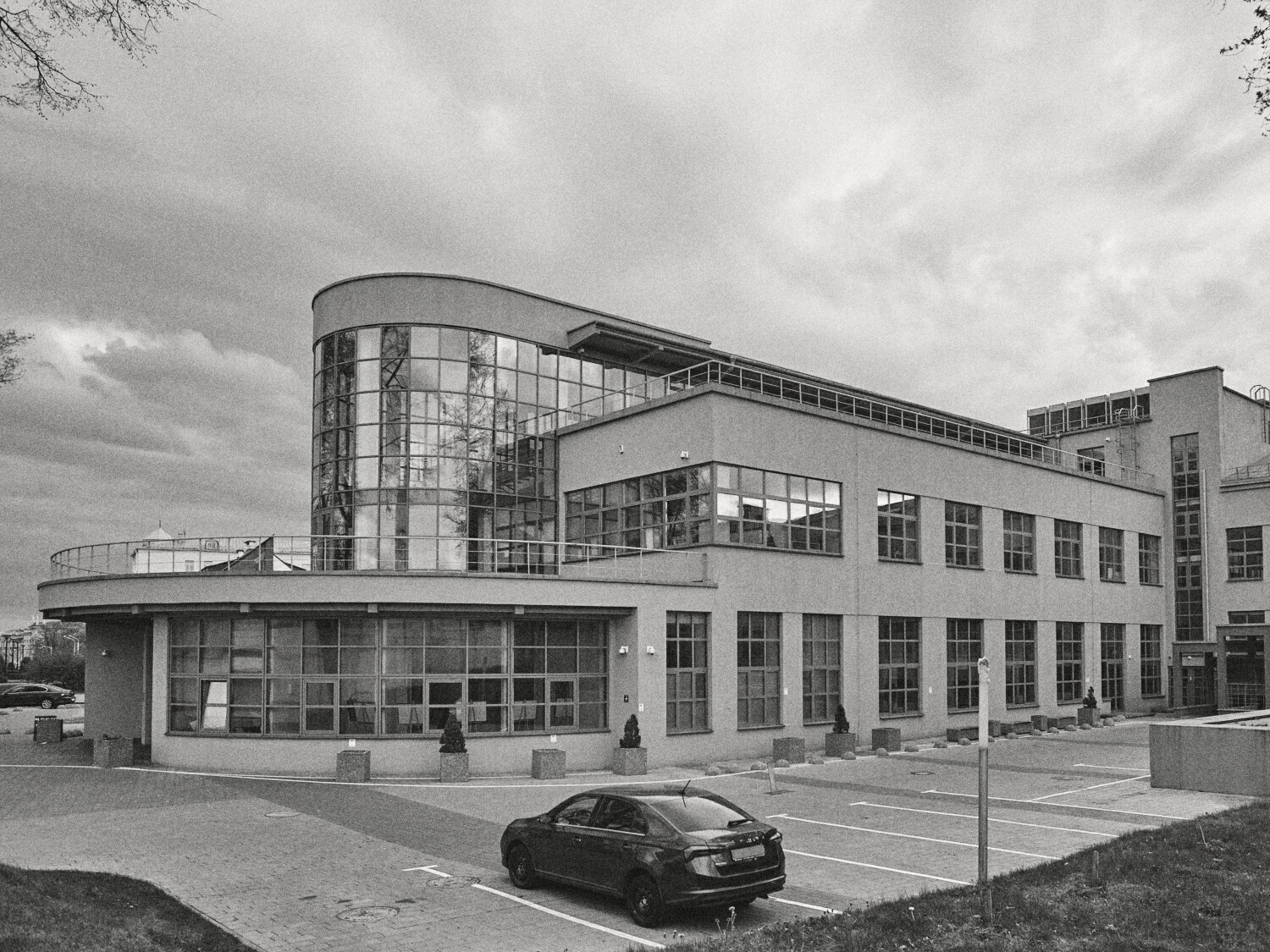
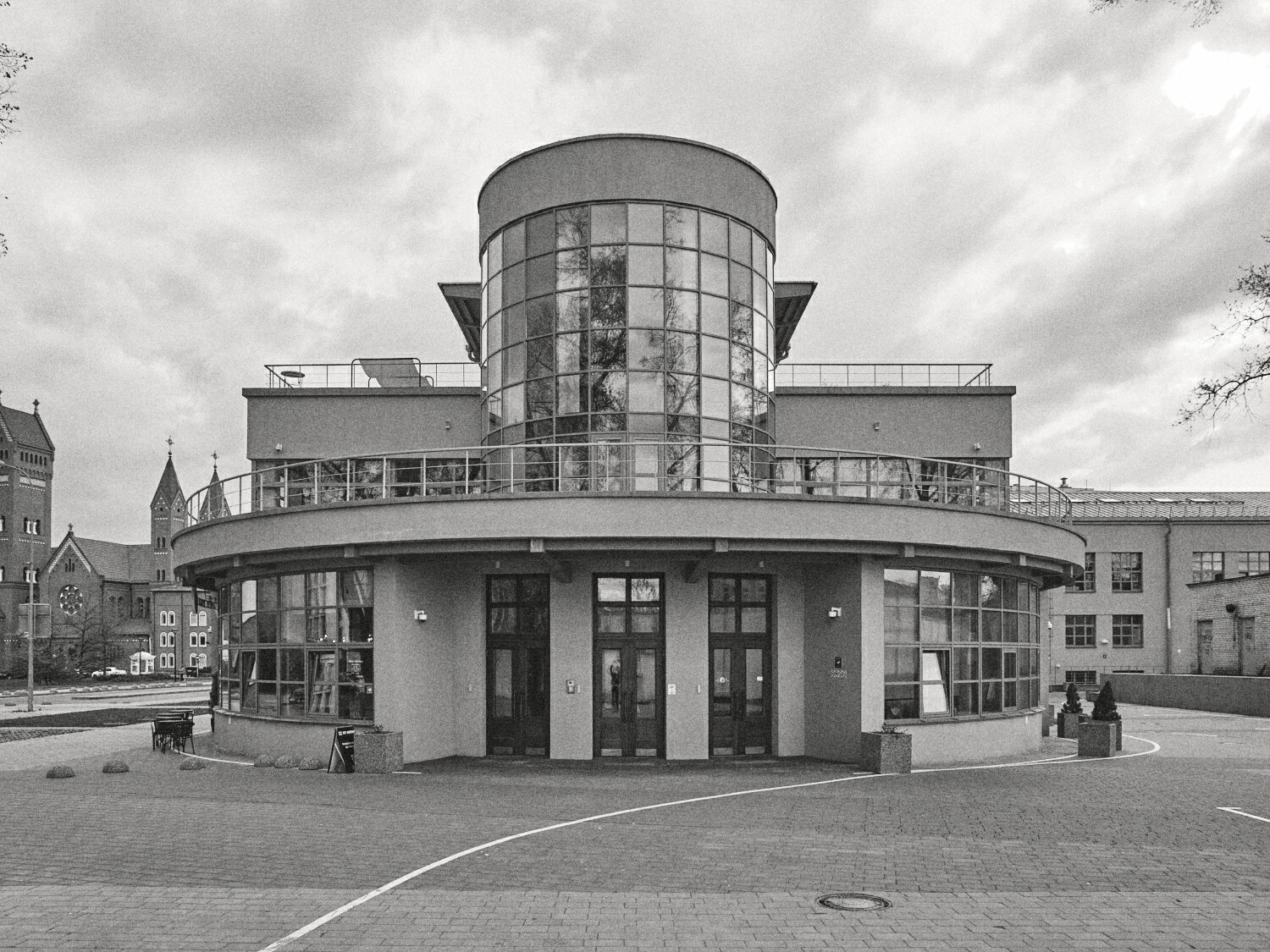
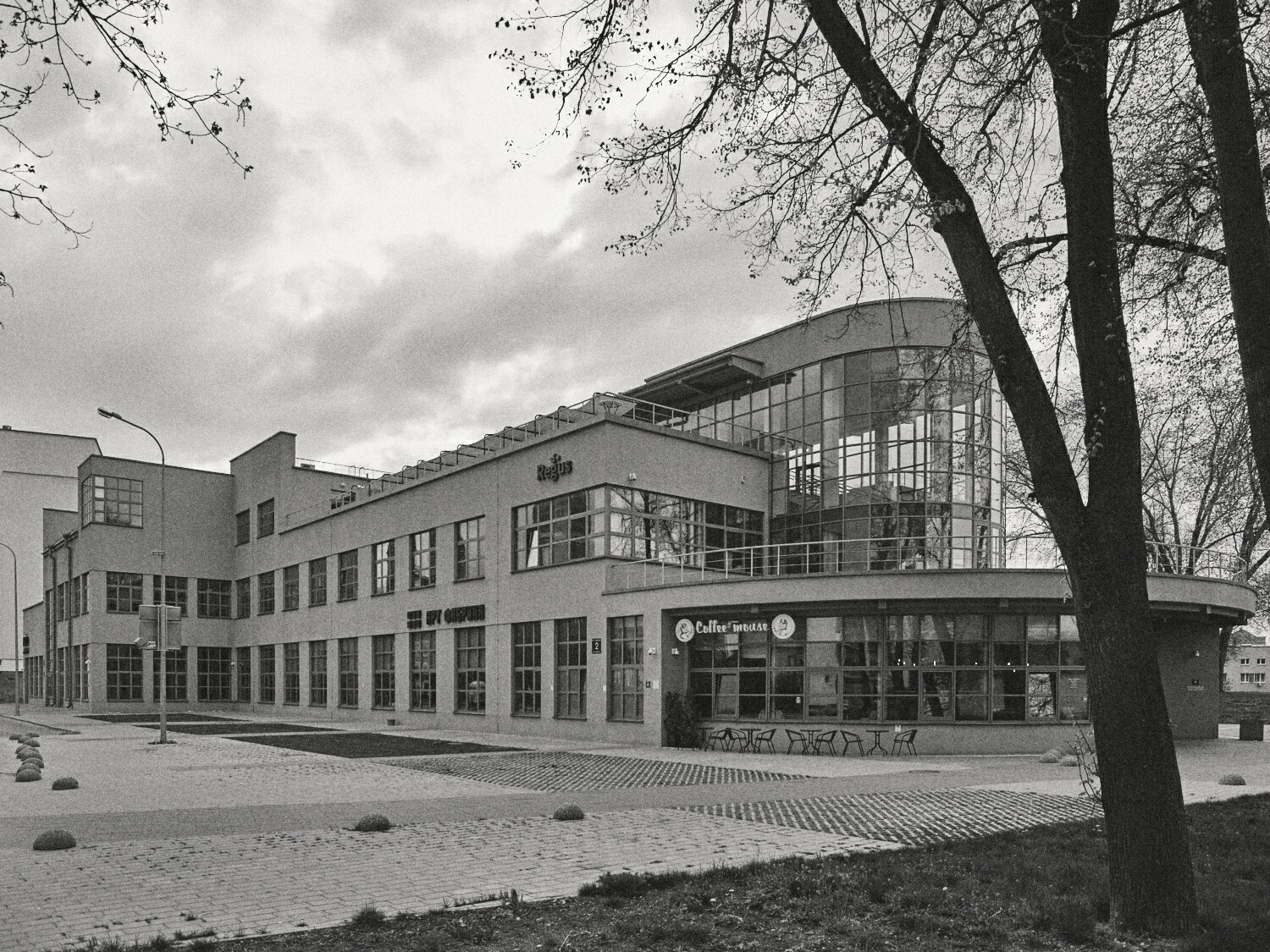
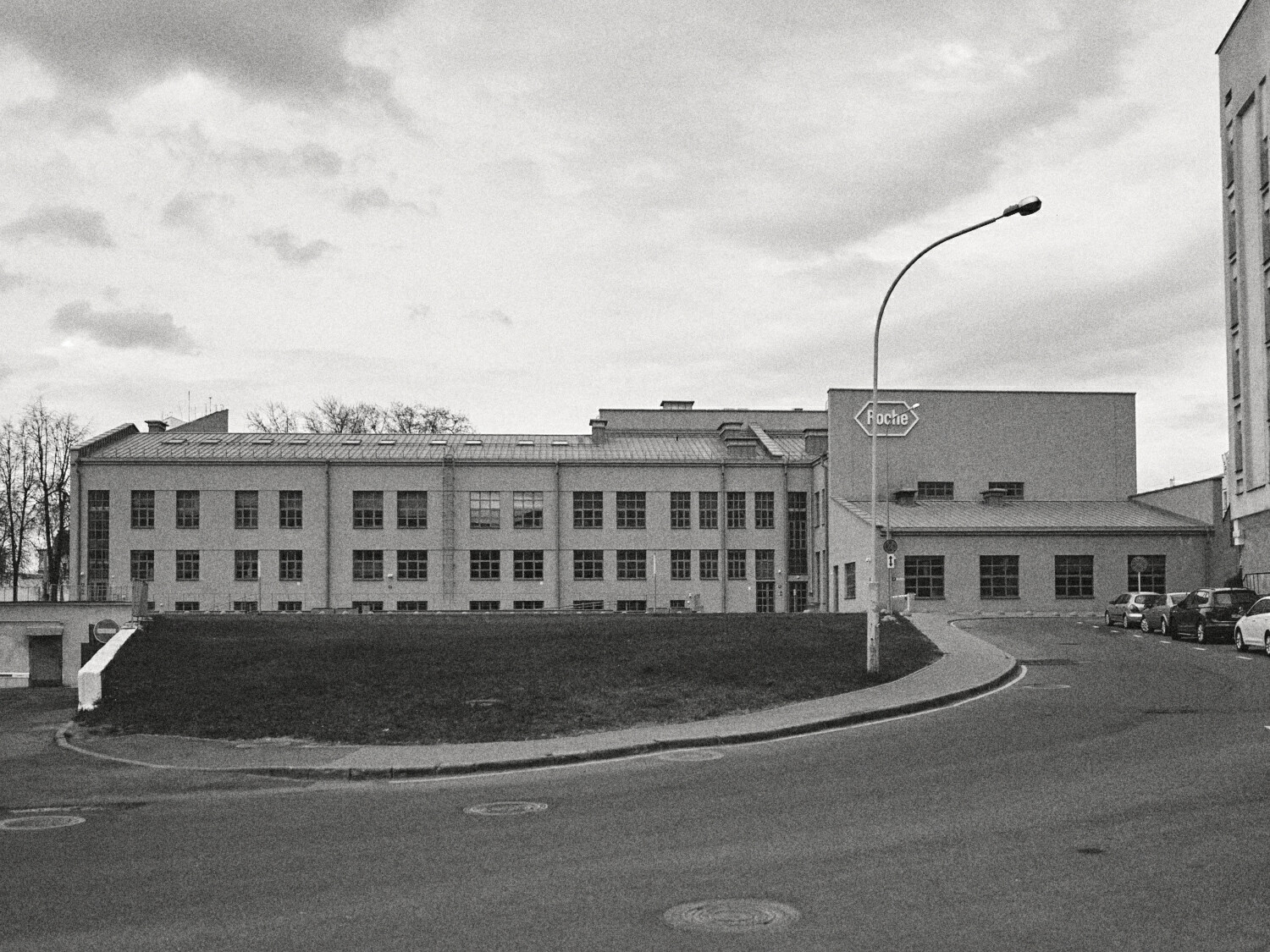
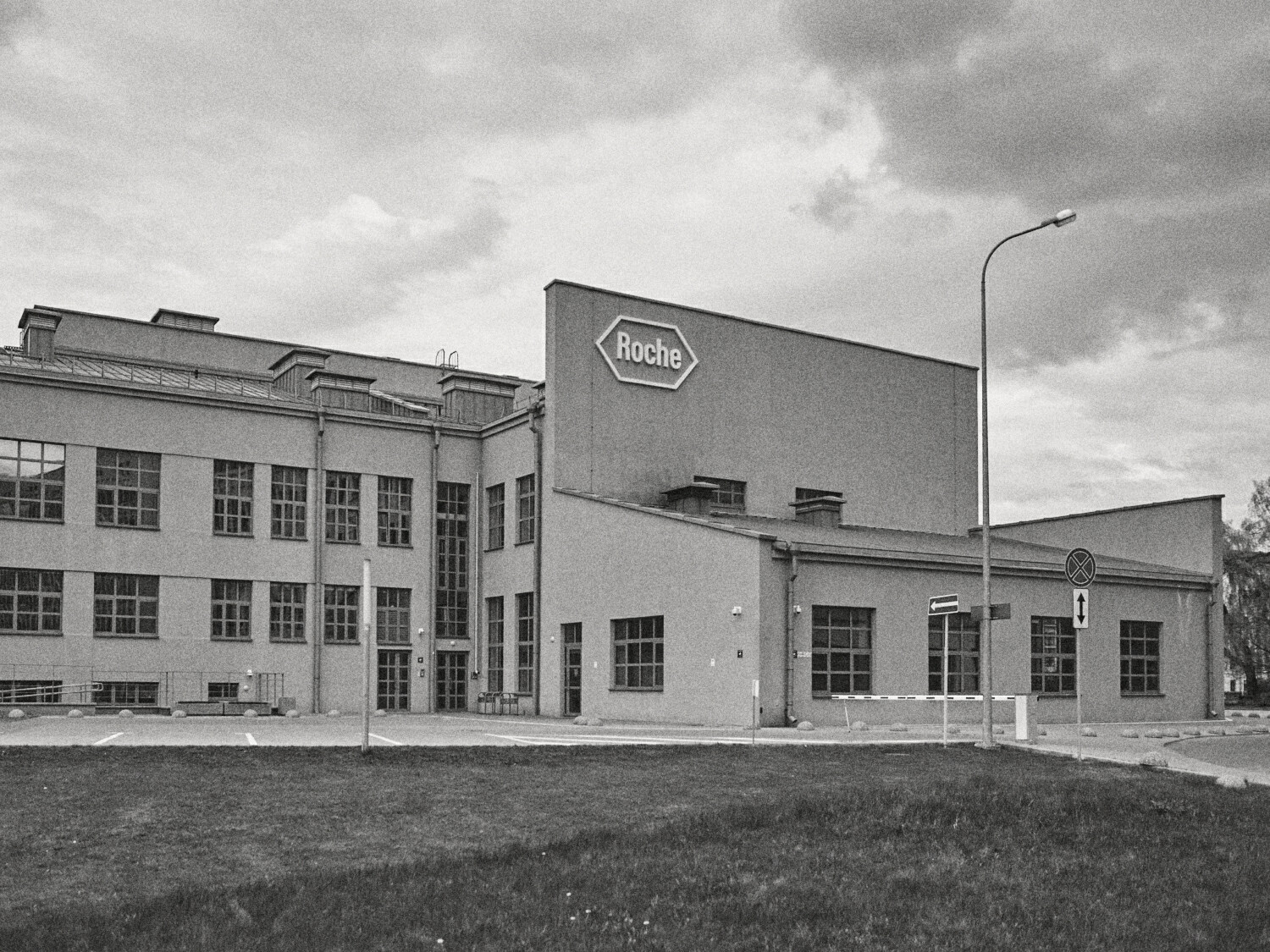
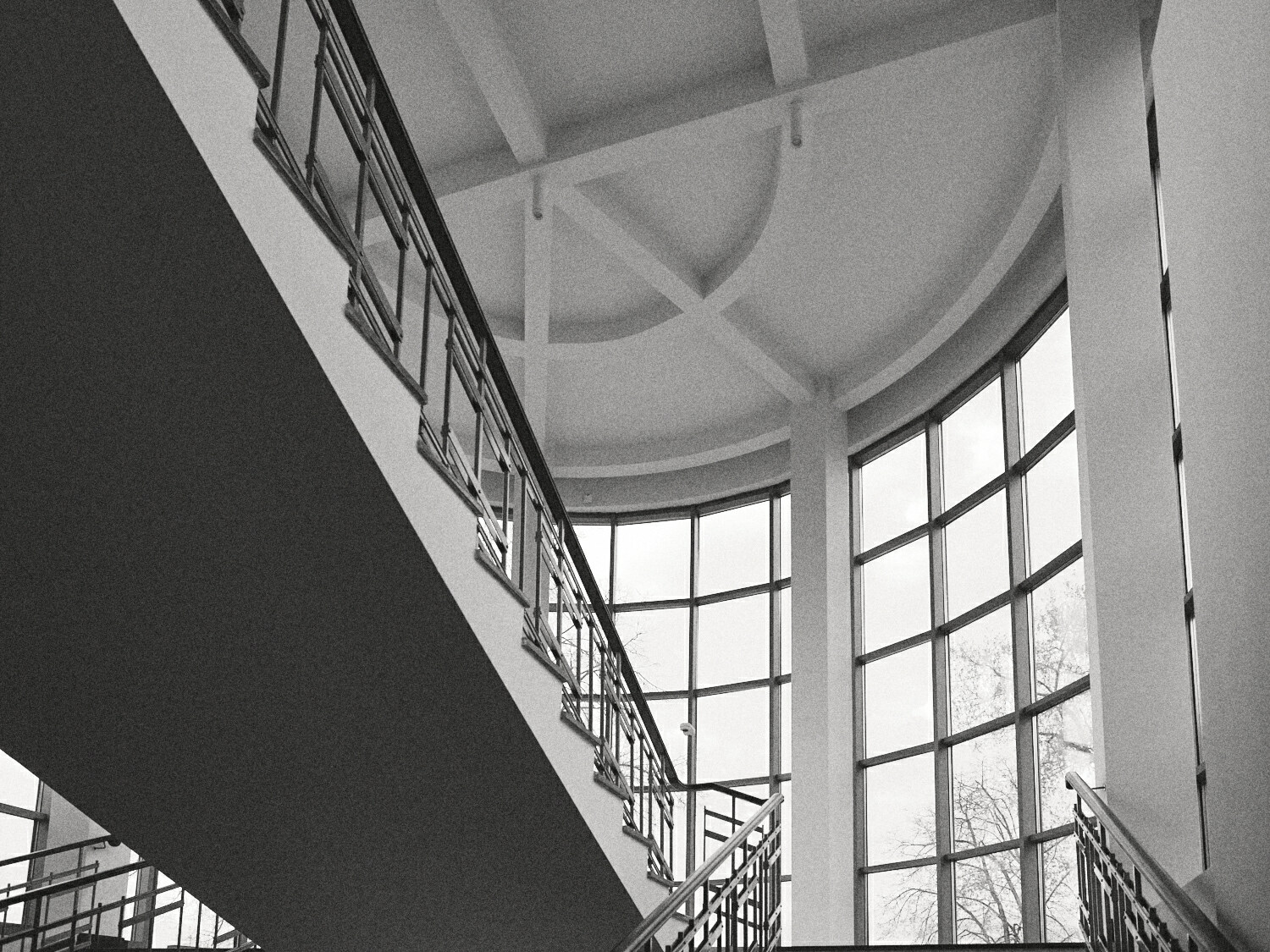
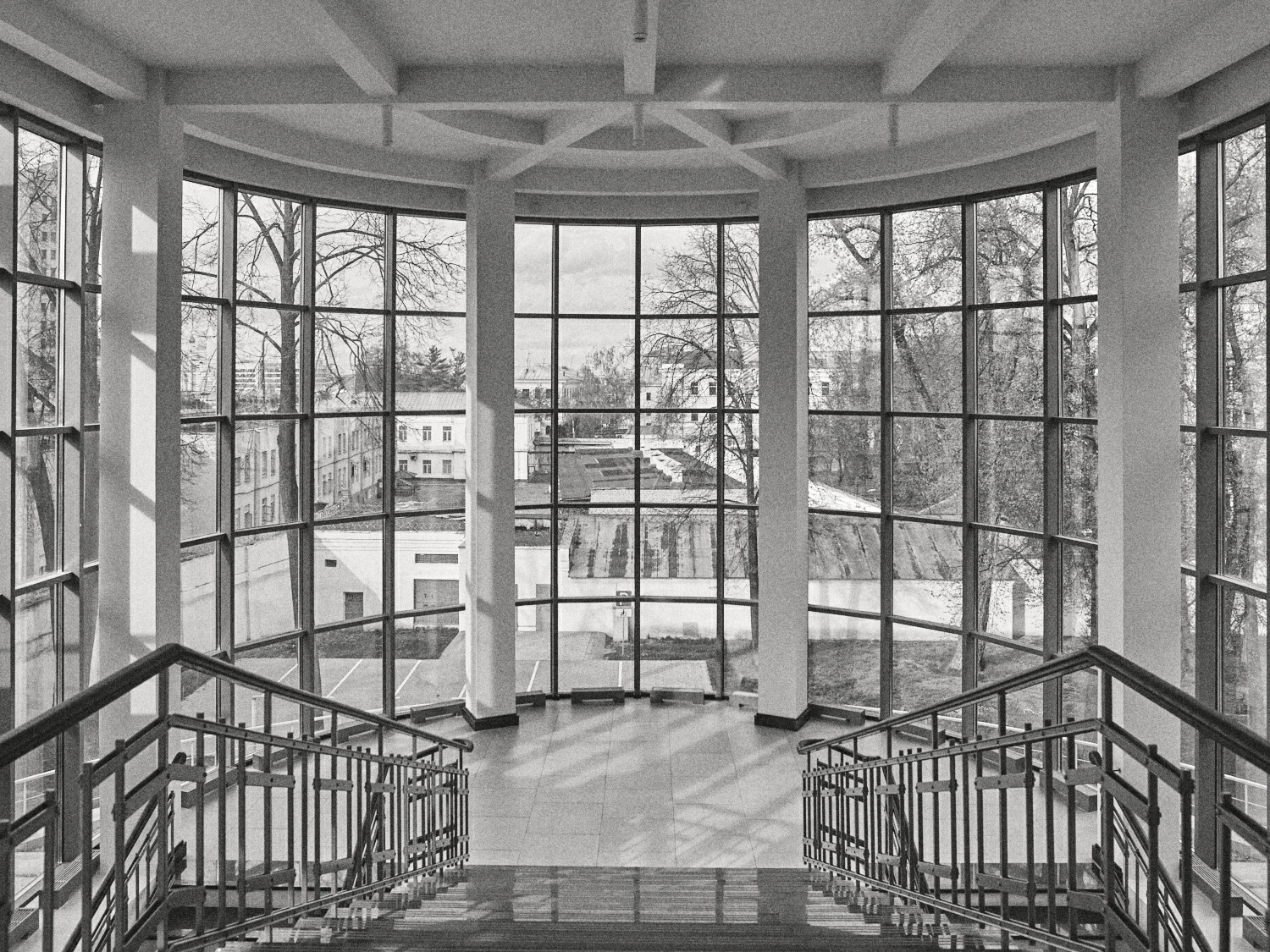
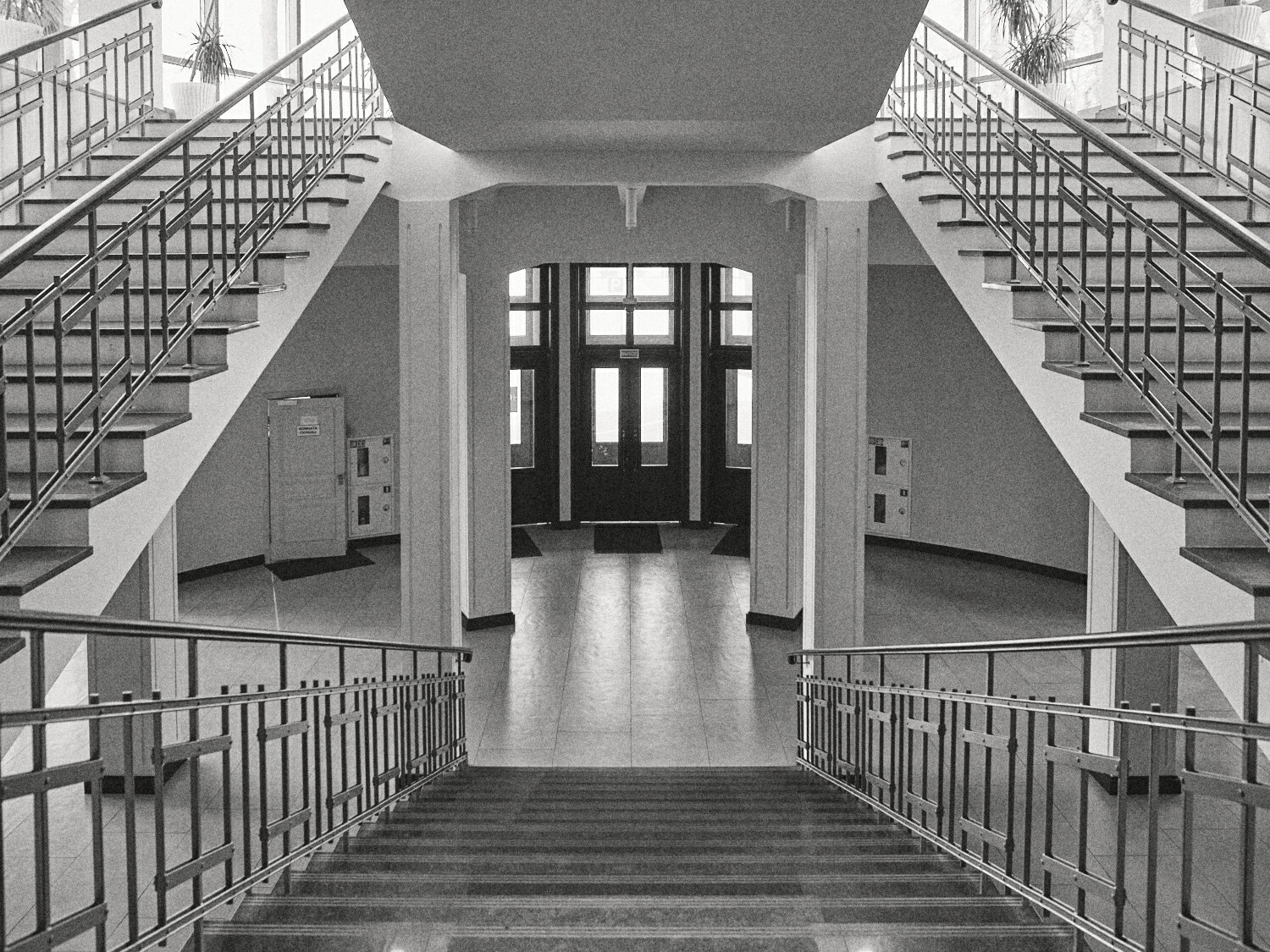
Faculty of Geography BSUГеографический факультет БГУ白俄罗斯国立大学地理系Geografische Fakultät der BSUFaculté de géographie de la BSUFacultad de Geografía de la BSUFaculdade de Geografia da BSU
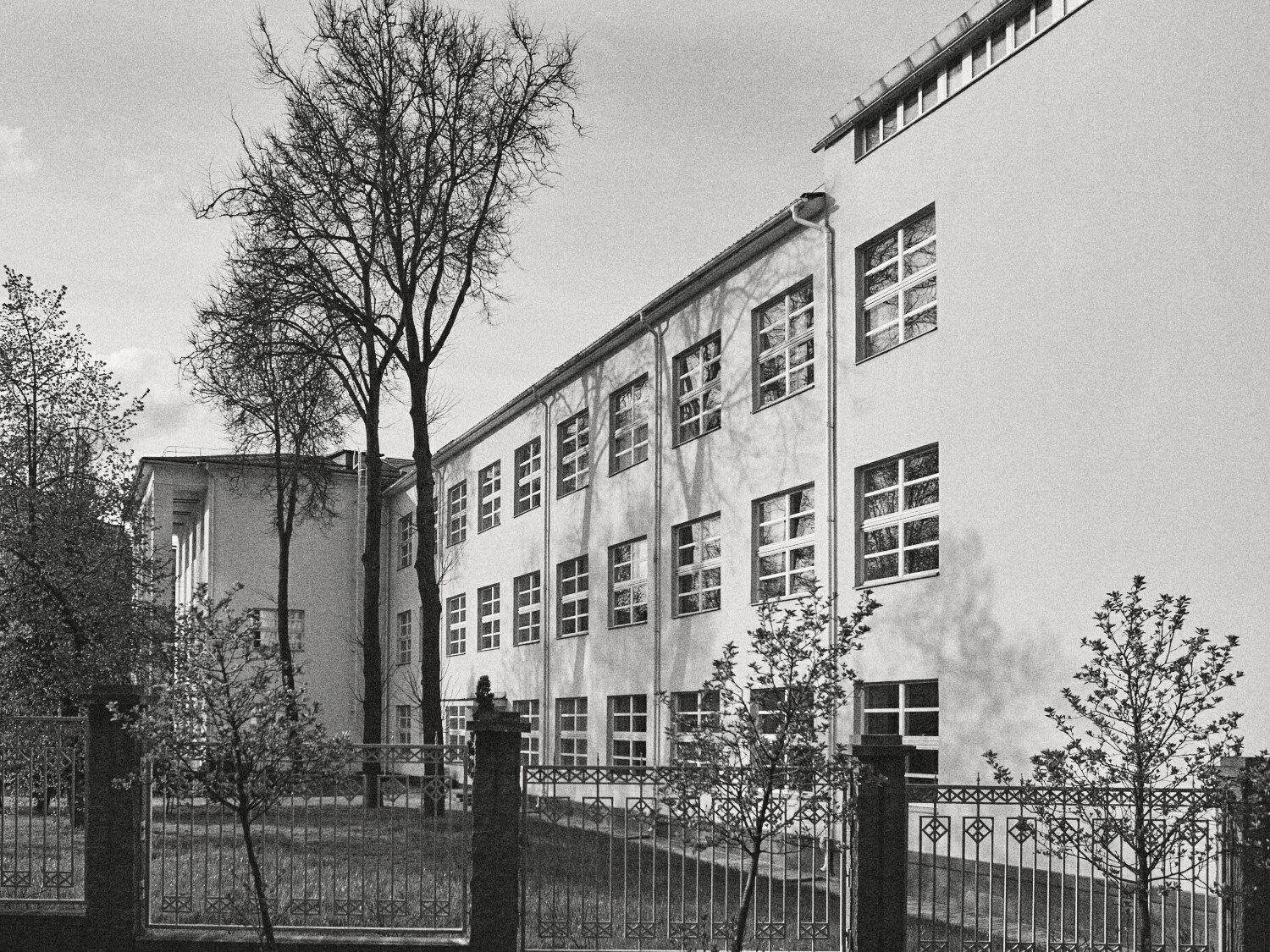
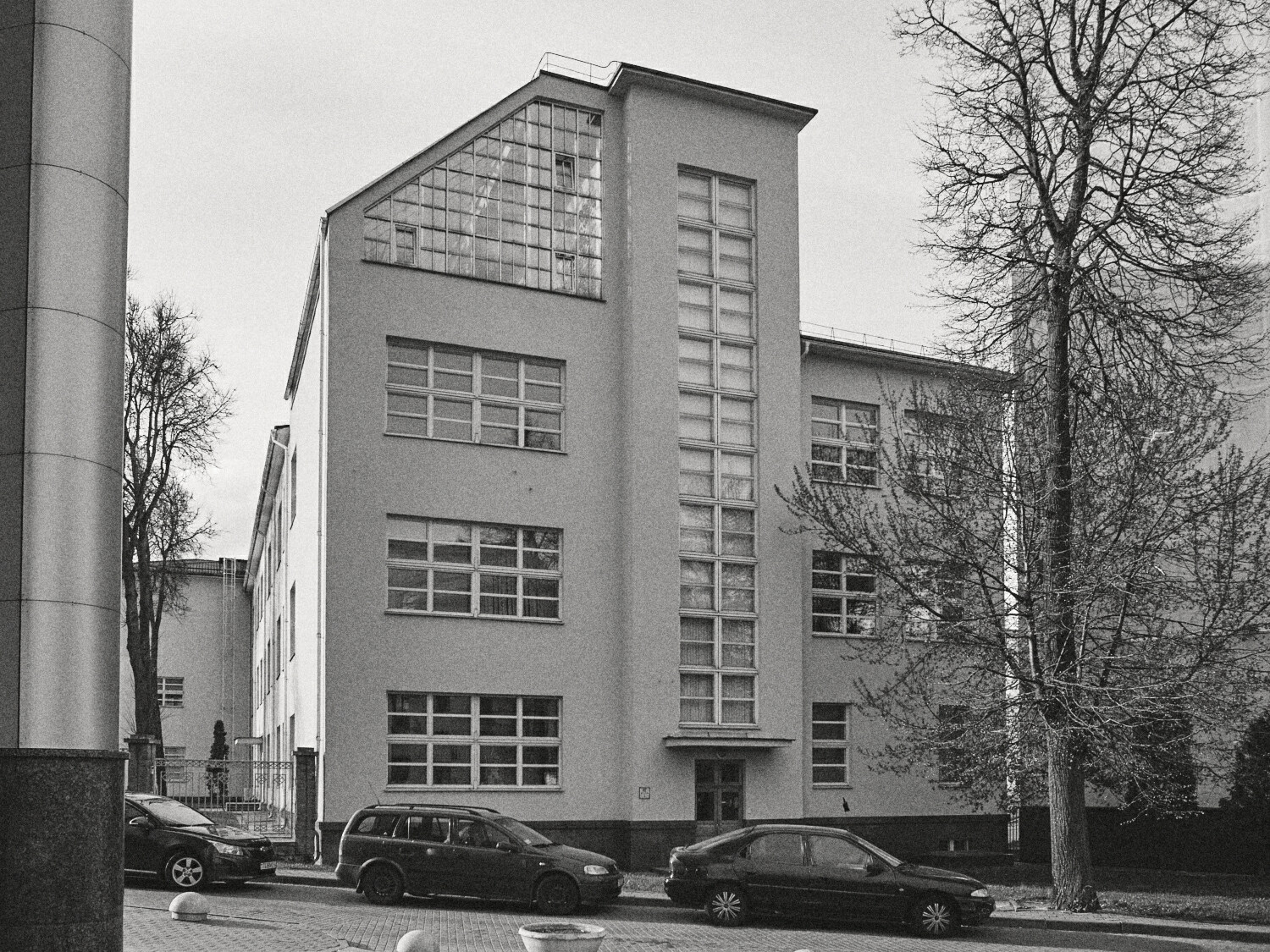
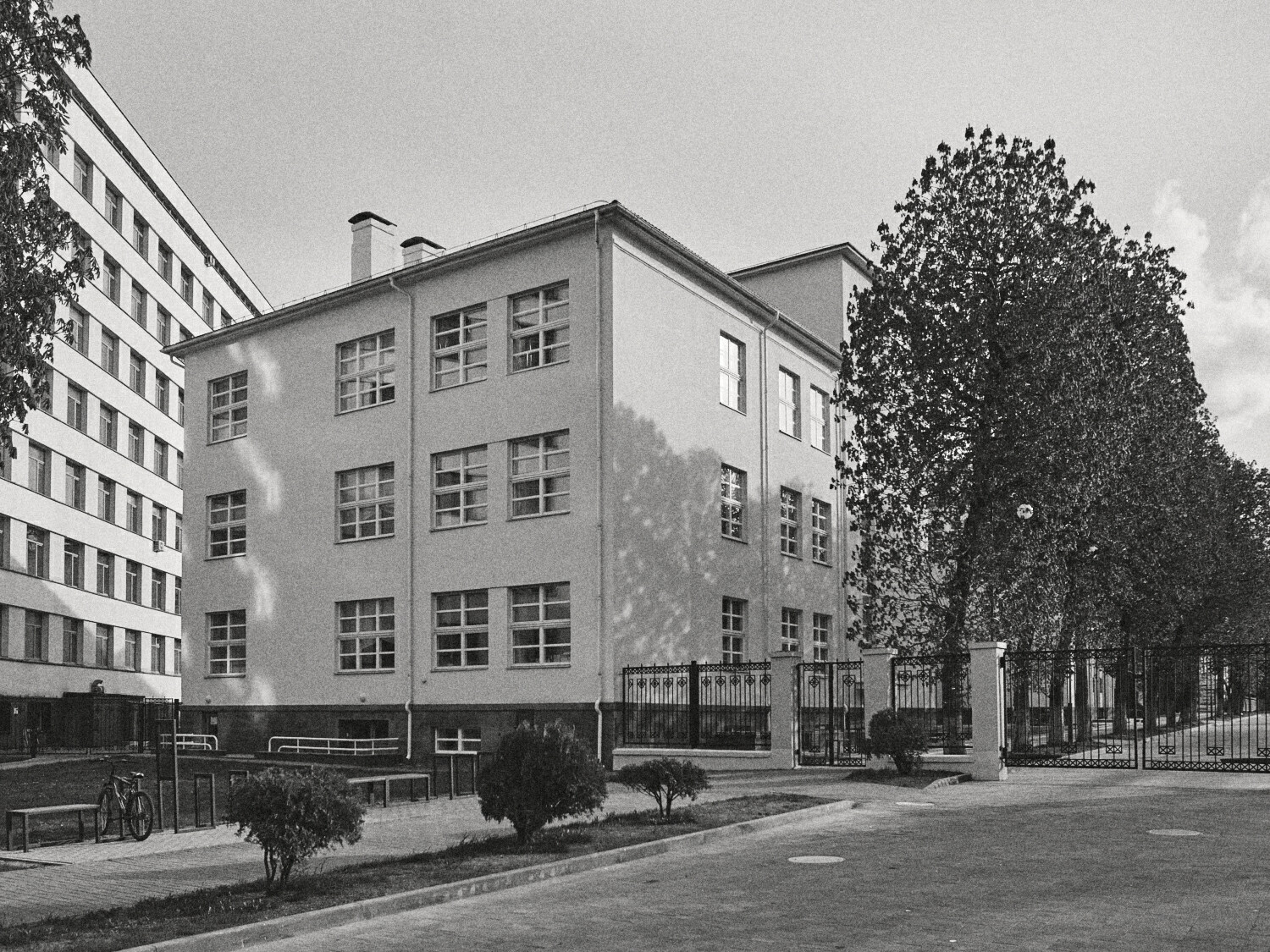
Education appears here as a public form. The photographs look at how knowledge is given mass, facade, entrances, and repetition: an institution trying to appear open, rational, and structurally new.Образование здесь становится публичной формой. Фотографии смотрят на то, как знанию дают массу, фасад, входы и повтор: институция пытается выглядеть открытой, рациональной и структурно новой.教育在这里成为公共形式。照片观察知识如何获得体量、立面、入口和重复:一种机构试图显得开放、理性并具有新的结构。Bildung erscheint hier als öffentliche Form. Die Fotografien schauen darauf, wie Wissen Masse, Fassade, Eingänge und Wiederholung erhält: eine Institution, die offen, rational und strukturell neu wirken will.L'éducation apparaît ici comme une forme publique. Les photographies regardent comment le savoir reçoit une masse, une façade, des entrées et une répétition : une institution qui cherche à paraître ouverte, rationnelle et structurellement nouvelle.La educación aparece aquí como forma pública. Las fotografías observan cómo el conocimiento recibe masa, fachada, entradas y repetición: una institución que intenta parecer abierta, racional y estructuralmente nueva.A educação aparece aqui como forma pública. As fotografias observam como o conhecimento ganha massa, fachada, entradas e repetição: uma instituição tentando parecer aberta, racional e estruturalmente nova.
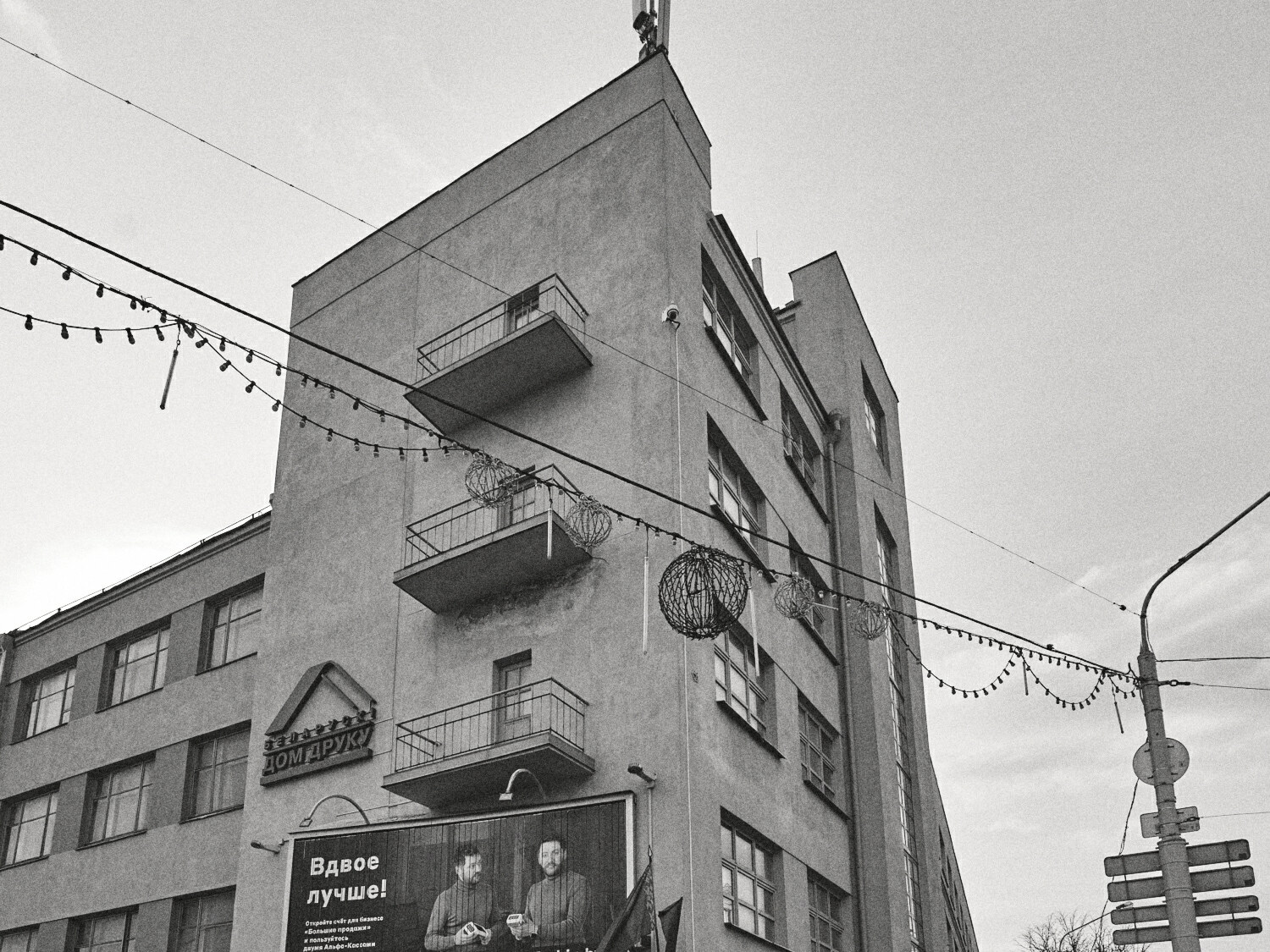
House of PrintДом печати印刷之家Haus der PresseMaison de la presseCasa de la prensaCasa da imprensa
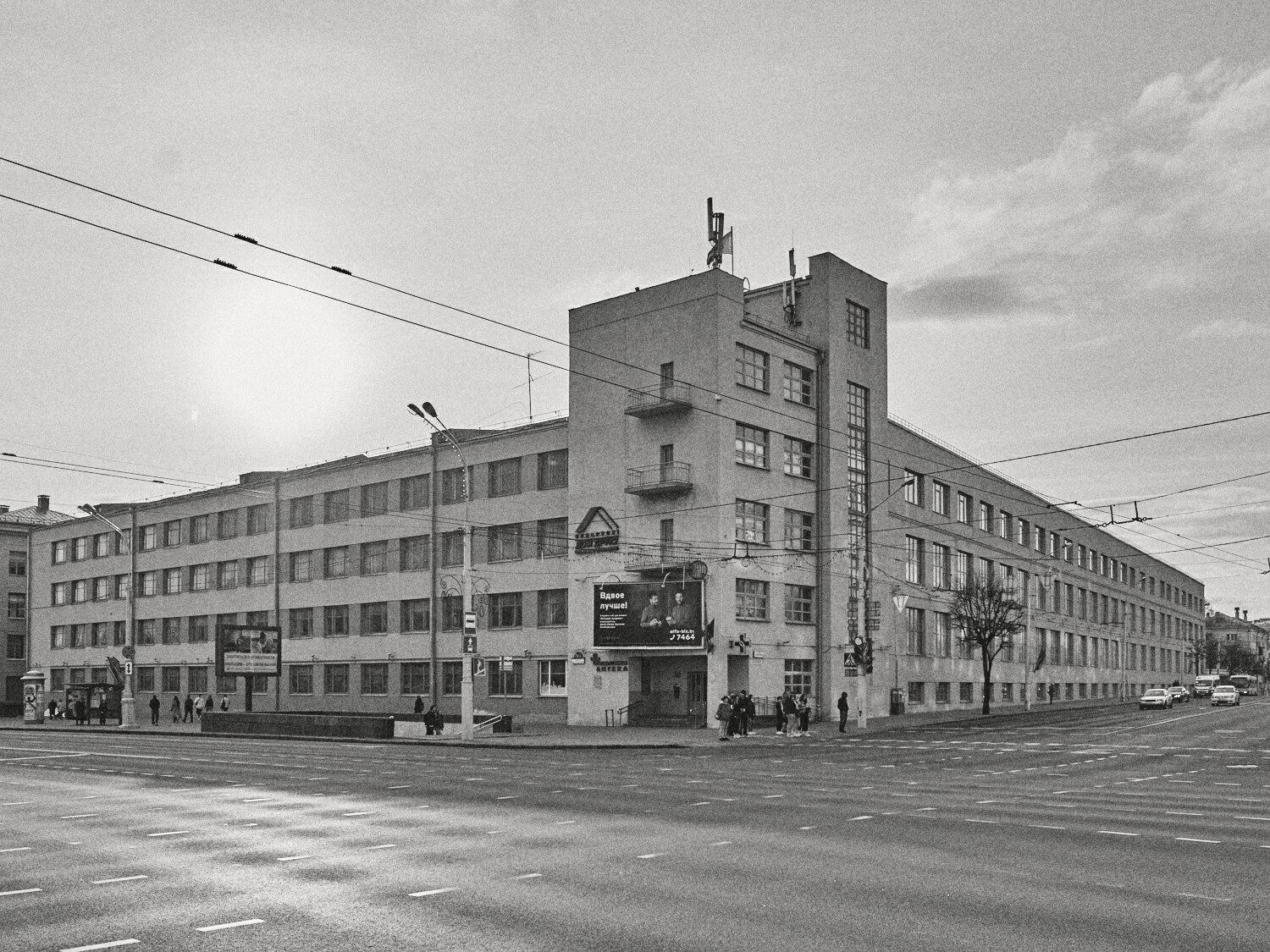
This building turns knowledge and print into architecture: storage, circulation, facade, and public address become one restrained machine. In the sequence it reads less as a monument than as a device for producing a new visual order.Это здание переводит знание и печать в архитектурную форму: хранение, движение, фасад и публичное обращение собраны в сдержанную машину. В серии оно читается не как памятник, а как устройство для производства нового визуального порядка.这座建筑把知识和印刷转化为建筑:存储、流线、立面和公共姿态被收进一台克制的机器。它在系列中不像纪念碑,更像生产新视觉秩序的装置。Dieses Gebäude übersetzt Wissen und Druck in Architektur: Lagerung, Bewegung, Fassade und öffentliche Ansprache werden zu einer zurückhaltenden Maschine. In der Serie wirkt es weniger wie ein Denkmal als wie ein Apparat zur Herstellung einer neuen visuellen Ordnung.Ce bâtiment traduit le savoir et l'impression en architecture : stockage, circulation, façade et adresse publique se rassemblent dans une machine contenue. Dans la série, il se lit moins comme un monument que comme un dispositif de production d'un nouvel ordre visuel.Este edificio convierte el conocimiento y la imprenta en arquitectura: almacenamiento, circulación, fachada y dirección pública se reúnen en una máquina contenida. En la serie se lee menos como monumento que como dispositivo para producir un nuevo orden visual.Este edifício transforma conhecimento e impressão em arquitetura: armazenamento, circulação, fachada e endereço público se reúnem numa máquina contida. Na série, lê-se menos como monumento do que como dispositivo para produzir uma nova ordem visual.
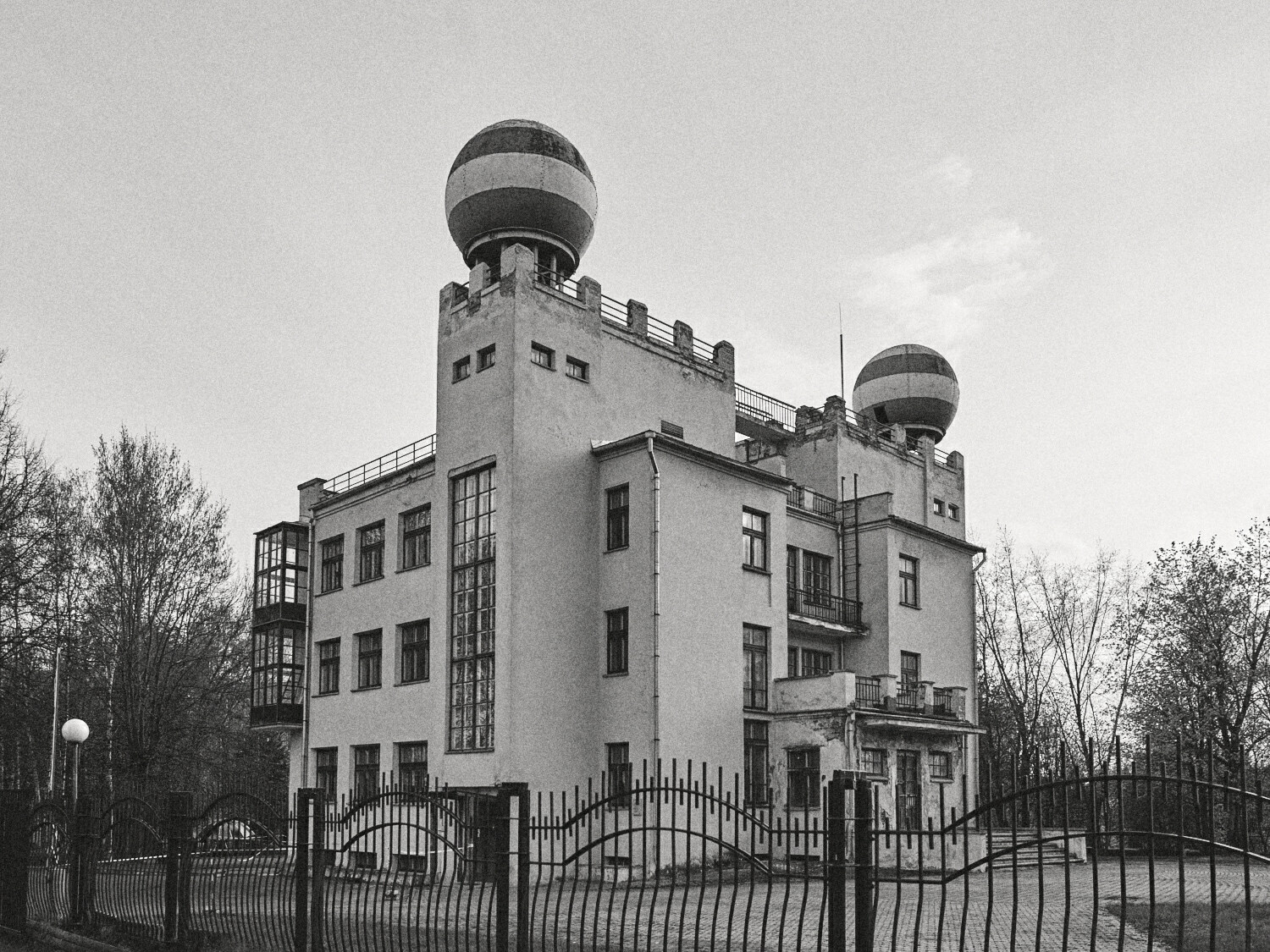
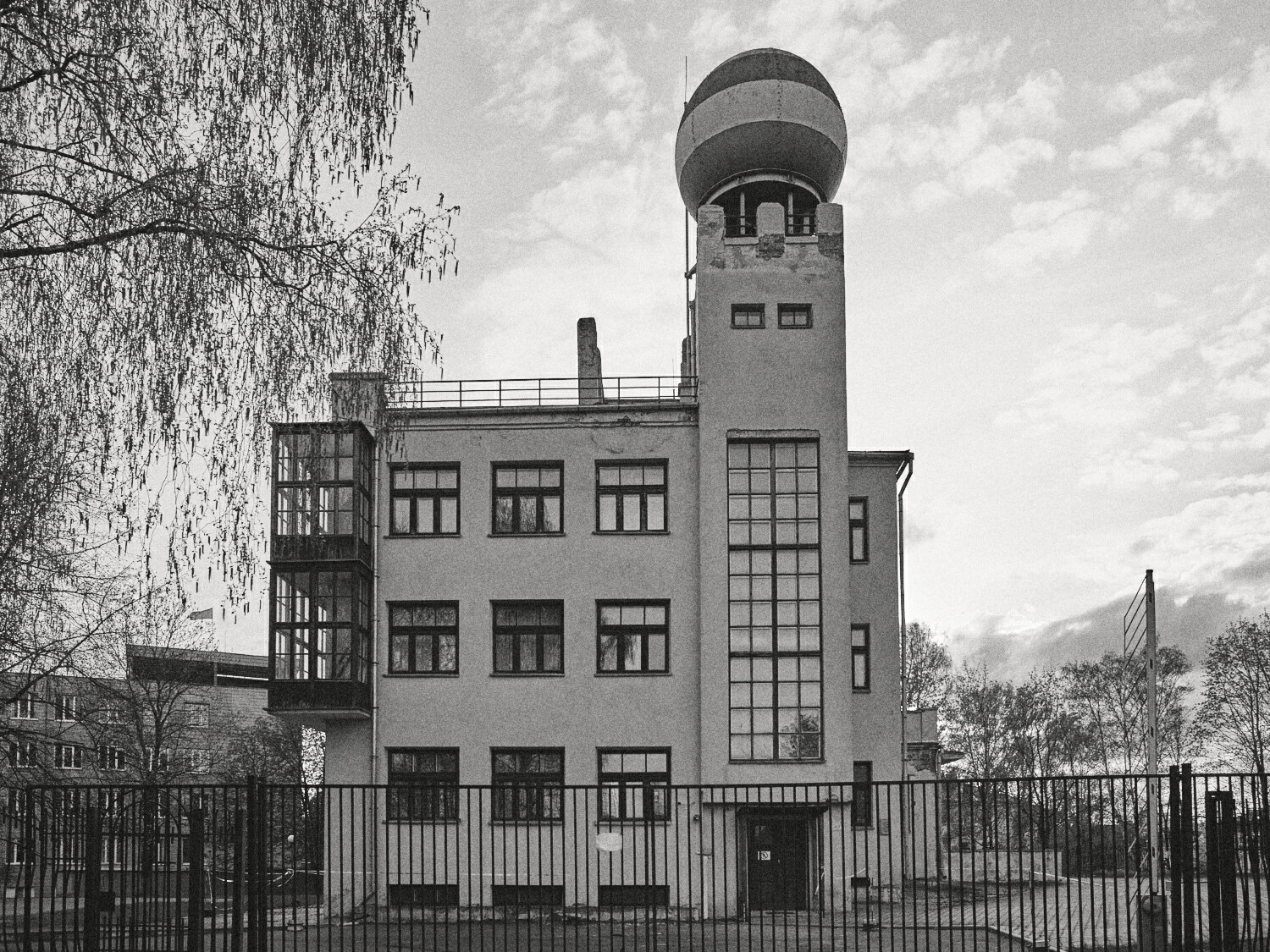
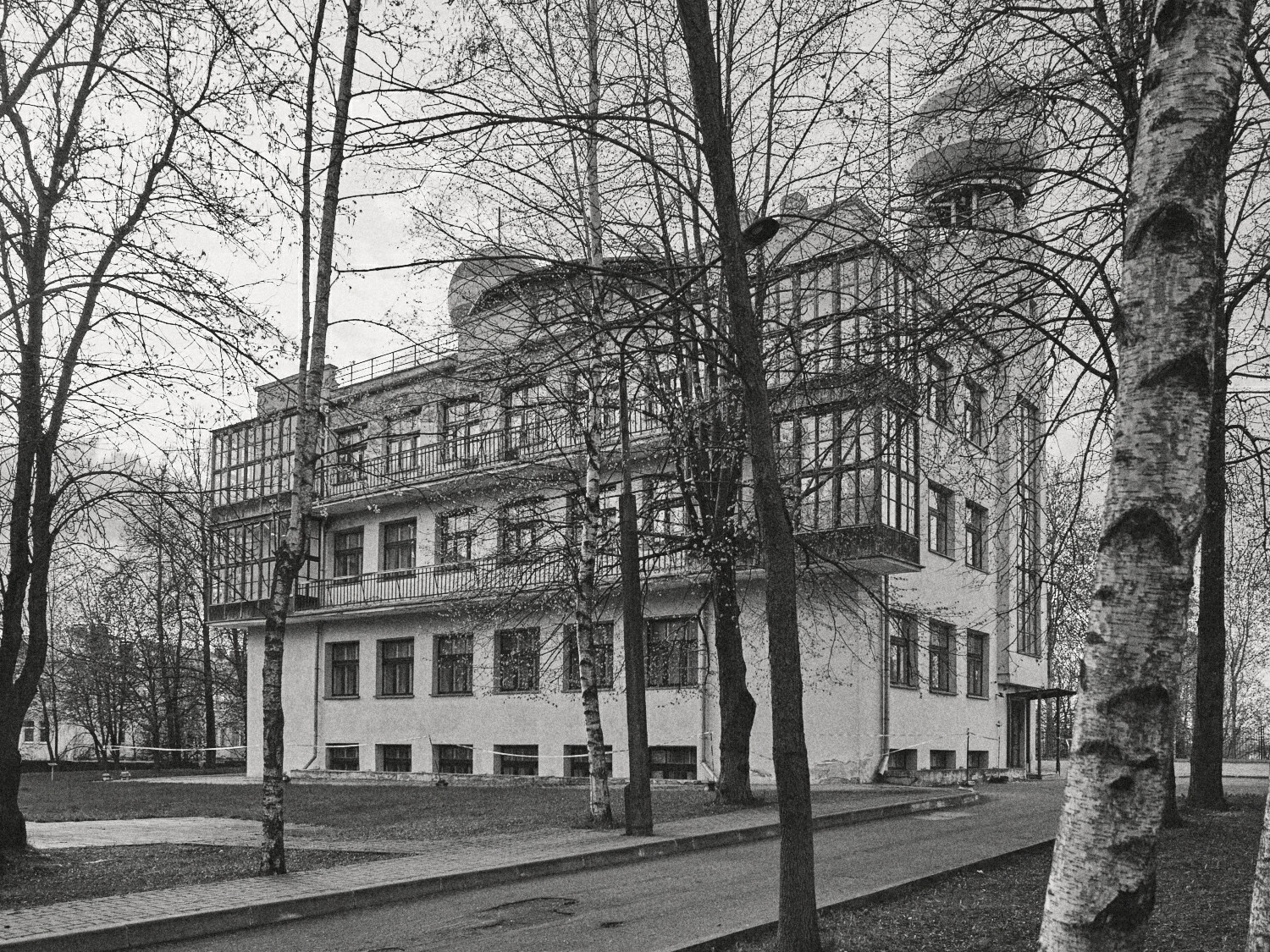
Observatory of the hydrometeorological centerОбсерватория гидрометеорологического центра水文气象中心观测站Observatorium des hydrometeorologischen ZentrumsObservatoire du centre hydrométéorologiqueObservatorio del centro hidrometeorológicoObservatório do centro hidrometeorológico
This is architecture of transmission. Its form is tied to measuring, broadcasting, watching, or sending: an almost invisible infrastructure made visible through volume, rhythm, and a precise position in the city.Это архитектура передачи. Ее форма связана с измерением, вещанием, наблюдением или сигналом: почти невидимая инфраструктура становится видимой через объем, ритм и точное положение в городе.这是传输的建筑。它的形式与测量、广播、观察或发送有关:几乎不可见的基础设施通过体量、节奏和在城市中的精确位置变得可见。Das ist Architektur der Übertragung. Ihre Form ist mit Messen, Senden, Beobachten oder Signalisieren verbunden: beinahe unsichtbare Infrastruktur wird durch Volumen, Rhythmus und eine präzise Lage in der Stadt sichtbar.C'est une architecture de transmission. Sa forme est liée à la mesure, à la diffusion, à l'observation ou au signal : une infrastructure presque invisible devient visible par le volume, le rythme et une position précise dans la ville.Es arquitectura de transmisión. Su forma se vincula con medir, emitir, observar o enviar: una infraestructura casi invisible se vuelve visible mediante volumen, ritmo y una posición precisa en la ciudad.É arquitetura de transmissão. Sua forma se liga a medir, transmitir, observar ou sinalizar: uma infraestrutura quase invisível torna-se visível por volume, ritmo e posição precisa na cidade.
MoscowМосква莫斯科MoskauMoscouMoscúMoscou
Buildings in MoscowЗдания: Москва建筑: 莫斯科Bauten in MoskauBâtiments à MoscouEdificios en MoscúEdifícios em Moscou
Printing plant of the party publishing house and the newspaper "Pravda"Типография издательства и газеты «Правда»《真理报》与党出版社印刷厂Druckerei des Parteiverlags und der Zeitung "Prawda"Imprimerie de la maison d'édition du parti et du journal « Pravda »Imprenta de la editorial del partido y del periódico «Pravda»Gráfica da editora do partido e do jornal «Pravda»
This building turns knowledge and print into architecture: storage, circulation, facade, and public address become one restrained machine. In the sequence it reads less as a monument than as a device for producing a new visual order.Это здание переводит знание и печать в архитектурную форму: хранение, движение, фасад и публичное обращение собраны в сдержанную машину. В серии оно читается не как памятник, а как устройство для производства нового визуального порядка.这座建筑把知识和印刷转化为建筑:存储、流线、立面和公共姿态被收进一台克制的机器。它在系列中不像纪念碑,更像生产新视觉秩序的装置。Dieses Gebäude übersetzt Wissen und Druck in Architektur: Lagerung, Bewegung, Fassade und öffentliche Ansprache werden zu einer zurückhaltenden Maschine. In der Serie wirkt es weniger wie ein Denkmal als wie ein Apparat zur Herstellung einer neuen visuellen Ordnung.Ce bâtiment traduit le savoir et l'impression en architecture : stockage, circulation, façade et adresse publique se rassemblent dans une machine contenue. Dans la série, il se lit moins comme un monument que comme un dispositif de production d'un nouvel ordre visuel.Este edificio convierte el conocimiento y la imprenta en arquitectura: almacenamiento, circulación, fachada y dirección pública se reúnen en una máquina contenida. En la serie se lee menos como monumento que como dispositivo para producir un nuevo orden visual.Este edifício transforma conhecimento e impressão em arquitetura: armazenamento, circulação, fachada e endereço público se reúnem numa máquina contida. Na série, lê-se menos como monumento do que como dispositivo para produzir uma nova ordem visual.
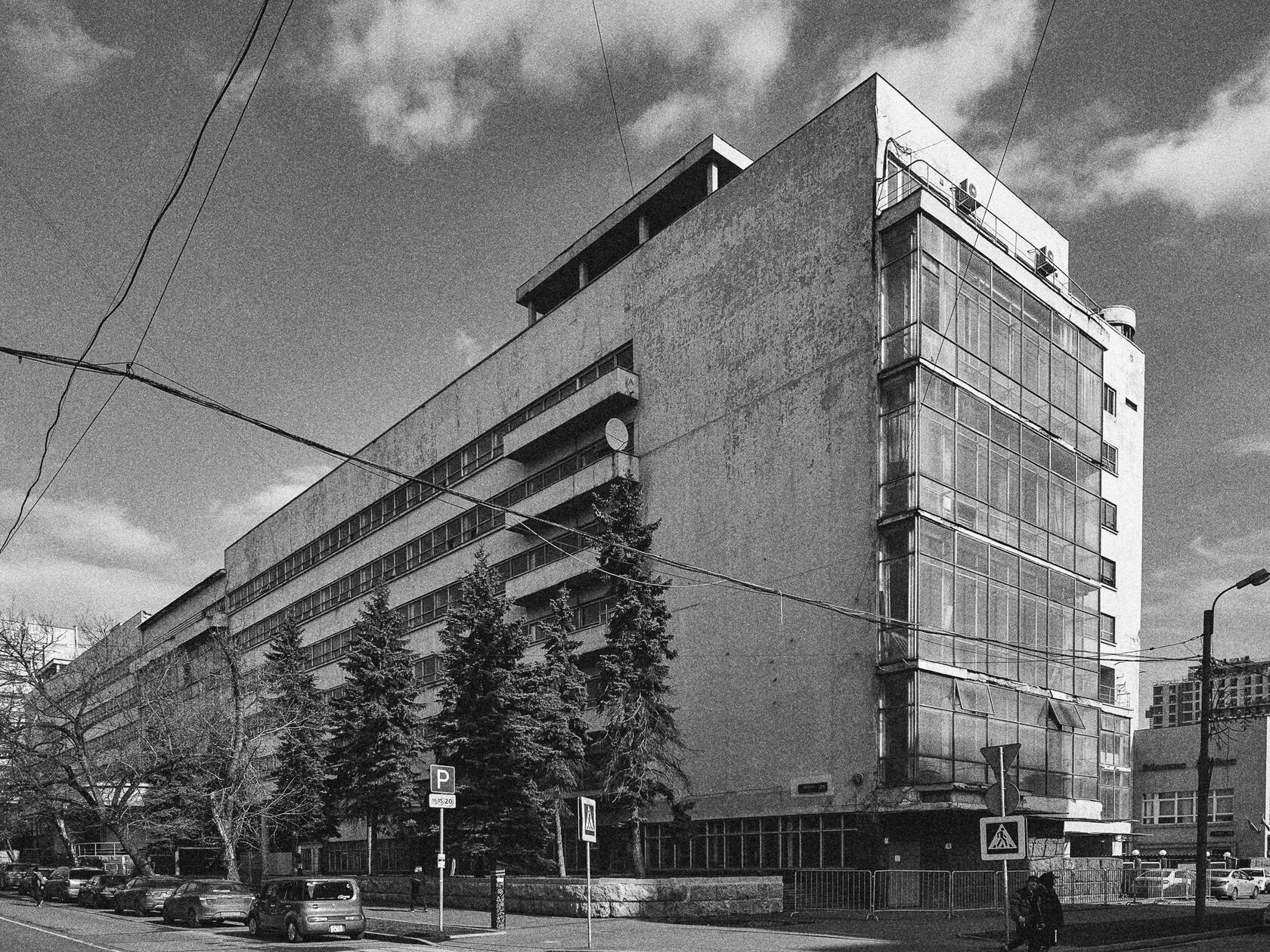
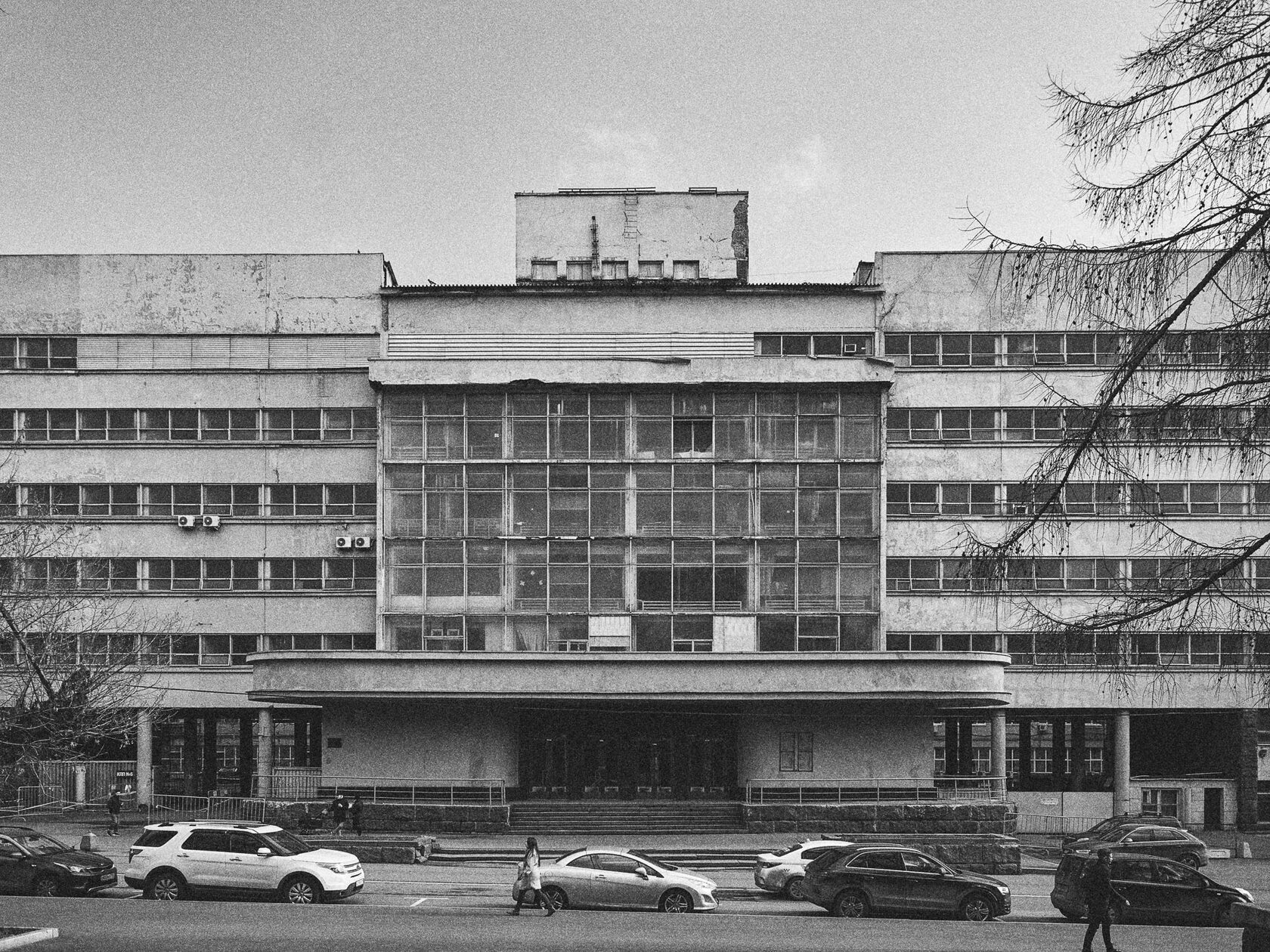
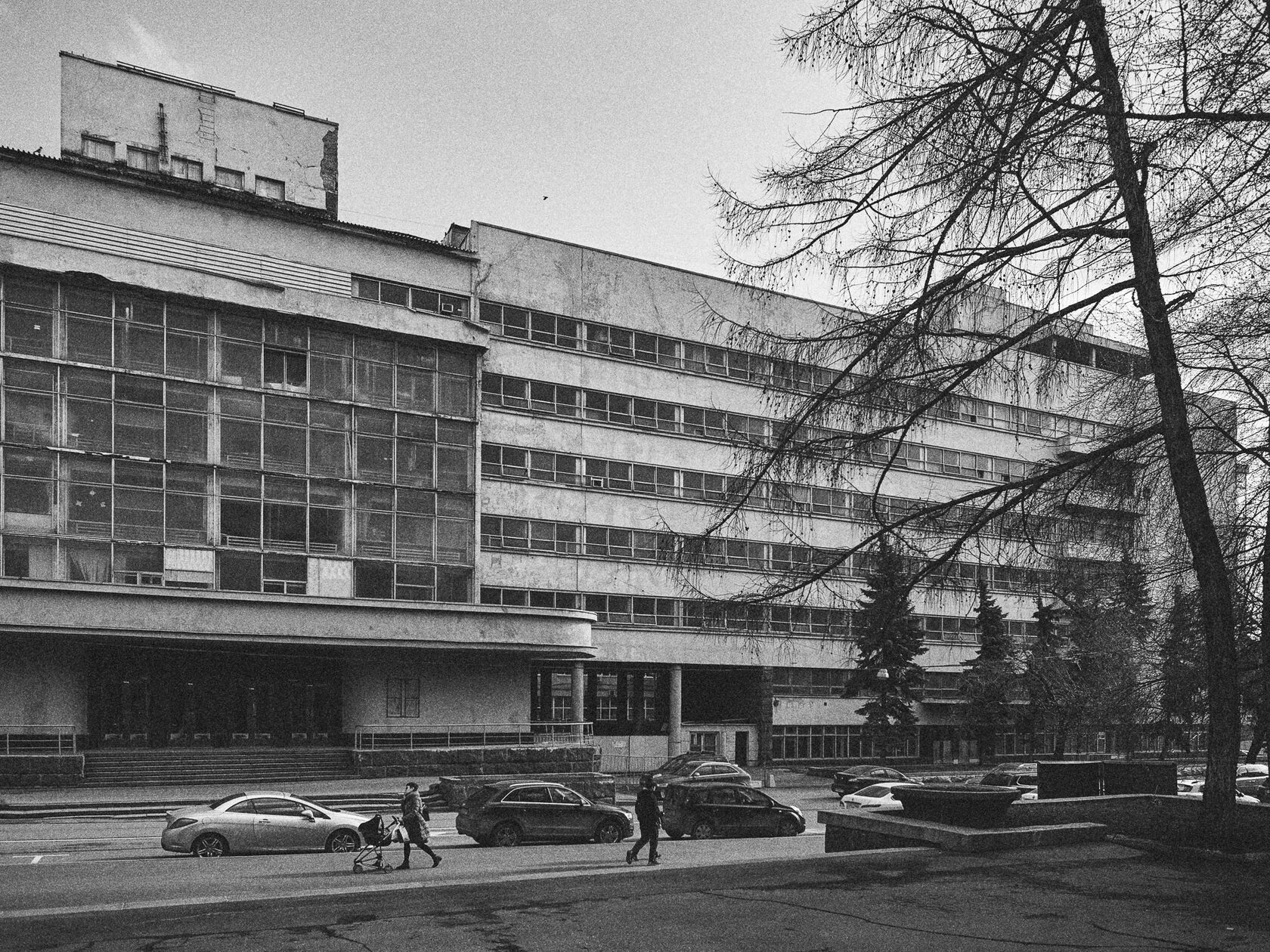
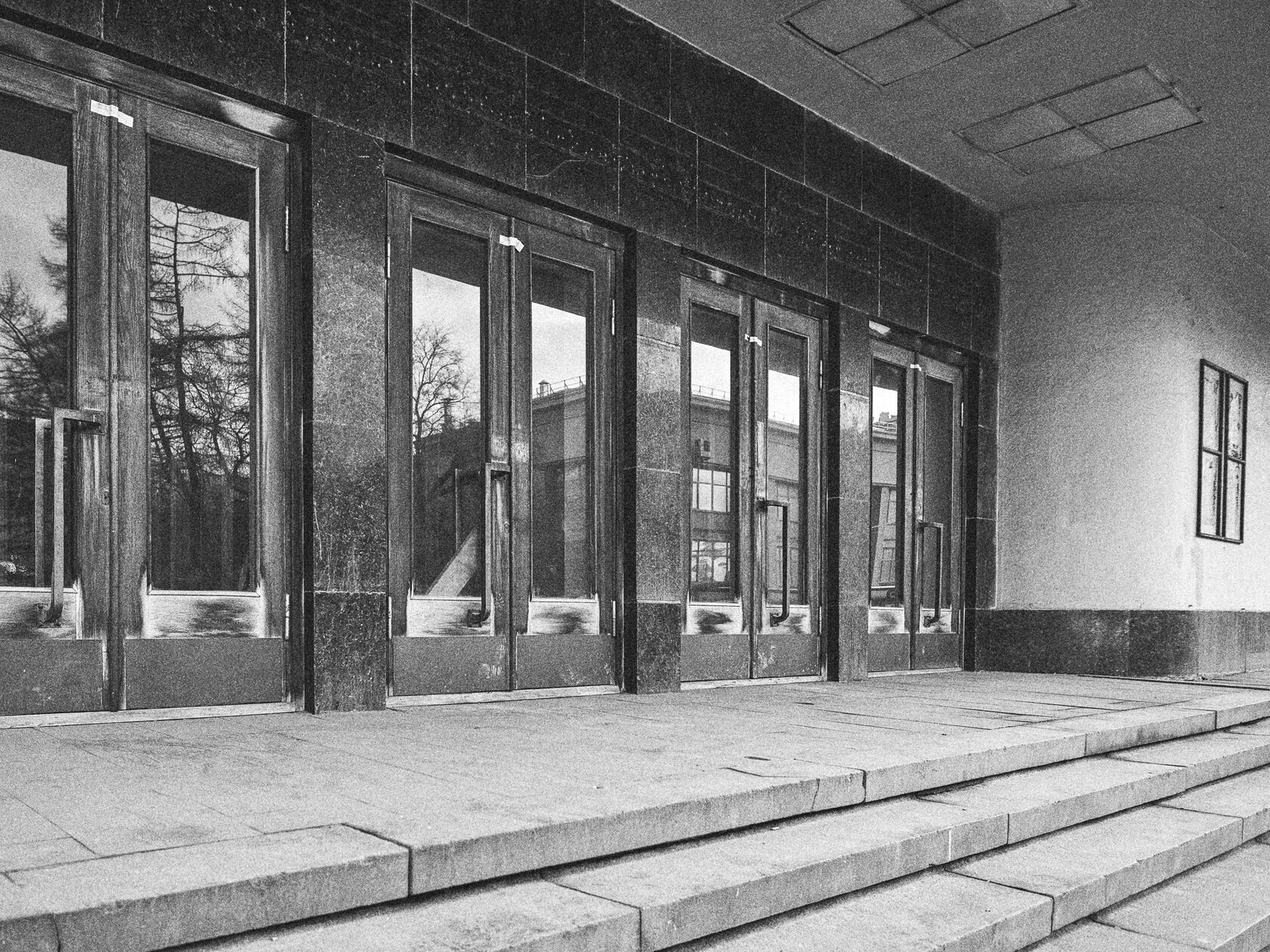
The club named after S.M. ZuevКлуб имени С. М. ЗуеваS. M. 祖耶夫俱乐部Klub S. M. ZuevClub S. M. ZuevClub S. M. ZuevClube S. M. Zuev
The building is photographed as a public interior turned outward. The facade carries the promise of assembly: lectures, rehearsals, meetings, cinema, theatre, music, and the belief that culture could be organized as part of everyday life.Здание снято как общественный интерьер, вывернутый наружу. Фасад удерживает обещание собрания: лекции, репетиции, встречи, кино, театр, музыку и веру в то, что культуру можно встроить в повседневность.这座建筑被拍成向外翻开的公共室内。立面保存着集会的承诺:讲座、排练、会议、电影、戏剧、音乐,以及文化可以被编入日常生活的信念。Das Gebäude wird als nach außen gekehrtes öffentliches Interieur fotografiert. Die Fassade trägt das Versprechen der Versammlung: Vorträge, Proben, Treffen, Kino, Theater, Musik und den Glauben, Kultur könne Teil des Alltags werden.Le bâtiment est photographié comme un intérieur public retourné vers l'extérieur. La façade porte la promesse du rassemblement : conférences, répétitions, réunions, cinéma, théâtre, musique, et la croyance que la culture pouvait être intégrée au quotidien.El edificio se fotografía como un interior público vuelto hacia fuera. La fachada sostiene la promesa de reunión: conferencias, ensayos, encuentros, cine, teatro, música y la creencia de que la cultura podía organizarse dentro de la vida cotidiana.O edifício é fotografado como um interior público virado para fora. A fachada guarda a promessa da reunião: palestras, ensaios, encontros, cinema, teatro, música e a crença de que a cultura podia ser organizada dentro do cotidiano.
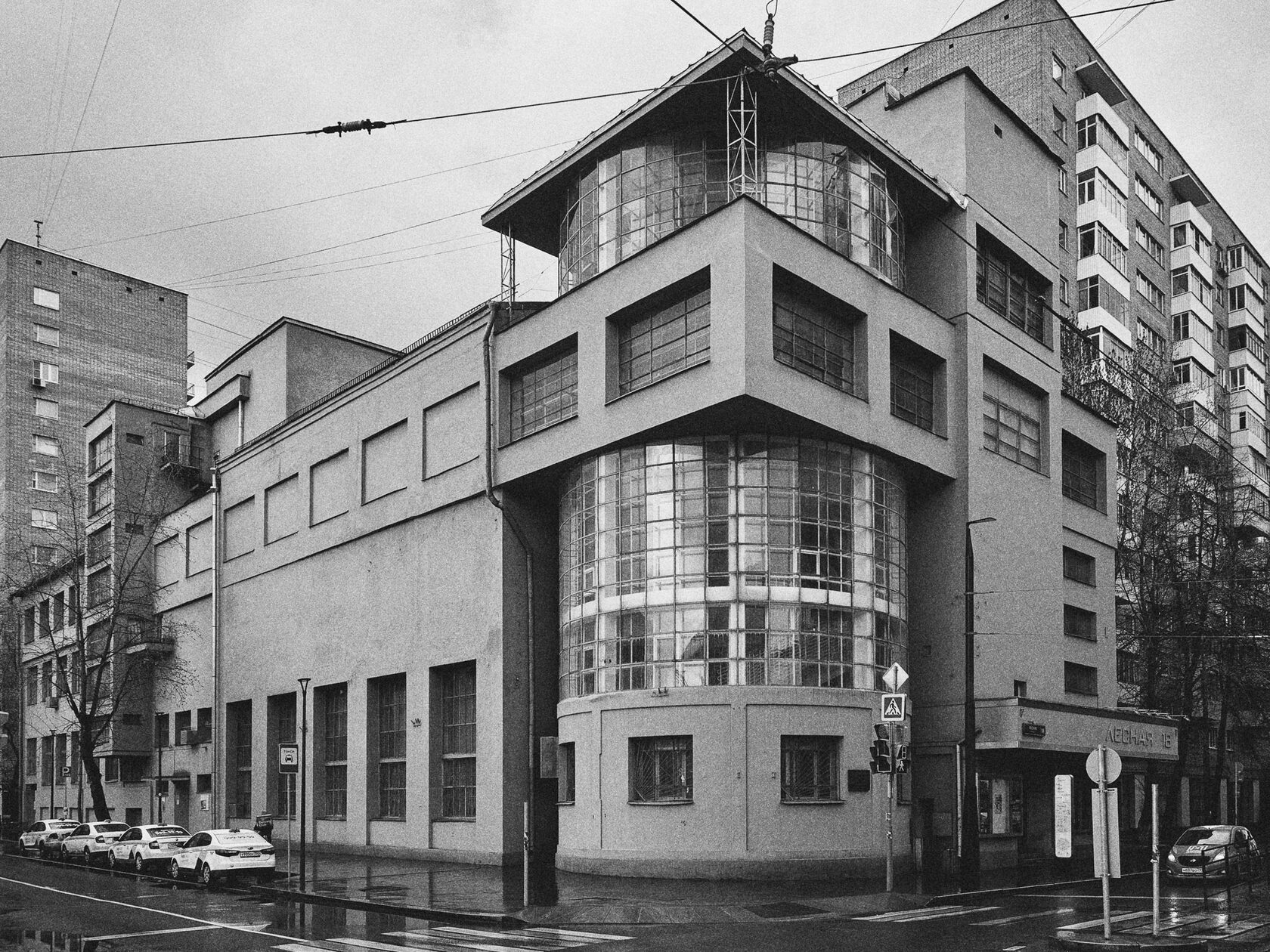
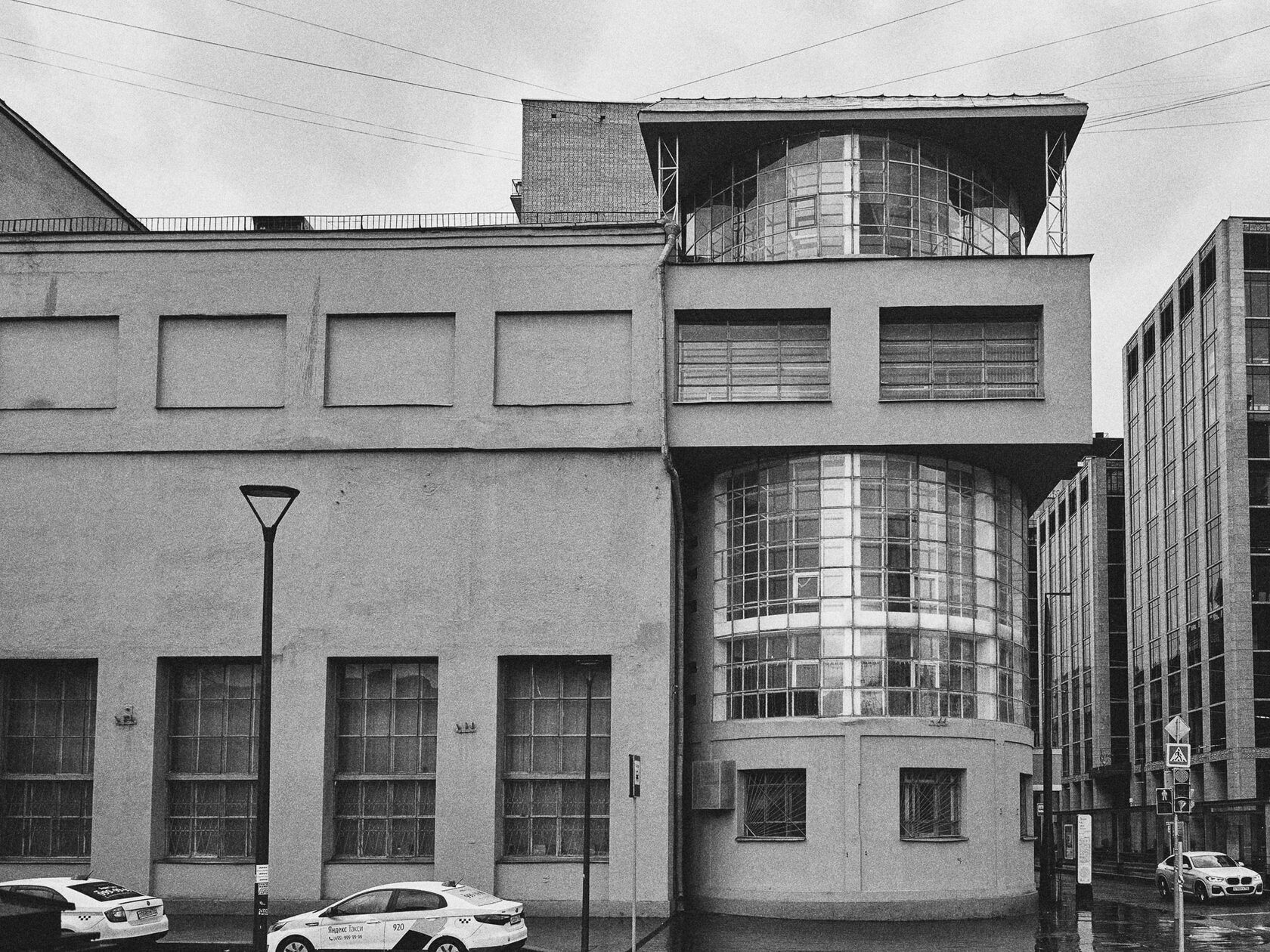
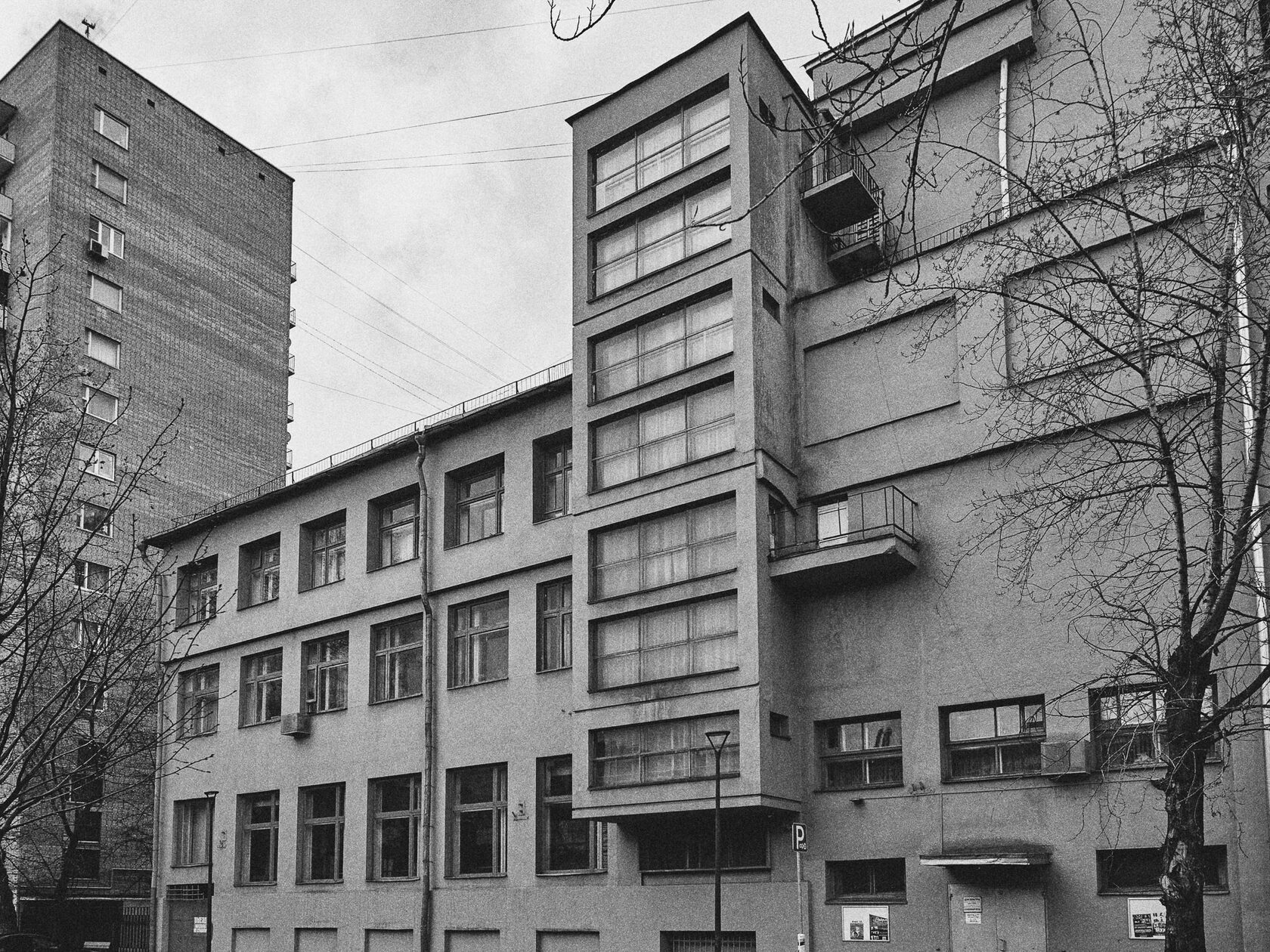
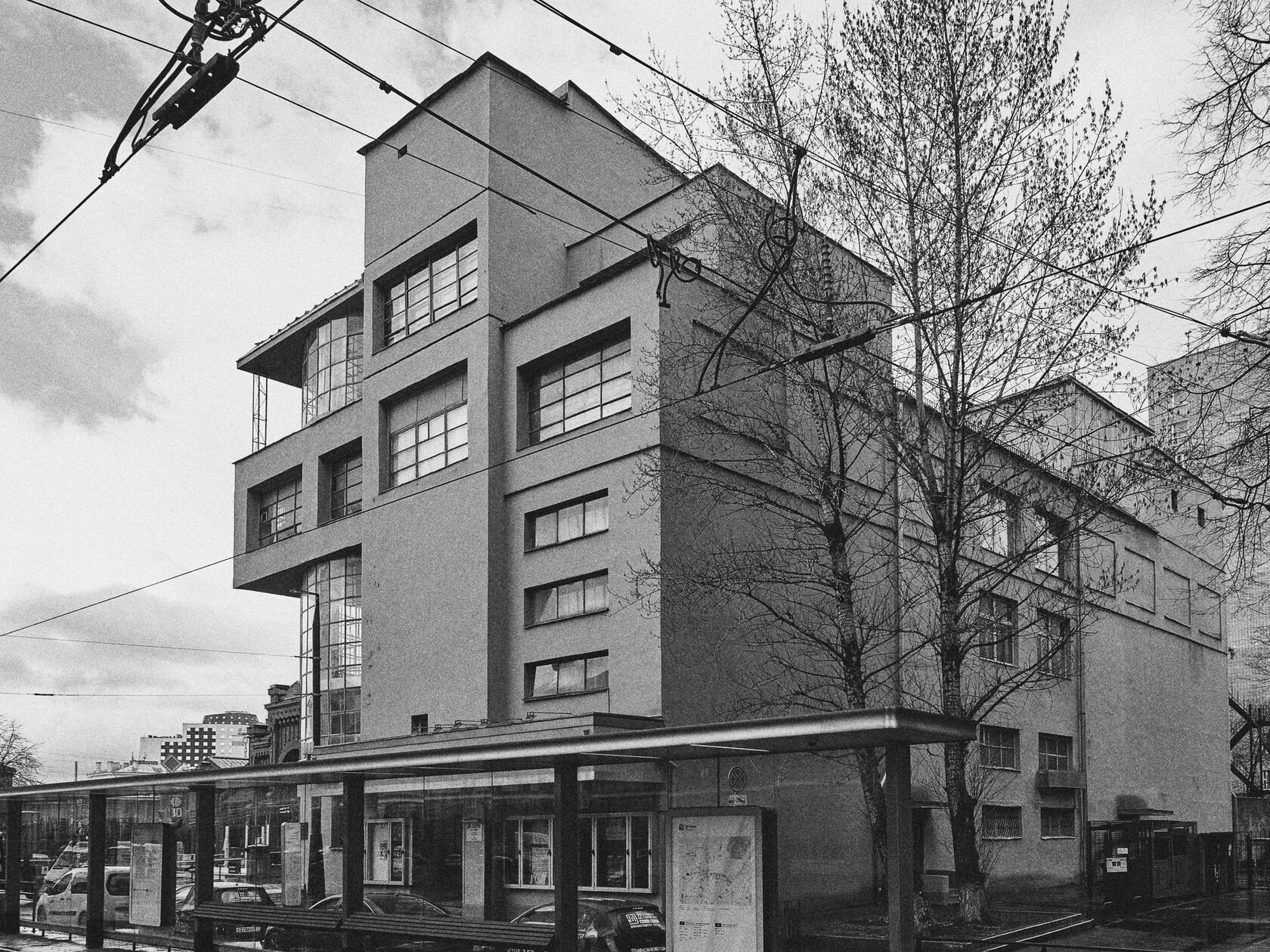
Krasnopresnensky District Council buildingЗдание Краснопресненского райсовета克拉斯诺普列斯年斯基区苏维埃大楼Gebäude des Bezirksrats KrasnopresnenskyBâtiment du conseil de district KrasnopresnenskyEdificio del consejo de distrito KrasnopresnenskyEdifício do conselho distrital Krasnopresnensky
Here administration becomes form. The geometry is not neutral: it stages authority, planning, and the desire to make a new order visible through walls, windows, and scale.Здесь управление становится формой. Геометрия не нейтральна: она ставит на сцену власть, планирование и желание сделать новый порядок видимым через стены, окна и масштаб.在这里,行政变成了形式。几何并不中立:它把权力、规划以及让新秩序通过墙、窗和尺度变得可见的欲望推上舞台。Hier wird Verwaltung zur Form. Die Geometrie ist nicht neutral: Sie inszeniert Autorität, Planung und den Wunsch, eine neue Ordnung durch Wände, Fenster und Maßstab sichtbar zu machen.Ici, l'administration devient forme. La géométrie n'est pas neutre : elle met en scène l'autorité, la planification et le désir de rendre un nouvel ordre visible par les murs, les fenêtres et l'échelle.Aquí la administración se vuelve forma. La geometría no es neutra: escenifica autoridad, planificación y el deseo de hacer visible un nuevo orden mediante muros, ventanas y escala.Aqui a administração vira forma. A geometria não é neutra: encena autoridade, planejamento e o desejo de tornar uma nova ordem visível por paredes, janelas e escala.
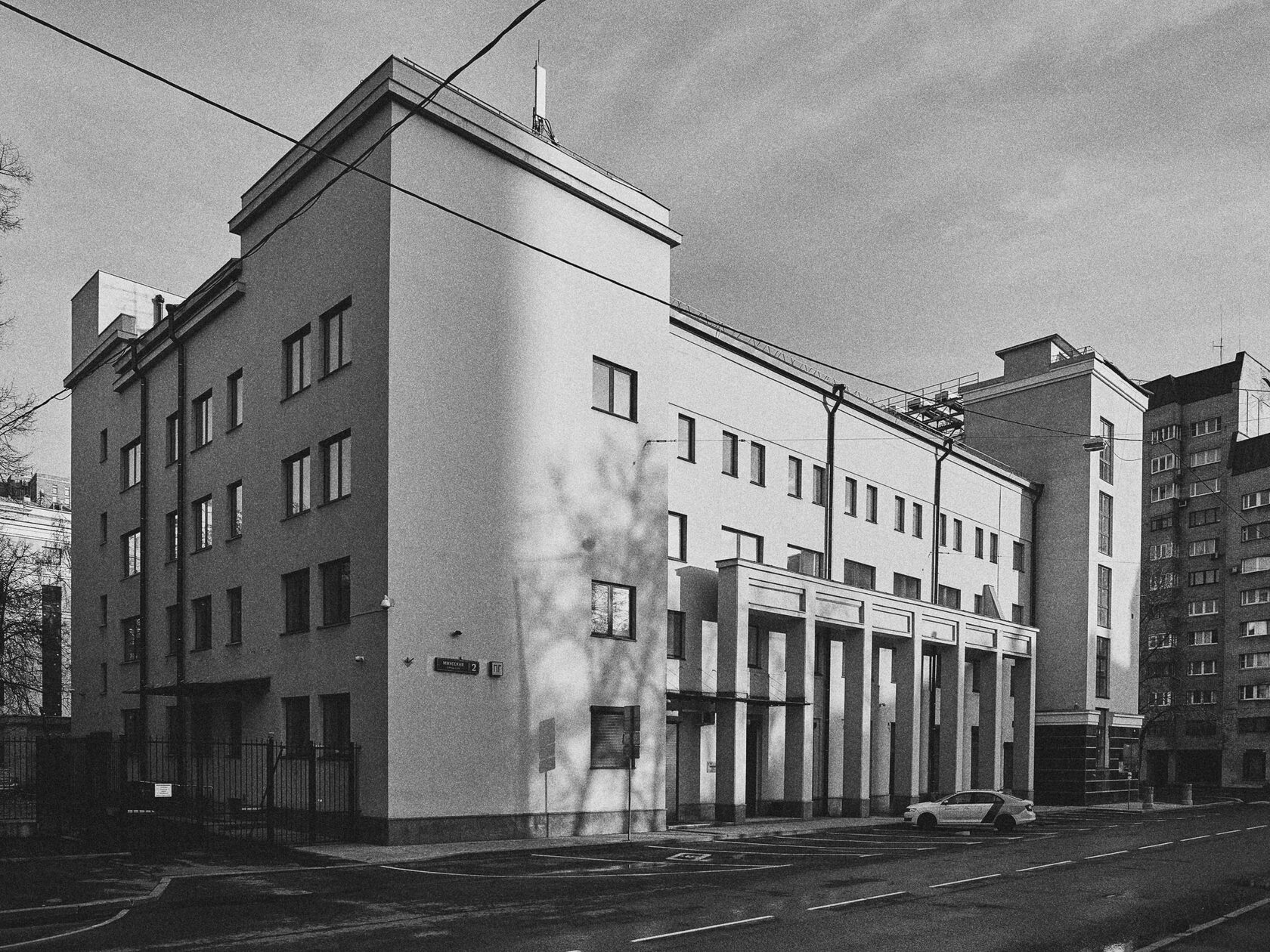
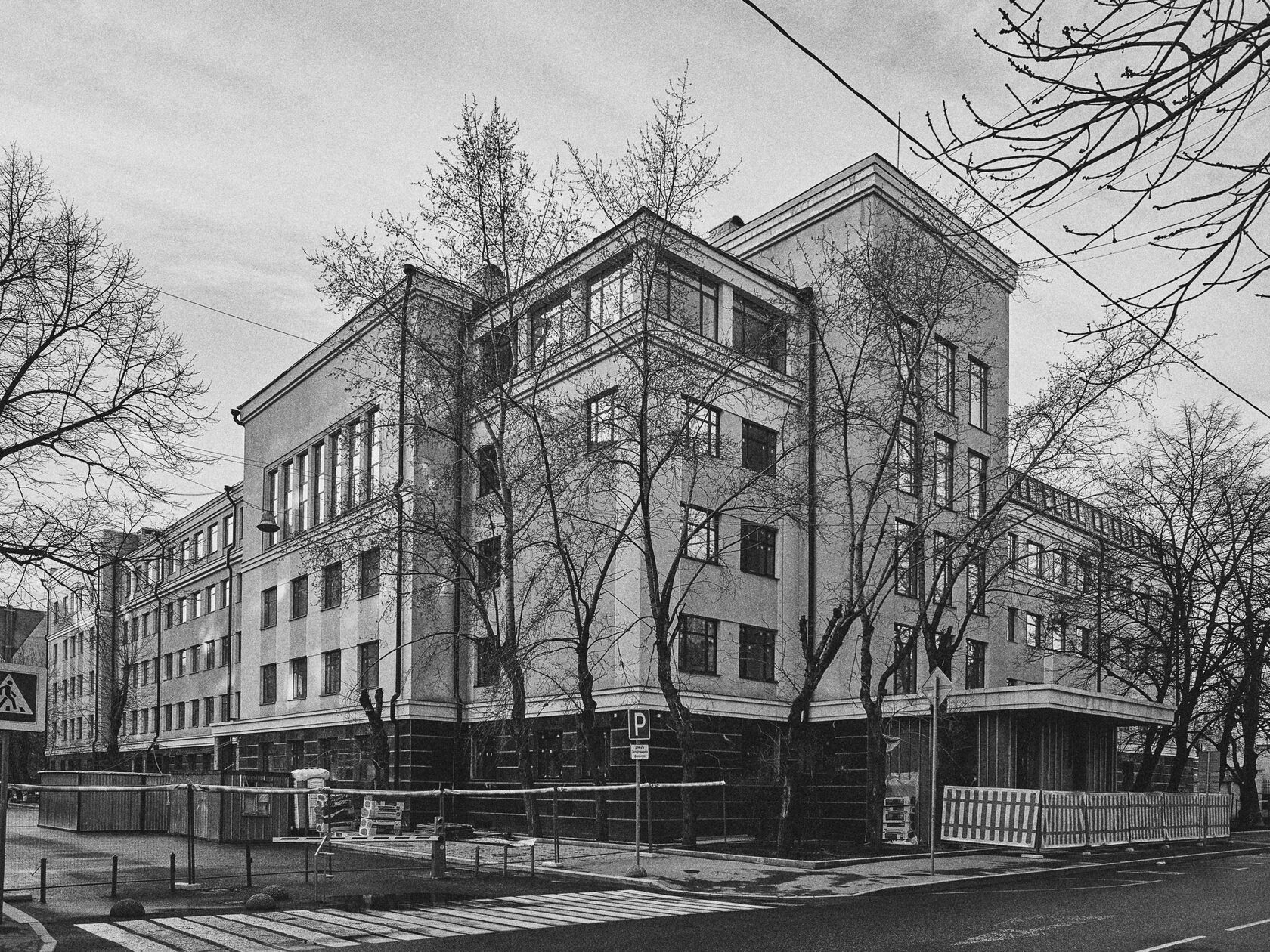
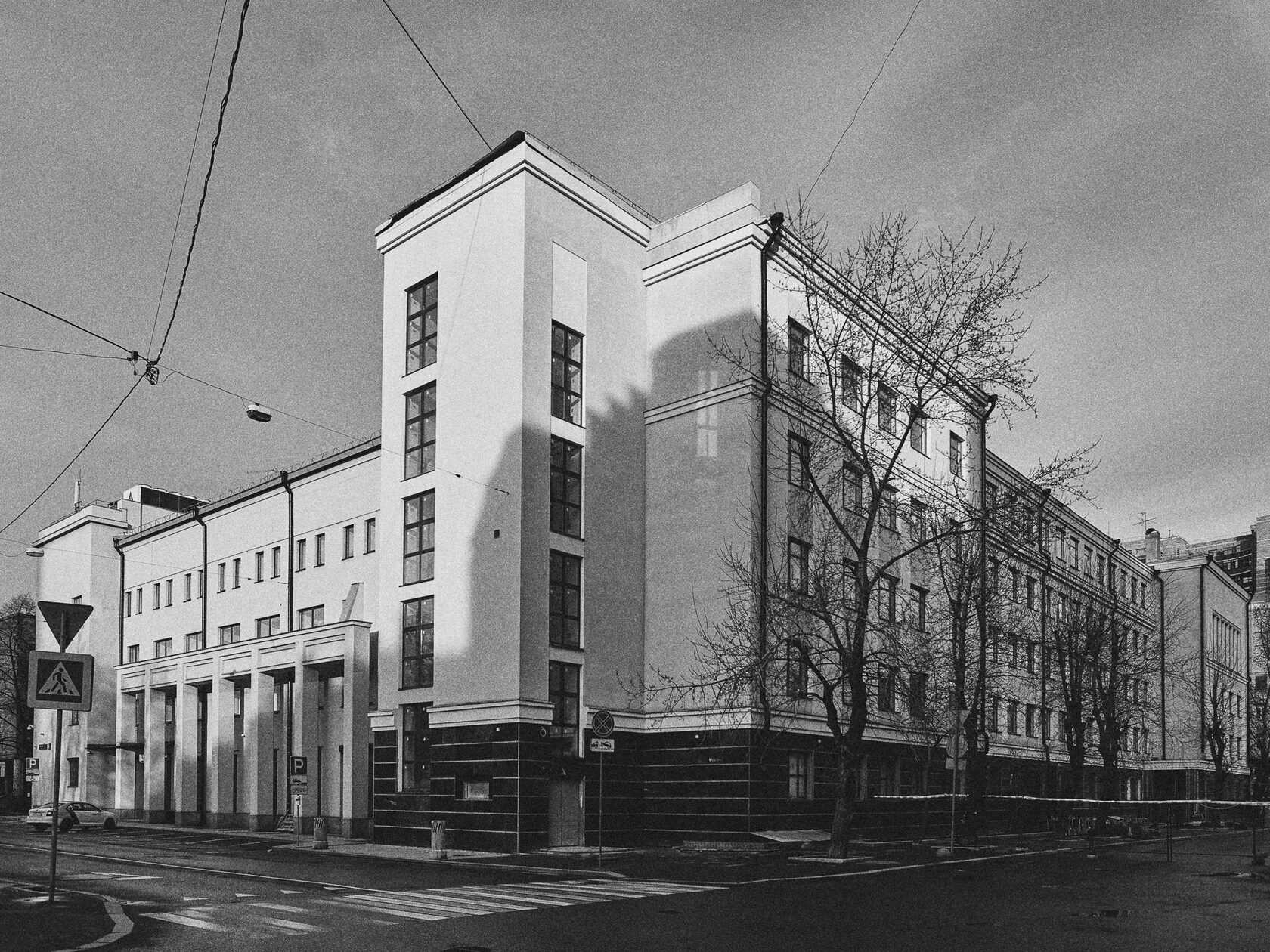
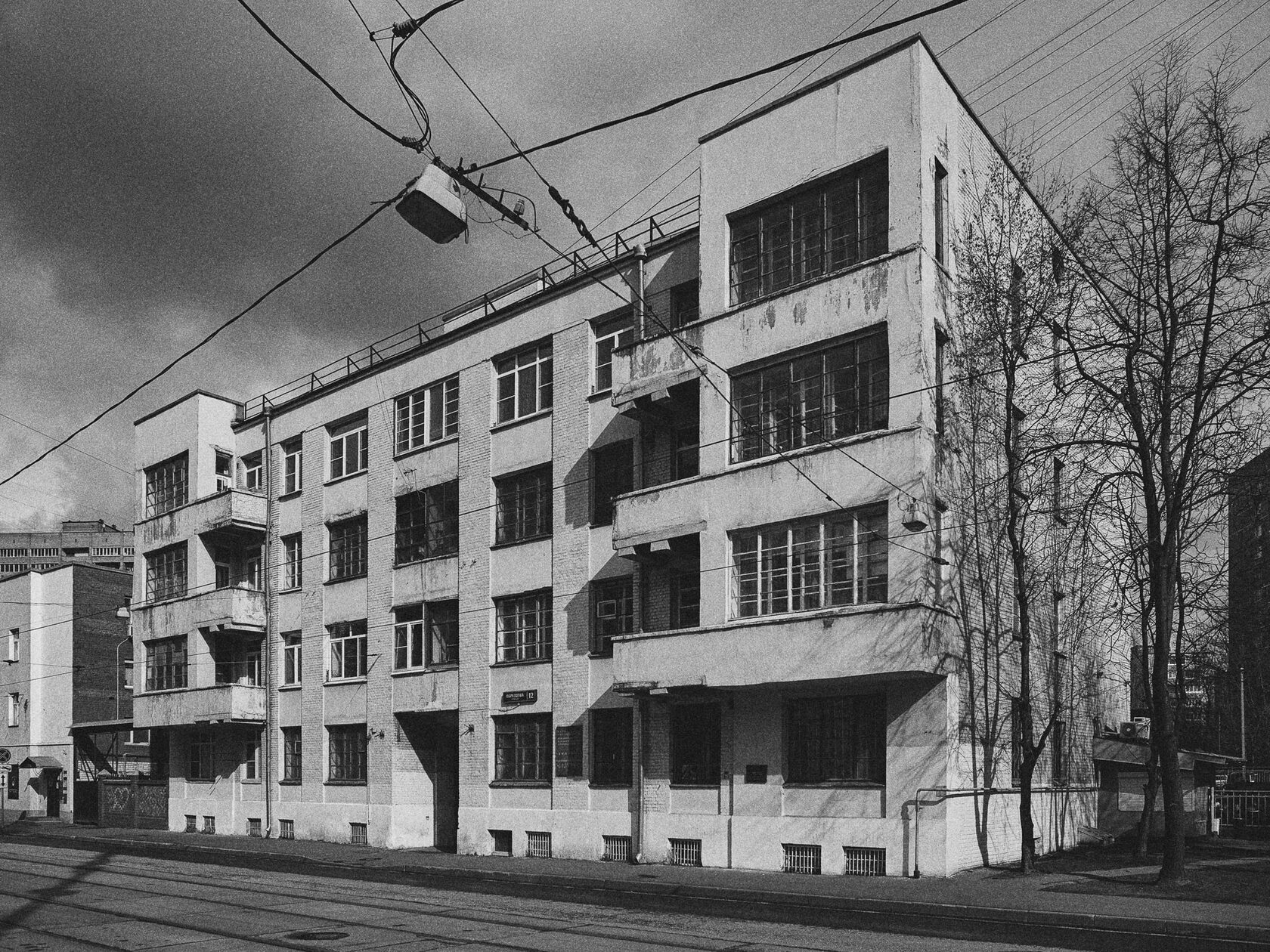
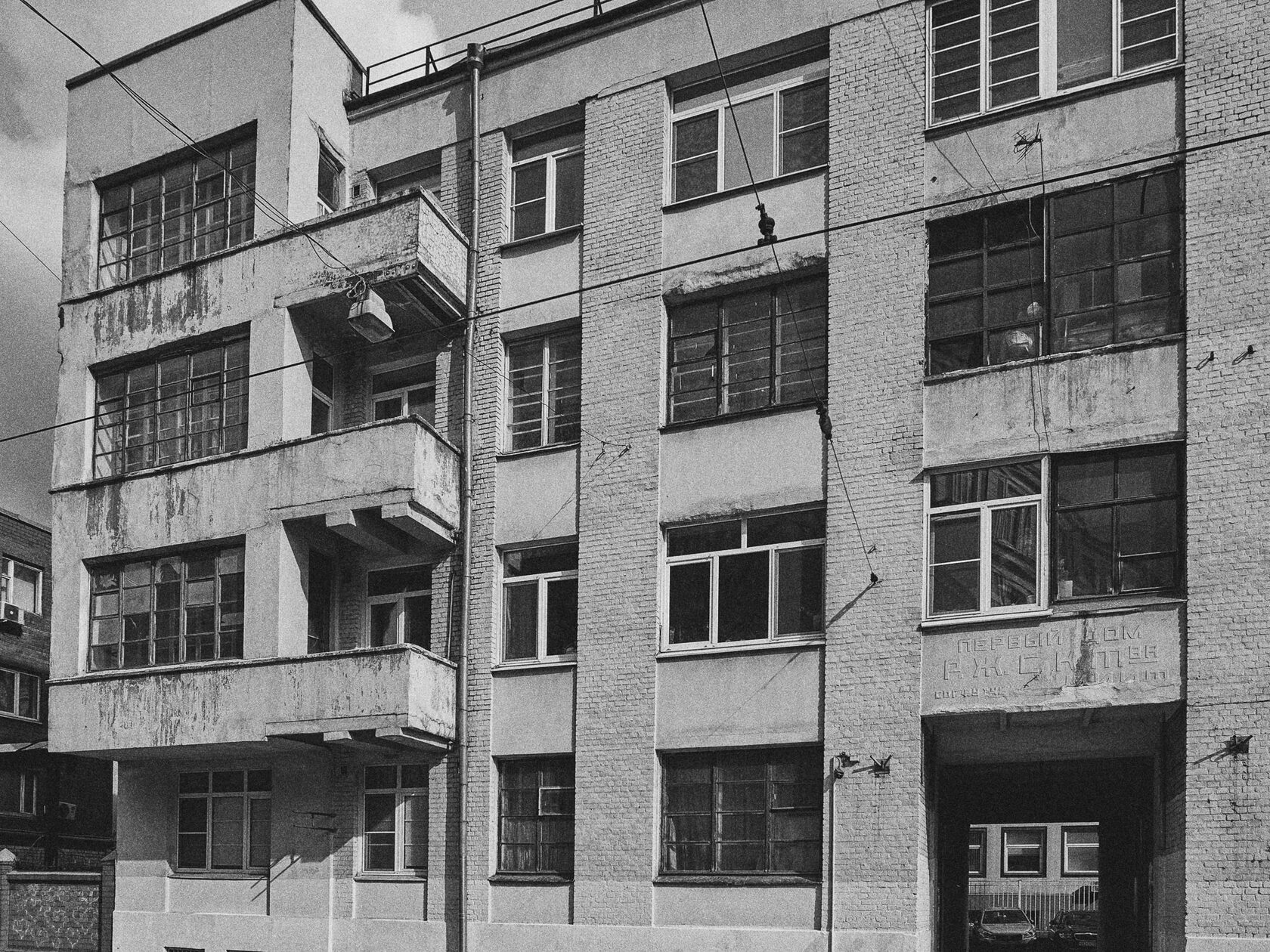
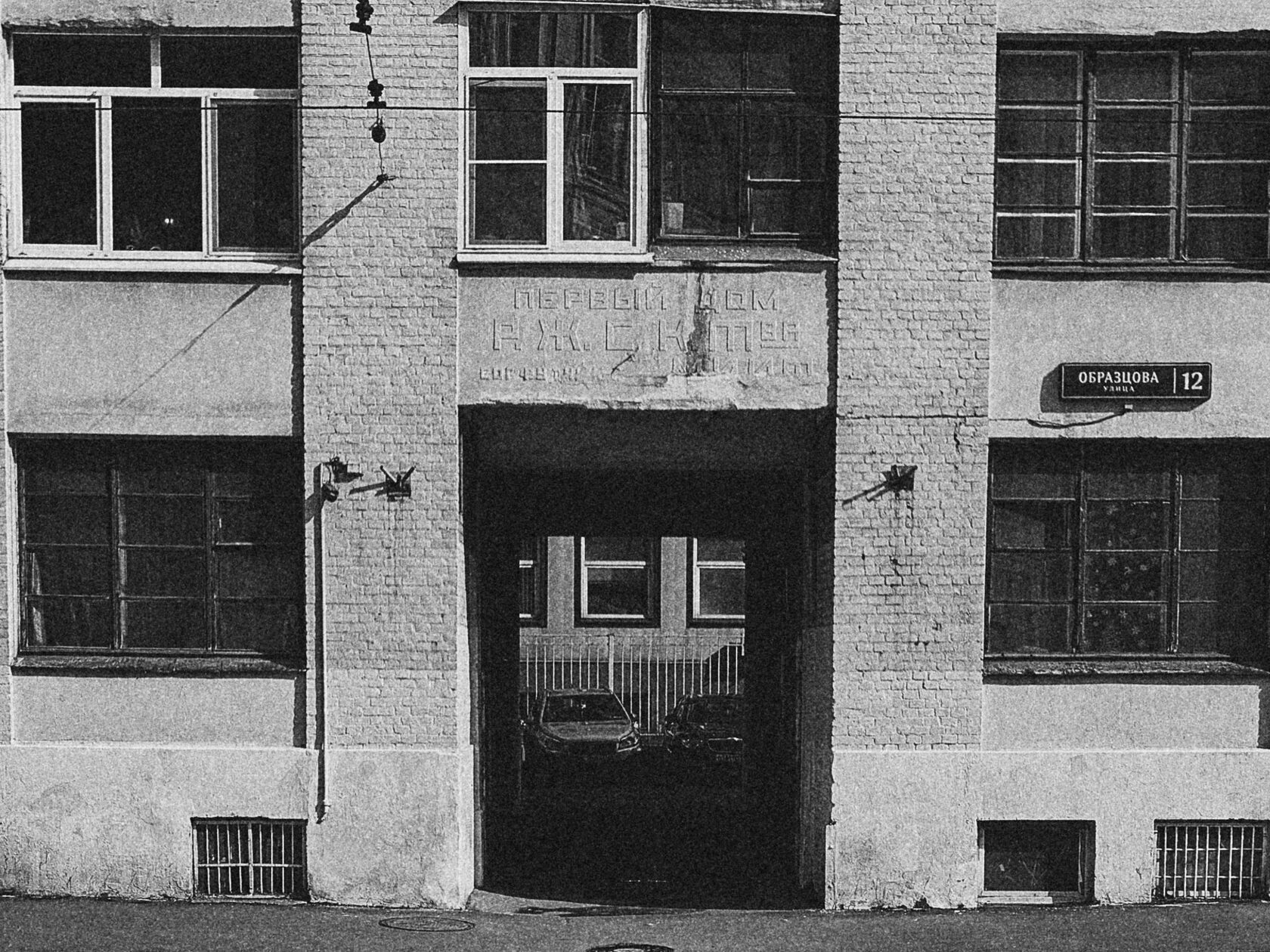
The first house of the Russian railway building cooperative partnershipПервый дом Русского железнодорожного строительного кооператива俄罗斯铁路建设合作社第一住宅Erstes Haus der russischen Eisenbahnbau-GenossenschaftPremier immeuble de la coopérative russe de construction ferroviairePrimer edificio de la cooperativa rusa de construcción ferroviariaPrimeiro edifício da cooperativa russa de construção ferroviária
The object remains in the sequence for the precision of its trace: a facade, a rhythm, a corner, a proportion. It does not need to be spectacular; it works as one more sentence in a larger architectural language.Объект остается в серии благодаря точности следа: фасад, ритм, угол, пропорция. Ему не нужно быть эффектным; он работает как еще одна фраза в большом архитектурном языке.这个对象留在系列中,是因为它的痕迹足够精确:立面、节奏、转角、比例。它不需要壮观;它像更大建筑语言中的又一句话。Das Objekt bleibt wegen der Präzision seiner Spur in der Serie: Fassade, Rhythmus, Ecke, Proportion. Es muss nicht spektakulär sein; es funktioniert als ein weiterer Satz in einer größeren architektonischen Sprache.L'objet demeure dans la série par la précision de sa trace : façade, rythme, angle, proportion. Il n'a pas besoin d'être spectaculaire ; il fonctionne comme une phrase de plus dans un langage architectural plus vaste.El objeto permanece en la serie por la precisión de su huella: fachada, ritmo, esquina, proporción. No necesita ser espectacular; funciona como una frase más dentro de un lenguaje arquitectónico mayor.O objeto permanece na série pela precisão de seu vestígio: fachada, ritmo, esquina, proporção. Não precisa ser espetacular; funciona como mais uma frase dentro de uma linguagem arquitetônica maior.
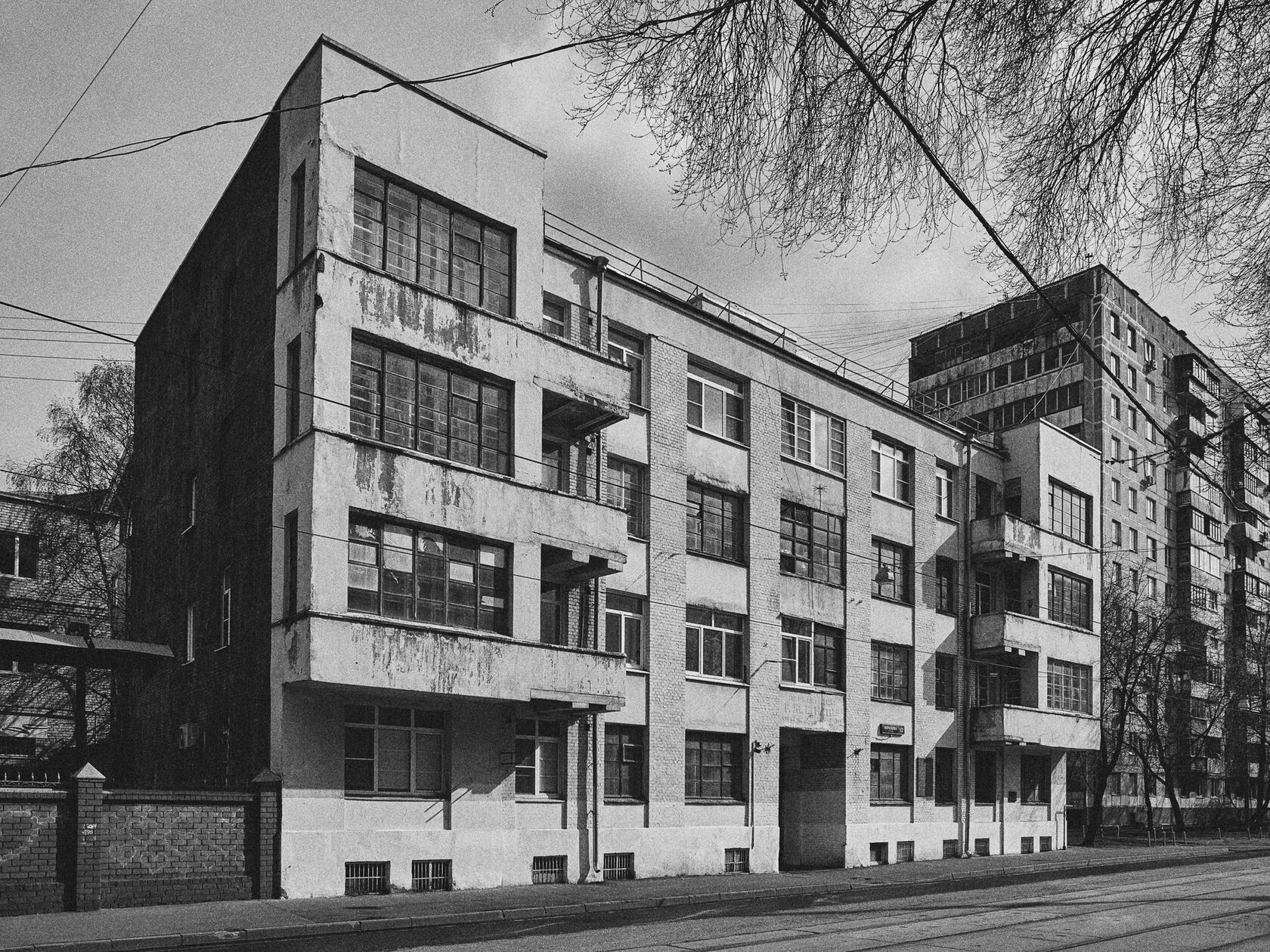
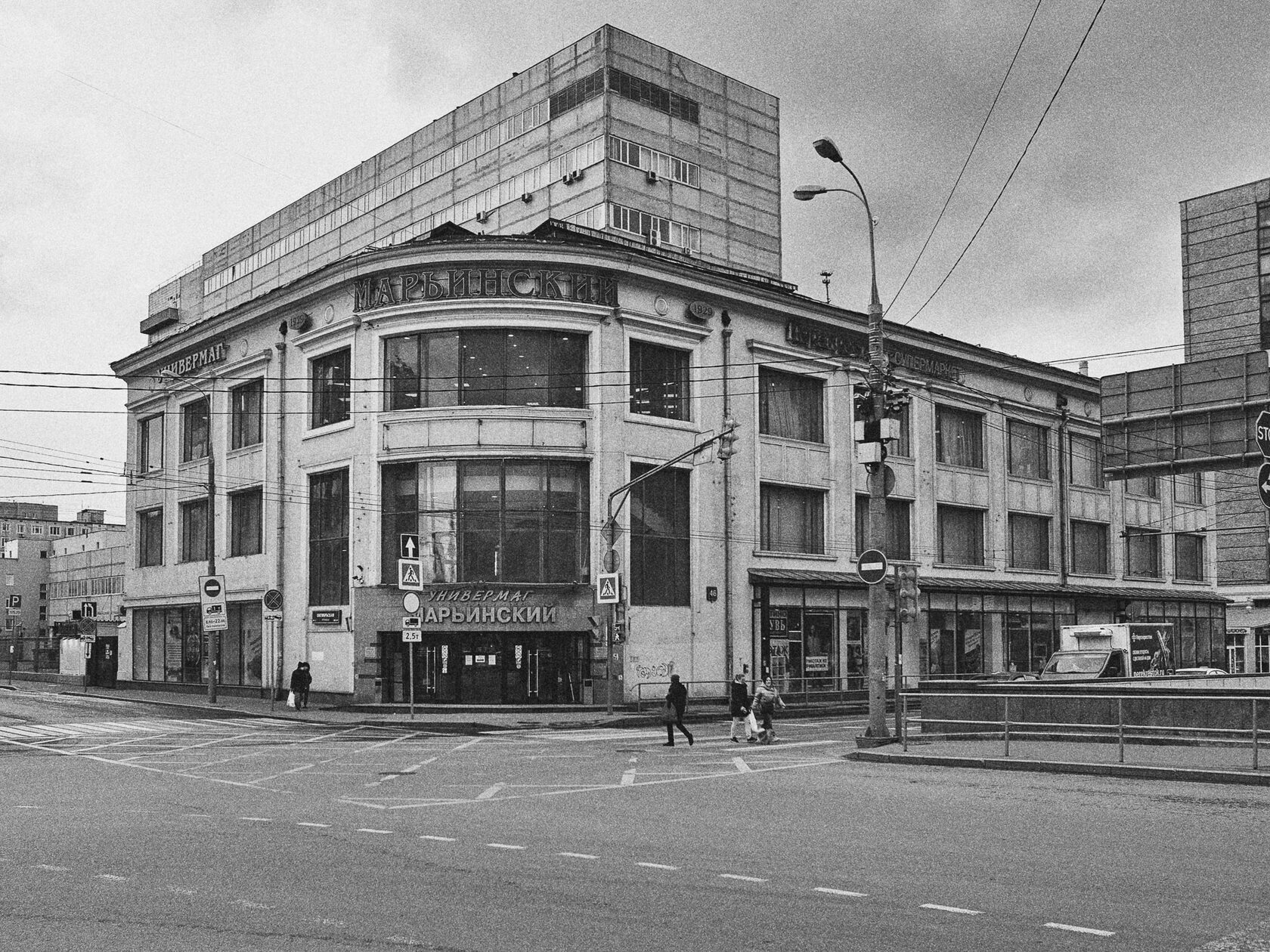
Maryinsky Mostorg (MSPO Krasnaya Presnya Department Store)Марьинский Мосторг / универмаг «Красная Пресня»马林斯基莫斯托尔格 / 克拉斯纳亚普列斯尼亚百货商店Maryinsky Mostorg / Kaufhaus Krasnaya PresnyaMaryinsky Mostorg / grand magasin Krasnaya PresnyaMaryinsky Mostorg / grandes almacenes Krasnaya PresnyaMaryinsky Mostorg / loja de departamentos Krasnaya Presnya
The building belongs to the constructivist everyday: food, purchase, production, distribution. Such architecture matters because it does not separate ideology from routine; it places the future inside ordinary actions.Здание принадлежит конструктивистской повседневности: еда, покупка, производство, распределение. Такая архитектура важна именно потому, что не отделяет идеологию от рутины, а помещает будущее внутрь обычных действий.这座建筑属于建构主义的日常:食物、购买、生产、分配。它重要,正因为它不把意识形态同惯例分开,而是把未来放进普通动作之中。Das Gebäude gehört zum konstruktivistischen Alltag: Essen, Einkauf, Produktion, Verteilung. Solche Architektur ist wichtig, weil sie Ideologie nicht von Routine trennt, sondern die Zukunft in gewöhnliche Handlungen legt.Le bâtiment appartient au quotidien constructiviste : manger, acheter, produire, distribuer. Cette architecture importe précisément parce qu'elle ne sépare pas l'idéologie de la routine ; elle place l'avenir dans les gestes ordinaires.El edificio pertenece a la vida cotidiana constructivista: comida, compra, producción, distribución. Esta arquitectura importa porque no separa ideología y rutina; coloca el futuro dentro de acciones ordinarias.O edifício pertence ao cotidiano construtivista: comida, compra, produção, distribuição. Essa arquitetura importa porque não separa ideologia de rotina; coloca o futuro dentro de ações comuns.
Garage "Intourist"Гараж «Интурист»“Intourist”车库Garage "Intourist"Garage « Intourist »Garaje «Intourist»Garagem «Intourist»
The building is read through movement: arrival, departure, service, waiting, repair. It is less an object than a pause inside a larger route, a place where modern life briefly becomes visible as logistics.Здание читается через движение: прибытие, отправление, обслуживание, ожидание, ремонт. Это не столько объект, сколько остановка внутри большого маршрута, место, где современная жизнь на мгновение становится видимой как логистика.这座建筑通过移动来阅读:抵达、出发、服务、等待、修理。它与其说是一个对象,不如说是更大路线中的一次停顿,一个现代生活短暂显现为物流的地点。Das Gebäude wird durch Bewegung gelesen: Ankunft, Abfahrt, Service, Warten, Reparatur. Es ist weniger ein Objekt als eine Pause in einer größeren Route, ein Ort, an dem modernes Leben kurz als Logistik sichtbar wird.Le bâtiment se lit par le mouvement : arrivée, départ, service, attente, réparation. C'est moins un objet qu'une pause dans un trajet plus vaste, un lieu où la vie moderne devient brièvement visible comme logistique.El edificio se lee a través del movimiento: llegada, salida, servicio, espera, reparación. Es menos un objeto que una pausa dentro de una ruta mayor, un lugar donde la vida moderna se vuelve visible por un momento como logística.O edifício é lido pelo movimento: chegada, partida, serviço, espera, reparo. É menos um objeto do que uma pausa dentro de uma rota maior, um lugar onde a vida moderna se torna brevemente visível como logística.
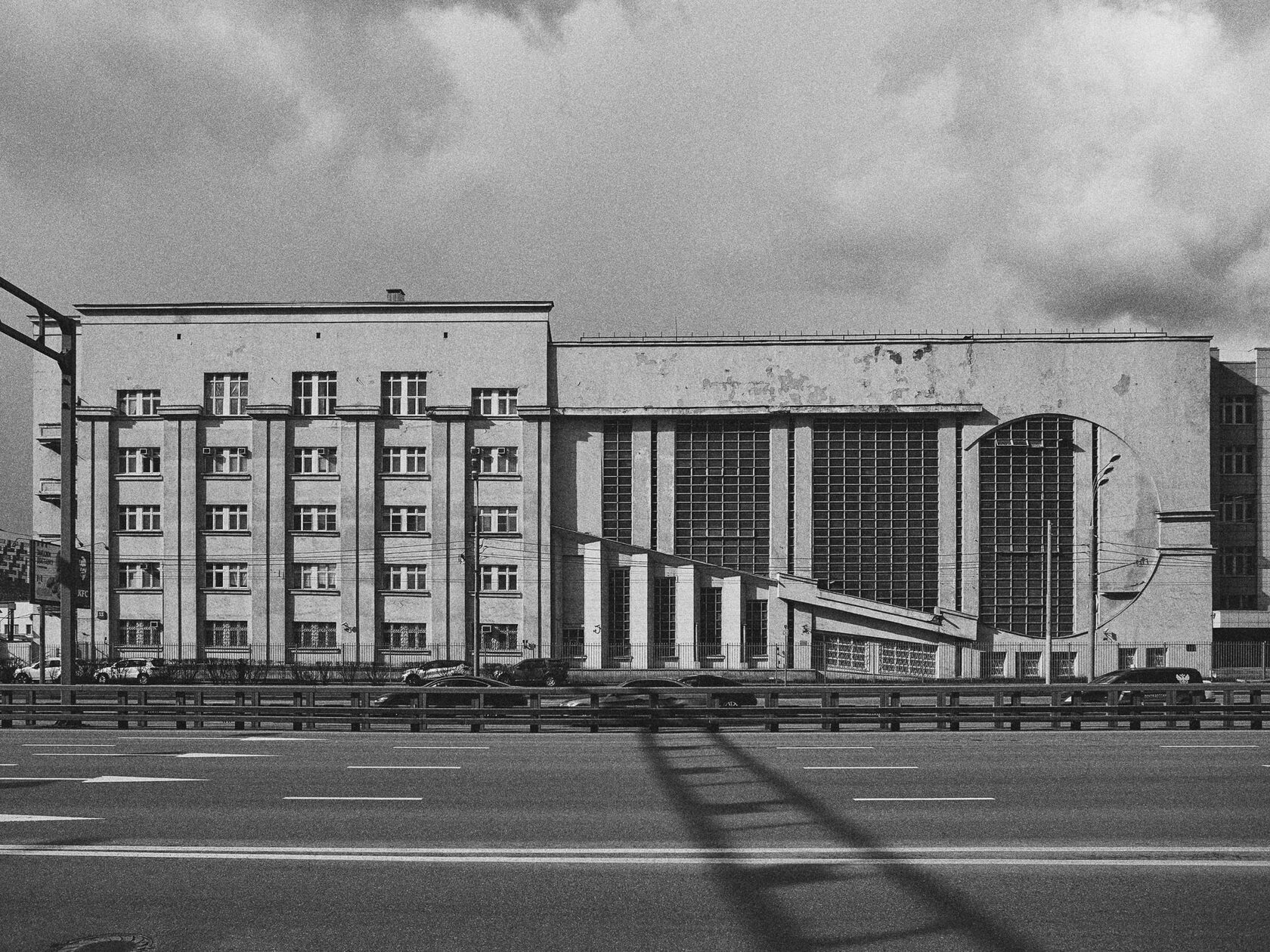
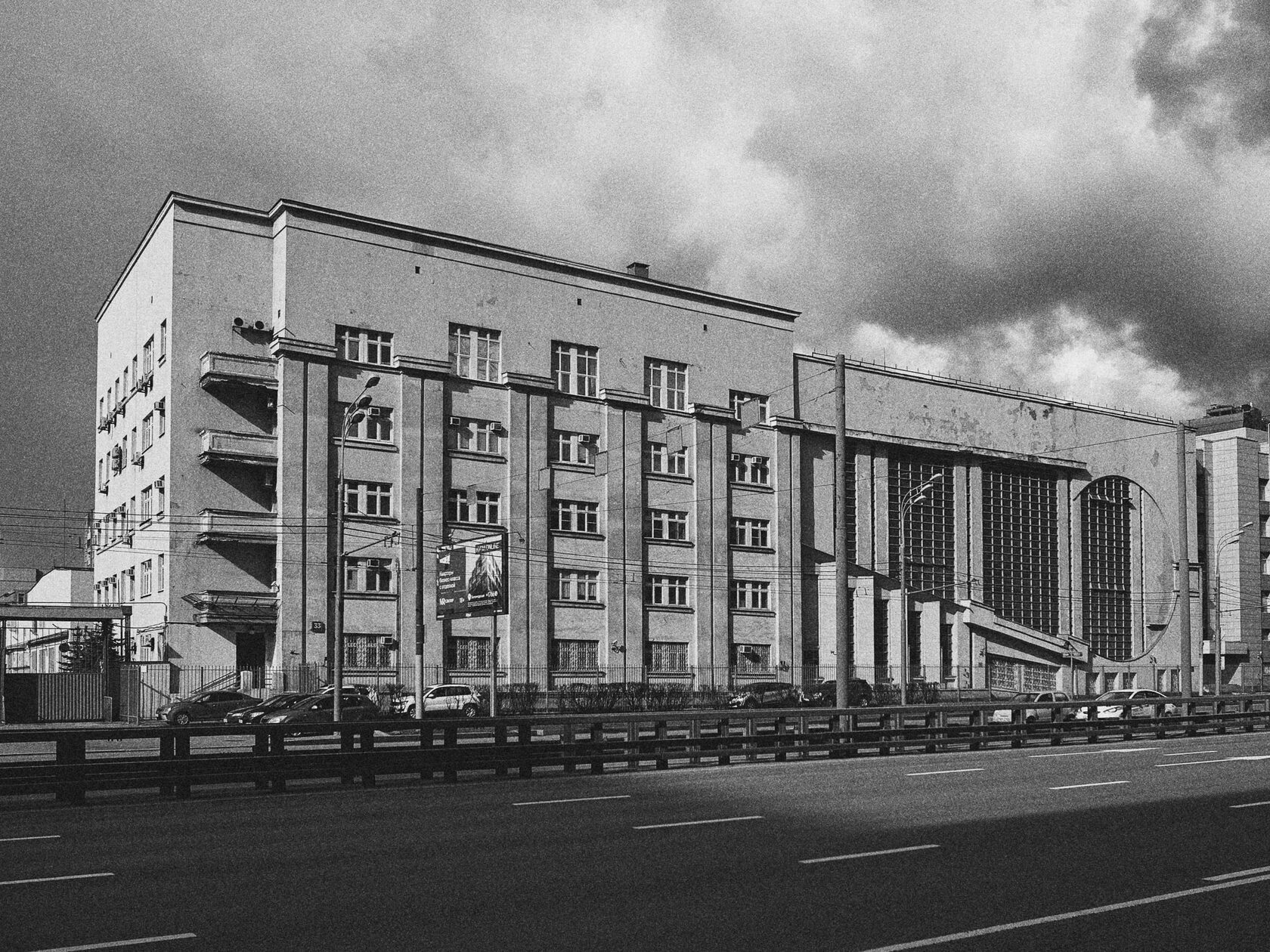
MIIT club and hostelКлуб и общежитие МИИТMIIT 俱乐部与宿舍MIIT-Klub und WohnheimClub et foyer du MIITClub y residencia del MIITClube e alojamento do MIIT
The building is photographed as a public interior turned outward. The facade carries the promise of assembly: lectures, rehearsals, meetings, cinema, theatre, music, and the belief that culture could be organized as part of everyday life.Здание снято как общественный интерьер, вывернутый наружу. Фасад удерживает обещание собрания: лекции, репетиции, встречи, кино, театр, музыку и веру в то, что культуру можно встроить в повседневность.这座建筑被拍成向外翻开的公共室内。立面保存着集会的承诺:讲座、排练、会议、电影、戏剧、音乐,以及文化可以被编入日常生活的信念。Das Gebäude wird als nach außen gekehrtes öffentliches Interieur fotografiert. Die Fassade trägt das Versprechen der Versammlung: Vorträge, Proben, Treffen, Kino, Theater, Musik und den Glauben, Kultur könne Teil des Alltags werden.Le bâtiment est photographié comme un intérieur public retourné vers l'extérieur. La façade porte la promesse du rassemblement : conférences, répétitions, réunions, cinéma, théâtre, musique, et la croyance que la culture pouvait être intégrée au quotidien.El edificio se fotografía como un interior público vuelto hacia fuera. La fachada sostiene la promesa de reunión: conferencias, ensayos, encuentros, cine, teatro, música y la creencia de que la cultura podía organizarse dentro de la vida cotidiana.O edifício é fotografado como um interior público virado para fora. A fachada guarda a promessa da reunião: palestras, ensaios, encontros, cinema, teatro, música e a crença de que a cultura podia ser organizada dentro do cotidiano.
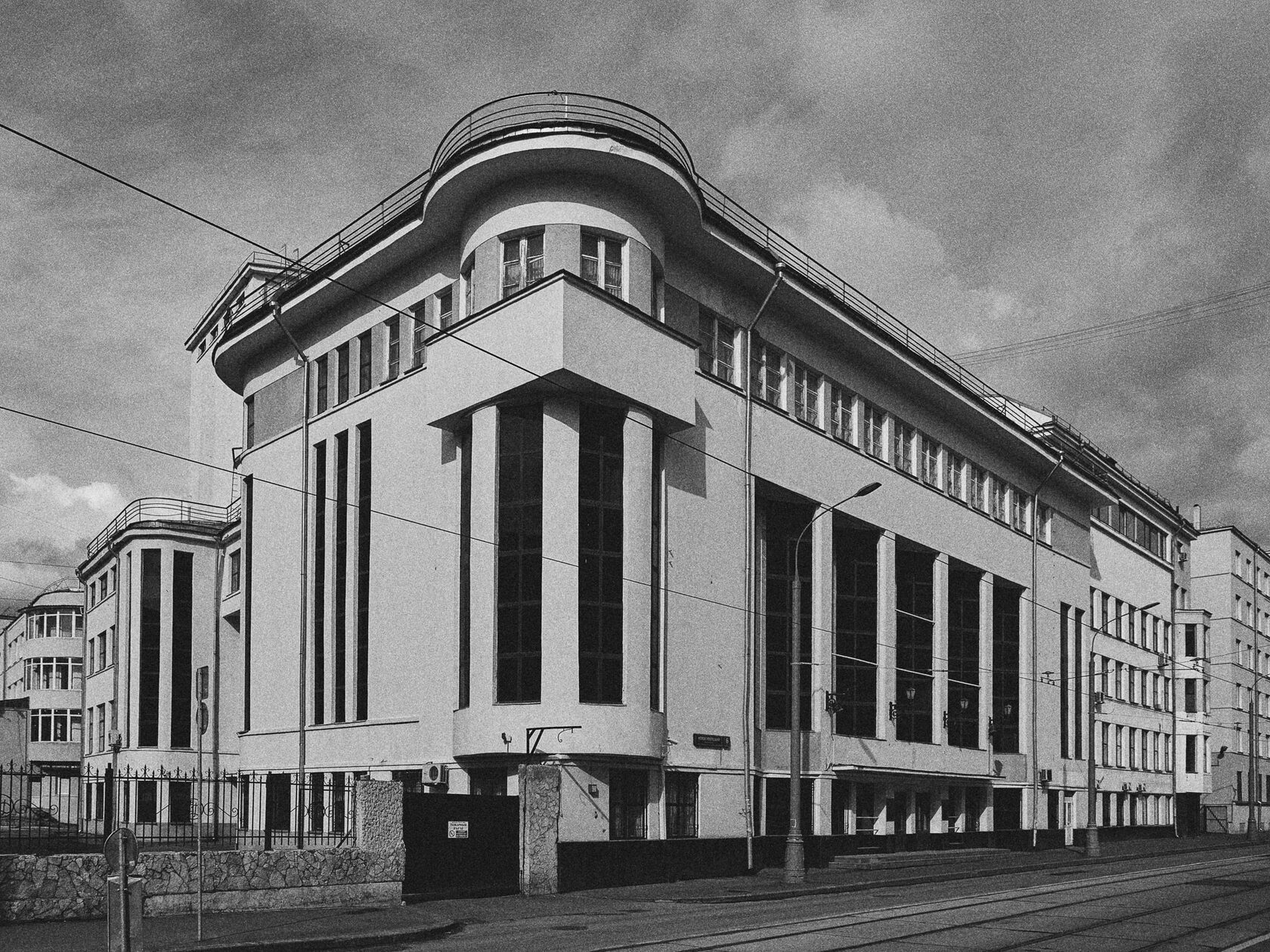
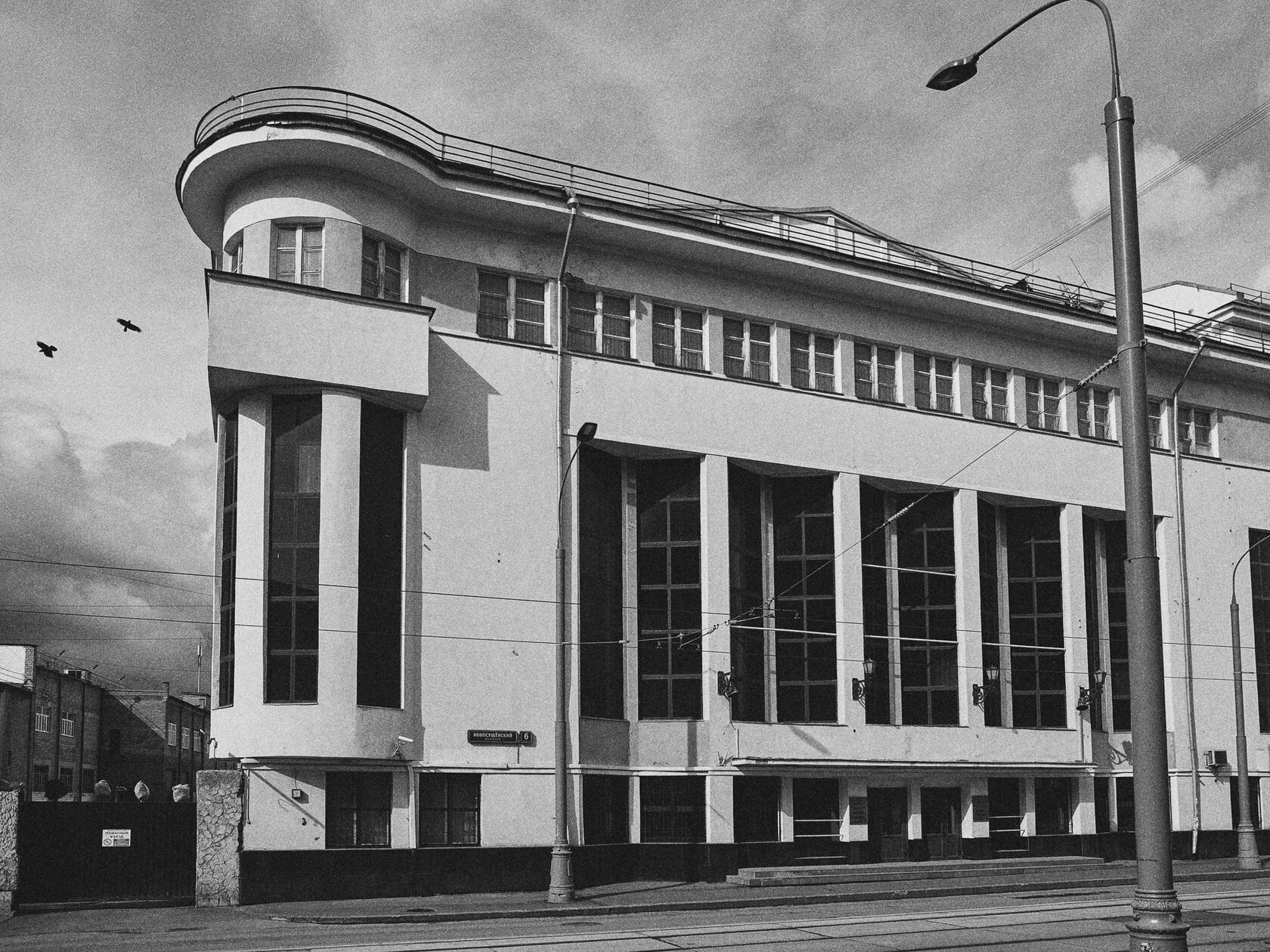
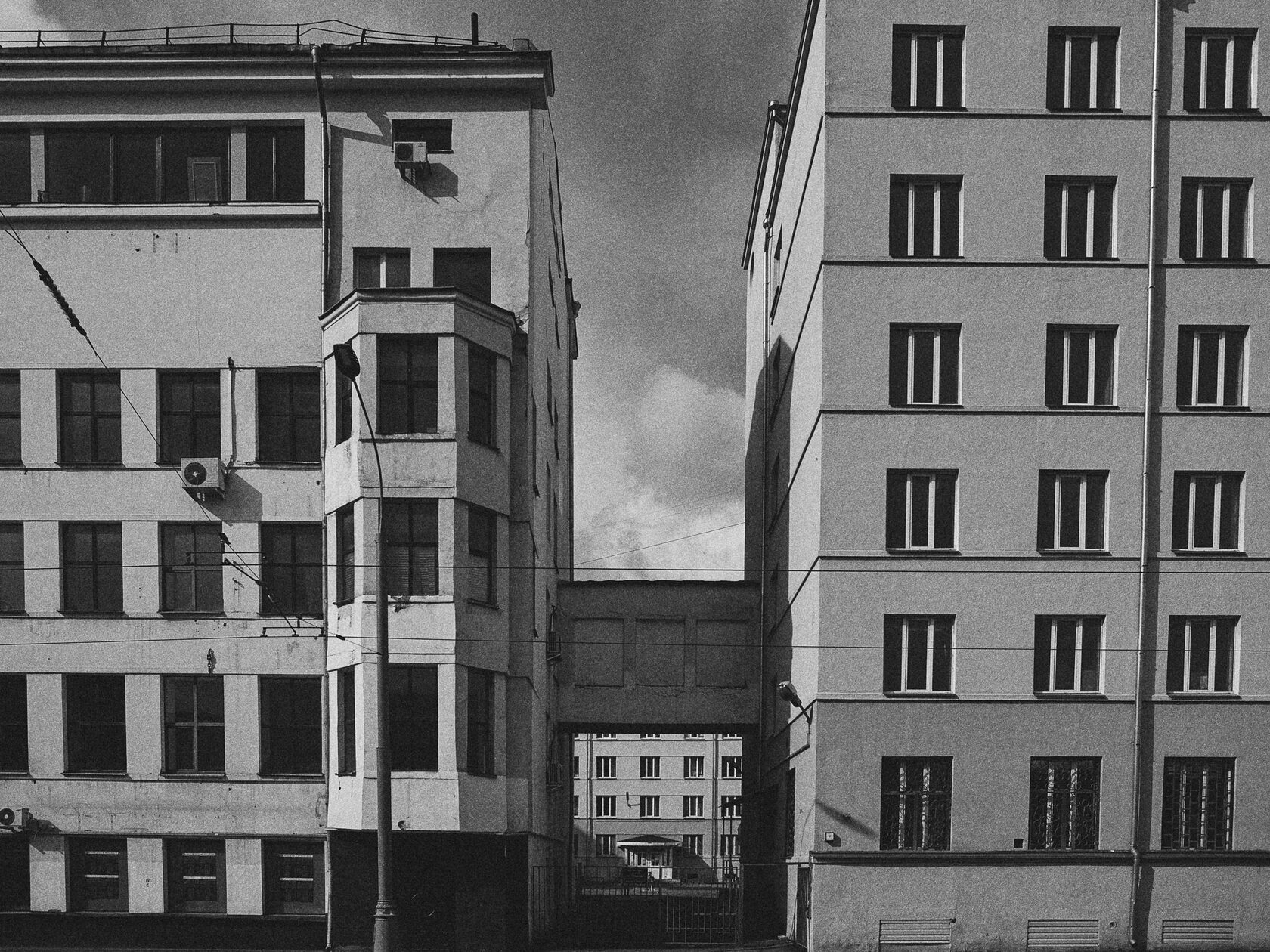
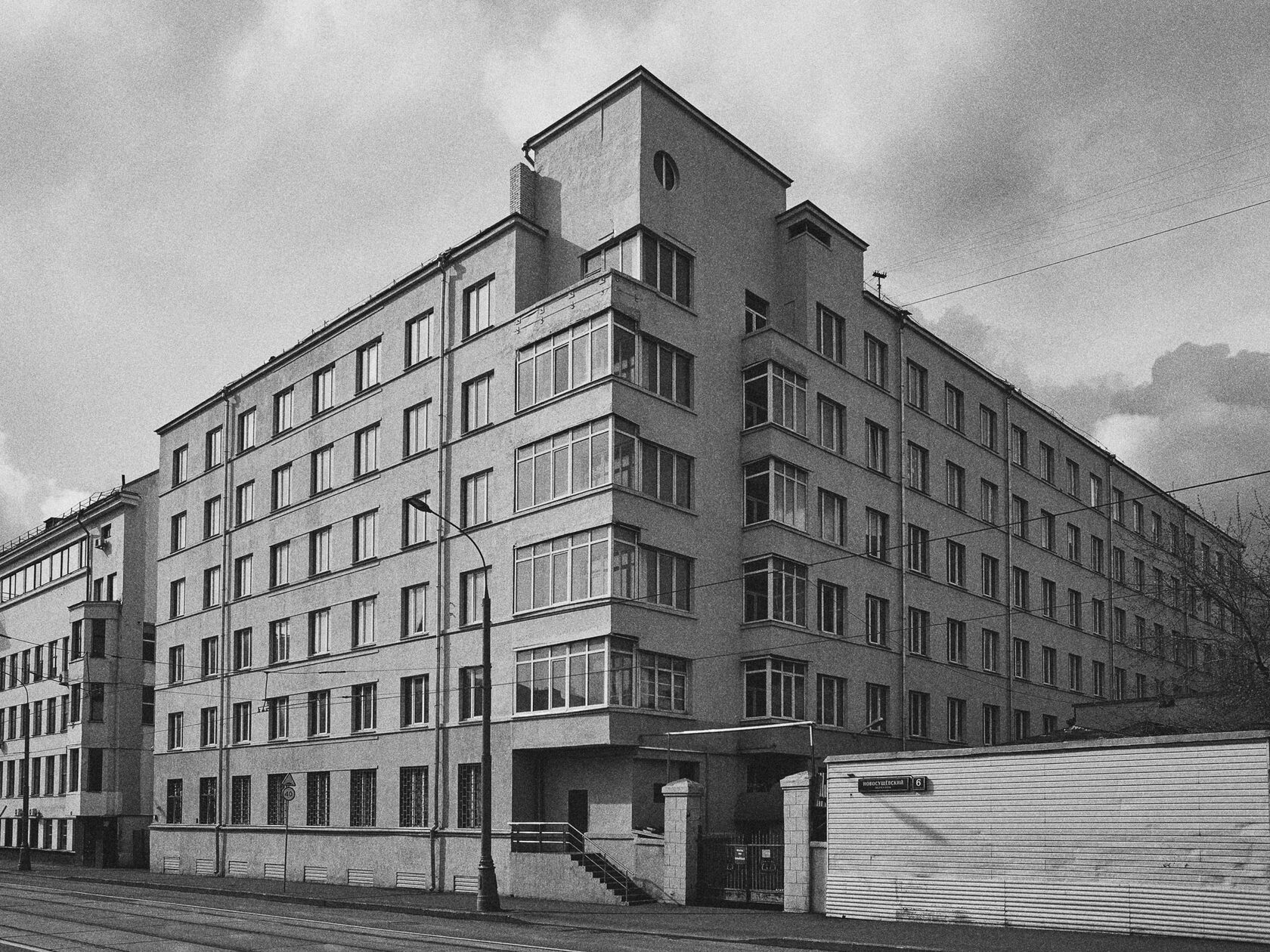
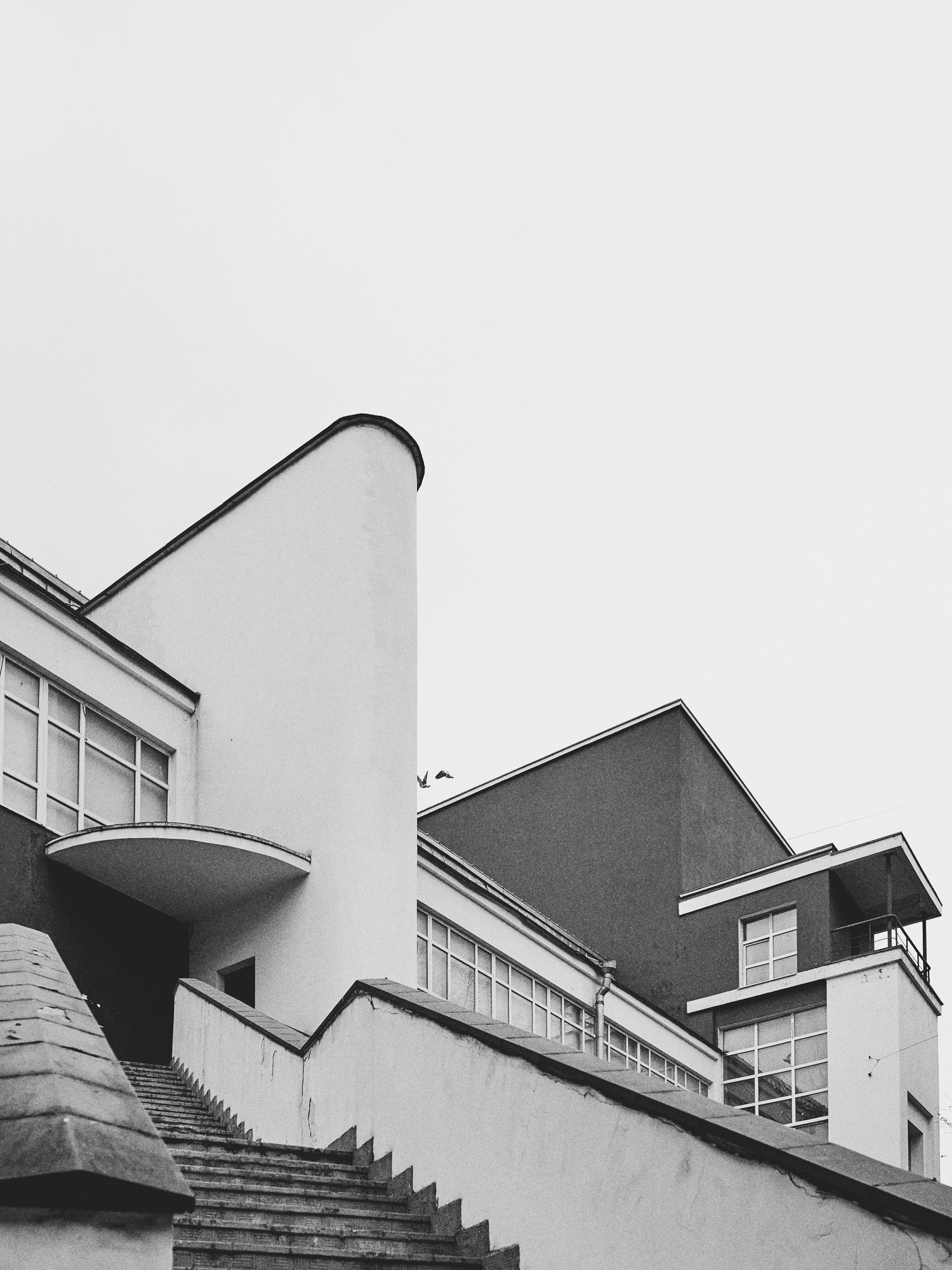
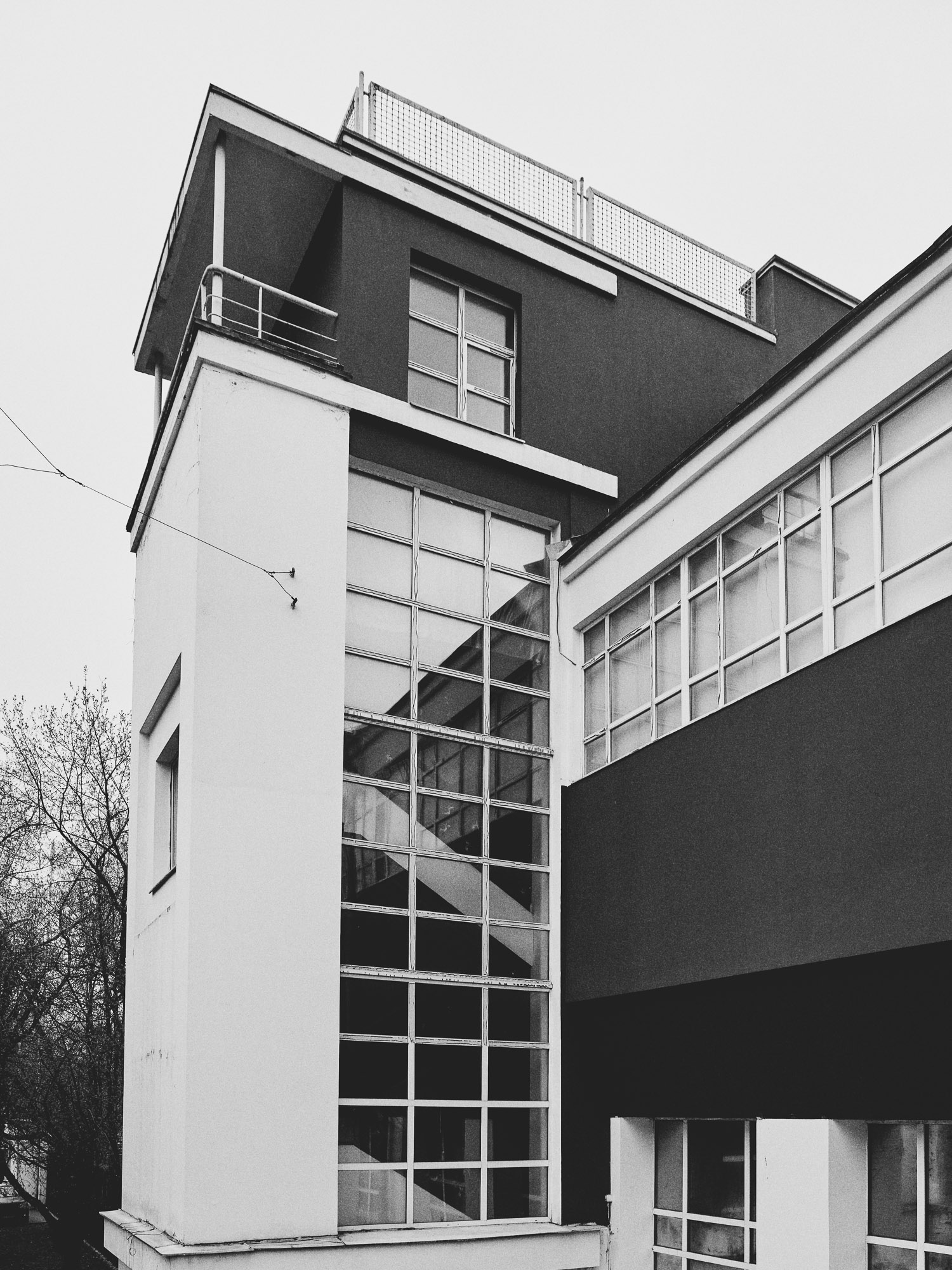
Svoboda Factory ClubКлуб фабрики «Свобода»“斯沃博达”工厂俱乐部Klub der Fabrik "Svoboda"Club de l'usine « Svoboda »Club de la fábrica «Svoboda»Clube da fábrica «Svoboda»
The building is photographed as a public interior turned outward. The facade carries the promise of assembly: lectures, rehearsals, meetings, cinema, theatre, music, and the belief that culture could be organized as part of everyday life.Здание снято как общественный интерьер, вывернутый наружу. Фасад удерживает обещание собрания: лекции, репетиции, встречи, кино, театр, музыку и веру в то, что культуру можно встроить в повседневность.这座建筑被拍成向外翻开的公共室内。立面保存着集会的承诺:讲座、排练、会议、电影、戏剧、音乐,以及文化可以被编入日常生活的信念。Das Gebäude wird als nach außen gekehrtes öffentliches Interieur fotografiert. Die Fassade trägt das Versprechen der Versammlung: Vorträge, Proben, Treffen, Kino, Theater, Musik und den Glauben, Kultur könne Teil des Alltags werden.Le bâtiment est photographié comme un intérieur public retourné vers l'extérieur. La façade porte la promesse du rassemblement : conférences, répétitions, réunions, cinéma, théâtre, musique, et la croyance que la culture pouvait être intégrée au quotidien.El edificio se fotografía como un interior público vuelto hacia fuera. La fachada sostiene la promesa de reunión: conferencias, ensayos, encuentros, cine, teatro, música y la creencia de que la cultura podía organizarse dentro de la vida cotidiana.O edifício é fotografado como um interior público virado para fora. A fachada guarda a promessa da reunião: palestras, ensaios, encontros, cinema, teatro, música e a crença de que a cultura podia ser organizada dentro do cotidiano.
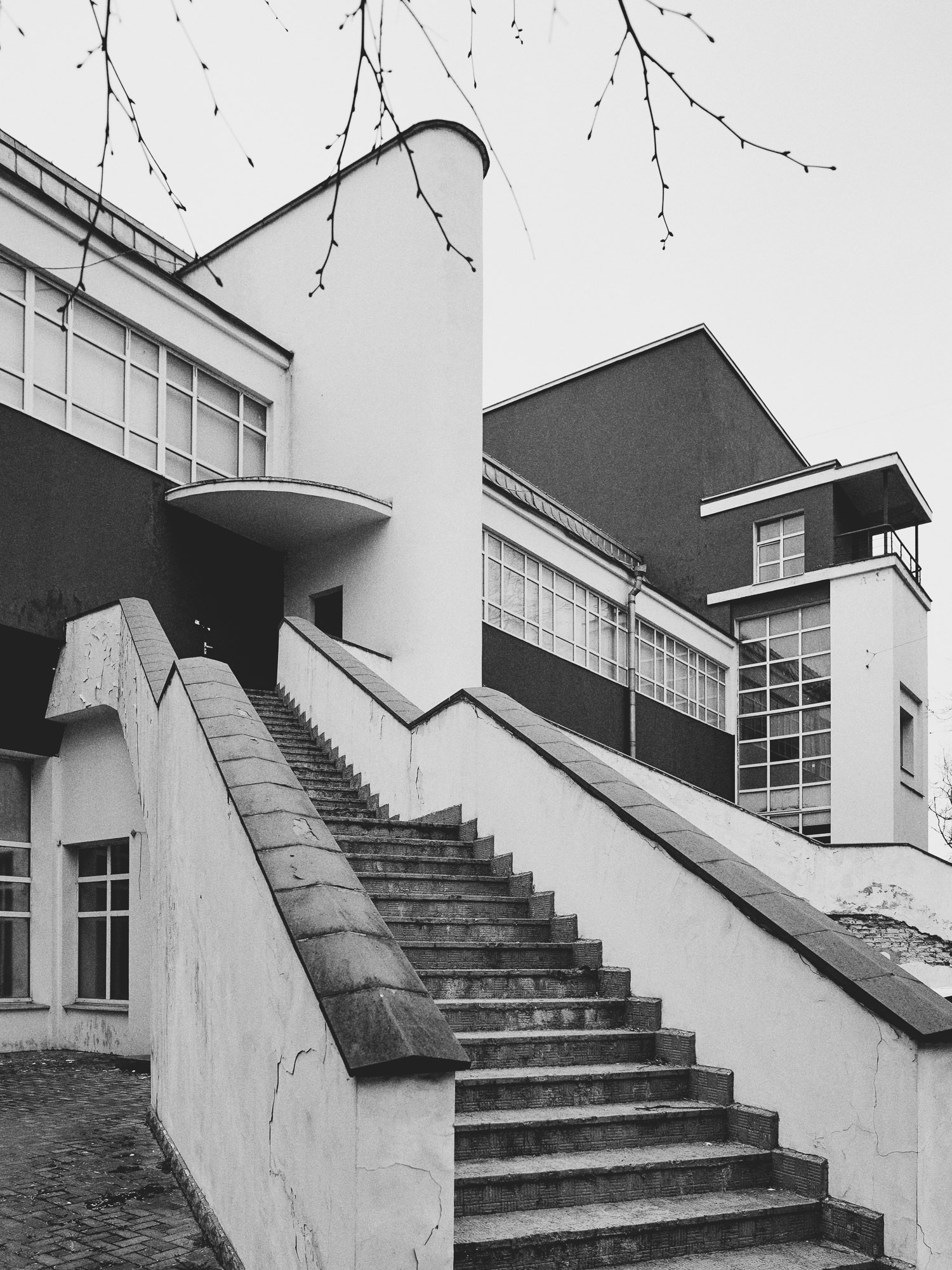
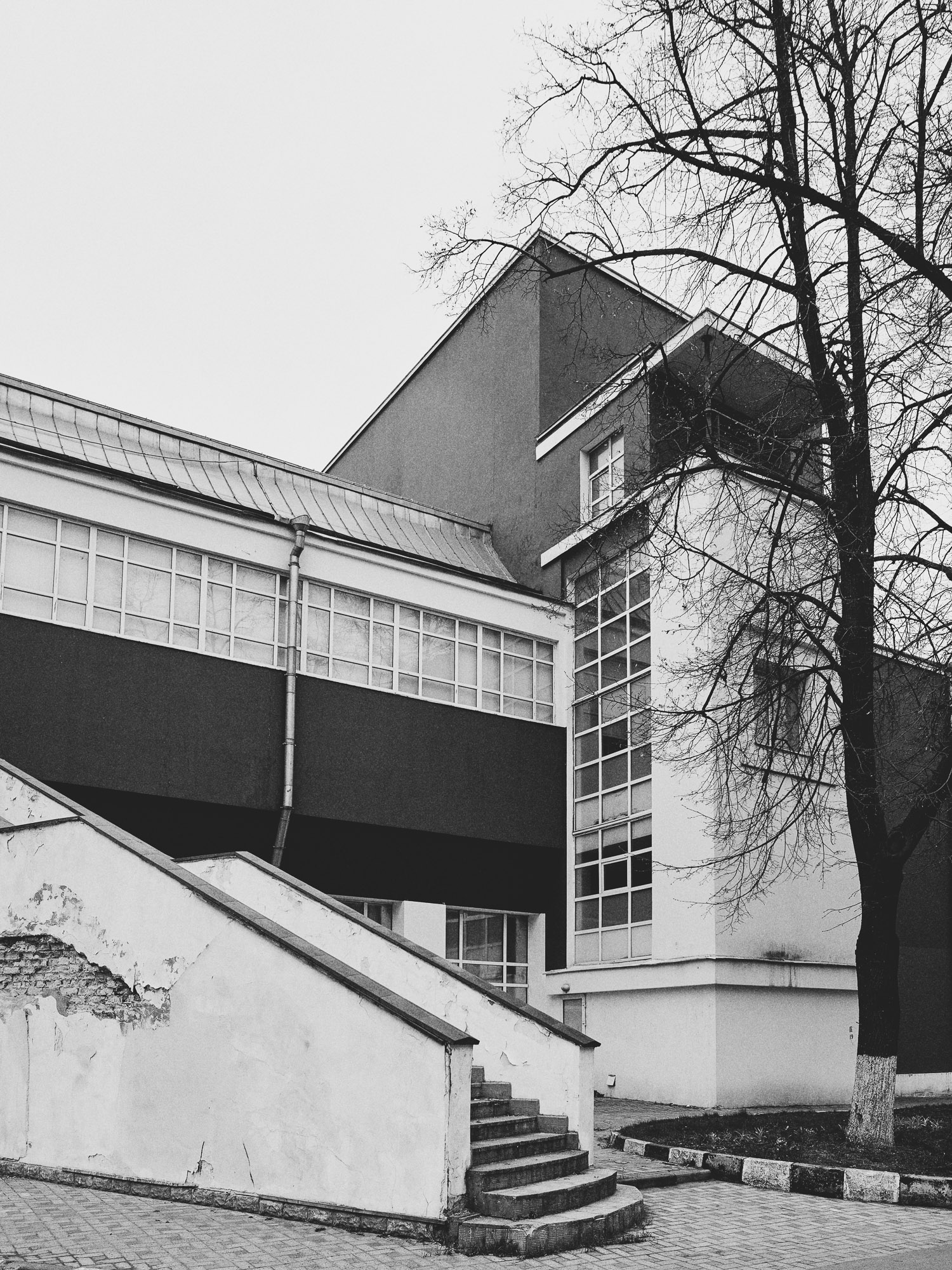
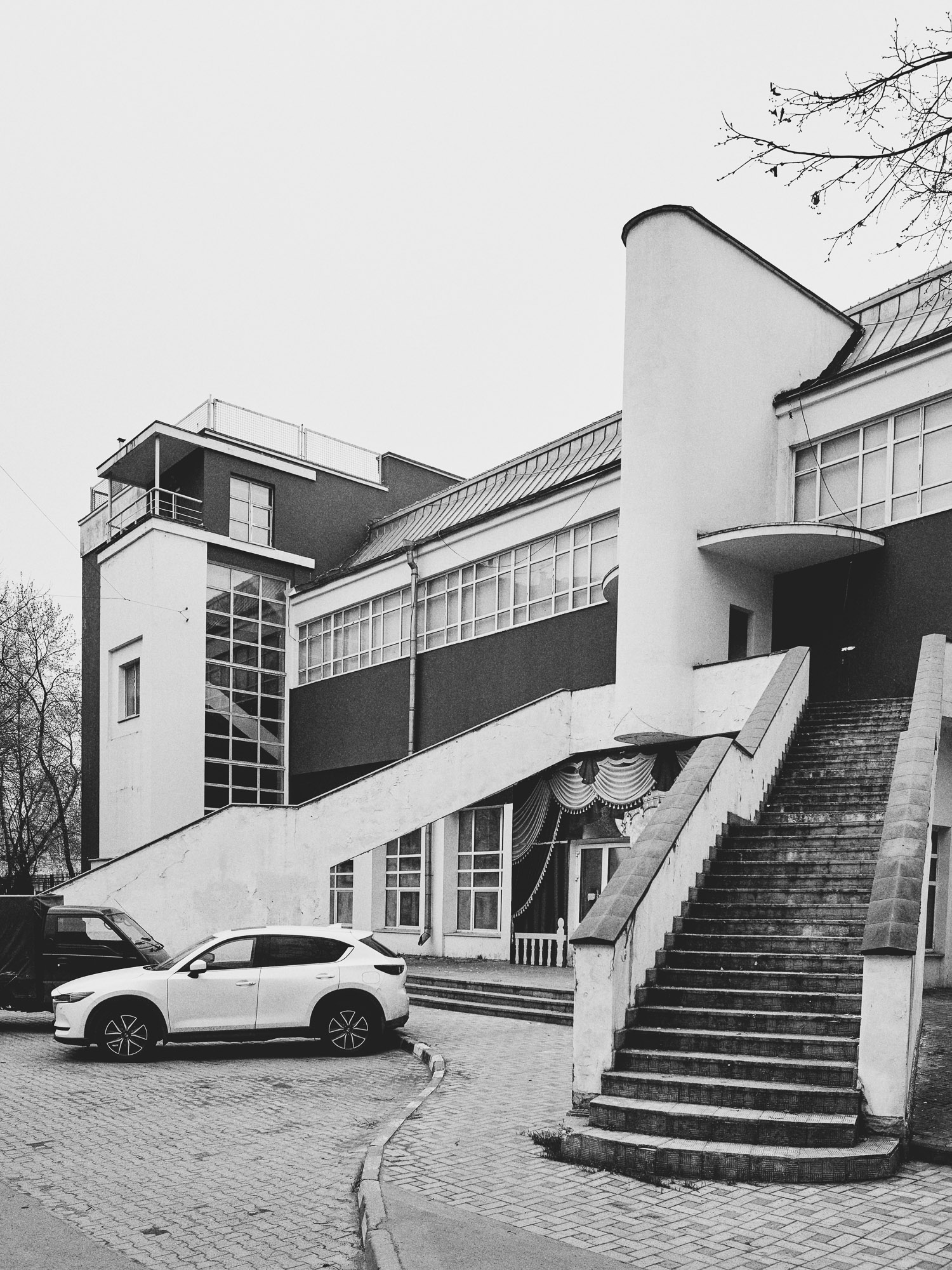
The Novo-Sukharevsky marketНово-Сухаревский рынок新苏哈列夫市场Novo-Sucharewski-MarktMarché Novo-SoukharevskyMercado Novo-SukharevskyMercado Novo-Sukharevsky
The building belongs to the constructivist everyday: food, purchase, production, distribution. Such architecture matters because it does not separate ideology from routine; it places the future inside ordinary actions.Здание принадлежит конструктивистской повседневности: еда, покупка, производство, распределение. Такая архитектура важна именно потому, что не отделяет идеологию от рутины, а помещает будущее внутрь обычных действий.这座建筑属于建构主义的日常:食物、购买、生产、分配。它重要,正因为它不把意识形态同惯例分开,而是把未来放进普通动作之中。Das Gebäude gehört zum konstruktivistischen Alltag: Essen, Einkauf, Produktion, Verteilung. Solche Architektur ist wichtig, weil sie Ideologie nicht von Routine trennt, sondern die Zukunft in gewöhnliche Handlungen legt.Le bâtiment appartient au quotidien constructiviste : manger, acheter, produire, distribuer. Cette architecture importe précisément parce qu'elle ne sépare pas l'idéologie de la routine ; elle place l'avenir dans les gestes ordinaires.El edificio pertenece a la vida cotidiana constructivista: comida, compra, producción, distribución. Esta arquitectura importa porque no separa ideología y rutina; coloca el futuro dentro de acciones ordinarias.O edifício pertence ao cotidiano construtivista: comida, compra, produção, distribuição. Essa arquitetura importa porque não separa ideologia de rotina; coloca o futuro dentro de ações comuns.
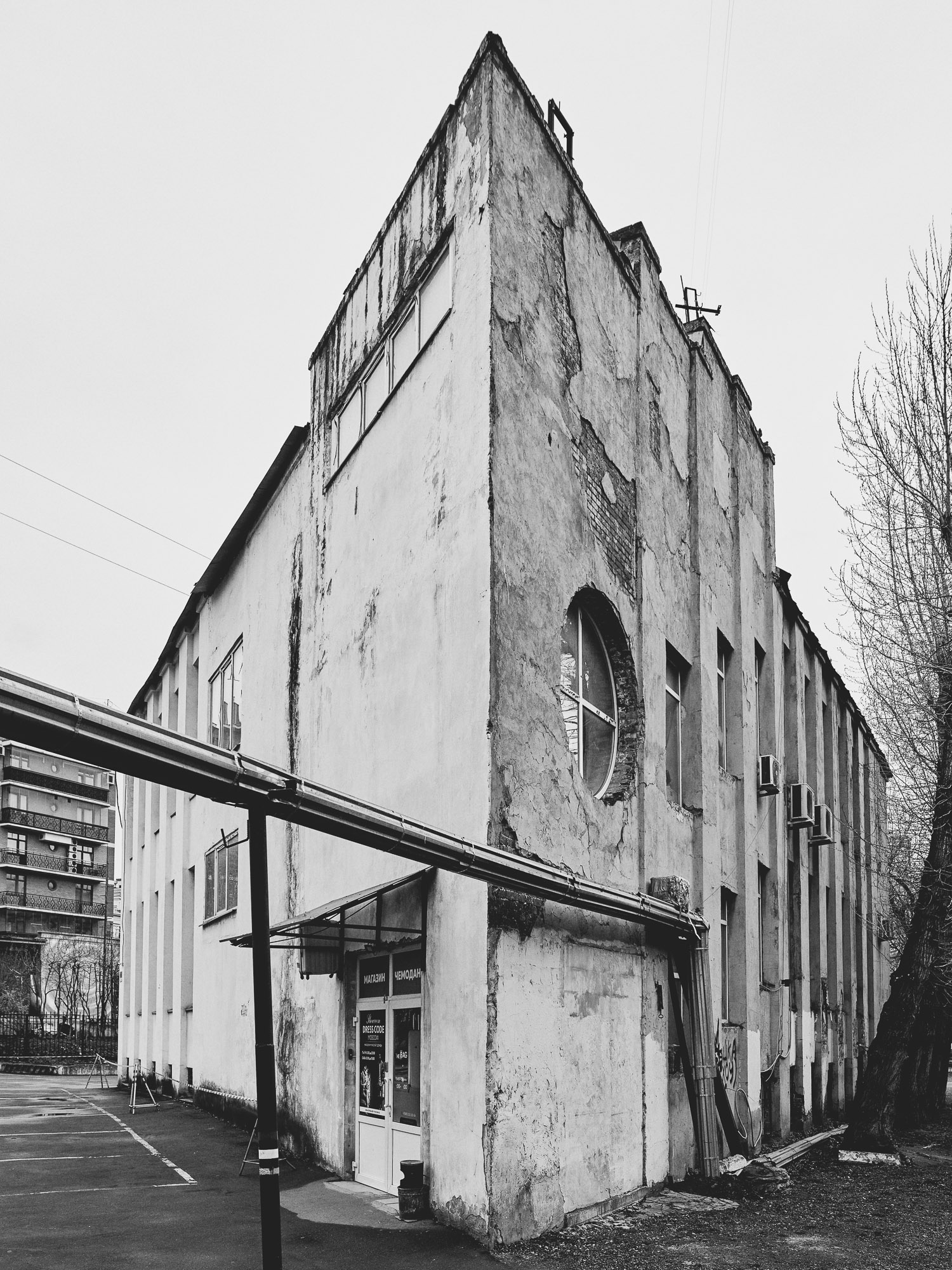
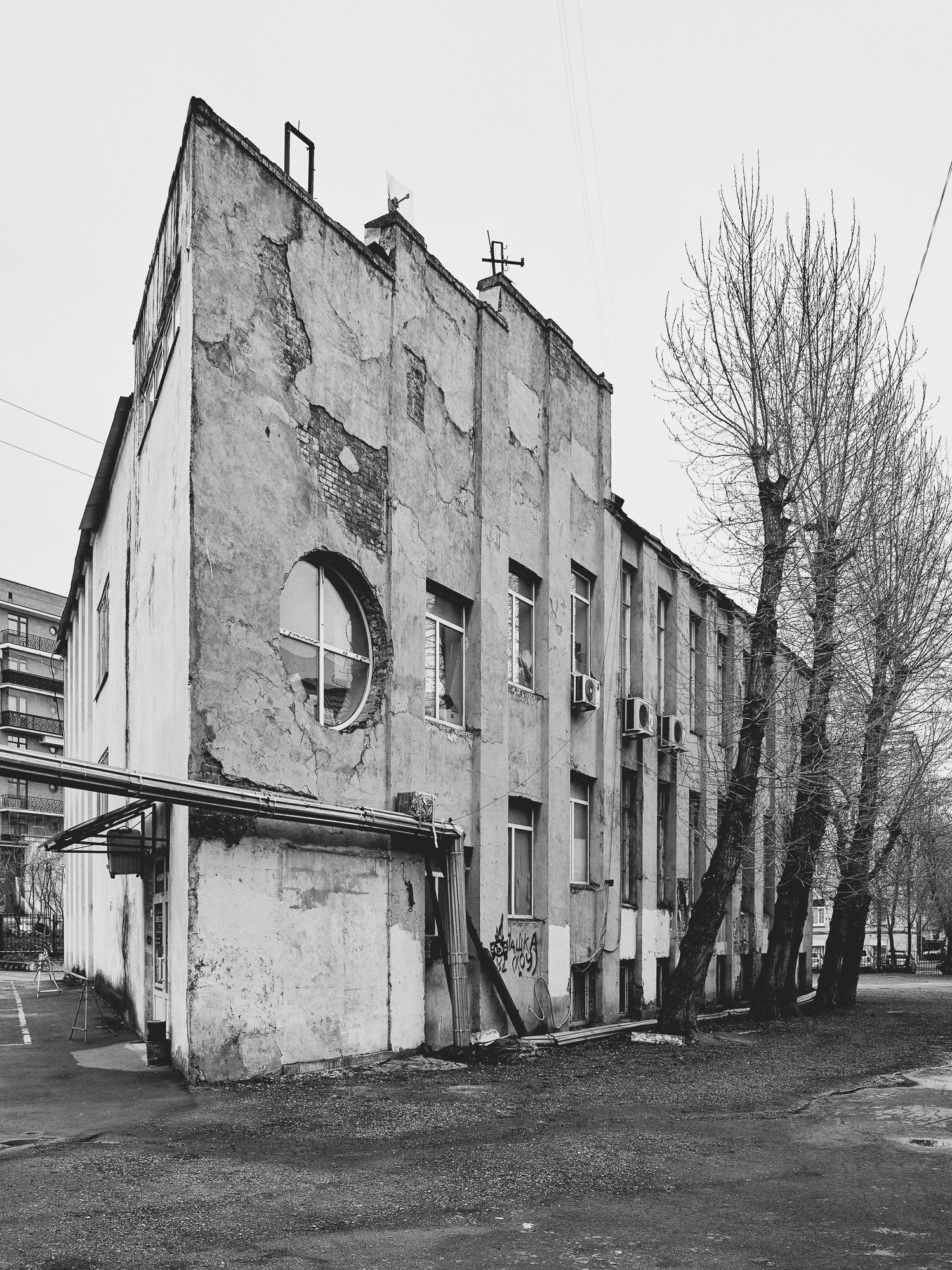
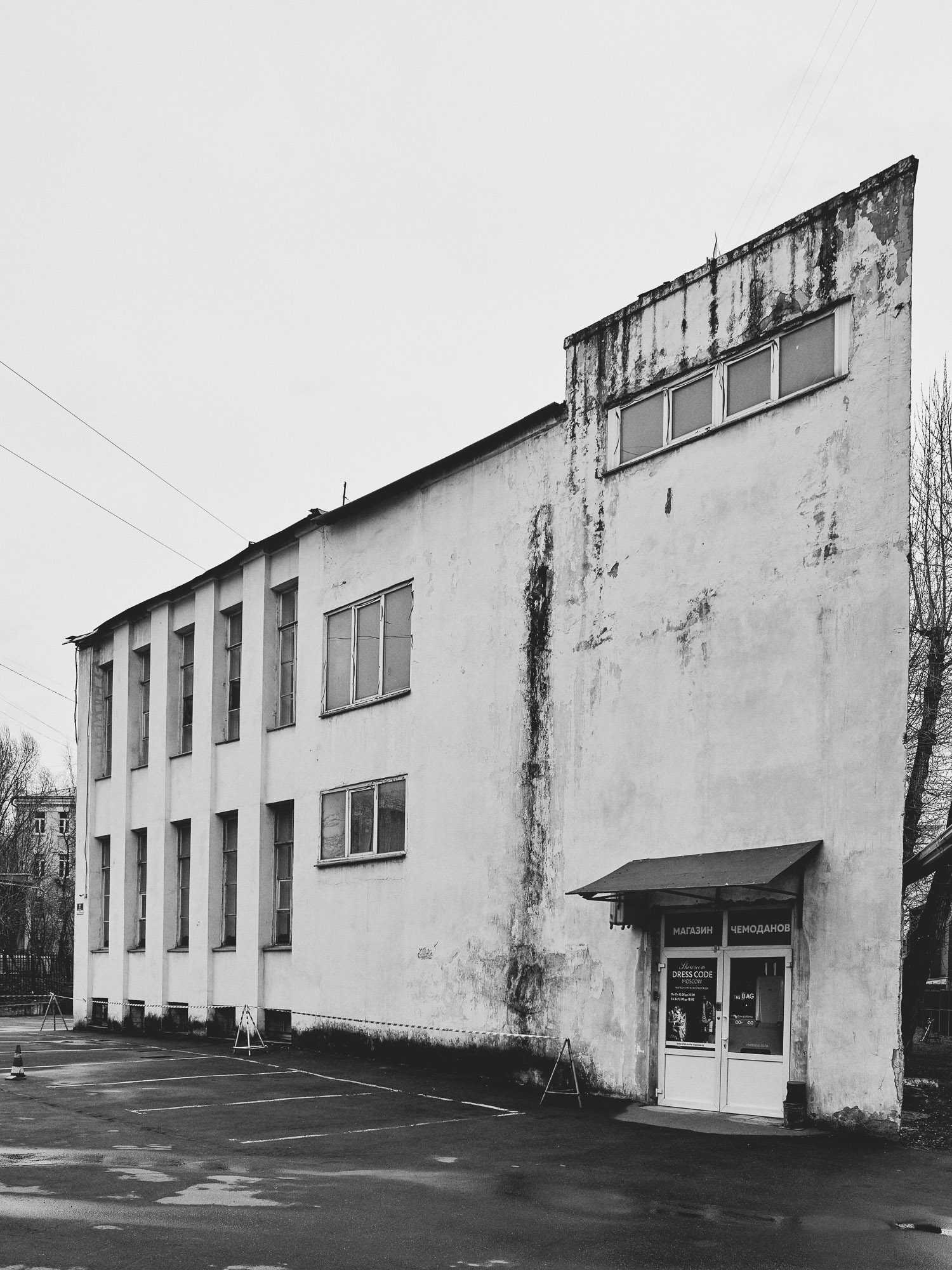
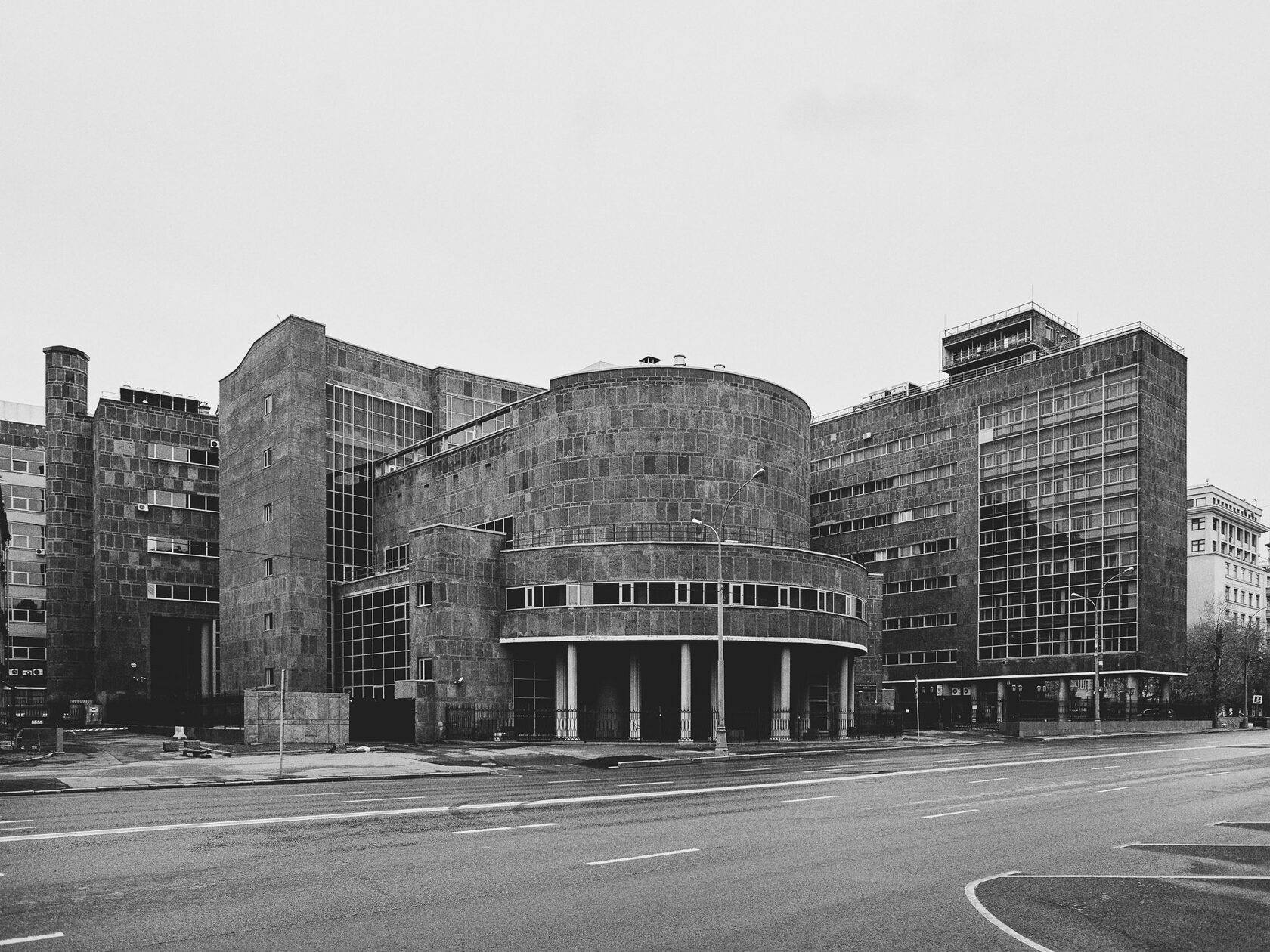
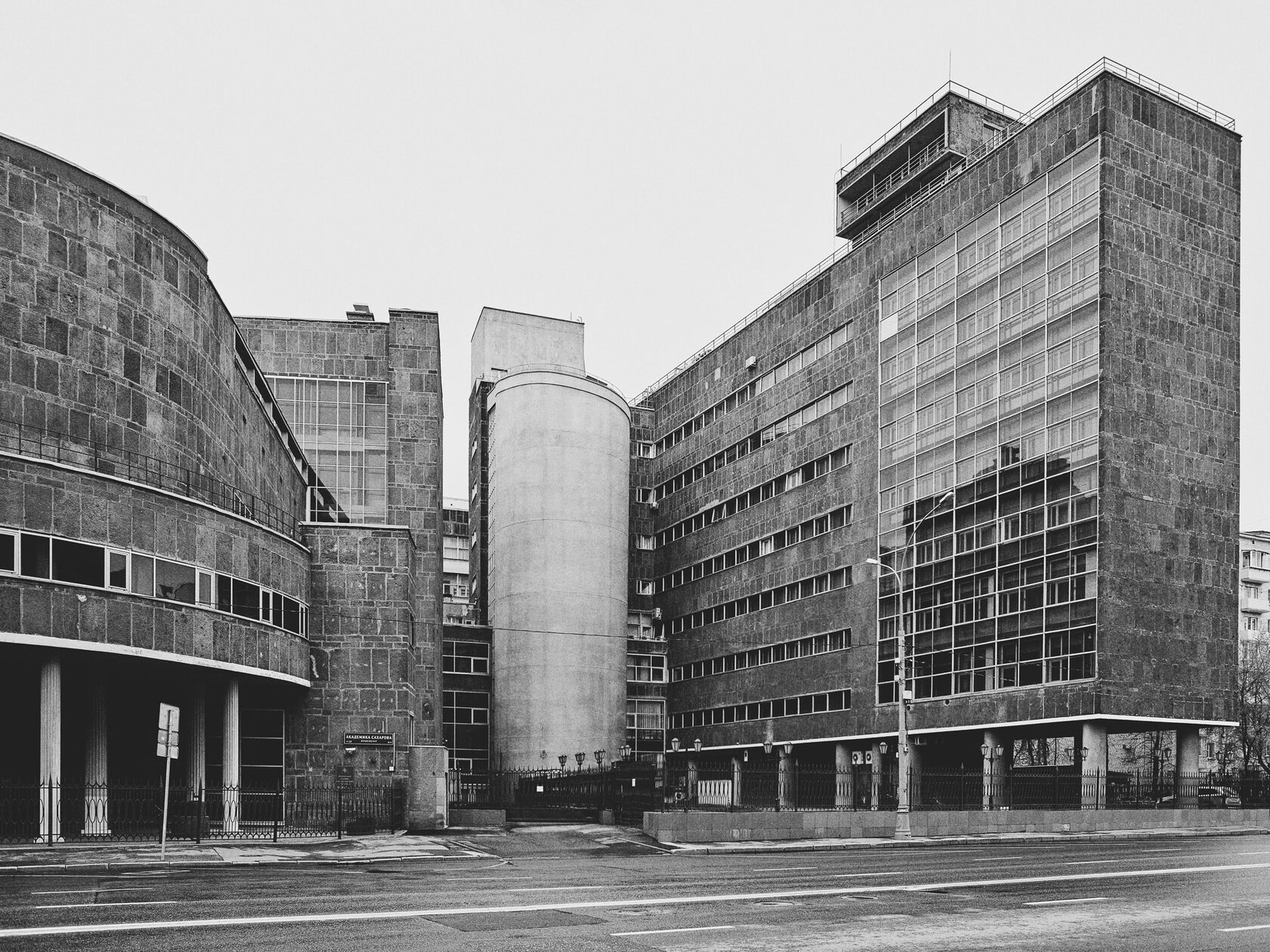
NarkomlegpromНаркомлегпром轻工业人民委员部NarkomlegpromNarkomlegpromNarkomlegpromNarkomlegprom
Here administration becomes form. The geometry is not neutral: it stages authority, planning, and the desire to make a new order visible through walls, windows, and scale.Здесь управление становится формой. Геометрия не нейтральна: она ставит на сцену власть, планирование и желание сделать новый порядок видимым через стены, окна и масштаб.在这里,行政变成了形式。几何并不中立:它把权力、规划以及让新秩序通过墙、窗和尺度变得可见的欲望推上舞台。Hier wird Verwaltung zur Form. Die Geometrie ist nicht neutral: Sie inszeniert Autorität, Planung und den Wunsch, eine neue Ordnung durch Wände, Fenster und Maßstab sichtbar zu machen.Ici, l'administration devient forme. La géométrie n'est pas neutre : elle met en scène l'autorité, la planification et le désir de rendre un nouvel ordre visible par les murs, les fenêtres et l'échelle.Aquí la administración se vuelve forma. La geometría no es neutra: escenifica autoridad, planificación y el deseo de hacer visible un nuevo orden mediante muros, ventanas y escala.Aqui a administração vira forma. A geometria não é neutra: encena autoridade, planejamento e o desejo de tornar uma nova ordem visível por paredes, janelas e escala.
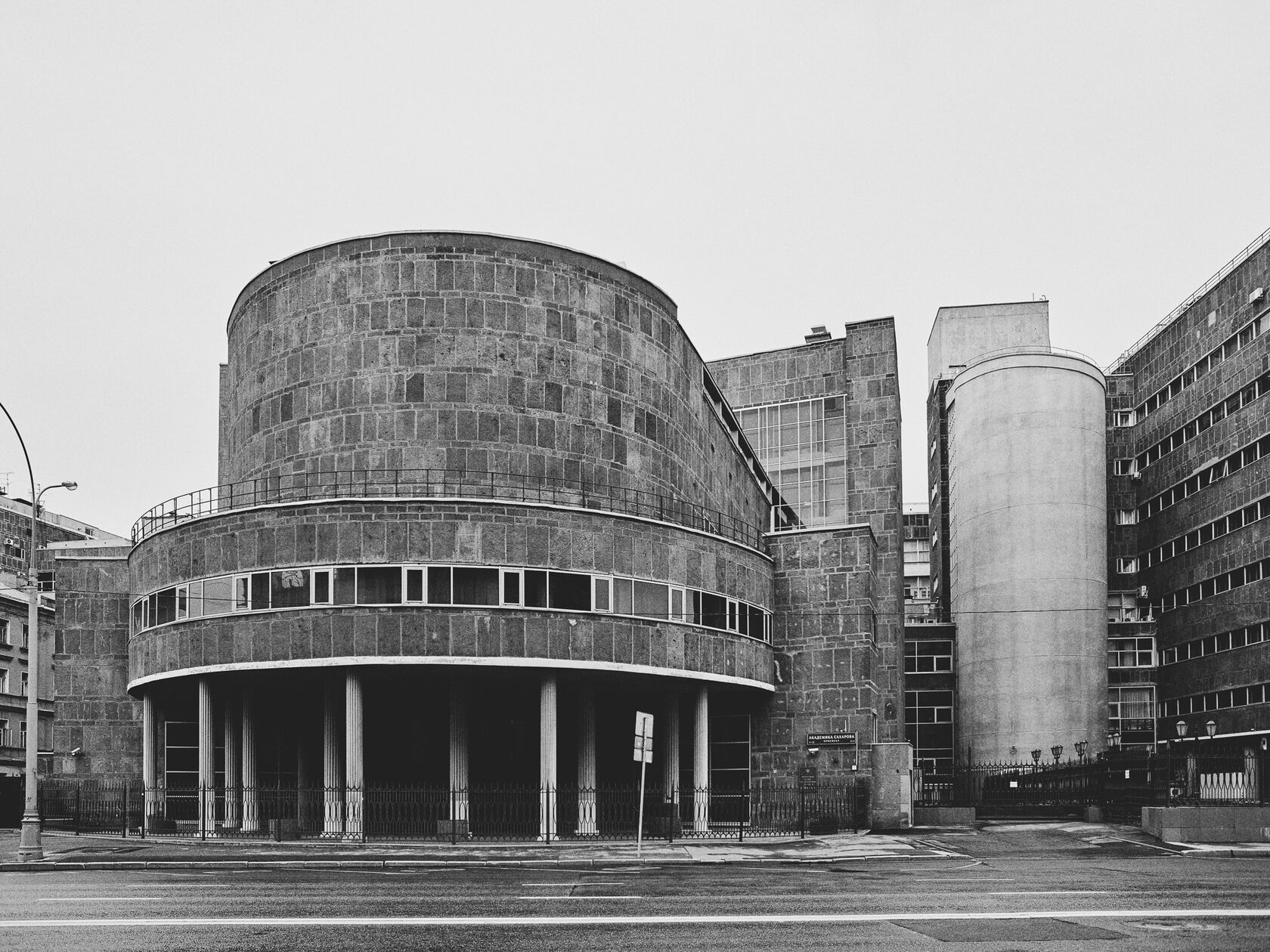
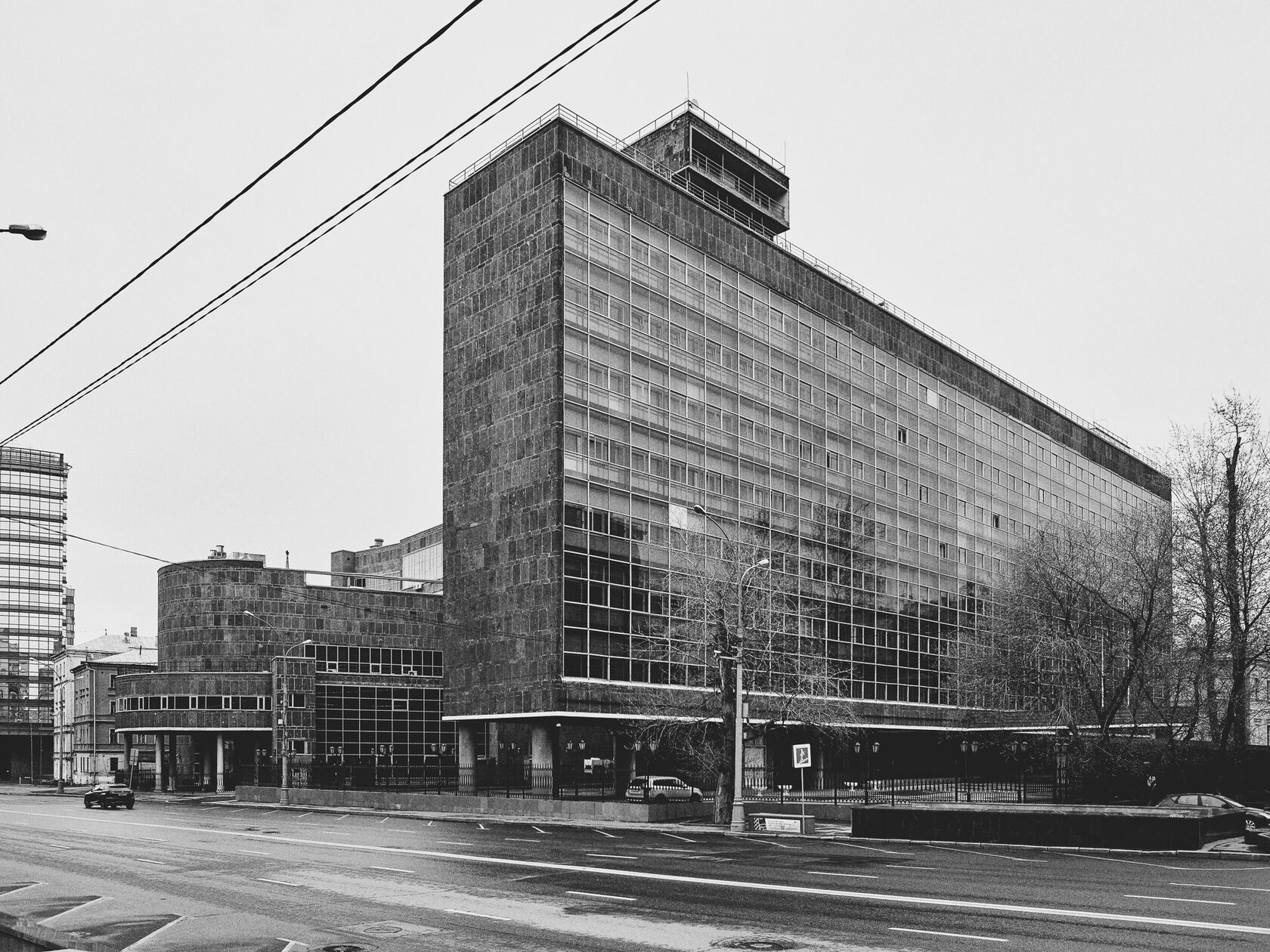
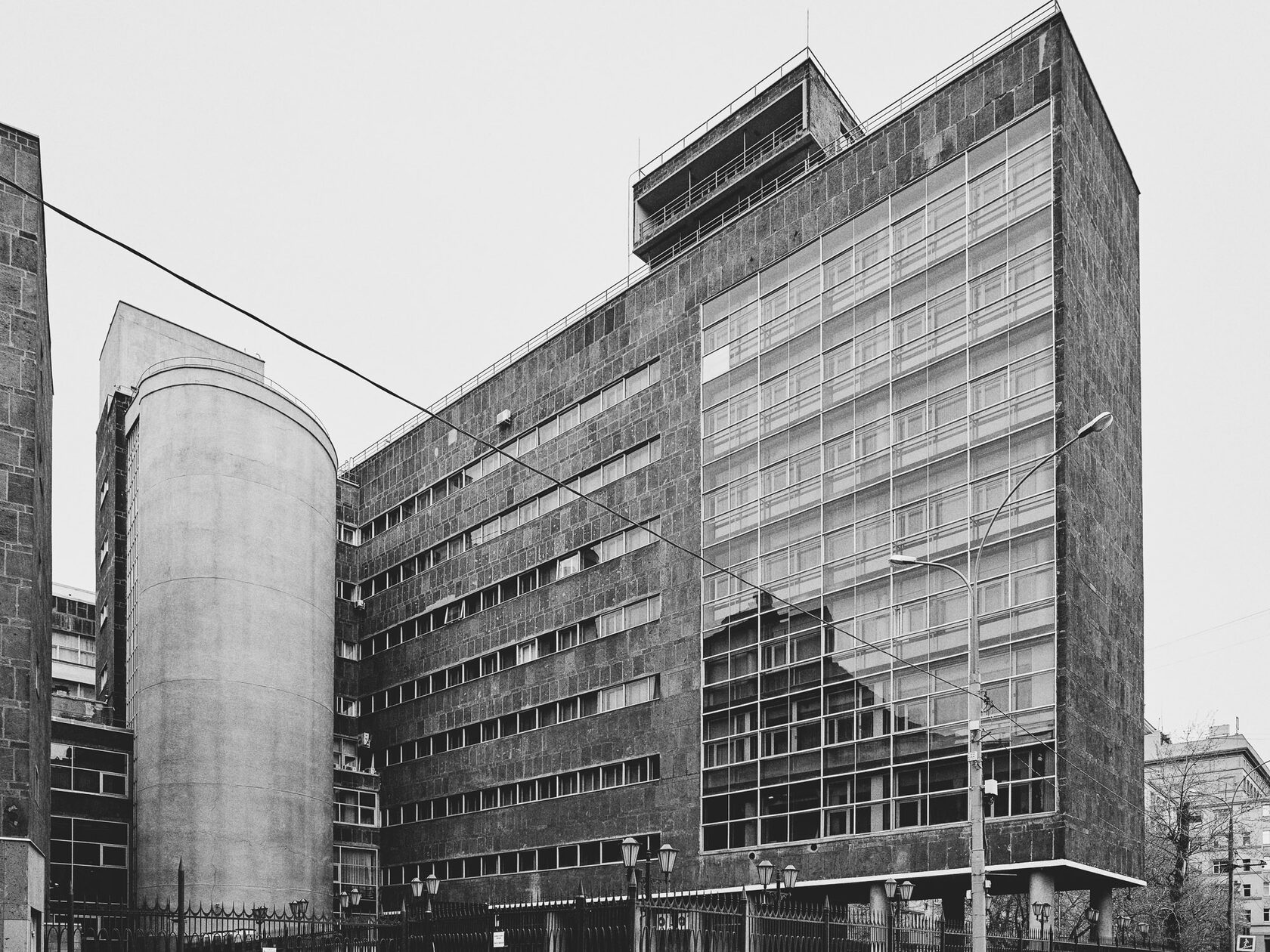
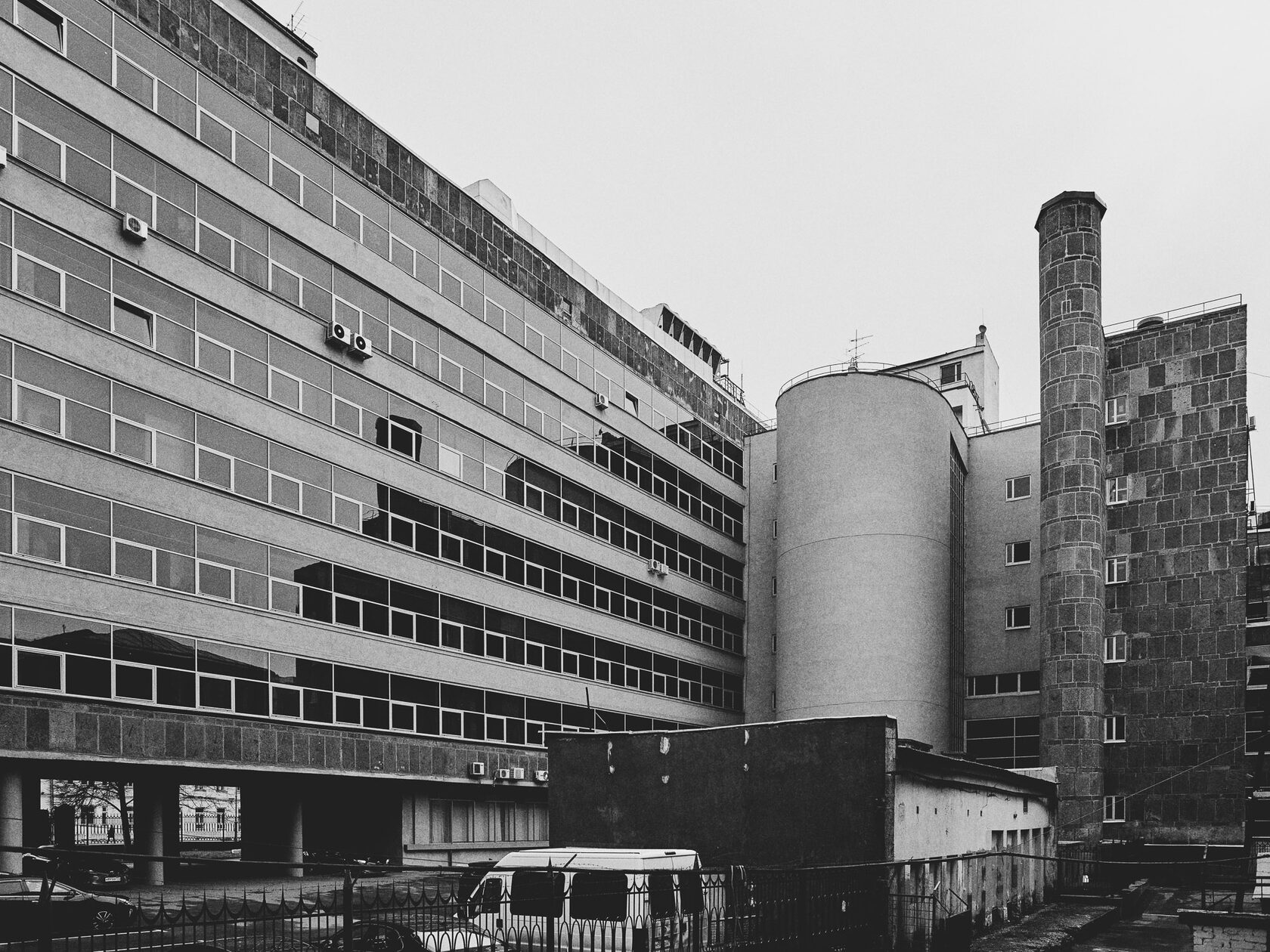
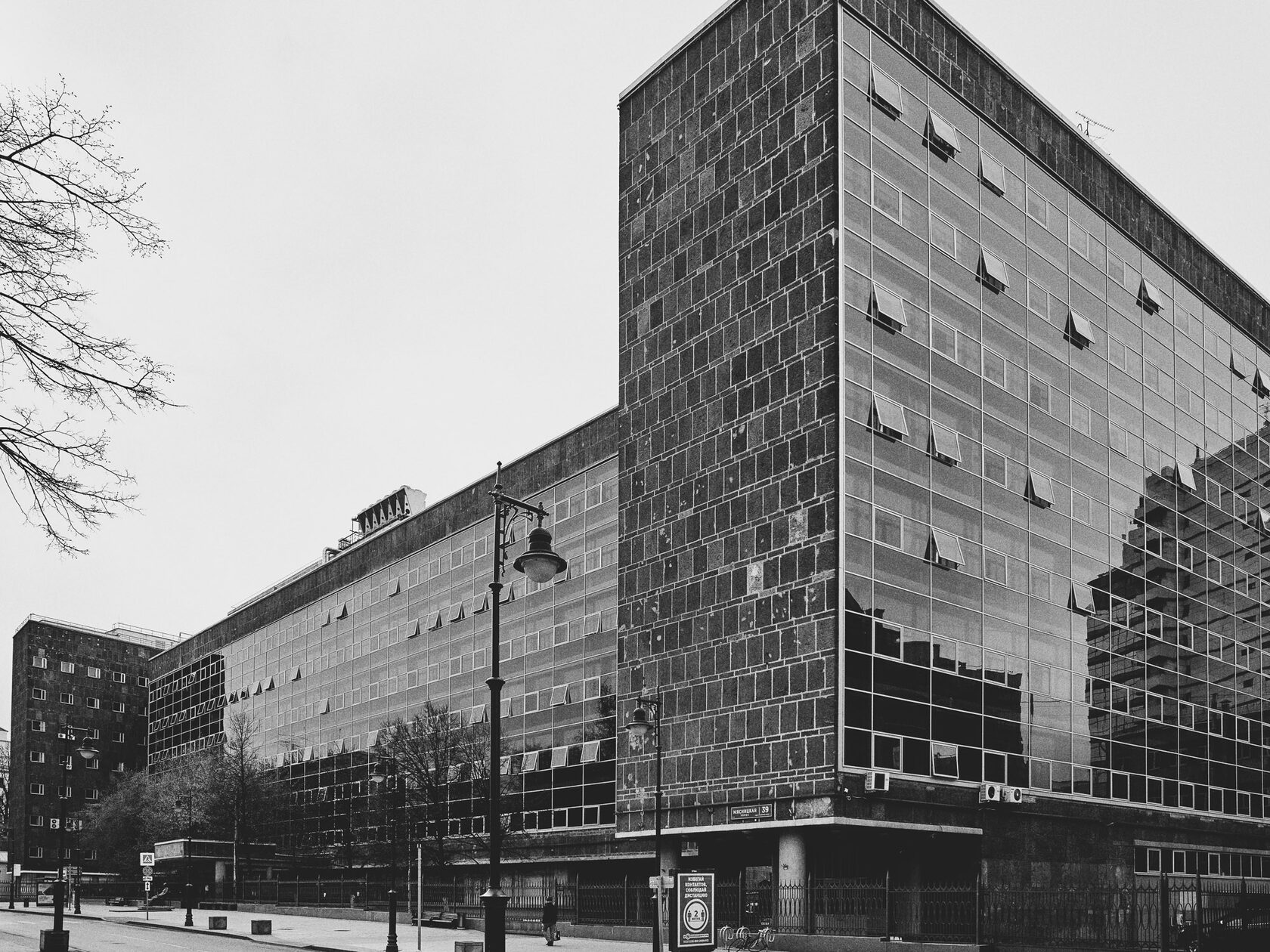
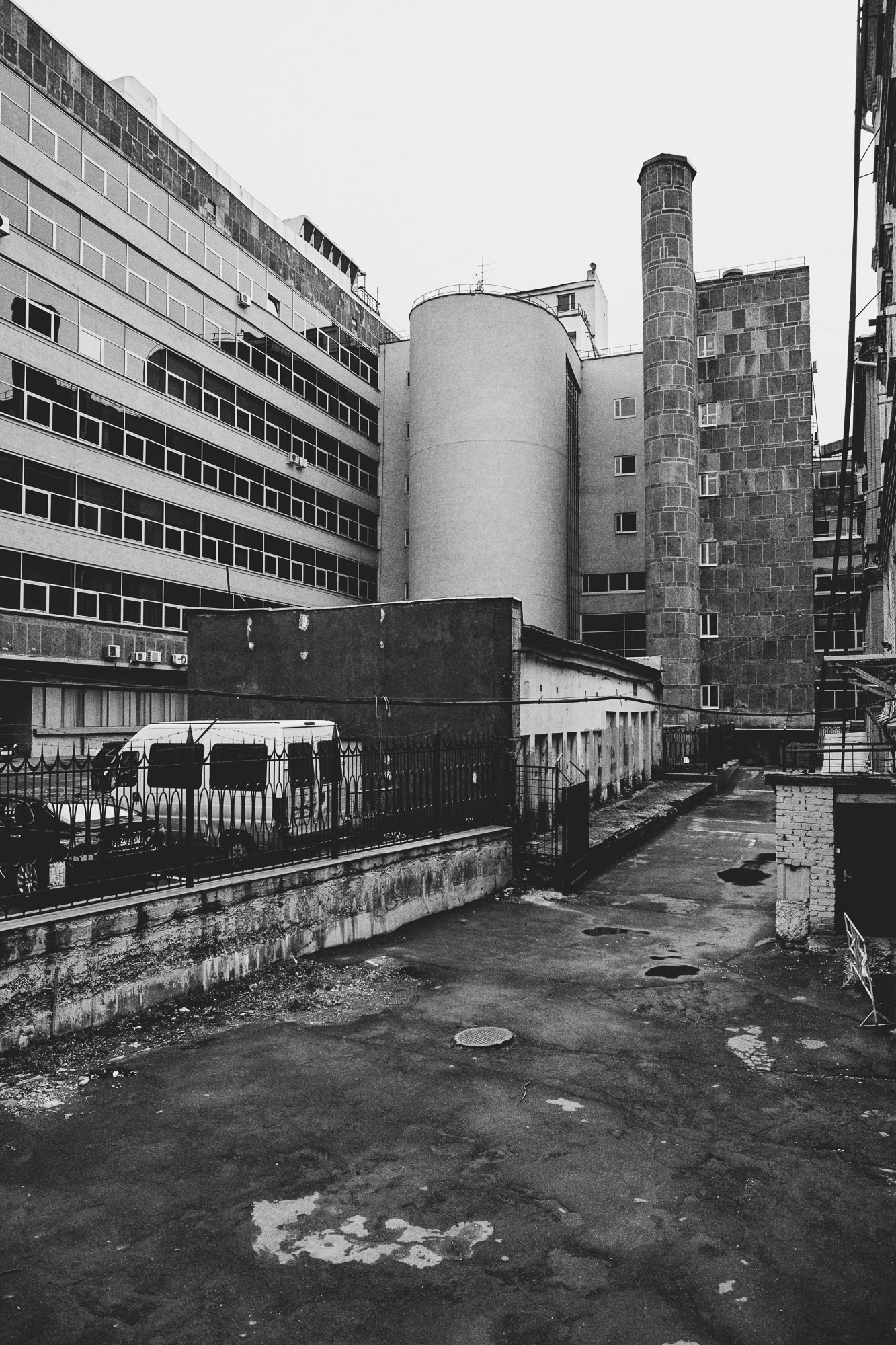
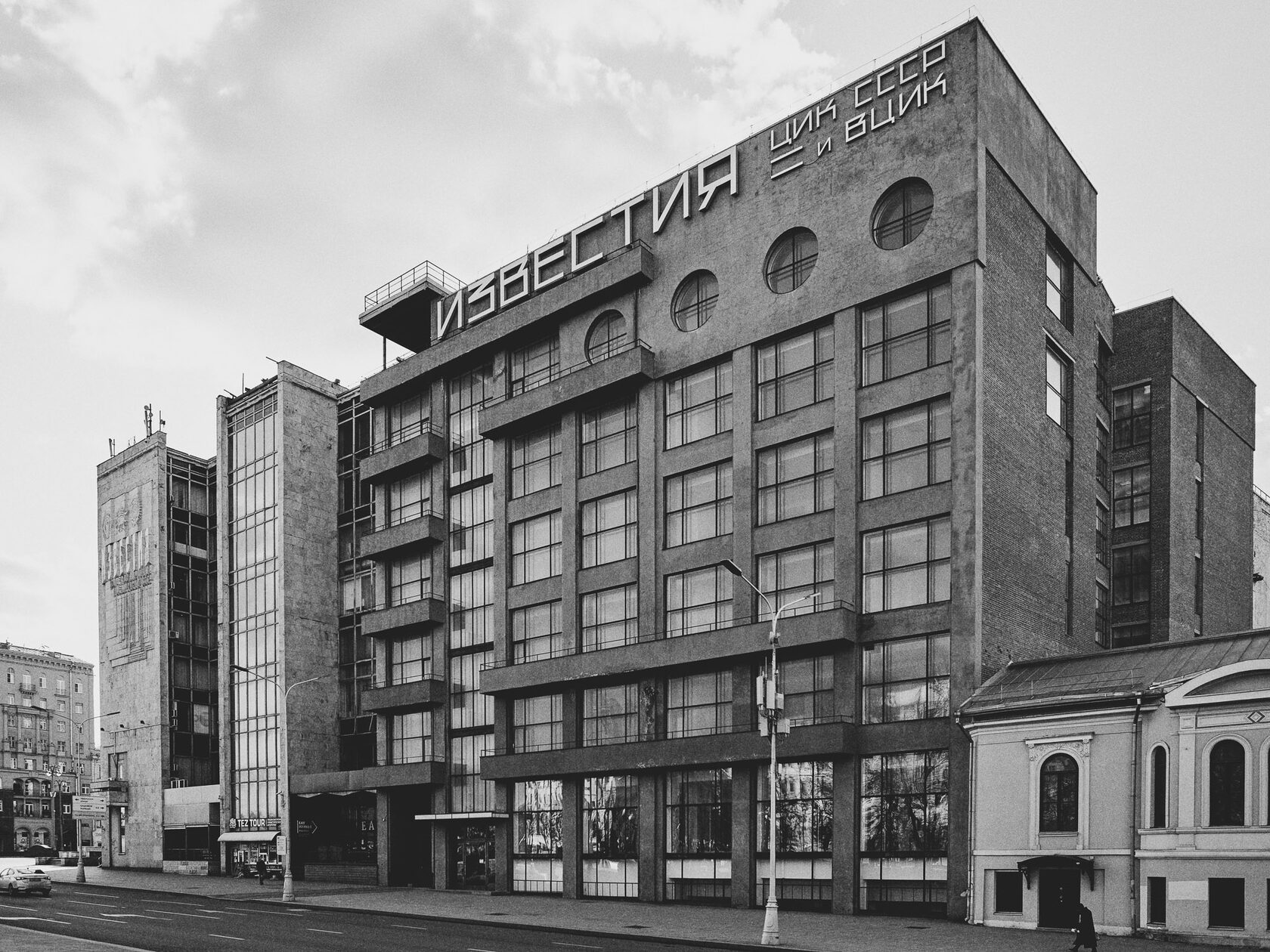
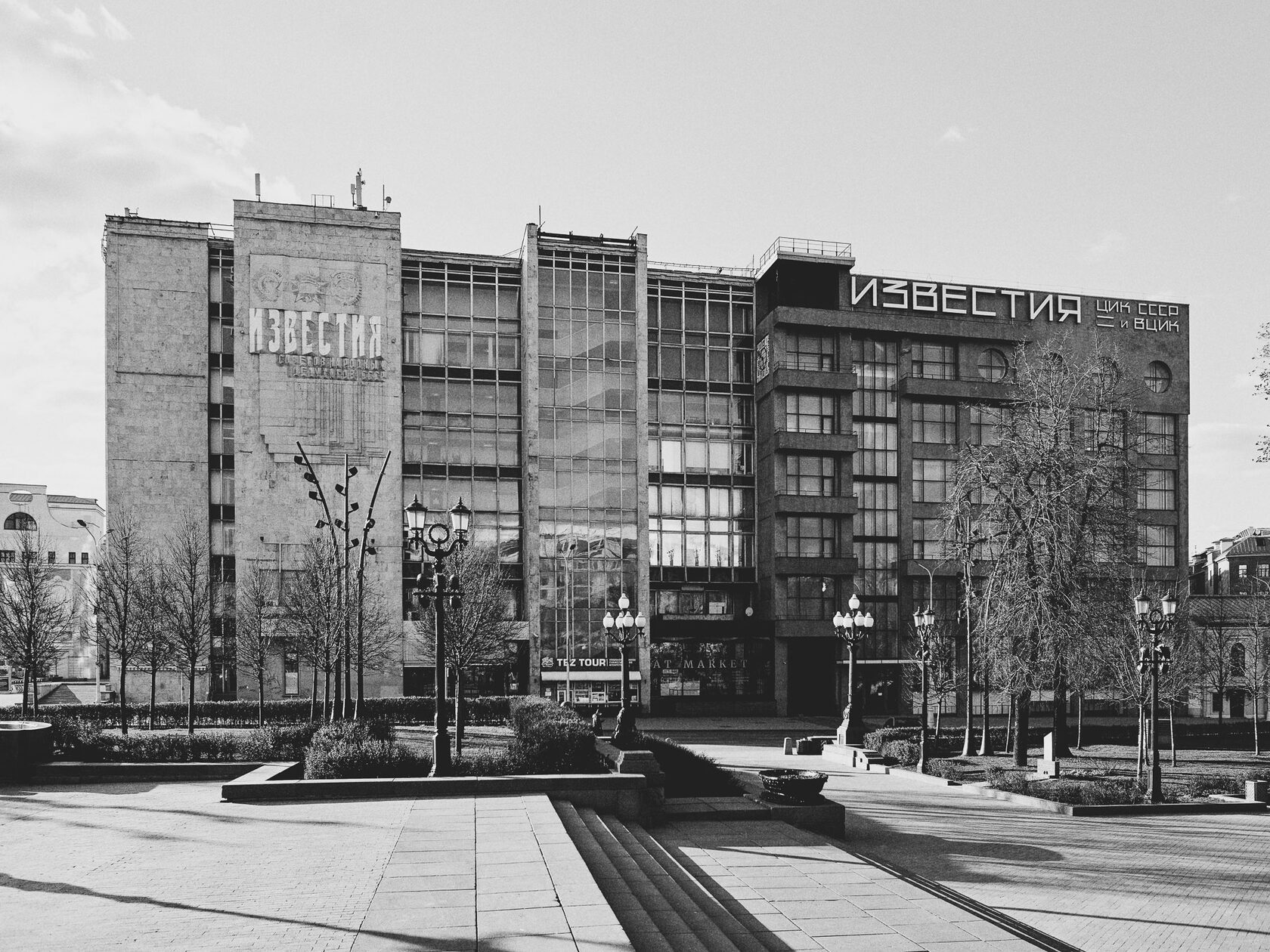
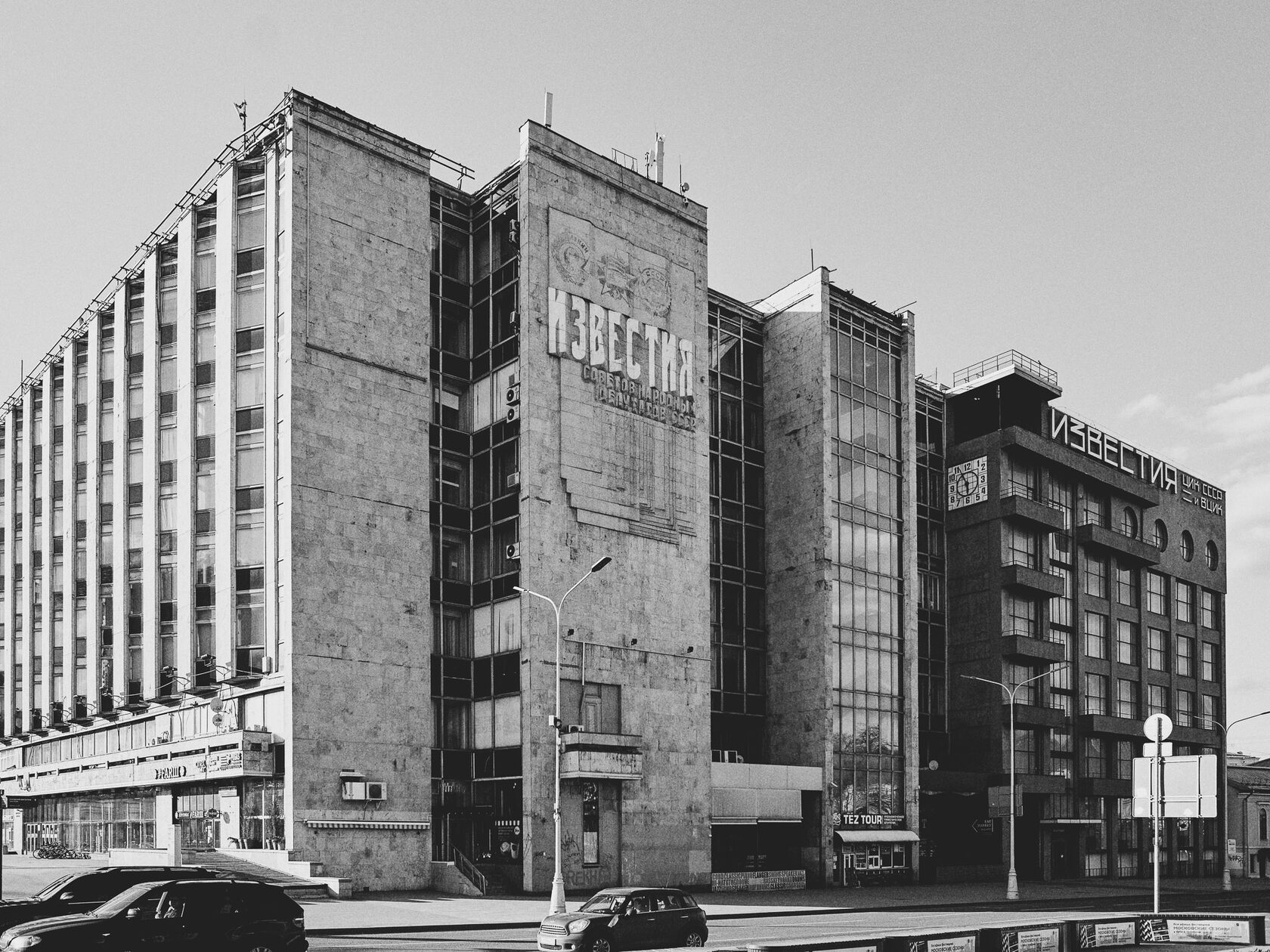
The building of the printing house and the editorial board of the Izvestia Central Executive Committee of the USSR and the All-Russian Central Executive Committee newspaperТипография и редакция газеты «Известия»《消息报》印刷厂与编辑部大楼Druckerei und Redaktion der Zeitung "Izvestia"Imprimerie et rédaction du journal « Izvestia »Imprenta y redacción del periódico «Izvestia»Gráfica e redação do jornal «Izvestia»
This building turns knowledge and print into architecture: storage, circulation, facade, and public address become one restrained machine. In the sequence it reads less as a monument than as a device for producing a new visual order.Это здание переводит знание и печать в архитектурную форму: хранение, движение, фасад и публичное обращение собраны в сдержанную машину. В серии оно читается не как памятник, а как устройство для производства нового визуального порядка.这座建筑把知识和印刷转化为建筑:存储、流线、立面和公共姿态被收进一台克制的机器。它在系列中不像纪念碑,更像生产新视觉秩序的装置。Dieses Gebäude übersetzt Wissen und Druck in Architektur: Lagerung, Bewegung, Fassade und öffentliche Ansprache werden zu einer zurückhaltenden Maschine. In der Serie wirkt es weniger wie ein Denkmal als wie ein Apparat zur Herstellung einer neuen visuellen Ordnung.Ce bâtiment traduit le savoir et l'impression en architecture : stockage, circulation, façade et adresse publique se rassemblent dans une machine contenue. Dans la série, il se lit moins comme un monument que comme un dispositif de production d'un nouvel ordre visuel.Este edificio convierte el conocimiento y la imprenta en arquitectura: almacenamiento, circulación, fachada y dirección pública se reúnen en una máquina contenida. En la serie se lee menos como monumento que como dispositivo para producir un nuevo orden visual.Este edifício transforma conhecimento e impressão em arquitetura: armazenamento, circulação, fachada e endereço público se reúnem numa máquina contida. Na série, lê-se menos como monumento do que como dispositivo para produzir uma nova ordem visual.
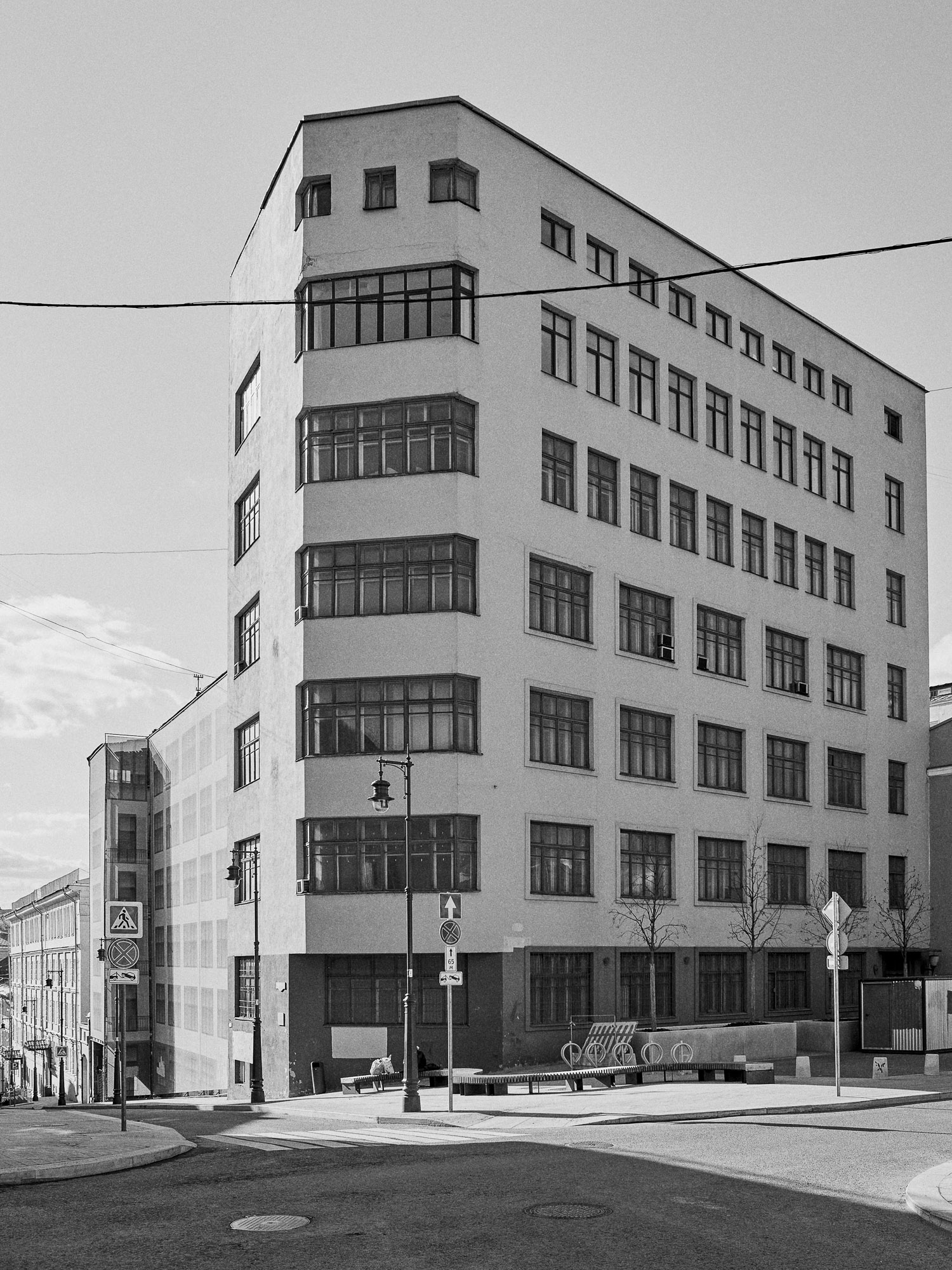
House-commune "Isotherm"Дом-коммуна «Изотерм»“Izoterm”公社住宅Kommunehaus "Isotherm"Maison-commune « Isotherm »Casa-comuna «Isotherm»Casa-comuna «Isotherm»
The image keeps the central constructivist question close to the ground: how should people live together? Balconies, entrances, shared edges, and later alterations show where an old social model meets private use.Кадр удерживает главный бытовой вопрос конструктивизма: как людям жить вместе? Балконы, входы, общие границы и поздние изменения показывают место, где старая социальная модель сталкивается с частным использованием.画面把建构主义最日常的问题拉回地面:人们该如何共同生活?阳台、入口、共享边界和后来的改动,显示出旧的社会模型如何与私人使用相遇。Das Bild hält die zentrale Alltagsfrage des Konstruktivismus nahe am Boden: Wie sollen Menschen zusammenleben? Balkone, Eingänge, gemeinsame Kanten und spätere Veränderungen zeigen, wo ein altes Sozialmodell auf private Nutzung trifft.L'image garde au ras du sol la question centrale du constructivisme : comment vivre ensemble ? Balcons, entrées, limites partagées et transformations ultérieures montrent l'endroit où un ancien modèle social rencontre l'usage privé.La imagen mantiene cerca del suelo la pregunta central del constructivismo: ¿cómo deben vivir juntas las personas? Balcones, entradas, bordes compartidos y alteraciones posteriores muestran dónde un viejo modelo social se encuentra con el uso privado.A imagem mantém rente ao chão a pergunta central do construtivismo: como as pessoas devem viver juntas? Varandas, entradas, limites compartilhados e alterações posteriores mostram onde um antigo modelo social encontra o uso privado.
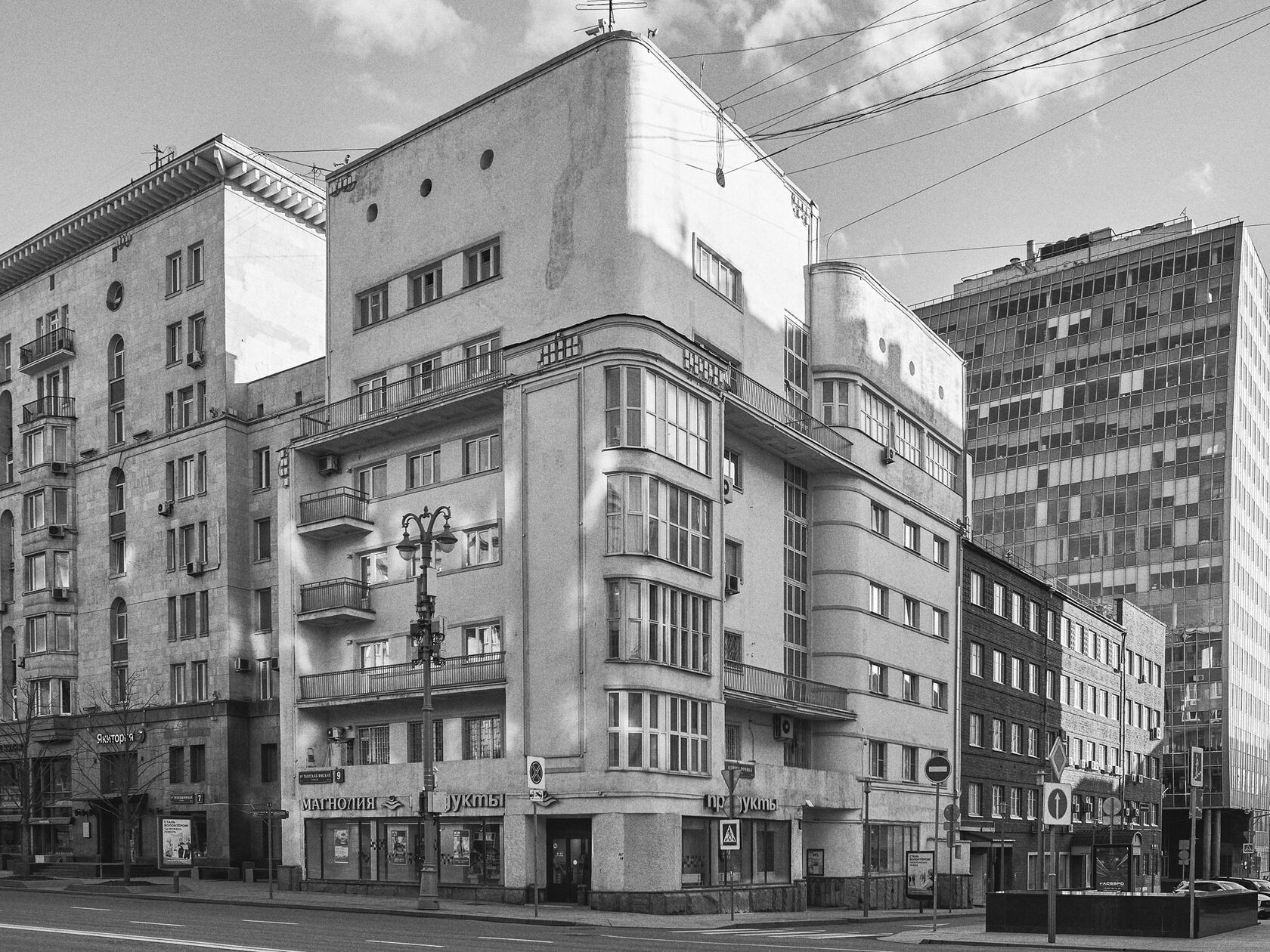
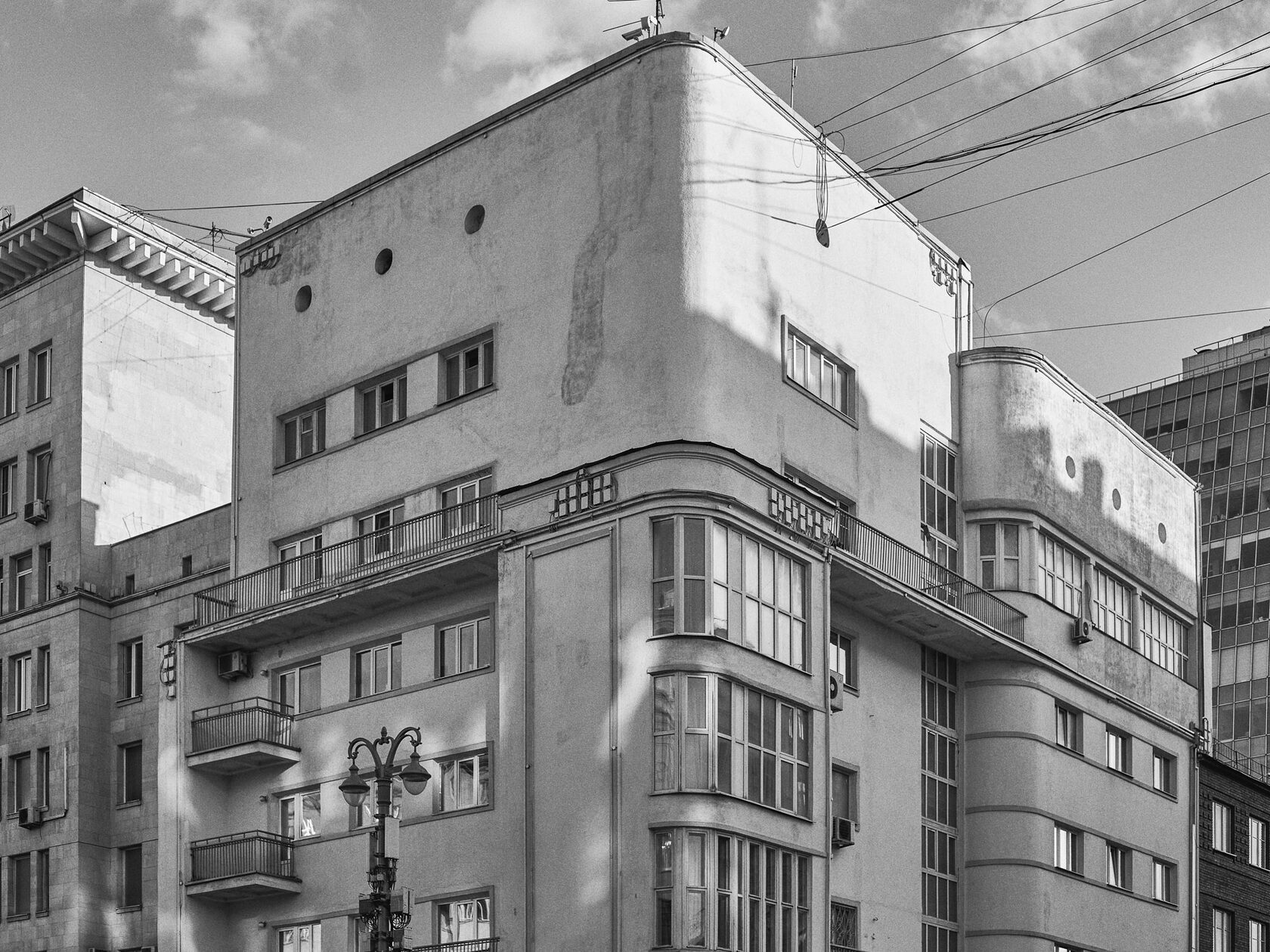
Mossovet residential buildingЖилой дом Моссовета莫斯科苏维埃住宅楼Wohnhaus des MossowetImmeuble d'habitation du MossovetEdificio residencial del MossovetEdifício residencial do Mossovet
The image keeps the central constructivist question close to the ground: how should people live together? Balconies, entrances, shared edges, and later alterations show where an old social model meets private use.Кадр удерживает главный бытовой вопрос конструктивизма: как людям жить вместе? Балконы, входы, общие границы и поздние изменения показывают место, где старая социальная модель сталкивается с частным использованием.画面把建构主义最日常的问题拉回地面:人们该如何共同生活?阳台、入口、共享边界和后来的改动,显示出旧的社会模型如何与私人使用相遇。Das Bild hält die zentrale Alltagsfrage des Konstruktivismus nahe am Boden: Wie sollen Menschen zusammenleben? Balkone, Eingänge, gemeinsame Kanten und spätere Veränderungen zeigen, wo ein altes Sozialmodell auf private Nutzung trifft.L'image garde au ras du sol la question centrale du constructivisme : comment vivre ensemble ? Balcons, entrées, limites partagées et transformations ultérieures montrent l'endroit où un ancien modèle social rencontre l'usage privé.La imagen mantiene cerca del suelo la pregunta central del constructivismo: ¿cómo deben vivir juntas las personas? Balcones, entradas, bordes compartidos y alteraciones posteriores muestran dónde un viejo modelo social se encuentra con el uso privado.A imagem mantém rente ao chão a pergunta central do construtivismo: como as pessoas devem viver juntas? Varandas, entradas, limites compartilhados e alterações posteriores mostram onde um antigo modelo social encontra o uso privado.
Office building of Transstroy TrustАдминистративное здание треста «Трансстрой»Transstroy 信托行政楼Verwaltungsgebäude des Trusts "Transstroy"Bâtiment administratif du trust « Transstroy »Edificio administrativo del trust «Transstroy»Edifício administrativo do truste «Transstroy»
The object remains in the sequence for the precision of its trace: a facade, a rhythm, a corner, a proportion. It does not need to be spectacular; it works as one more sentence in a larger architectural language.Объект остается в серии благодаря точности следа: фасад, ритм, угол, пропорция. Ему не нужно быть эффектным; он работает как еще одна фраза в большом архитектурном языке.这个对象留在系列中,是因为它的痕迹足够精确:立面、节奏、转角、比例。它不需要壮观;它像更大建筑语言中的又一句话。Das Objekt bleibt wegen der Präzision seiner Spur in der Serie: Fassade, Rhythmus, Ecke, Proportion. Es muss nicht spektakulär sein; es funktioniert als ein weiterer Satz in einer größeren architektonischen Sprache.L'objet demeure dans la série par la précision de sa trace : façade, rythme, angle, proportion. Il n'a pas besoin d'être spectaculaire ; il fonctionne comme une phrase de plus dans un langage architectural plus vaste.El objeto permanece en la serie por la precisión de su huella: fachada, ritmo, esquina, proporción. No necesita ser espectacular; funciona como una frase más dentro de un lenguaje arquitectónico mayor.O objeto permanece na série pela precisão de seu vestígio: fachada, ritmo, esquina, proporção. Não precisa ser espetacular; funciona como mais uma frase dentro de uma linguagem arquitetônica maior.
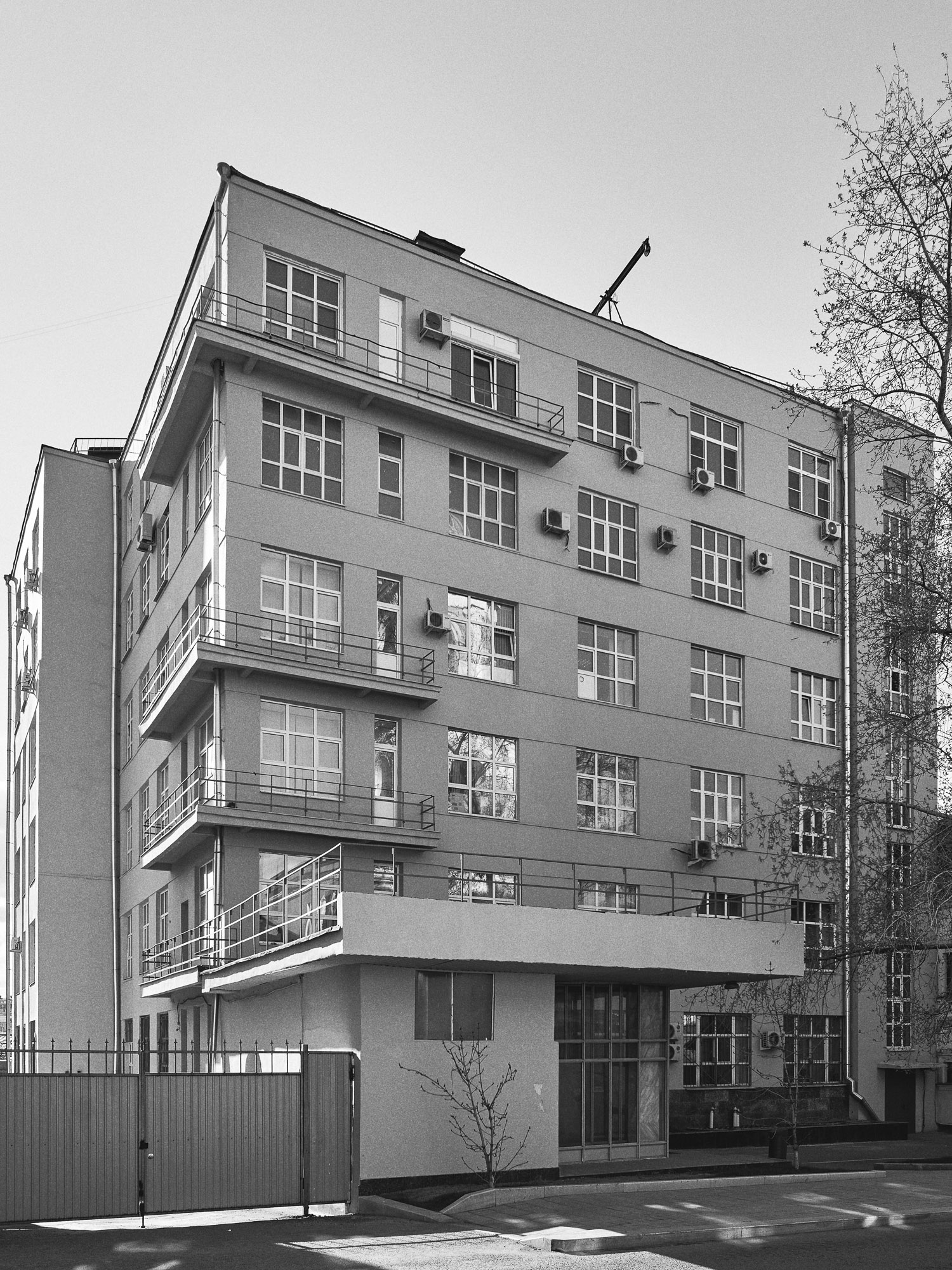
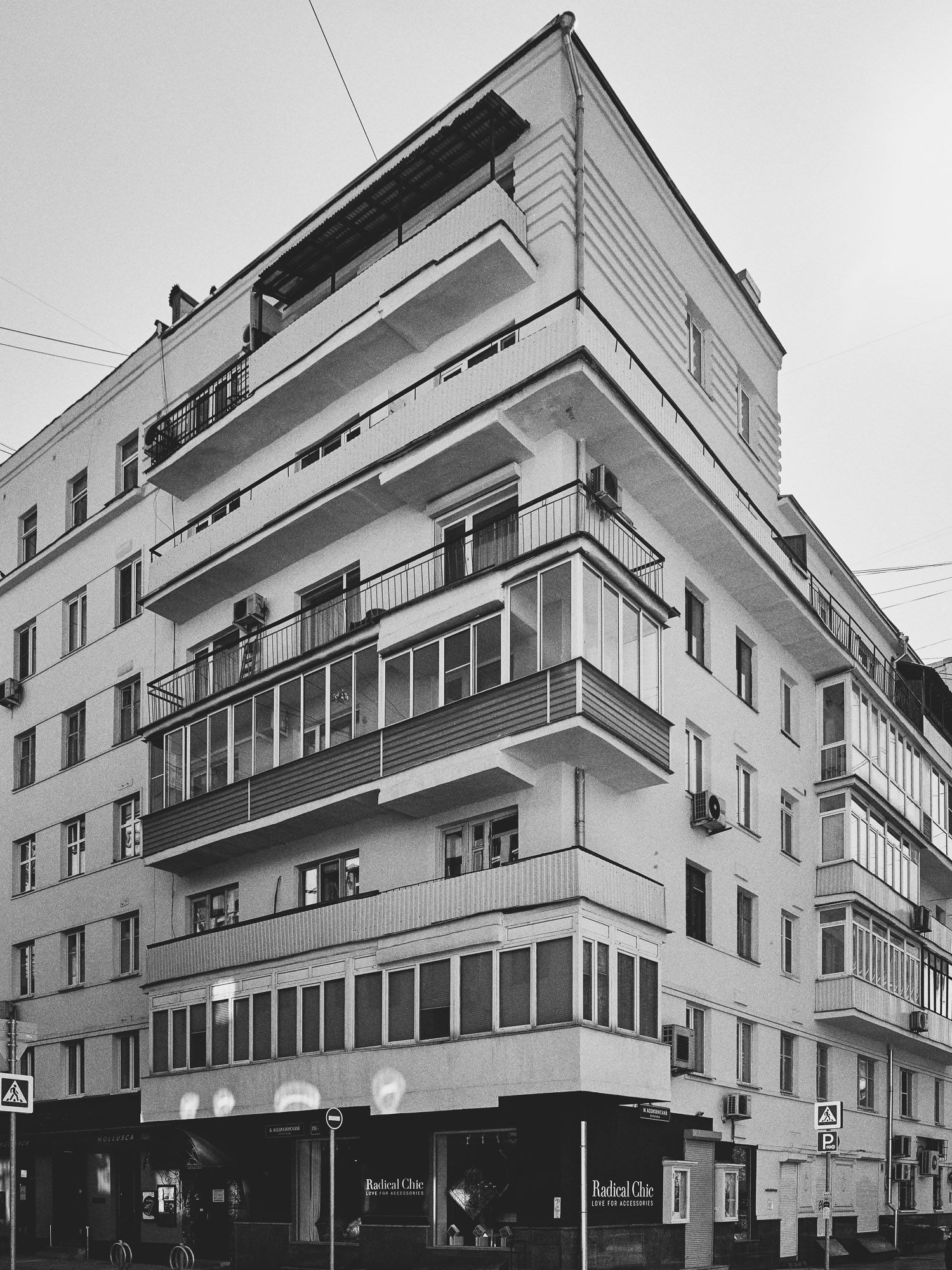
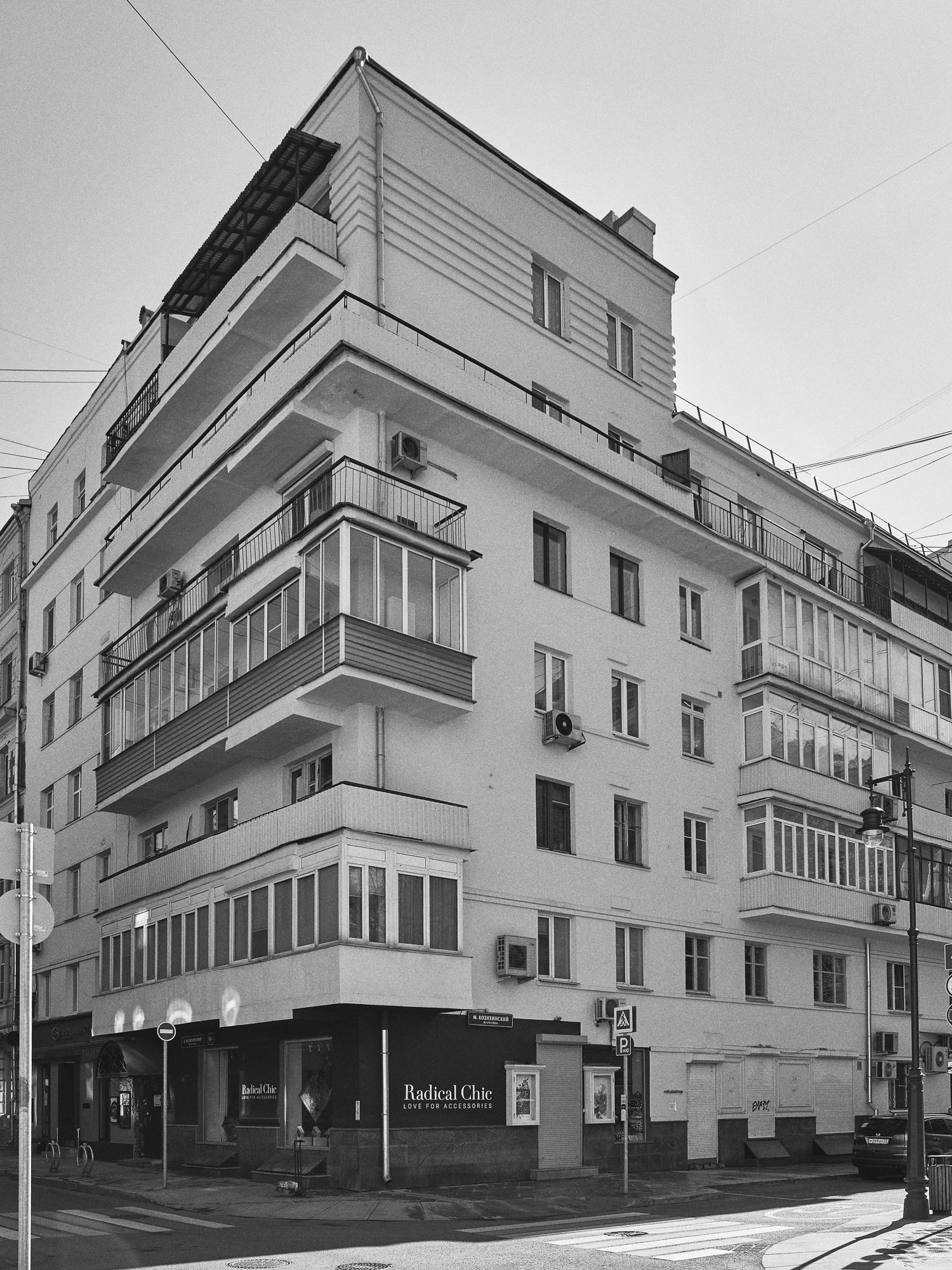
House number 19/6 on Bolshoy KozikhinskyДом 19/6 в Большом Козихинском переулке大科济欣斯基巷 19/6 号住宅Haus 19/6 in der Bolschoi-Kosichinski-GasseMaison 19/6 dans la ruelle Bolchoï KozikhinskyCasa 19/6 en el callejón Bolshoy KozikhinskyCasa 19/6 na travessa Bolshoy Kozikhinsky
The image keeps the central constructivist question close to the ground: how should people live together? Balconies, entrances, shared edges, and later alterations show where an old social model meets private use.Кадр удерживает главный бытовой вопрос конструктивизма: как людям жить вместе? Балконы, входы, общие границы и поздние изменения показывают место, где старая социальная модель сталкивается с частным использованием.画面把建构主义最日常的问题拉回地面:人们该如何共同生活?阳台、入口、共享边界和后来的改动,显示出旧的社会模型如何与私人使用相遇。Das Bild hält die zentrale Alltagsfrage des Konstruktivismus nahe am Boden: Wie sollen Menschen zusammenleben? Balkone, Eingänge, gemeinsame Kanten und spätere Veränderungen zeigen, wo ein altes Sozialmodell auf private Nutzung trifft.L'image garde au ras du sol la question centrale du constructivisme : comment vivre ensemble ? Balcons, entrées, limites partagées et transformations ultérieures montrent l'endroit où un ancien modèle social rencontre l'usage privé.La imagen mantiene cerca del suelo la pregunta central del constructivismo: ¿cómo deben vivir juntas las personas? Balcones, entradas, bordes compartidos y alteraciones posteriores muestran dónde un viejo modelo social se encuentra con el uso privado.A imagem mantém rente ao chão a pergunta central do construtivismo: como as pessoas devem viver juntas? Varandas, entradas, limites compartilhados e alterações posteriores mostram onde um antigo modelo social encontra o uso privado.
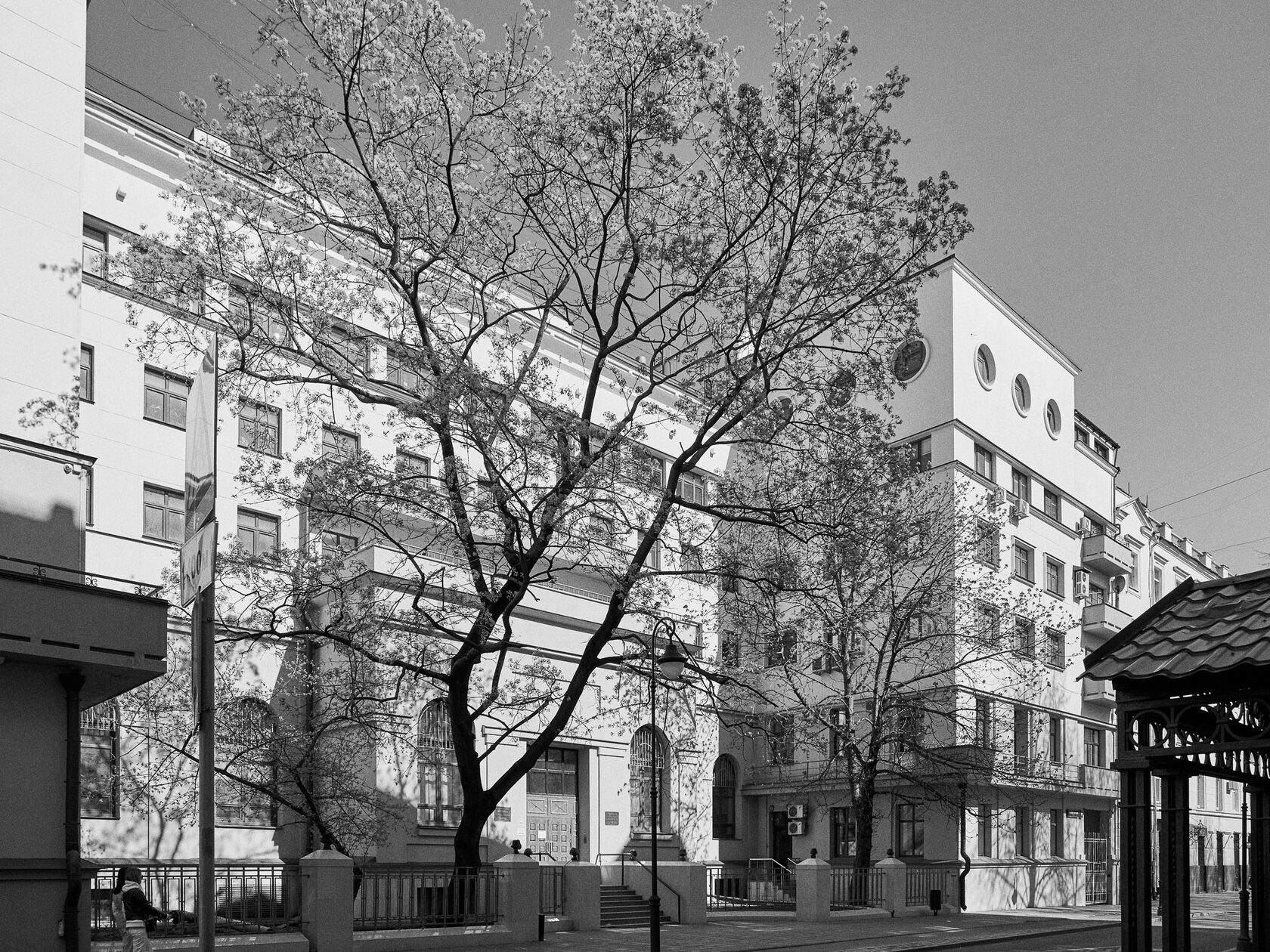
Assay AdministrationПробирное управление检验管理局ProbieramtAdministration des essaisAdministración de ensayosAdministração de ensaio
Here administration becomes form. The geometry is not neutral: it stages authority, planning, and the desire to make a new order visible through walls, windows, and scale.Здесь управление становится формой. Геометрия не нейтральна: она ставит на сцену власть, планирование и желание сделать новый порядок видимым через стены, окна и масштаб.在这里,行政变成了形式。几何并不中立:它把权力、规划以及让新秩序通过墙、窗和尺度变得可见的欲望推上舞台。Hier wird Verwaltung zur Form. Die Geometrie ist nicht neutral: Sie inszeniert Autorität, Planung und den Wunsch, eine neue Ordnung durch Wände, Fenster und Maßstab sichtbar zu machen.Ici, l'administration devient forme. La géométrie n'est pas neutre : elle met en scène l'autorité, la planification et le désir de rendre un nouvel ordre visible par les murs, les fenêtres et l'échelle.Aquí la administración se vuelve forma. La geometría no es neutra: escenifica autoridad, planificación y el deseo de hacer visible un nuevo orden mediante muros, ventanas y escala.Aqui a administração vira forma. A geometria não é neutra: encena autoridade, planejamento e o desejo de tornar uma nova ordem visível por paredes, janelas e escala.
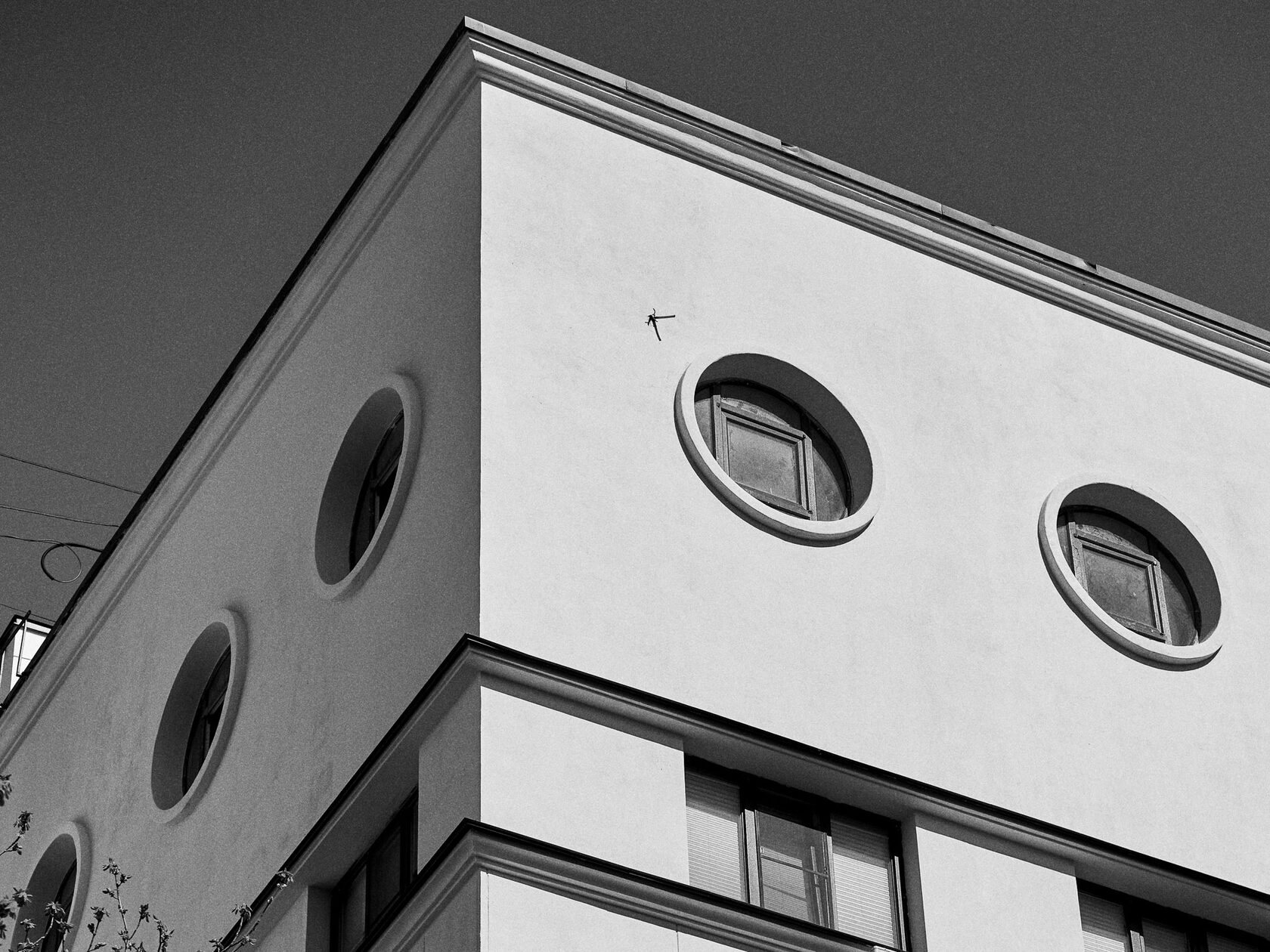
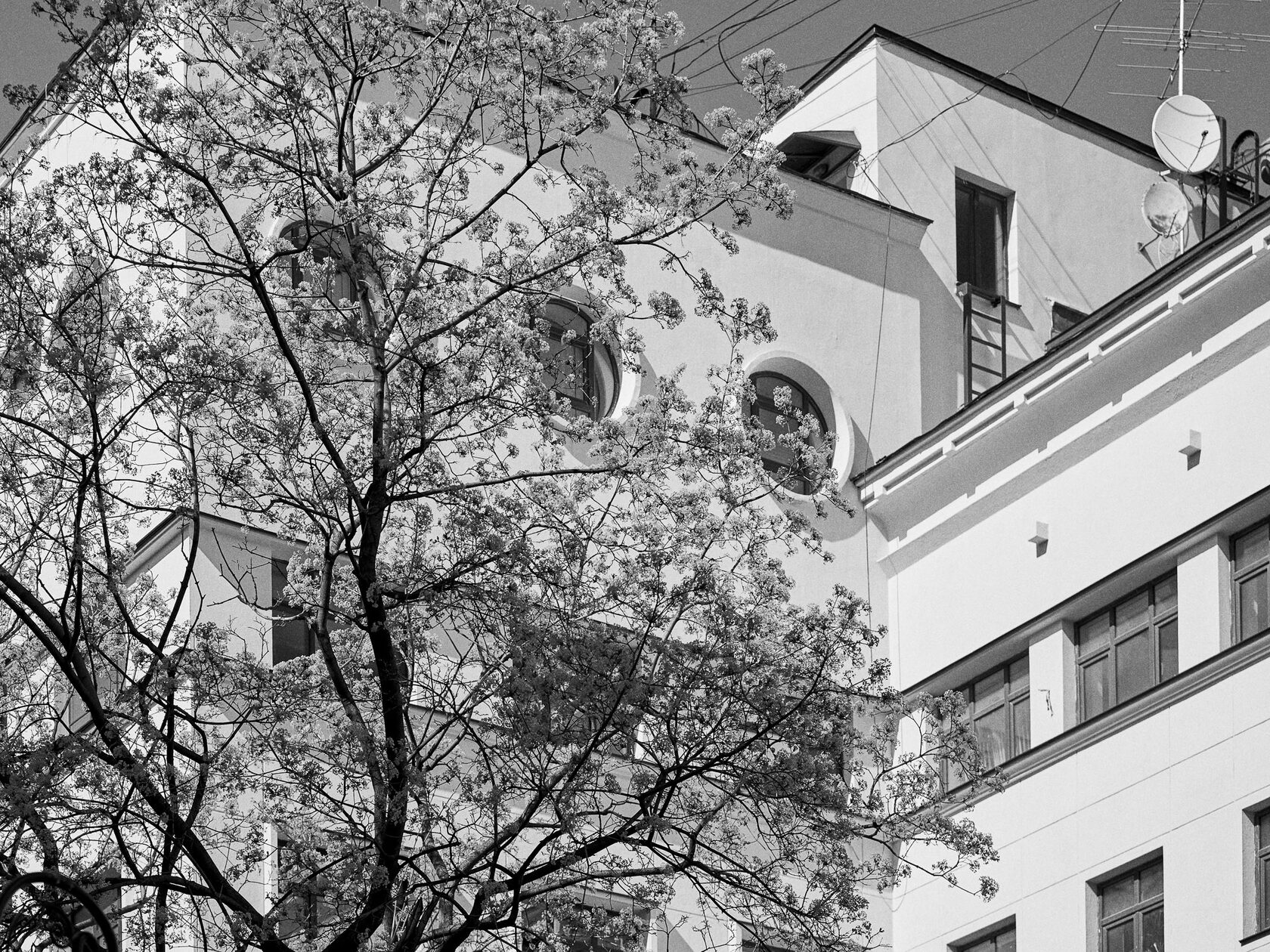
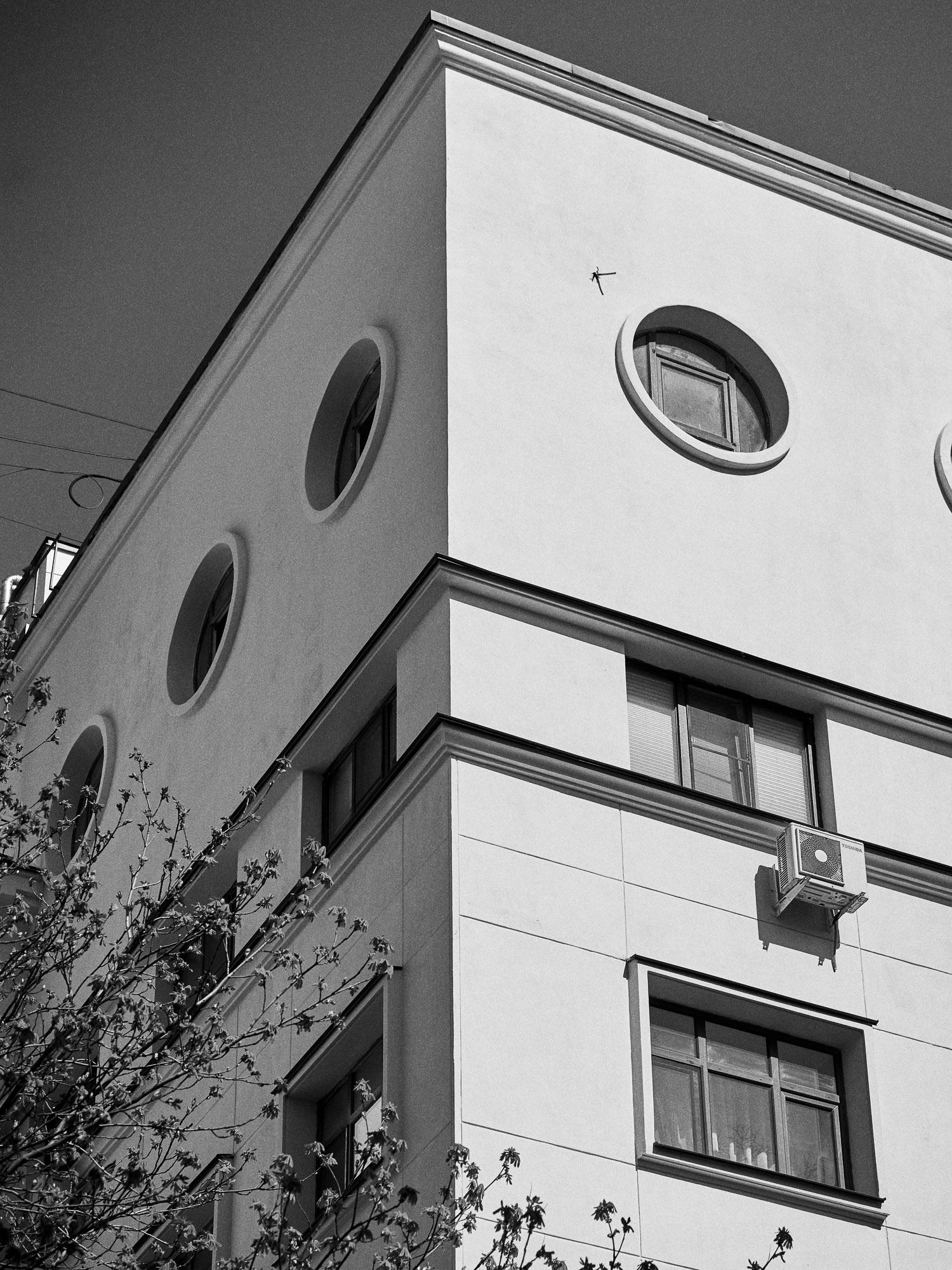
All-Union Planning Academy (APA) named after V. M. Molotov at the State Planning Committee of the USSRВсесоюзная плановая академия имени В. М. Молотова苏联国家计划委员会 V. M. 莫洛托夫全联盟计划学院Allunions-Planungsakademie V. M. Molotow beim Gosplan der UdSSRAcadémie pan-union de planification V. M. Molotov auprès du Gosplan de l'URSSAcademia Panunionista de Planificación V. M. Molotov del Gosplan de la URSSAcademia Pan-União de Planejamento V. M. Molotov junto ao Gosplan da URSS
Education appears here as a public form. The photographs look at how knowledge is given mass, facade, entrances, and repetition: an institution trying to appear open, rational, and structurally new.Образование здесь становится публичной формой. Фотографии смотрят на то, как знанию дают массу, фасад, входы и повтор: институция пытается выглядеть открытой, рациональной и структурно новой.教育在这里成为公共形式。照片观察知识如何获得体量、立面、入口和重复:一种机构试图显得开放、理性并具有新的结构。Bildung erscheint hier als öffentliche Form. Die Fotografien schauen darauf, wie Wissen Masse, Fassade, Eingänge und Wiederholung erhält: eine Institution, die offen, rational und strukturell neu wirken will.L'éducation apparaît ici comme une forme publique. Les photographies regardent comment le savoir reçoit une masse, une façade, des entrées et une répétition : une institution qui cherche à paraître ouverte, rationnelle et structurellement nouvelle.La educación aparece aquí como forma pública. Las fotografías observan cómo el conocimiento recibe masa, fachada, entradas y repetición: una institución que intenta parecer abierta, racional y estructuralmente nueva.A educação aparece aqui como forma pública. As fotografias observam como o conhecimento ganha massa, fachada, entradas e repetição: uma instituição tentando parecer aberta, racional e estruturalmente nova.
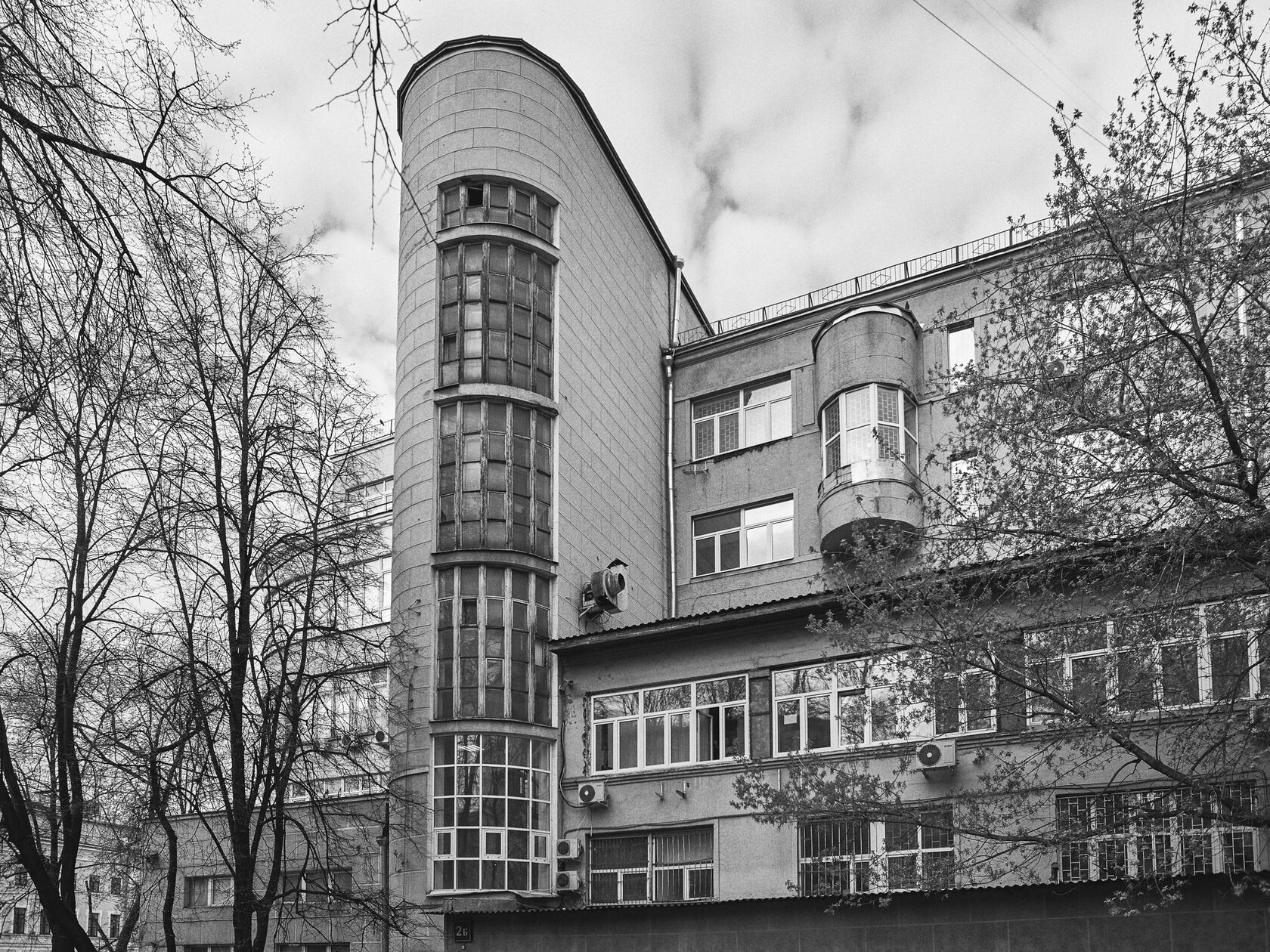
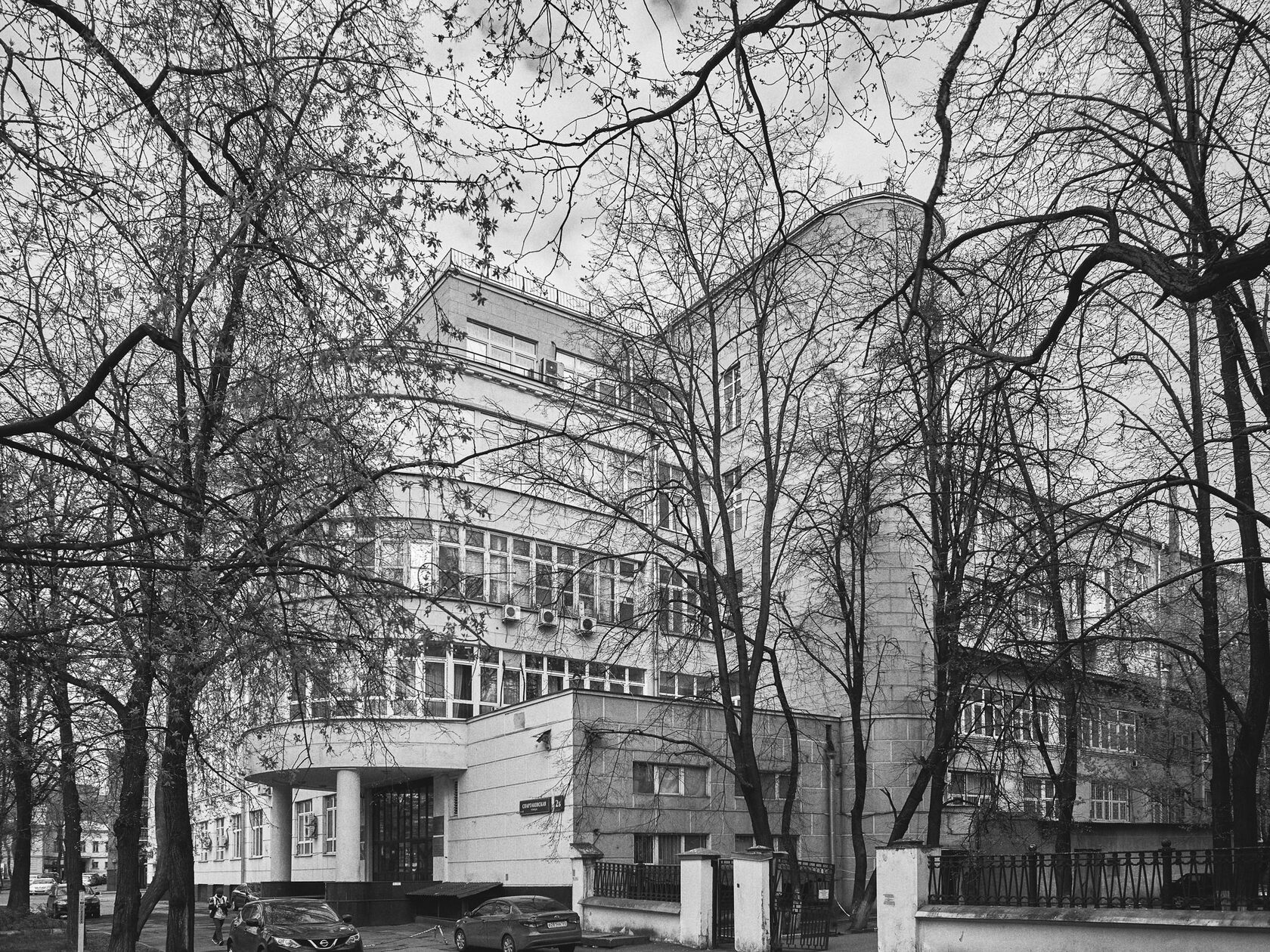
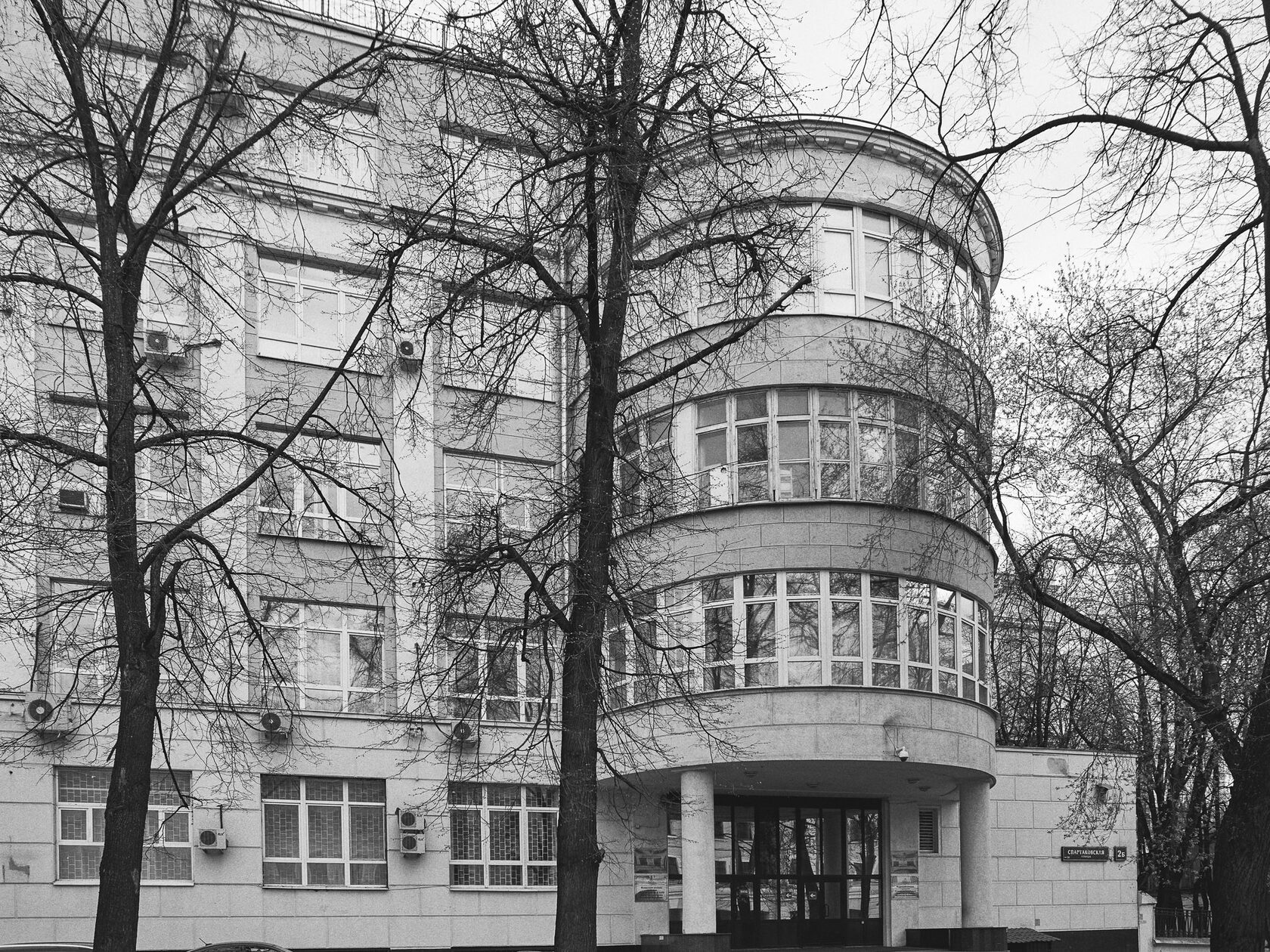
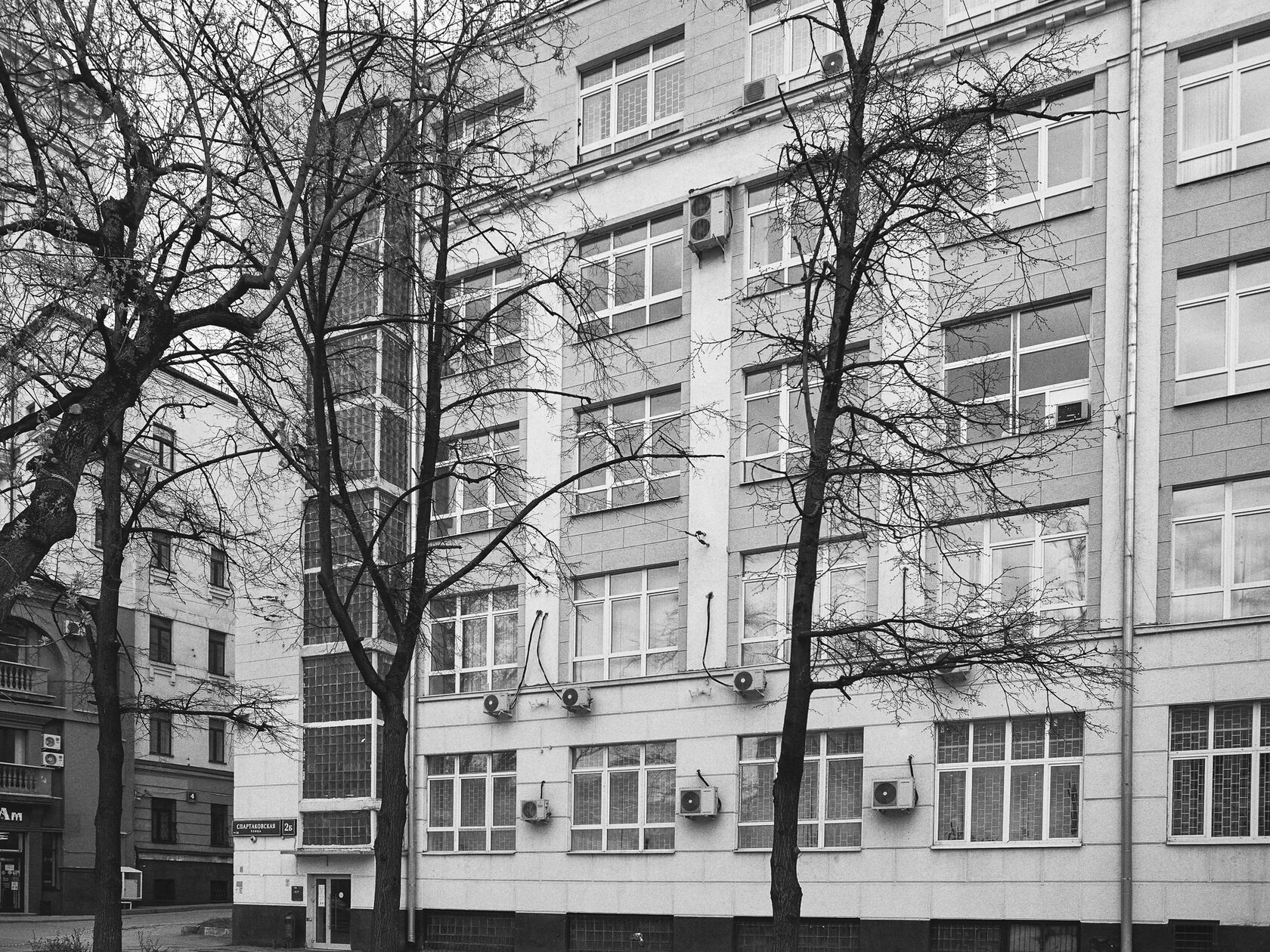
House of the Union of Builders (Builders' Club)Дом Союза строителей / Клуб строителей建筑者联盟之家 / 建筑者俱乐部Haus der Bauarbeiterunion / Klub der BauarbeiterMaison de l'Union des constructeurs / Club des constructeursCasa de la Unión de Constructores / Club de constructoresCasa da União dos Construtores / Clube dos construtores
The building is photographed as a public interior turned outward. The facade carries the promise of assembly: lectures, rehearsals, meetings, cinema, theatre, music, and the belief that culture could be organized as part of everyday life.Здание снято как общественный интерьер, вывернутый наружу. Фасад удерживает обещание собрания: лекции, репетиции, встречи, кино, театр, музыку и веру в то, что культуру можно встроить в повседневность.这座建筑被拍成向外翻开的公共室内。立面保存着集会的承诺:讲座、排练、会议、电影、戏剧、音乐,以及文化可以被编入日常生活的信念。Das Gebäude wird als nach außen gekehrtes öffentliches Interieur fotografiert. Die Fassade trägt das Versprechen der Versammlung: Vorträge, Proben, Treffen, Kino, Theater, Musik und den Glauben, Kultur könne Teil des Alltags werden.Le bâtiment est photographié comme un intérieur public retourné vers l'extérieur. La façade porte la promesse du rassemblement : conférences, répétitions, réunions, cinéma, théâtre, musique, et la croyance que la culture pouvait être intégrée au quotidien.El edificio se fotografía como un interior público vuelto hacia fuera. La fachada sostiene la promesa de reunión: conferencias, ensayos, encuentros, cine, teatro, música y la creencia de que la cultura podía organizarse dentro de la vida cotidiana.O edifício é fotografado como um interior público virado para fora. A fachada guarda a promessa da reunião: palestras, ensaios, encontros, cinema, teatro, música e a crença de que a cultura podia ser organizada dentro do cotidiano.
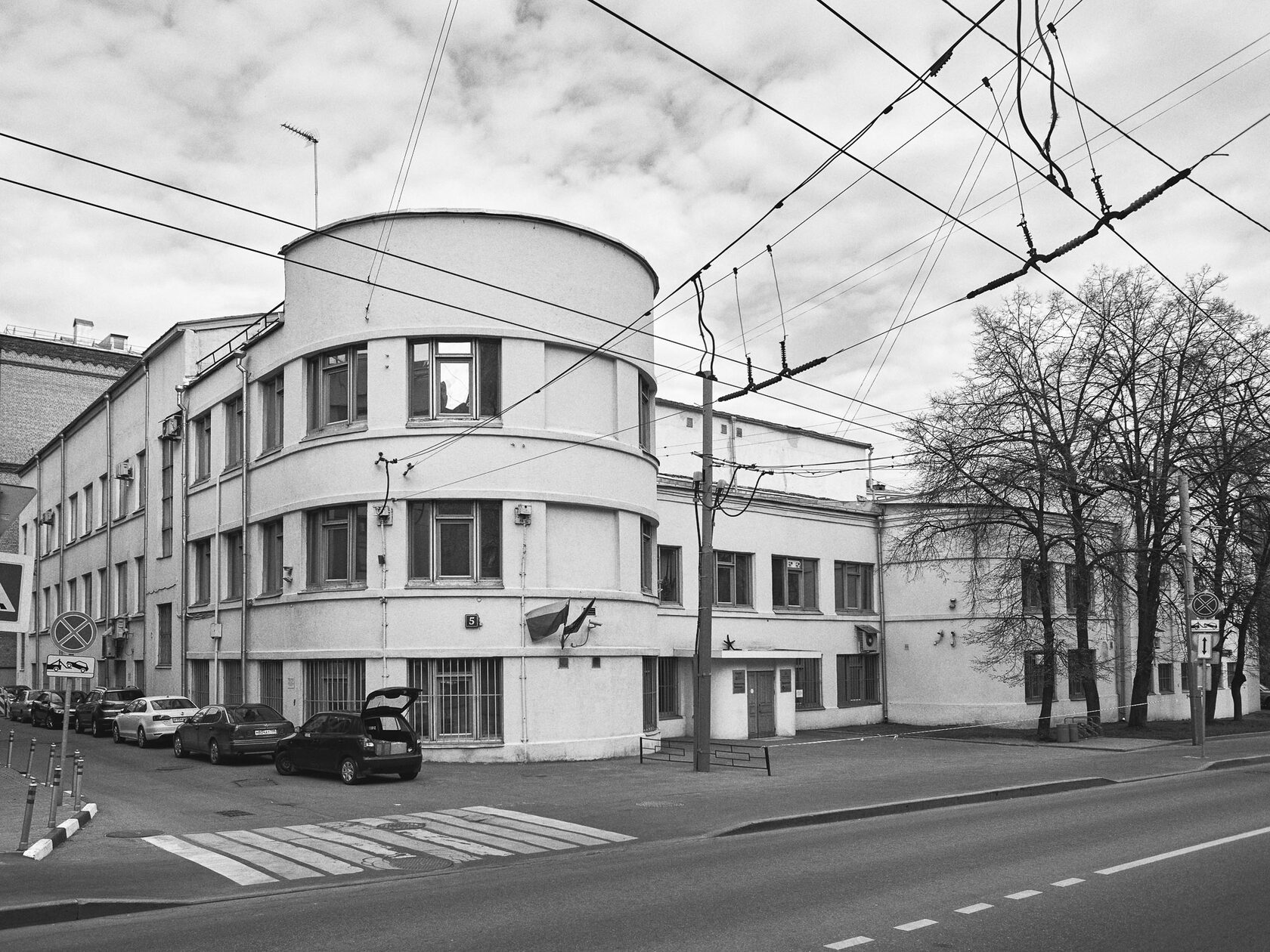
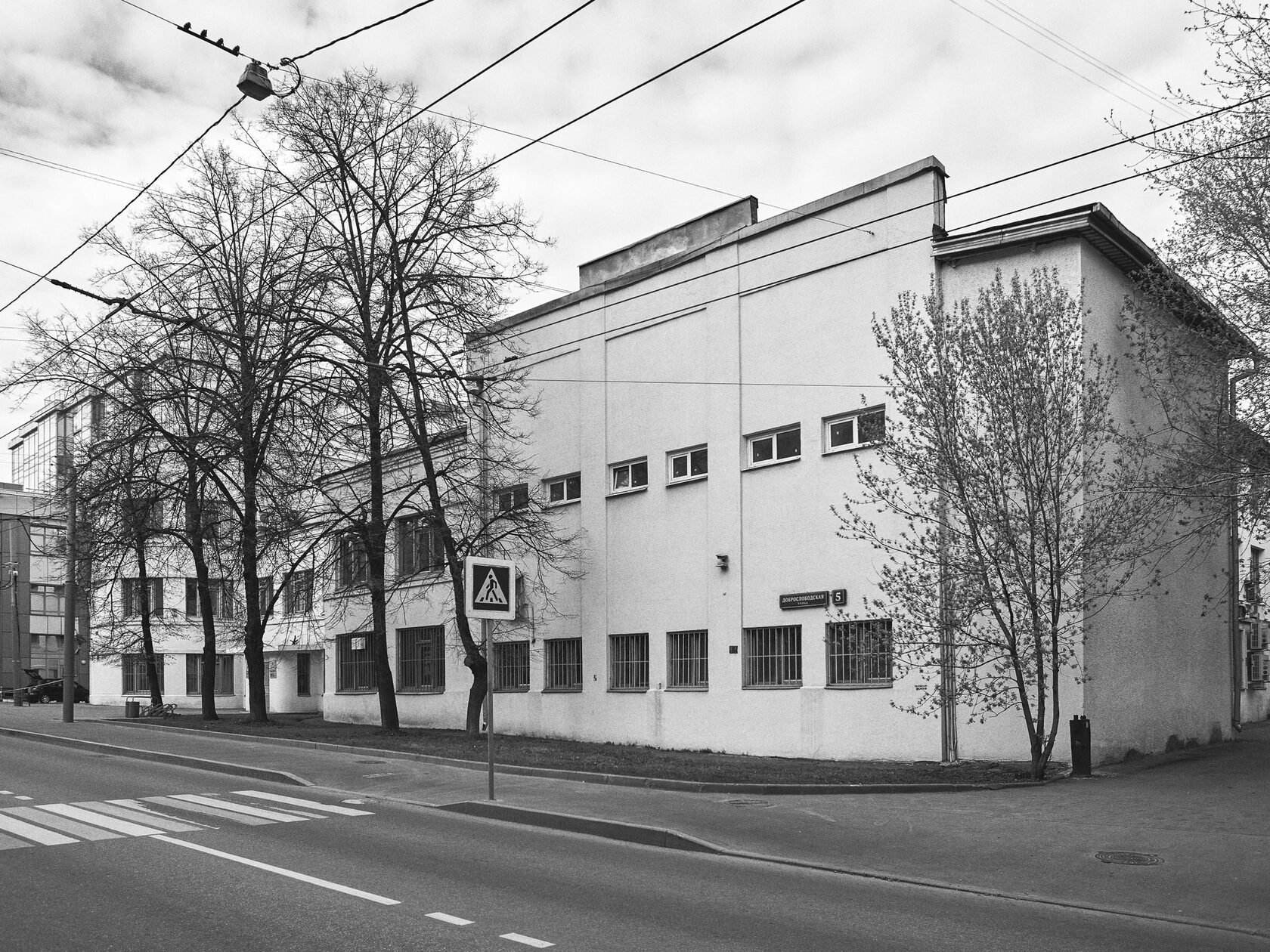
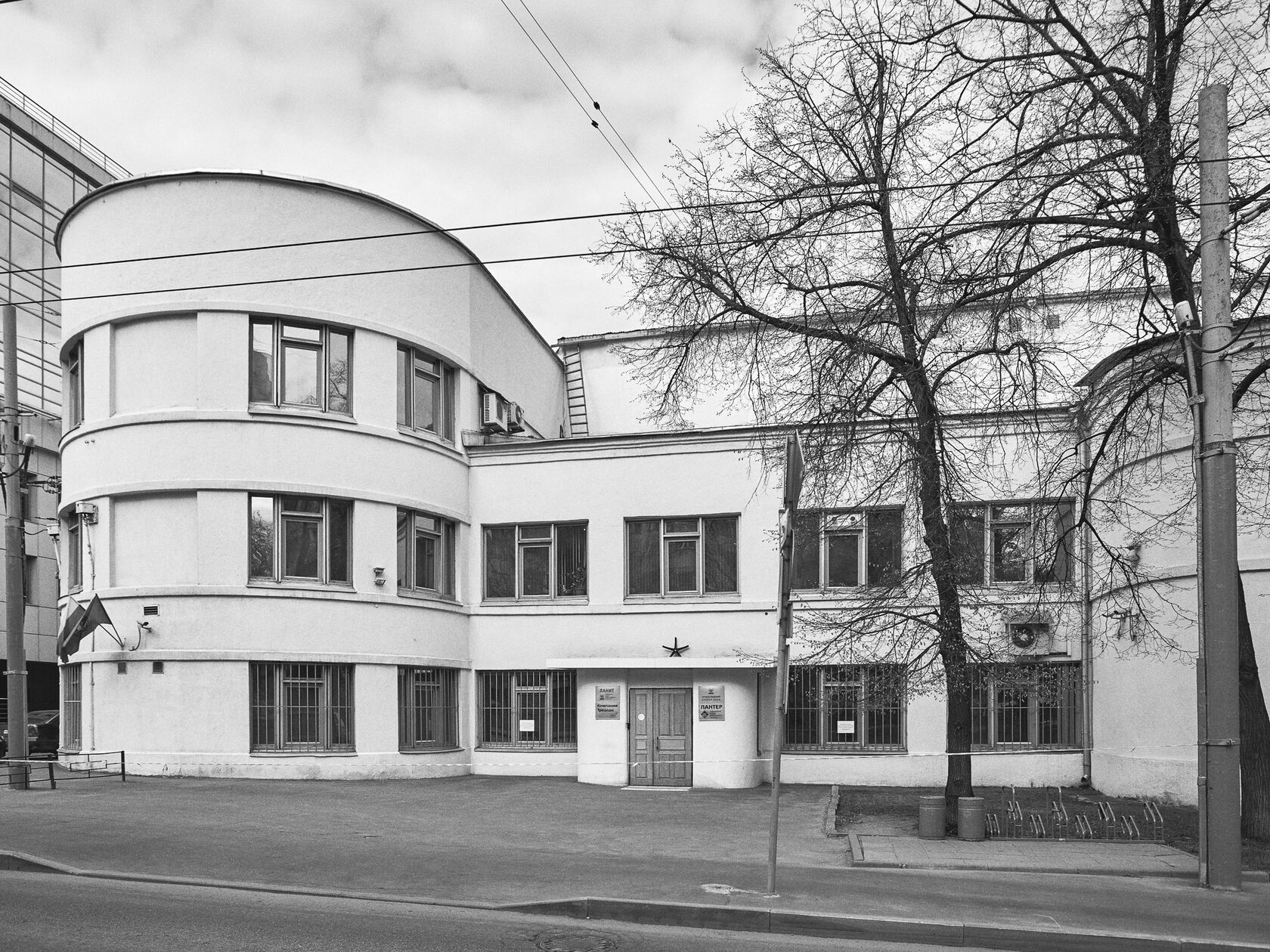
The building of bathhouse in the Rogozhsko-Simonovsky DistrictБани Рогожско-Симоновского района罗戈日斯科-西蒙诺夫斯基区浴场Badehaus des Bezirks Rogozhsko-SimonovskyBains du district Rogozhsko-SimonovskyBaños del distrito Rogozhsko-SimonovskyBalneário do distrito Rogozhsko-Simonovsky
This is the social body seen through architecture. Health, hygiene, care, and discipline are not private matters here, but a spatial program: corridors, volumes, entrances, and surfaces arranged for collective maintenance.Это социальное тело, увиденное через архитектуру. Здоровье, гигиена, уход и дисциплина здесь не частное дело, а пространственная программа: коридоры, объемы, входы и поверхности, выстроенные для коллективного обслуживания жизни.这是通过建筑看到的社会身体。健康、卫生、照护和纪律在这里不是私人事务,而是一套空间程序:走廊、体量、入口和表面被组织起来,服务于集体生活的维护。Hier wird der soziale Körper durch Architektur sichtbar. Gesundheit, Hygiene, Fürsorge und Disziplin sind keine privaten Angelegenheiten, sondern ein räumliches Programm: Korridore, Volumen, Eingänge und Oberflächen für kollektive Erhaltung.C'est le corps social vu à travers l'architecture. Santé, hygiène, soin et discipline ne sont pas ici des affaires privées, mais un programme spatial : couloirs, volumes, entrées et surfaces organisés pour l'entretien collectif de la vie.Es el cuerpo social visto a través de la arquitectura. Salud, higiene, cuidado y disciplina no son aquí asuntos privados, sino un programa espacial: pasillos, volúmenes, entradas y superficies organizados para el mantenimiento colectivo de la vida.É o corpo social visto pela arquitetura. Saúde, higiene, cuidado e disciplina não são aqui questões privadas, mas um programa espacial: corredores, volumes, entradas e superfícies organizados para a manutenção coletiva da vida.
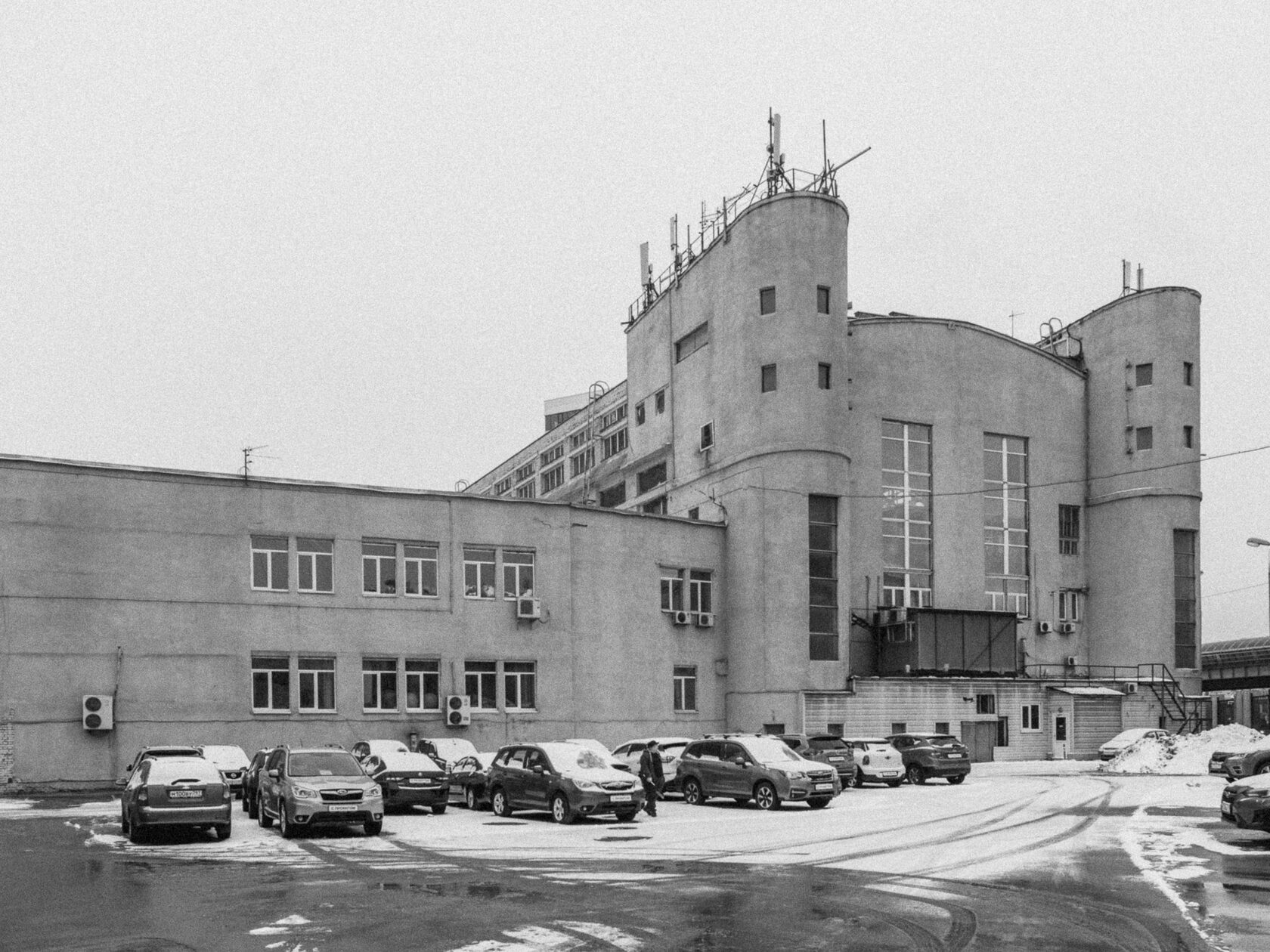
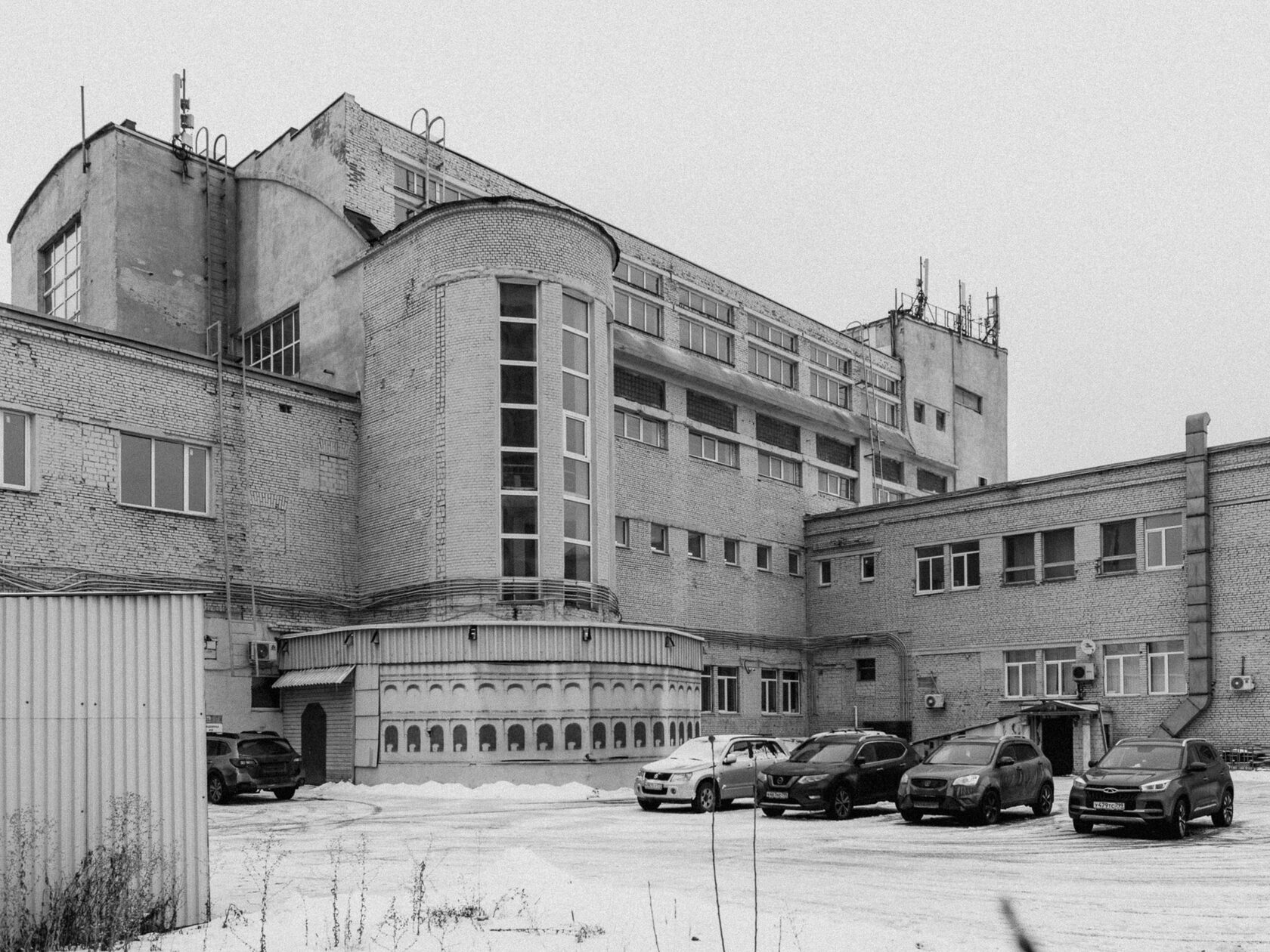
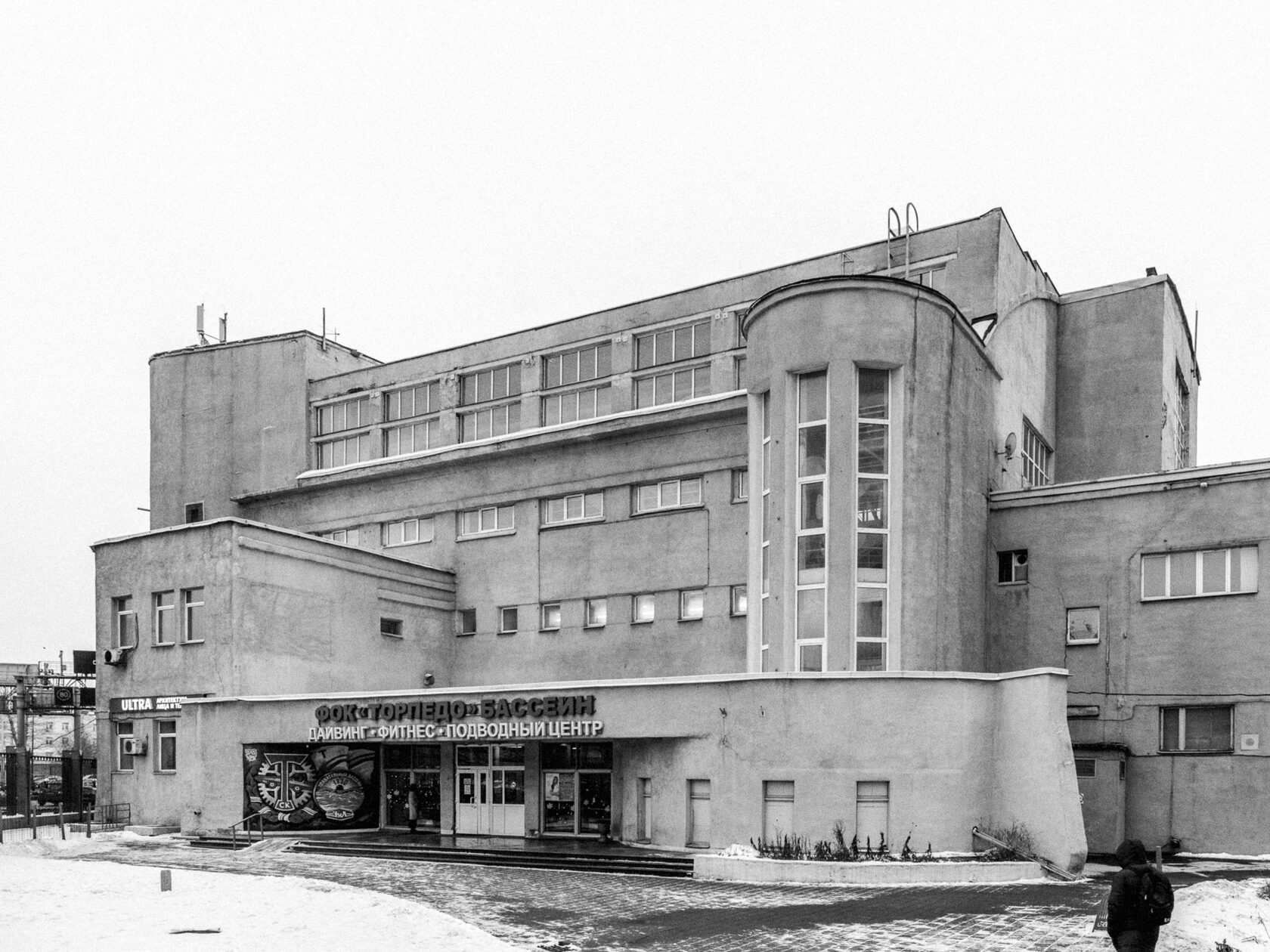
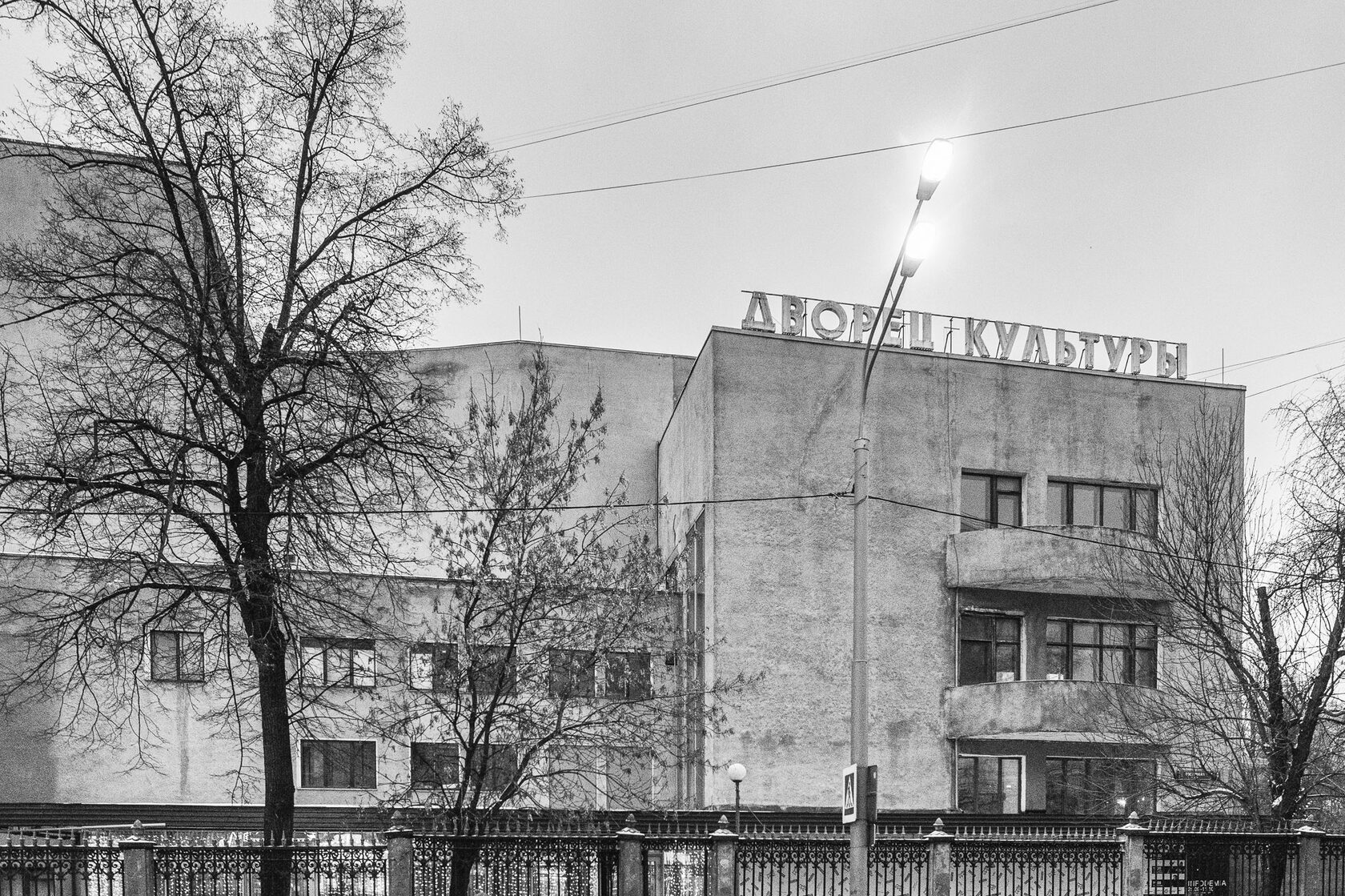
The Palace of Culture of the Proletarsky DistrictДворец культуры Пролетарского района无产阶级区文化宫Kulturpalast des Proletarsky-BezirksPalais de la culture du district ProletarskyPalacio de Cultura del distrito ProletarskyPalácio da Cultura do distrito Proletarsky
The building is photographed as a public interior turned outward. The facade carries the promise of assembly: lectures, rehearsals, meetings, cinema, theatre, music, and the belief that culture could be organized as part of everyday life.Здание снято как общественный интерьер, вывернутый наружу. Фасад удерживает обещание собрания: лекции, репетиции, встречи, кино, театр, музыку и веру в то, что культуру можно встроить в повседневность.这座建筑被拍成向外翻开的公共室内。立面保存着集会的承诺:讲座、排练、会议、电影、戏剧、音乐,以及文化可以被编入日常生活的信念。Das Gebäude wird als nach außen gekehrtes öffentliches Interieur fotografiert. Die Fassade trägt das Versprechen der Versammlung: Vorträge, Proben, Treffen, Kino, Theater, Musik und den Glauben, Kultur könne Teil des Alltags werden.Le bâtiment est photographié comme un intérieur public retourné vers l'extérieur. La façade porte la promesse du rassemblement : conférences, répétitions, réunions, cinéma, théâtre, musique, et la croyance que la culture pouvait être intégrée au quotidien.El edificio se fotografía como un interior público vuelto hacia fuera. La fachada sostiene la promesa de reunión: conferencias, ensayos, encuentros, cine, teatro, música y la creencia de que la cultura podía organizarse dentro de la vida cotidiana.O edifício é fotografado como um interior público virado para fora. A fachada guarda a promessa da reunião: palestras, ensaios, encontros, cinema, teatro, música e a crença de que a cultura podia ser organizada dentro do cotidiano.
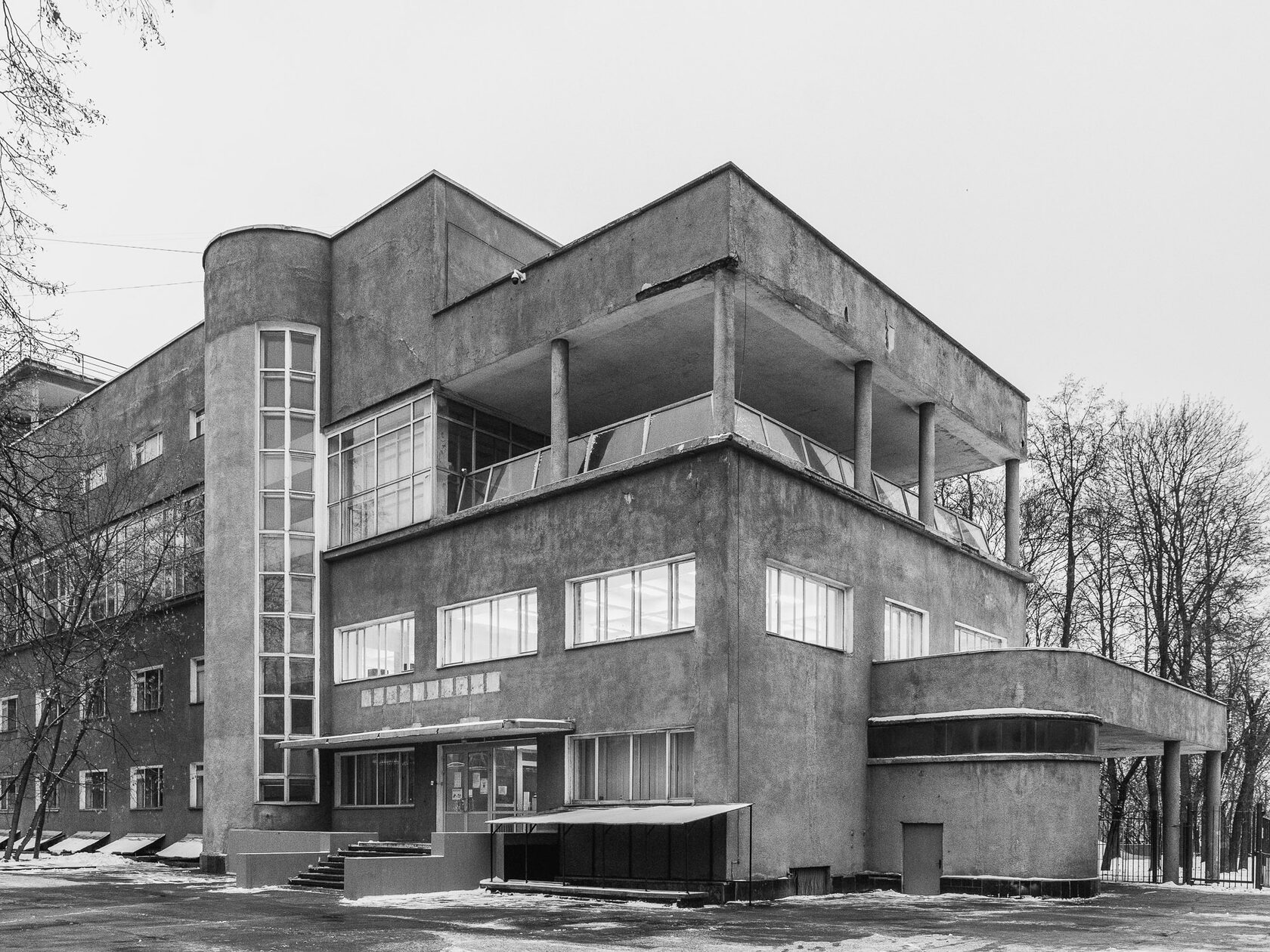
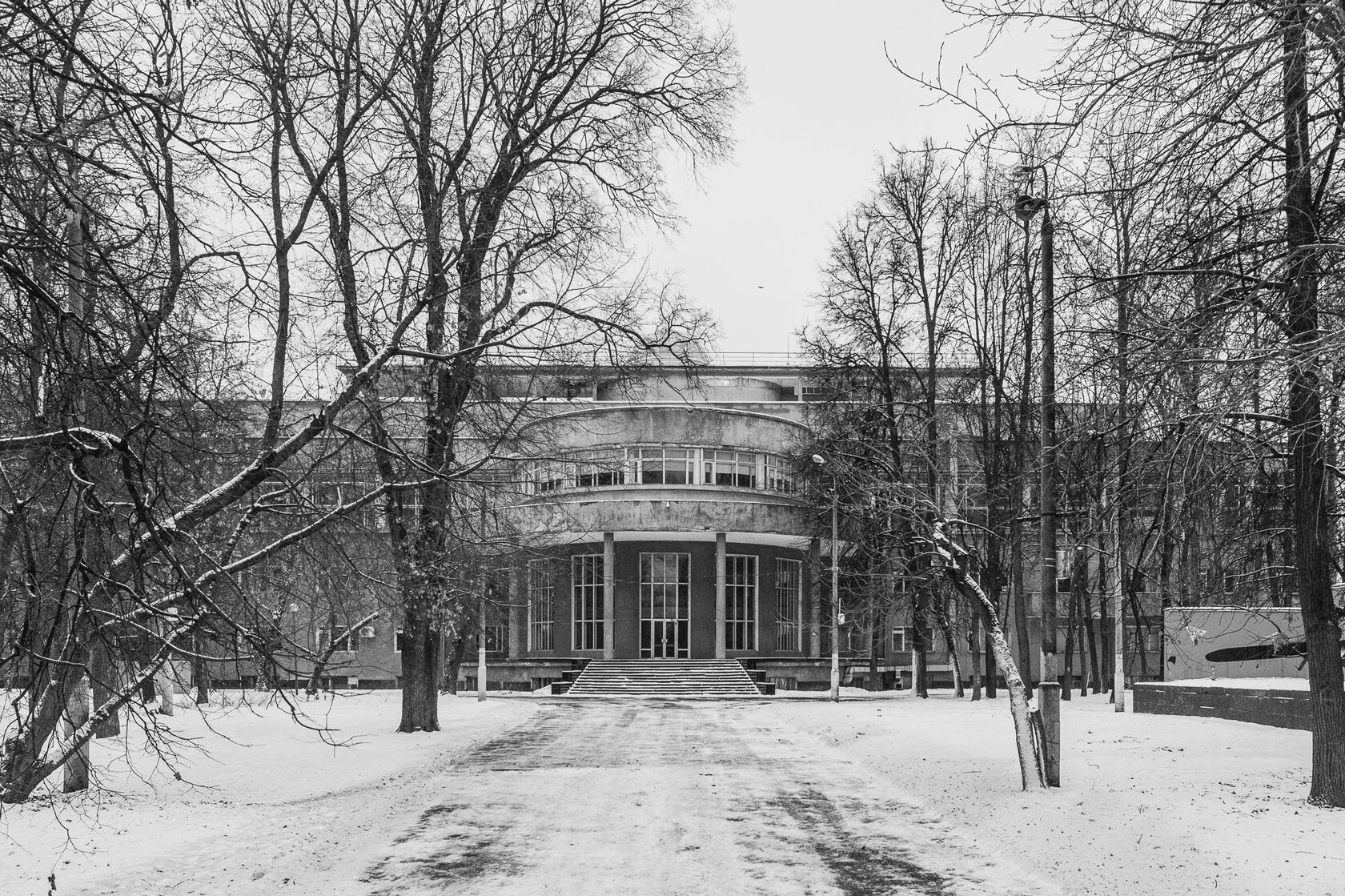
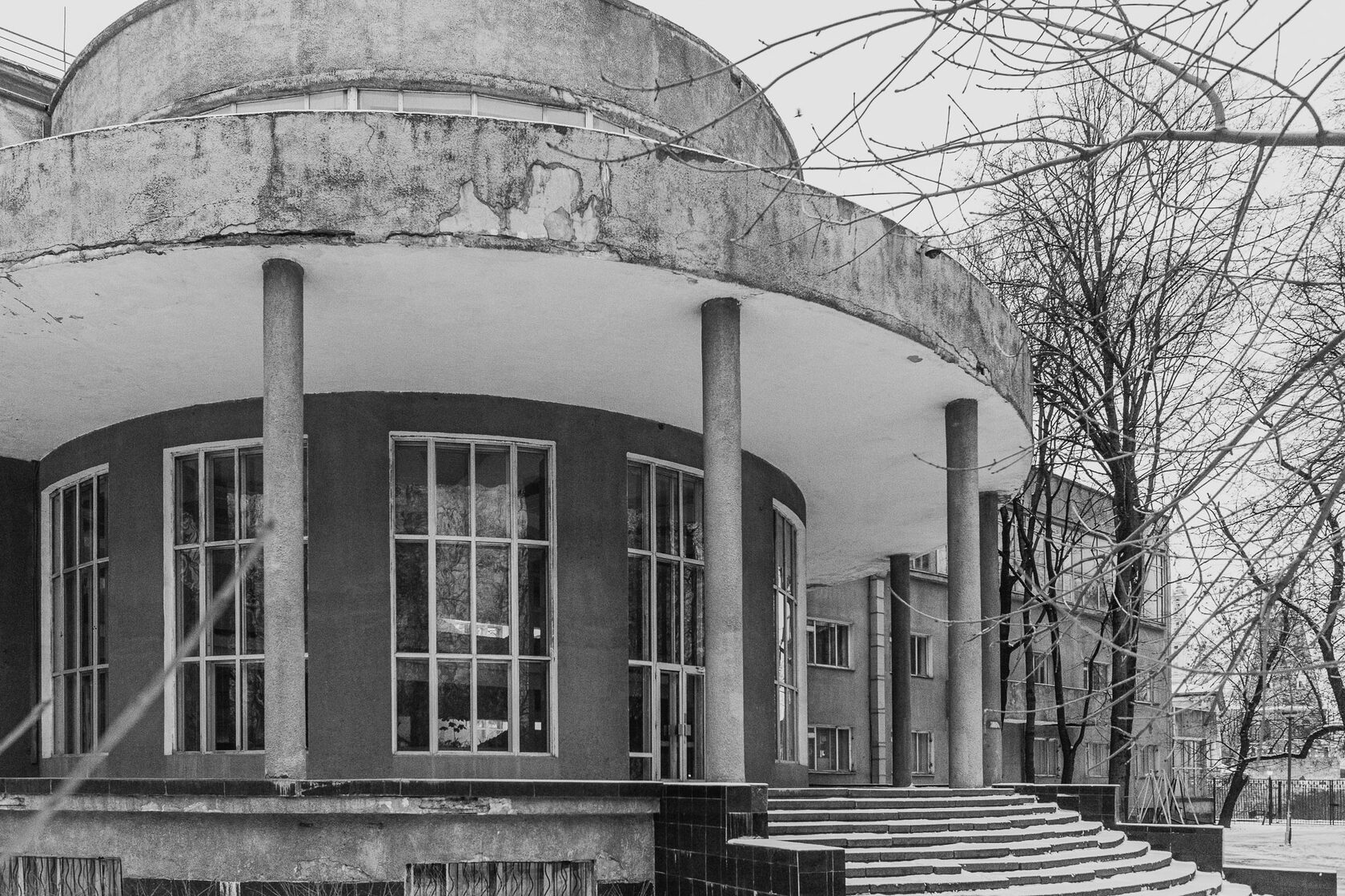
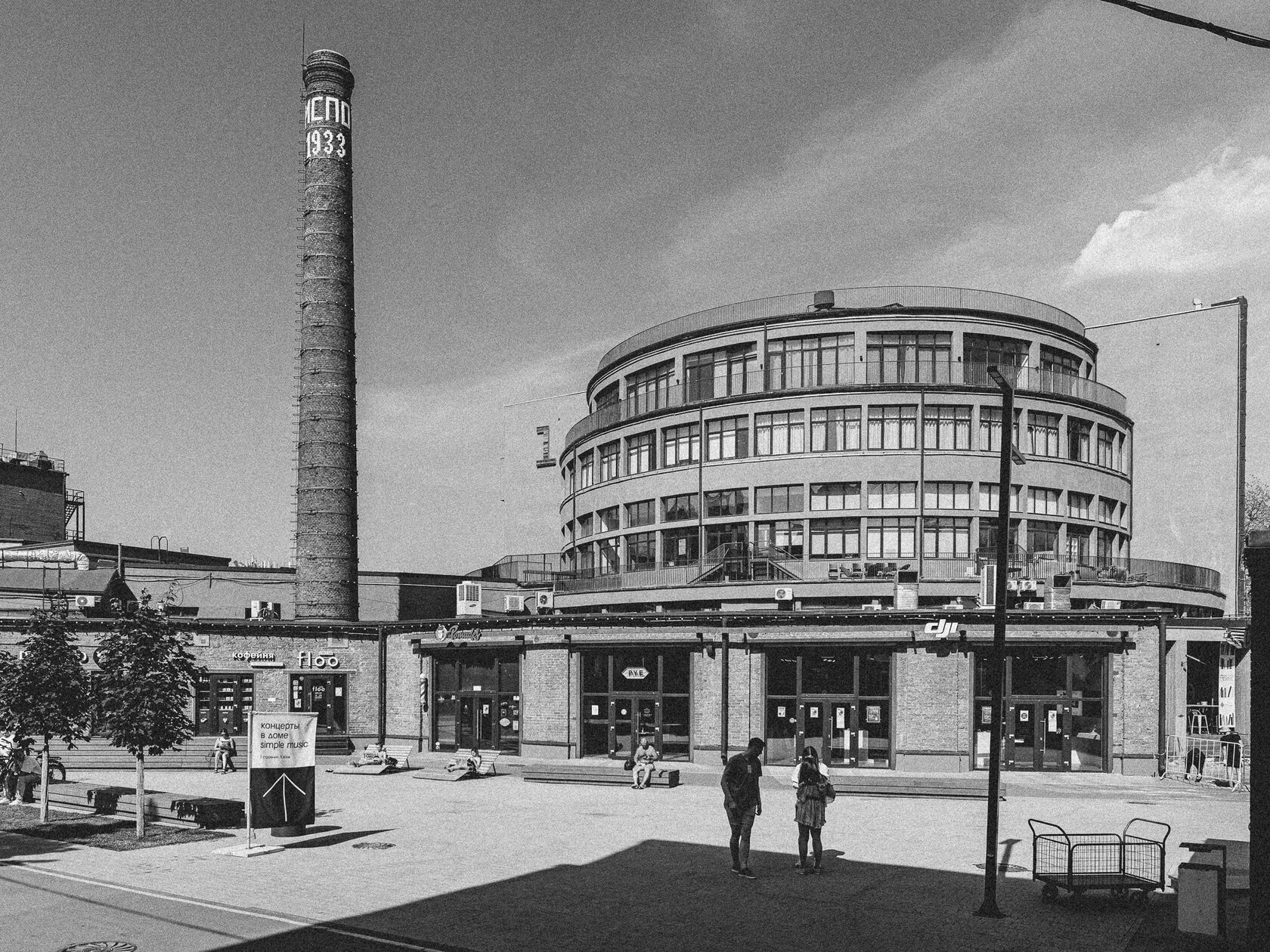
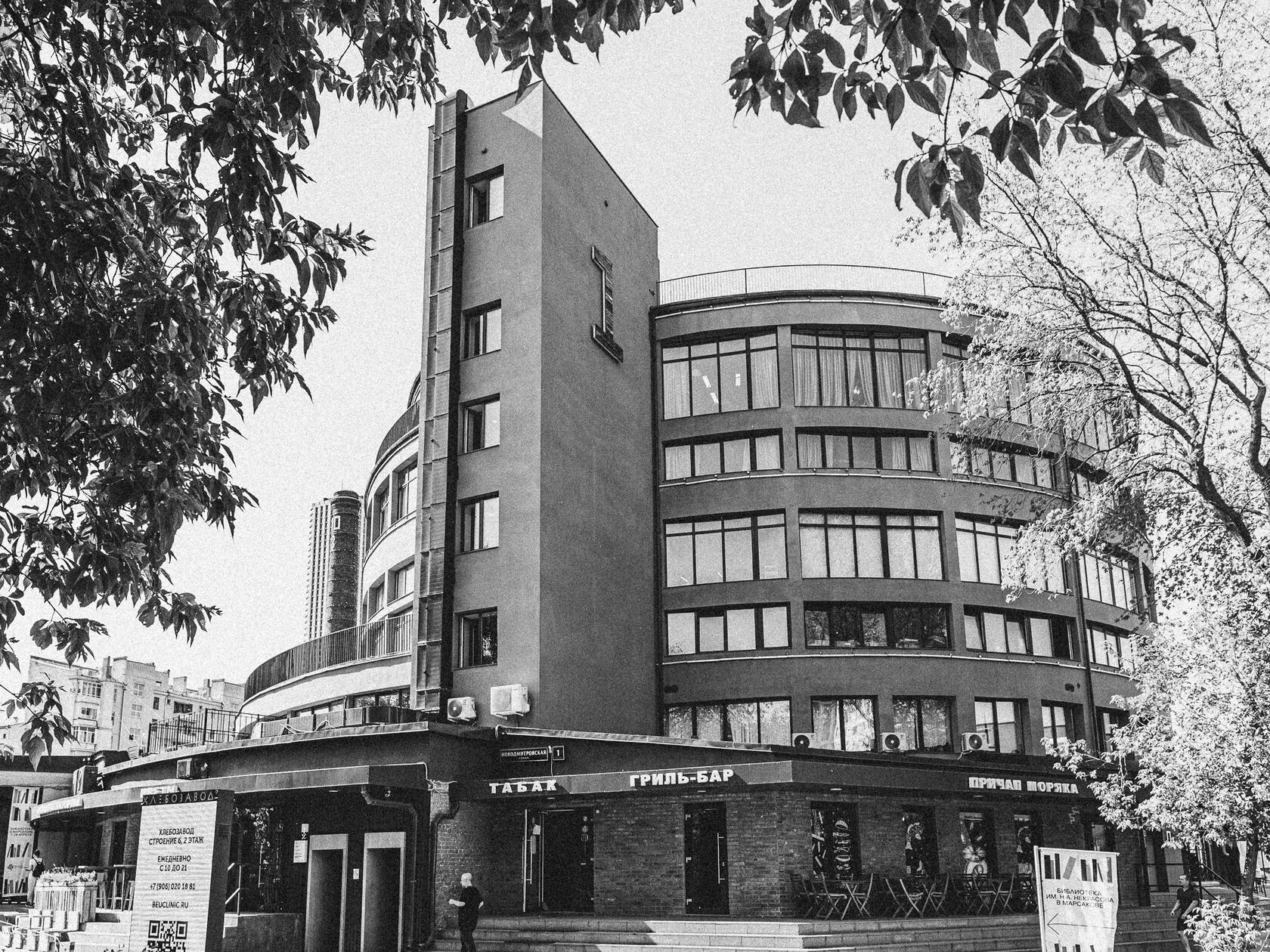
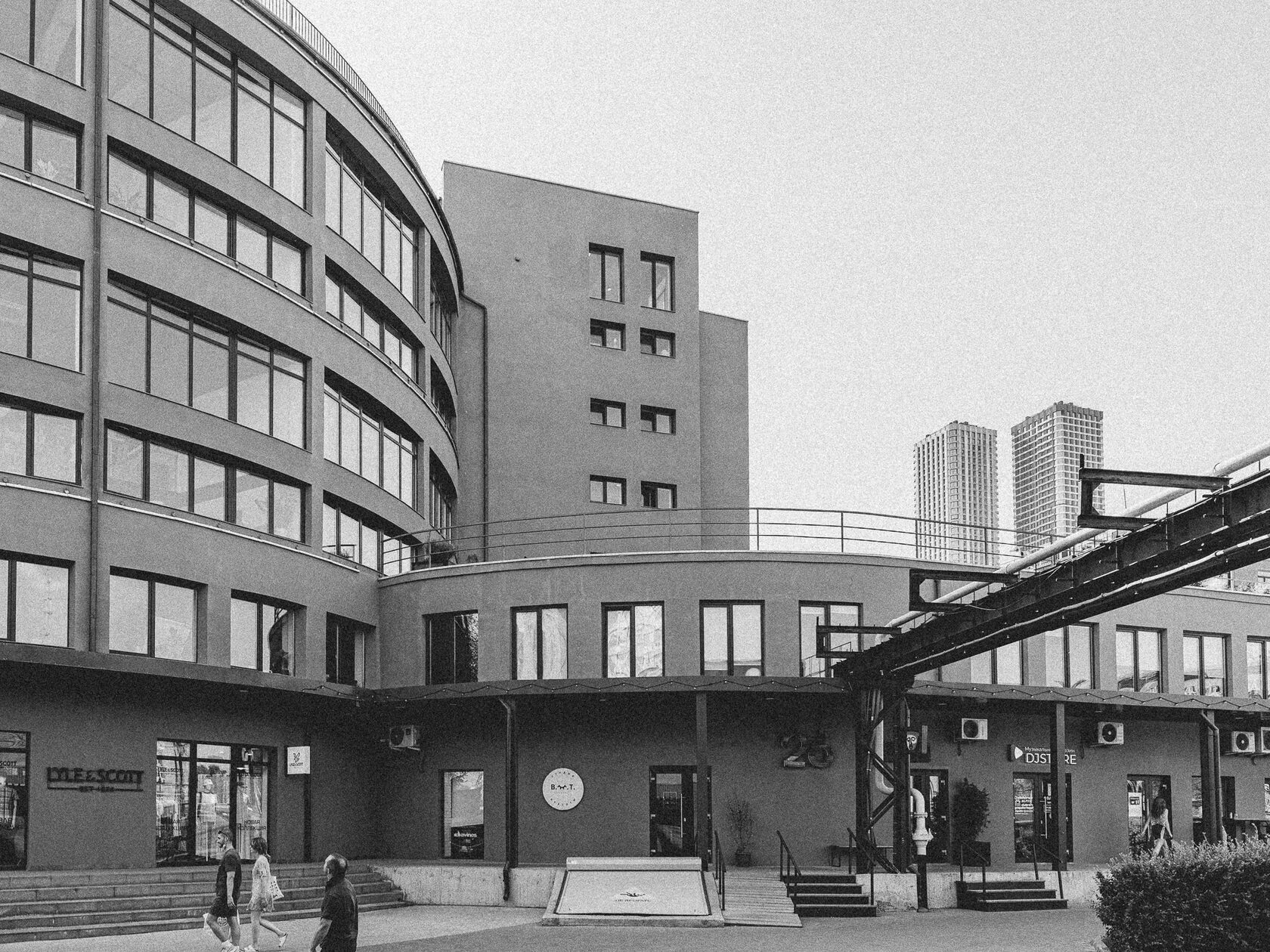
Bakery number 9 named after the XVII Party CongressХлебозавод № 9 имени 17-го съезда партии以第十七次党代会命名的第 9 面包厂Bäckerei Nr. 9, benannt nach dem XVII. ParteitagBoulangerie n° 9 nommée d'après le XVIIe congrès du partiPanificadora n.º 9 dedicada al XVII Congreso del PartidoPadaria n.º 9 dedicada ao XVII Congresso do Partido
The building belongs to the constructivist everyday: food, purchase, production, distribution. Such architecture matters because it does not separate ideology from routine; it places the future inside ordinary actions.Здание принадлежит конструктивистской повседневности: еда, покупка, производство, распределение. Такая архитектура важна именно потому, что не отделяет идеологию от рутины, а помещает будущее внутрь обычных действий.这座建筑属于建构主义的日常:食物、购买、生产、分配。它重要,正因为它不把意识形态同惯例分开,而是把未来放进普通动作之中。Das Gebäude gehört zum konstruktivistischen Alltag: Essen, Einkauf, Produktion, Verteilung. Solche Architektur ist wichtig, weil sie Ideologie nicht von Routine trennt, sondern die Zukunft in gewöhnliche Handlungen legt.Le bâtiment appartient au quotidien constructiviste : manger, acheter, produire, distribuer. Cette architecture importe précisément parce qu'elle ne sépare pas l'idéologie de la routine ; elle place l'avenir dans les gestes ordinaires.El edificio pertenece a la vida cotidiana constructivista: comida, compra, producción, distribución. Esta arquitectura importa porque no separa ideología y rutina; coloca el futuro dentro de acciones ordinarias.O edifício pertence ao cotidiano construtivista: comida, compra, produção, distribuição. Essa arquitetura importa porque não separa ideologia de rotina; coloca o futuro dentro de ações comuns.
Gosplan garageГараж Госплана国家计划委员会车库Gosplan-GarageGarage du GosplanGaraje del GosplanGaragem do Gosplan
The building is read through movement: arrival, departure, service, waiting, repair. It is less an object than a pause inside a larger route, a place where modern life briefly becomes visible as logistics.Здание читается через движение: прибытие, отправление, обслуживание, ожидание, ремонт. Это не столько объект, сколько остановка внутри большого маршрута, место, где современная жизнь на мгновение становится видимой как логистика.这座建筑通过移动来阅读:抵达、出发、服务、等待、修理。它与其说是一个对象,不如说是更大路线中的一次停顿,一个现代生活短暂显现为物流的地点。Das Gebäude wird durch Bewegung gelesen: Ankunft, Abfahrt, Service, Warten, Reparatur. Es ist weniger ein Objekt als eine Pause in einer größeren Route, ein Ort, an dem modernes Leben kurz als Logistik sichtbar wird.Le bâtiment se lit par le mouvement : arrivée, départ, service, attente, réparation. C'est moins un objet qu'une pause dans un trajet plus vaste, un lieu où la vie moderne devient brièvement visible comme logistique.El edificio se lee a través del movimiento: llegada, salida, servicio, espera, reparación. Es menos un objeto que una pausa dentro de una ruta mayor, un lugar donde la vida moderna se vuelve visible por un momento como logística.O edifício é lido pelo movimento: chegada, partida, serviço, espera, reparo. É menos um objeto do que uma pausa dentro de uma rota maior, um lugar onde a vida moderna se torna brevemente visível como logística.
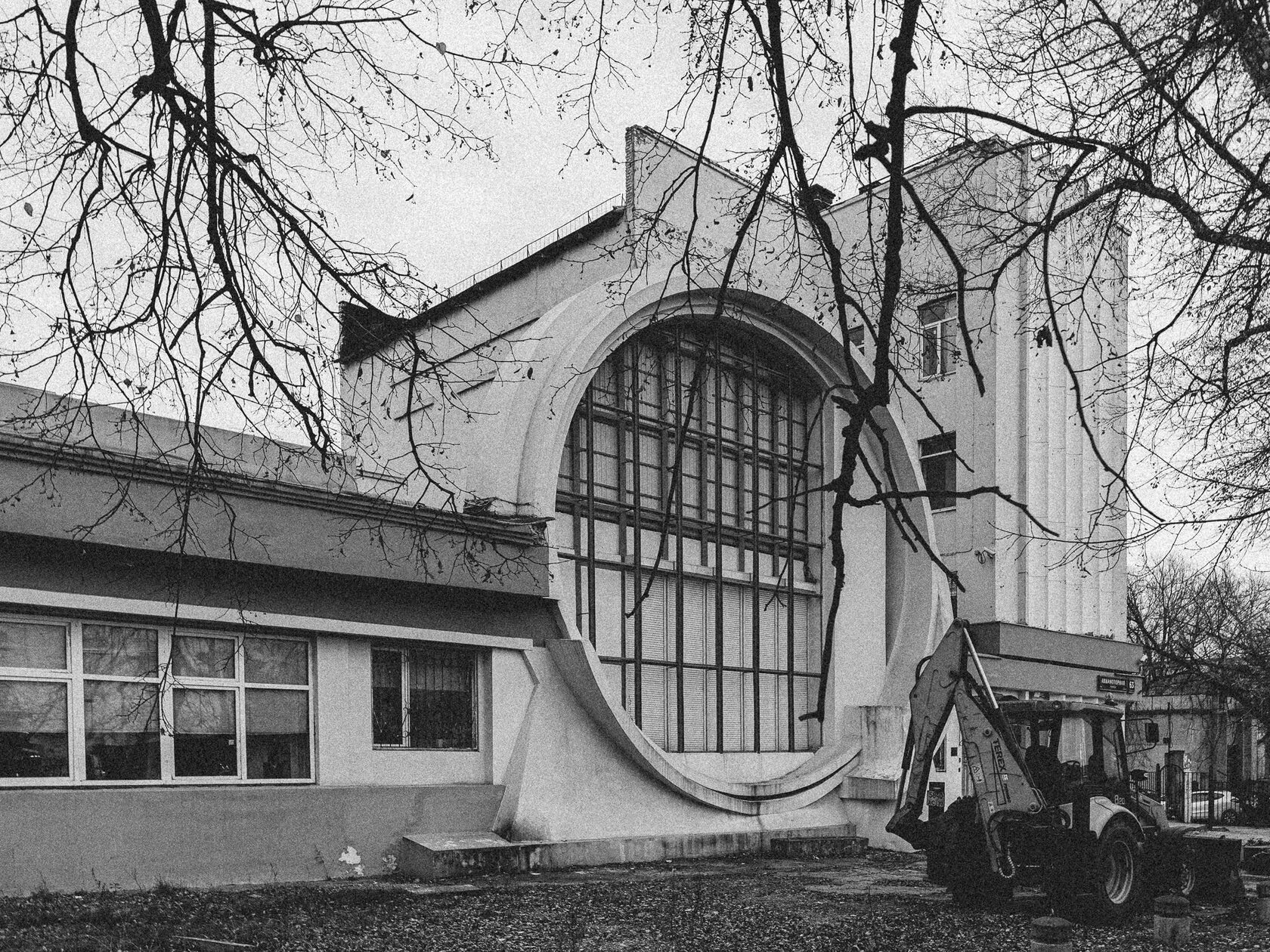
KorolevКоролев科罗廖夫KoroljowKorolevKoroliovKorolev
Buildings in KorolevЗдания: Королев建筑: 科罗廖夫Bauten in KoroljowBâtiments à KorolevEdificios en KoroliovEdifícios em Korolev
Factory-kitchen (Bolshevsk labor commune)Фабрика-кухня Болшевской трудовой коммуны博尔舍沃劳动公社工厂厨房Fabrikküche der Arbeitskommune BolshevskFabrique-cuisine de la commune de travail de BolshevskFábrica-cocina de la comuna laboral de BolshevskFábrica-cozinha da comuna de trabalho de Bolshevsk
The building belongs to the constructivist everyday: food, purchase, production, distribution. Such architecture matters because it does not separate ideology from routine; it places the future inside ordinary actions.Здание принадлежит конструктивистской повседневности: еда, покупка, производство, распределение. Такая архитектура важна именно потому, что не отделяет идеологию от рутины, а помещает будущее внутрь обычных действий.这座建筑属于建构主义的日常:食物、购买、生产、分配。它重要,正因为它不把意识形态同惯例分开,而是把未来放进普通动作之中。Das Gebäude gehört zum konstruktivistischen Alltag: Essen, Einkauf, Produktion, Verteilung. Solche Architektur ist wichtig, weil sie Ideologie nicht von Routine trennt, sondern die Zukunft in gewöhnliche Handlungen legt.Le bâtiment appartient au quotidien constructiviste : manger, acheter, produire, distribuer. Cette architecture importe précisément parce qu'elle ne sépare pas l'idéologie de la routine ; elle place l'avenir dans les gestes ordinaires.El edificio pertenece a la vida cotidiana constructivista: comida, compra, producción, distribución. Esta arquitectura importa porque no separa ideología y rutina; coloca el futuro dentro de acciones ordinarias.O edifício pertence ao cotidiano construtivista: comida, compra, produção, distribuição. Essa arquitetura importa porque não separa ideologia de rotina; coloca o futuro dentro de ações comuns.
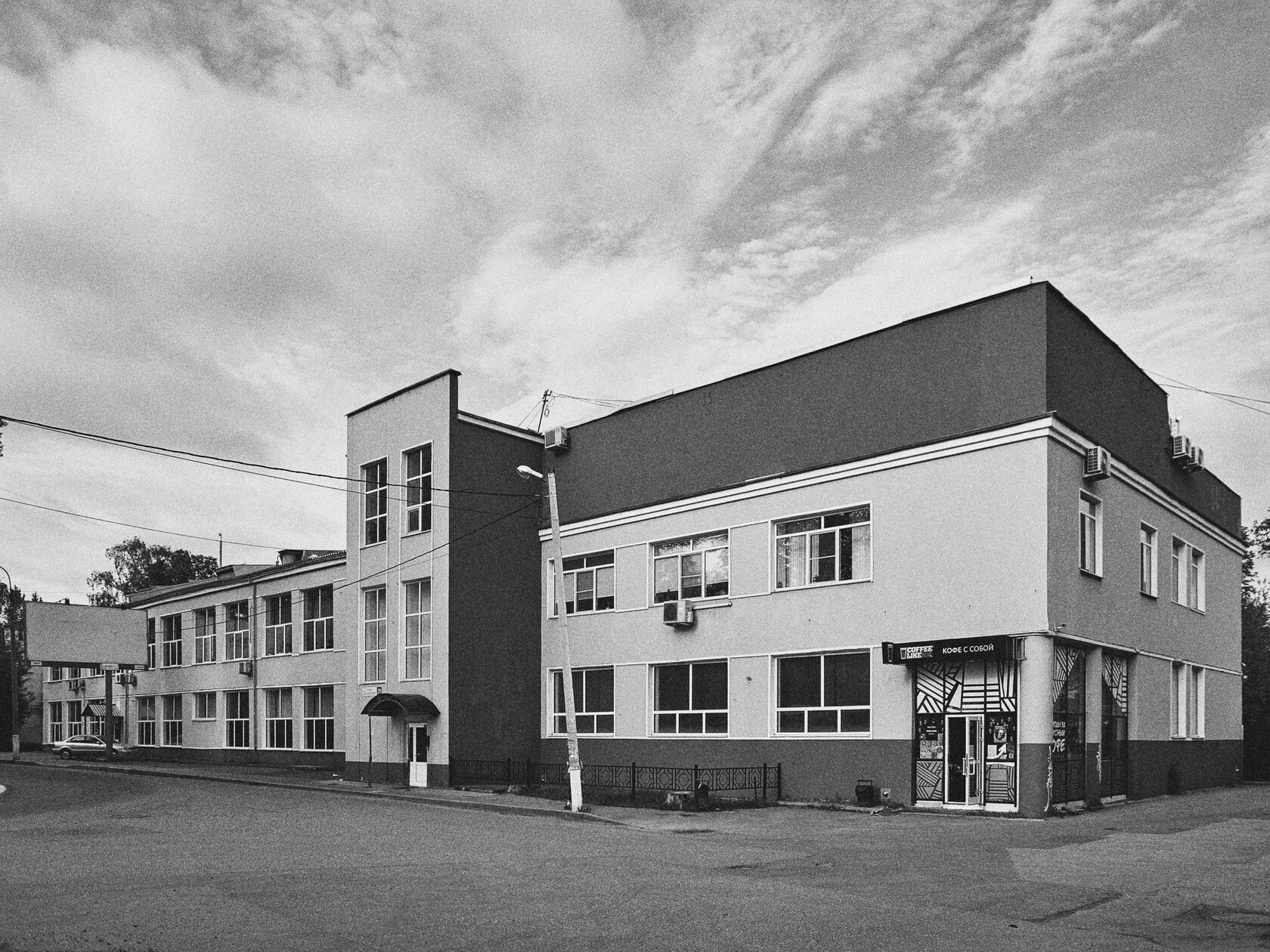
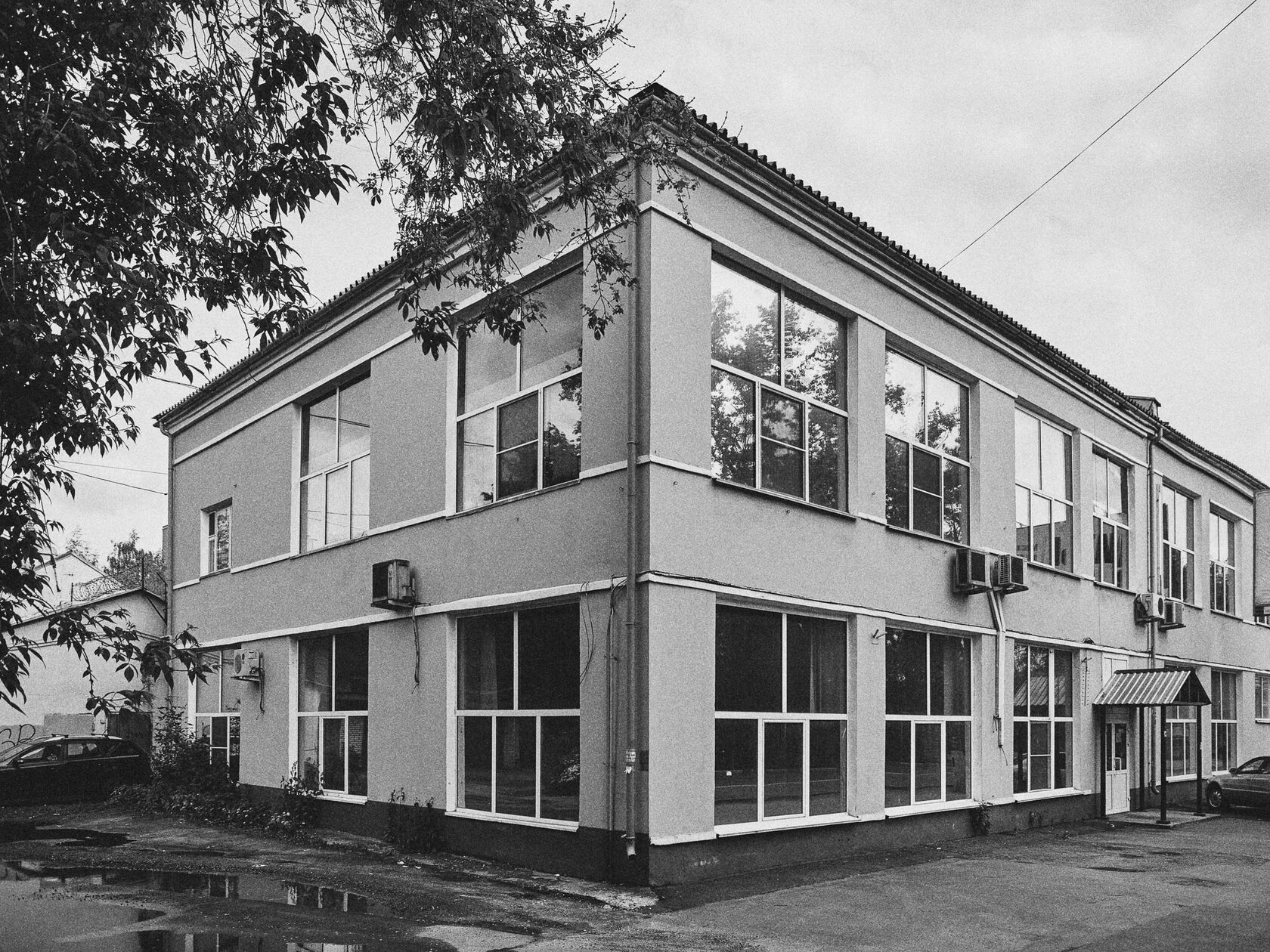
Shopping center (Bolshevskaya labor commune)Торговый центр Болшевской трудовой коммуны博尔舍沃劳动公社购物中心Einkaufszentrum der Arbeitskommune BolshevskCentre commercial de la commune de travail de BolshevskCentro comercial de la comuna laboral de BolshevskCentro comercial da comuna de trabalho de Bolshevsk
The image keeps the central constructivist question close to the ground: how should people live together? Balconies, entrances, shared edges, and later alterations show where an old social model meets private use.Кадр удерживает главный бытовой вопрос конструктивизма: как людям жить вместе? Балконы, входы, общие границы и поздние изменения показывают место, где старая социальная модель сталкивается с частным использованием.画面把建构主义最日常的问题拉回地面:人们该如何共同生活?阳台、入口、共享边界和后来的改动,显示出旧的社会模型如何与私人使用相遇。Das Bild hält die zentrale Alltagsfrage des Konstruktivismus nahe am Boden: Wie sollen Menschen zusammenleben? Balkone, Eingänge, gemeinsame Kanten und spätere Veränderungen zeigen, wo ein altes Sozialmodell auf private Nutzung trifft.L'image garde au ras du sol la question centrale du constructivisme : comment vivre ensemble ? Balcons, entrées, limites partagées et transformations ultérieures montrent l'endroit où un ancien modèle social rencontre l'usage privé.La imagen mantiene cerca del suelo la pregunta central del constructivismo: ¿cómo deben vivir juntas las personas? Balcones, entradas, bordes compartidos y alteraciones posteriores muestran dónde un viejo modelo social se encuentra con el uso privado.A imagem mantém rente ao chão a pergunta central do construtivismo: como as pessoas devem viver juntas? Varandas, entradas, limites compartilhados e alterações posteriores mostram onde um antigo modelo social encontra o uso privado.
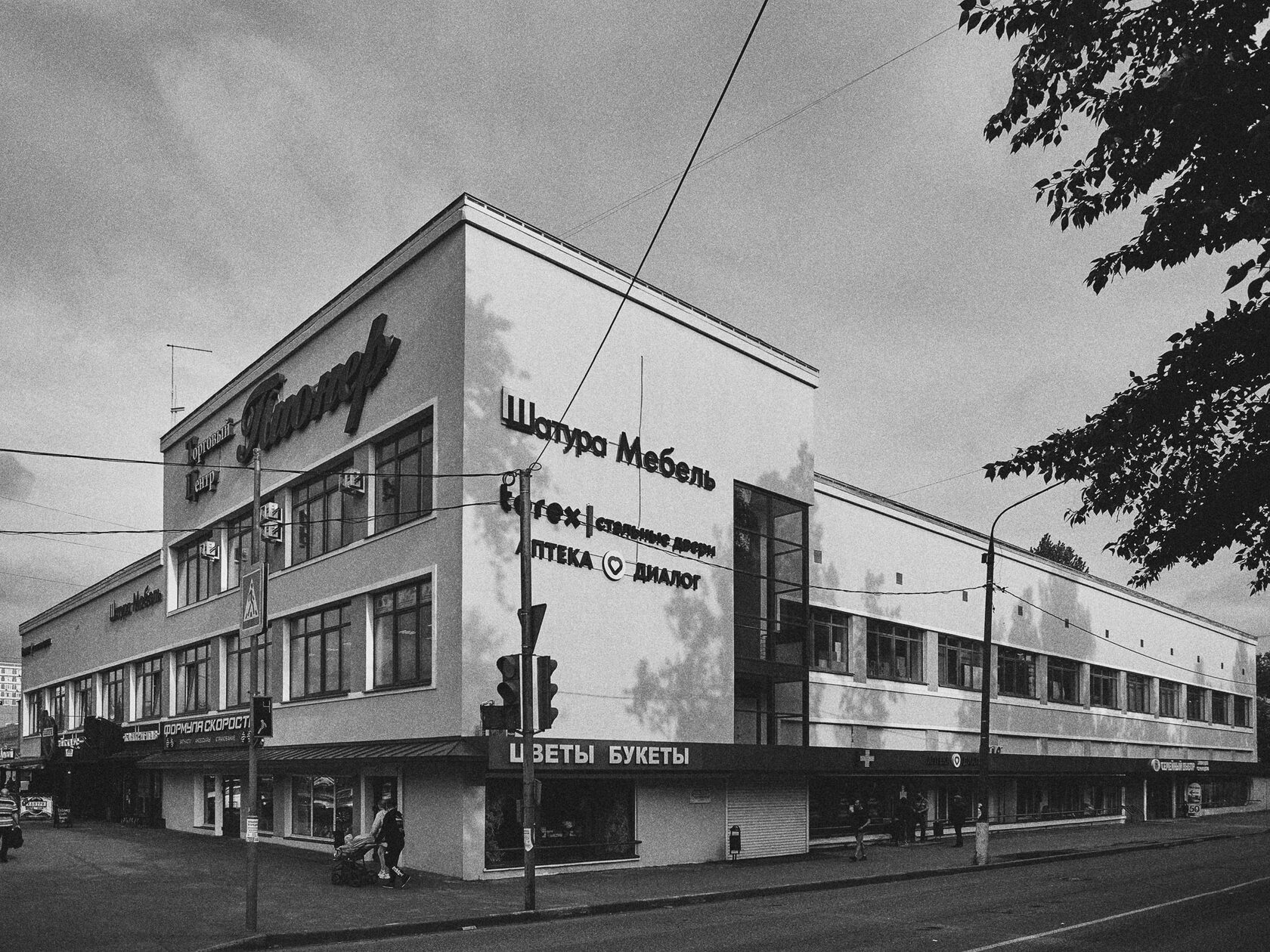
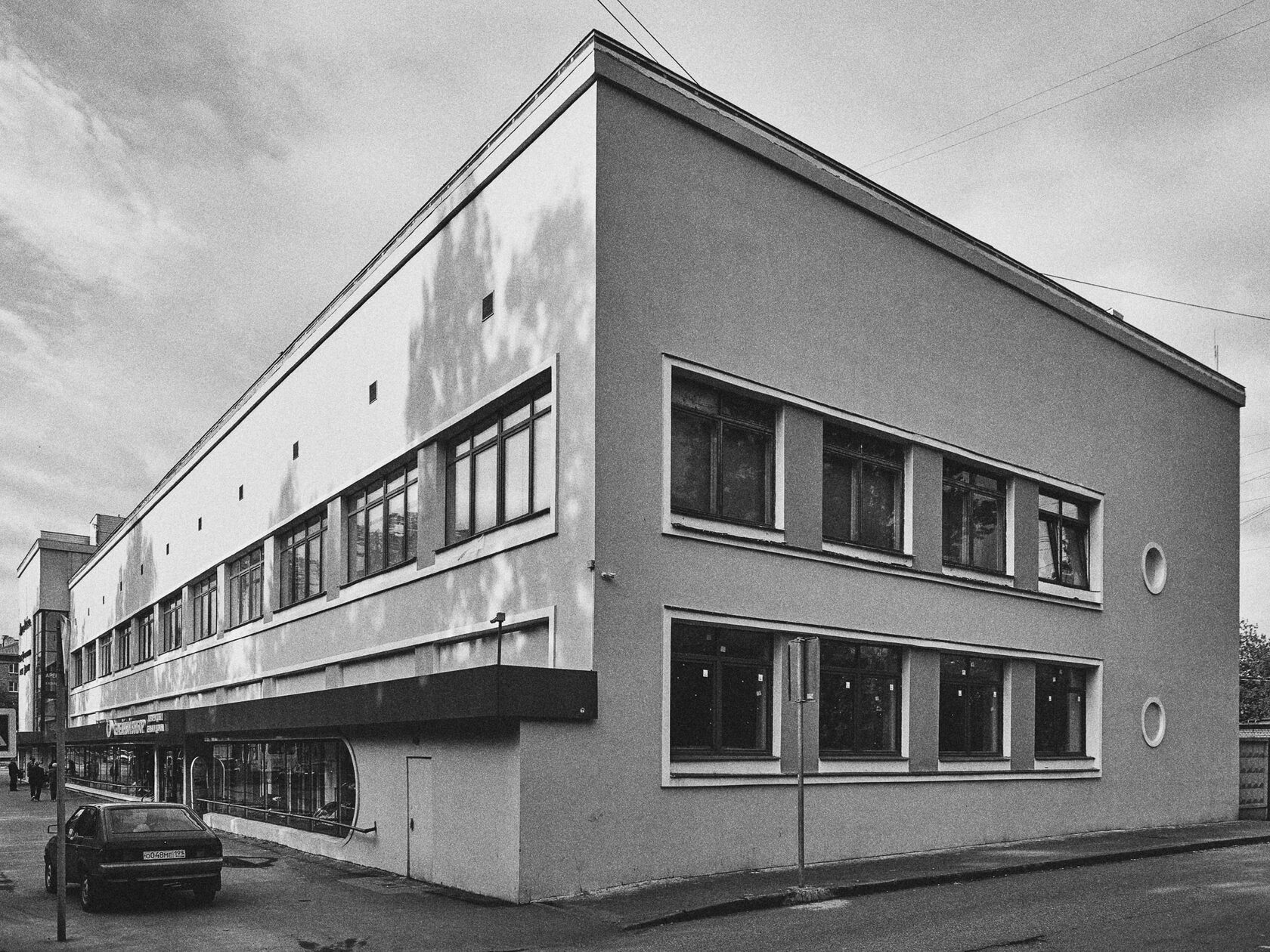
Dormitory (Bolshevsk Labor Commune)Общежитие Болшевской трудовой коммуны博尔舍沃劳动公社宿舍Wohnheim der Arbeitskommune BolshevskFoyer de la commune de travail de BolshevskResidencia de la comuna laboral de BolshevskAlojamento da comuna de trabalho de Bolshevsk
The image keeps the central constructivist question close to the ground: how should people live together? Balconies, entrances, shared edges, and later alterations show where an old social model meets private use.Кадр удерживает главный бытовой вопрос конструктивизма: как людям жить вместе? Балконы, входы, общие границы и поздние изменения показывают место, где старая социальная модель сталкивается с частным использованием.画面把建构主义最日常的问题拉回地面:人们该如何共同生活?阳台、入口、共享边界和后来的改动,显示出旧的社会模型如何与私人使用相遇。Das Bild hält die zentrale Alltagsfrage des Konstruktivismus nahe am Boden: Wie sollen Menschen zusammenleben? Balkone, Eingänge, gemeinsame Kanten und spätere Veränderungen zeigen, wo ein altes Sozialmodell auf private Nutzung trifft.L'image garde au ras du sol la question centrale du constructivisme : comment vivre ensemble ? Balcons, entrées, limites partagées et transformations ultérieures montrent l'endroit où un ancien modèle social rencontre l'usage privé.La imagen mantiene cerca del suelo la pregunta central del constructivismo: ¿cómo deben vivir juntas las personas? Balcones, entradas, bordes compartidos y alteraciones posteriores muestran dónde un viejo modelo social se encuentra con el uso privado.A imagem mantém rente ao chão a pergunta central do construtivismo: como as pessoas devem viver juntas? Varandas, entradas, limites compartilhados e alterações posteriores mostram onde um antigo modelo social encontra o uso privado.
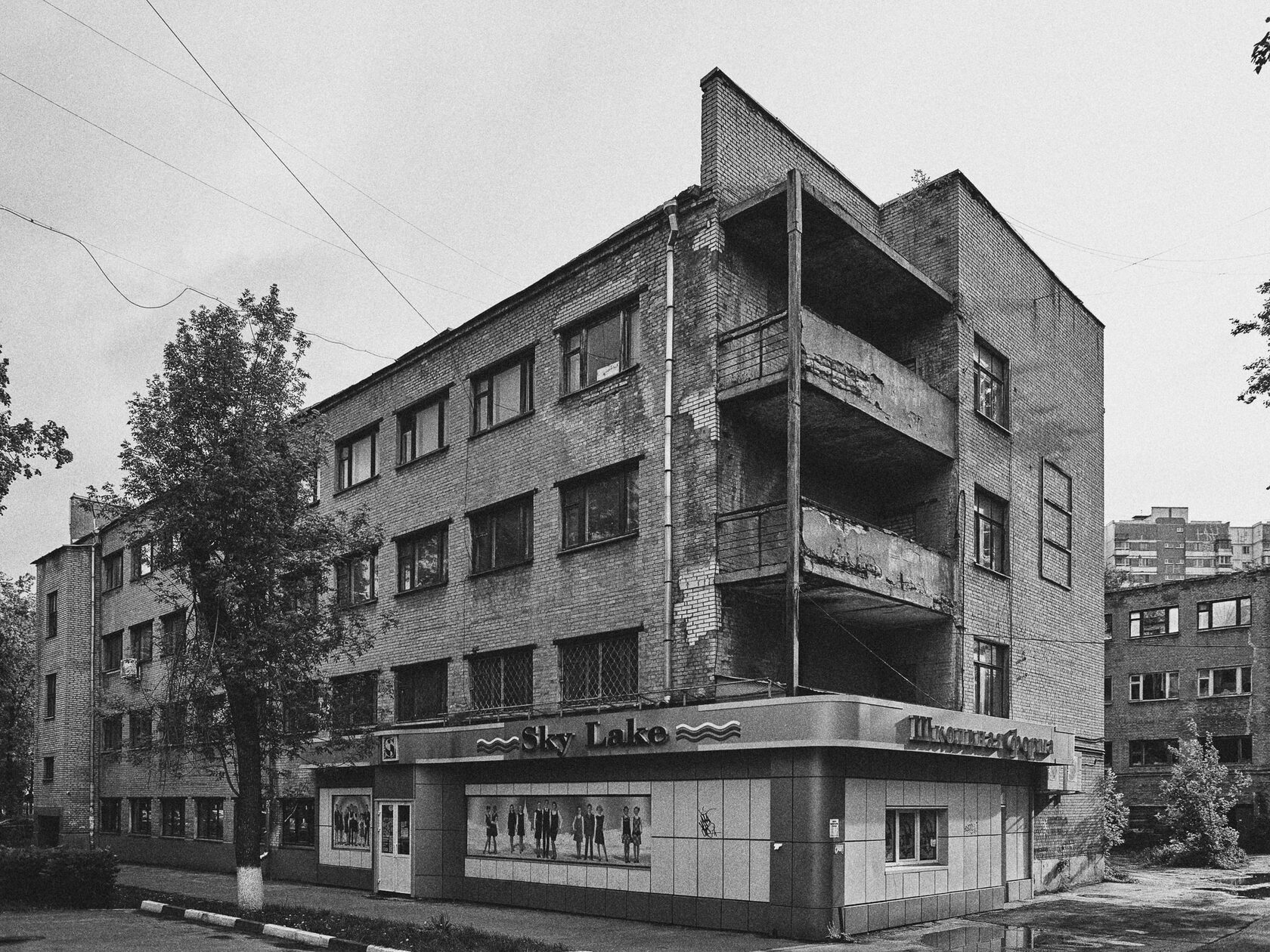
Factory-kitchen of factory No. 8Фабрика-кухня завода № 8第 8 工厂工人食堂Fabrikküche des Werks Nr. 8Fabrique-cuisine de l'usine n° 8Fábrica-cocina de la fábrica n.º 8Fábrica-cozinha da fábrica n.º 8
The building belongs to the constructivist everyday: food, purchase, production, distribution. Such architecture matters because it does not separate ideology from routine; it places the future inside ordinary actions.Здание принадлежит конструктивистской повседневности: еда, покупка, производство, распределение. Такая архитектура важна именно потому, что не отделяет идеологию от рутины, а помещает будущее внутрь обычных действий.这座建筑属于建构主义的日常:食物、购买、生产、分配。它重要,正因为它不把意识形态同惯例分开,而是把未来放进普通动作之中。Das Gebäude gehört zum konstruktivistischen Alltag: Essen, Einkauf, Produktion, Verteilung. Solche Architektur ist wichtig, weil sie Ideologie nicht von Routine trennt, sondern die Zukunft in gewöhnliche Handlungen legt.Le bâtiment appartient au quotidien constructiviste : manger, acheter, produire, distribuer. Cette architecture importe précisément parce qu'elle ne sépare pas l'idéologie de la routine ; elle place l'avenir dans les gestes ordinaires.El edificio pertenece a la vida cotidiana constructivista: comida, compra, producción, distribución. Esta arquitectura importa porque no separa ideología y rutina; coloca el futuro dentro de acciones ordinarias.O edifício pertence ao cotidiano construtivista: comida, compra, produção, distribuição. Essa arquitetura importa porque não separa ideologia de rotina; coloca o futuro dentro de ações comuns.
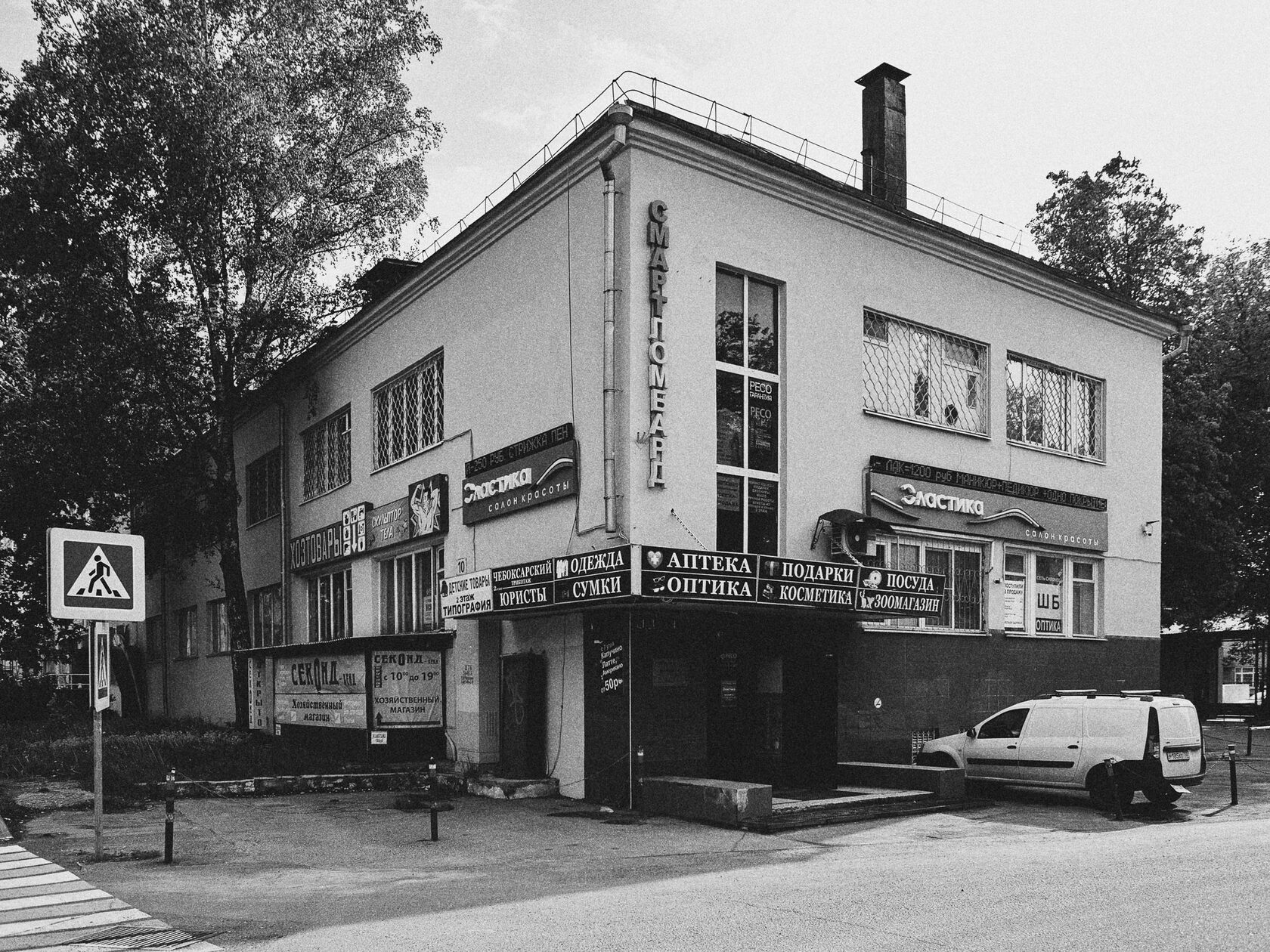
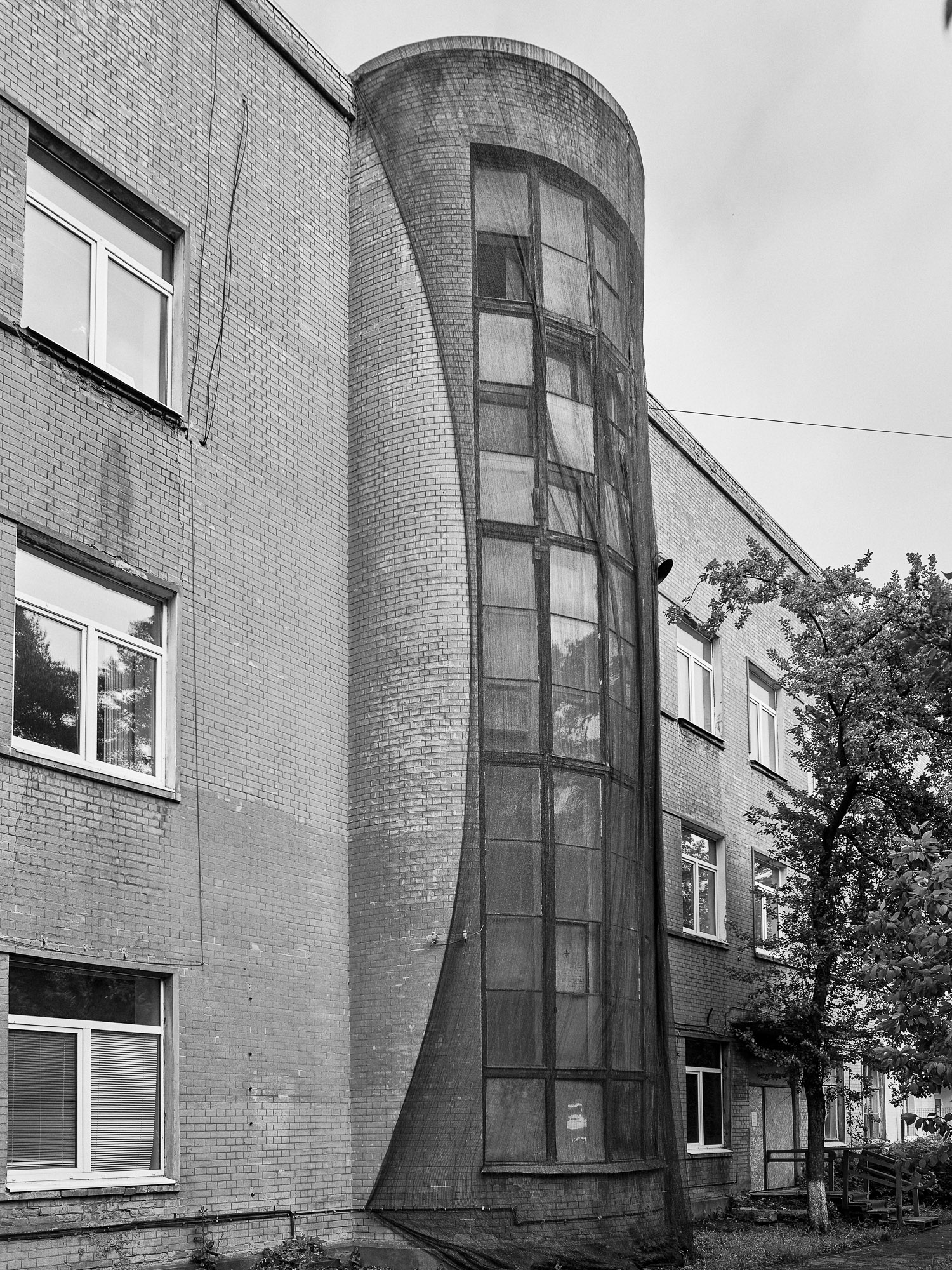
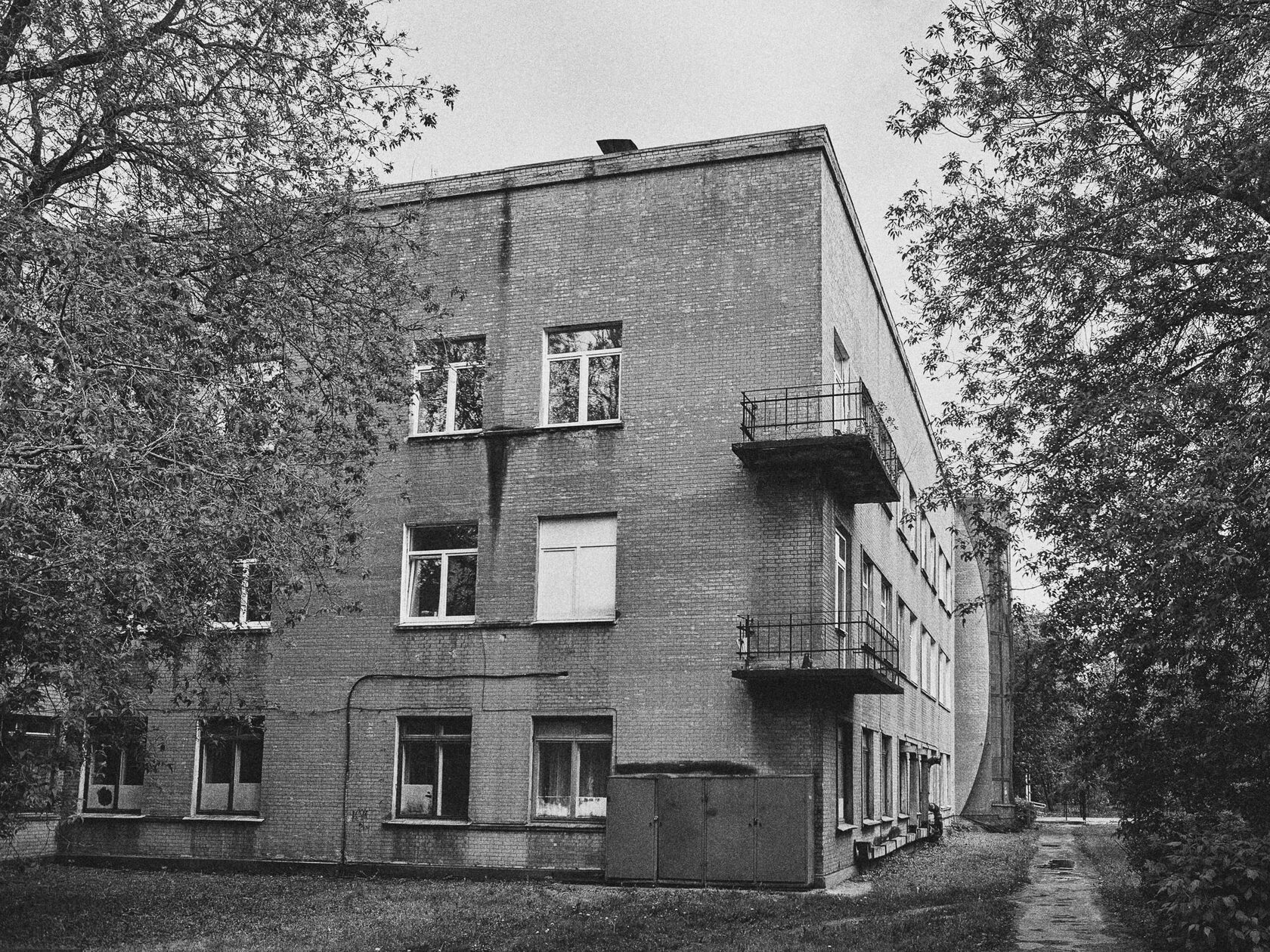
Hospital complex (Bolshevskaya labor commune)Больничный комплекс Болшевской трудовой коммуны博尔舍沃劳动公社医院建筑群Krankenhauskomplex der Arbeitskommune BolshevskComplexe hospitalier de la commune de travail de BolshevskComplejo hospitalario de la comuna laboral de BolshevskComplexo hospitalar da comuna de trabalho de Bolshevsk
This is the social body seen through architecture. Health, hygiene, care, and discipline are not private matters here, but a spatial program: corridors, volumes, entrances, and surfaces arranged for collective maintenance.Это социальное тело, увиденное через архитектуру. Здоровье, гигиена, уход и дисциплина здесь не частное дело, а пространственная программа: коридоры, объемы, входы и поверхности, выстроенные для коллективного обслуживания жизни.这是通过建筑看到的社会身体。健康、卫生、照护和纪律在这里不是私人事务,而是一套空间程序:走廊、体量、入口和表面被组织起来,服务于集体生活的维护。Hier wird der soziale Körper durch Architektur sichtbar. Gesundheit, Hygiene, Fürsorge und Disziplin sind keine privaten Angelegenheiten, sondern ein räumliches Programm: Korridore, Volumen, Eingänge und Oberflächen für kollektive Erhaltung.C'est le corps social vu à travers l'architecture. Santé, hygiène, soin et discipline ne sont pas ici des affaires privées, mais un programme spatial : couloirs, volumes, entrées et surfaces organisés pour l'entretien collectif de la vie.Es el cuerpo social visto a través de la arquitectura. Salud, higiene, cuidado y disciplina no son aquí asuntos privados, sino un programa espacial: pasillos, volúmenes, entradas y superficies organizados para el mantenimiento colectivo de la vida.É o corpo social visto pela arquitetura. Saúde, higiene, cuidado e disciplina não são aqui questões privadas, mas um programa espacial: corredores, volumes, entradas e superfícies organizados para a manutenção coletiva da vida.
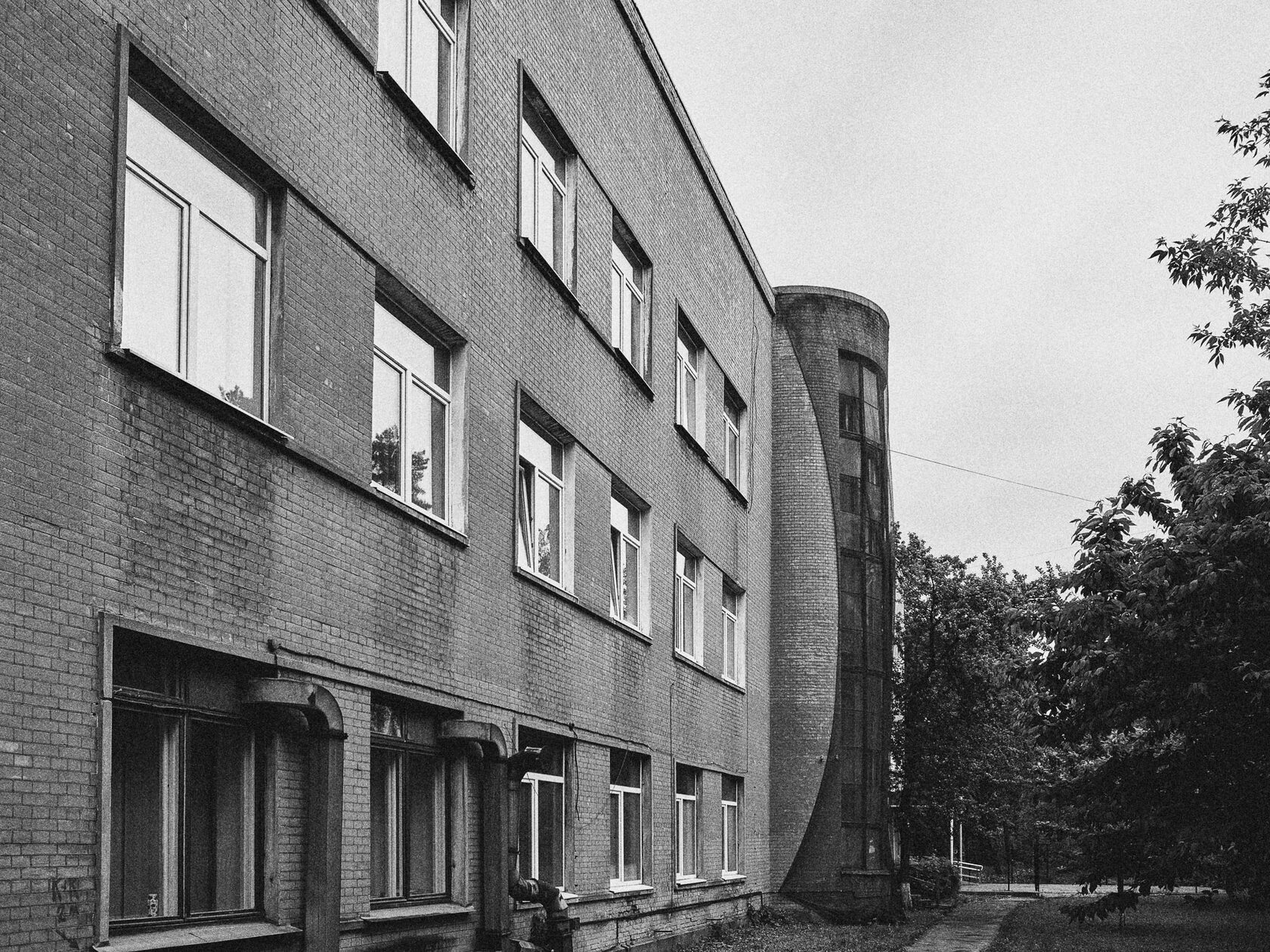
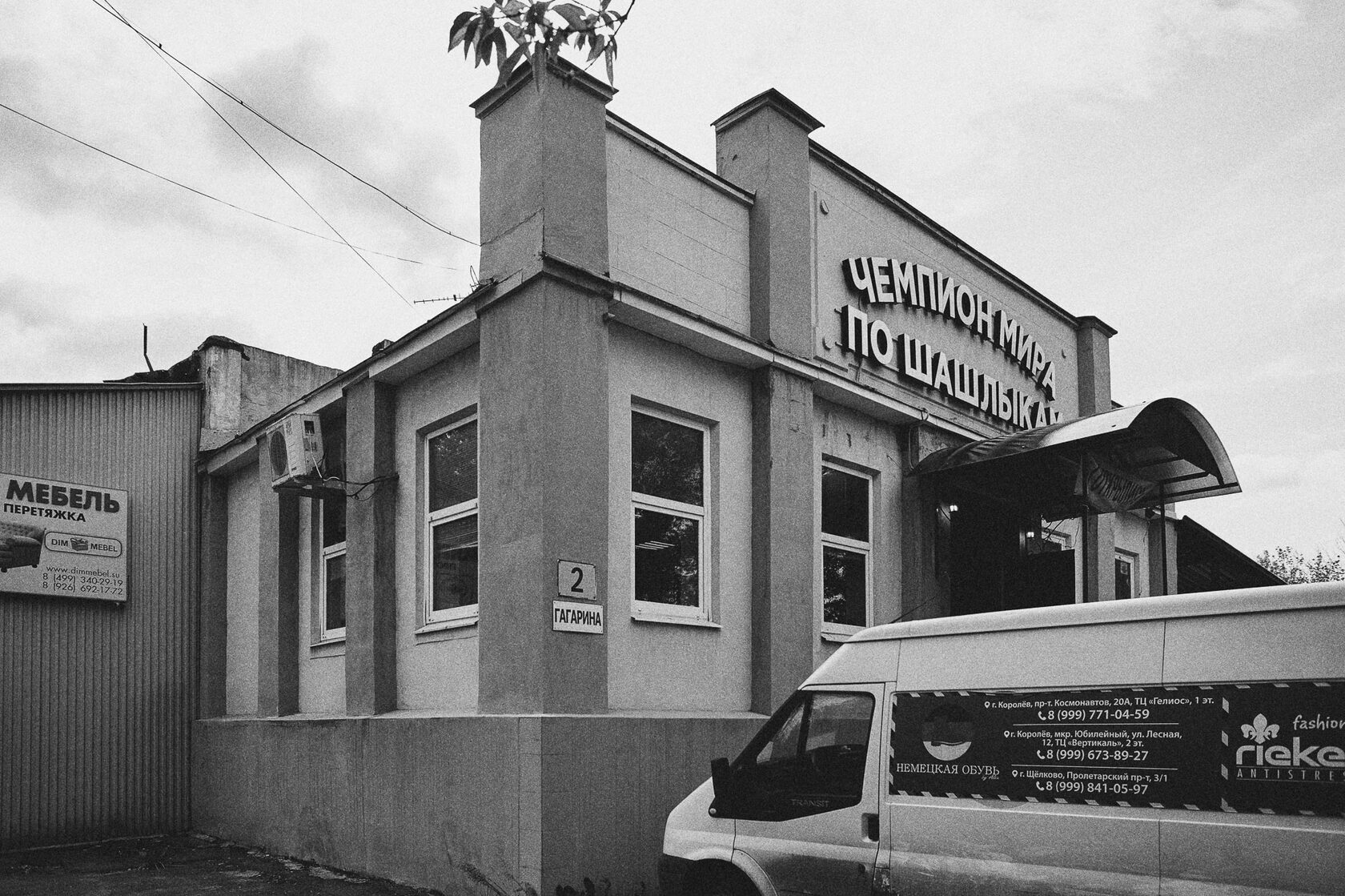
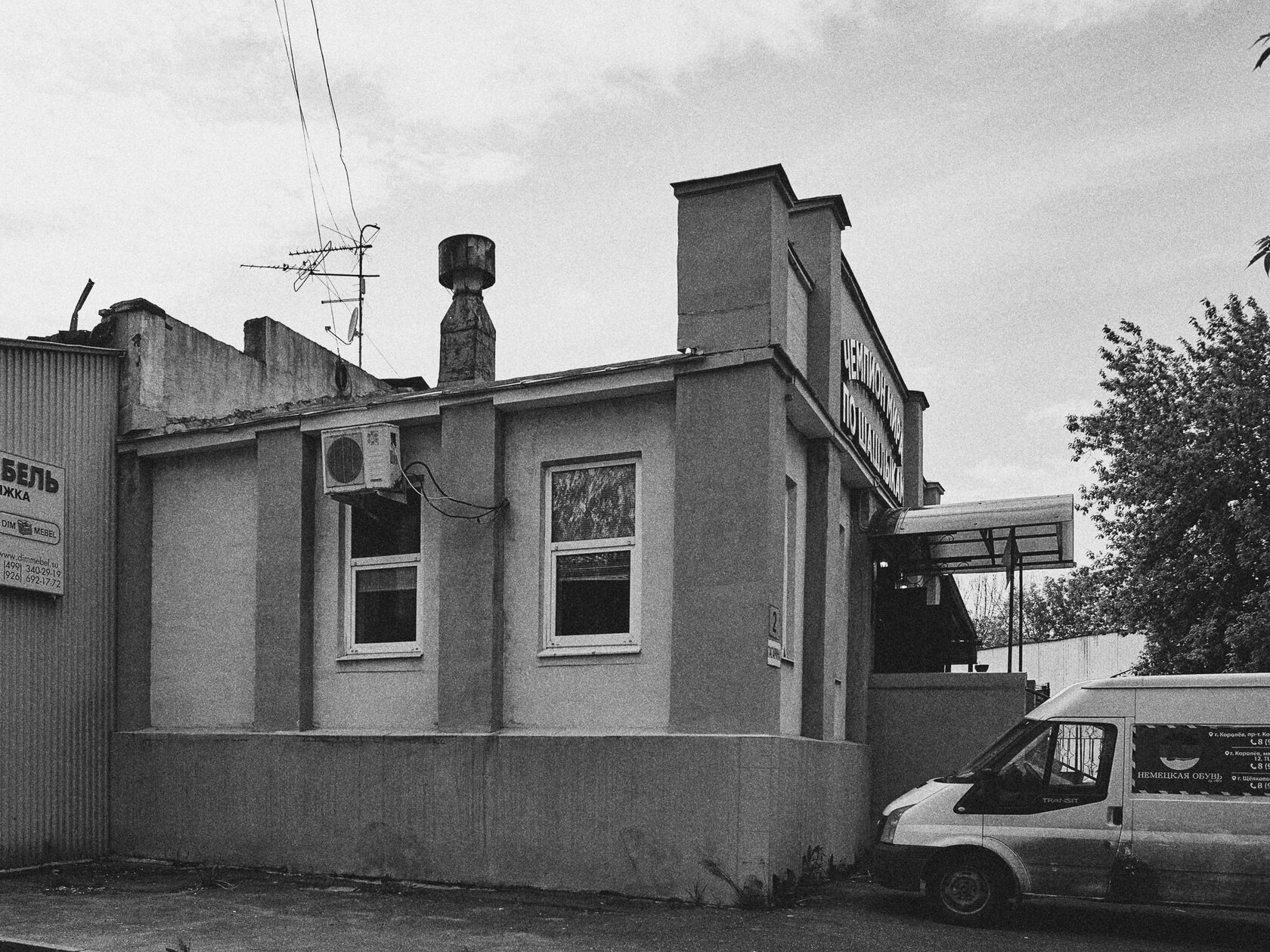
Grocery storeПродуктовый магазин食品店LebensmittelladenÉpicerieTienda de comestiblesMercearia
The building belongs to the constructivist everyday: food, purchase, production, distribution. Such architecture matters because it does not separate ideology from routine; it places the future inside ordinary actions.Здание принадлежит конструктивистской повседневности: еда, покупка, производство, распределение. Такая архитектура важна именно потому, что не отделяет идеологию от рутины, а помещает будущее внутрь обычных действий.这座建筑属于建构主义的日常:食物、购买、生产、分配。它重要,正因为它不把意识形态同惯例分开,而是把未来放进普通动作之中。Das Gebäude gehört zum konstruktivistischen Alltag: Essen, Einkauf, Produktion, Verteilung. Solche Architektur ist wichtig, weil sie Ideologie nicht von Routine trennt, sondern die Zukunft in gewöhnliche Handlungen legt.Le bâtiment appartient au quotidien constructiviste : manger, acheter, produire, distribuer. Cette architecture importe précisément parce qu'elle ne sépare pas l'idéologie de la routine ; elle place l'avenir dans les gestes ordinaires.El edificio pertenece a la vida cotidiana constructivista: comida, compra, producción, distribución. Esta arquitectura importa porque no separa ideología y rutina; coloca el futuro dentro de acciones ordinarias.O edifício pertence ao cotidiano construtivista: comida, compra, produção, distribuição. Essa arquitetura importa porque não separa ideologia de rotina; coloca o futuro dentro de ações comuns.
Nizhny NovgorodНижний Новгород下诺夫哥罗德Nischni NowgorodNijni NovgorodNizhni NóvgorodNíjni Novgorod
Buildings in Nizhny NovgorodЗдания: Нижний Новгород建筑: 下诺夫哥罗德Bauten in Nischni NowgorodBâtiments à Nijni NovgorodEdificios en Nizhni NóvgorodEdifícios em Níjni Novgorod
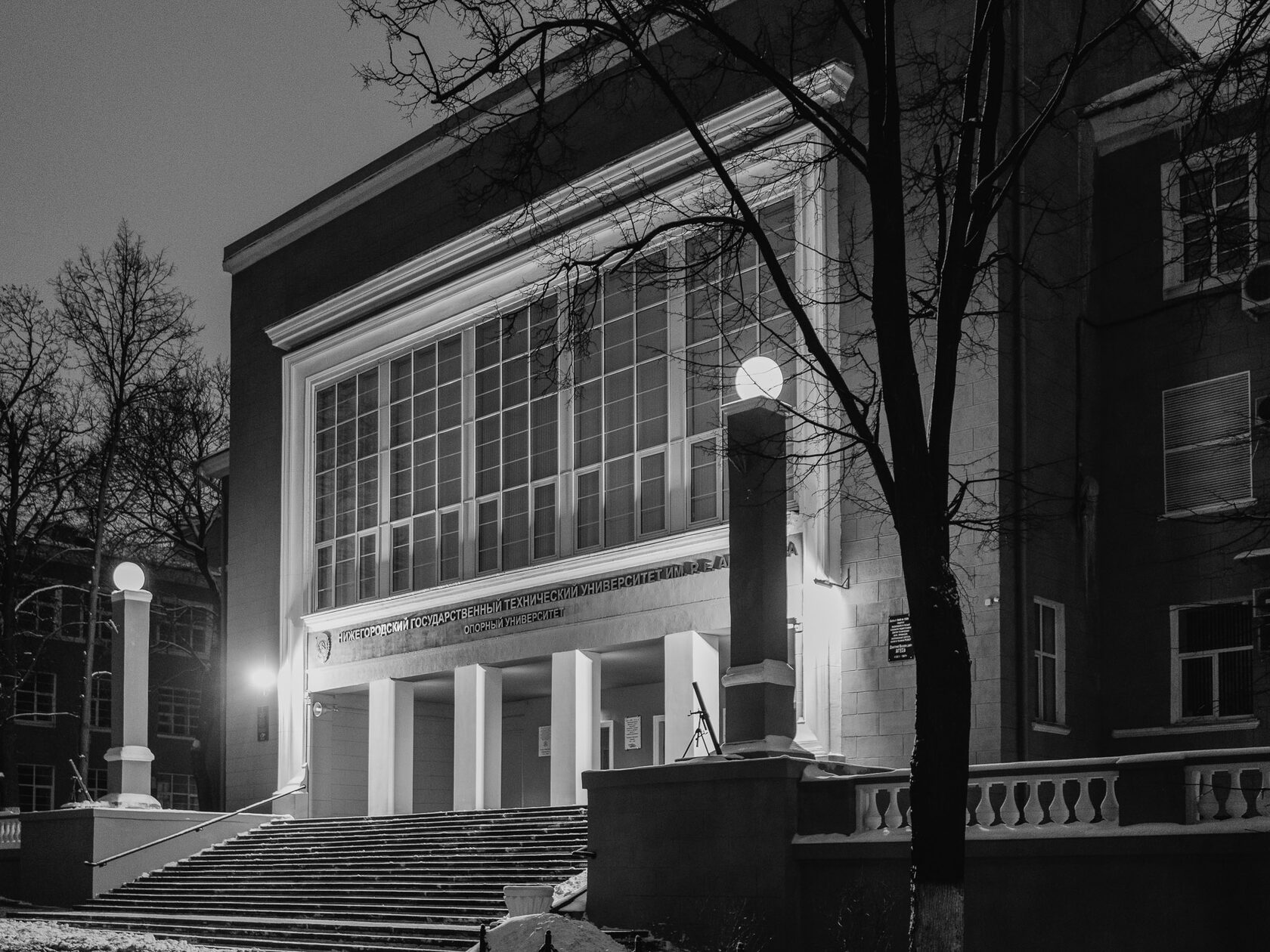
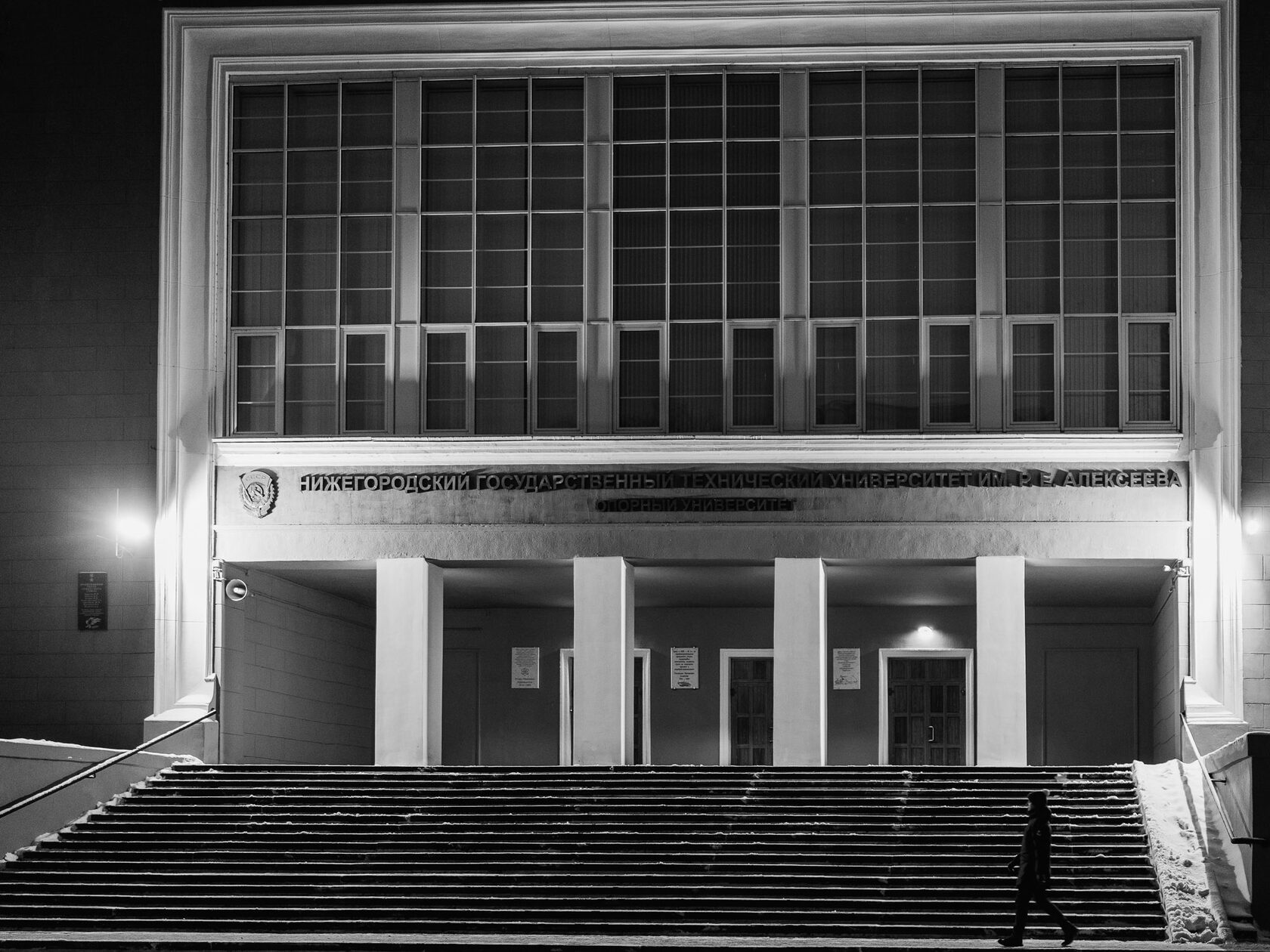
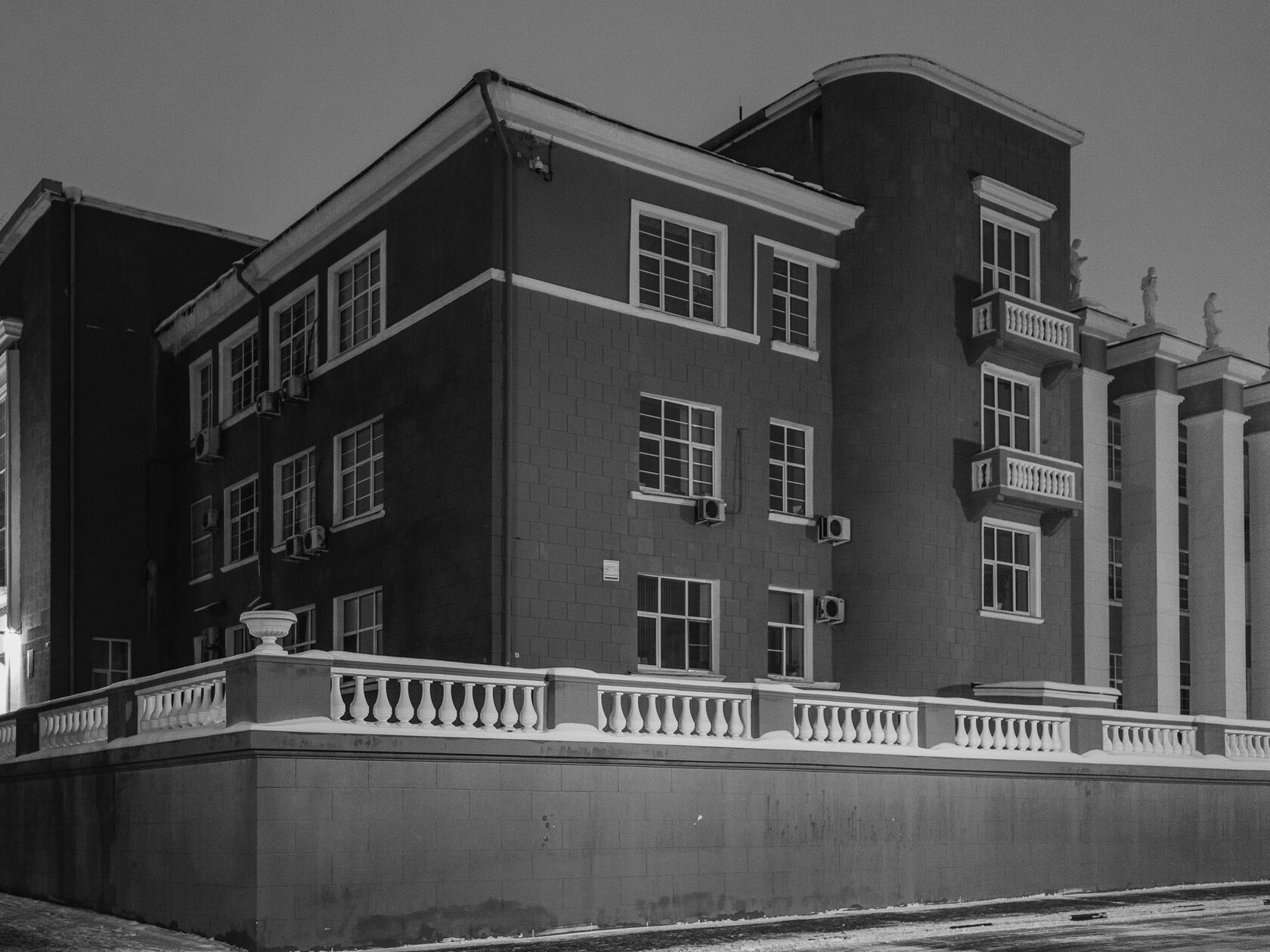
Nizhny Novgorod Polytechnic UniversityНижегородский политехнический университет下诺夫哥罗德理工大学Polytechnische Universität Nischni NowgorodUniversité polytechnique de Nijni NovgorodUniversidad Politécnica de Nizhni NóvgorodUniversidade Politécnica de Níjni Novgorod
Education appears here as a public form. The photographs look at how knowledge is given mass, facade, entrances, and repetition: an institution trying to appear open, rational, and structurally new.Образование здесь становится публичной формой. Фотографии смотрят на то, как знанию дают массу, фасад, входы и повтор: институция пытается выглядеть открытой, рациональной и структурно новой.教育在这里成为公共形式。照片观察知识如何获得体量、立面、入口和重复:一种机构试图显得开放、理性并具有新的结构。Bildung erscheint hier als öffentliche Form. Die Fotografien schauen darauf, wie Wissen Masse, Fassade, Eingänge und Wiederholung erhält: eine Institution, die offen, rational und strukturell neu wirken will.L'éducation apparaît ici comme une forme publique. Les photographies regardent comment le savoir reçoit une masse, une façade, des entrées et une répétition : une institution qui cherche à paraître ouverte, rationnelle et structurellement nouvelle.La educación aparece aquí como forma pública. Las fotografías observan cómo el conocimiento recibe masa, fachada, entradas y repetición: una institución que intenta parecer abierta, racional y estructuralmente nueva.A educação aparece aqui como forma pública. As fotografias observam como o conhecimento ganha massa, fachada, entradas e repetição: uma instituição tentando parecer aberta, racional e estruturalmente nova.
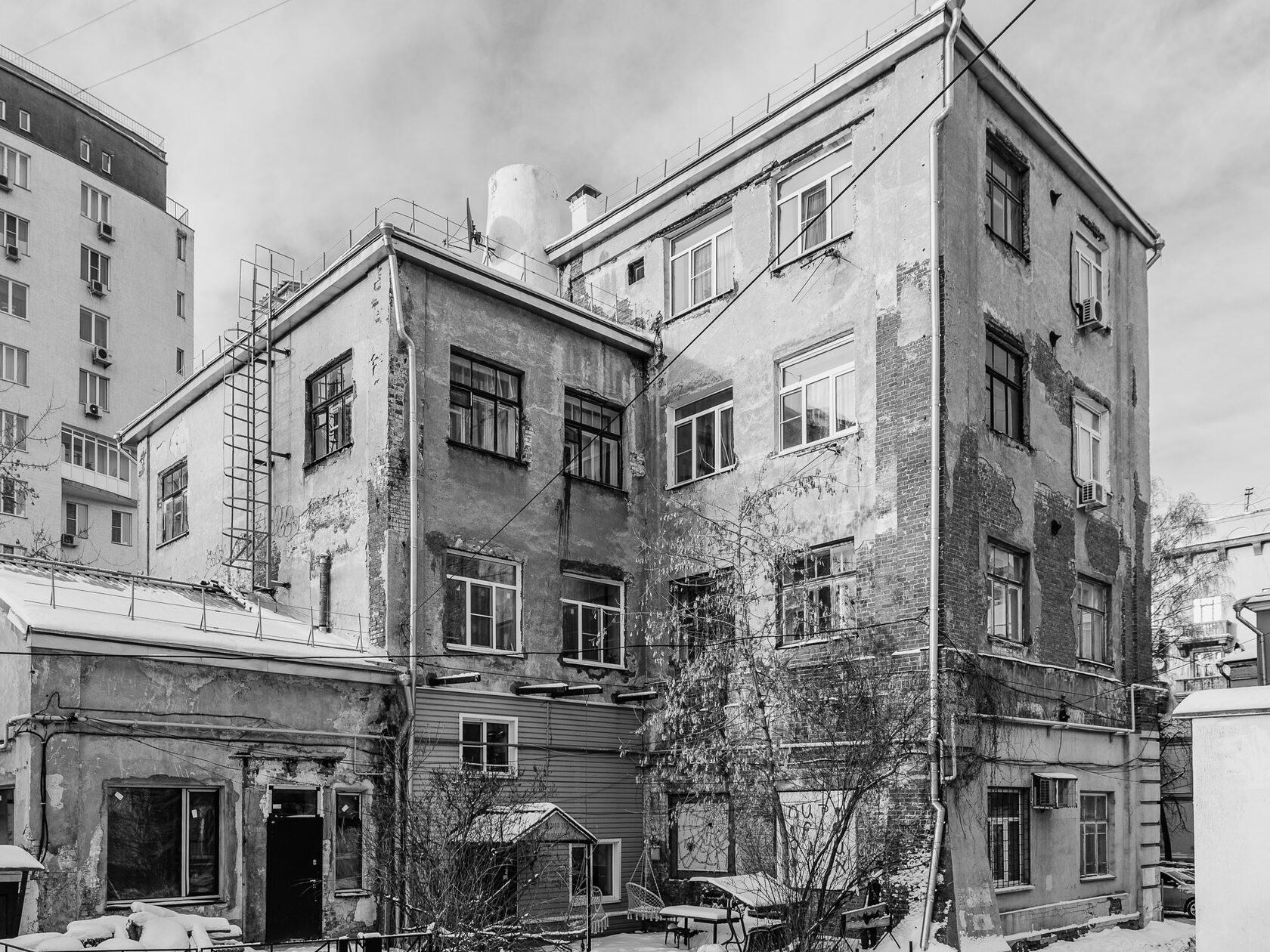
Residential buildingЖилой дом住宅楼WohnhausImmeuble d'habitationEdificio residencialEdifício residencial
The image keeps the central constructivist question close to the ground: how should people live together? Balconies, entrances, shared edges, and later alterations show where an old social model meets private use.Кадр удерживает главный бытовой вопрос конструктивизма: как людям жить вместе? Балконы, входы, общие границы и поздние изменения показывают место, где старая социальная модель сталкивается с частным использованием.画面把建构主义最日常的问题拉回地面:人们该如何共同生活?阳台、入口、共享边界和后来的改动,显示出旧的社会模型如何与私人使用相遇。Das Bild hält die zentrale Alltagsfrage des Konstruktivismus nahe am Boden: Wie sollen Menschen zusammenleben? Balkone, Eingänge, gemeinsame Kanten und spätere Veränderungen zeigen, wo ein altes Sozialmodell auf private Nutzung trifft.L'image garde au ras du sol la question centrale du constructivisme : comment vivre ensemble ? Balcons, entrées, limites partagées et transformations ultérieures montrent l'endroit où un ancien modèle social rencontre l'usage privé.La imagen mantiene cerca del suelo la pregunta central del constructivismo: ¿cómo deben vivir juntas las personas? Balcones, entradas, bordes compartidos y alteraciones posteriores muestran dónde un viejo modelo social se encuentra con el uso privado.A imagem mantém rente ao chão a pergunta central do construtivismo: como as pessoas devem viver juntas? Varandas, entradas, limites compartilhados e alterações posteriores mostram onde um antigo modelo social encontra o uso privado.
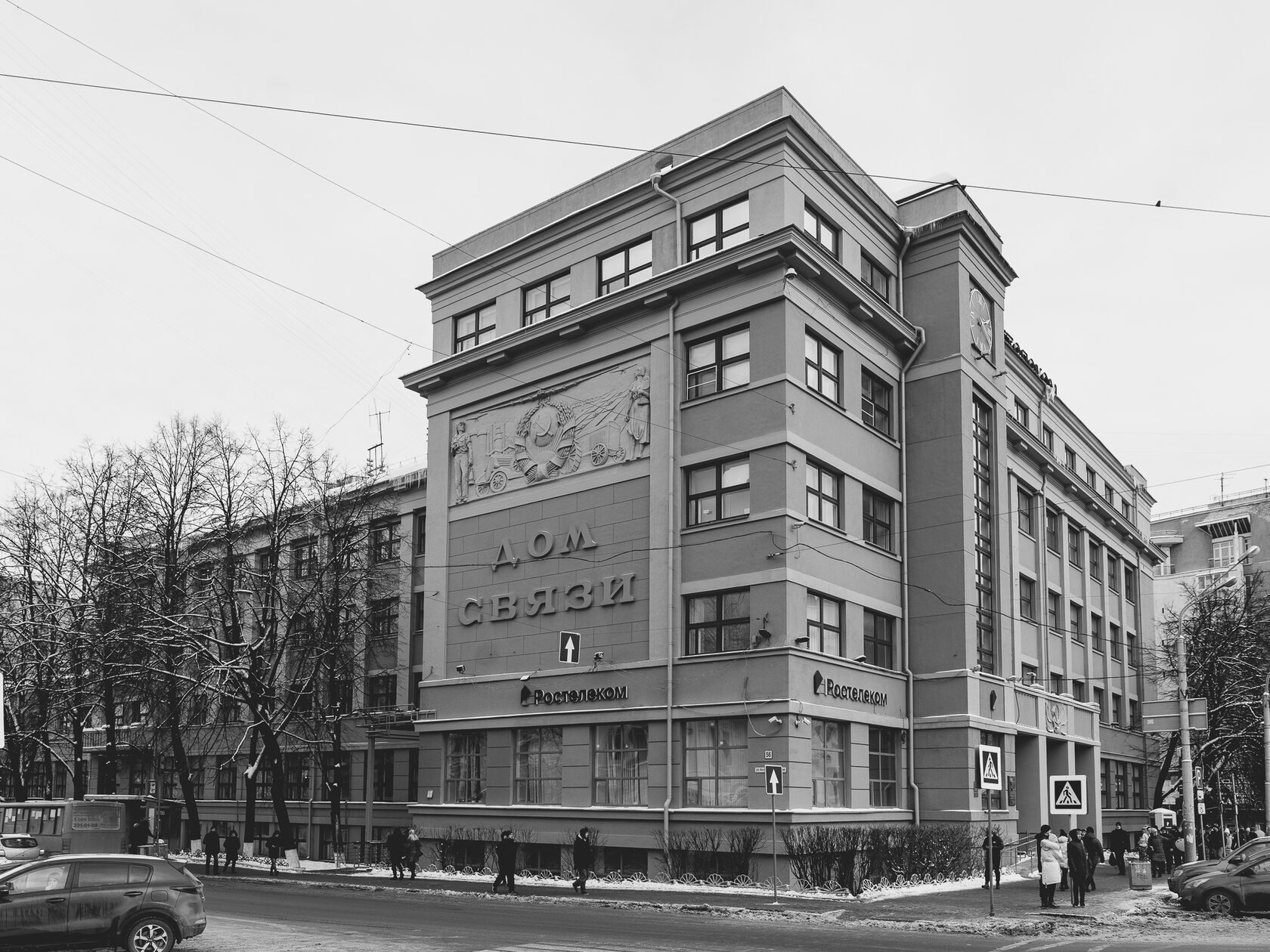
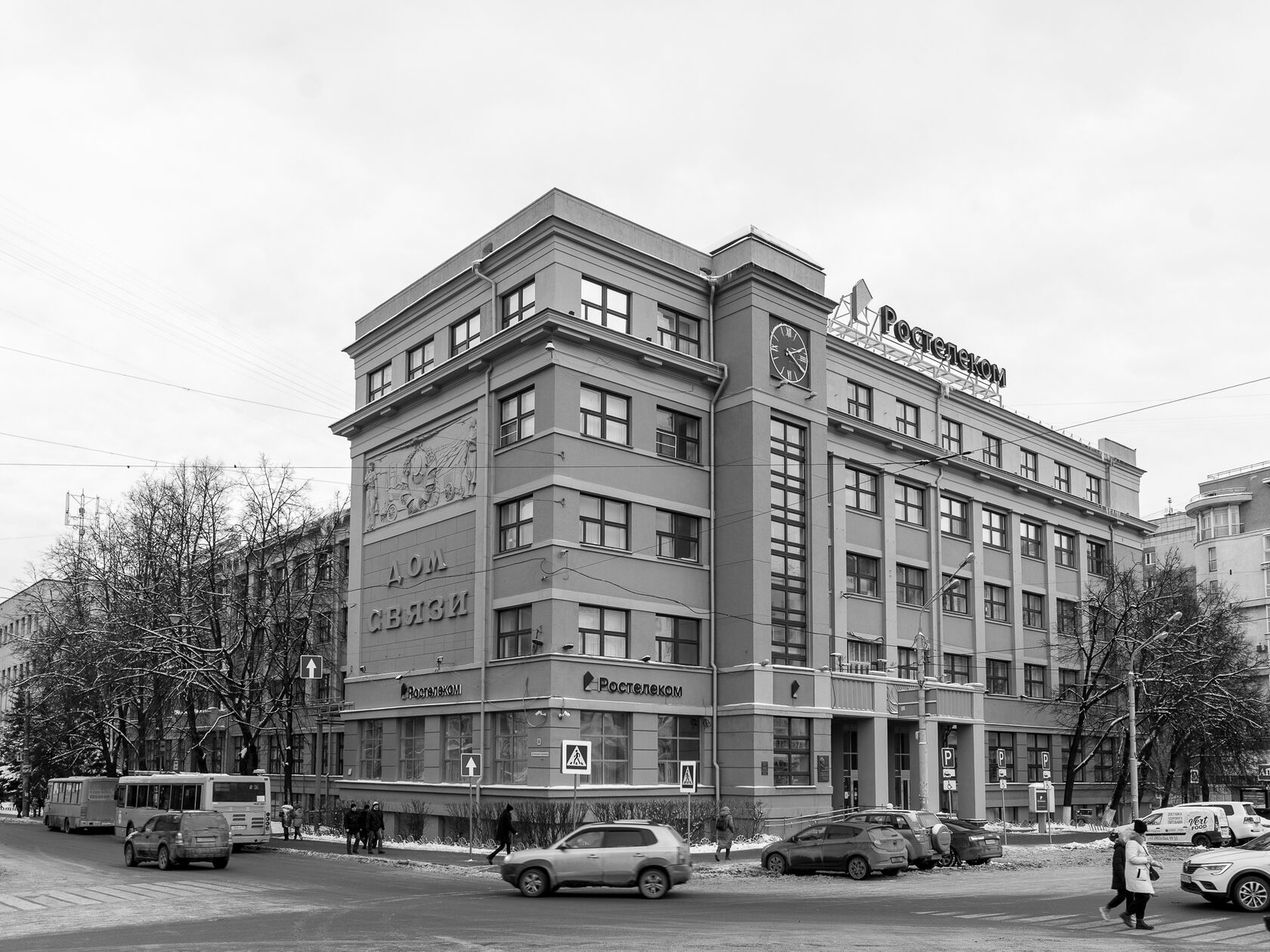
House of CommunicationДом связи通信之家Haus der KommunikationMaison des communicationsCasa de ComunicacionesCasa das Comunicações
The object remains in the sequence for the precision of its trace: a facade, a rhythm, a corner, a proportion. It does not need to be spectacular; it works as one more sentence in a larger architectural language.Объект остается в серии благодаря точности следа: фасад, ритм, угол, пропорция. Ему не нужно быть эффектным; он работает как еще одна фраза в большом архитектурном языке.这个对象留在系列中,是因为它的痕迹足够精确:立面、节奏、转角、比例。它不需要壮观;它像更大建筑语言中的又一句话。Das Objekt bleibt wegen der Präzision seiner Spur in der Serie: Fassade, Rhythmus, Ecke, Proportion. Es muss nicht spektakulär sein; es funktioniert als ein weiterer Satz in einer größeren architektonischen Sprache.L'objet demeure dans la série par la précision de sa trace : façade, rythme, angle, proportion. Il n'a pas besoin d'être spectaculaire ; il fonctionne comme une phrase de plus dans un langage architectural plus vaste.El objeto permanece en la serie por la precisión de su huella: fachada, ritmo, esquina, proporción. No necesita ser espectacular; funciona como una frase más dentro de un lenguaje arquitectónico mayor.O objeto permanece na série pela precisão de seu vestígio: fachada, ritmo, esquina, proporção. Não precisa ser espetacular; funciona como mais uma frase dentro de uma linguagem arquitetônica maior.
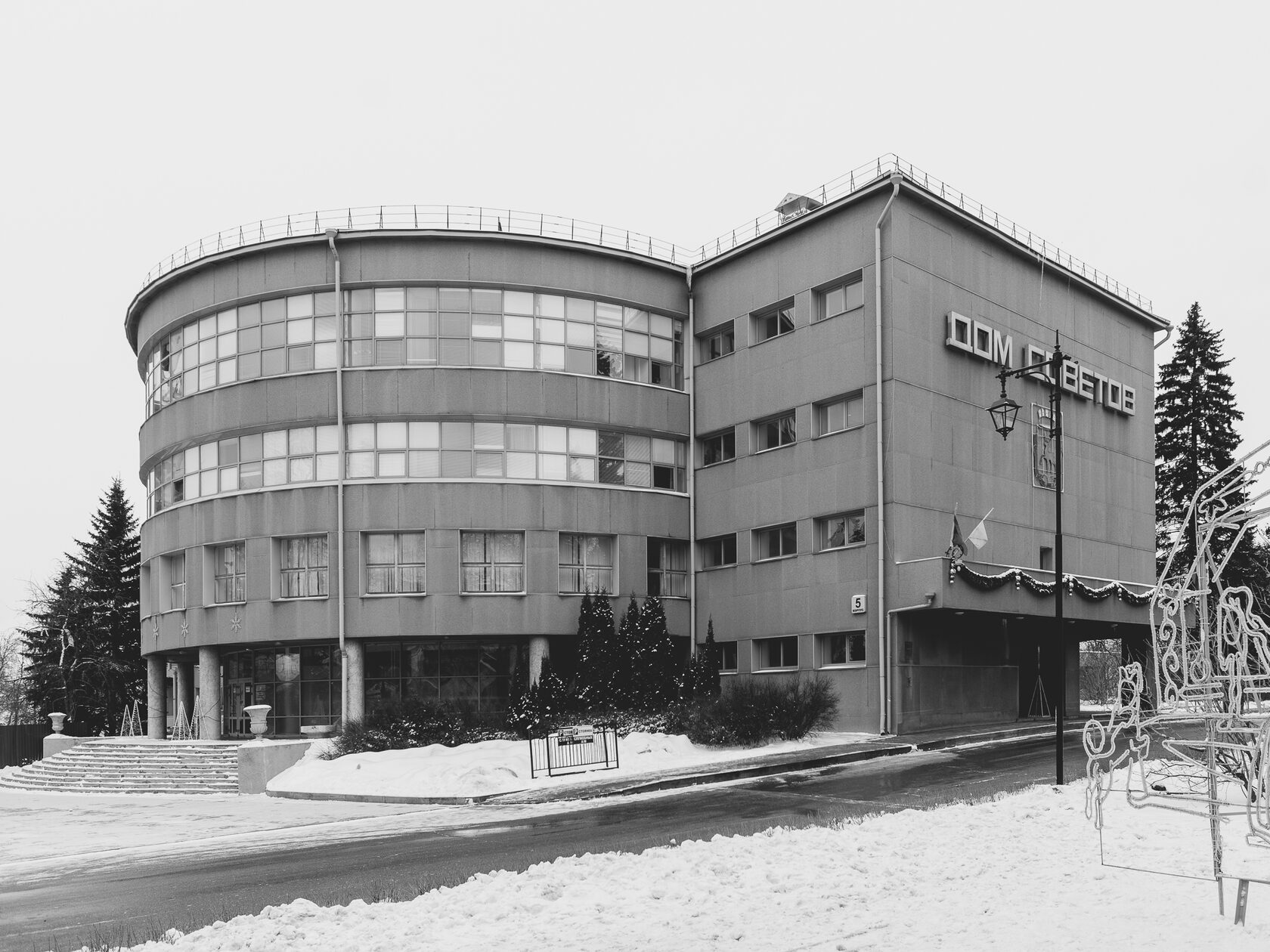
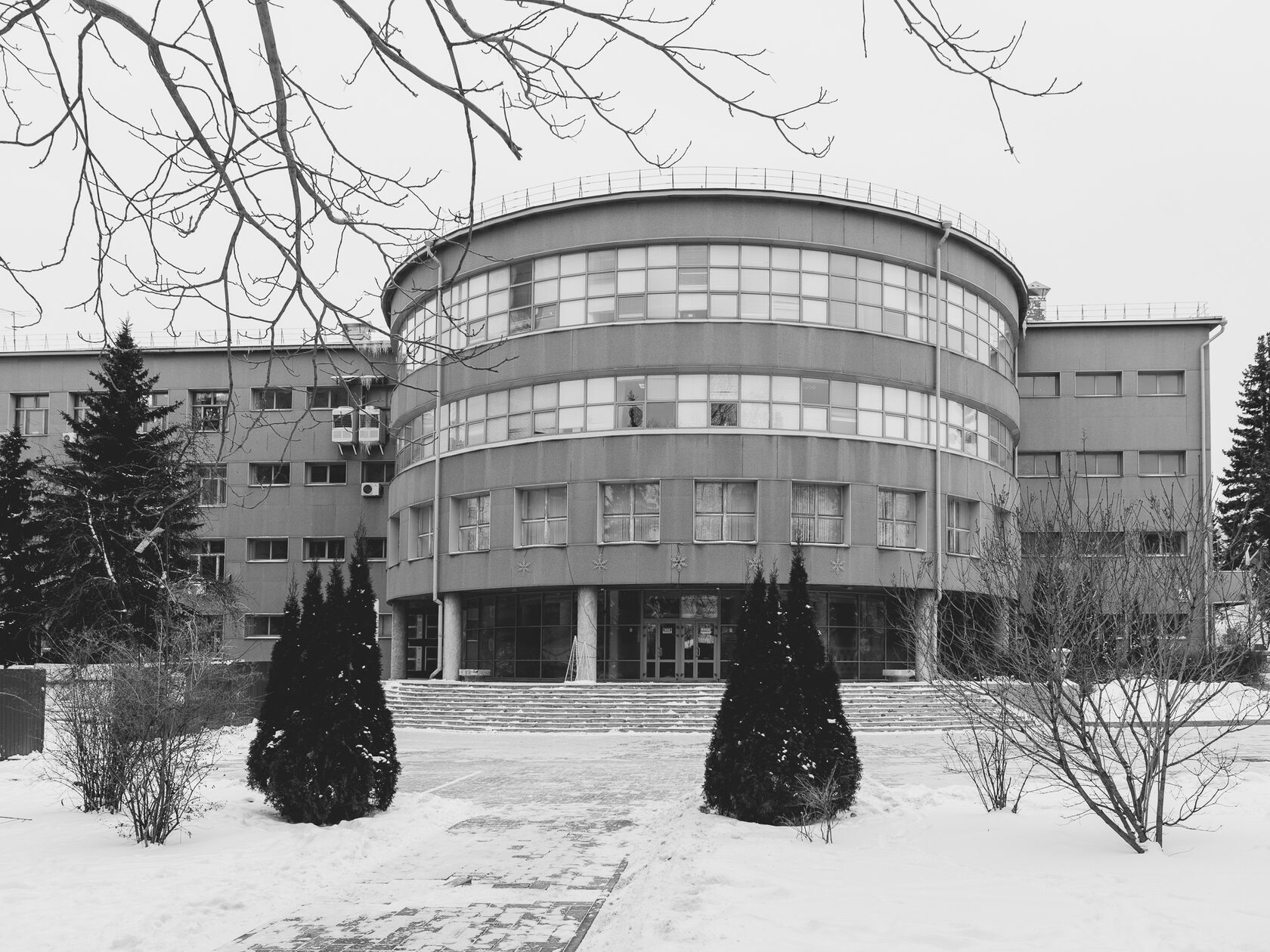
House of SovietsДом Советов苏维埃宫Haus der SowjetsMaison des SovietsCasa de los SovietsCasa dos Sovietes
Here administration becomes form. The geometry is not neutral: it stages authority, planning, and the desire to make a new order visible through walls, windows, and scale.Здесь управление становится формой. Геометрия не нейтральна: она ставит на сцену власть, планирование и желание сделать новый порядок видимым через стены, окна и масштаб.在这里,行政变成了形式。几何并不中立:它把权力、规划以及让新秩序通过墙、窗和尺度变得可见的欲望推上舞台。Hier wird Verwaltung zur Form. Die Geometrie ist nicht neutral: Sie inszeniert Autorität, Planung und den Wunsch, eine neue Ordnung durch Wände, Fenster und Maßstab sichtbar zu machen.Ici, l'administration devient forme. La géométrie n'est pas neutre : elle met en scène l'autorité, la planification et le désir de rendre un nouvel ordre visible par les murs, les fenêtres et l'échelle.Aquí la administración se vuelve forma. La geometría no es neutra: escenifica autoridad, planificación y el deseo de hacer visible un nuevo orden mediante muros, ventanas y escala.Aqui a administração vira forma. A geometria não é neutra: encena autoridade, planejamento e o desejo de tornar uma nova ordem visível por paredes, janelas e escala.
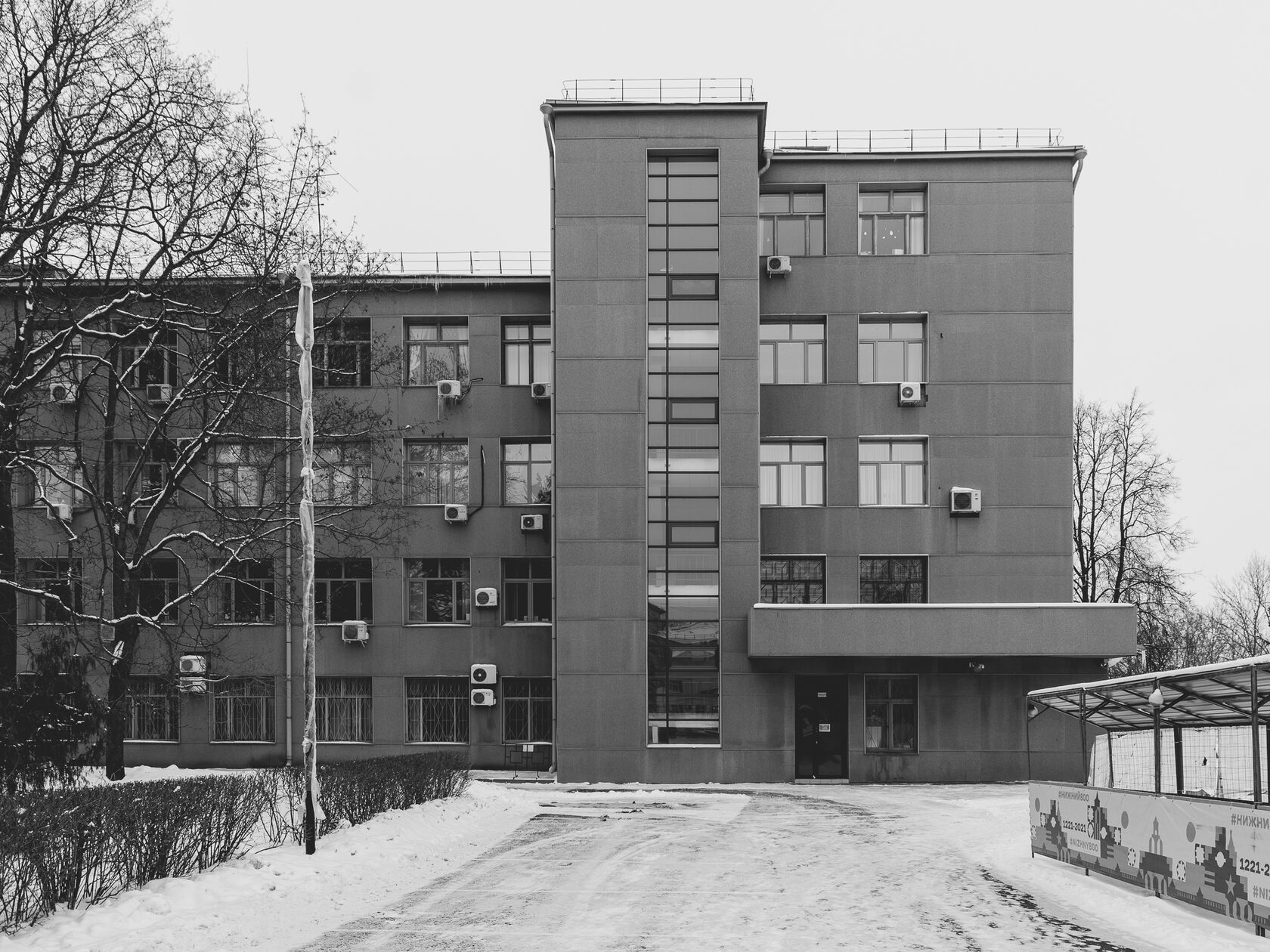
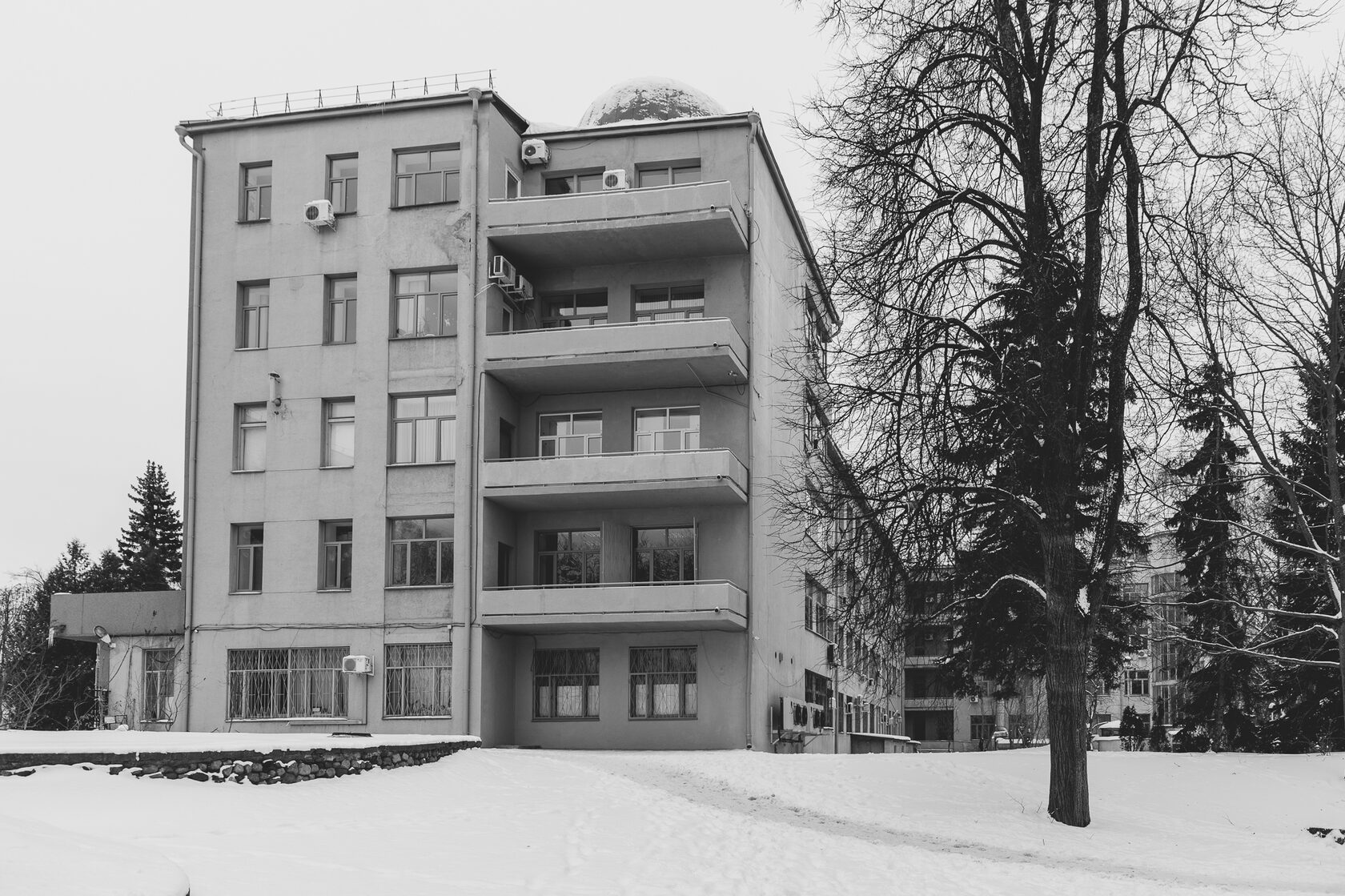
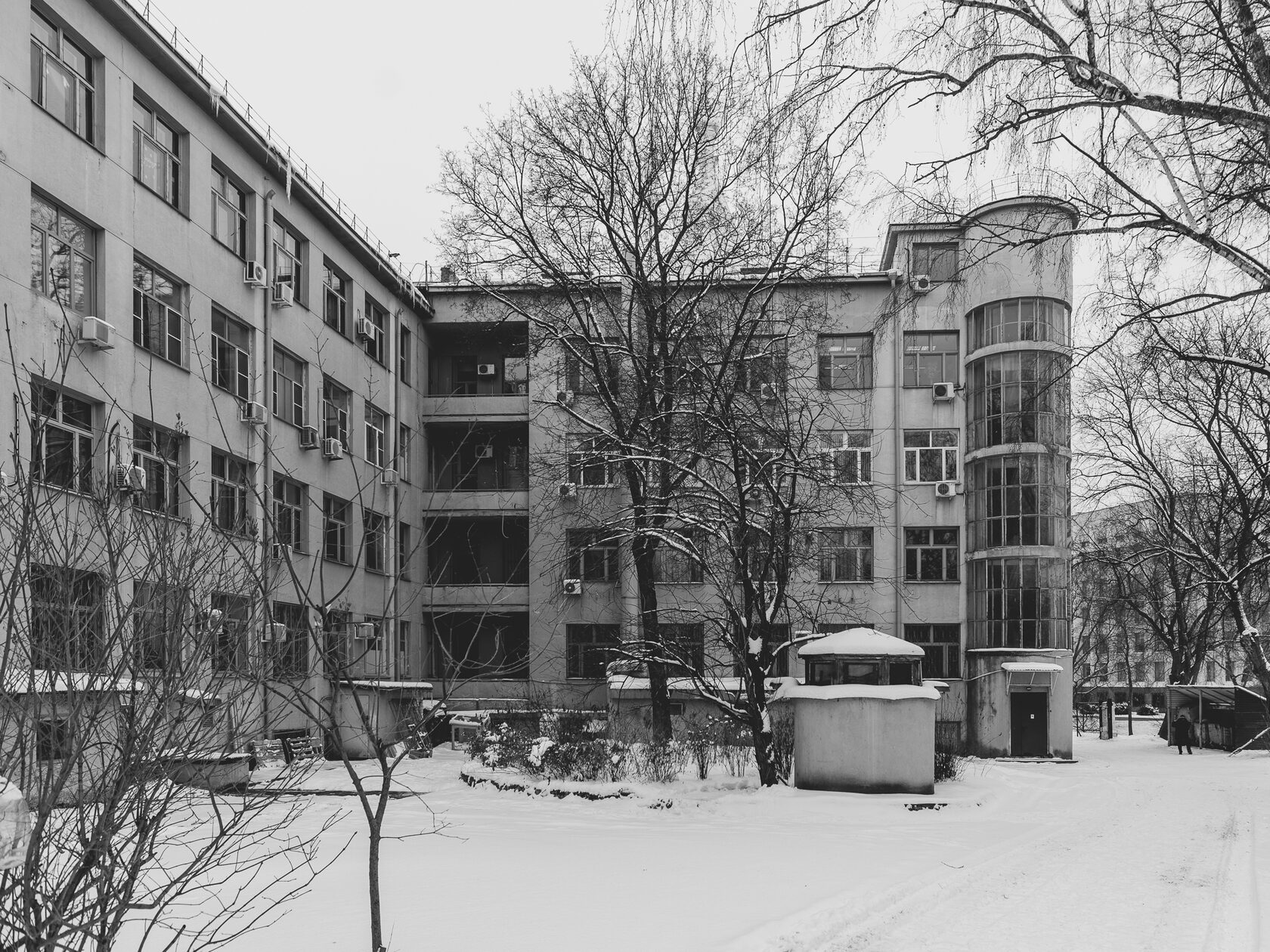
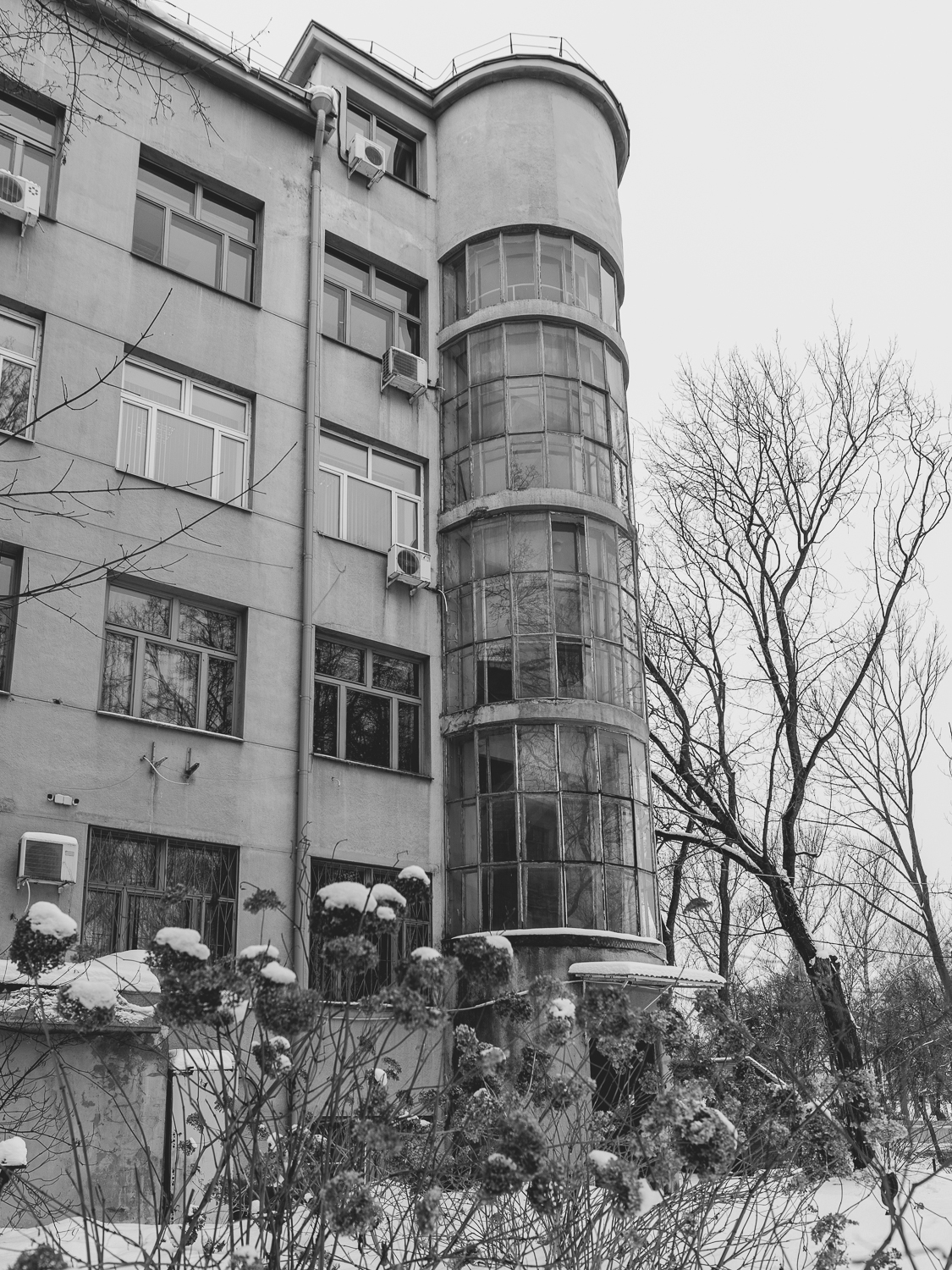
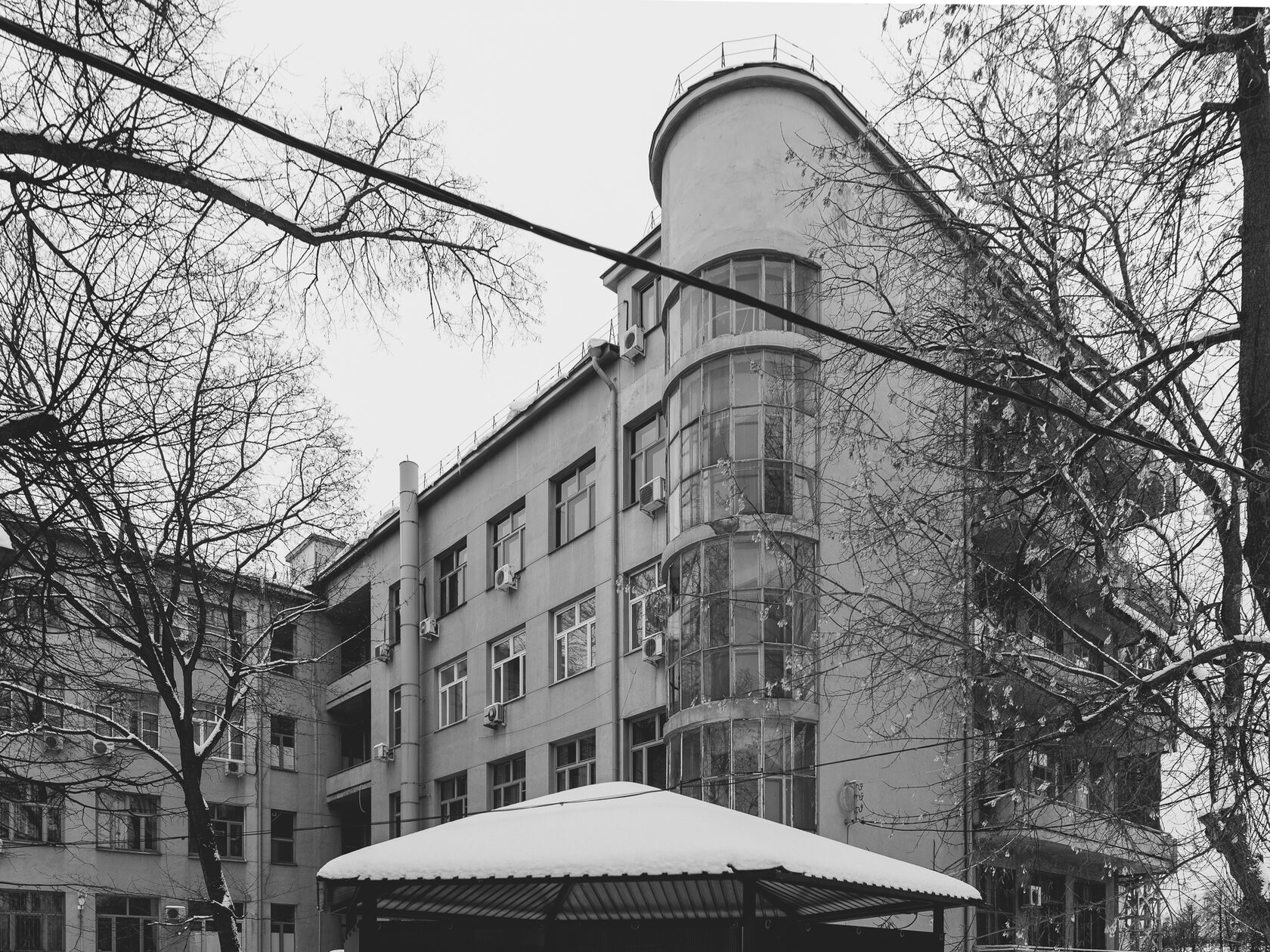
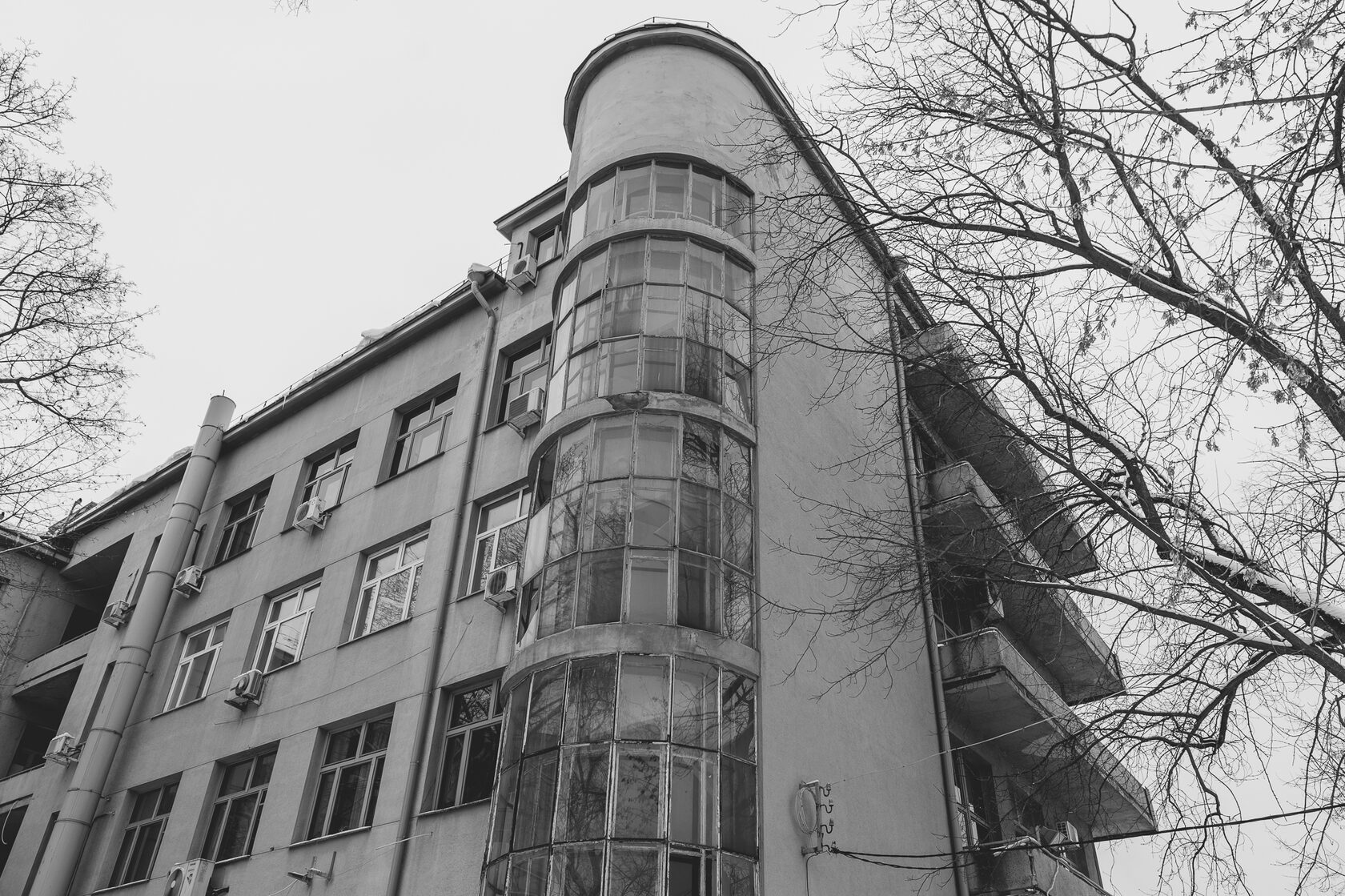
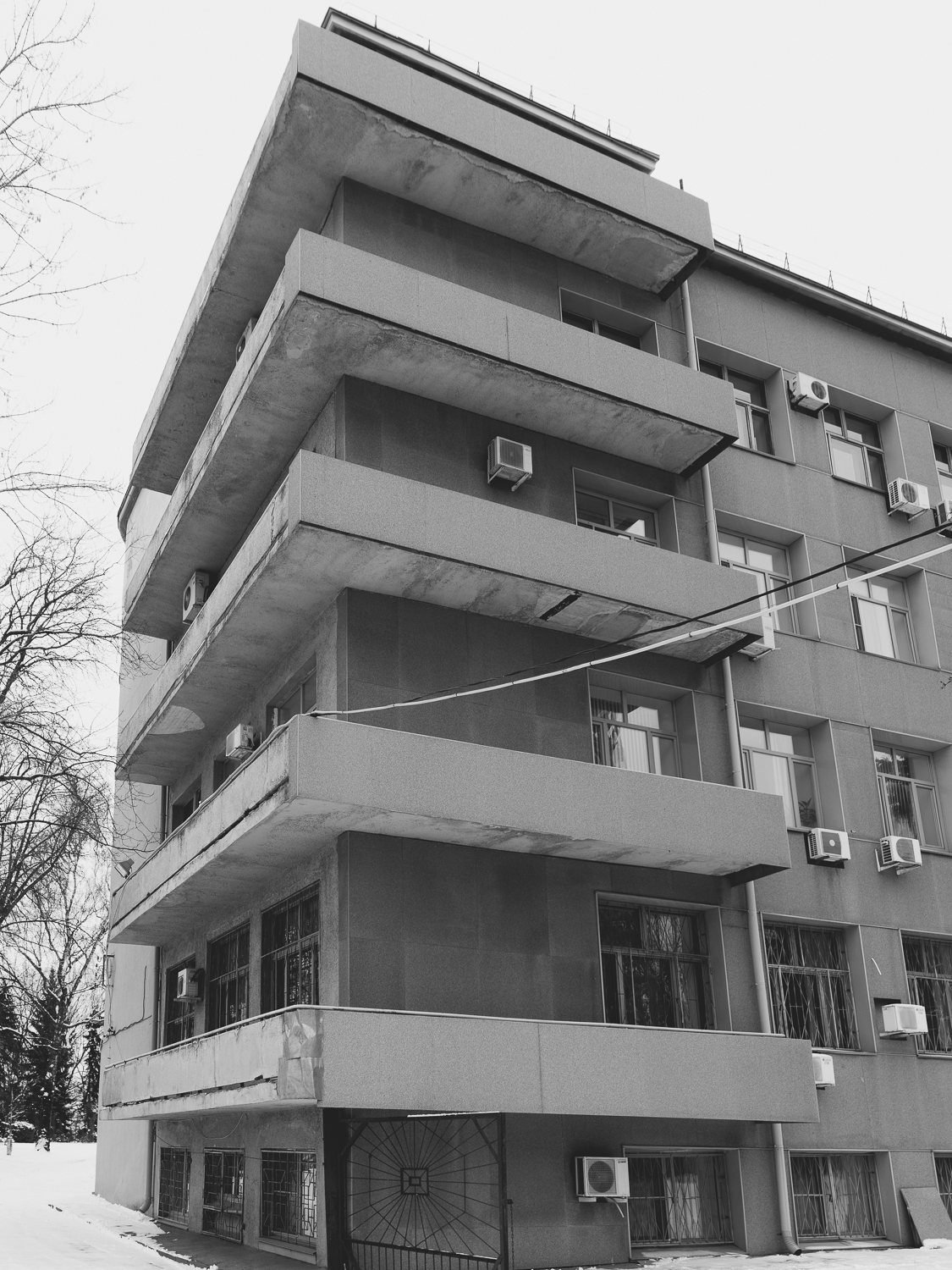
House-commune "Cultural Revolution"Дом-коммуна «Культурная революция»“文化革命”公社住宅Kommunehaus "Kulturelle Revolution"Maison-commune « Révolution culturelle »Casa-comuna «Revolución cultural»Casa-comuna «Revolução Cultural»
The image keeps the central constructivist question close to the ground: how should people live together? Balconies, entrances, shared edges, and later alterations show where an old social model meets private use.Кадр удерживает главный бытовой вопрос конструктивизма: как людям жить вместе? Балконы, входы, общие границы и поздние изменения показывают место, где старая социальная модель сталкивается с частным использованием.画面把建构主义最日常的问题拉回地面:人们该如何共同生活?阳台、入口、共享边界和后来的改动,显示出旧的社会模型如何与私人使用相遇。Das Bild hält die zentrale Alltagsfrage des Konstruktivismus nahe am Boden: Wie sollen Menschen zusammenleben? Balkone, Eingänge, gemeinsame Kanten und spätere Veränderungen zeigen, wo ein altes Sozialmodell auf private Nutzung trifft.L'image garde au ras du sol la question centrale du constructivisme : comment vivre ensemble ? Balcons, entrées, limites partagées et transformations ultérieures montrent l'endroit où un ancien modèle social rencontre l'usage privé.La imagen mantiene cerca del suelo la pregunta central del constructivismo: ¿cómo deben vivir juntas las personas? Balcones, entradas, bordes compartidos y alteraciones posteriores muestran dónde un viejo modelo social se encuentra con el uso privado.A imagem mantém rente ao chão a pergunta central do construtivismo: como as pessoas devem viver juntas? Varandas, entradas, limites compartilhados e alterações posteriores mostram onde um antigo modelo social encontra o uso privado.
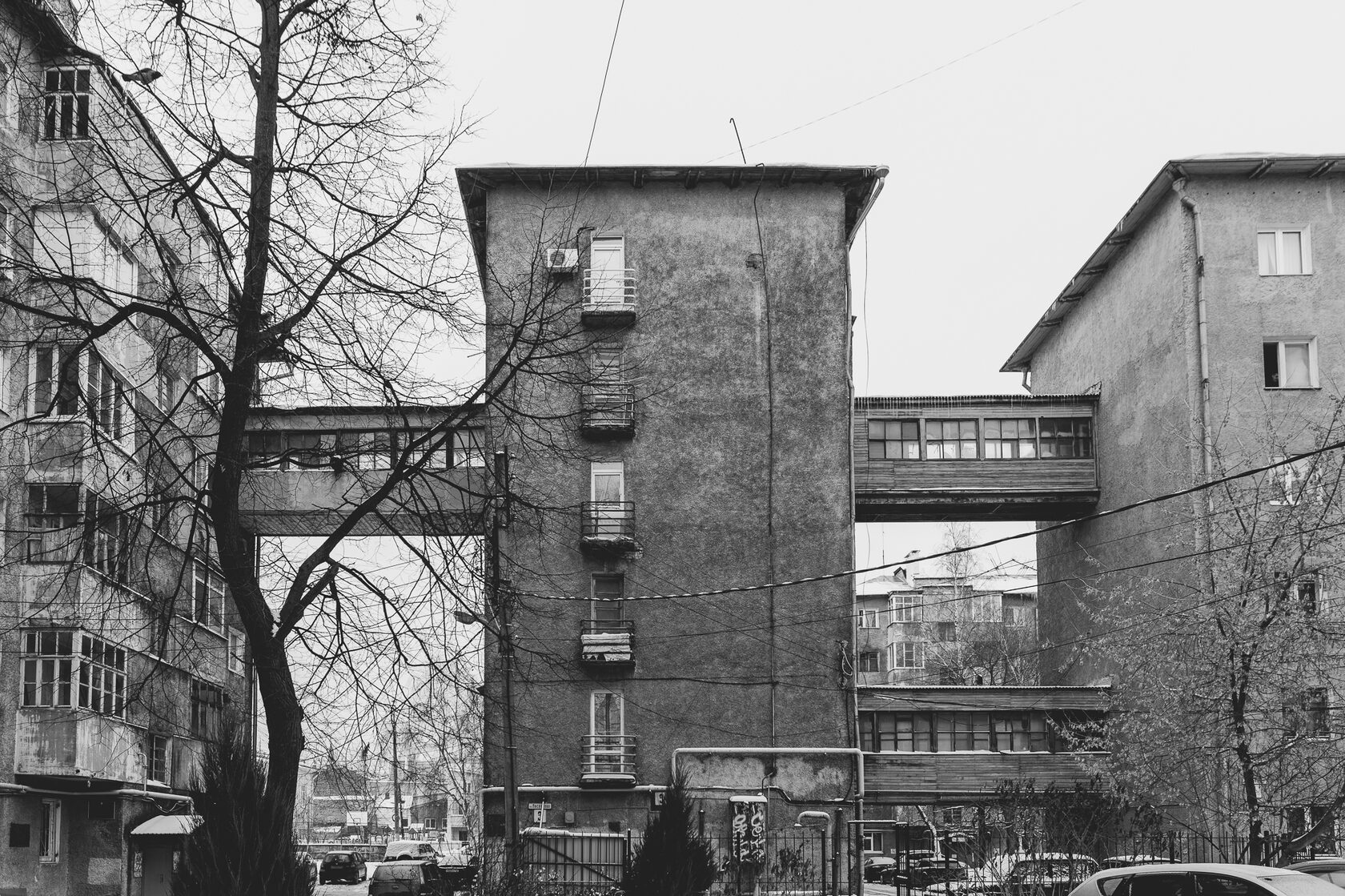
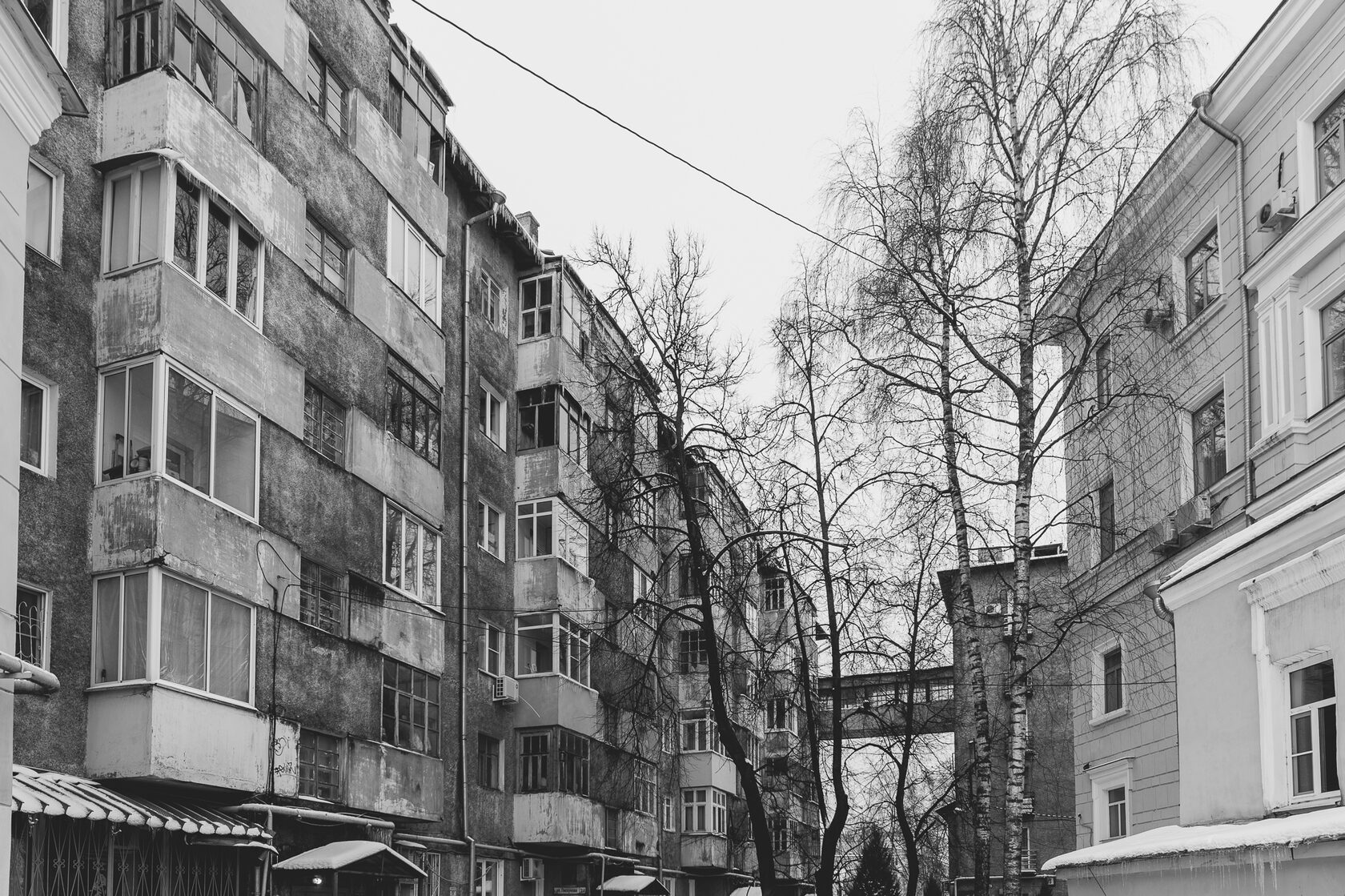
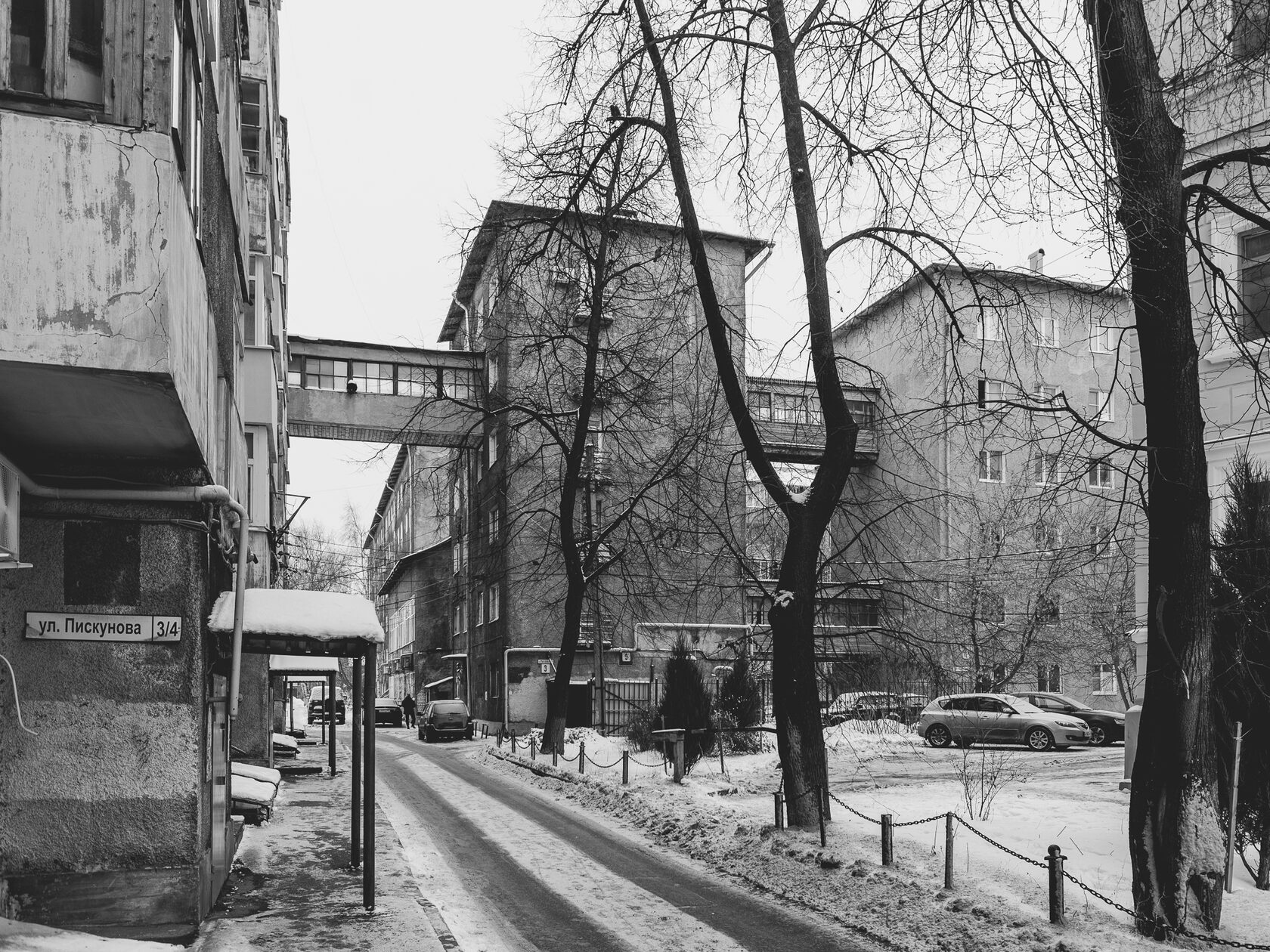
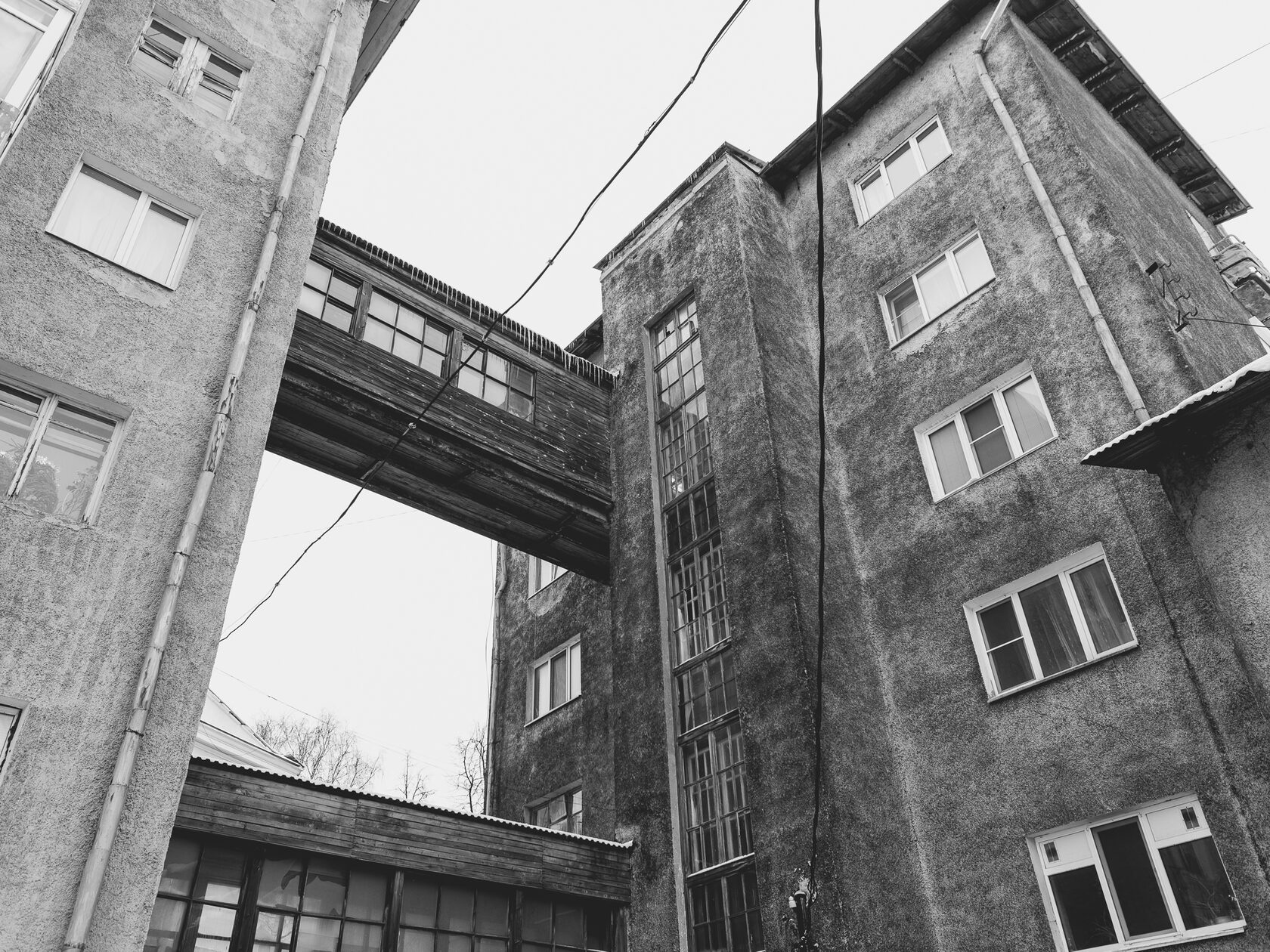
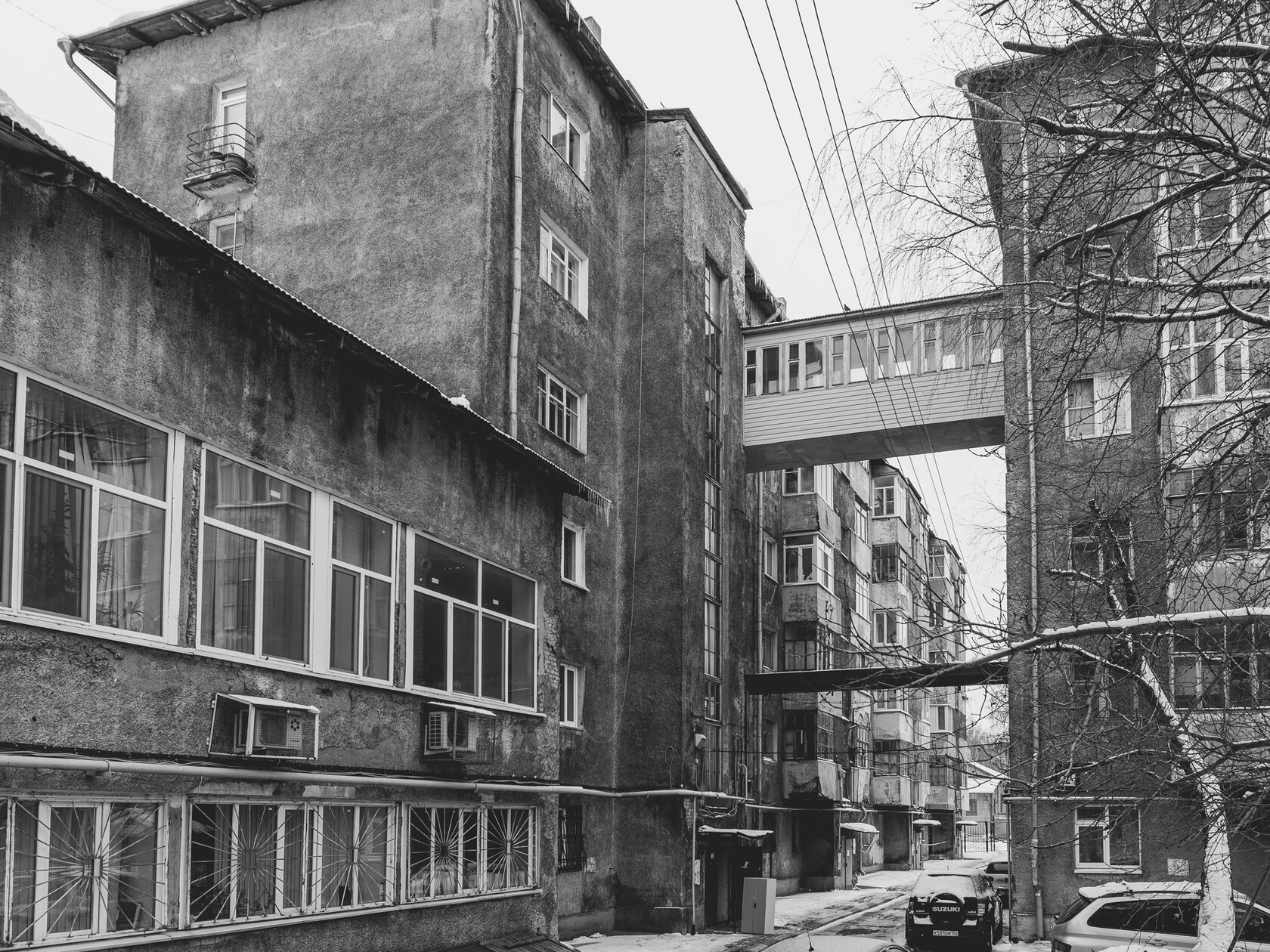
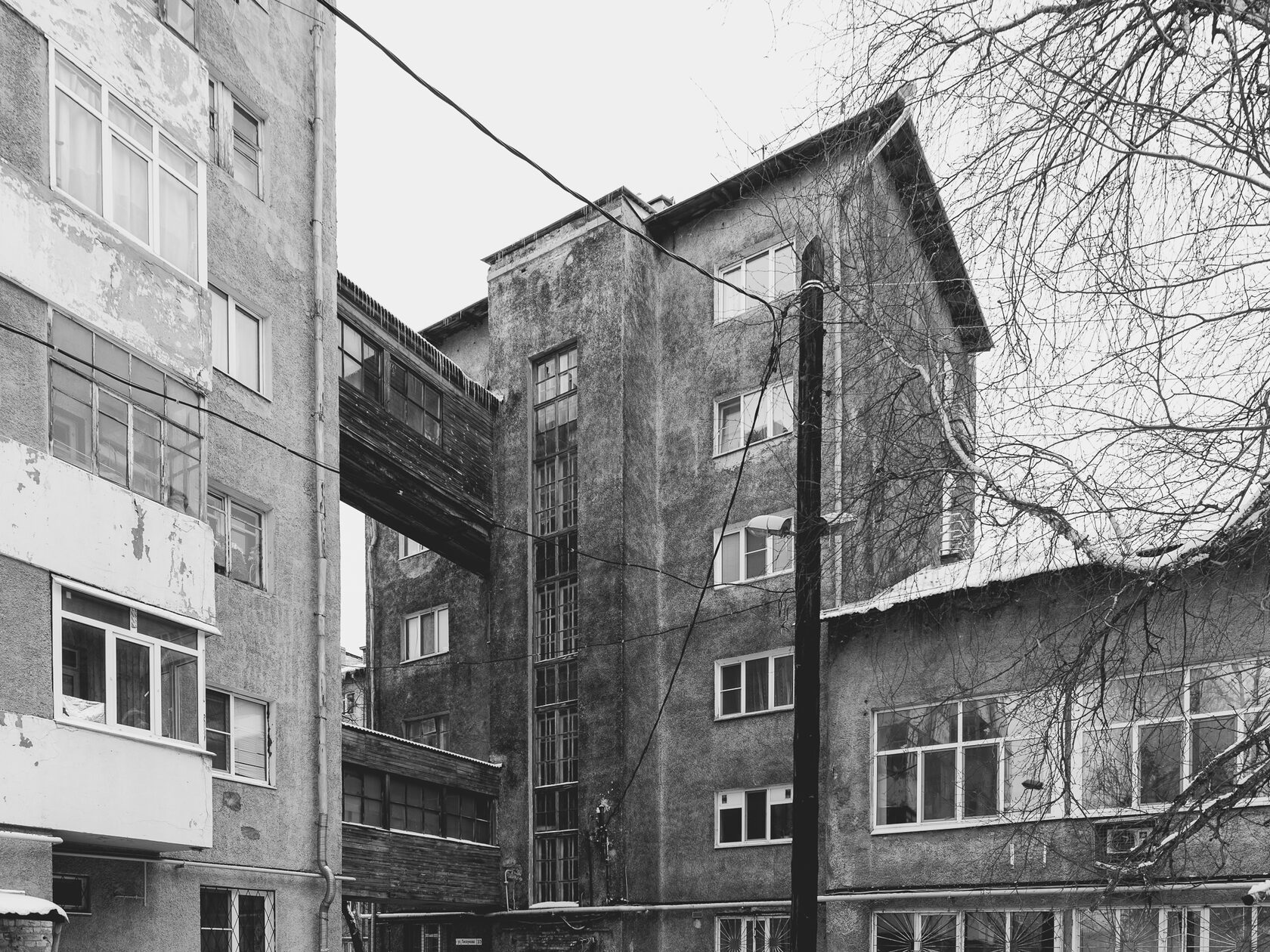
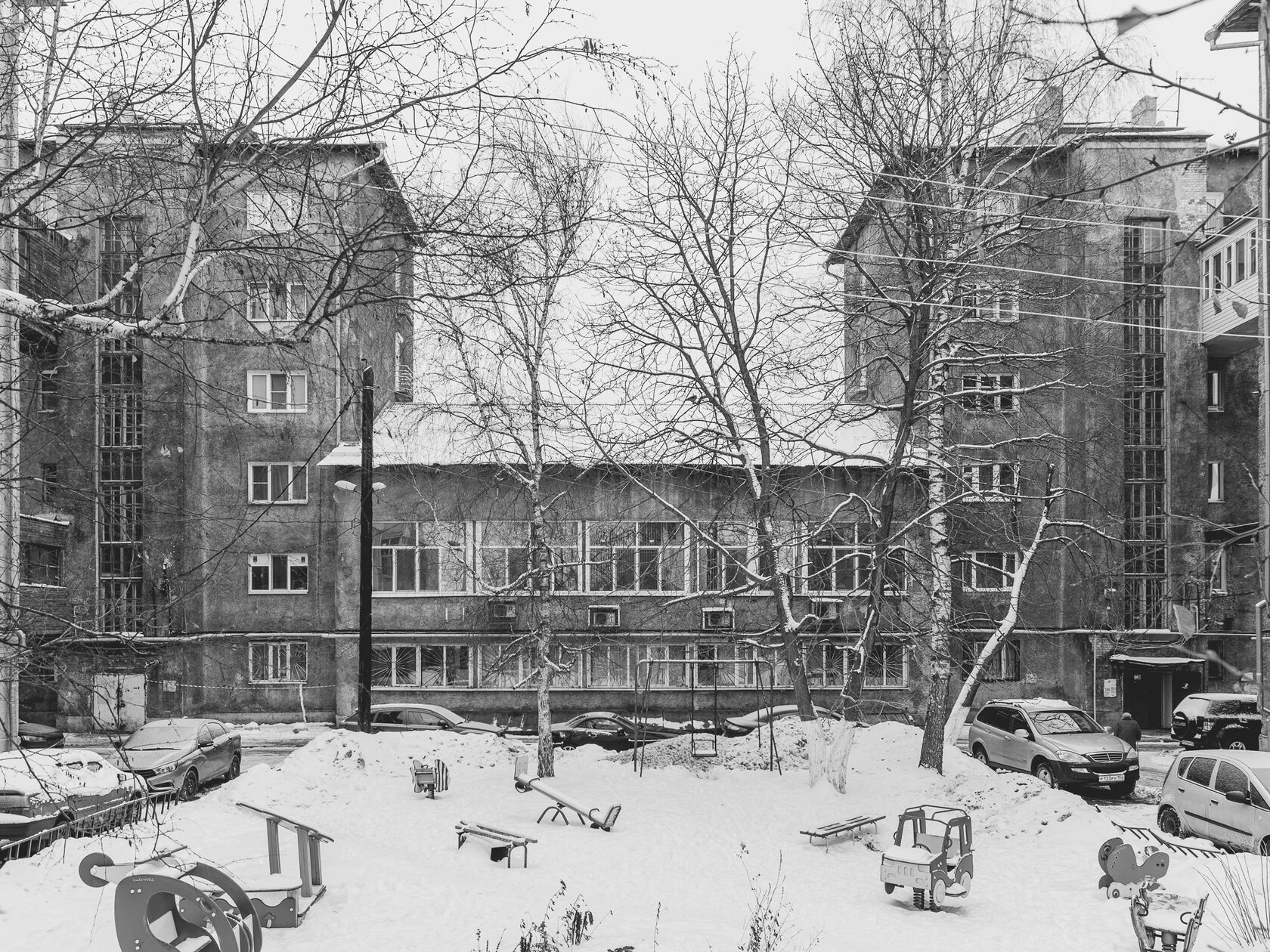
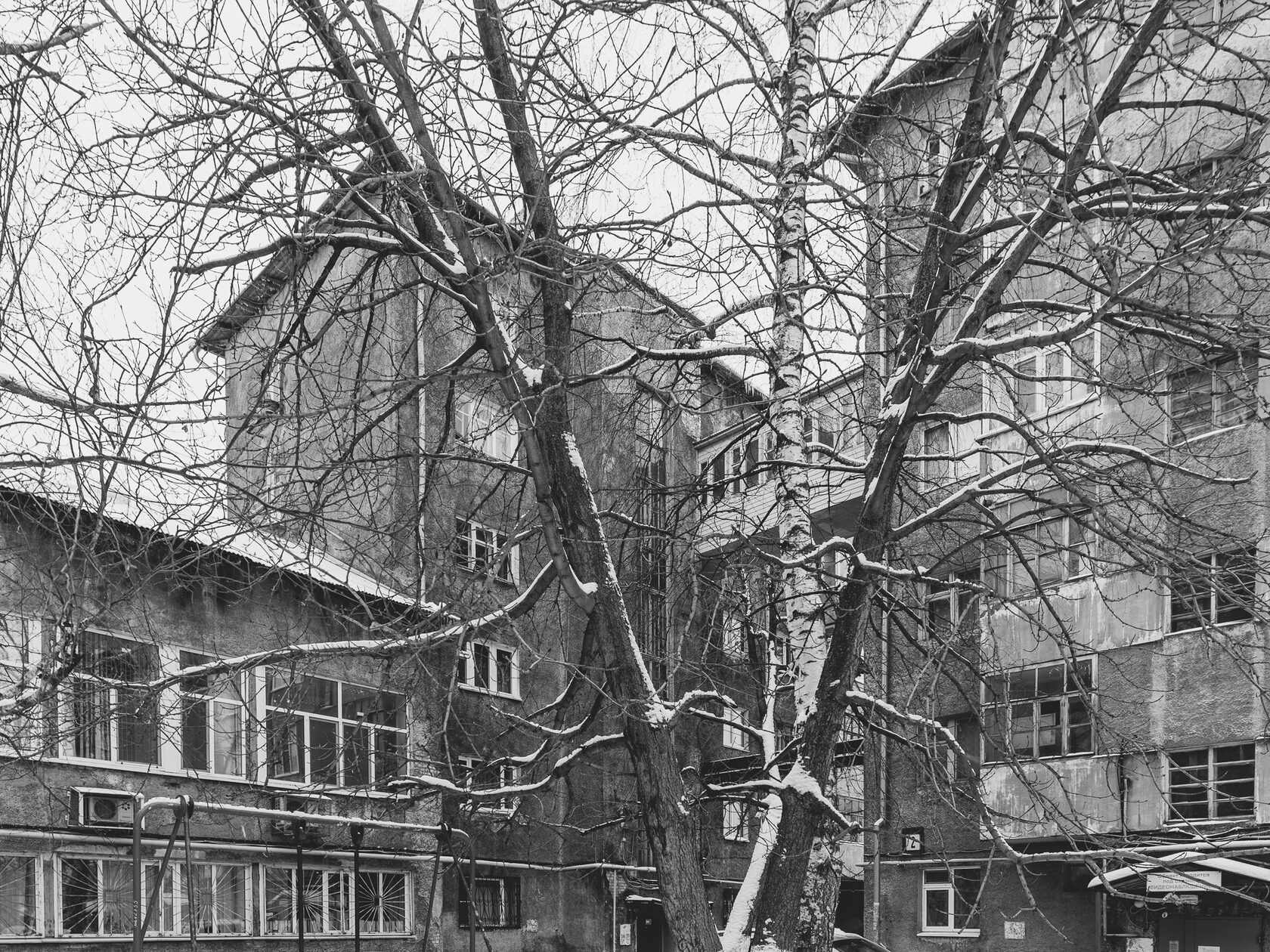
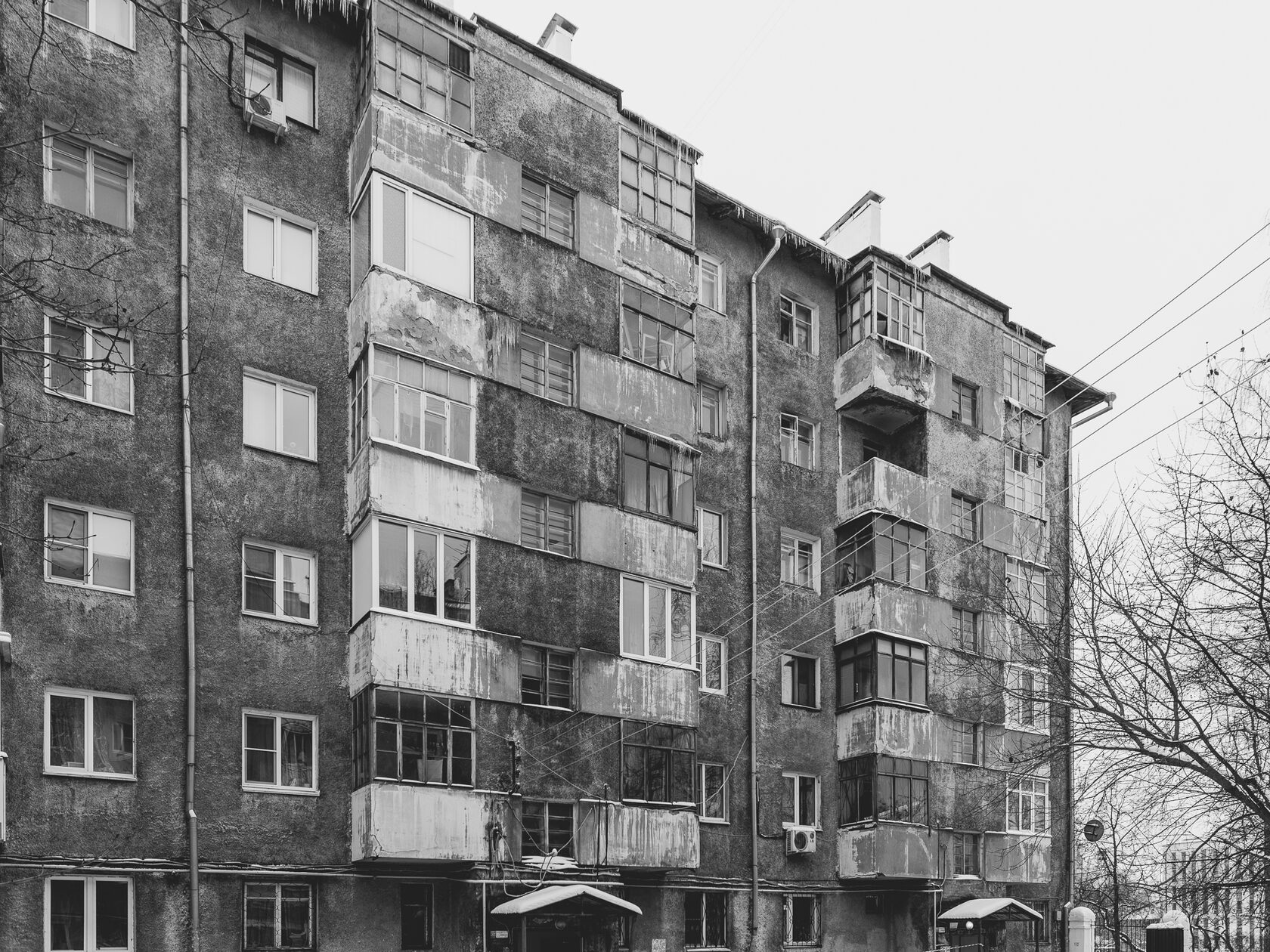
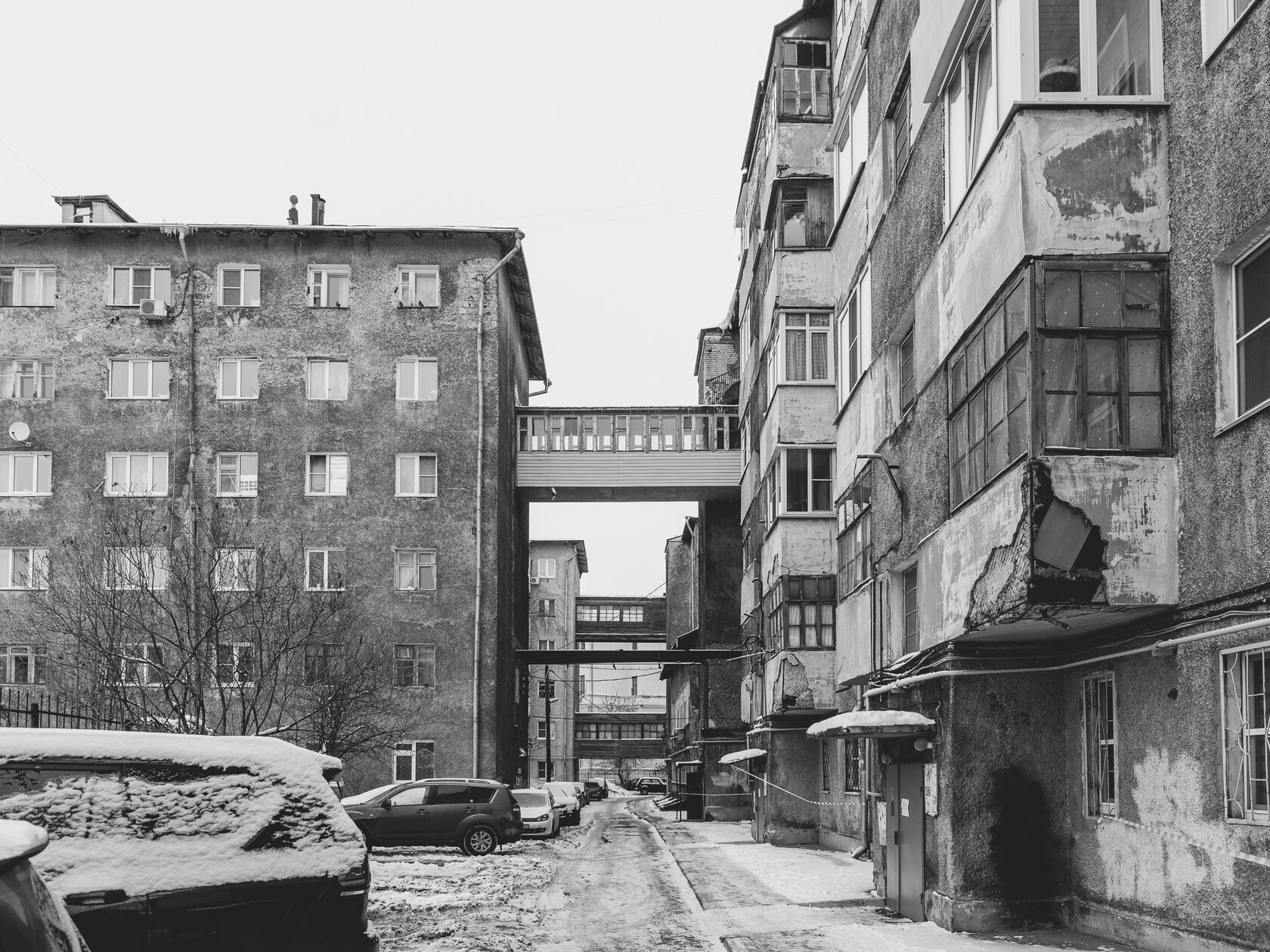
House-commune of railway workersДом-коммуна железнодорожников铁路工人公社住宅Kommunehaus der EisenbahnerMaison-commune des cheminotsCasa-comuna de ferroviariosCasa-comuna dos ferroviários
The image keeps the central constructivist question close to the ground: how should people live together? Balconies, entrances, shared edges, and later alterations show where an old social model meets private use.Кадр удерживает главный бытовой вопрос конструктивизма: как людям жить вместе? Балконы, входы, общие границы и поздние изменения показывают место, где старая социальная модель сталкивается с частным использованием.画面把建构主义最日常的问题拉回地面:人们该如何共同生活?阳台、入口、共享边界和后来的改动,显示出旧的社会模型如何与私人使用相遇。Das Bild hält die zentrale Alltagsfrage des Konstruktivismus nahe am Boden: Wie sollen Menschen zusammenleben? Balkone, Eingänge, gemeinsame Kanten und spätere Veränderungen zeigen, wo ein altes Sozialmodell auf private Nutzung trifft.L'image garde au ras du sol la question centrale du constructivisme : comment vivre ensemble ? Balcons, entrées, limites partagées et transformations ultérieures montrent l'endroit où un ancien modèle social rencontre l'usage privé.La imagen mantiene cerca del suelo la pregunta central del constructivismo: ¿cómo deben vivir juntas las personas? Balcones, entradas, bordes compartidos y alteraciones posteriores muestran dónde un viejo modelo social se encuentra con el uso privado.A imagem mantém rente ao chão a pergunta central do construtivismo: como as pessoas devem viver juntas? Varandas, entradas, limites compartilhados e alterações posteriores mostram onde um antigo modelo social encontra o uso privado.
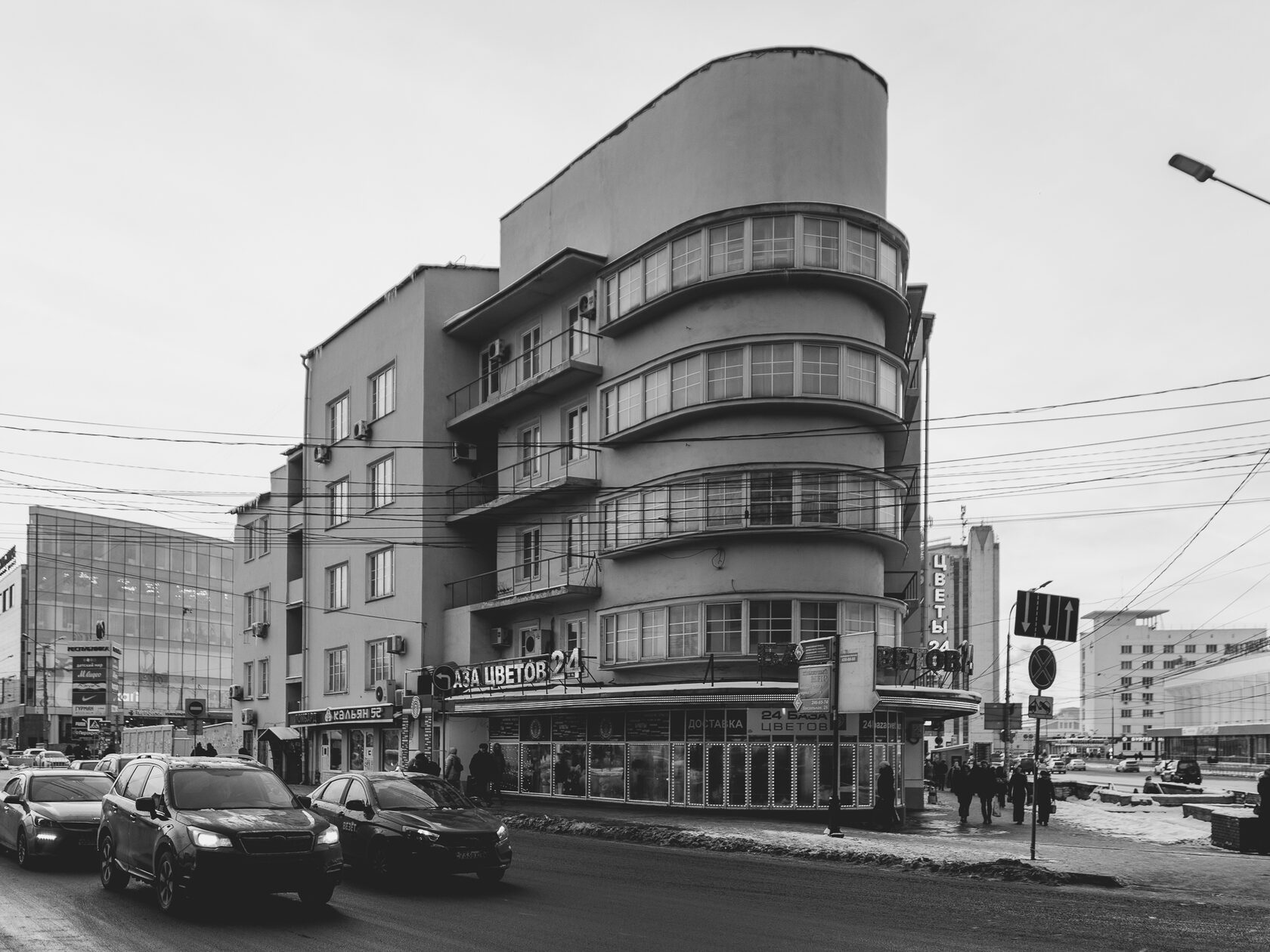
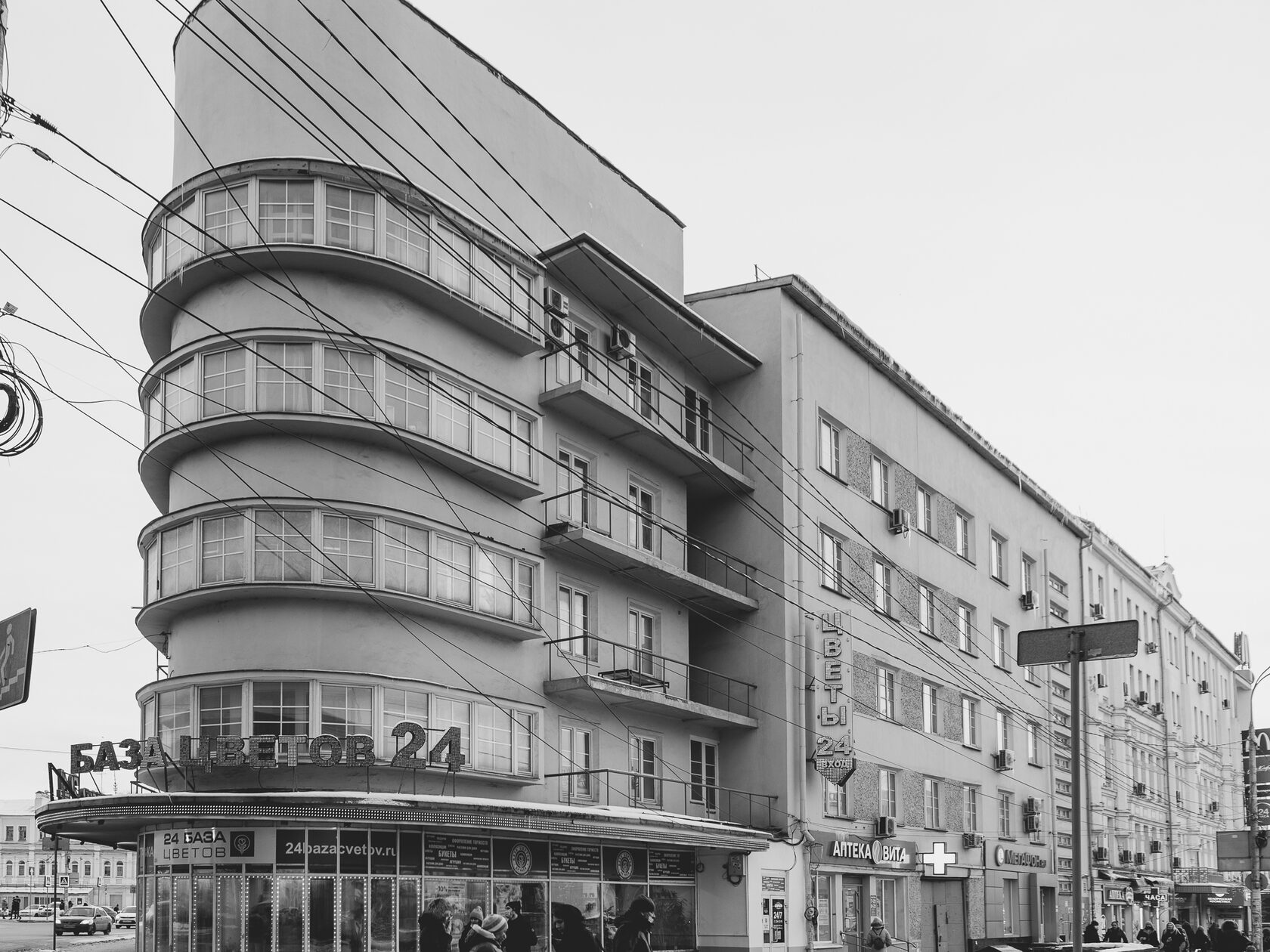
KaliningradКалининград加里宁格勒KaliningradKaliningradKaliningradoKaliningrado
Buildings in KaliningradЗдания: Калининград建筑: 加里宁格勒Bauten in KaliningradBâtiments à KaliningradEdificios en KaliningradoEdifícios em Kaliningrado
Regional Library / Prussian State Archives (Preußisches Staatsarchiv)Региональная библиотека / Прусский государственный архив区域图书馆 / 普鲁士国家档案馆Regionalbibliothek / Preußisches StaatsarchivBibliothèque régionale / Archives d'État prussiennesBiblioteca regional / Archivo Estatal PrusianoBiblioteca regional / Arquivo Estatal Prussiano
This building turns knowledge and print into architecture: storage, circulation, facade, and public address become one restrained machine. In the sequence it reads less as a monument than as a device for producing a new visual order.Это здание переводит знание и печать в архитектурную форму: хранение, движение, фасад и публичное обращение собраны в сдержанную машину. В серии оно читается не как памятник, а как устройство для производства нового визуального порядка.这座建筑把知识和印刷转化为建筑:存储、流线、立面和公共姿态被收进一台克制的机器。它在系列中不像纪念碑,更像生产新视觉秩序的装置。Dieses Gebäude übersetzt Wissen und Druck in Architektur: Lagerung, Bewegung, Fassade und öffentliche Ansprache werden zu einer zurückhaltenden Maschine. In der Serie wirkt es weniger wie ein Denkmal als wie ein Apparat zur Herstellung einer neuen visuellen Ordnung.Ce bâtiment traduit le savoir et l'impression en architecture : stockage, circulation, façade et adresse publique se rassemblent dans une machine contenue. Dans la série, il se lit moins comme un monument que comme un dispositif de production d'un nouvel ordre visuel.Este edificio convierte el conocimiento y la imprenta en arquitectura: almacenamiento, circulación, fachada y dirección pública se reúnen en una máquina contenida. En la serie se lee menos como monumento que como dispositivo para producir un nuevo orden visual.Este edifício transforma conhecimento e impressão em arquitetura: armazenamento, circulação, fachada e endereço público se reúnem numa máquina contida. Na série, lê-se menos como monumento do que como dispositivo para produzir uma nova ordem visual.
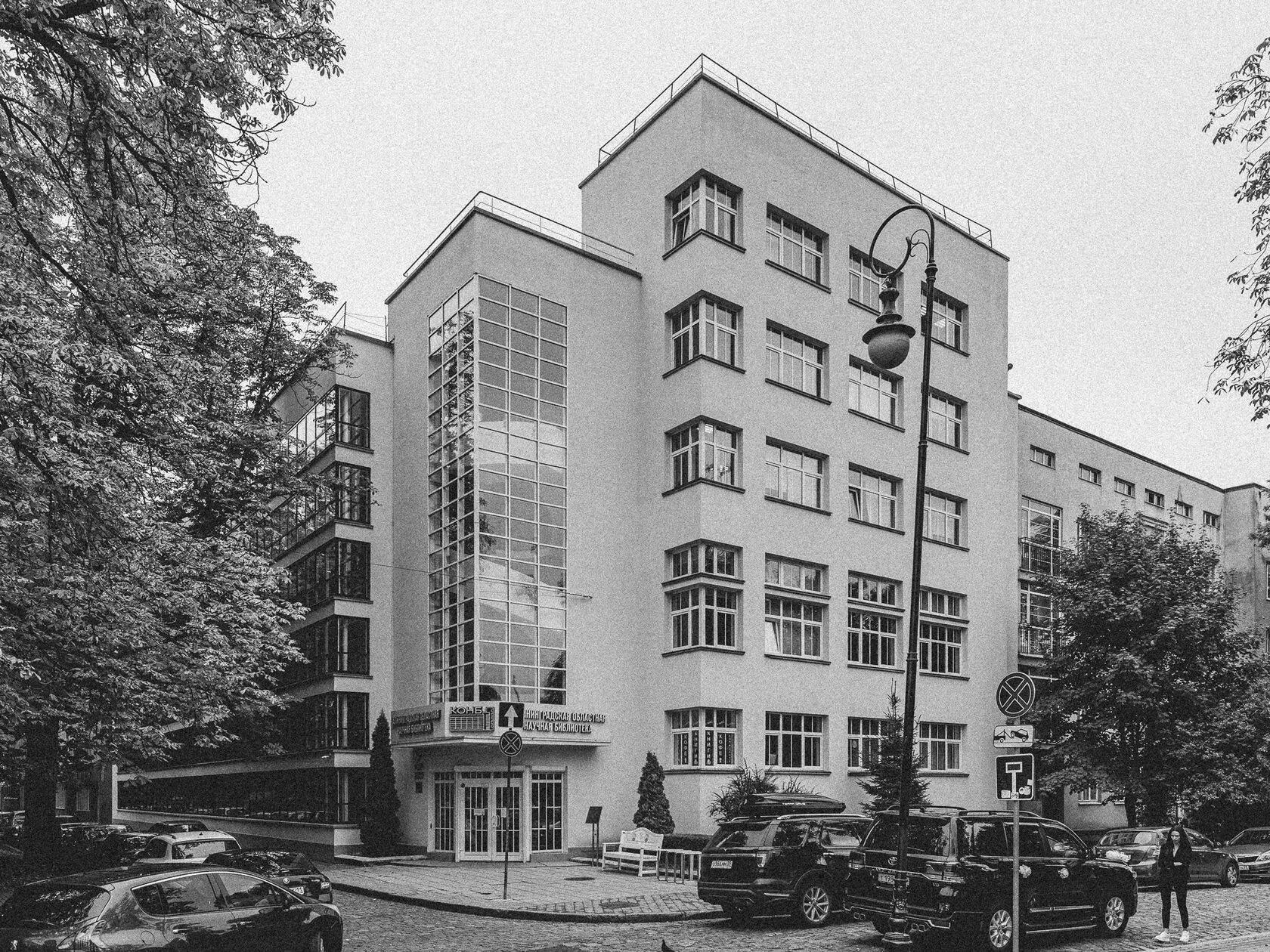
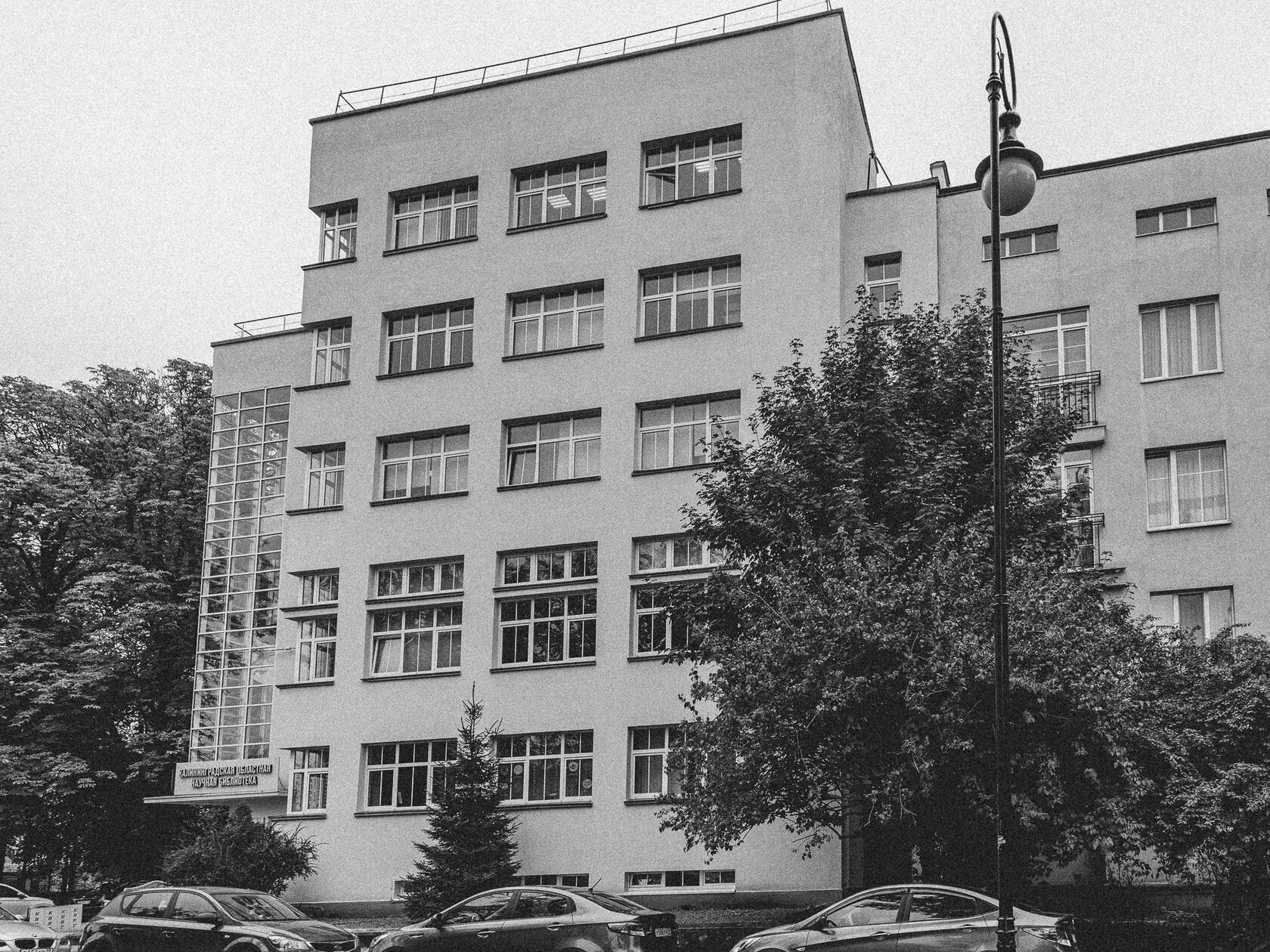
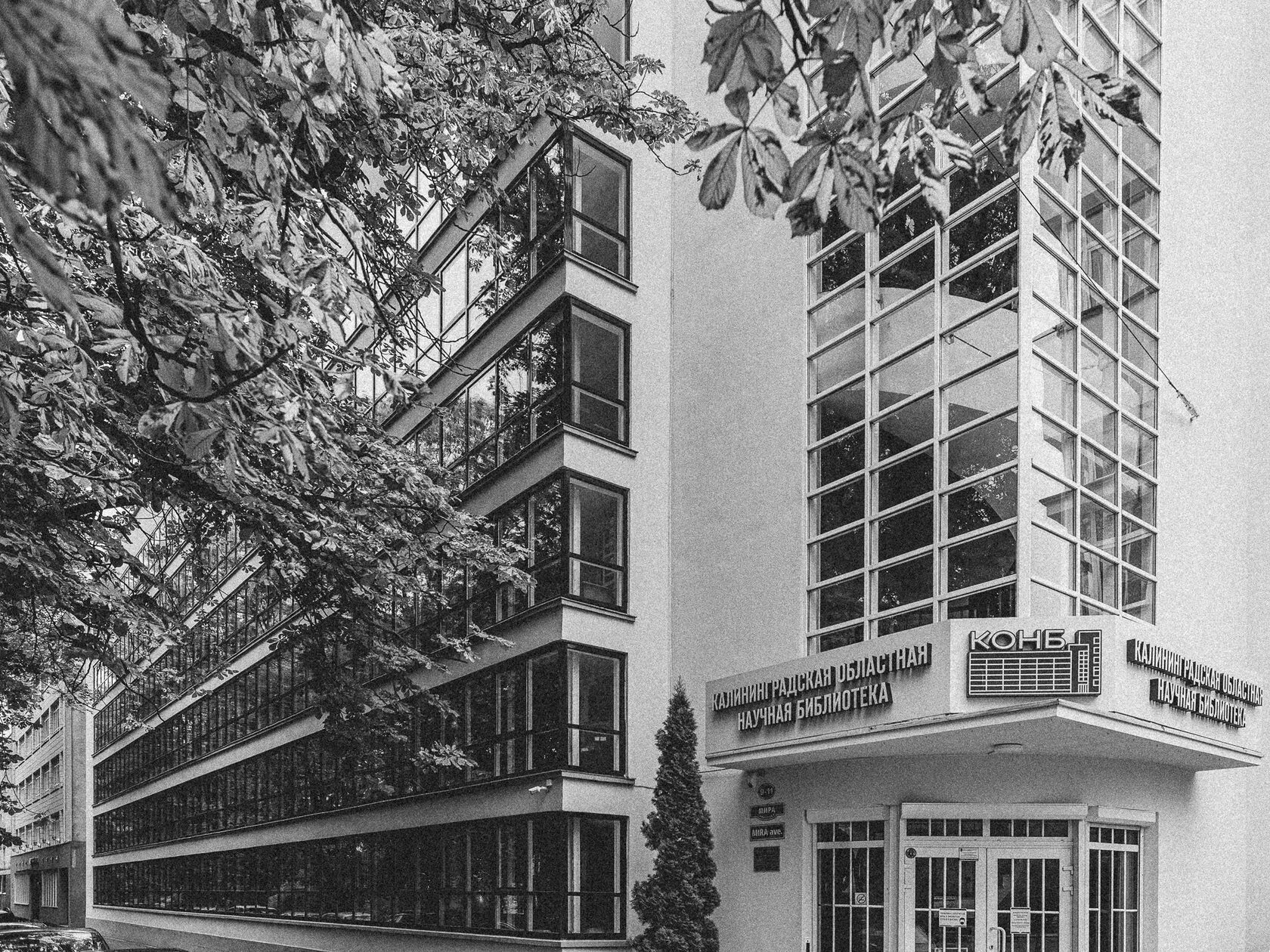
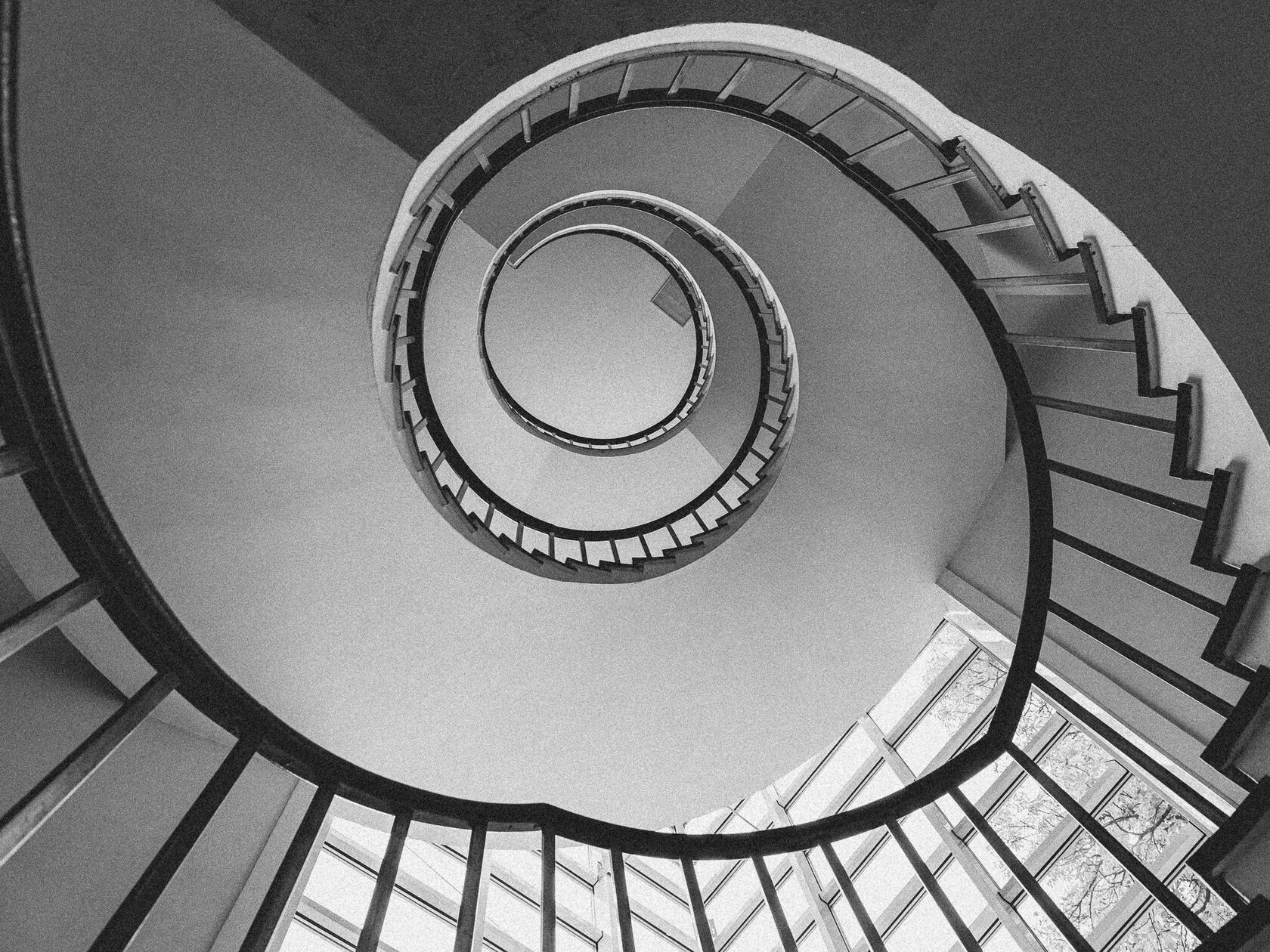
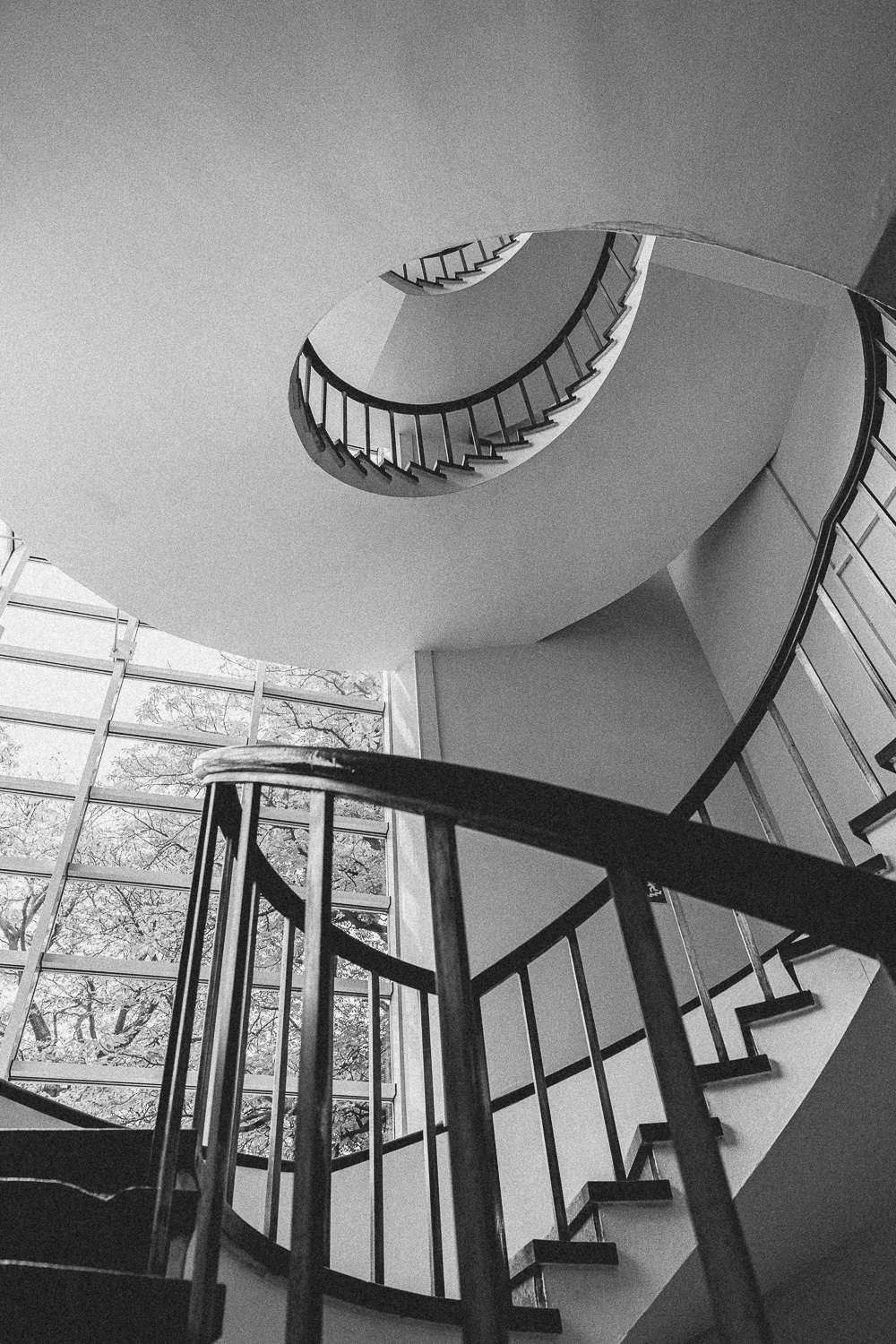
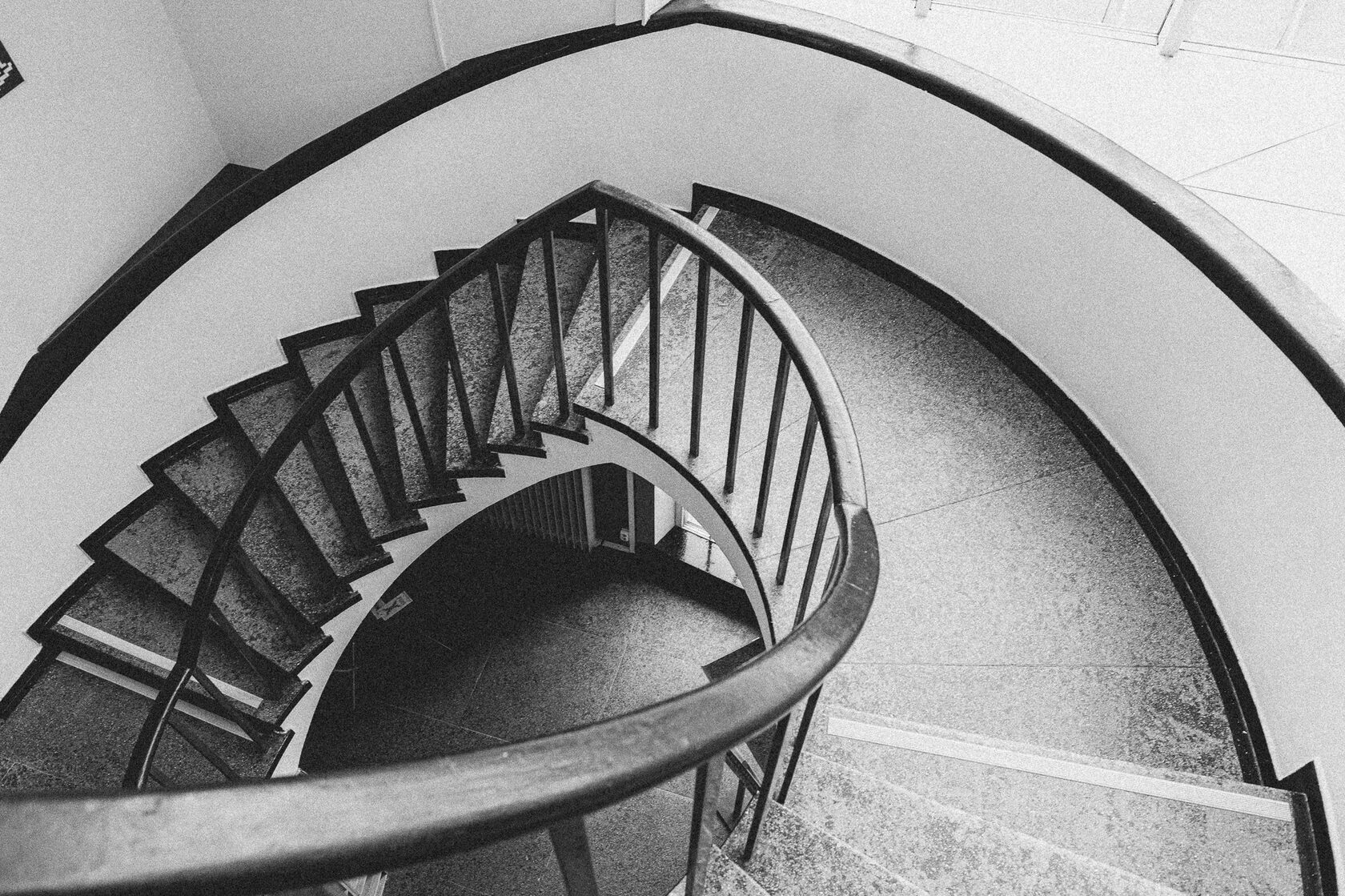
House number 10 on Marina Raskova StreetДом № 10 на улице Марины Расковой玛丽娜·拉斯科娃街 10 号住宅Haus Nr. 10 in der Marina-Raskowa-StraßeMaison n° 10 rue Marina RaskovaCasa n.º 10 en la calle Marina RaskovaCasa n.º 10 na rua Marina Raskova
The image keeps the central constructivist question close to the ground: how should people live together? Balconies, entrances, shared edges, and later alterations show where an old social model meets private use.Кадр удерживает главный бытовой вопрос конструктивизма: как людям жить вместе? Балконы, входы, общие границы и поздние изменения показывают место, где старая социальная модель сталкивается с частным использованием.画面把建构主义最日常的问题拉回地面:人们该如何共同生活?阳台、入口、共享边界和后来的改动,显示出旧的社会模型如何与私人使用相遇。Das Bild hält die zentrale Alltagsfrage des Konstruktivismus nahe am Boden: Wie sollen Menschen zusammenleben? Balkone, Eingänge, gemeinsame Kanten und spätere Veränderungen zeigen, wo ein altes Sozialmodell auf private Nutzung trifft.L'image garde au ras du sol la question centrale du constructivisme : comment vivre ensemble ? Balcons, entrées, limites partagées et transformations ultérieures montrent l'endroit où un ancien modèle social rencontre l'usage privé.La imagen mantiene cerca del suelo la pregunta central del constructivismo: ¿cómo deben vivir juntas las personas? Balcones, entradas, bordes compartidos y alteraciones posteriores muestran dónde un viejo modelo social se encuentra con el uso privado.A imagem mantém rente ao chão a pergunta central do construtivismo: como as pessoas devem viver juntas? Varandas, entradas, limites compartilhados e alterações posteriores mostram onde um antigo modelo social encontra o uso privado.
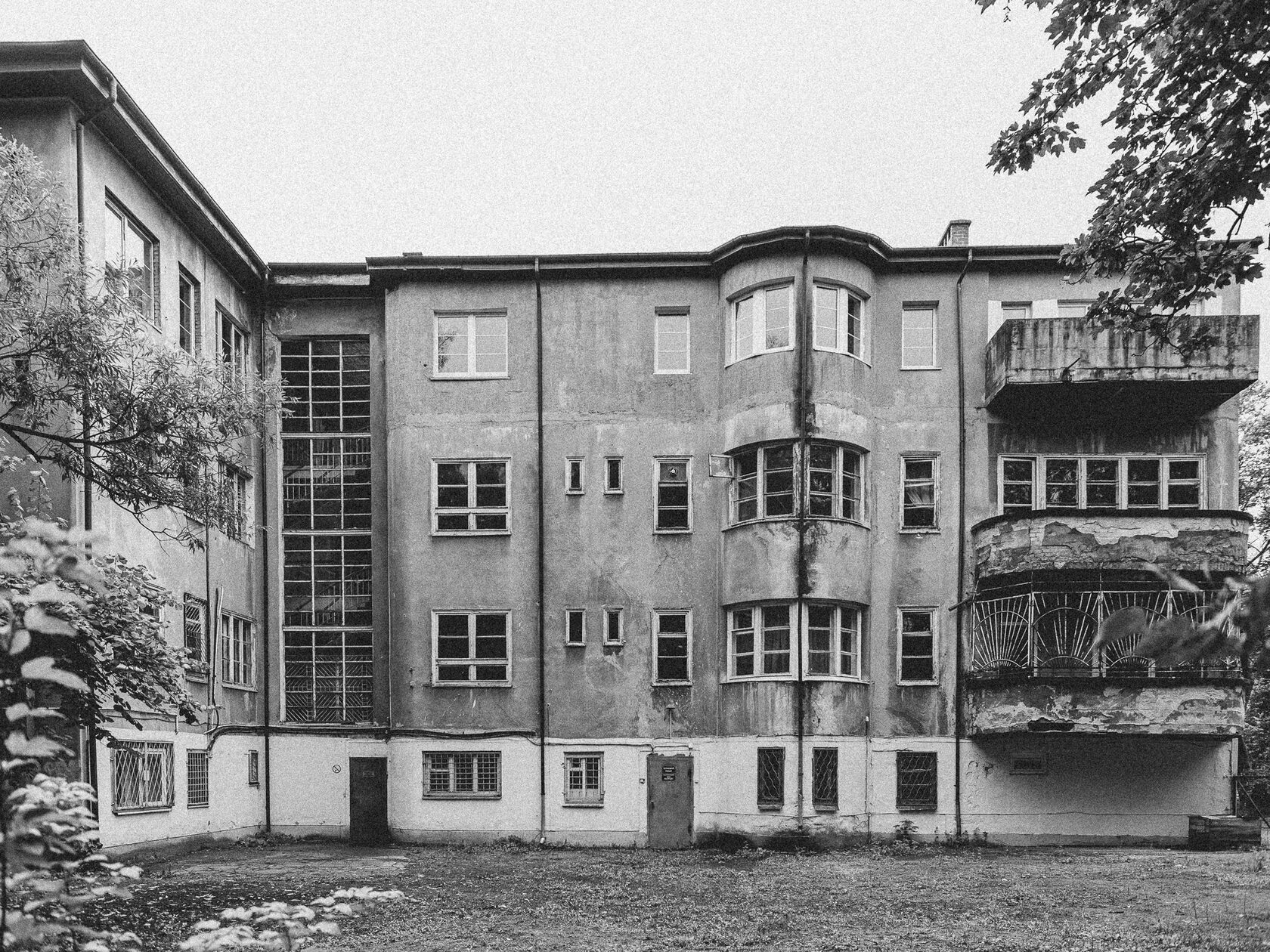
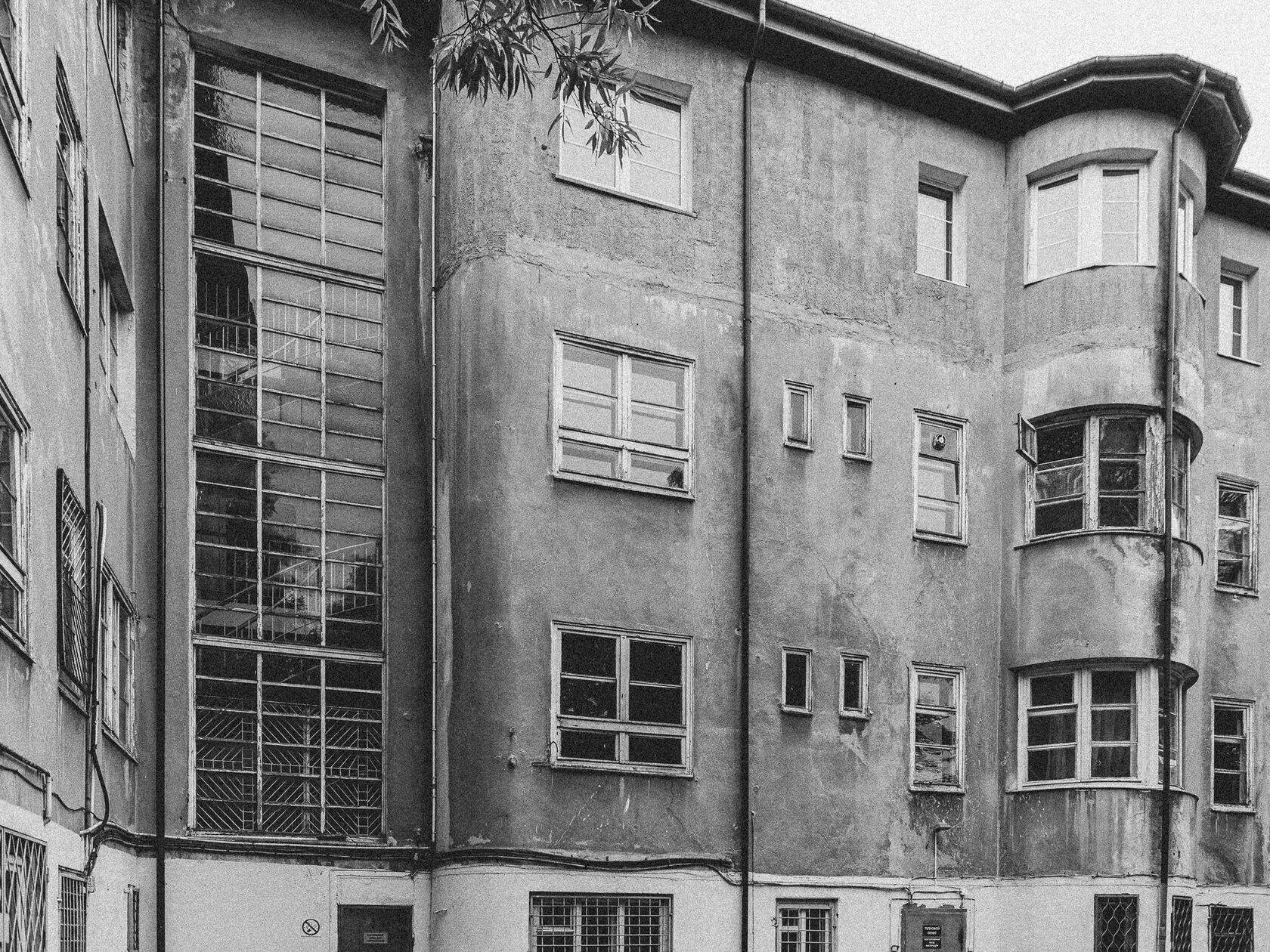
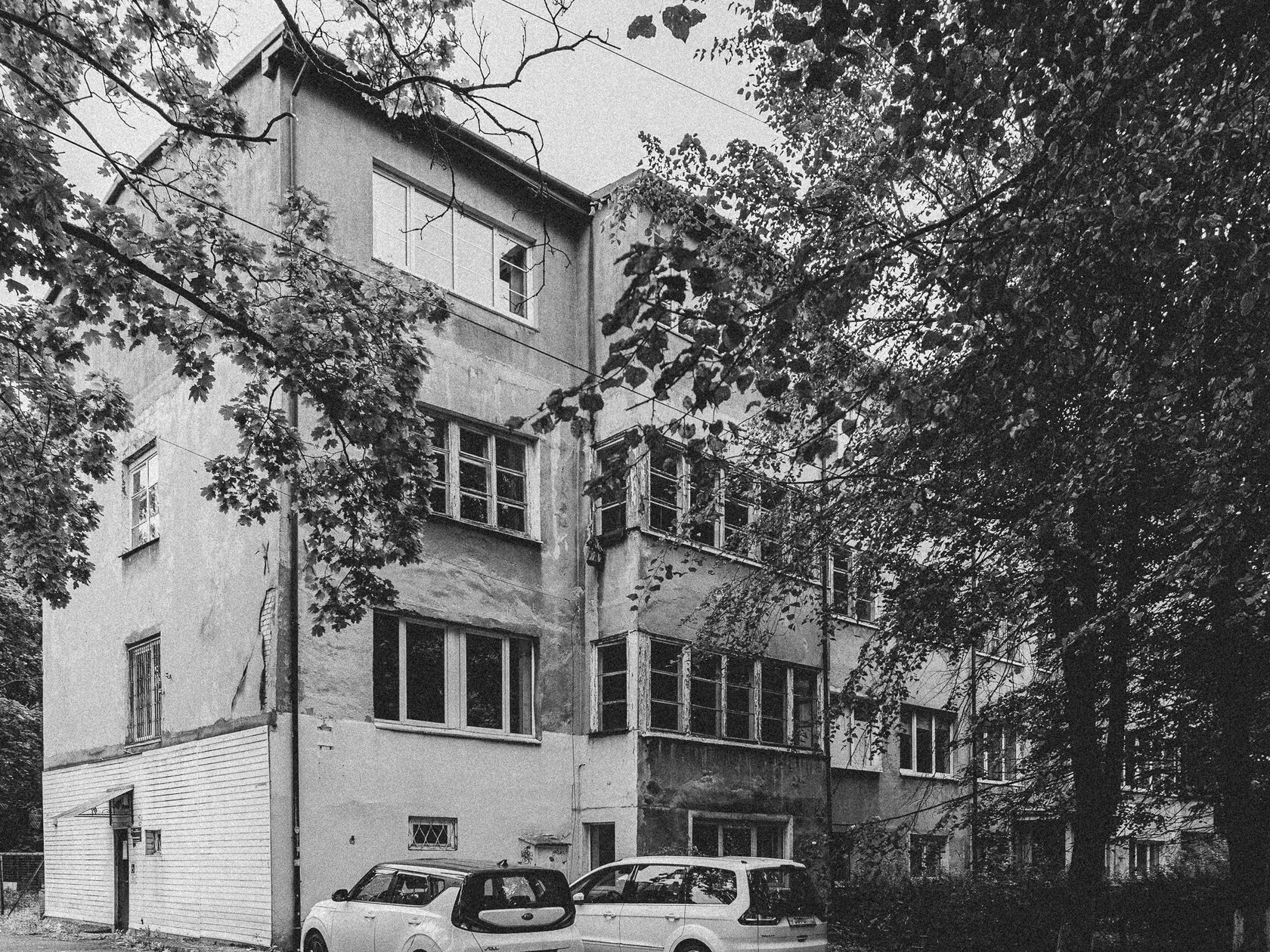
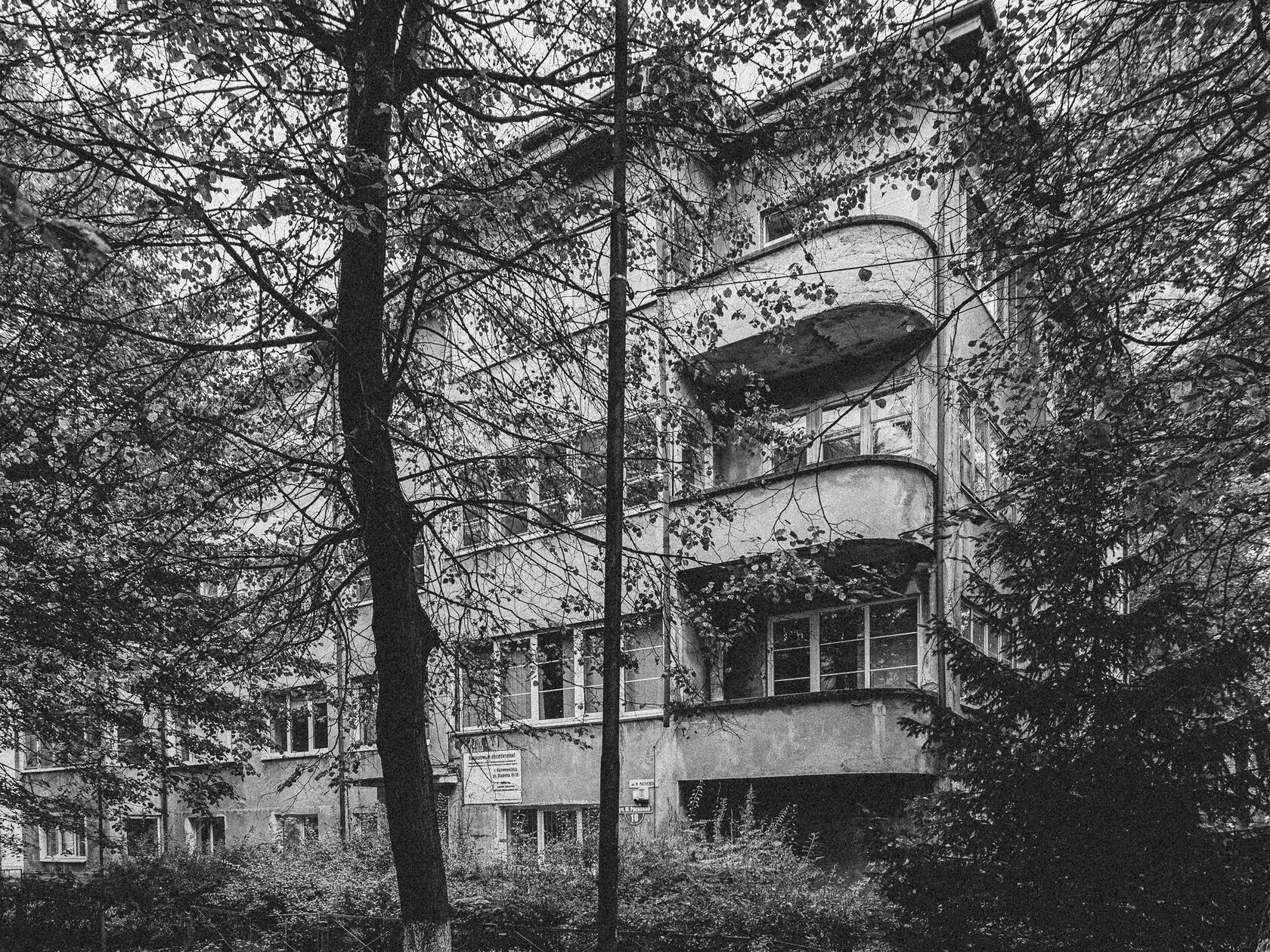
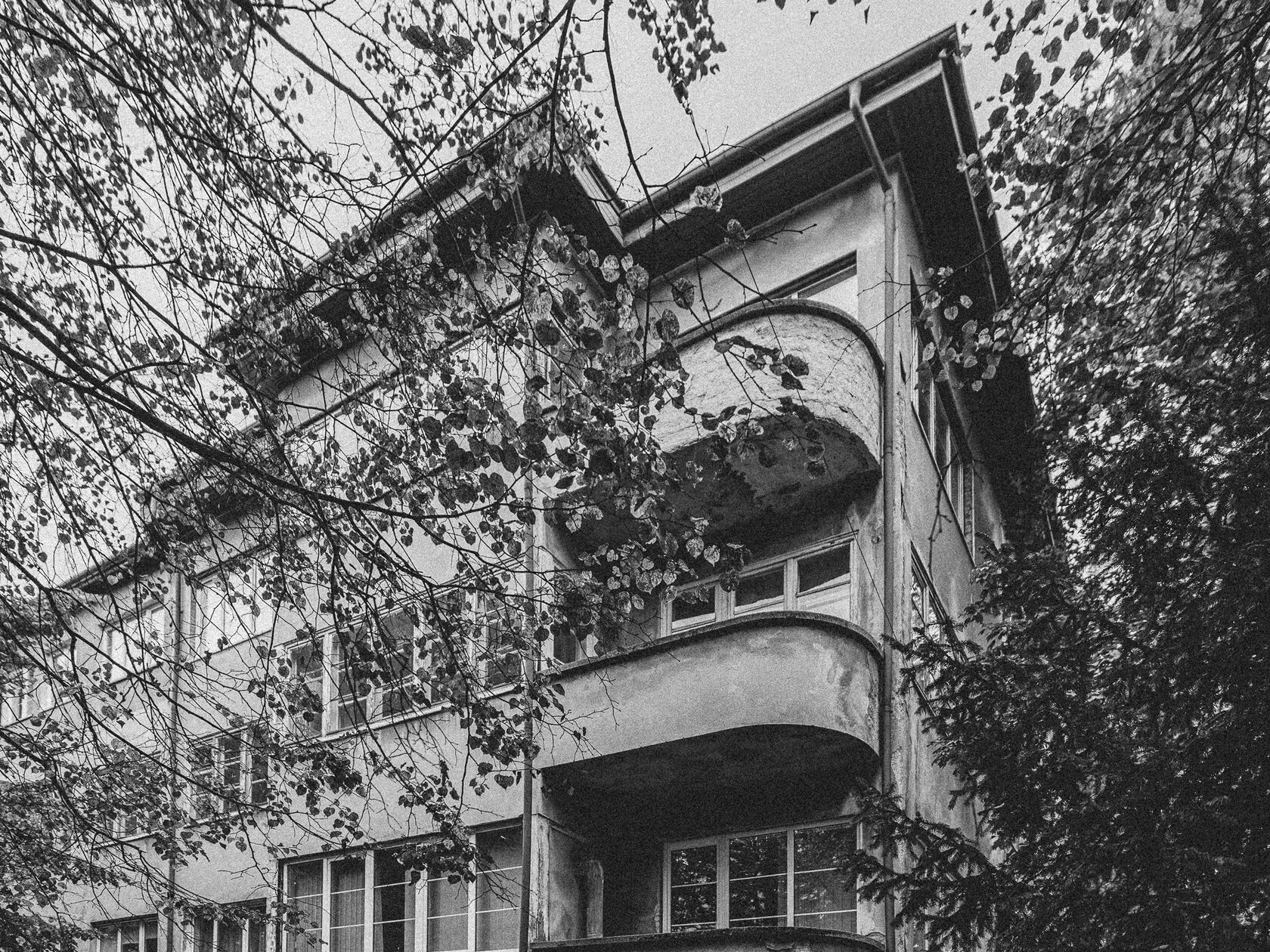
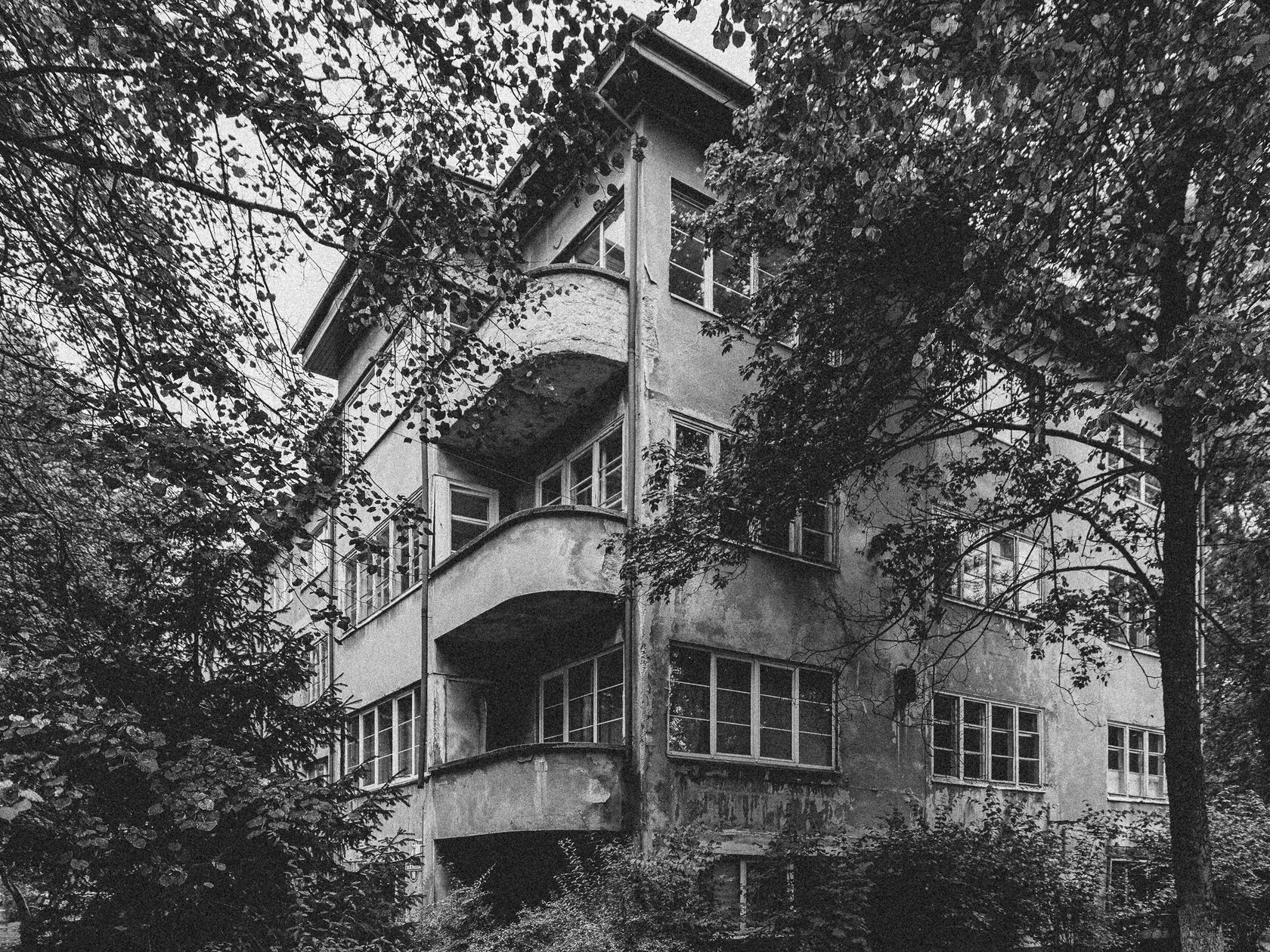
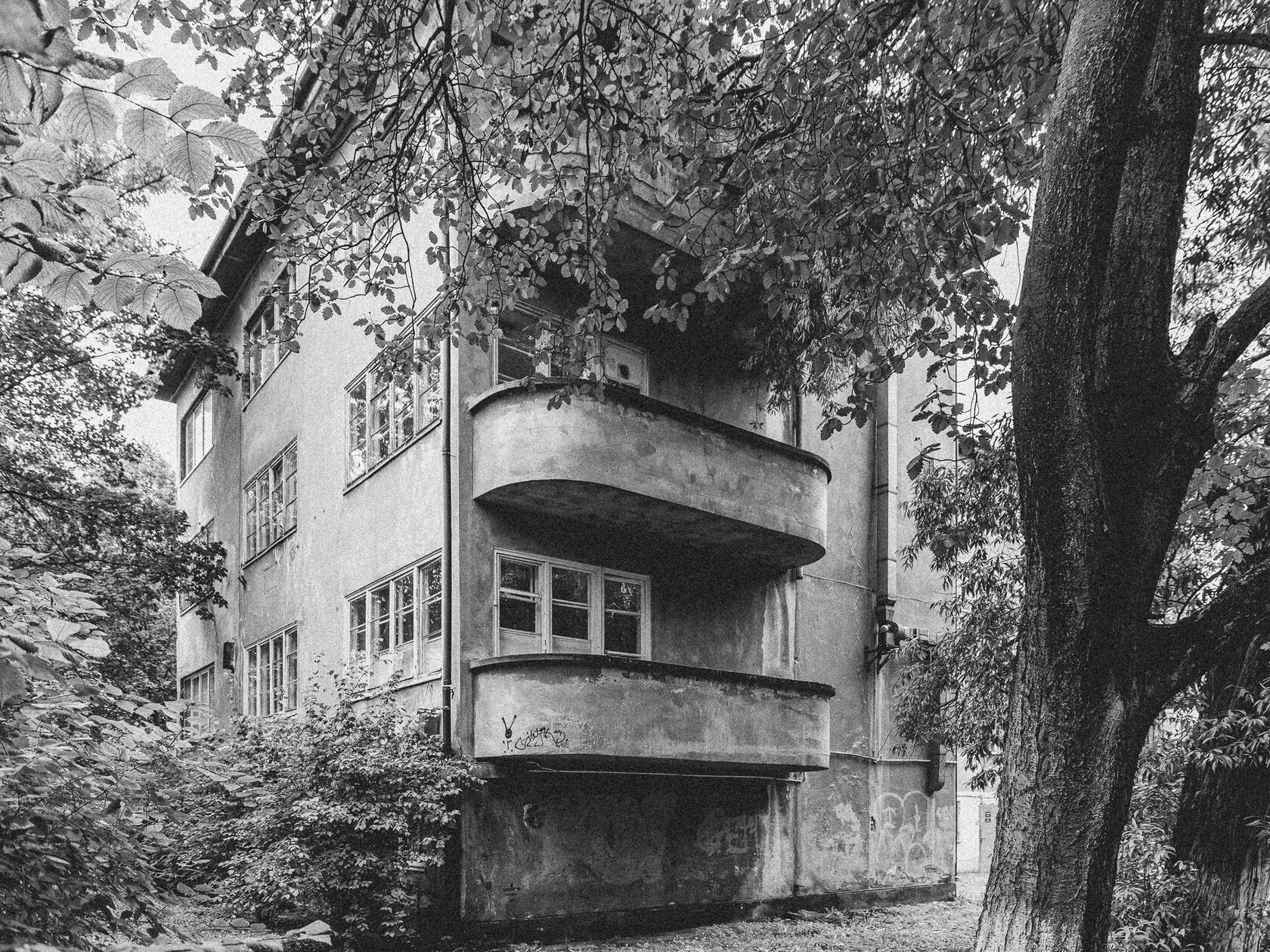
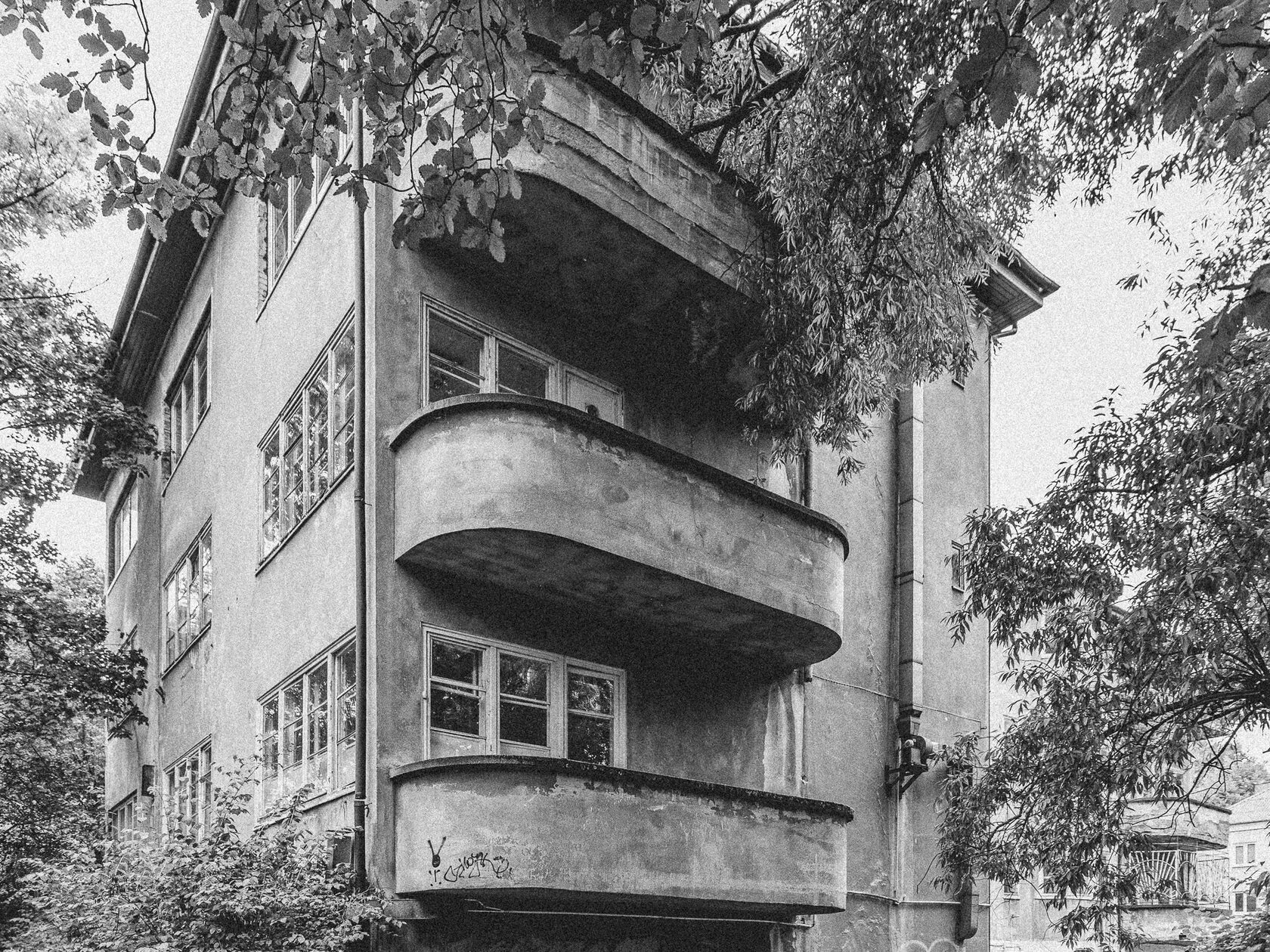
New House of RadioНовый дом радио新广播之家Neues Haus des RadiosNouvelle Maison de la radioNueva Casa de la RadioNova Casa do Rádio
This is architecture of transmission. Its form is tied to measuring, broadcasting, watching, or sending: an almost invisible infrastructure made visible through volume, rhythm, and a precise position in the city.Это архитектура передачи. Ее форма связана с измерением, вещанием, наблюдением или сигналом: почти невидимая инфраструктура становится видимой через объем, ритм и точное положение в городе.这是传输的建筑。它的形式与测量、广播、观察或发送有关:几乎不可见的基础设施通过体量、节奏和在城市中的精确位置变得可见。Das ist Architektur der Übertragung. Ihre Form ist mit Messen, Senden, Beobachten oder Signalisieren verbunden: beinahe unsichtbare Infrastruktur wird durch Volumen, Rhythmus und eine präzise Lage in der Stadt sichtbar.C'est une architecture de transmission. Sa forme est liée à la mesure, à la diffusion, à l'observation ou au signal : une infrastructure presque invisible devient visible par le volume, le rythme et une position précise dans la ville.Es arquitectura de transmisión. Su forma se vincula con medir, emitir, observar o enviar: una infraestructura casi invisible se vuelve visible mediante volumen, ritmo y una posición precisa en la ciudad.É arquitetura de transmissão. Sua forma se liga a medir, transmitir, observar ou sinalizar: uma infraestrutura quase invisível torna-se visível por volume, ritmo e posição precisa na cidade.
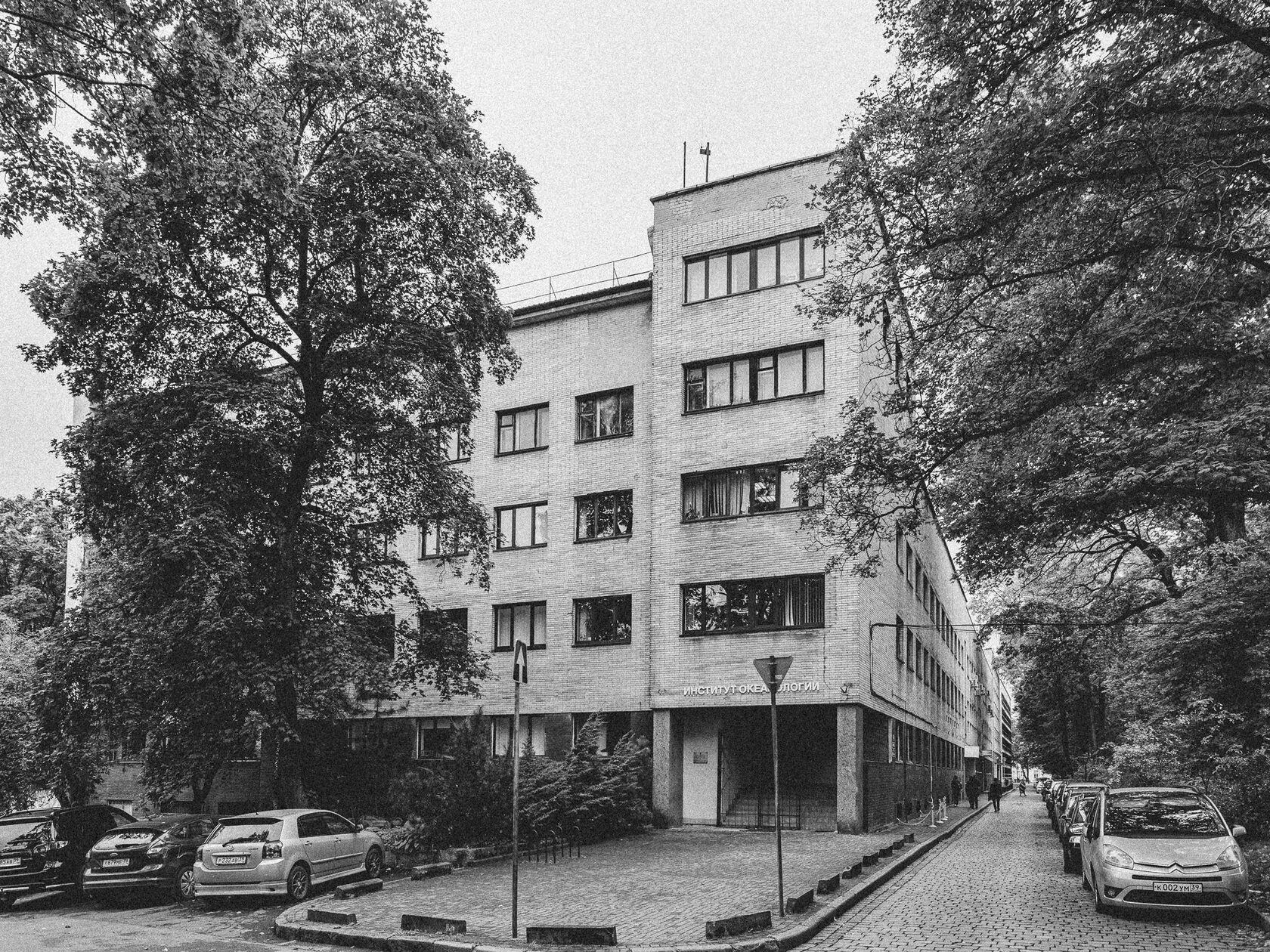
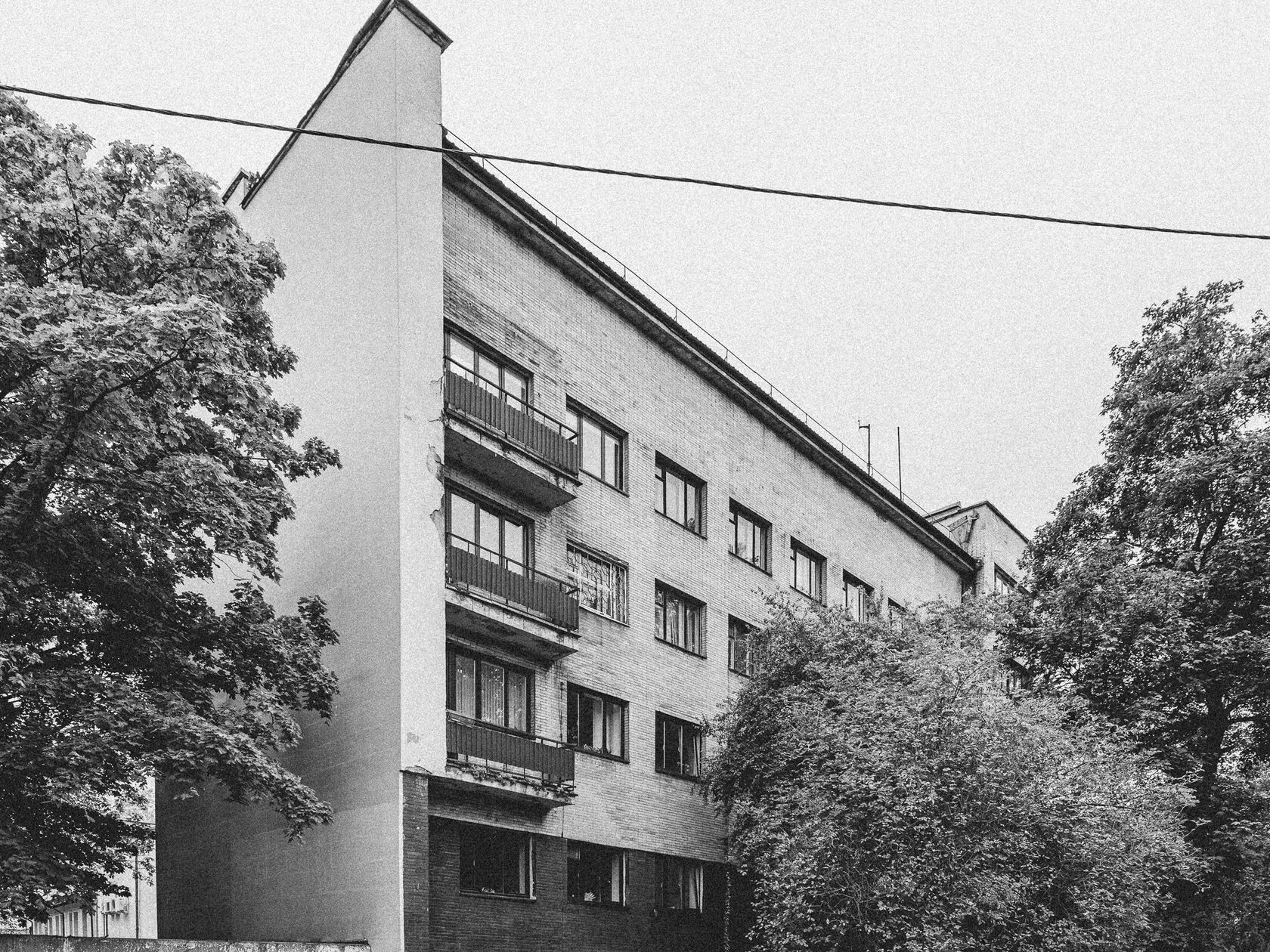
Anatomical Institute of the University of Königsberg (Die Neue Anatomie Universität Königsberg)Анатомический институт Кенигсбергского университета柯尼斯堡大学解剖学研究所Anatomisches Institut der Universität KönigsbergInstitut d'anatomie de l'université de KönigsbergInstituto Anatómico de la Universidad de KönigsbergInstituto Anatômico da Universidade de Königsberg
This is the social body seen through architecture. Health, hygiene, care, and discipline are not private matters here, but a spatial program: corridors, volumes, entrances, and surfaces arranged for collective maintenance.Это социальное тело, увиденное через архитектуру. Здоровье, гигиена, уход и дисциплина здесь не частное дело, а пространственная программа: коридоры, объемы, входы и поверхности, выстроенные для коллективного обслуживания жизни.这是通过建筑看到的社会身体。健康、卫生、照护和纪律在这里不是私人事务,而是一套空间程序:走廊、体量、入口和表面被组织起来,服务于集体生活的维护。Hier wird der soziale Körper durch Architektur sichtbar. Gesundheit, Hygiene, Fürsorge und Disziplin sind keine privaten Angelegenheiten, sondern ein räumliches Programm: Korridore, Volumen, Eingänge und Oberflächen für kollektive Erhaltung.C'est le corps social vu à travers l'architecture. Santé, hygiène, soin et discipline ne sont pas ici des affaires privées, mais un programme spatial : couloirs, volumes, entrées et surfaces organisés pour l'entretien collectif de la vie.Es el cuerpo social visto a través de la arquitectura. Salud, higiene, cuidado y disciplina no son aquí asuntos privados, sino un programa espacial: pasillos, volúmenes, entradas y superficies organizados para el mantenimiento colectivo de la vida.É o corpo social visto pela arquitetura. Saúde, higiene, cuidado e disciplina não são aqui questões privadas, mas um programa espacial: corredores, volumes, entradas e superfícies organizados para a manutenção coletiva da vida.
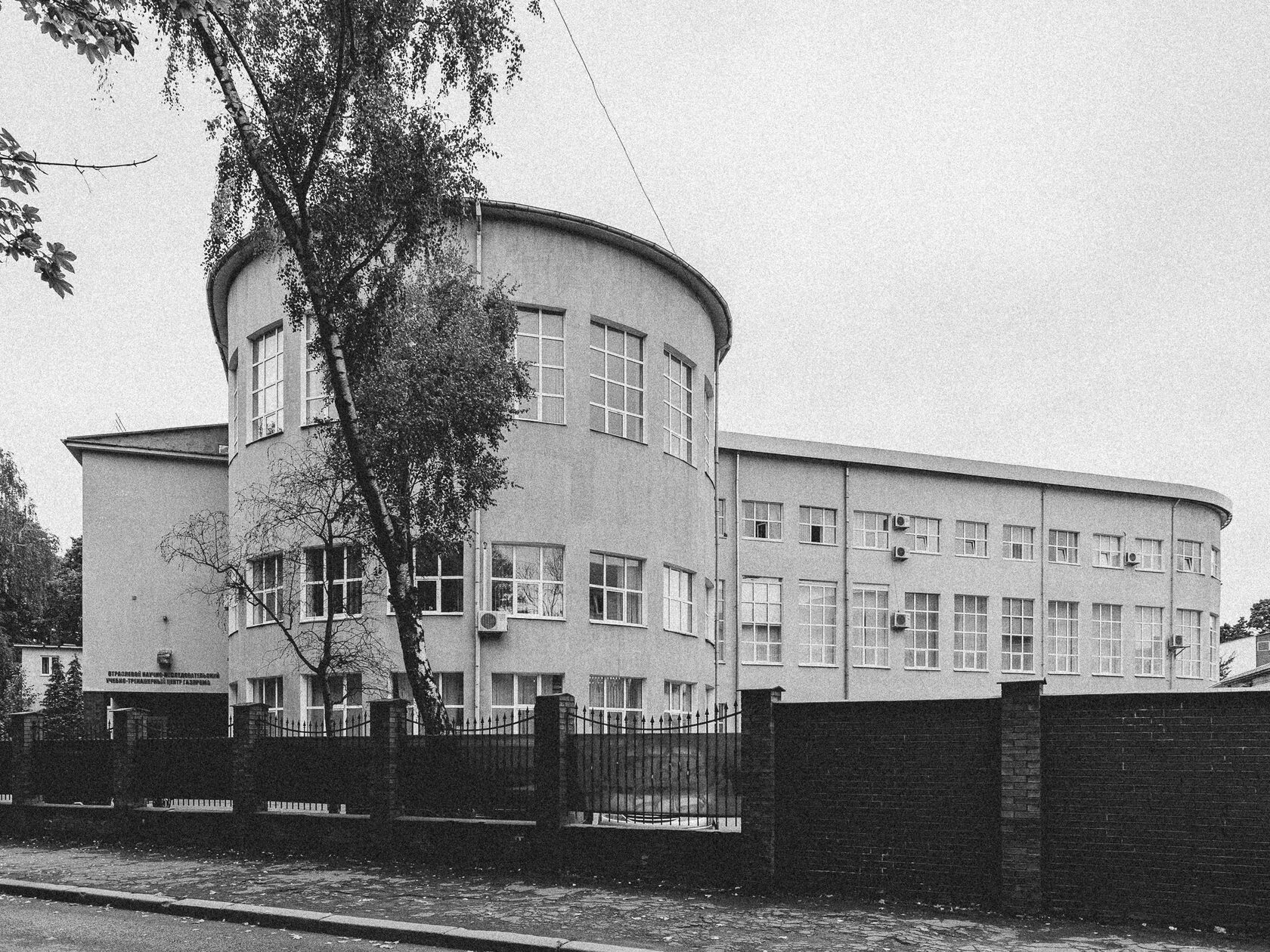
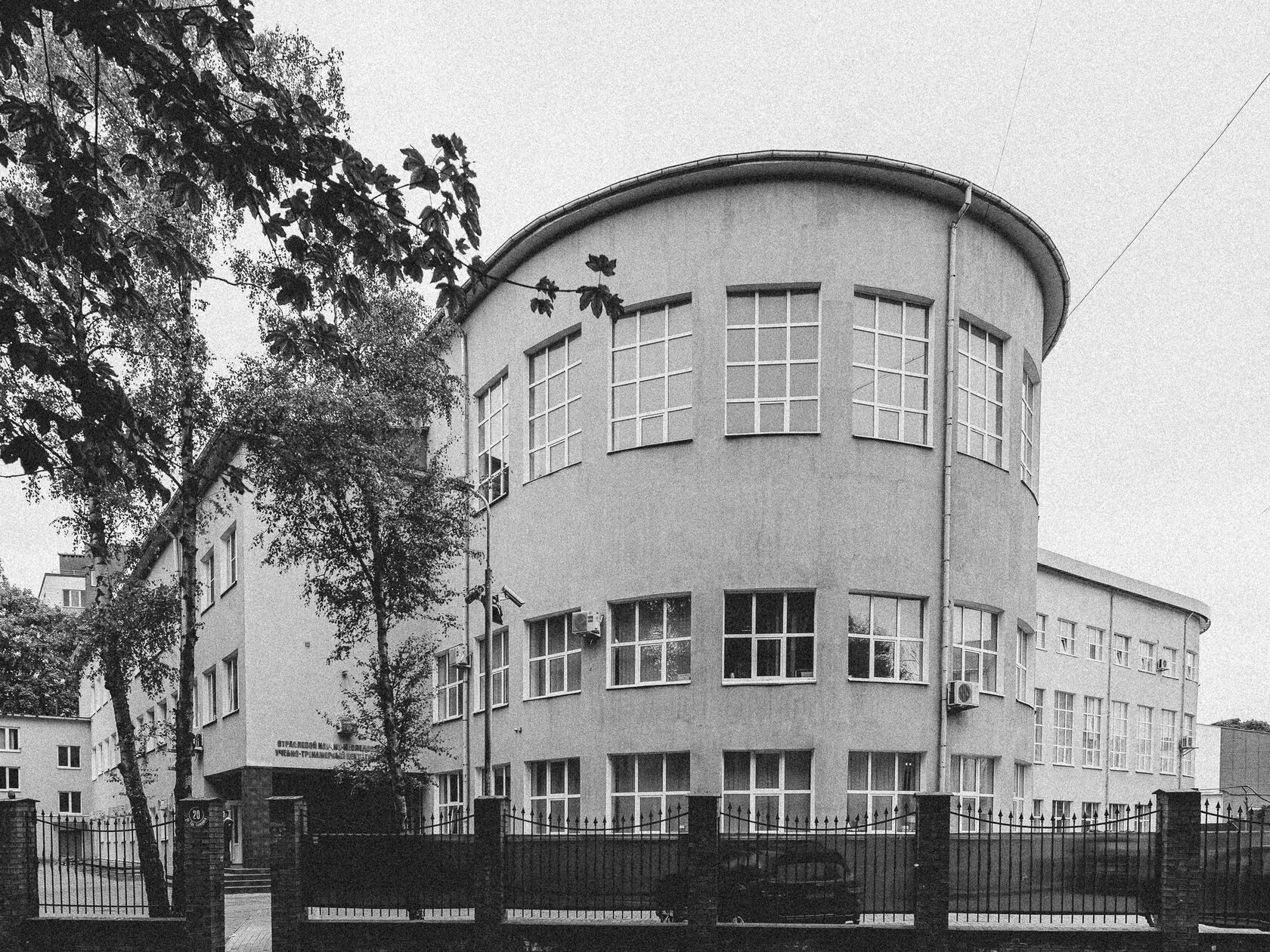
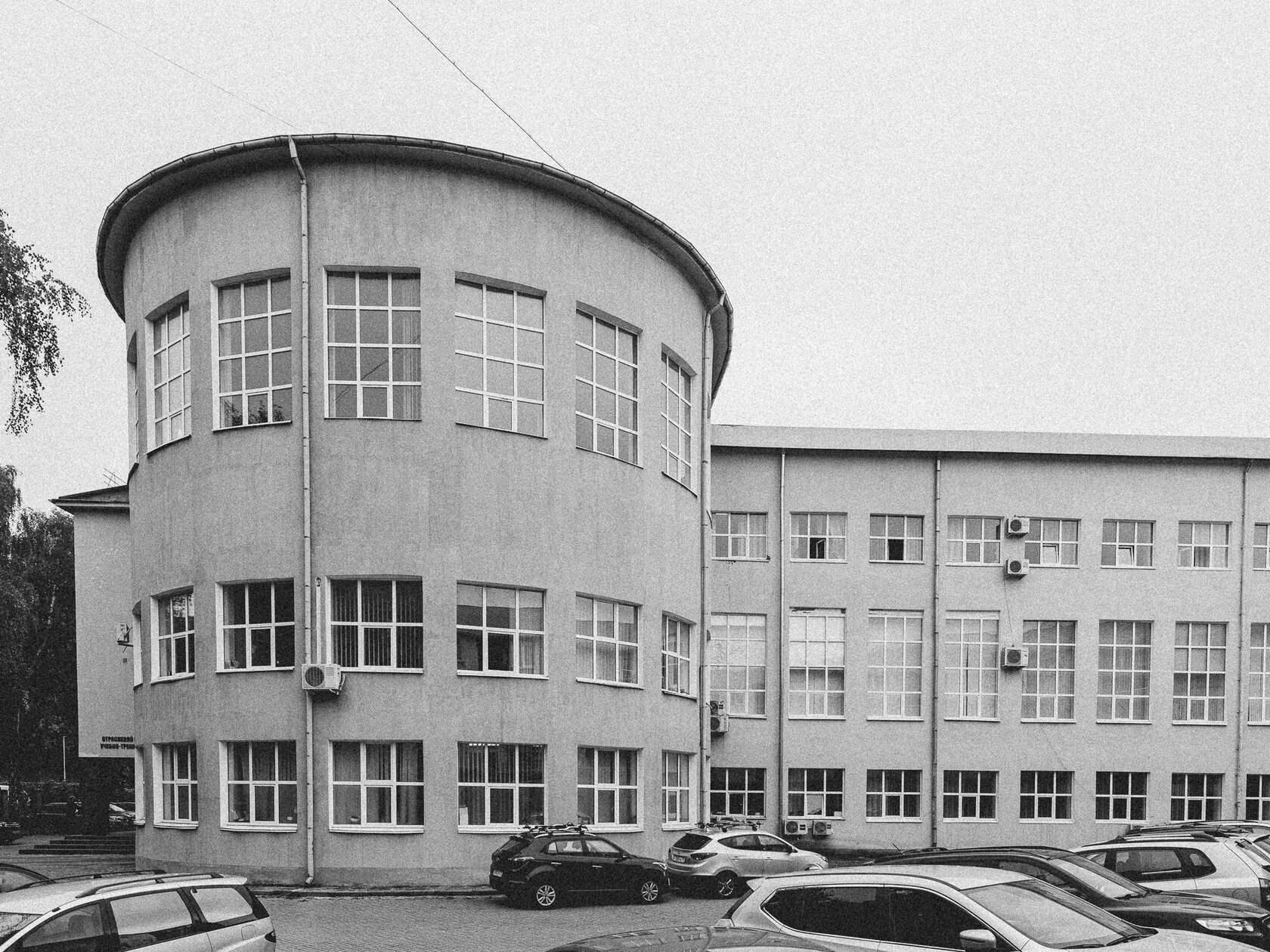
House of Officers of the Baltic Fleet / East Prussian Crafts School for GirlsДом офицеров Балтийского флота / Восточно-прусская ремесленная школа для девушек波罗的海舰队军官之家 / 东普鲁士女子工艺学校Haus der Offiziere der Baltischen Flotte / Ostpreußische Mädchen-GewerbeschuleMaison des officiers de la flotte de la Baltique / École artisanale est-prussienne pour fillesCasa de Oficiales de la Flota del Báltico / Escuela artesanal de Prusia Oriental para niñasCasa dos Oficiais da Frota do Báltico / Escola de ofícios da Prússia Oriental para meninas
Education appears here as a public form. The photographs look at how knowledge is given mass, facade, entrances, and repetition: an institution trying to appear open, rational, and structurally new.Образование здесь становится публичной формой. Фотографии смотрят на то, как знанию дают массу, фасад, входы и повтор: институция пытается выглядеть открытой, рациональной и структурно новой.教育在这里成为公共形式。照片观察知识如何获得体量、立面、入口和重复:一种机构试图显得开放、理性并具有新的结构。Bildung erscheint hier als öffentliche Form. Die Fotografien schauen darauf, wie Wissen Masse, Fassade, Eingänge und Wiederholung erhält: eine Institution, die offen, rational und strukturell neu wirken will.L'éducation apparaît ici comme une forme publique. Les photographies regardent comment le savoir reçoit une masse, une façade, des entrées et une répétition : une institution qui cherche à paraître ouverte, rationnelle et structurellement nouvelle.La educación aparece aquí como forma pública. Las fotografías observan cómo el conocimiento recibe masa, fachada, entradas y repetición: una institución que intenta parecer abierta, racional y estructuralmente nueva.A educação aparece aqui como forma pública. As fotografias observam como o conhecimento ganha massa, fachada, entradas e repetição: uma instituição tentando parecer aberta, racional e estruturalmente nova.
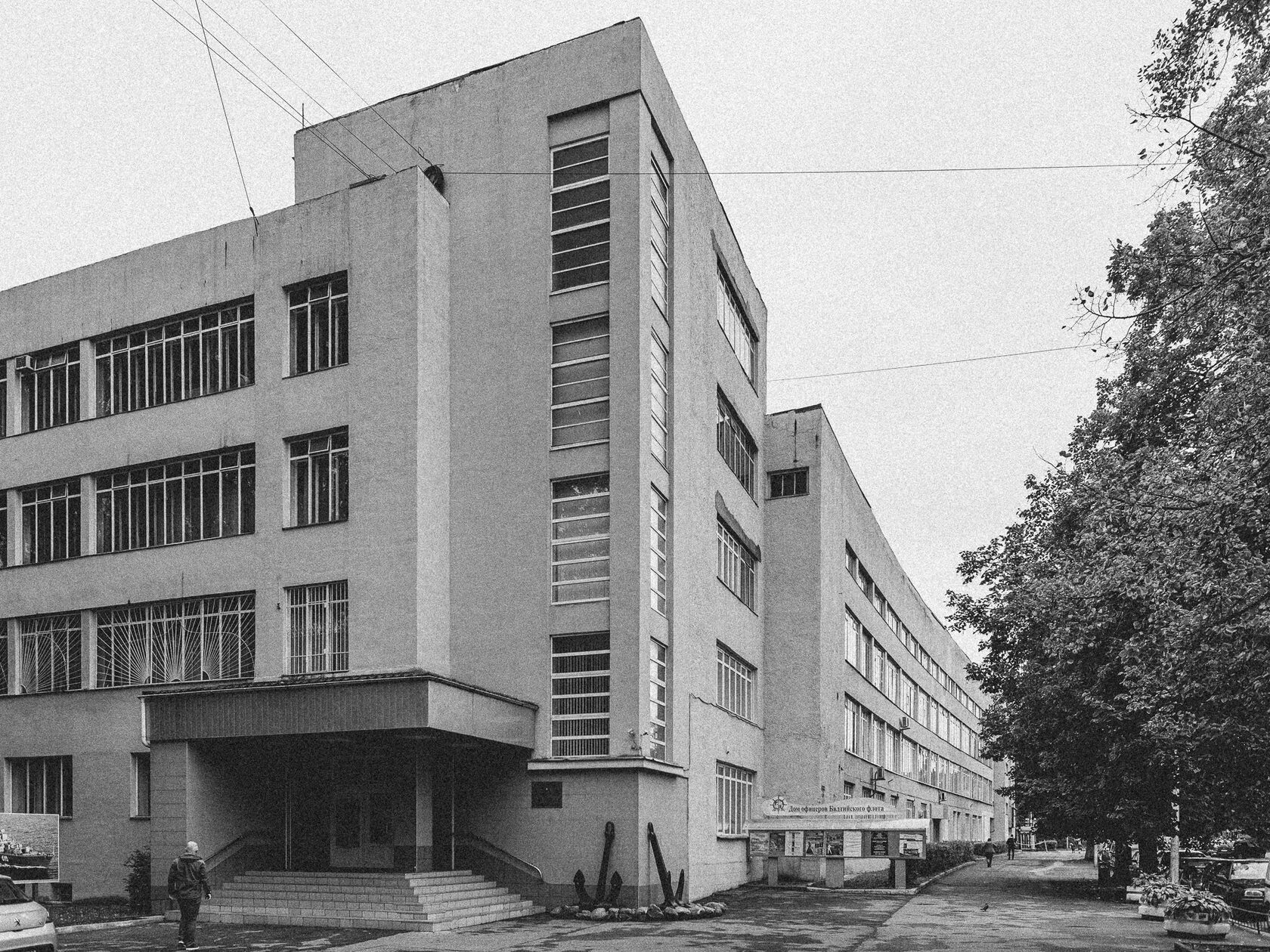
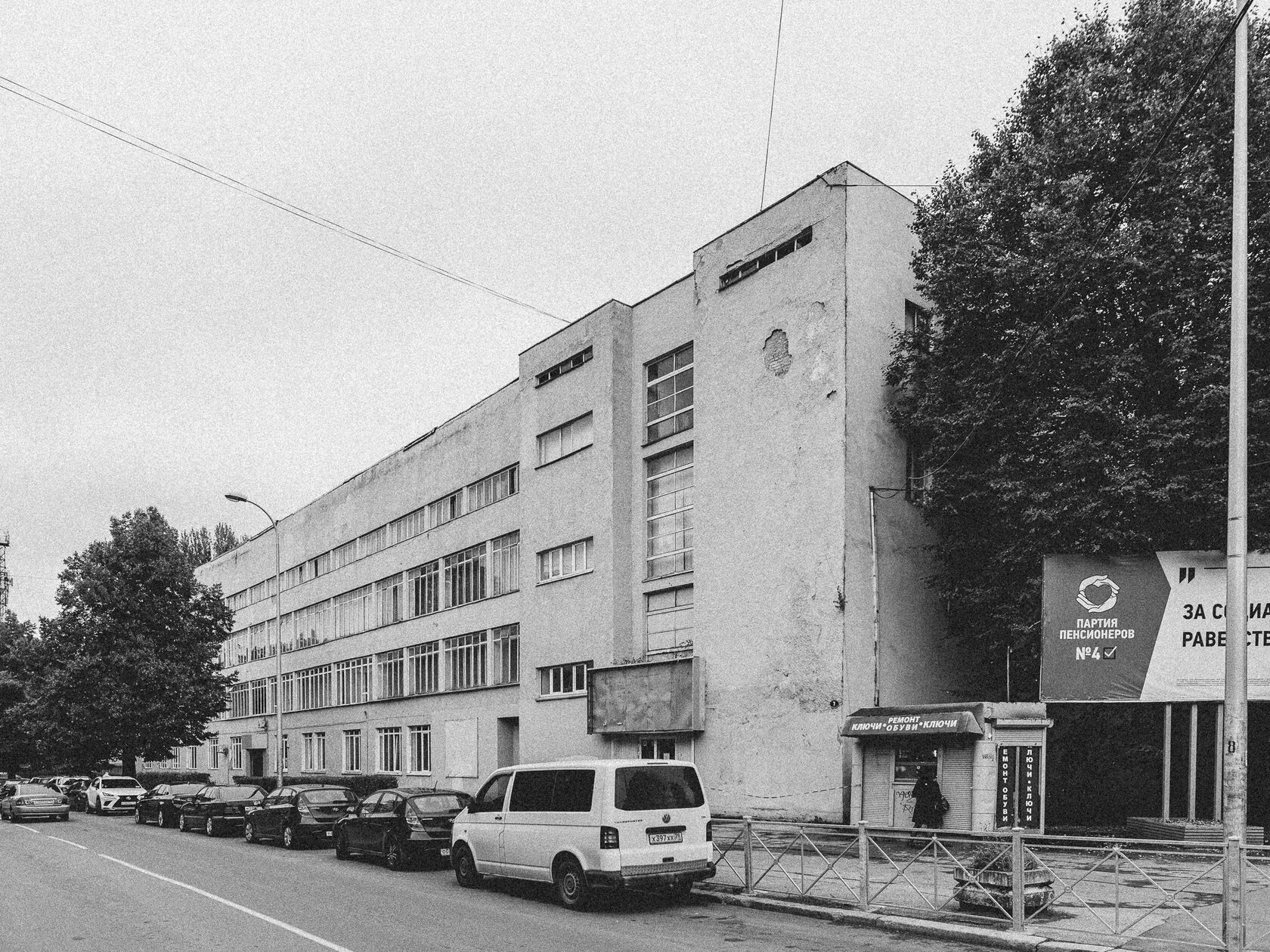
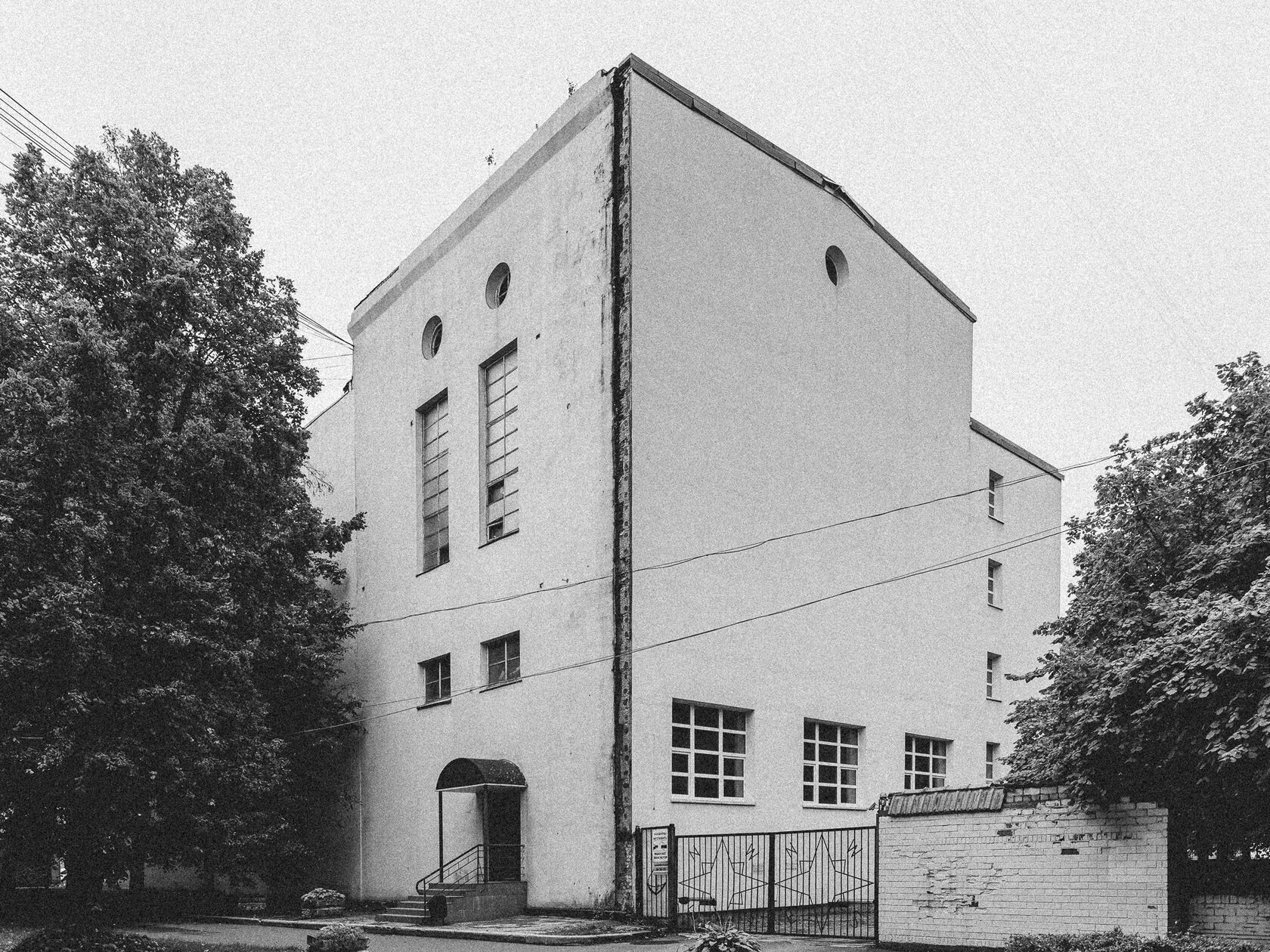
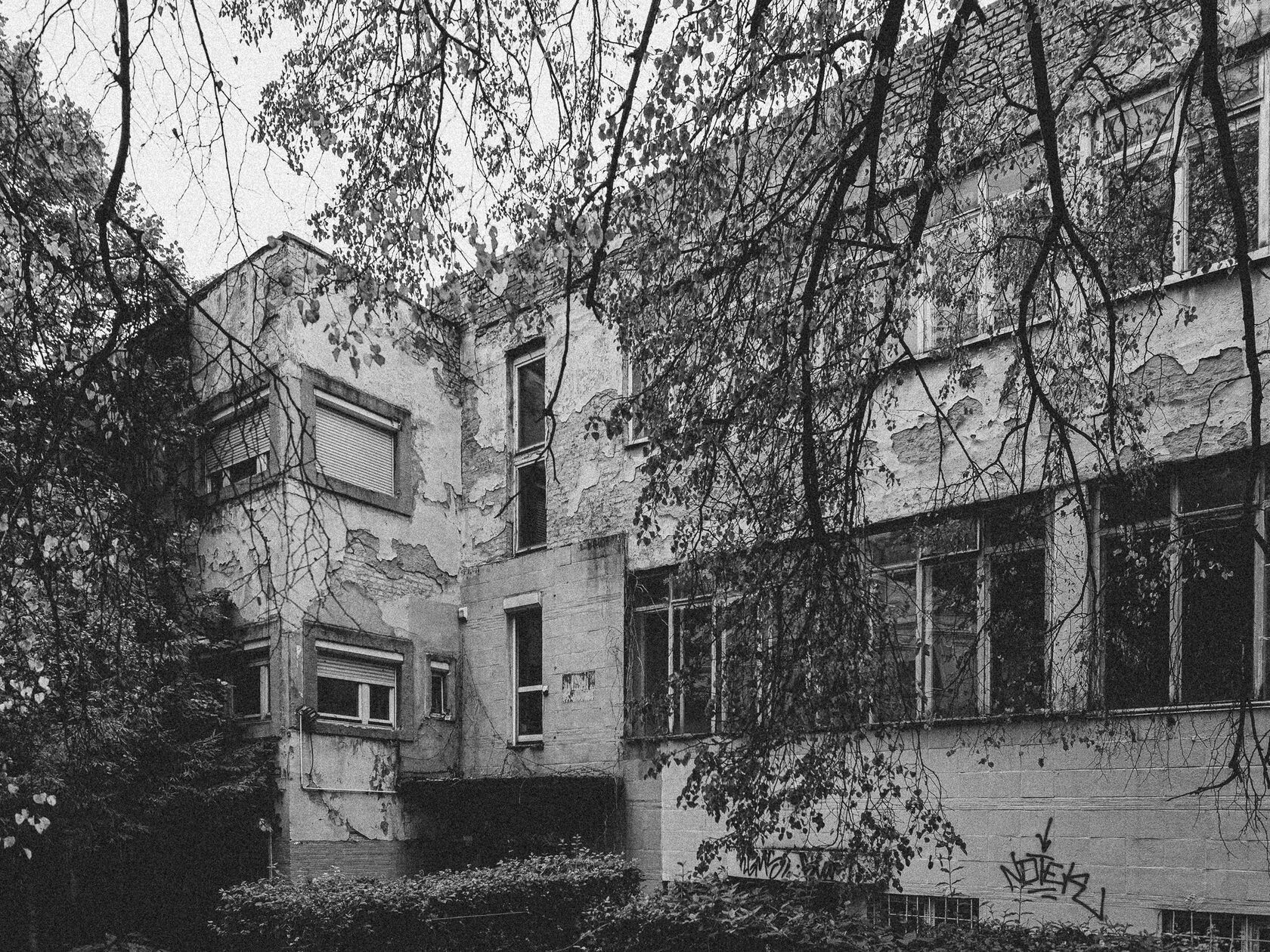
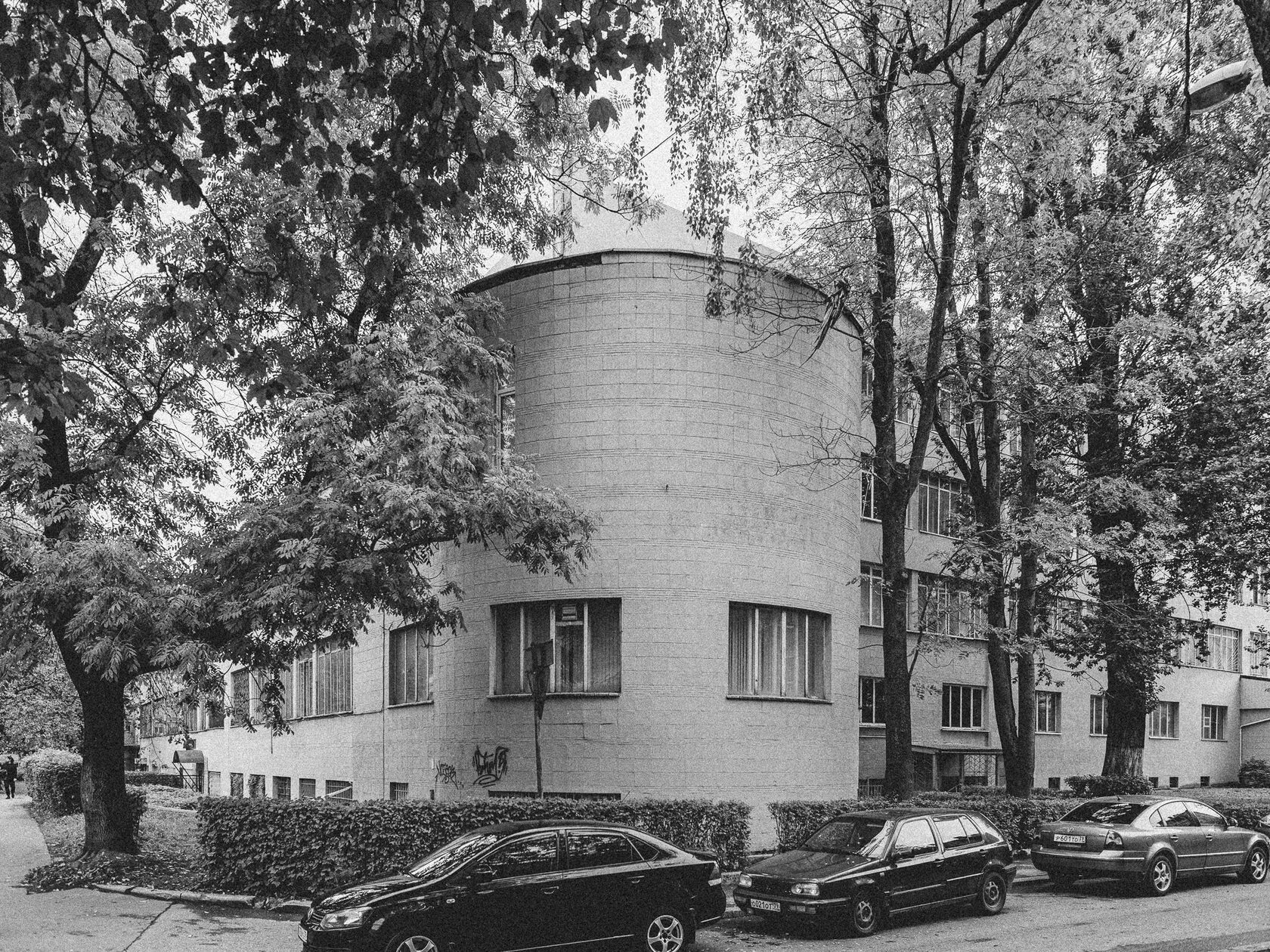
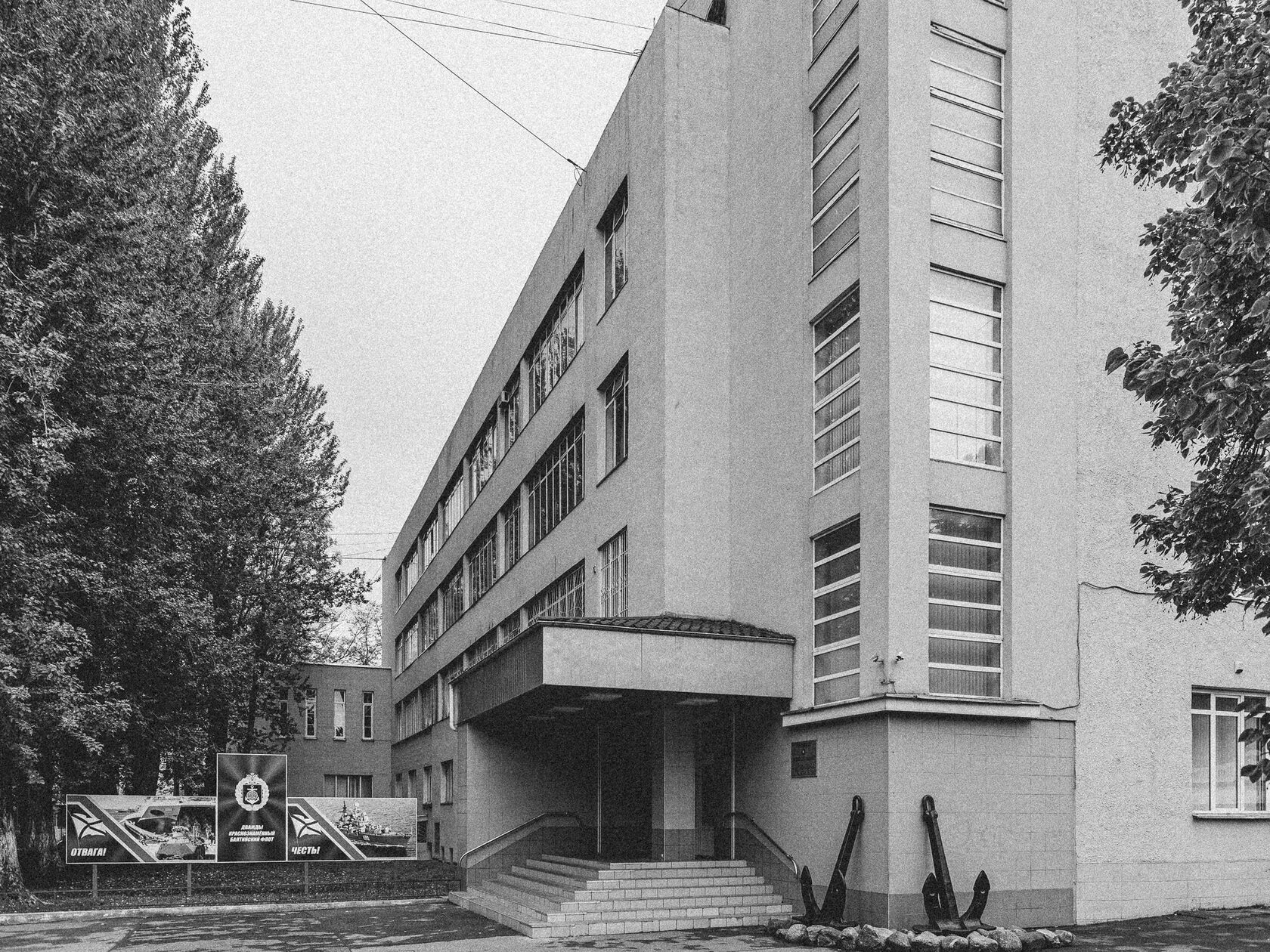
Institute of Engineering and Technology of the IKBFU / Higher Trade SchoolИнженерно-технический институт БФУ / Высшая торговая школа康德联邦大学工程技术学院 / 高等商学院Institut für Ingenieurwesen und Technik der IKBFU / Höhere HandelsschuleInstitut d'ingénierie et de technologie de l'IKBFU / École supérieure de commerceInstituto de Ingeniería y Tecnología de la IKBFU / Escuela Superior de ComercioInstituto de Engenharia e Tecnologia da IKBFU / Escola Superior de Comércio
Education appears here as a public form. The photographs look at how knowledge is given mass, facade, entrances, and repetition: an institution trying to appear open, rational, and structurally new.Образование здесь становится публичной формой. Фотографии смотрят на то, как знанию дают массу, фасад, входы и повтор: институция пытается выглядеть открытой, рациональной и структурно новой.教育在这里成为公共形式。照片观察知识如何获得体量、立面、入口和重复:一种机构试图显得开放、理性并具有新的结构。Bildung erscheint hier als öffentliche Form. Die Fotografien schauen darauf, wie Wissen Masse, Fassade, Eingänge und Wiederholung erhält: eine Institution, die offen, rational und strukturell neu wirken will.L'éducation apparaît ici comme une forme publique. Les photographies regardent comment le savoir reçoit une masse, une façade, des entrées et une répétition : une institution qui cherche à paraître ouverte, rationnelle et structurellement nouvelle.La educación aparece aquí como forma pública. Las fotografías observan cómo el conocimiento recibe masa, fachada, entradas y repetición: una institución que intenta parecer abierta, racional y estructuralmente nueva.A educação aparece aqui como forma pública. As fotografias observam como o conhecimento ganha massa, fachada, entradas e repetição: uma instituição tentando parecer aberta, racional e estruturalmente nova.
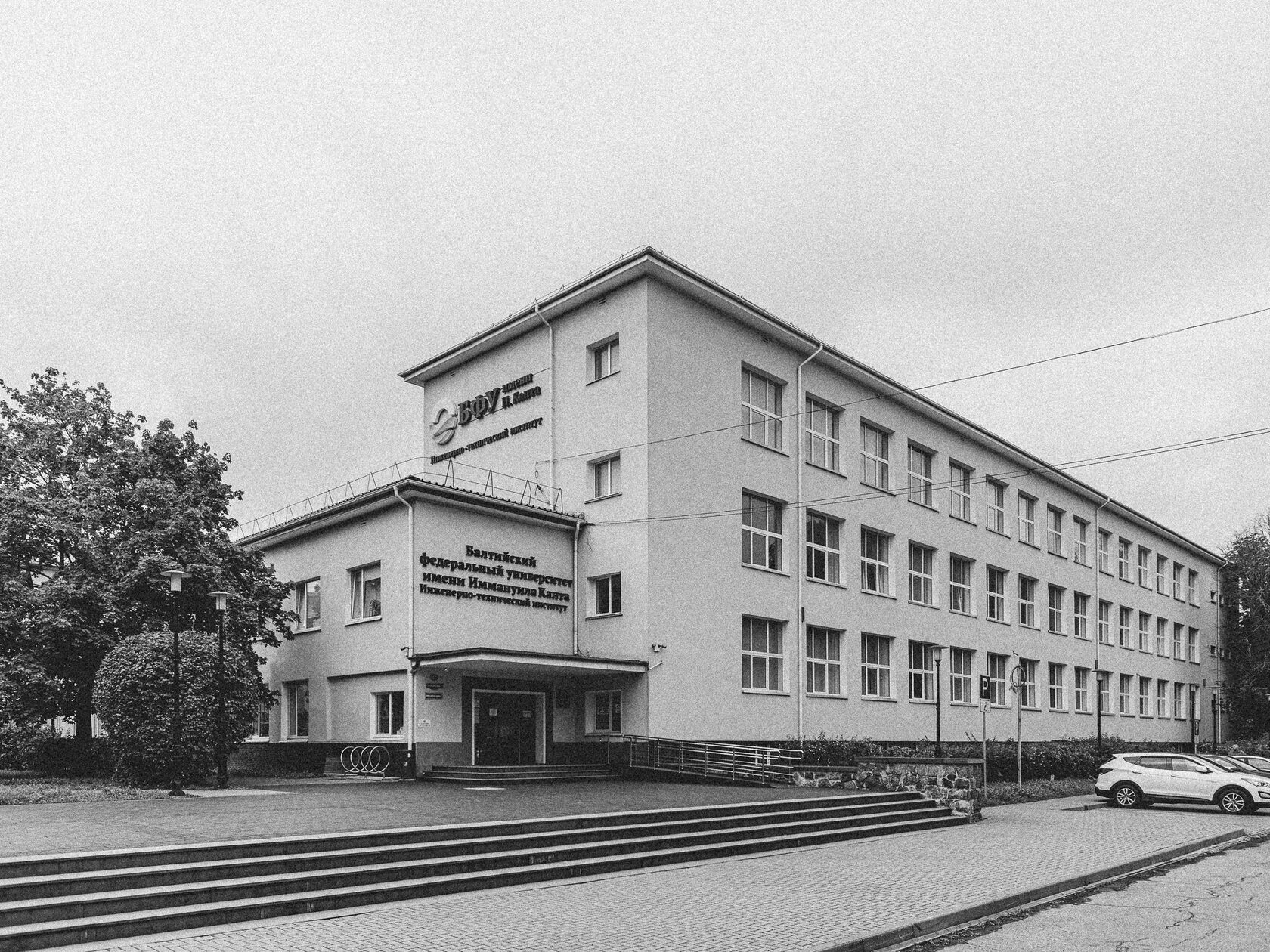
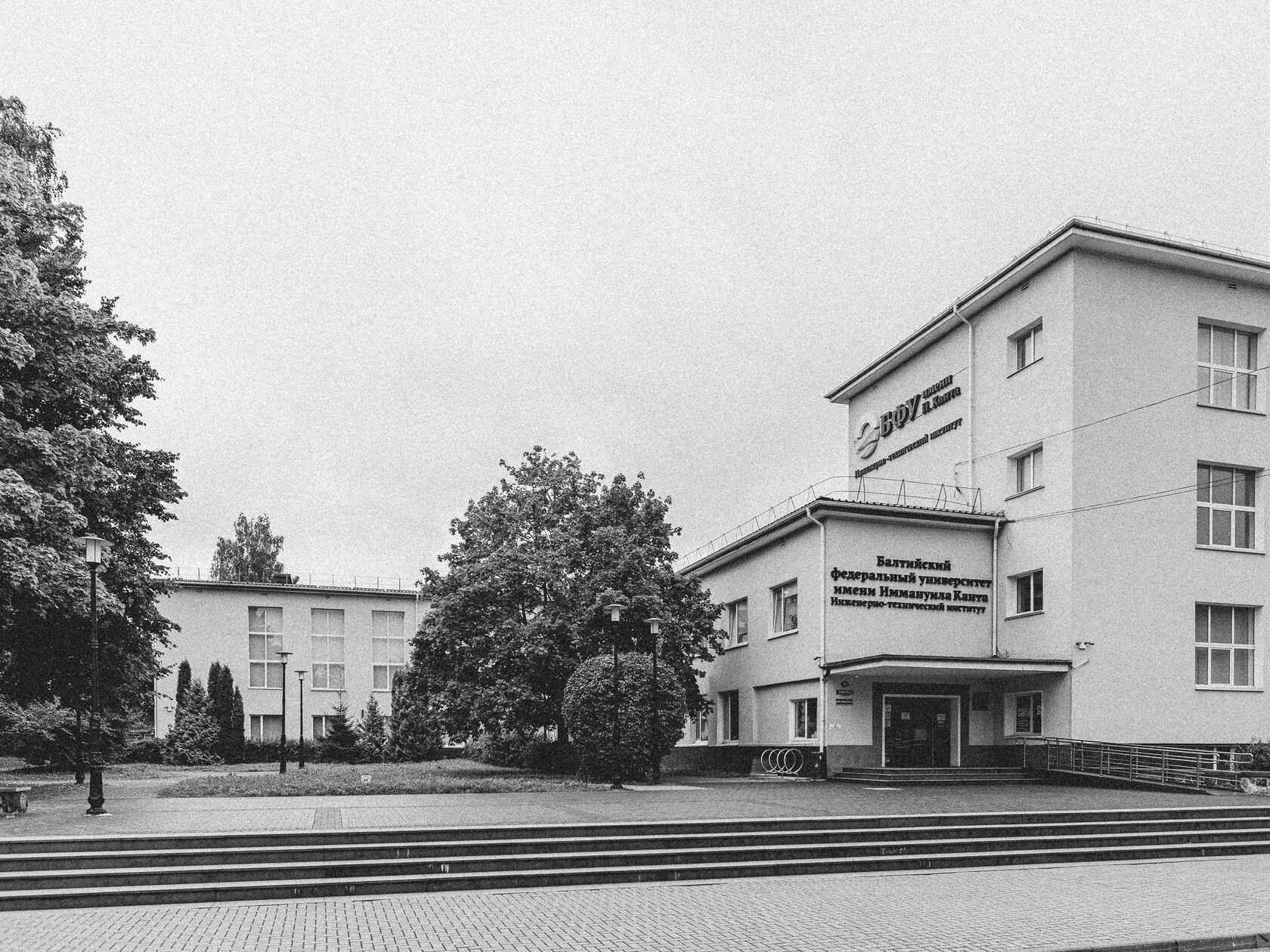
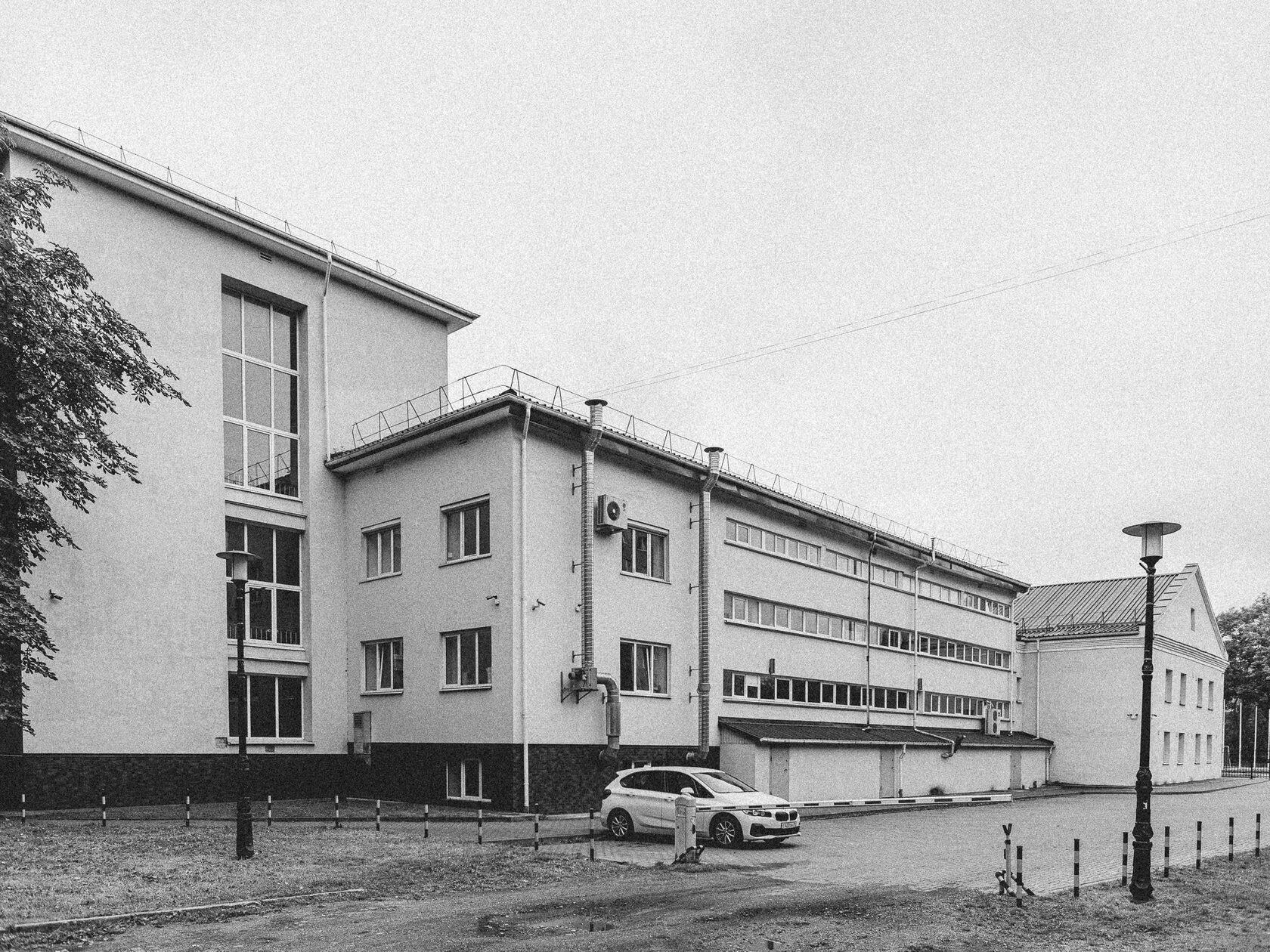
Kaliningrad Regional Clinical Hospital / Hospital of MercyКалининградская областная клиническая больница / Госпиталь милосердия加里宁格勒州临床医院 / 慈善医院Regionale klinische Klinik Kaliningrad / Krankenhaus der BarmherzigkeitHôpital clinique régional de Kaliningrad / Hôpital de la MiséricordeHospital clínico regional de Kaliningrado / Hospital de la MisericordiaHospital clínico regional de Kaliningrado / Hospital da Misericórdia
This is the social body seen through architecture. Health, hygiene, care, and discipline are not private matters here, but a spatial program: corridors, volumes, entrances, and surfaces arranged for collective maintenance.Это социальное тело, увиденное через архитектуру. Здоровье, гигиена, уход и дисциплина здесь не частное дело, а пространственная программа: коридоры, объемы, входы и поверхности, выстроенные для коллективного обслуживания жизни.这是通过建筑看到的社会身体。健康、卫生、照护和纪律在这里不是私人事务,而是一套空间程序:走廊、体量、入口和表面被组织起来,服务于集体生活的维护。Hier wird der soziale Körper durch Architektur sichtbar. Gesundheit, Hygiene, Fürsorge und Disziplin sind keine privaten Angelegenheiten, sondern ein räumliches Programm: Korridore, Volumen, Eingänge und Oberflächen für kollektive Erhaltung.C'est le corps social vu à travers l'architecture. Santé, hygiène, soin et discipline ne sont pas ici des affaires privées, mais un programme spatial : couloirs, volumes, entrées et surfaces organisés pour l'entretien collectif de la vie.Es el cuerpo social visto a través de la arquitectura. Salud, higiene, cuidado y disciplina no son aquí asuntos privados, sino un programa espacial: pasillos, volúmenes, entradas y superficies organizados para el mantenimiento colectivo de la vida.É o corpo social visto pela arquitetura. Saúde, higiene, cuidado e disciplina não são aqui questões privadas, mas um programa espacial: corredores, volumes, entradas e superfícies organizados para a manutenção coletiva da vida.
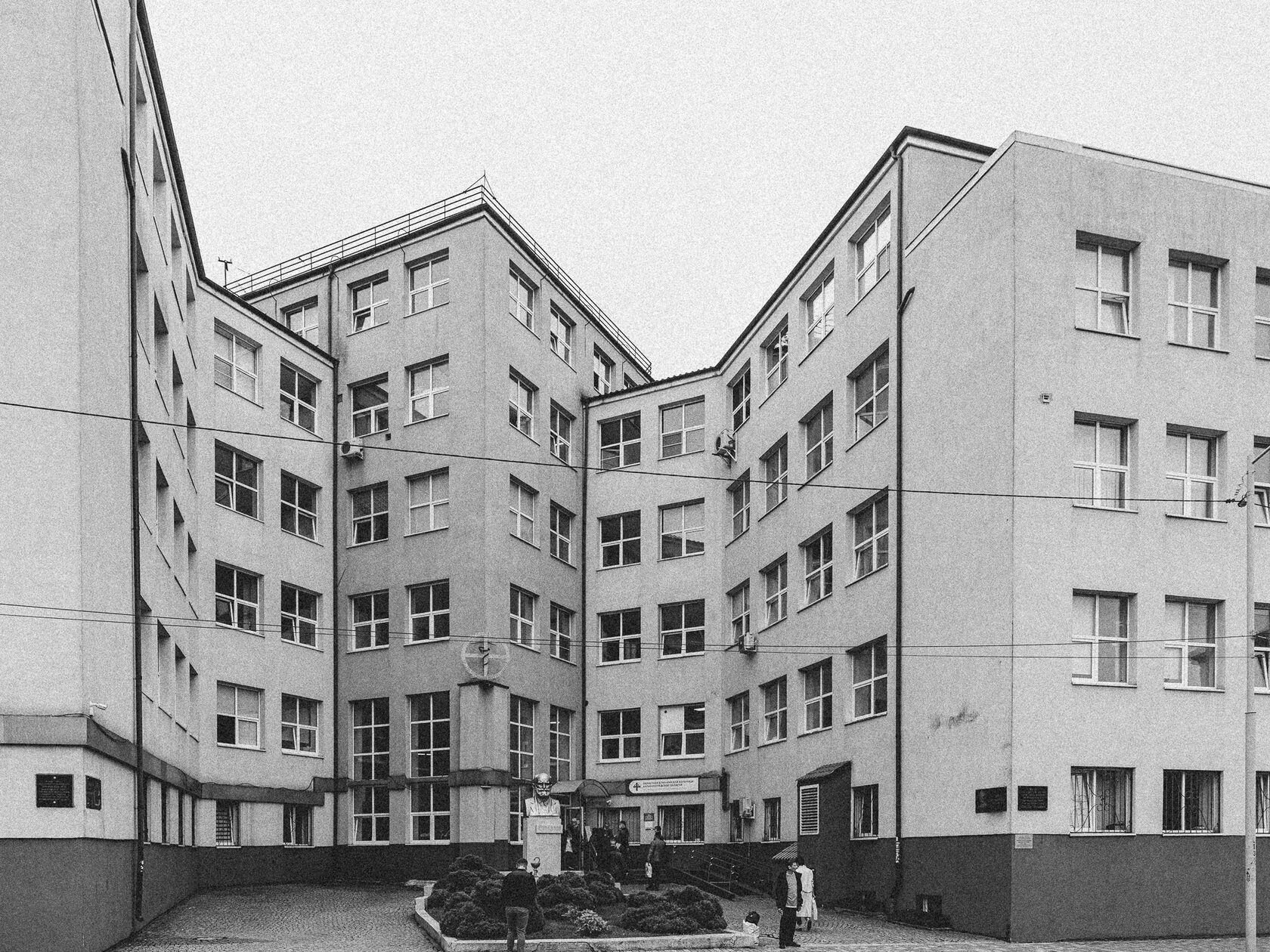
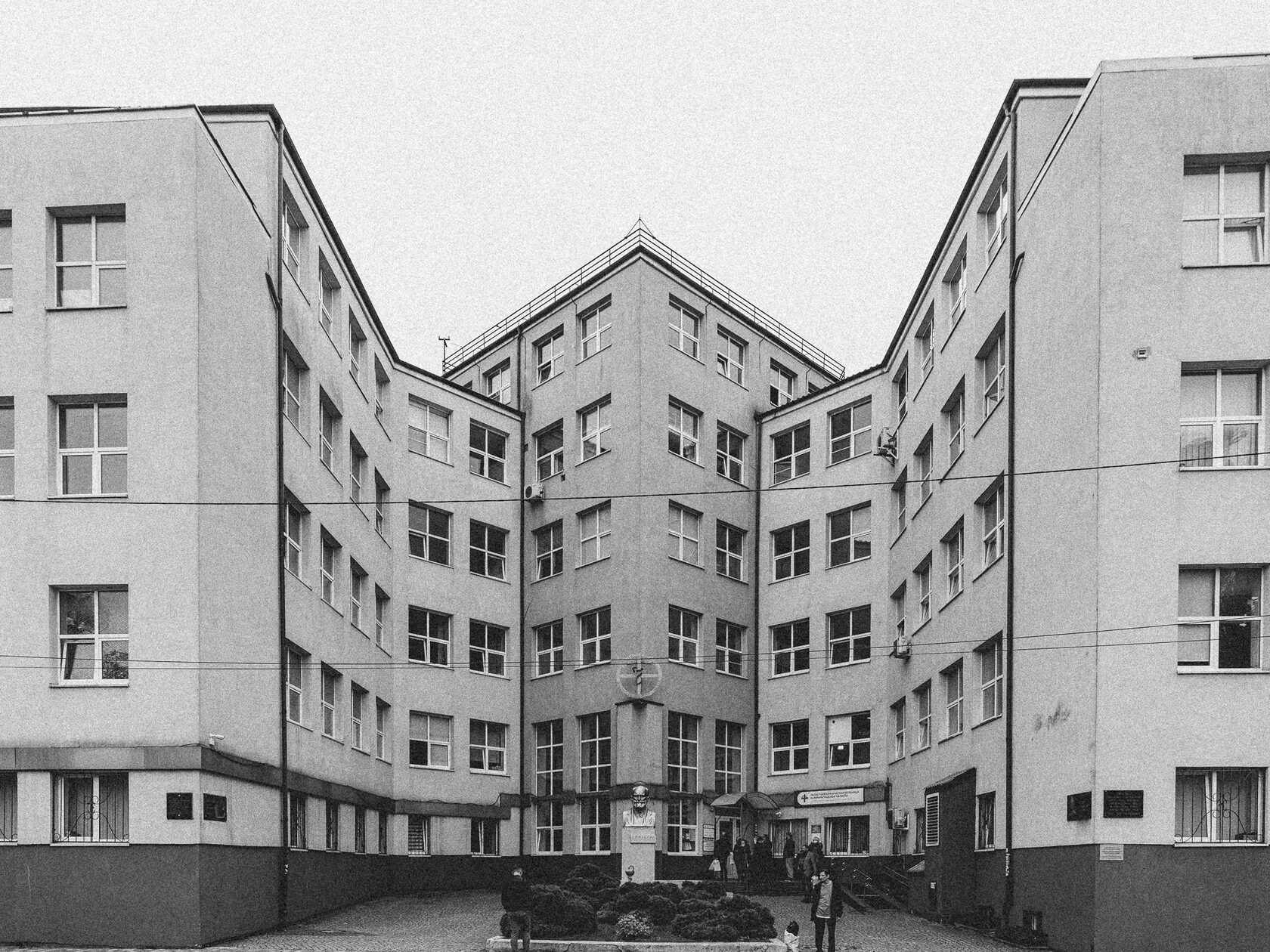
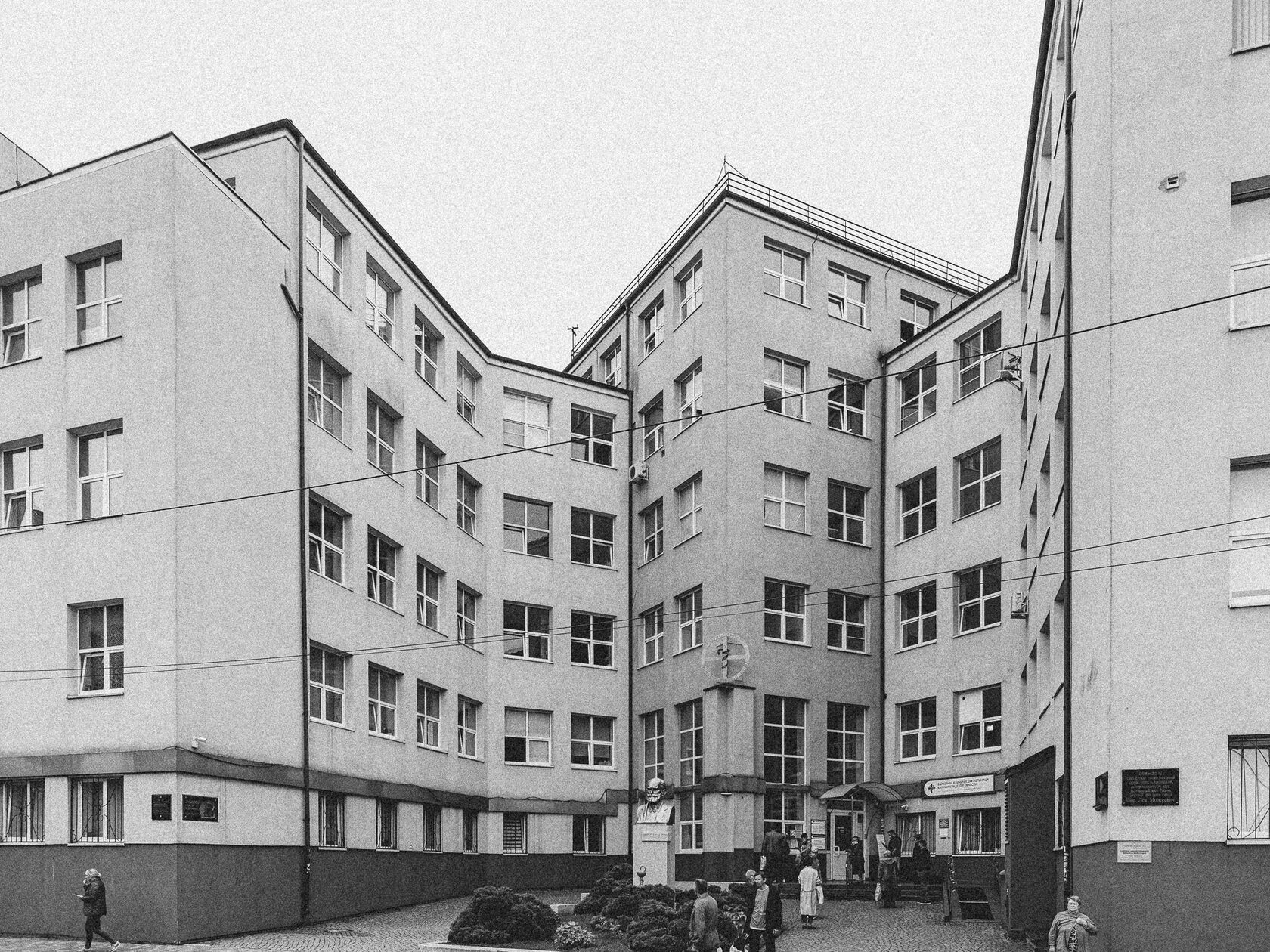
Business Center / Park HotelБизнес-центр / парк-отель商务中心 / 公园酒店Businesscenter / ParkhotelCentre d'affaires / parc-hôtelCentro de negocios / park-hotelCentro empresarial / park-hotel
The building is read through movement: arrival, departure, service, waiting, repair. It is less an object than a pause inside a larger route, a place where modern life briefly becomes visible as logistics.Здание читается через движение: прибытие, отправление, обслуживание, ожидание, ремонт. Это не столько объект, сколько остановка внутри большого маршрута, место, где современная жизнь на мгновение становится видимой как логистика.这座建筑通过移动来阅读:抵达、出发、服务、等待、修理。它与其说是一个对象,不如说是更大路线中的一次停顿,一个现代生活短暂显现为物流的地点。Das Gebäude wird durch Bewegung gelesen: Ankunft, Abfahrt, Service, Warten, Reparatur. Es ist weniger ein Objekt als eine Pause in einer größeren Route, ein Ort, an dem modernes Leben kurz als Logistik sichtbar wird.Le bâtiment se lit par le mouvement : arrivée, départ, service, attente, réparation. C'est moins un objet qu'une pause dans un trajet plus vaste, un lieu où la vie moderne devient brièvement visible comme logistique.El edificio se lee a través del movimiento: llegada, salida, servicio, espera, reparación. Es menos un objeto que una pausa dentro de una ruta mayor, un lugar donde la vida moderna se vuelve visible por un momento como logística.O edifício é lido pelo movimento: chegada, partida, serviço, espera, reparo. É menos um objeto do que uma pausa dentro de uma rota maior, um lugar onde a vida moderna se torna brevemente visível como logística.
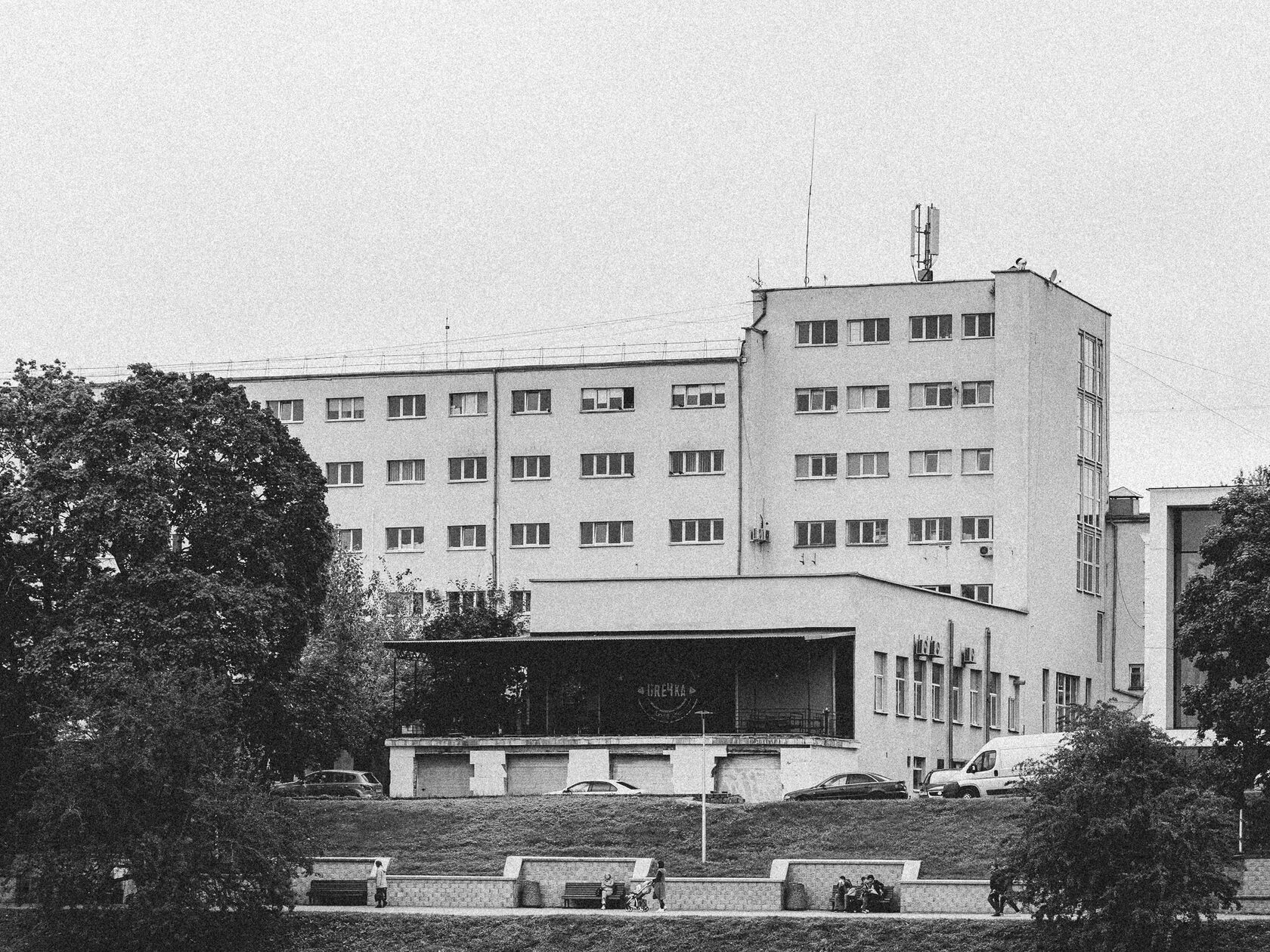
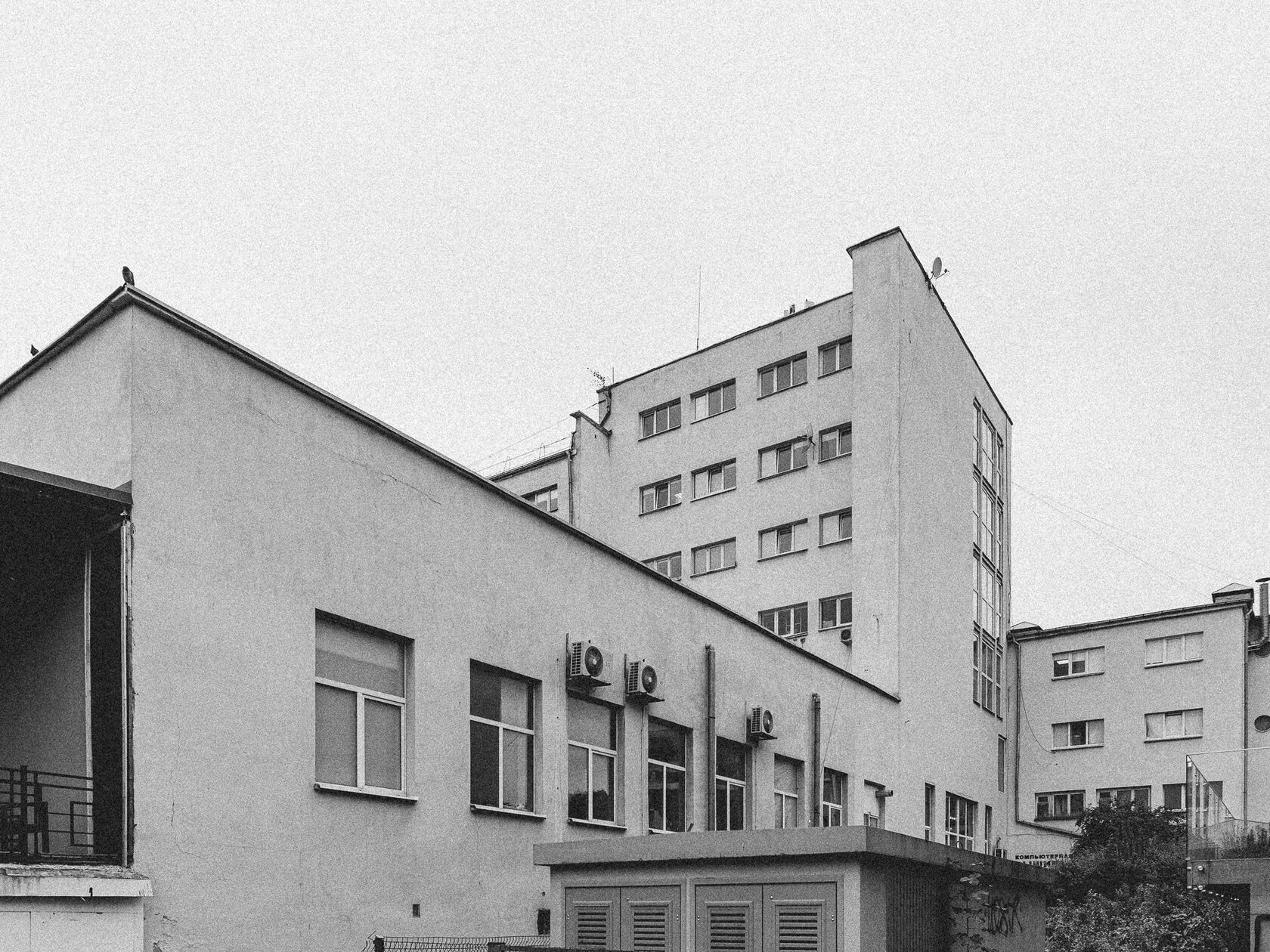
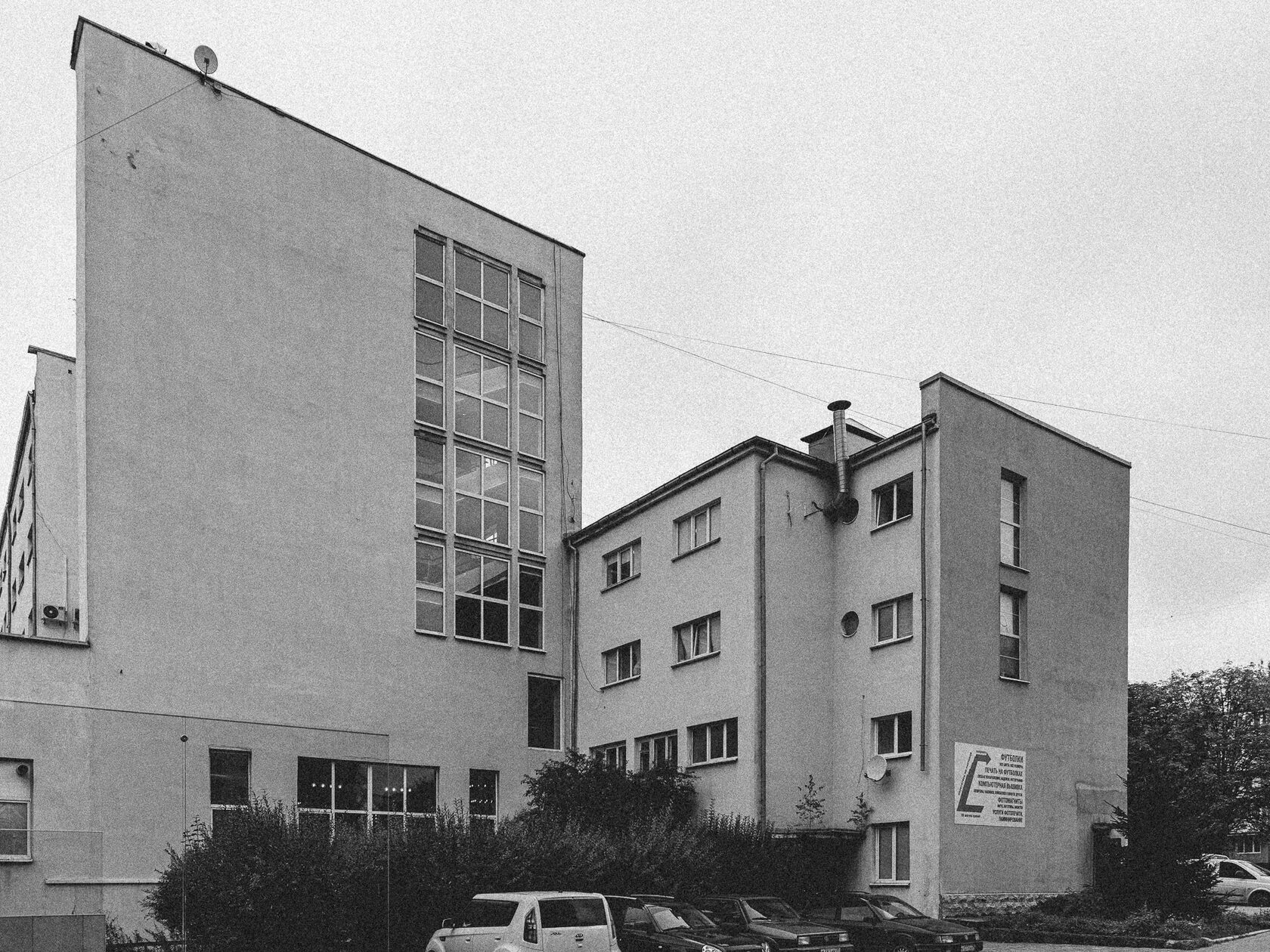
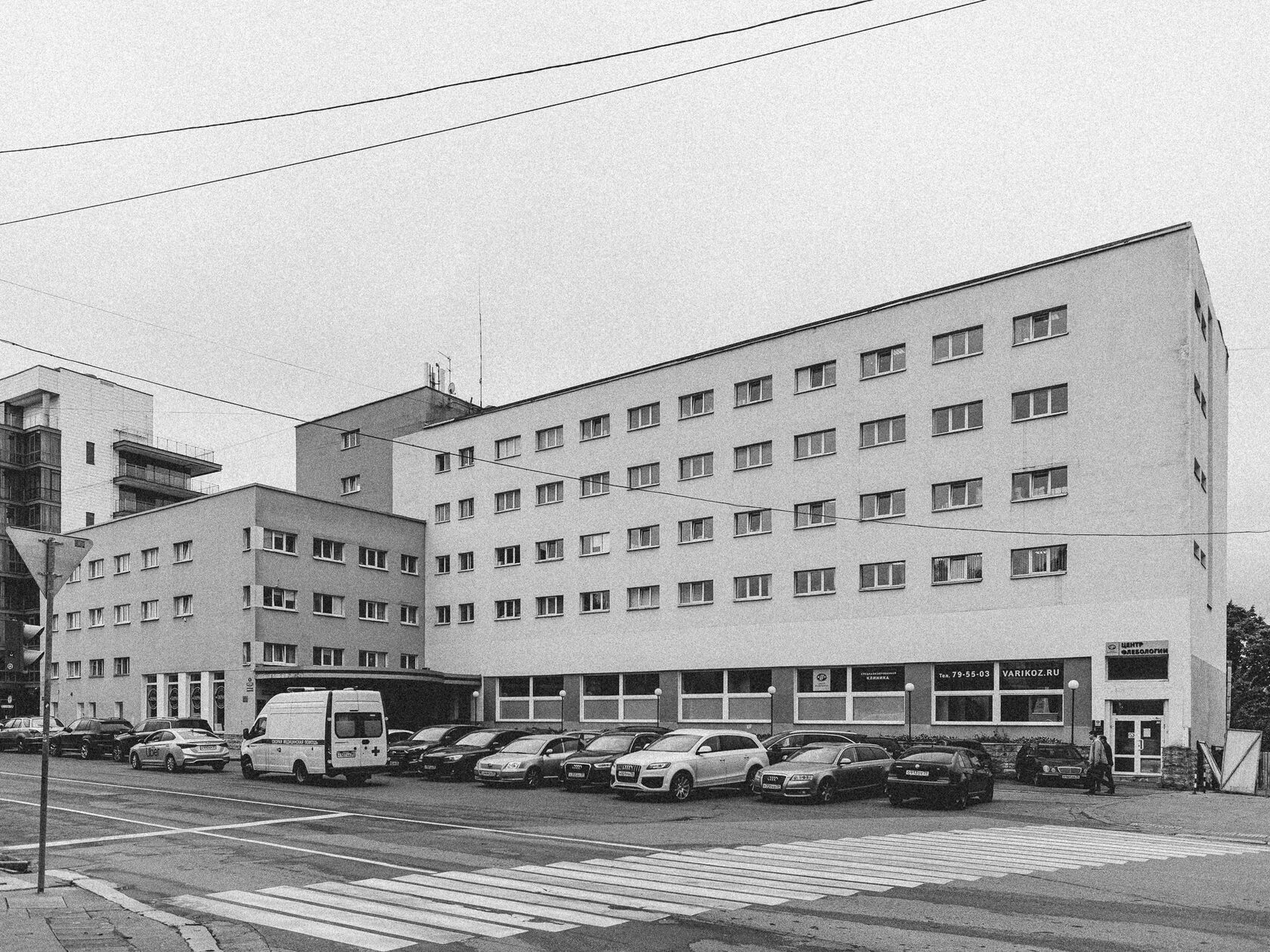
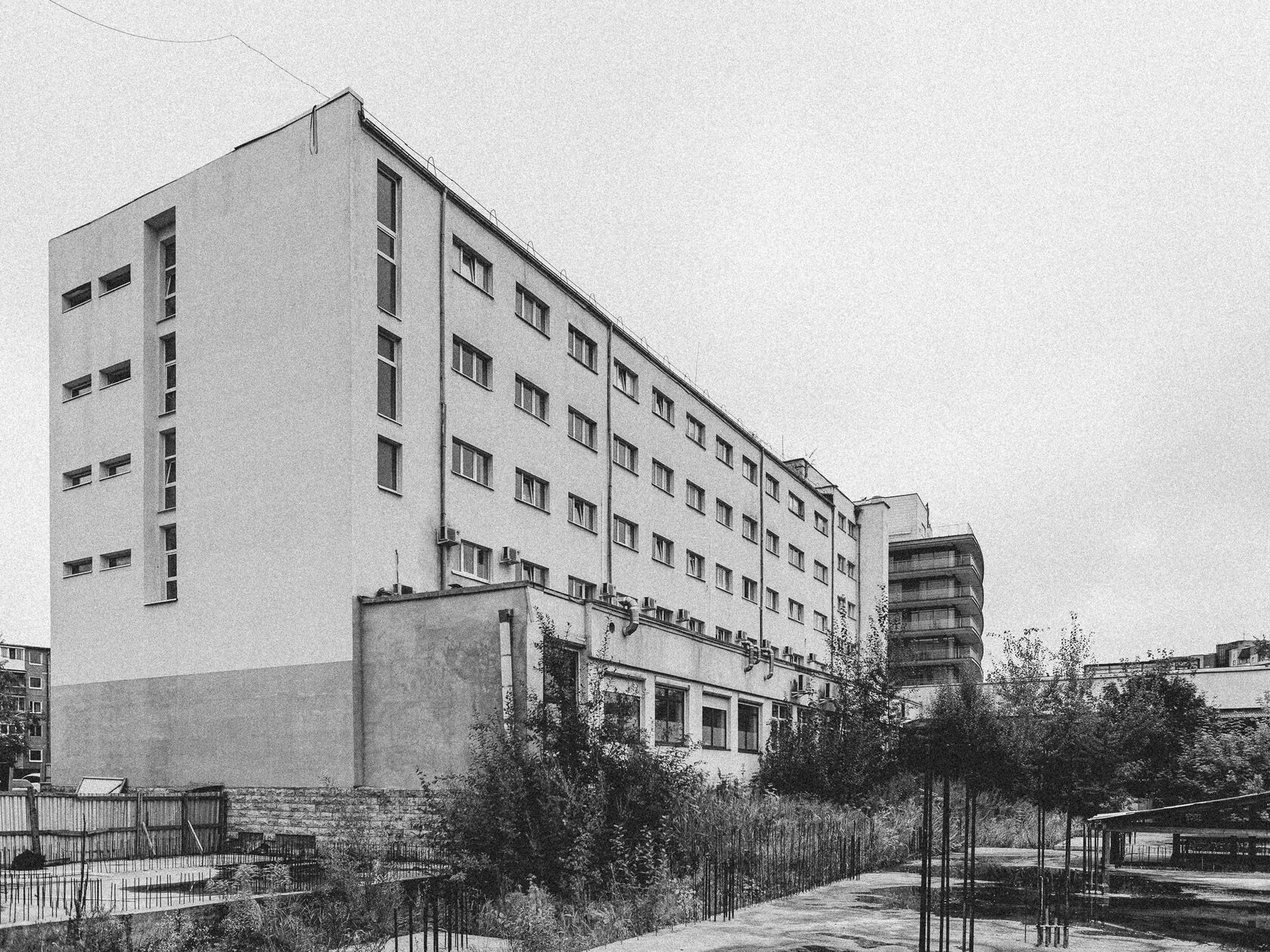
TverТверь特维尔TwerTverTverTver
Buildings in TverЗдания: Тверь建筑: 特维尔Bauten in TwerBâtiments à TverEdificios en TverEdifícios em Tver
Pedagogical InstituteПедагогический институт师范学院Pädagogisches InstitutInstitut pédagogiqueInstituto PedagógicoInstituto Pedagógico
Education appears here as a public form. The photographs look at how knowledge is given mass, facade, entrances, and repetition: an institution trying to appear open, rational, and structurally new.Образование здесь становится публичной формой. Фотографии смотрят на то, как знанию дают массу, фасад, входы и повтор: институция пытается выглядеть открытой, рациональной и структурно новой.教育在这里成为公共形式。照片观察知识如何获得体量、立面、入口和重复:一种机构试图显得开放、理性并具有新的结构。Bildung erscheint hier als öffentliche Form. Die Fotografien schauen darauf, wie Wissen Masse, Fassade, Eingänge und Wiederholung erhält: eine Institution, die offen, rational und strukturell neu wirken will.L'éducation apparaît ici comme une forme publique. Les photographies regardent comment le savoir reçoit une masse, une façade, des entrées et une répétition : une institution qui cherche à paraître ouverte, rationnelle et structurellement nouvelle.La educación aparece aquí como forma pública. Las fotografías observan cómo el conocimiento recibe masa, fachada, entradas y repetición: una institución que intenta parecer abierta, racional y estructuralmente nueva.A educação aparece aqui como forma pública. As fotografias observam como o conhecimento ganha massa, fachada, entradas e repetição: uma instituição tentando parecer aberta, racional e estruturalmente nova.
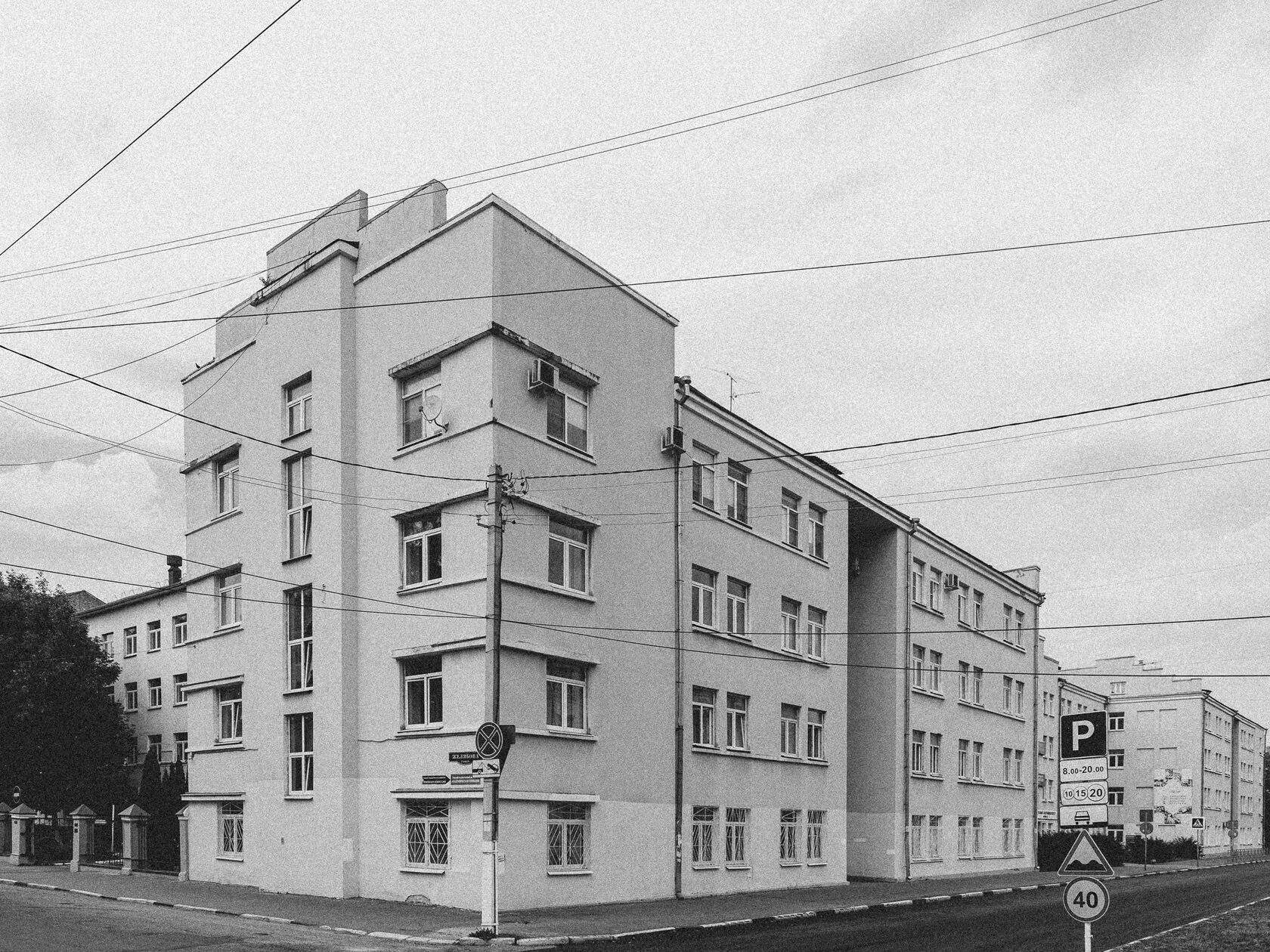
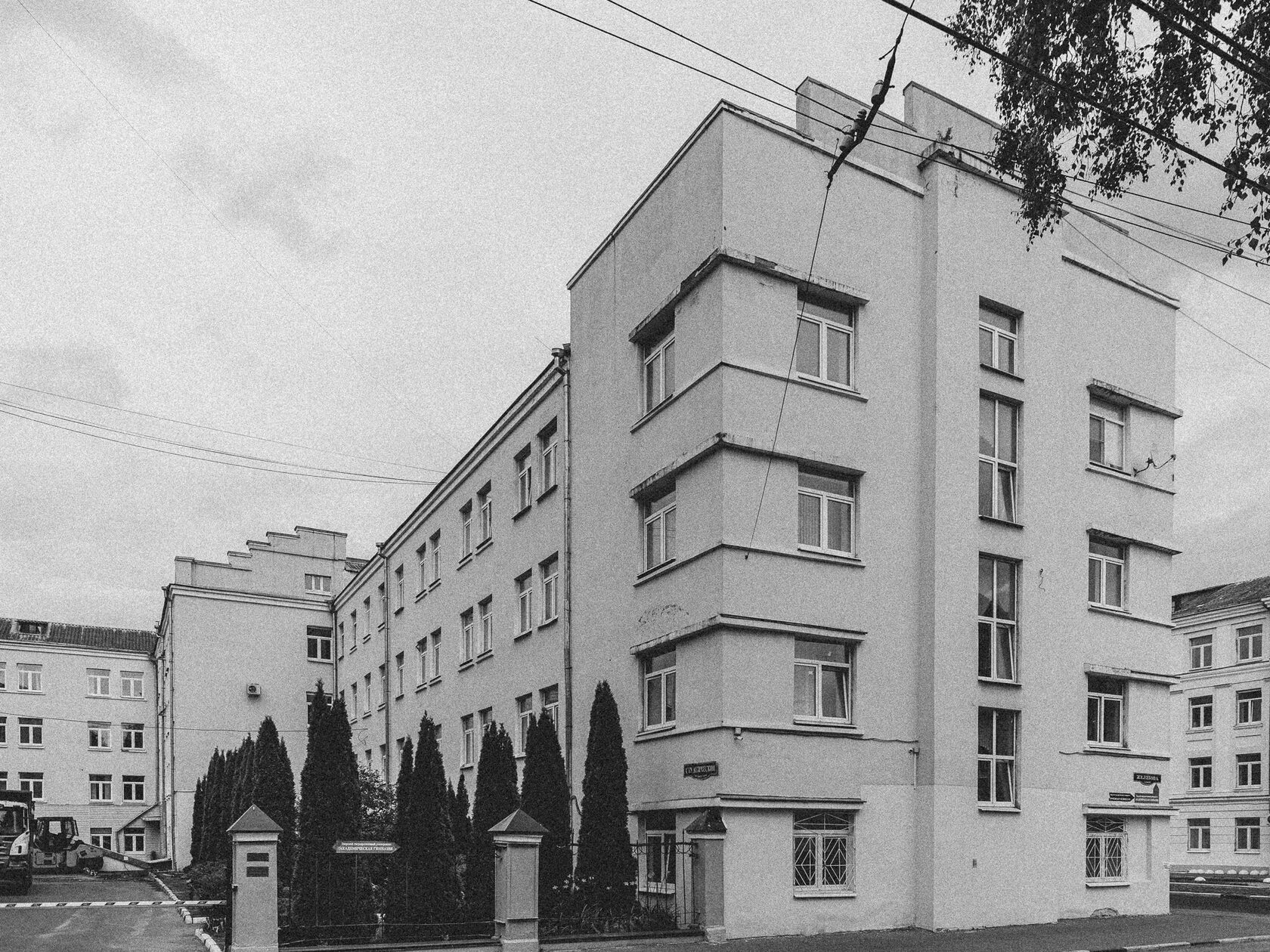
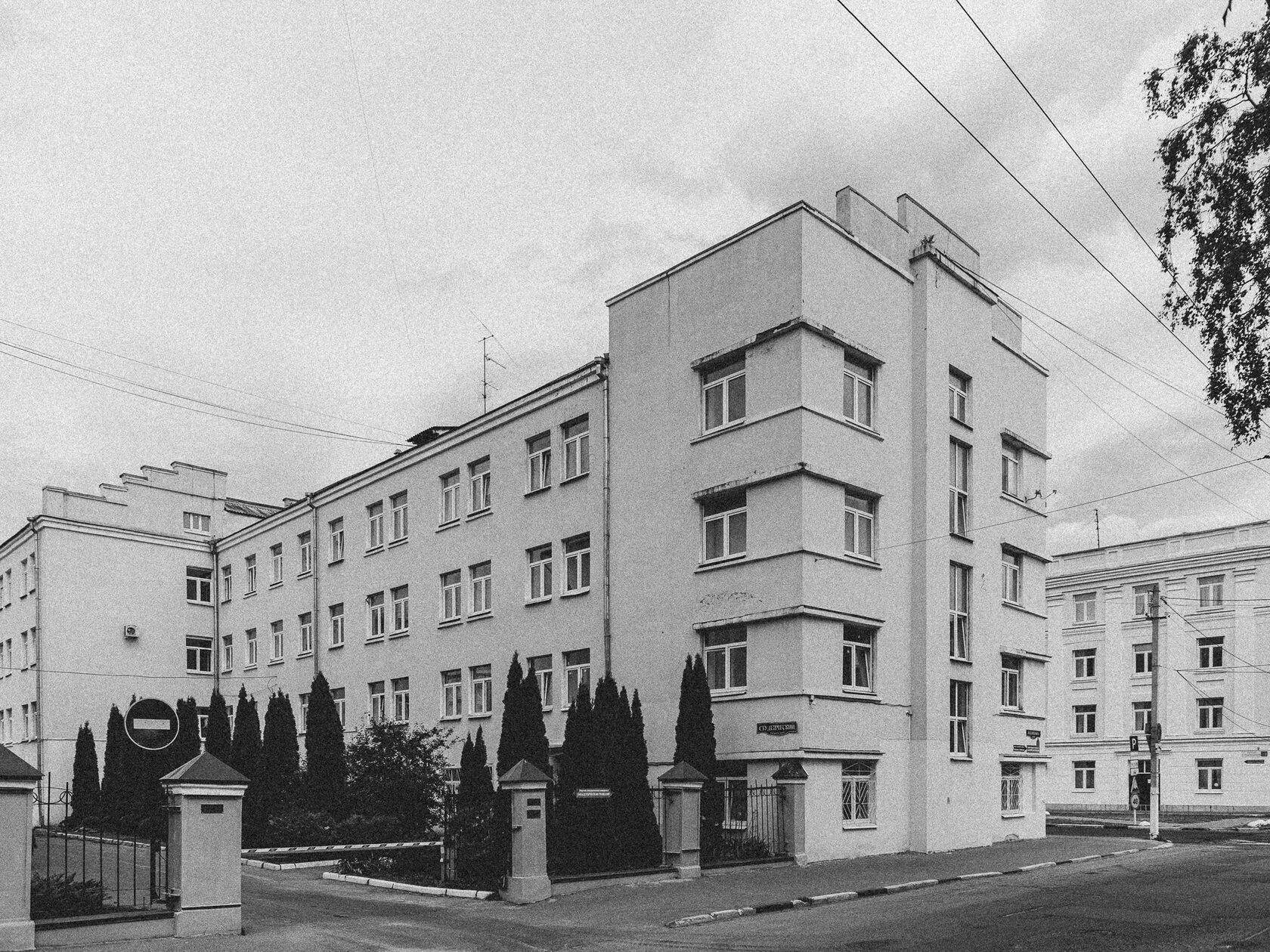
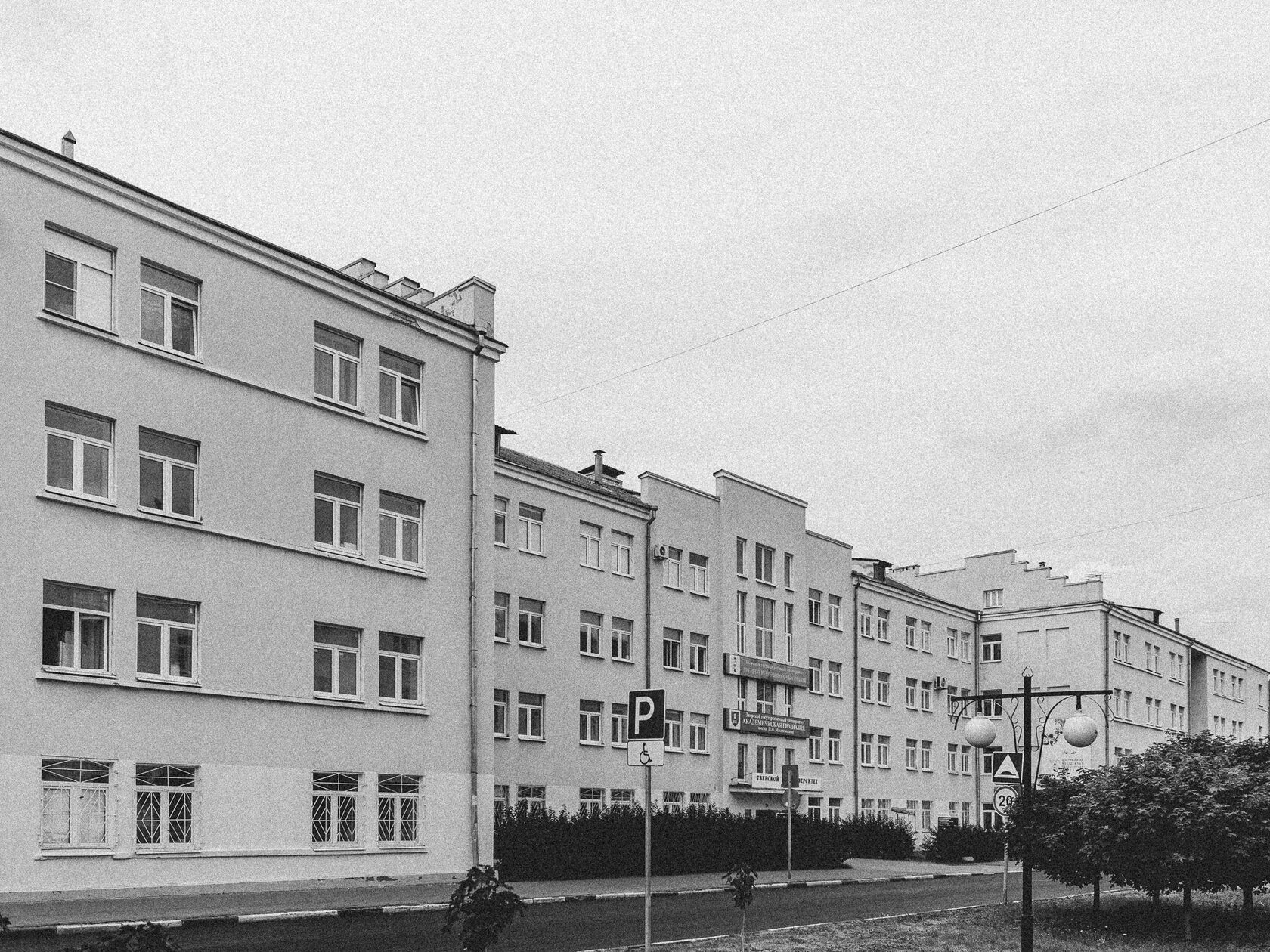
Palace of PioneersДворец пионеров少年先锋宫PionierpalastPalais des pionniersPalacio de los PionerosPalácio dos Pioneiros
The building is photographed as a public interior turned outward. The facade carries the promise of assembly: lectures, rehearsals, meetings, cinema, theatre, music, and the belief that culture could be organized as part of everyday life.Здание снято как общественный интерьер, вывернутый наружу. Фасад удерживает обещание собрания: лекции, репетиции, встречи, кино, театр, музыку и веру в то, что культуру можно встроить в повседневность.这座建筑被拍成向外翻开的公共室内。立面保存着集会的承诺:讲座、排练、会议、电影、戏剧、音乐,以及文化可以被编入日常生活的信念。Das Gebäude wird als nach außen gekehrtes öffentliches Interieur fotografiert. Die Fassade trägt das Versprechen der Versammlung: Vorträge, Proben, Treffen, Kino, Theater, Musik und den Glauben, Kultur könne Teil des Alltags werden.Le bâtiment est photographié comme un intérieur public retourné vers l'extérieur. La façade porte la promesse du rassemblement : conférences, répétitions, réunions, cinéma, théâtre, musique, et la croyance que la culture pouvait être intégrée au quotidien.El edificio se fotografía como un interior público vuelto hacia fuera. La fachada sostiene la promesa de reunión: conferencias, ensayos, encuentros, cine, teatro, música y la creencia de que la cultura podía organizarse dentro de la vida cotidiana.O edifício é fotografado como um interior público virado para fora. A fachada guarda a promessa da reunião: palestras, ensaios, encontros, cinema, teatro, música e a crença de que a cultura podia ser organizada dentro do cotidiano.
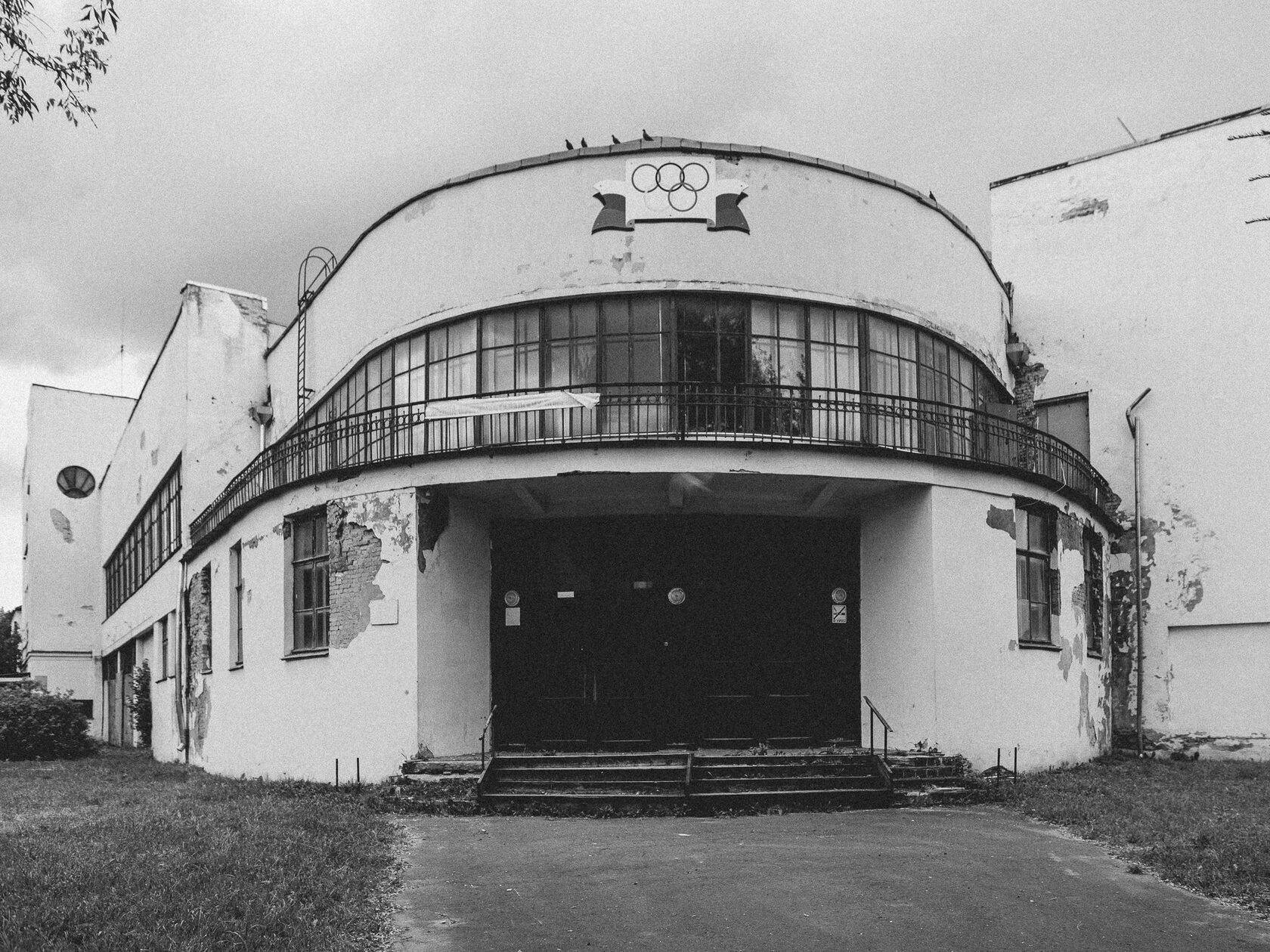
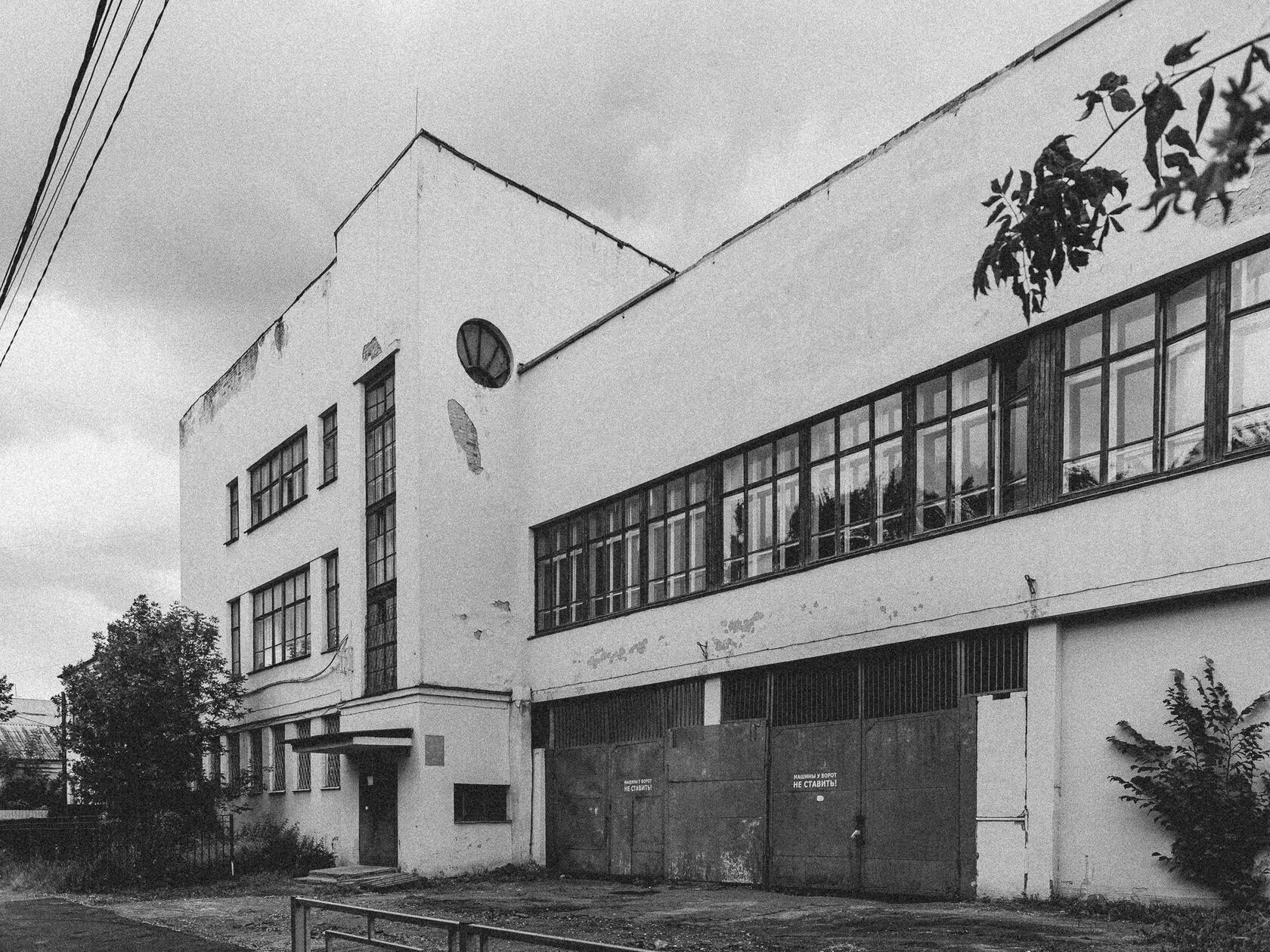
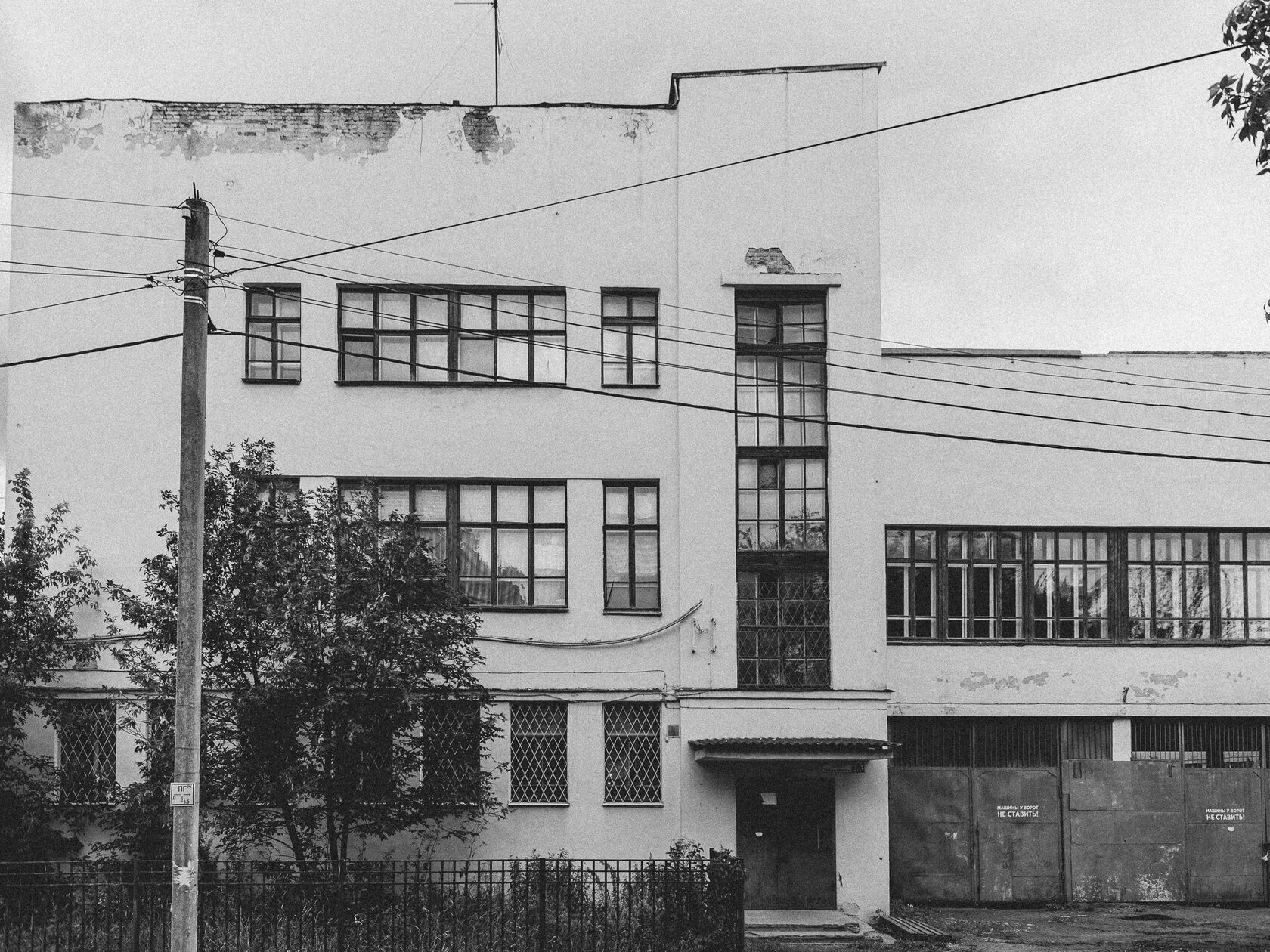
Cinema "Zvezda"Кинотеатр «Звезда»“星星”电影院Kino "Zvezda"Cinéma « Zvezda »Cine «Zvezda»Cinema «Zvezda»
The building is photographed as a public interior turned outward. The facade carries the promise of assembly: lectures, rehearsals, meetings, cinema, theatre, music, and the belief that culture could be organized as part of everyday life.Здание снято как общественный интерьер, вывернутый наружу. Фасад удерживает обещание собрания: лекции, репетиции, встречи, кино, театр, музыку и веру в то, что культуру можно встроить в повседневность.这座建筑被拍成向外翻开的公共室内。立面保存着集会的承诺:讲座、排练、会议、电影、戏剧、音乐,以及文化可以被编入日常生活的信念。Das Gebäude wird als nach außen gekehrtes öffentliches Interieur fotografiert. Die Fassade trägt das Versprechen der Versammlung: Vorträge, Proben, Treffen, Kino, Theater, Musik und den Glauben, Kultur könne Teil des Alltags werden.Le bâtiment est photographié comme un intérieur public retourné vers l'extérieur. La façade porte la promesse du rassemblement : conférences, répétitions, réunions, cinéma, théâtre, musique, et la croyance que la culture pouvait être intégrée au quotidien.El edificio se fotografía como un interior público vuelto hacia fuera. La fachada sostiene la promesa de reunión: conferencias, ensayos, encuentros, cine, teatro, música y la creencia de que la cultura podía organizarse dentro de la vida cotidiana.O edifício é fotografado como um interior público virado para fora. A fachada guarda a promessa da reunião: palestras, ensaios, encontros, cinema, teatro, música e a crença de que a cultura podia ser organizada dentro do cotidiano.
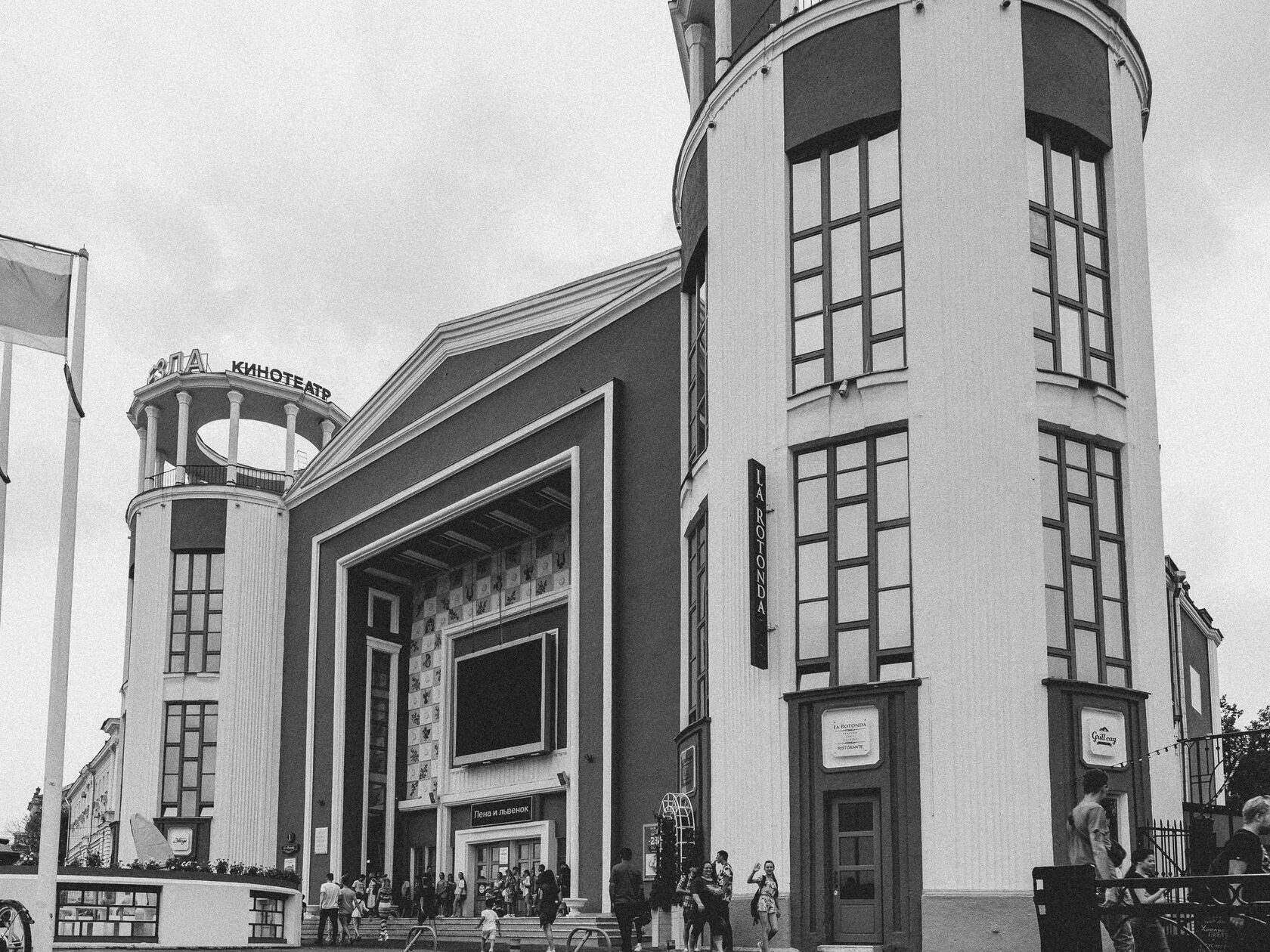
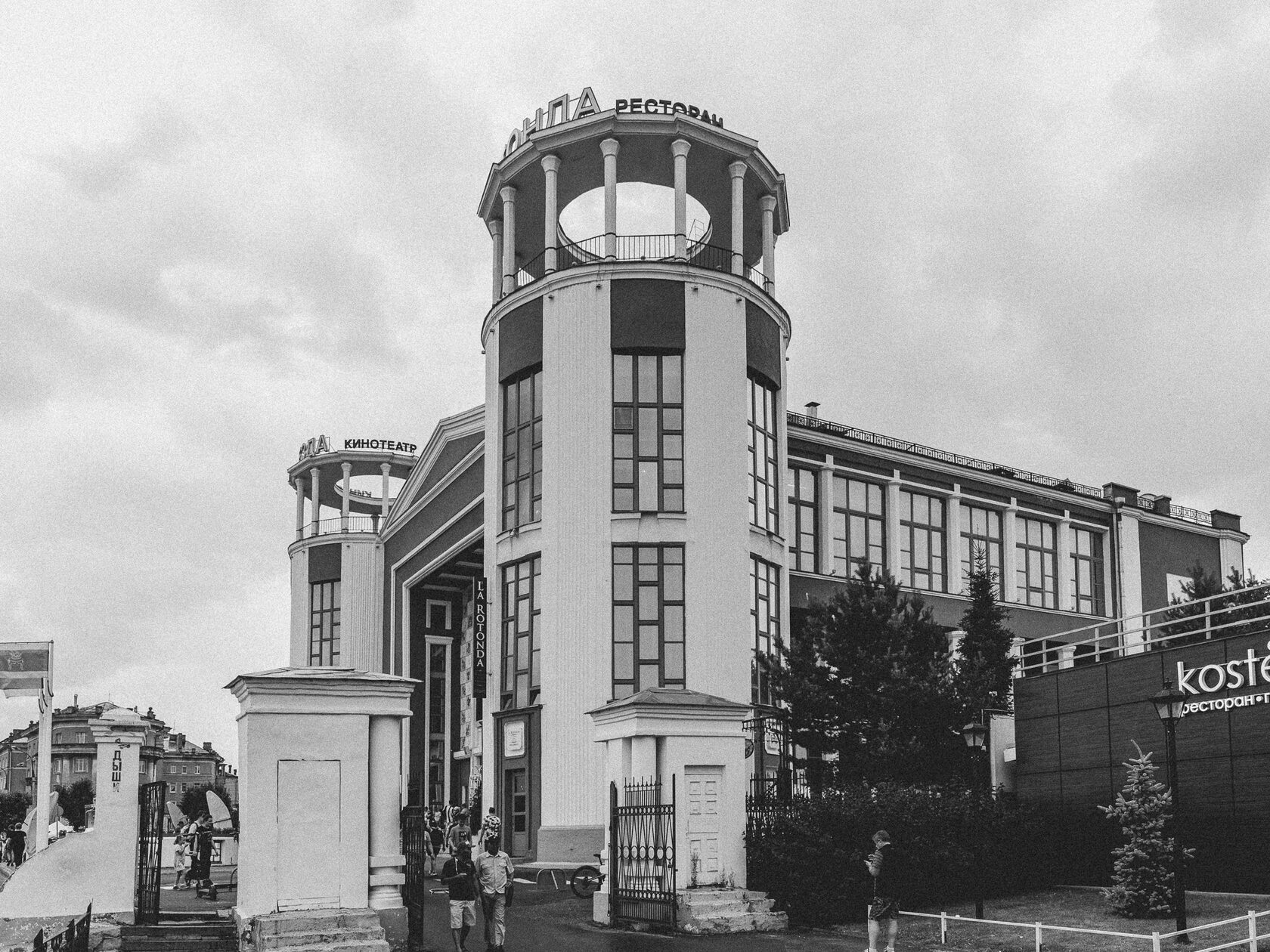
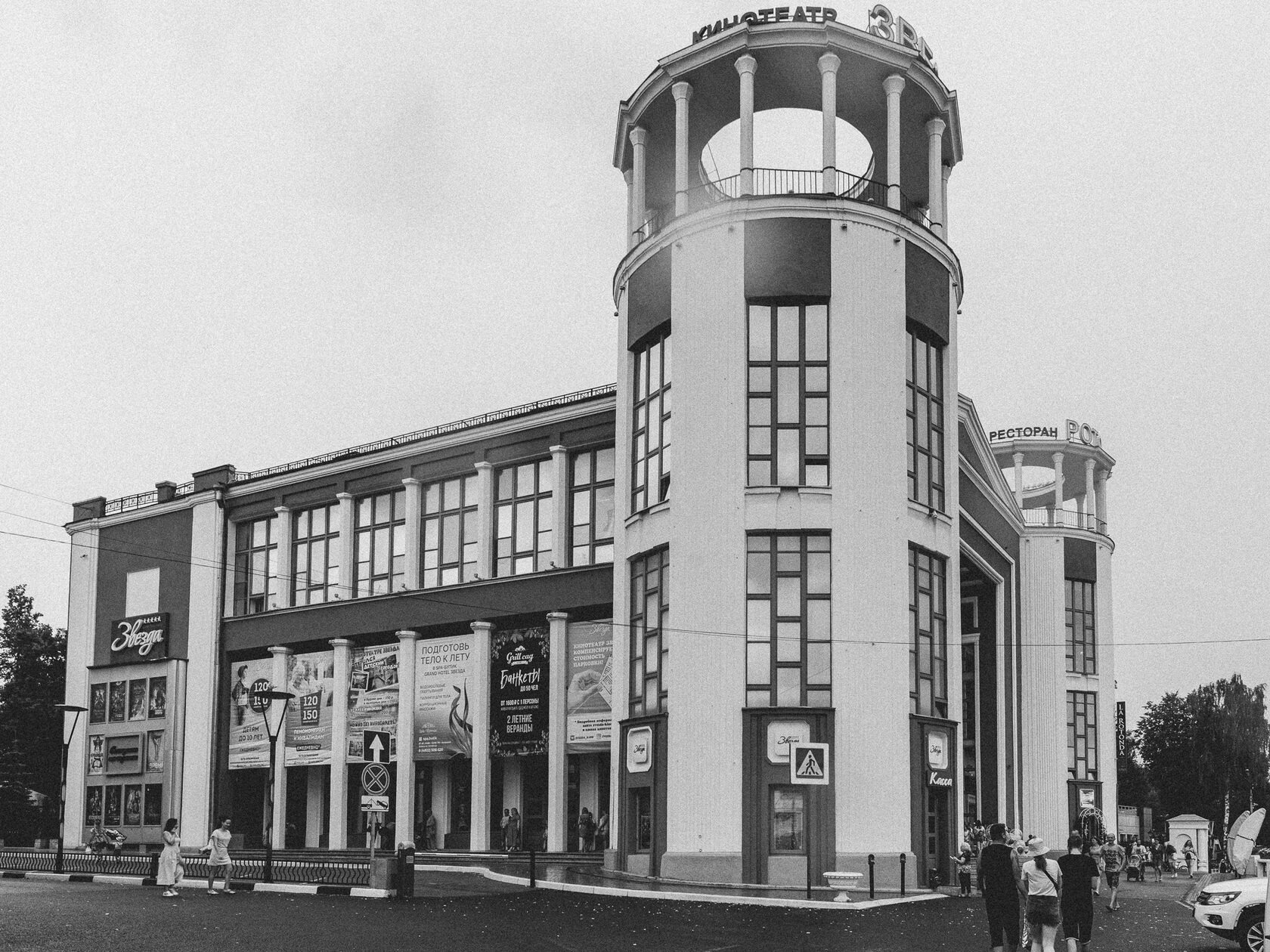
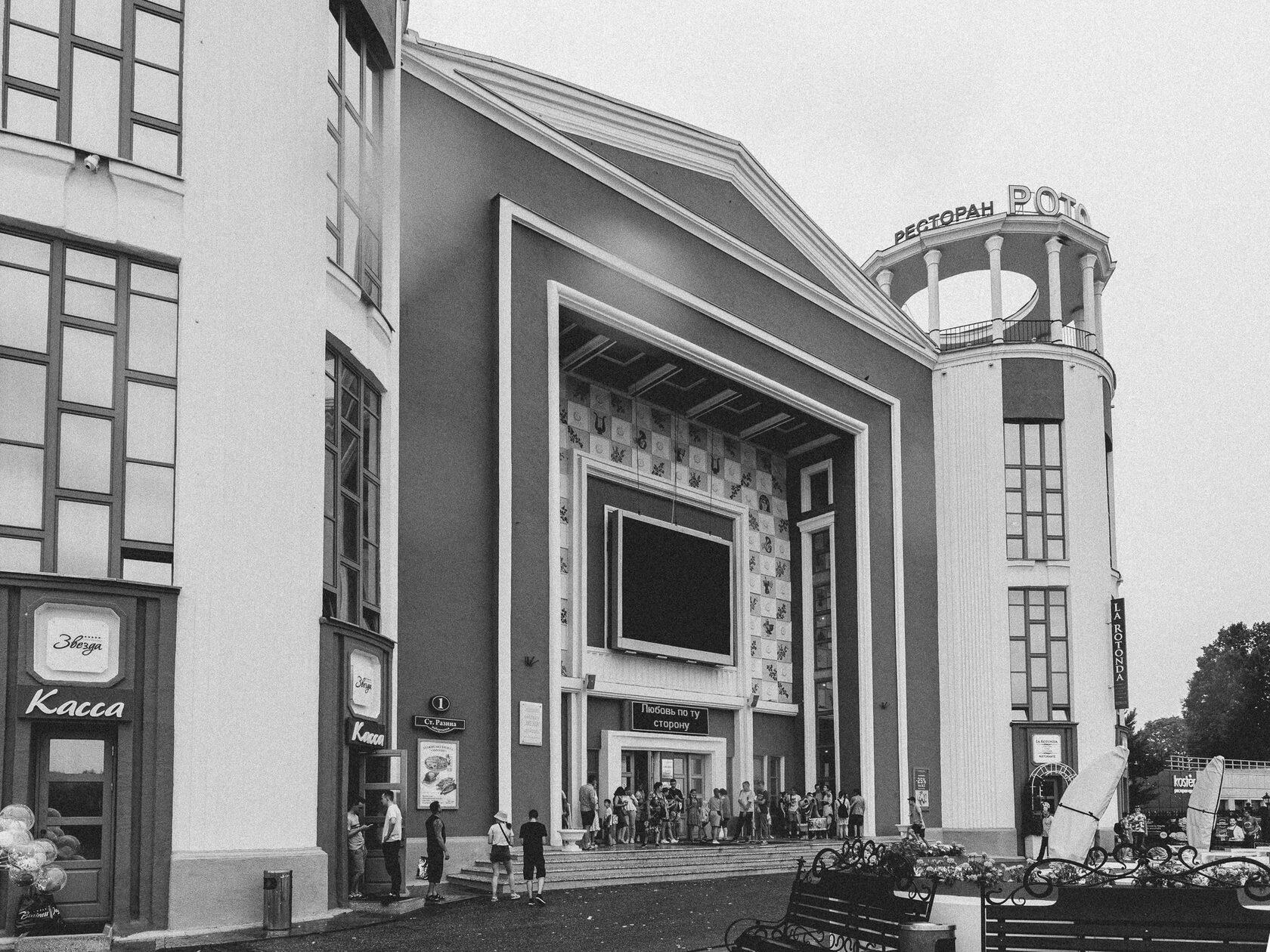
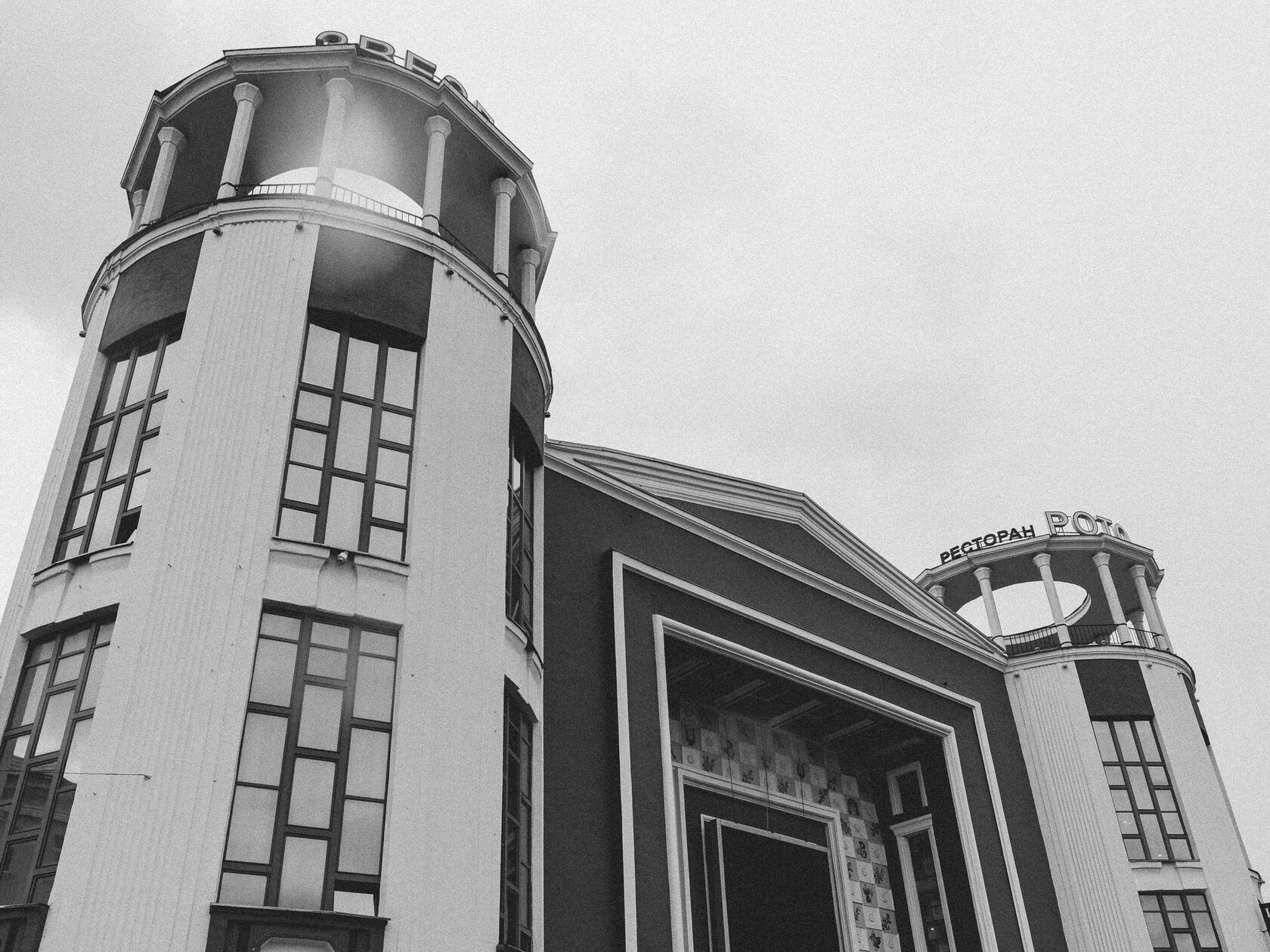
River StationРечной вокзал河港客运站FlussbahnhofGare fluvialeEstación fluvialEstação fluvial
The building is read through movement: arrival, departure, service, waiting, repair. It is less an object than a pause inside a larger route, a place where modern life briefly becomes visible as logistics.Здание читается через движение: прибытие, отправление, обслуживание, ожидание, ремонт. Это не столько объект, сколько остановка внутри большого маршрута, место, где современная жизнь на мгновение становится видимой как логистика.这座建筑通过移动来阅读:抵达、出发、服务、等待、修理。它与其说是一个对象,不如说是更大路线中的一次停顿,一个现代生活短暂显现为物流的地点。Das Gebäude wird durch Bewegung gelesen: Ankunft, Abfahrt, Service, Warten, Reparatur. Es ist weniger ein Objekt als eine Pause in einer größeren Route, ein Ort, an dem modernes Leben kurz als Logistik sichtbar wird.Le bâtiment se lit par le mouvement : arrivée, départ, service, attente, réparation. C'est moins un objet qu'une pause dans un trajet plus vaste, un lieu où la vie moderne devient brièvement visible comme logistique.El edificio se lee a través del movimiento: llegada, salida, servicio, espera, reparación. Es menos un objeto que una pausa dentro de una ruta mayor, un lugar donde la vida moderna se vuelve visible por un momento como logística.O edifício é lido pelo movimento: chegada, partida, serviço, espera, reparo. É menos um objeto do que uma pausa dentro de uma rota maior, um lugar onde a vida moderna se torna brevemente visível como logística.
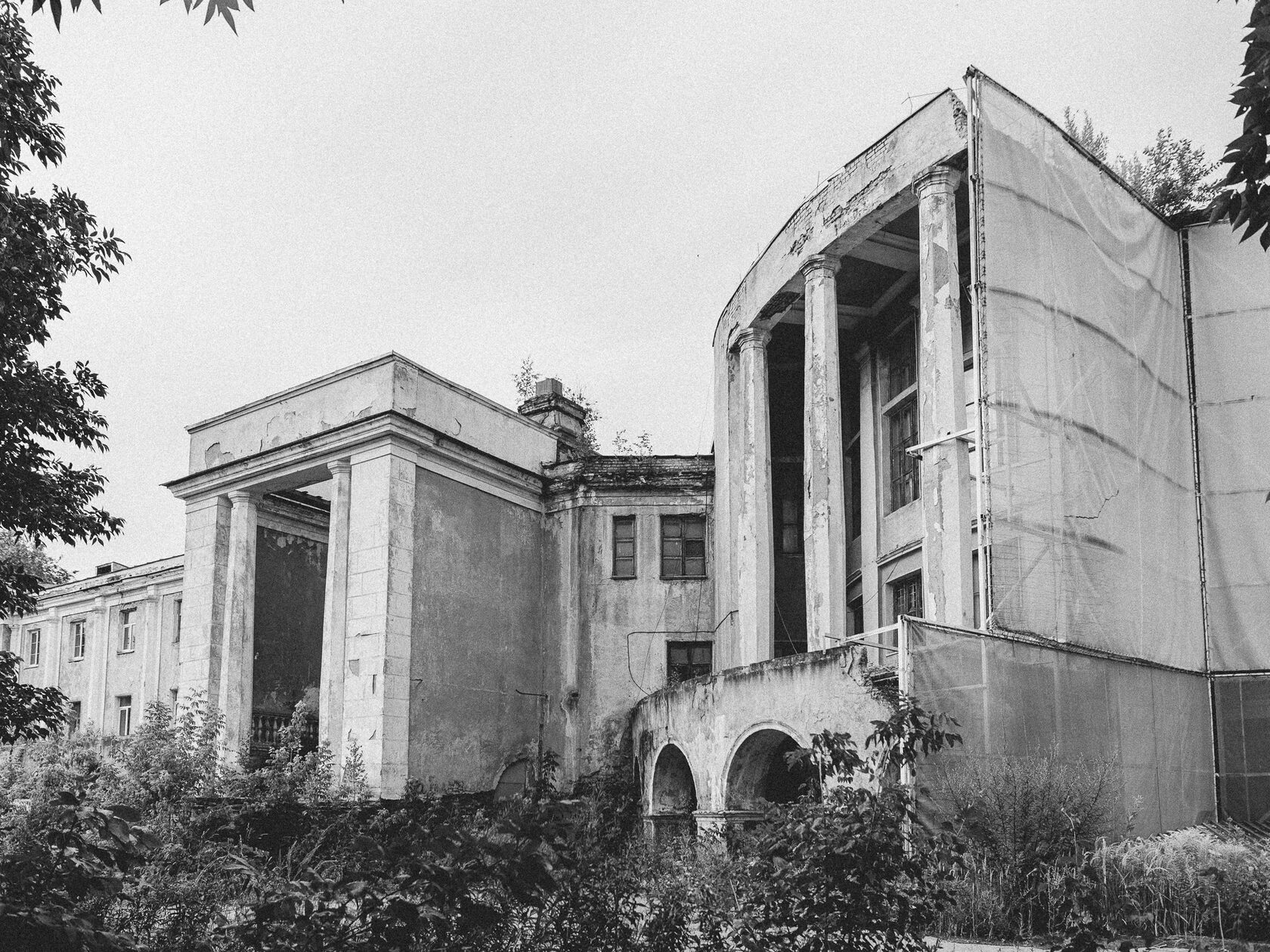
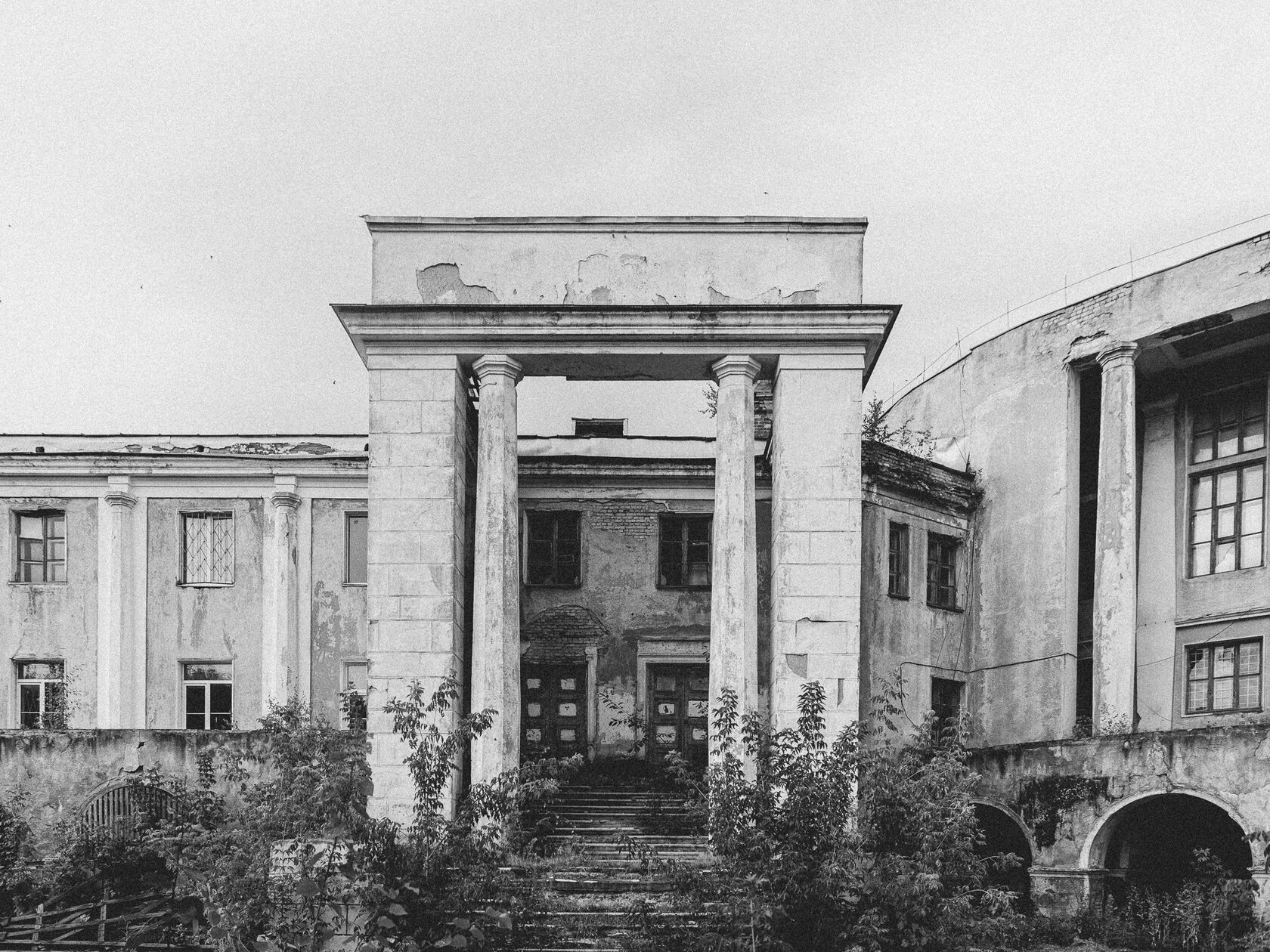
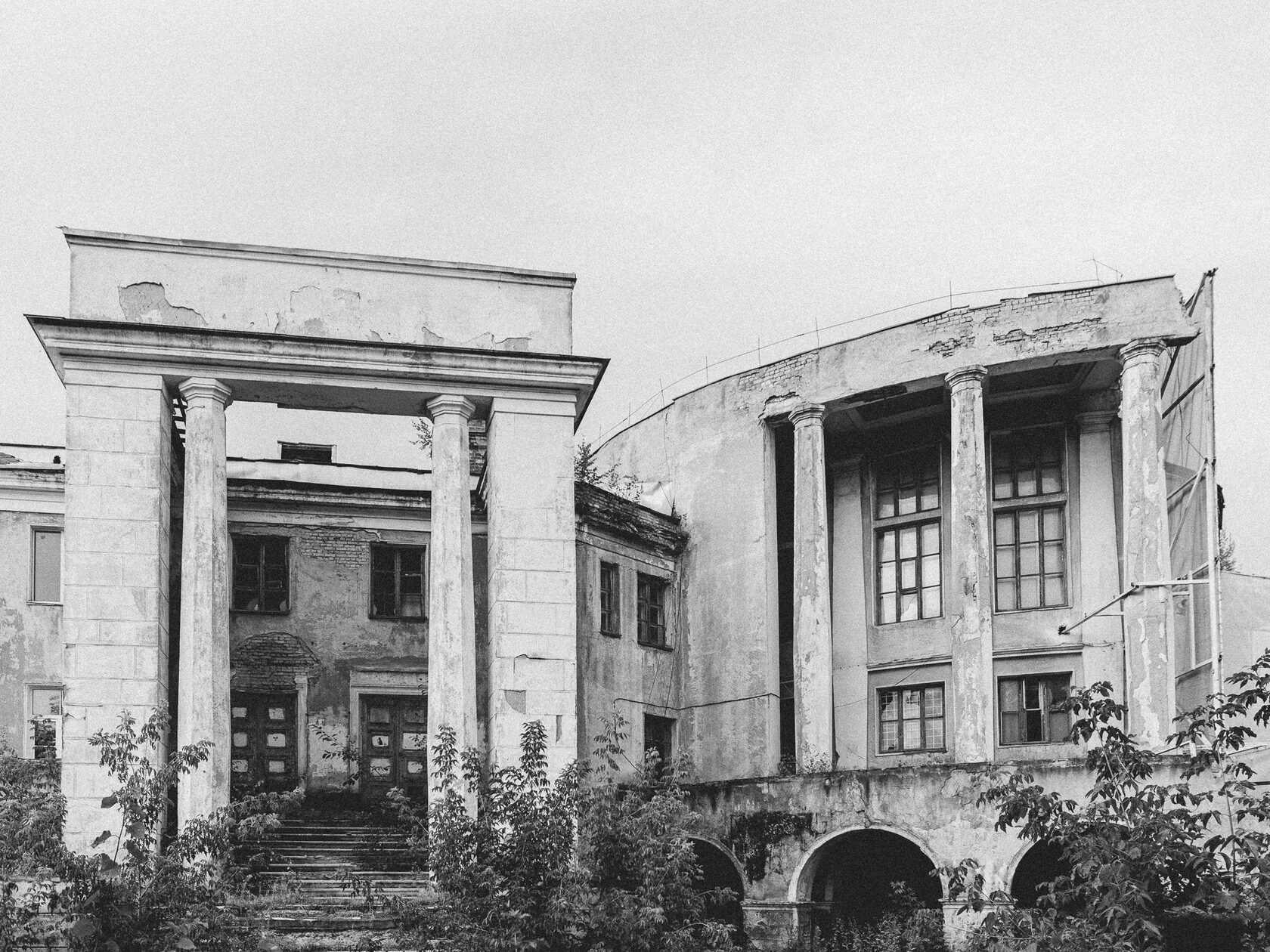
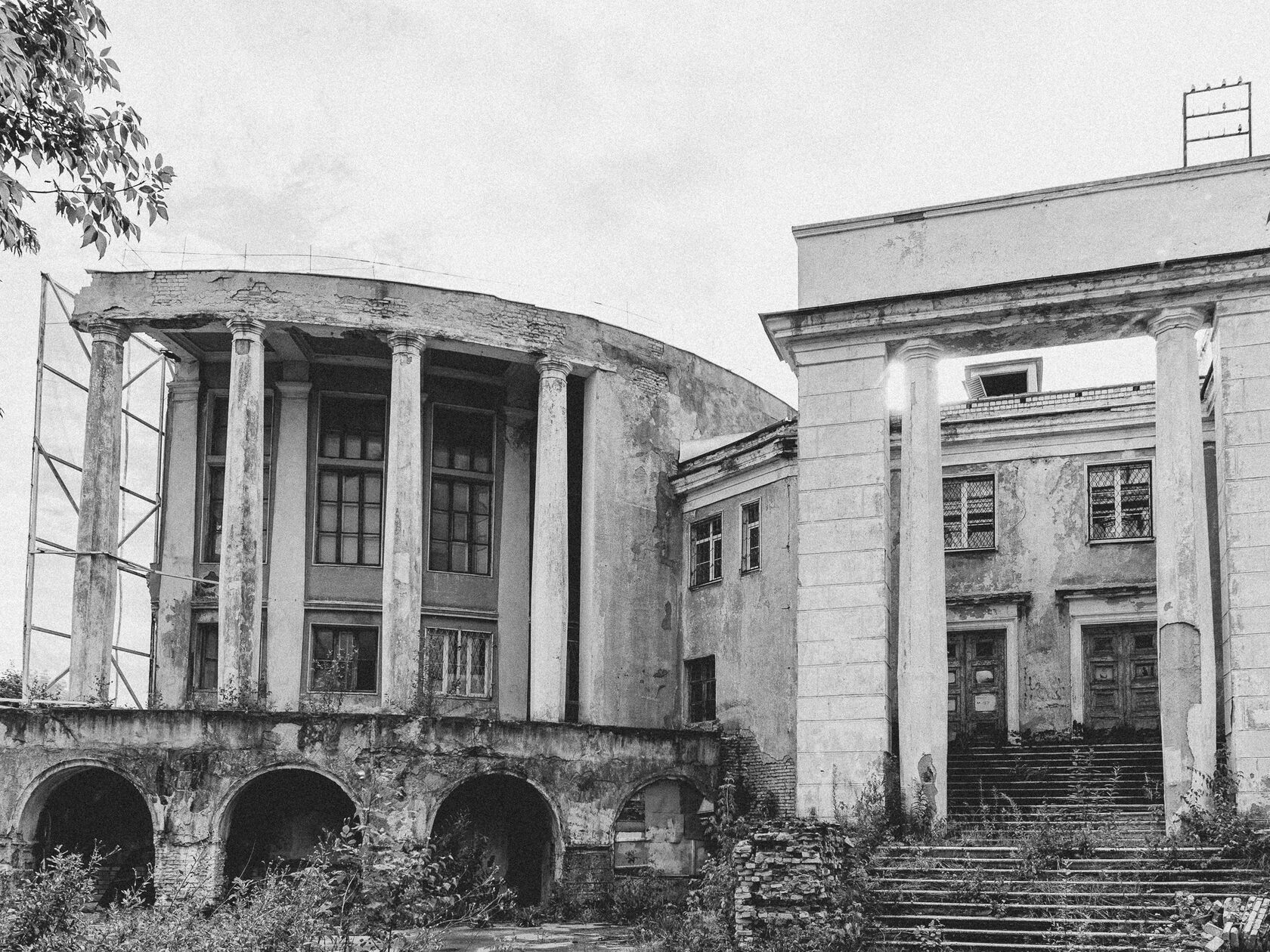
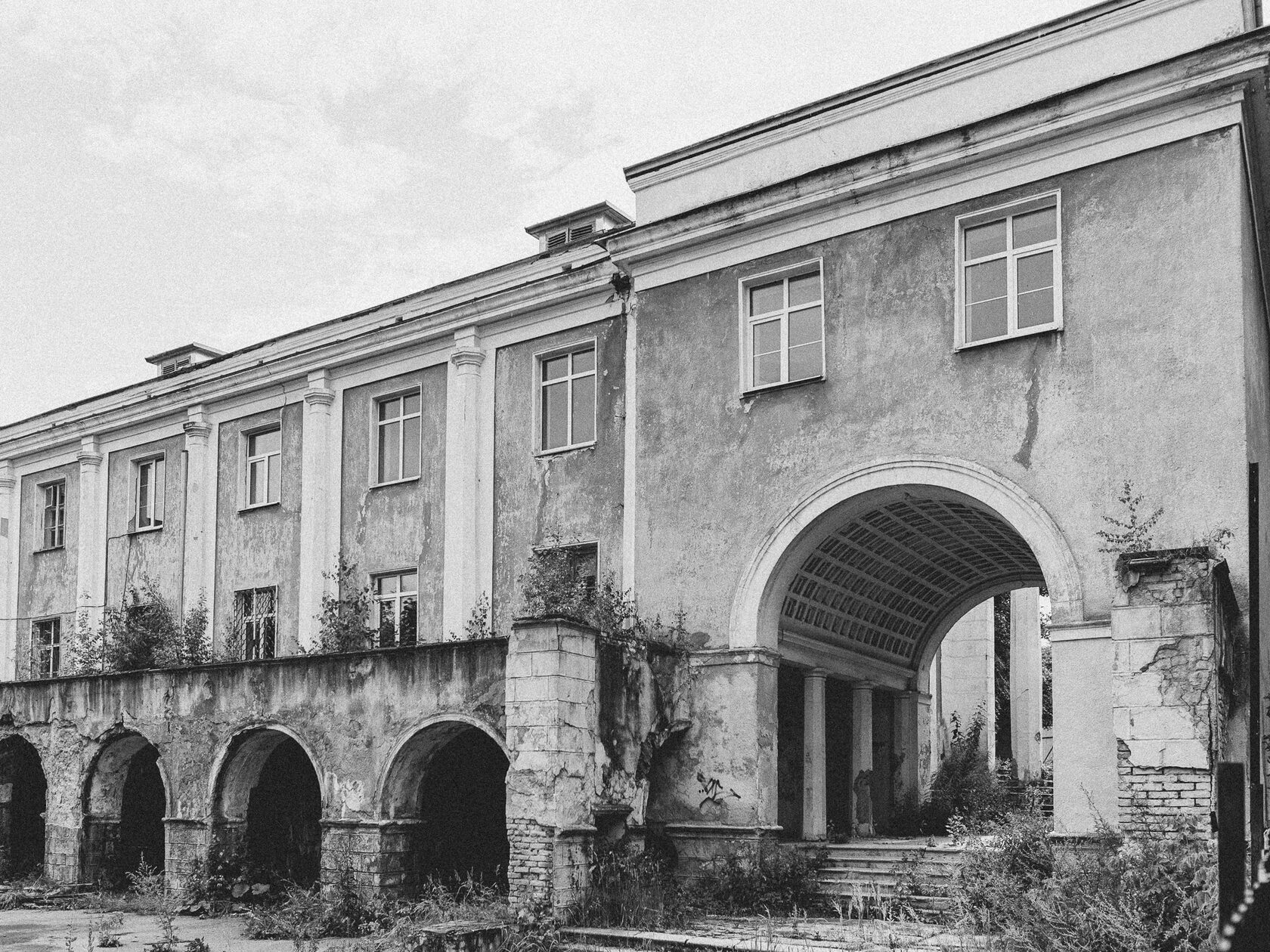
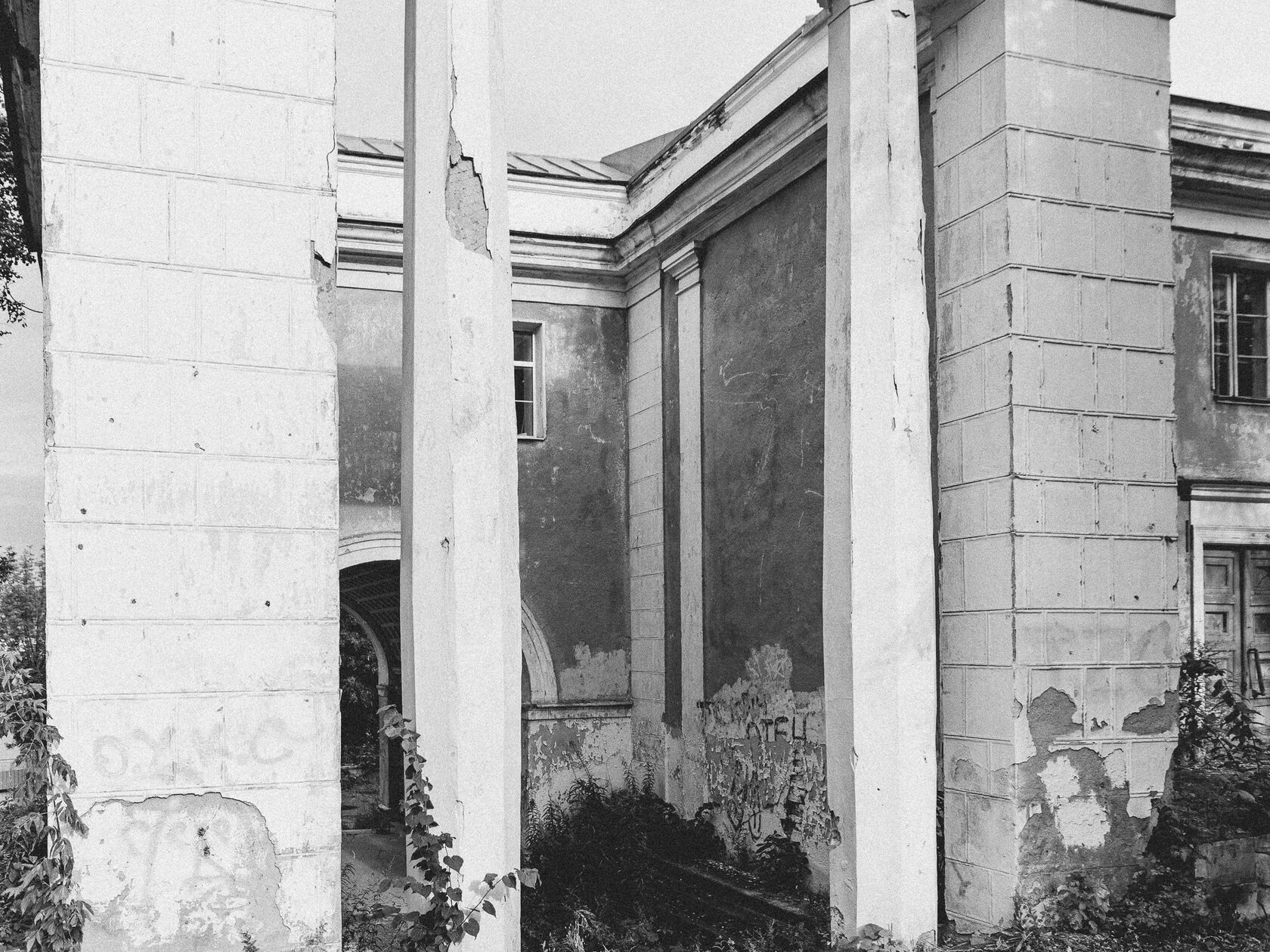
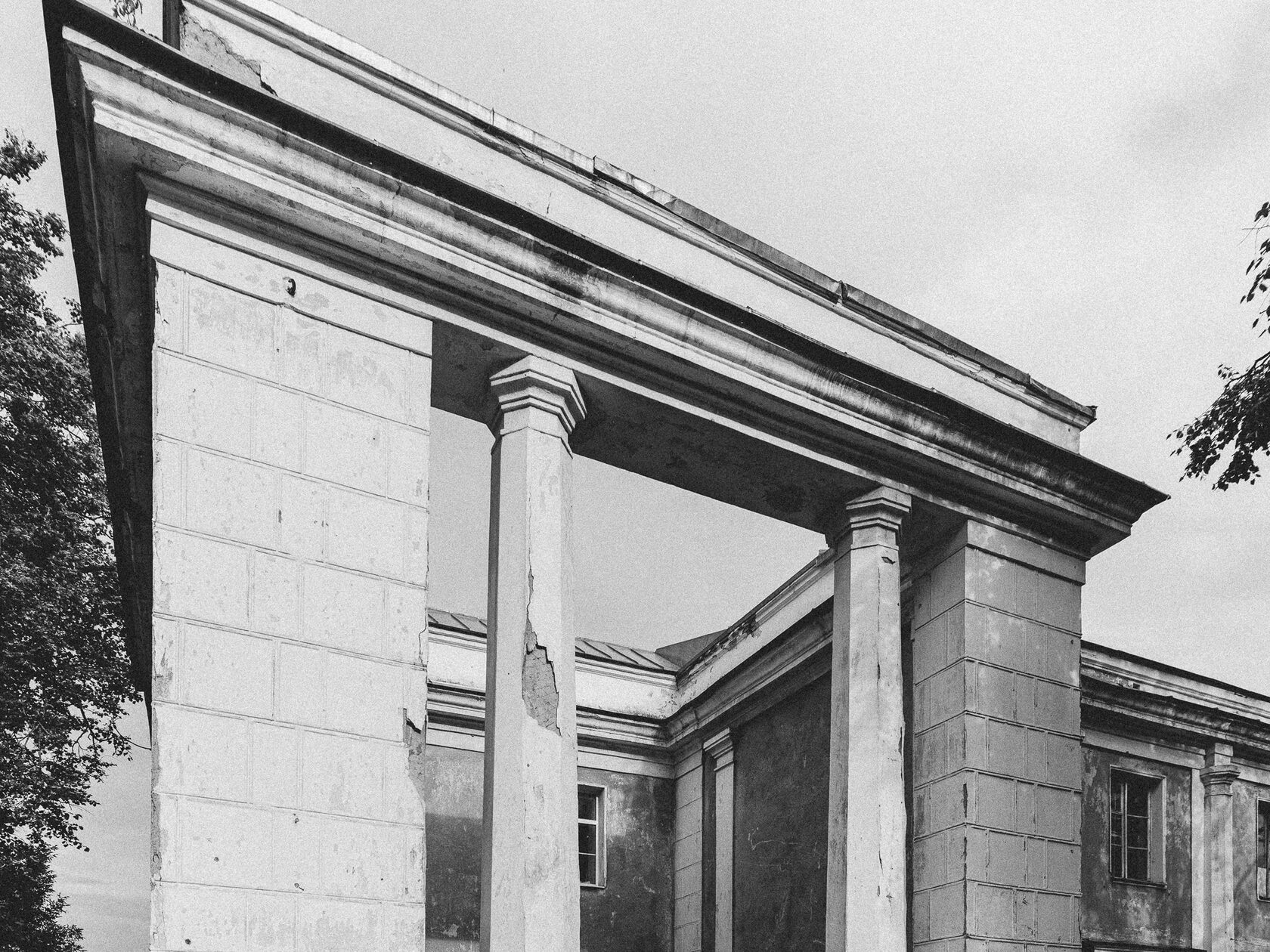
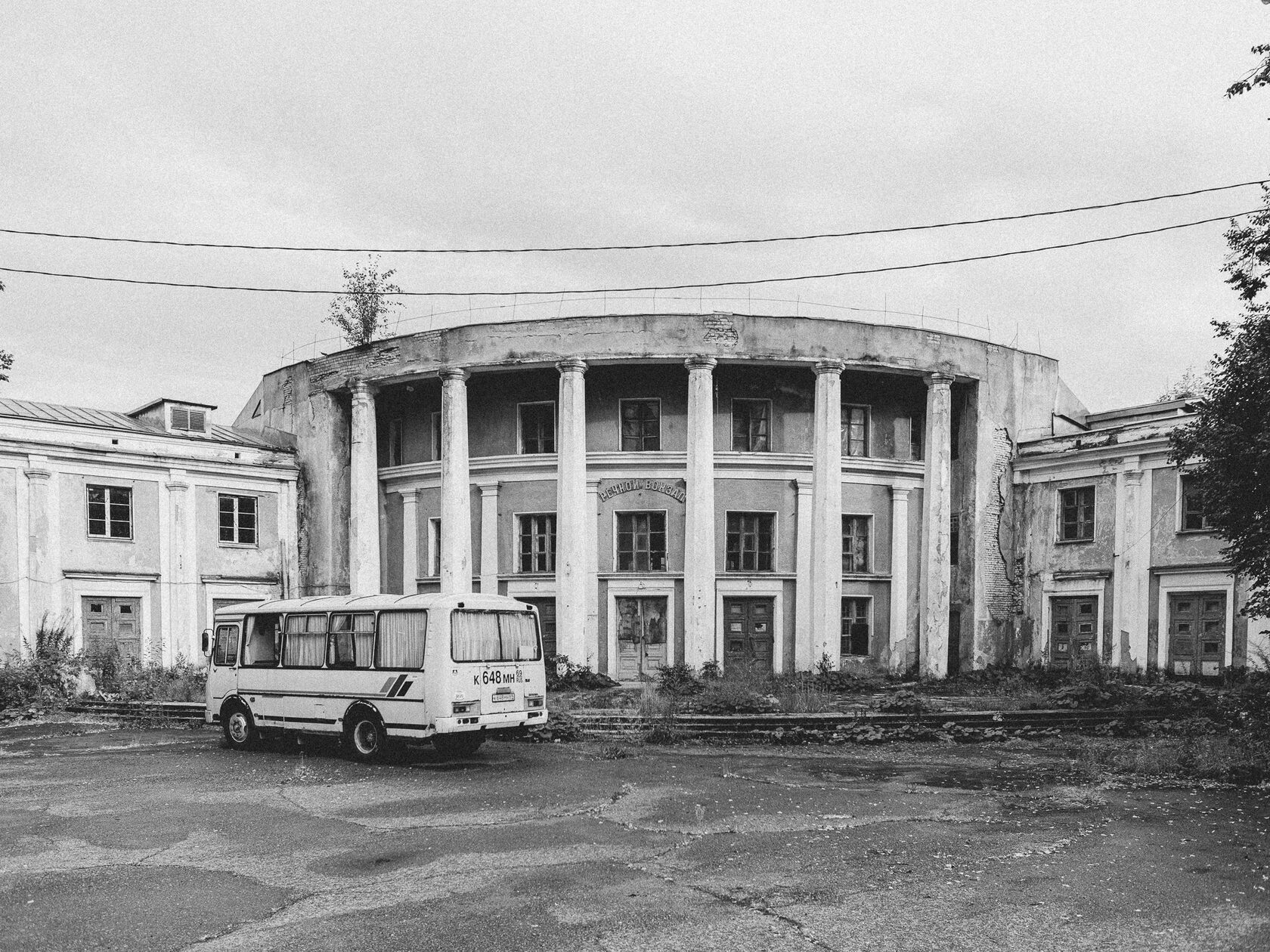
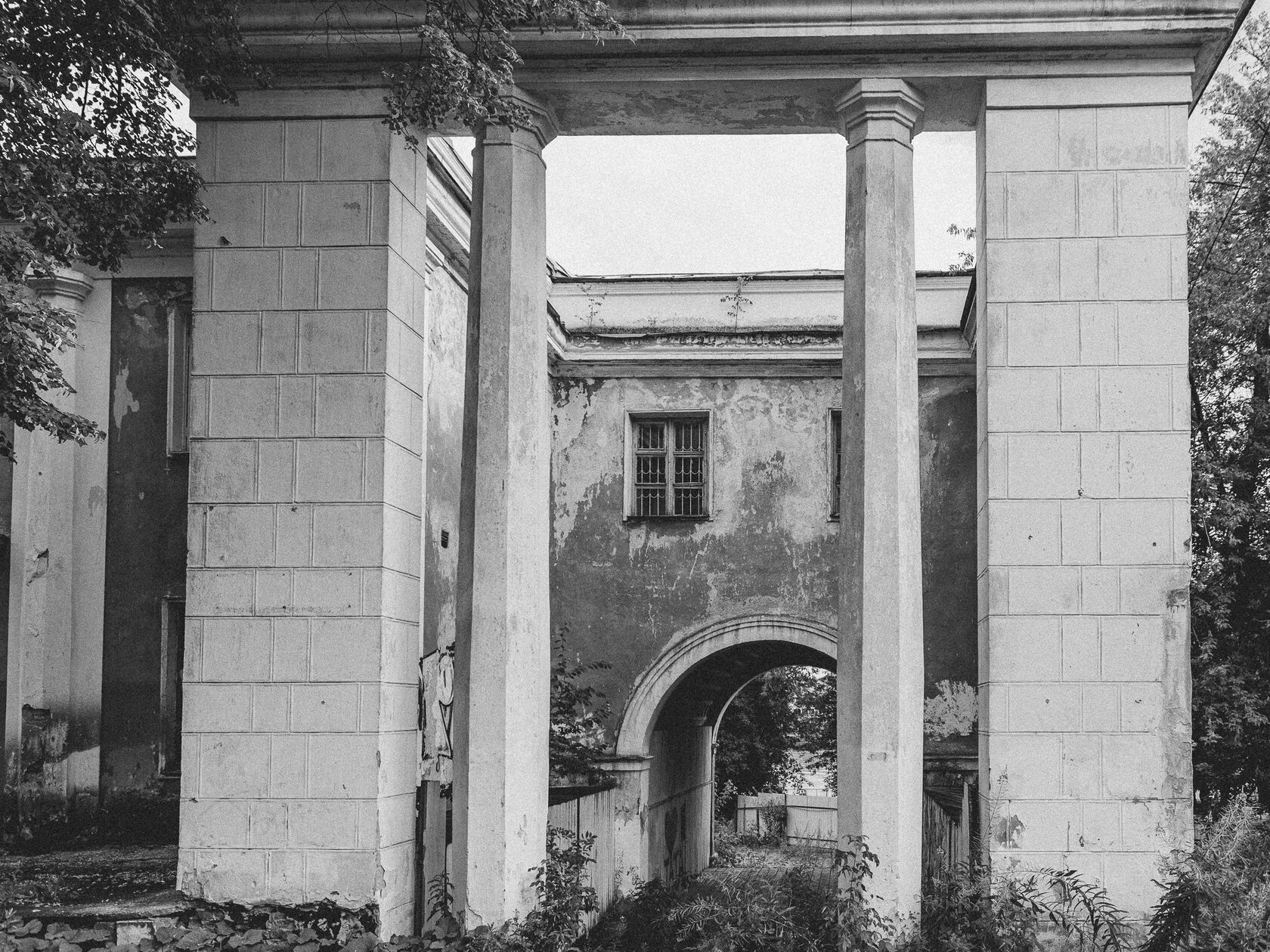
KazanКазань喀山KasanKazanKazánKazan
Buildings in KazanЗдания: Казань建筑: 喀山Bauten in KasanBâtiments à KazanEdificios en KazánEdifícios em Kazan
Unified Dispensary of the People's Commissariat for HealthЕдиный диспансер Наркомздрава卫生人民委员部统一门诊部Einheitsdispensarium des Volkskommissariats für GesundheitDispensaire unifié du Commissariat du peuple à la SantéDispensario unificado del Comisariado del Pueblo de SaludDispensário unificado do Comissariado do Povo da Saúde
This is the social body seen through architecture. Health, hygiene, care, and discipline are not private matters here, but a spatial program: corridors, volumes, entrances, and surfaces arranged for collective maintenance.Это социальное тело, увиденное через архитектуру. Здоровье, гигиена, уход и дисциплина здесь не частное дело, а пространственная программа: коридоры, объемы, входы и поверхности, выстроенные для коллективного обслуживания жизни.这是通过建筑看到的社会身体。健康、卫生、照护和纪律在这里不是私人事务,而是一套空间程序:走廊、体量、入口和表面被组织起来,服务于集体生活的维护。Hier wird der soziale Körper durch Architektur sichtbar. Gesundheit, Hygiene, Fürsorge und Disziplin sind keine privaten Angelegenheiten, sondern ein räumliches Programm: Korridore, Volumen, Eingänge und Oberflächen für kollektive Erhaltung.C'est le corps social vu à travers l'architecture. Santé, hygiène, soin et discipline ne sont pas ici des affaires privées, mais un programme spatial : couloirs, volumes, entrées et surfaces organisés pour l'entretien collectif de la vie.Es el cuerpo social visto a través de la arquitectura. Salud, higiene, cuidado y disciplina no son aquí asuntos privados, sino un programa espacial: pasillos, volúmenes, entradas y superficies organizados para el mantenimiento colectivo de la vida.É o corpo social visto pela arquitetura. Saúde, higiene, cuidado e disciplina não são aqui questões privadas, mas um programa espacial: corredores, volumes, entradas e superfícies organizados para a manutenção coletiva da vida.
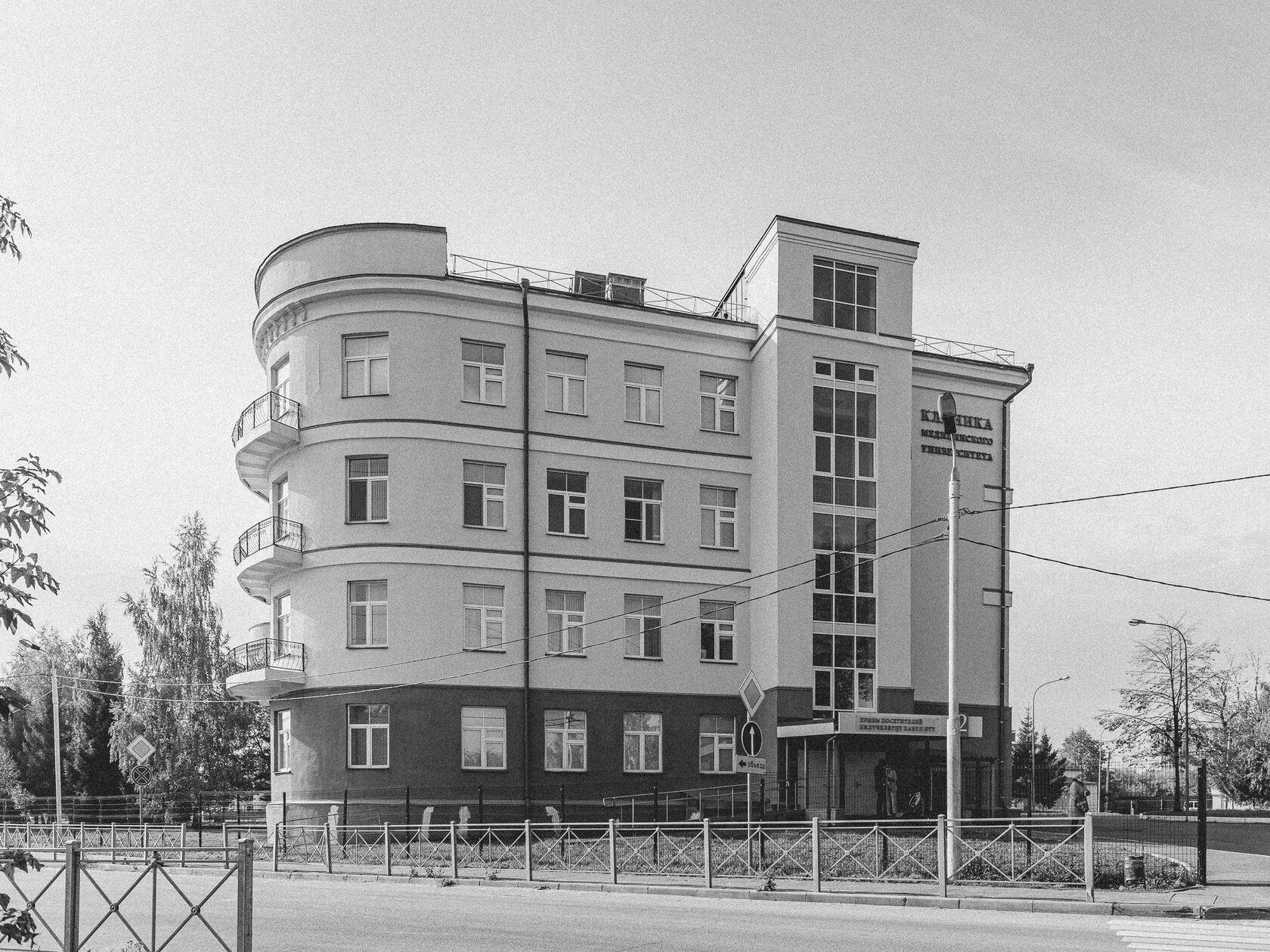
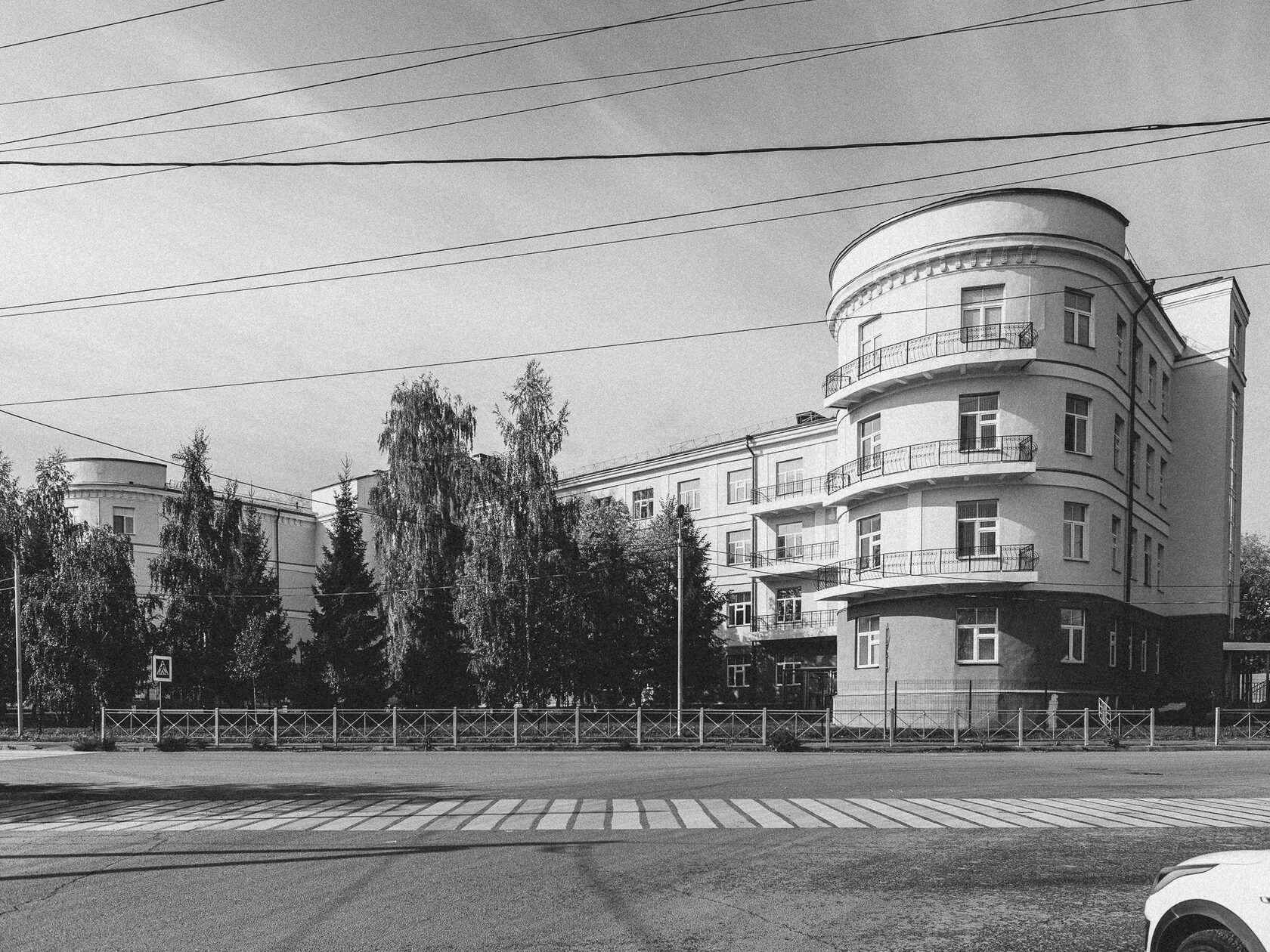
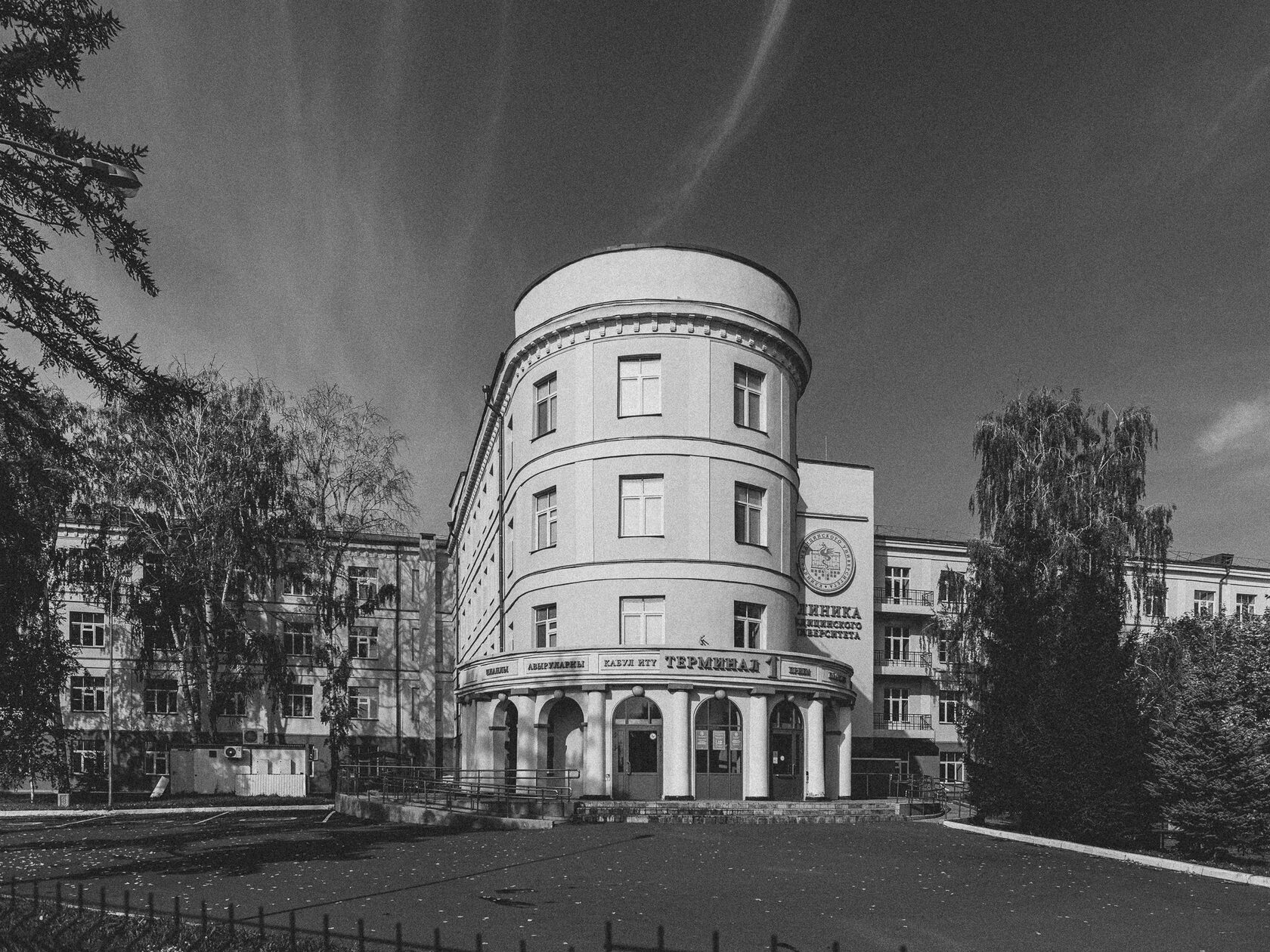
School of factory apprenticeship named after Comrade StalinШкола фабрично-заводского ученичества имени товарища Сталина斯大林同志工厂学徒学校Fabrik- und Werklehrlingsschule, benannt nach Genosse StalinÉcole d'apprentissage d'usine nommée d'après le camarade StalineEscuela de aprendizaje fabril nombrada en honor al camarada StalinEscola de aprendizagem fabril em nome do camarada Stalin
Education appears here as a public form. The photographs look at how knowledge is given mass, facade, entrances, and repetition: an institution trying to appear open, rational, and structurally new.Образование здесь становится публичной формой. Фотографии смотрят на то, как знанию дают массу, фасад, входы и повтор: институция пытается выглядеть открытой, рациональной и структурно новой.教育在这里成为公共形式。照片观察知识如何获得体量、立面、入口和重复:一种机构试图显得开放、理性并具有新的结构。Bildung erscheint hier als öffentliche Form. Die Fotografien schauen darauf, wie Wissen Masse, Fassade, Eingänge und Wiederholung erhält: eine Institution, die offen, rational und strukturell neu wirken will.L'éducation apparaît ici comme une forme publique. Les photographies regardent comment le savoir reçoit une masse, une façade, des entrées et une répétition : une institution qui cherche à paraître ouverte, rationnelle et structurellement nouvelle.La educación aparece aquí como forma pública. Las fotografías observan cómo el conocimiento recibe masa, fachada, entradas y repetición: una institución que intenta parecer abierta, racional y estructuralmente nueva.A educação aparece aqui como forma pública. As fotografias observam como o conhecimento ganha massa, fachada, entradas e repetição: uma instituição tentando parecer aberta, racional e estruturalmente nova.
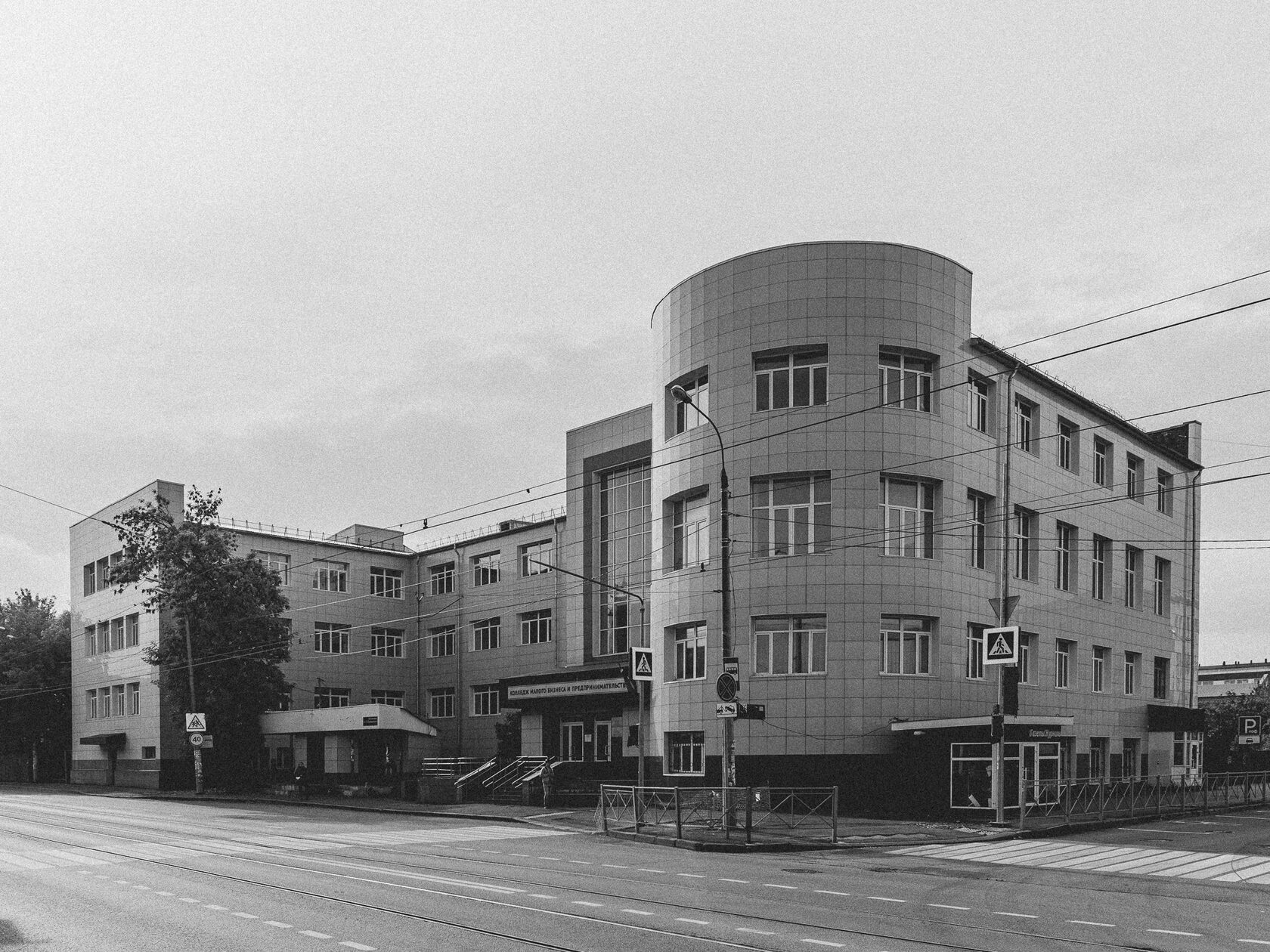
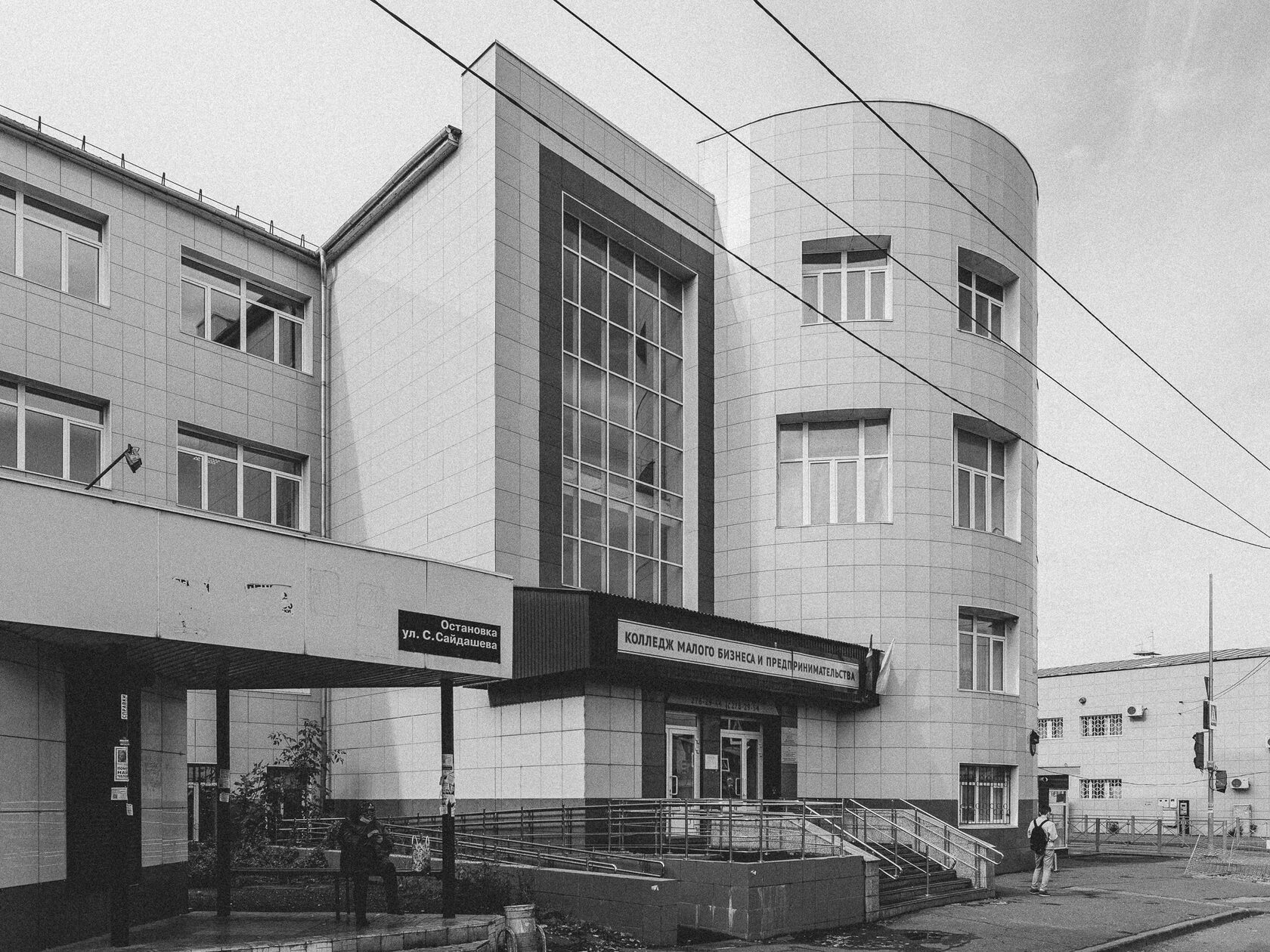
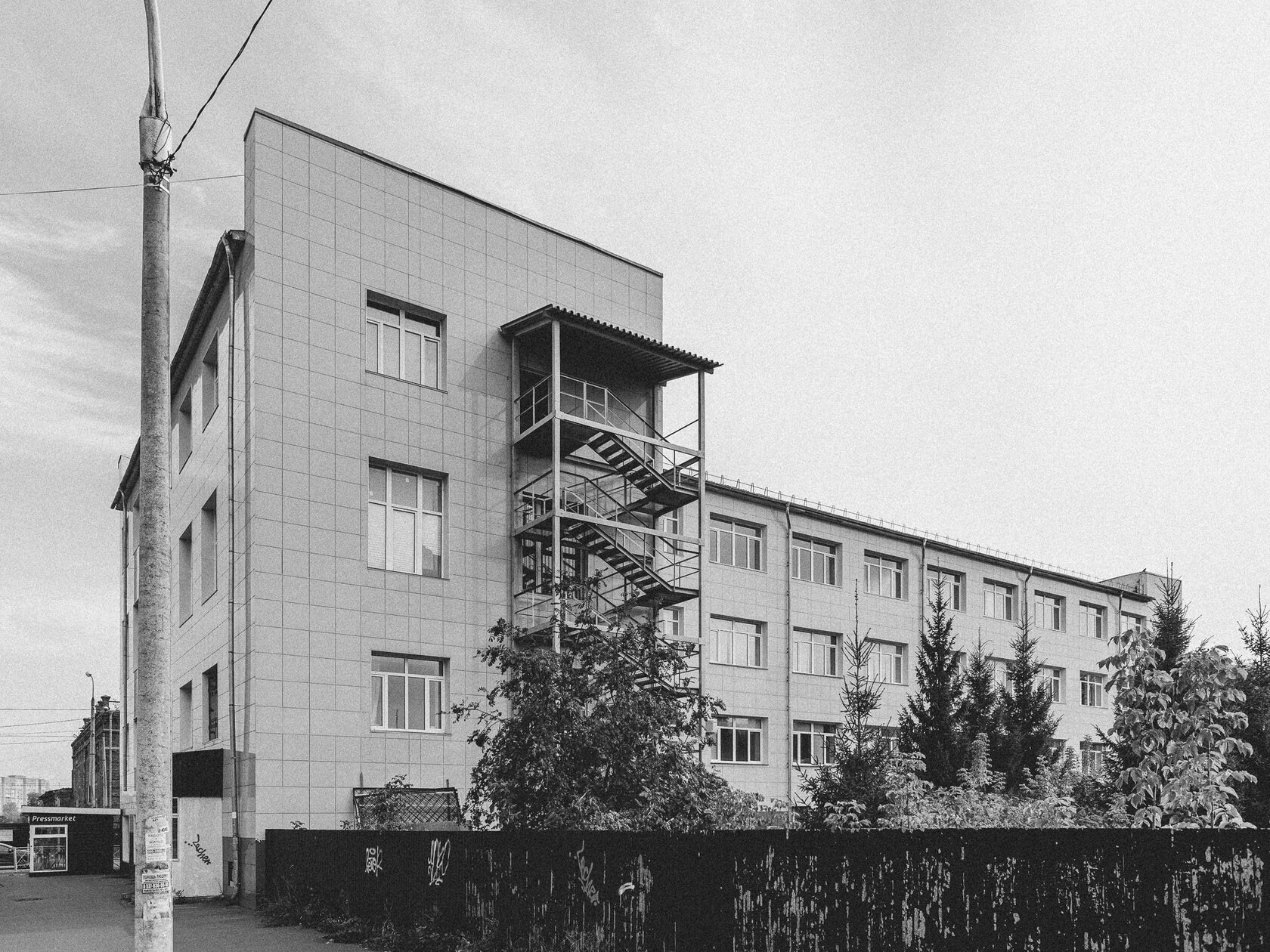
Furriers' House of CultureДом культуры меховщиков皮草工人文化宫Haus der Kultur der KürschnerMaison de la culture des fourreursCasa de Cultura de los peleterosCasa da Cultura dos peleiros
The building is photographed as a public interior turned outward. The facade carries the promise of assembly: lectures, rehearsals, meetings, cinema, theatre, music, and the belief that culture could be organized as part of everyday life.Здание снято как общественный интерьер, вывернутый наружу. Фасад удерживает обещание собрания: лекции, репетиции, встречи, кино, театр, музыку и веру в то, что культуру можно встроить в повседневность.这座建筑被拍成向外翻开的公共室内。立面保存着集会的承诺:讲座、排练、会议、电影、戏剧、音乐,以及文化可以被编入日常生活的信念。Das Gebäude wird als nach außen gekehrtes öffentliches Interieur fotografiert. Die Fassade trägt das Versprechen der Versammlung: Vorträge, Proben, Treffen, Kino, Theater, Musik und den Glauben, Kultur könne Teil des Alltags werden.Le bâtiment est photographié comme un intérieur public retourné vers l'extérieur. La façade porte la promesse du rassemblement : conférences, répétitions, réunions, cinéma, théâtre, musique, et la croyance que la culture pouvait être intégrée au quotidien.El edificio se fotografía como un interior público vuelto hacia fuera. La fachada sostiene la promesa de reunión: conferencias, ensayos, encuentros, cine, teatro, música y la creencia de que la cultura podía organizarse dentro de la vida cotidiana.O edifício é fotografado como um interior público virado para fora. A fachada guarda a promessa da reunião: palestras, ensaios, encontros, cinema, teatro, música e a crença de que a cultura podia ser organizada dentro do cotidiano.
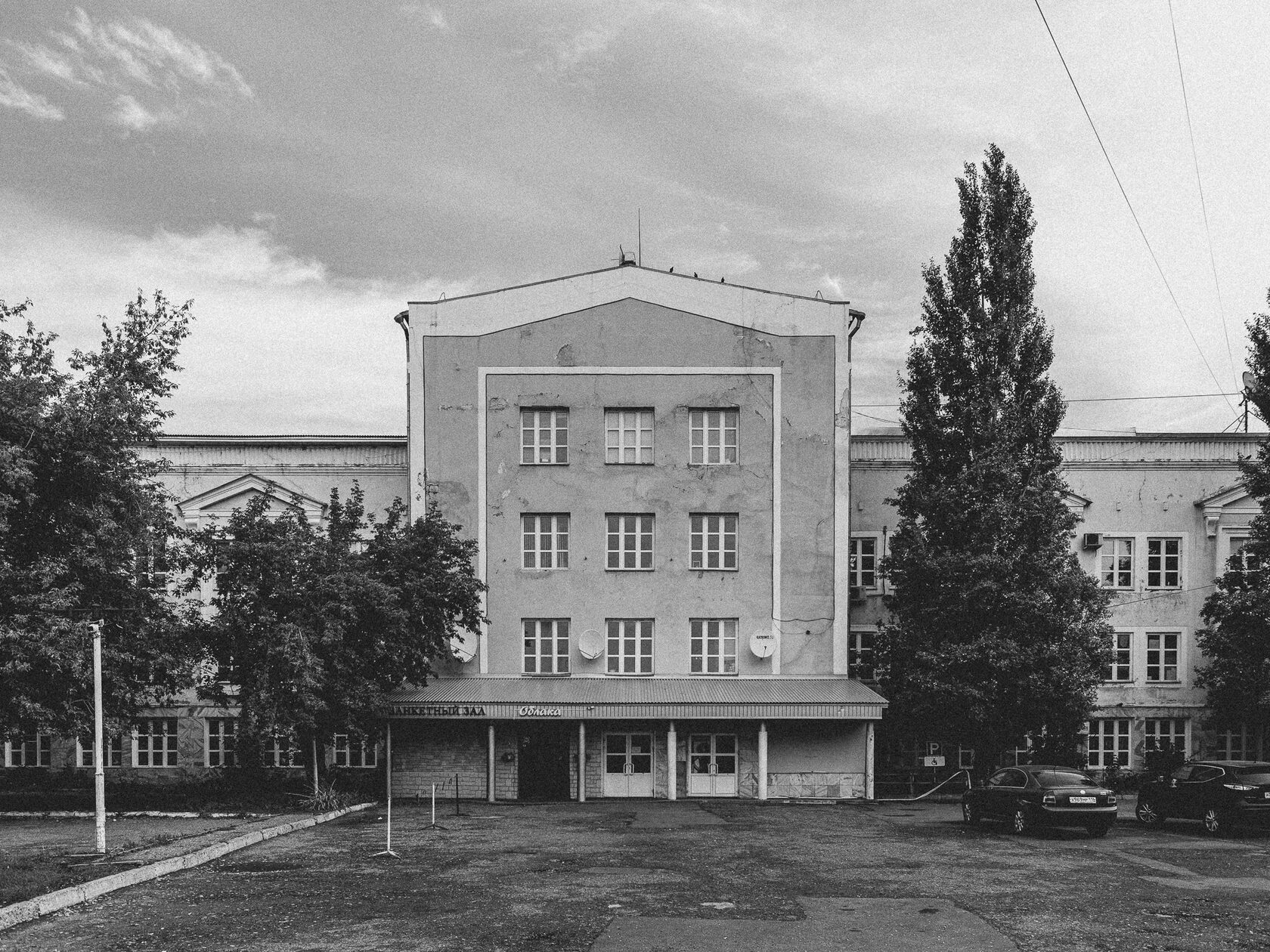
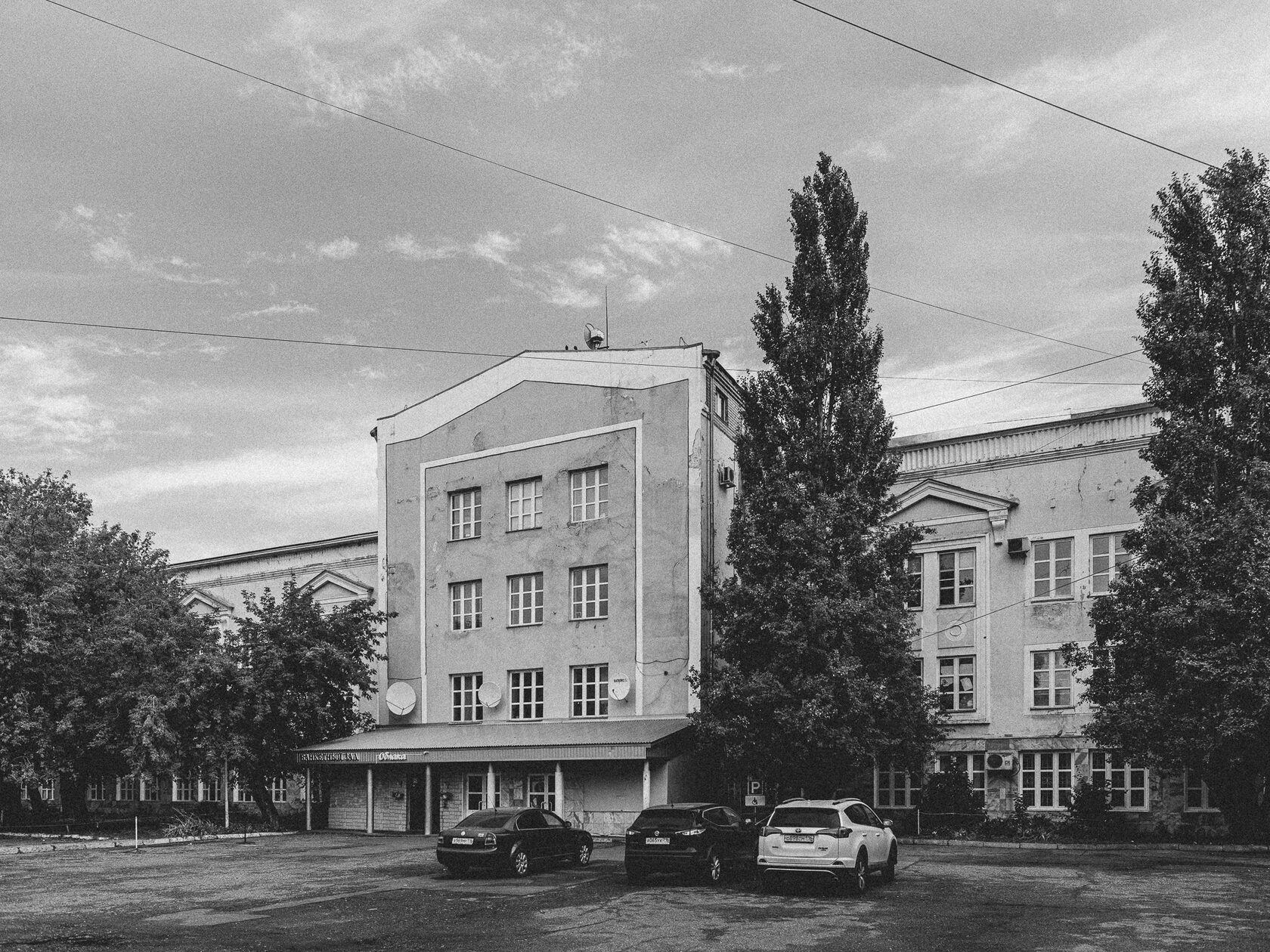
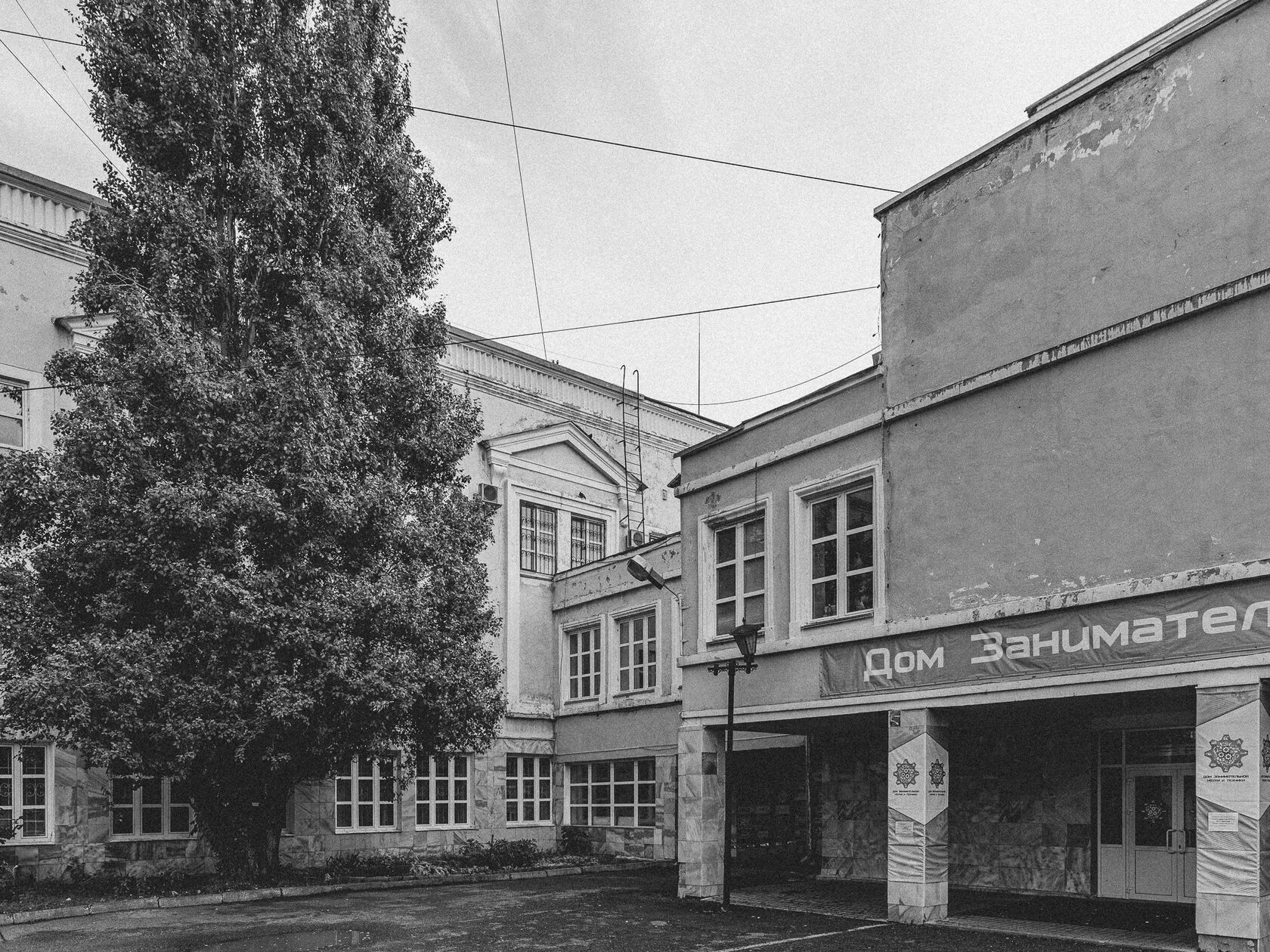
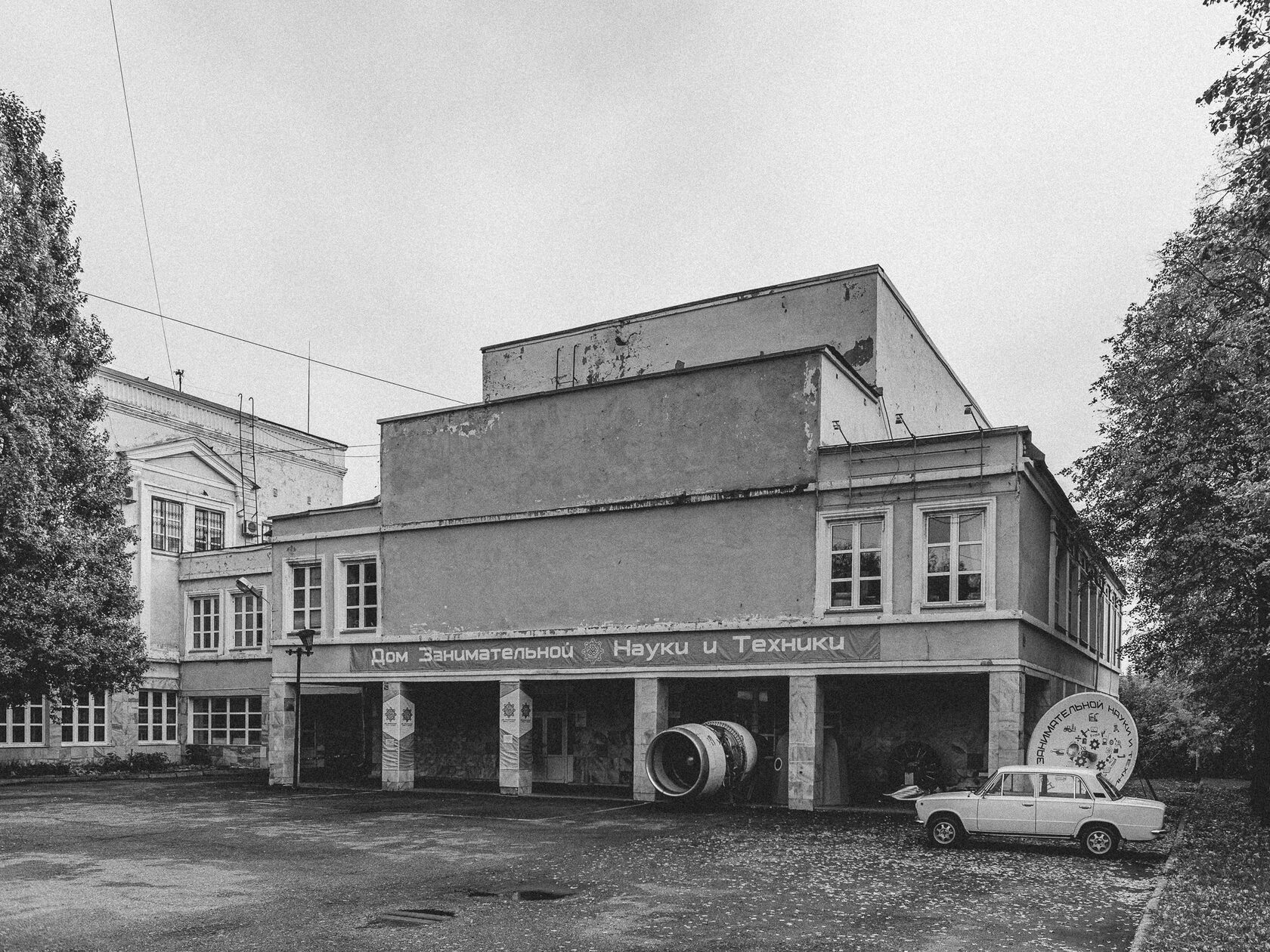
House of the pressДом печати印刷之家Haus der PresseMaison de la presseCasa de la prensaCasa da imprensa
This building turns knowledge and print into architecture: storage, circulation, facade, and public address become one restrained machine. In the sequence it reads less as a monument than as a device for producing a new visual order.Это здание переводит знание и печать в архитектурную форму: хранение, движение, фасад и публичное обращение собраны в сдержанную машину. В серии оно читается не как памятник, а как устройство для производства нового визуального порядка.这座建筑把知识和印刷转化为建筑:存储、流线、立面和公共姿态被收进一台克制的机器。它在系列中不像纪念碑,更像生产新视觉秩序的装置。Dieses Gebäude übersetzt Wissen und Druck in Architektur: Lagerung, Bewegung, Fassade und öffentliche Ansprache werden zu einer zurückhaltenden Maschine. In der Serie wirkt es weniger wie ein Denkmal als wie ein Apparat zur Herstellung einer neuen visuellen Ordnung.Ce bâtiment traduit le savoir et l'impression en architecture : stockage, circulation, façade et adresse publique se rassemblent dans une machine contenue. Dans la série, il se lit moins comme un monument que comme un dispositif de production d'un nouvel ordre visuel.Este edificio convierte el conocimiento y la imprenta en arquitectura: almacenamiento, circulación, fachada y dirección pública se reúnen en una máquina contenida. En la serie se lee menos como monumento que como dispositivo para producir un nuevo orden visual.Este edifício transforma conhecimento e impressão em arquitetura: armazenamento, circulação, fachada e endereço público se reúnem numa máquina contida. Na série, lê-se menos como monumento do que como dispositivo para produzir uma nova ordem visual.
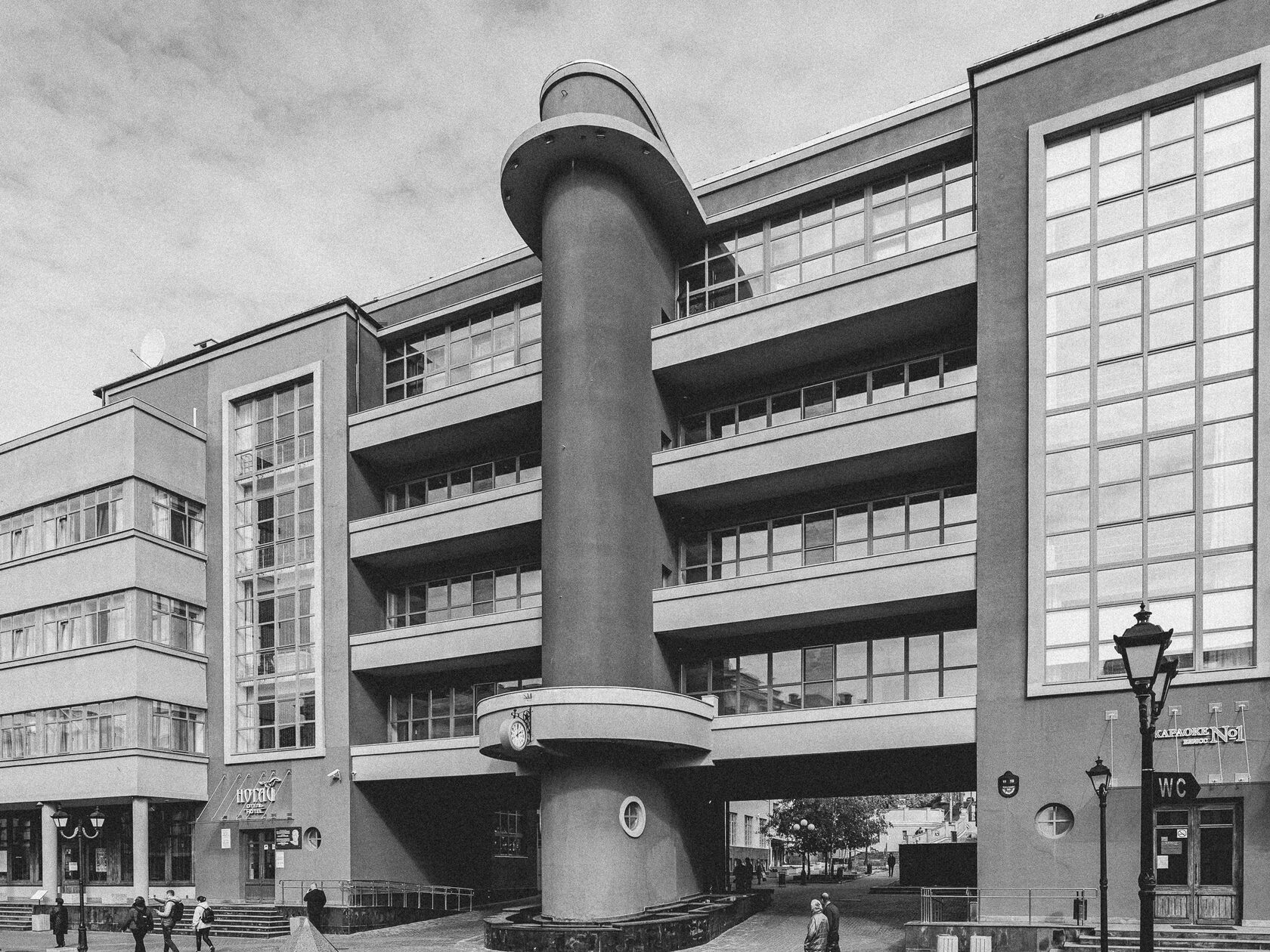
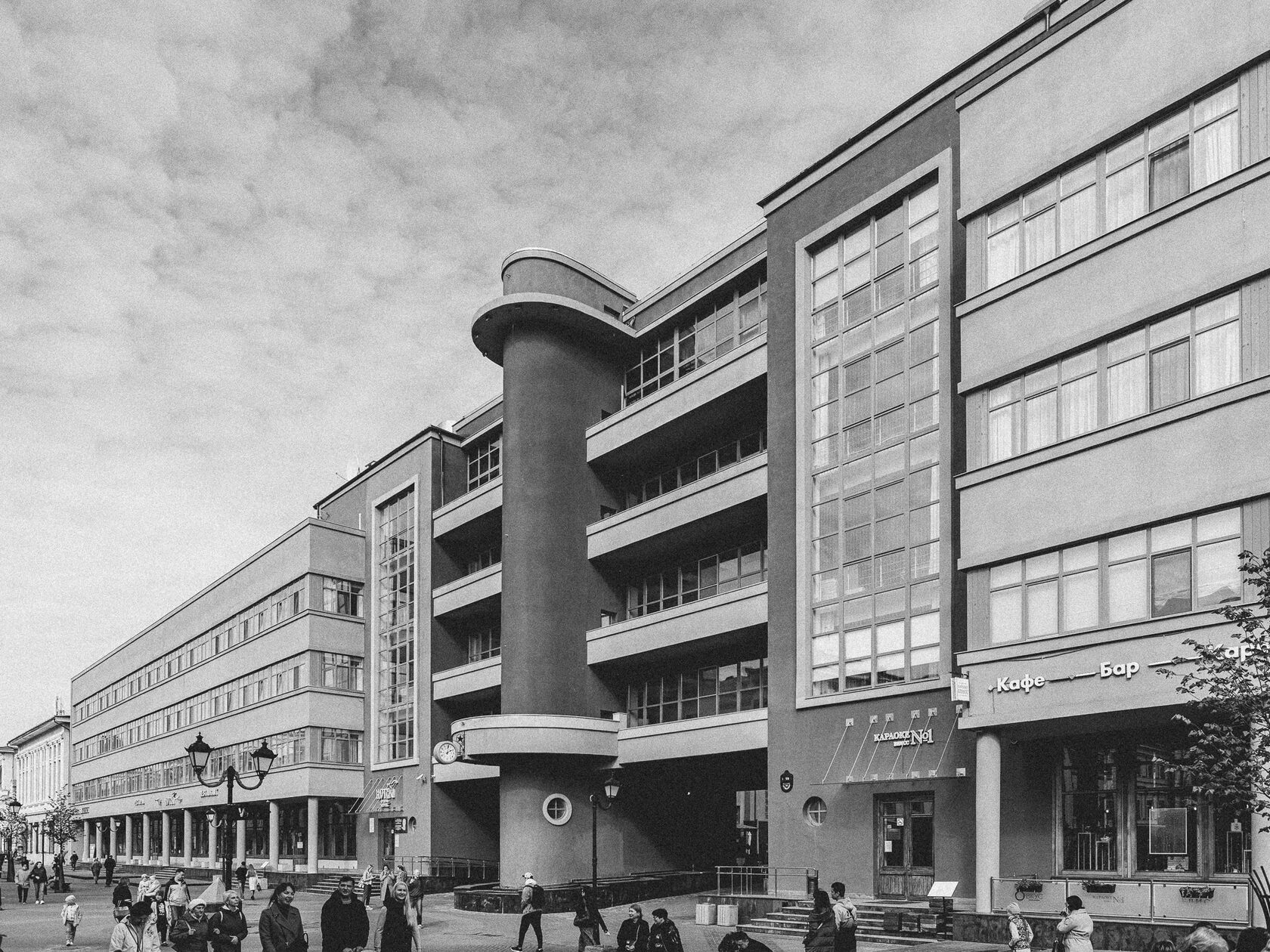
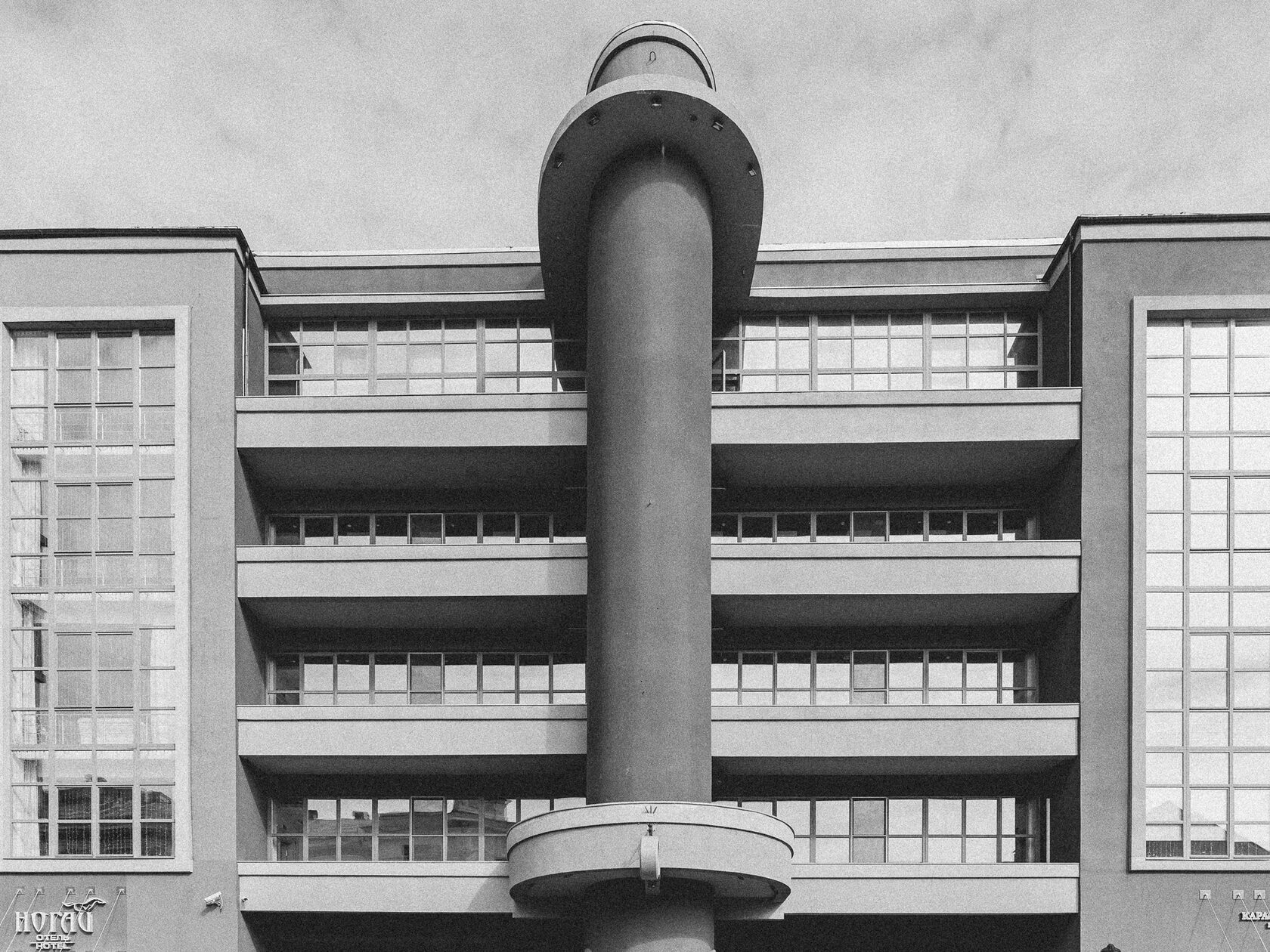
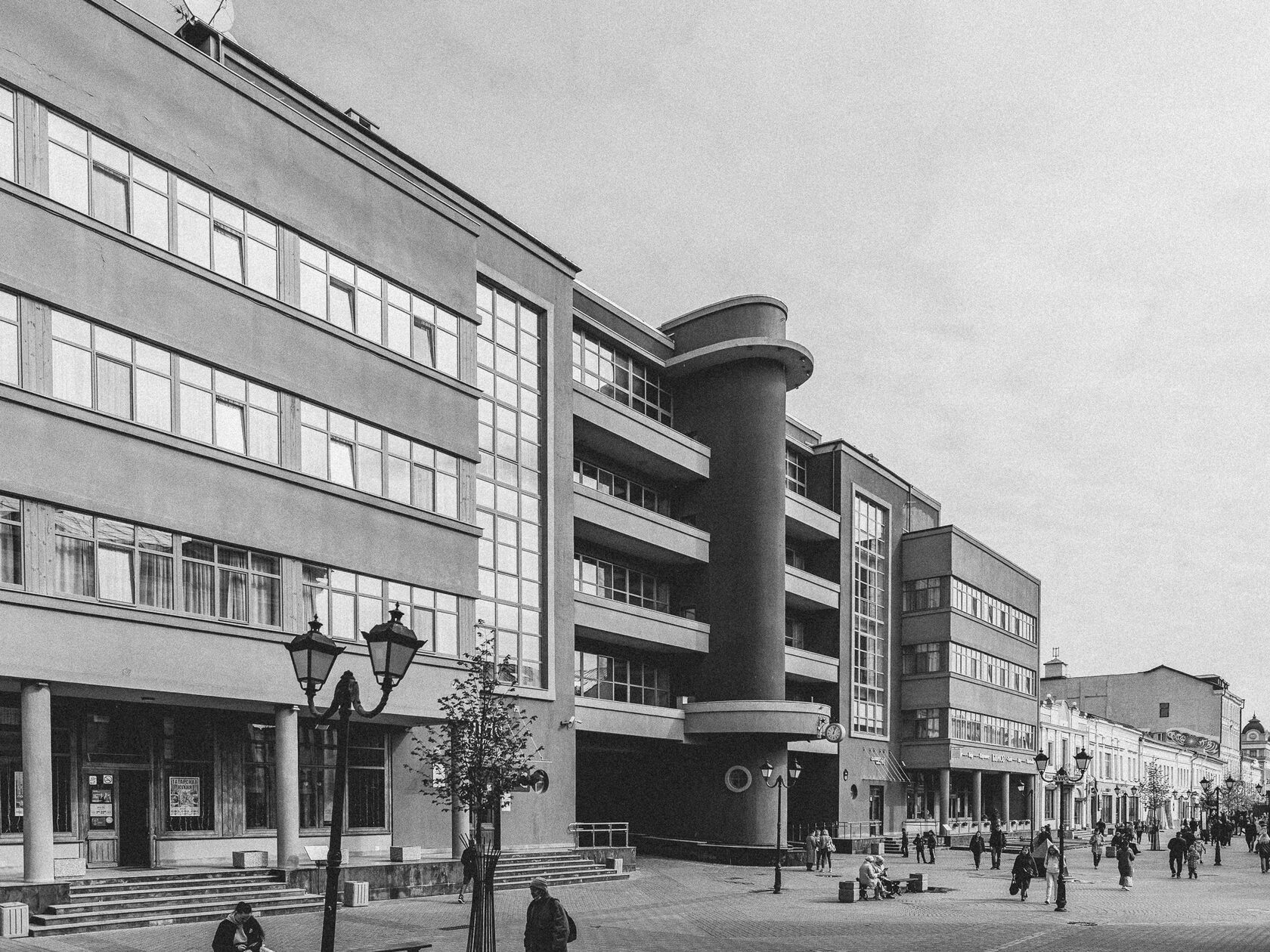
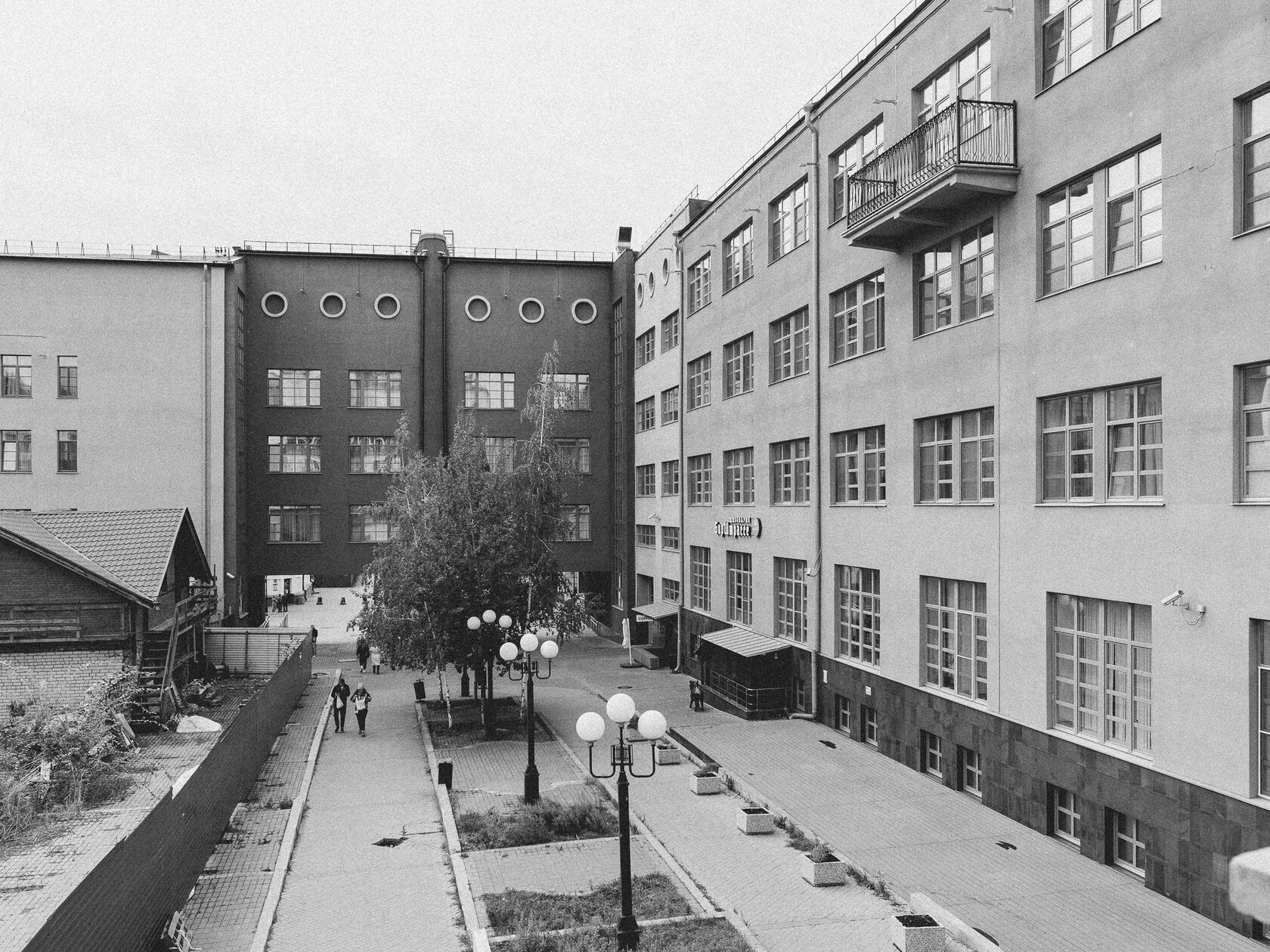
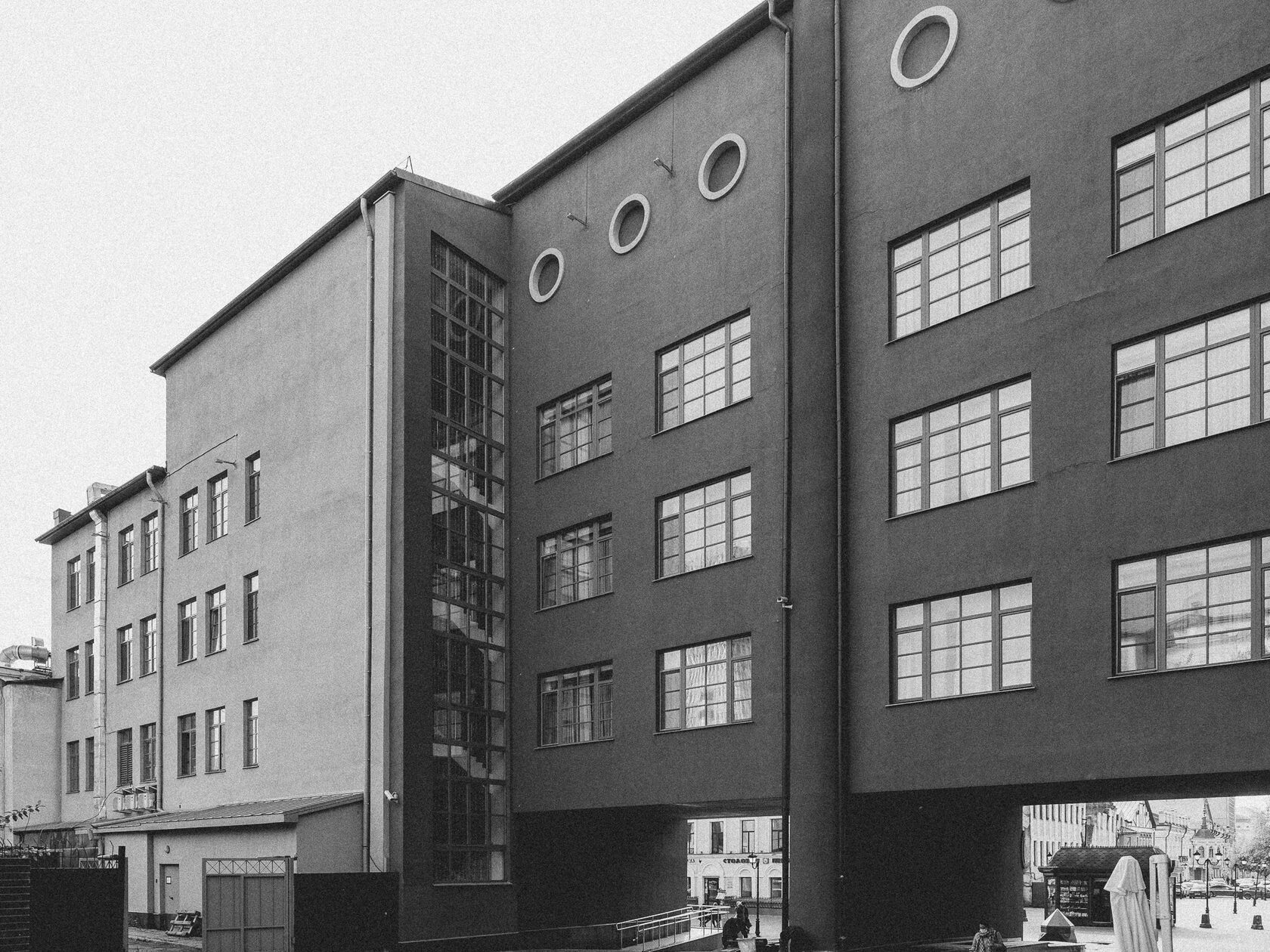
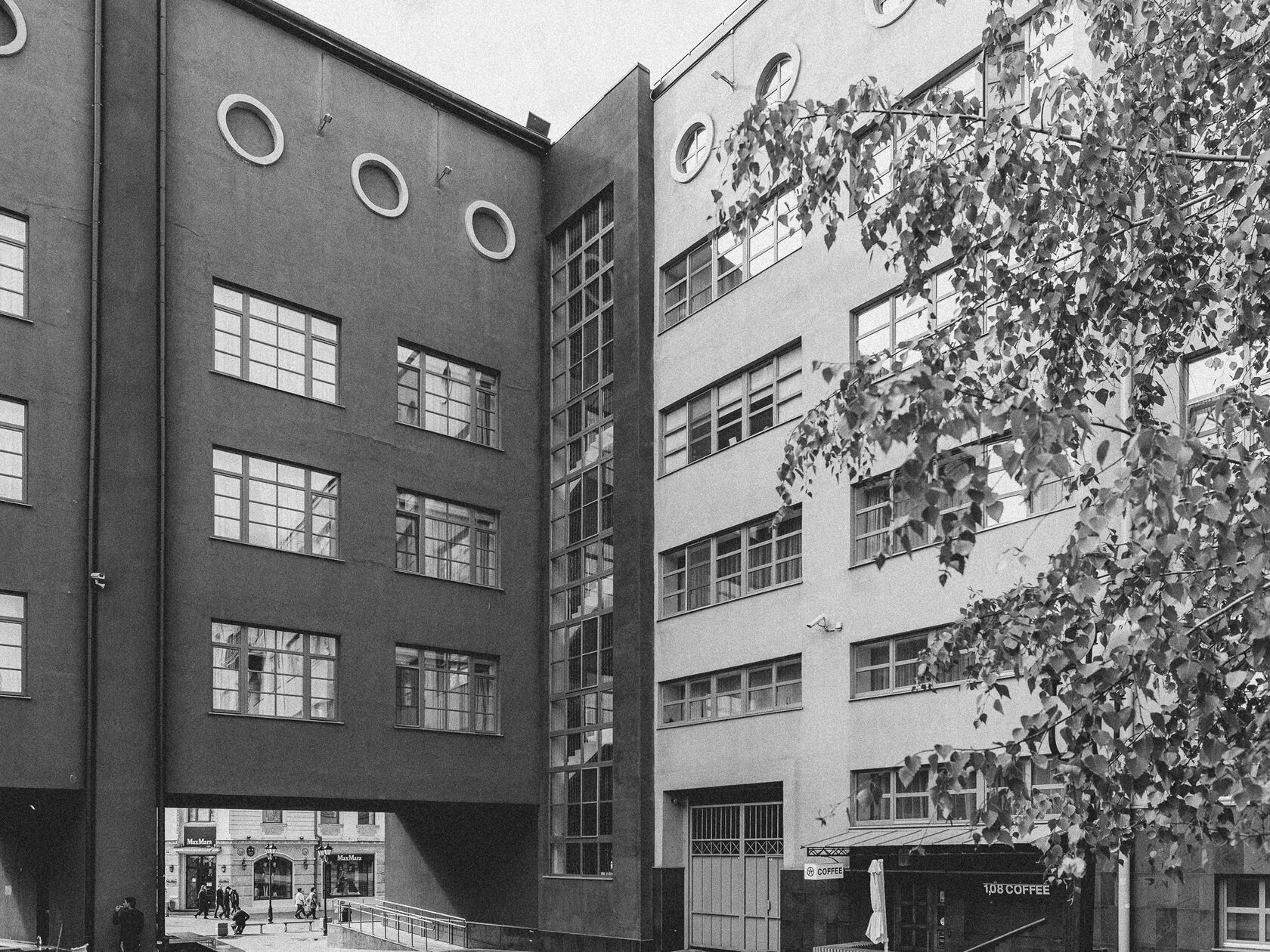
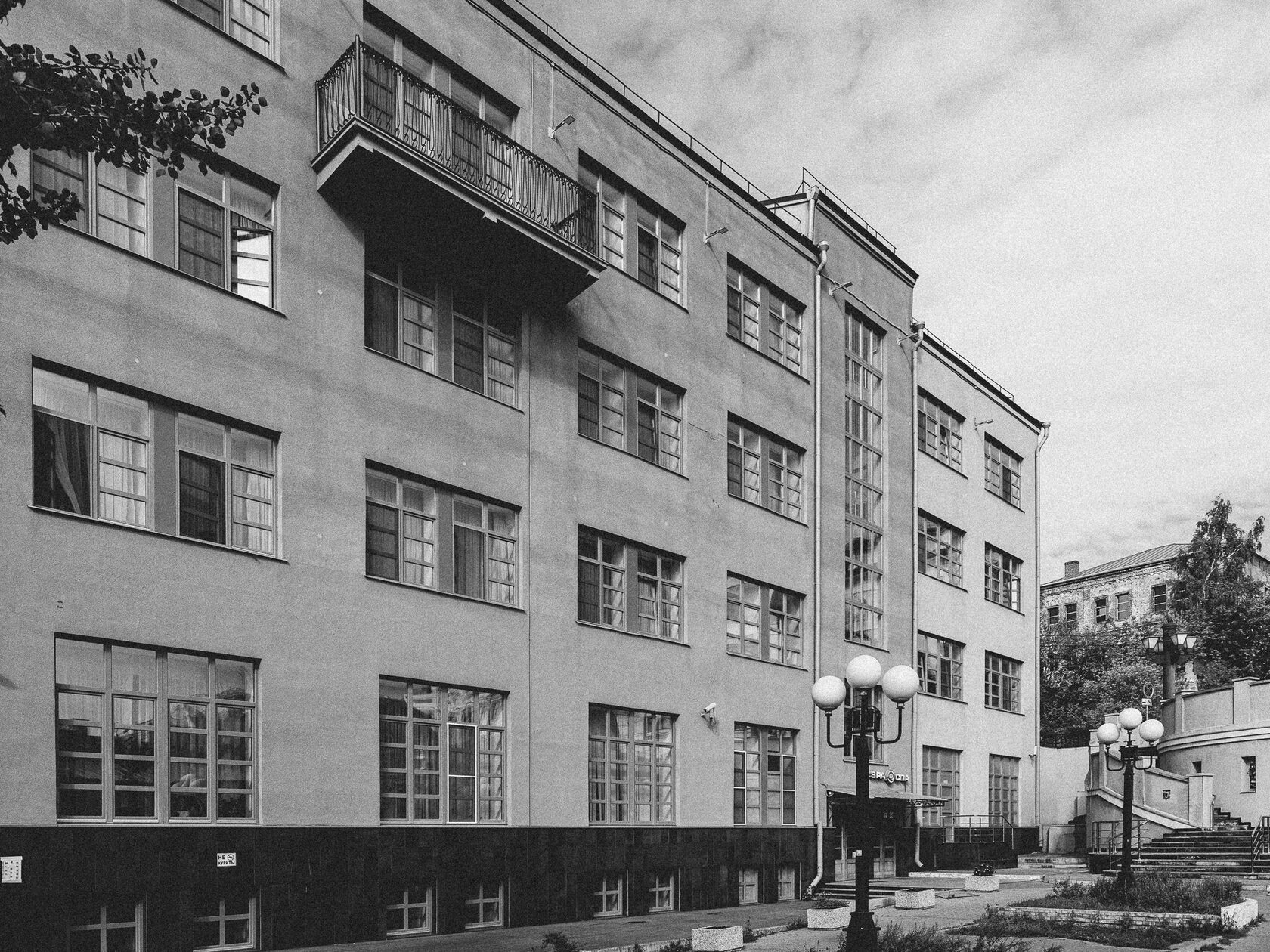
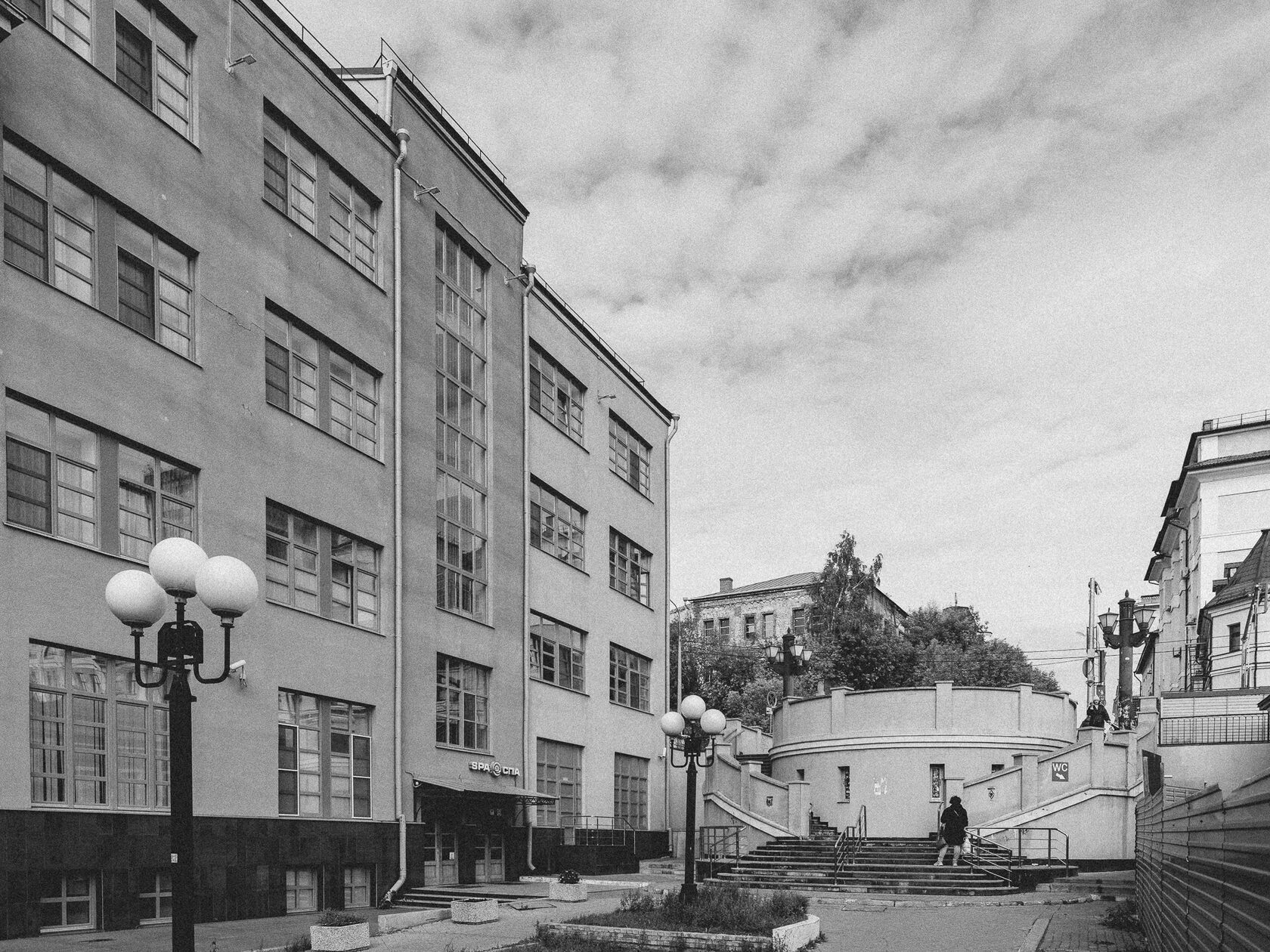
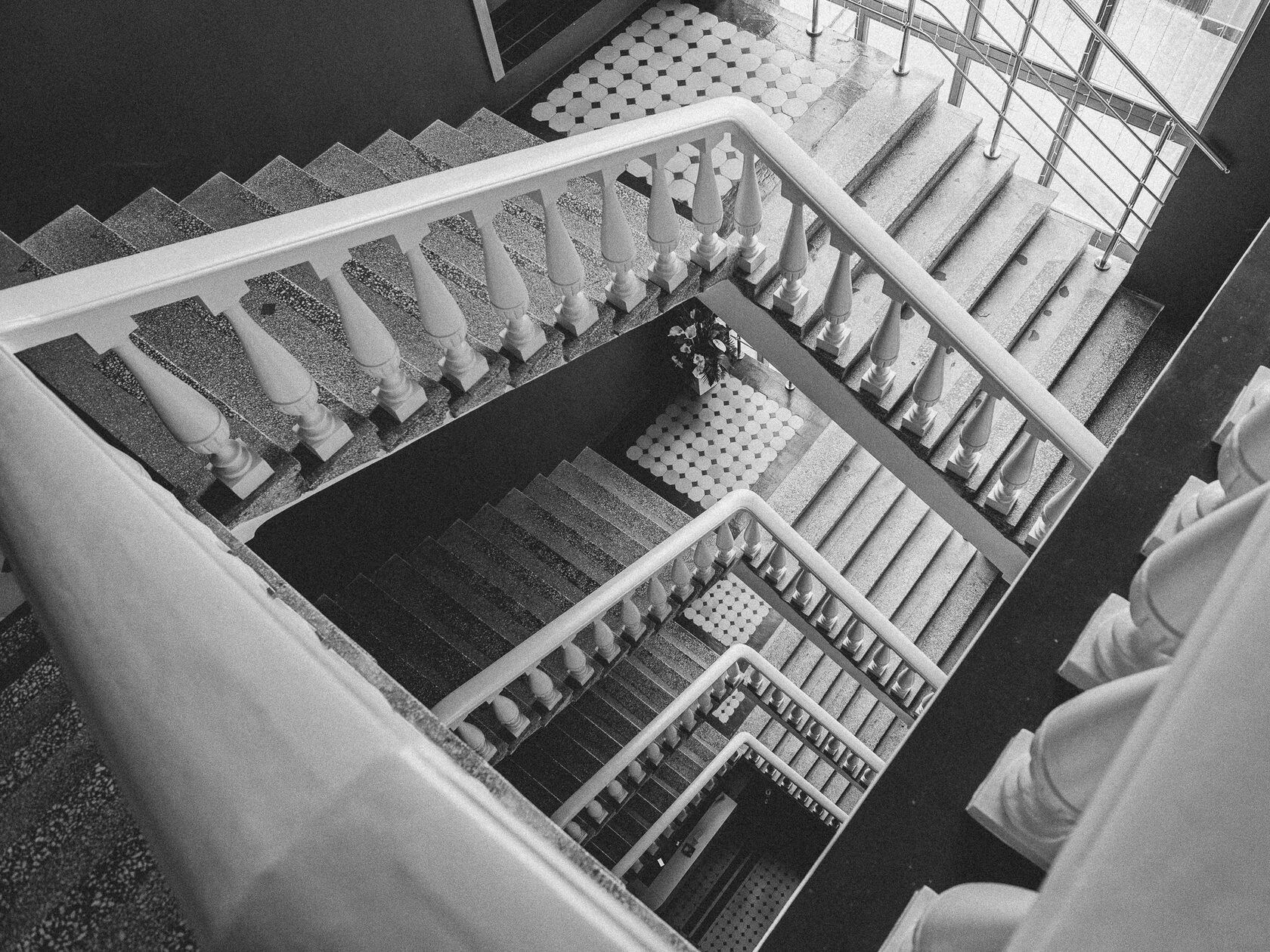
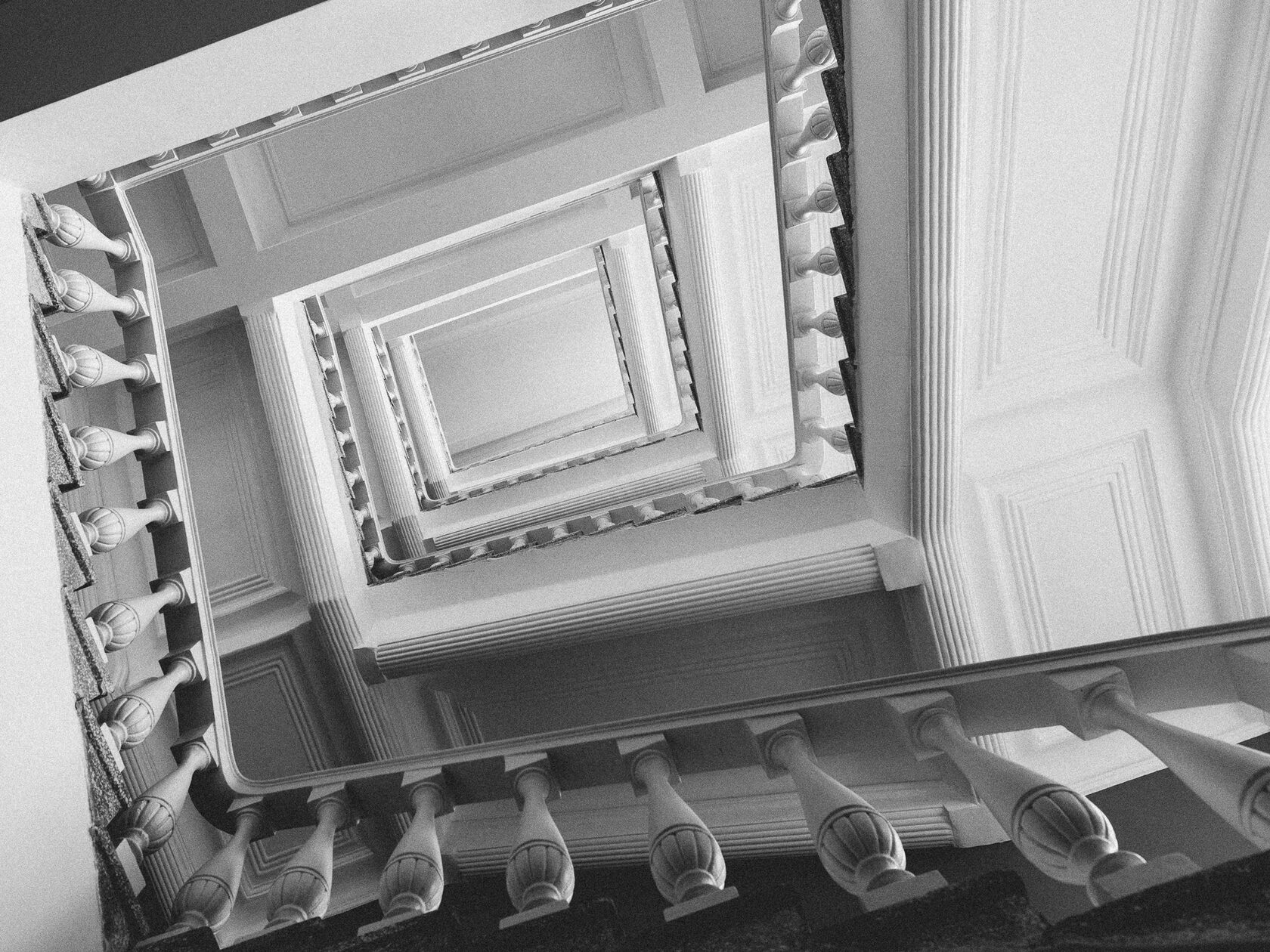
Apartment houseДоходный дом公寓楼MietshausImmeuble de rapportCasa de rentaPrédio de rendimento
The image keeps the central constructivist question close to the ground: how should people live together? Balconies, entrances, shared edges, and later alterations show where an old social model meets private use.Кадр удерживает главный бытовой вопрос конструктивизма: как людям жить вместе? Балконы, входы, общие границы и поздние изменения показывают место, где старая социальная модель сталкивается с частным использованием.画面把建构主义最日常的问题拉回地面:人们该如何共同生活?阳台、入口、共享边界和后来的改动,显示出旧的社会模型如何与私人使用相遇。Das Bild hält die zentrale Alltagsfrage des Konstruktivismus nahe am Boden: Wie sollen Menschen zusammenleben? Balkone, Eingänge, gemeinsame Kanten und spätere Veränderungen zeigen, wo ein altes Sozialmodell auf private Nutzung trifft.L'image garde au ras du sol la question centrale du constructivisme : comment vivre ensemble ? Balcons, entrées, limites partagées et transformations ultérieures montrent l'endroit où un ancien modèle social rencontre l'usage privé.La imagen mantiene cerca del suelo la pregunta central del constructivismo: ¿cómo deben vivir juntas las personas? Balcones, entradas, bordes compartidos y alteraciones posteriores muestran dónde un viejo modelo social se encuentra con el uso privado.A imagem mantém rente ao chão a pergunta central do construtivismo: como as pessoas devem viver juntas? Varandas, entradas, limites compartilhados e alterações posteriores mostram onde um antigo modelo social encontra o uso privado.
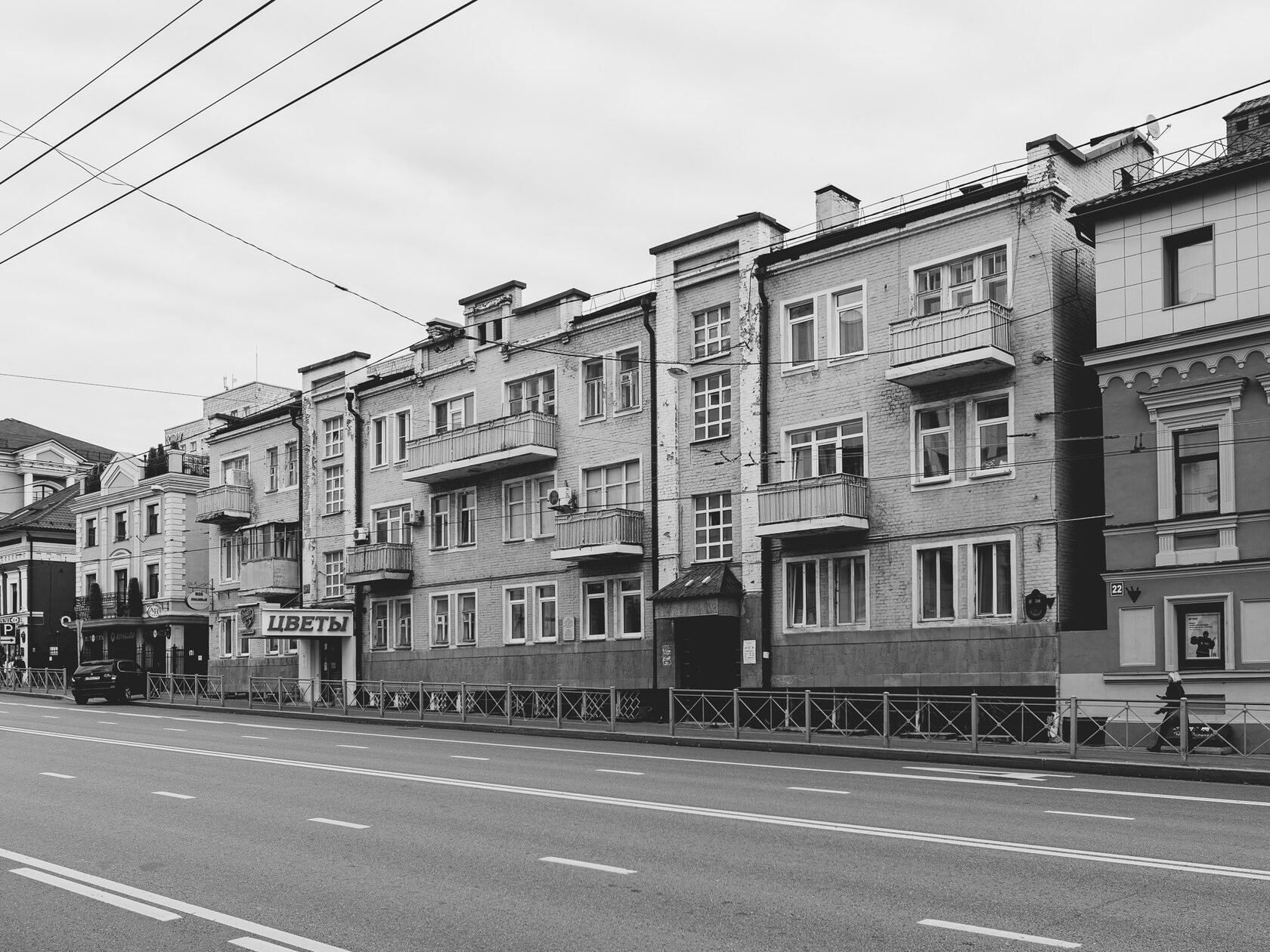
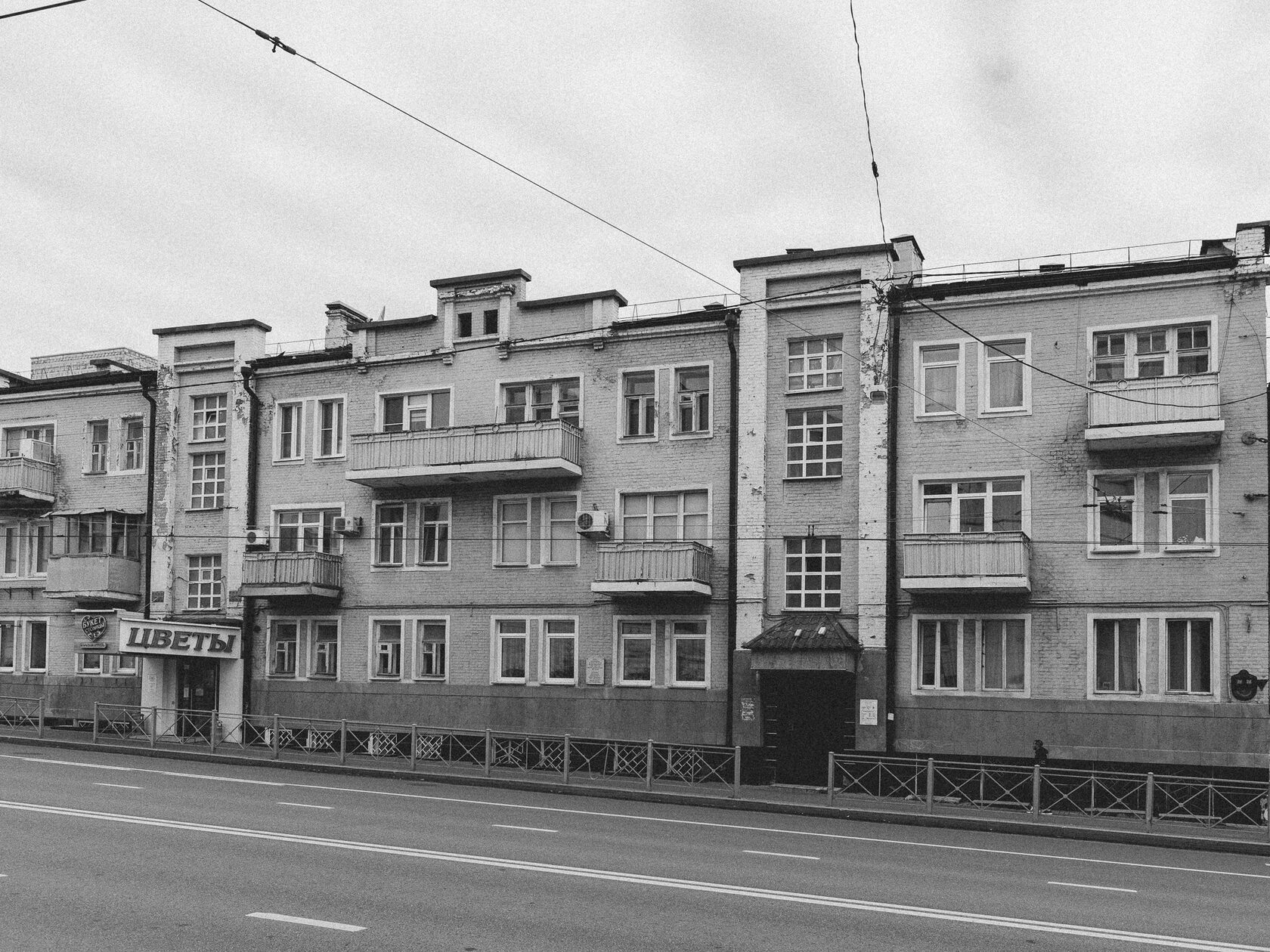
Kazan Institute of Chemical TechnologyКазанский химико-технологический институт喀山化学技术学院Kasaner Institut für ChemietechnologieInstitut de technologie chimique de KazanInstituto de Tecnología Química de KazánInstituto de Tecnologia Química de Kazan
Education appears here as a public form. The photographs look at how knowledge is given mass, facade, entrances, and repetition: an institution trying to appear open, rational, and structurally new.Образование здесь становится публичной формой. Фотографии смотрят на то, как знанию дают массу, фасад, входы и повтор: институция пытается выглядеть открытой, рациональной и структурно новой.教育在这里成为公共形式。照片观察知识如何获得体量、立面、入口和重复:一种机构试图显得开放、理性并具有新的结构。Bildung erscheint hier als öffentliche Form. Die Fotografien schauen darauf, wie Wissen Masse, Fassade, Eingänge und Wiederholung erhält: eine Institution, die offen, rational und strukturell neu wirken will.L'éducation apparaît ici comme une forme publique. Les photographies regardent comment le savoir reçoit une masse, une façade, des entrées et une répétition : une institution qui cherche à paraître ouverte, rationnelle et structurellement nouvelle.La educación aparece aquí como forma pública. Las fotografías observan cómo el conocimiento recibe masa, fachada, entradas y repetición: una institución que intenta parecer abierta, racional y estructuralmente nueva.A educação aparece aqui como forma pública. As fotografias observam como o conhecimento ganha massa, fachada, entradas e repetição: uma instituição tentando parecer aberta, racional e estruturalmente nova.
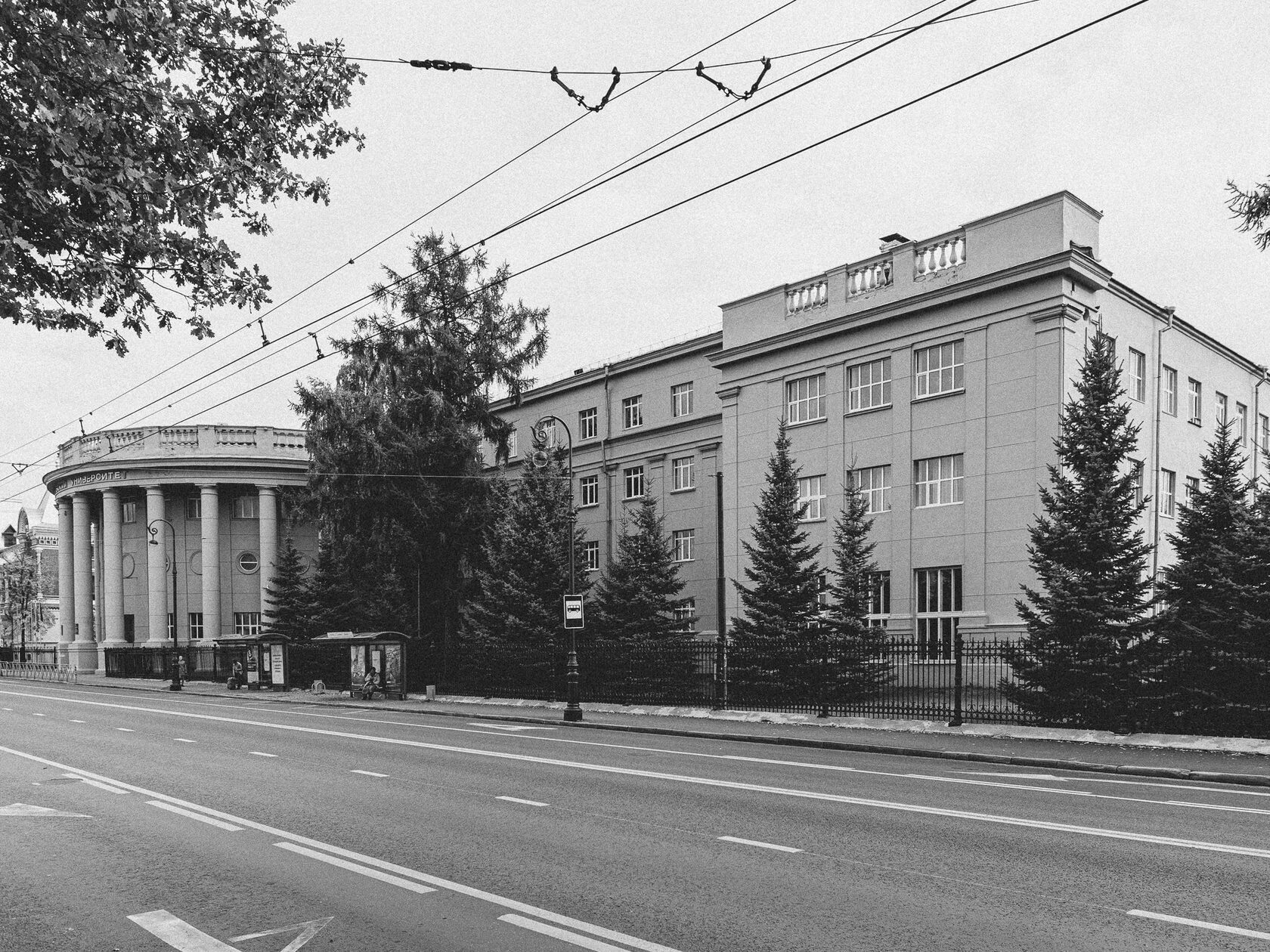
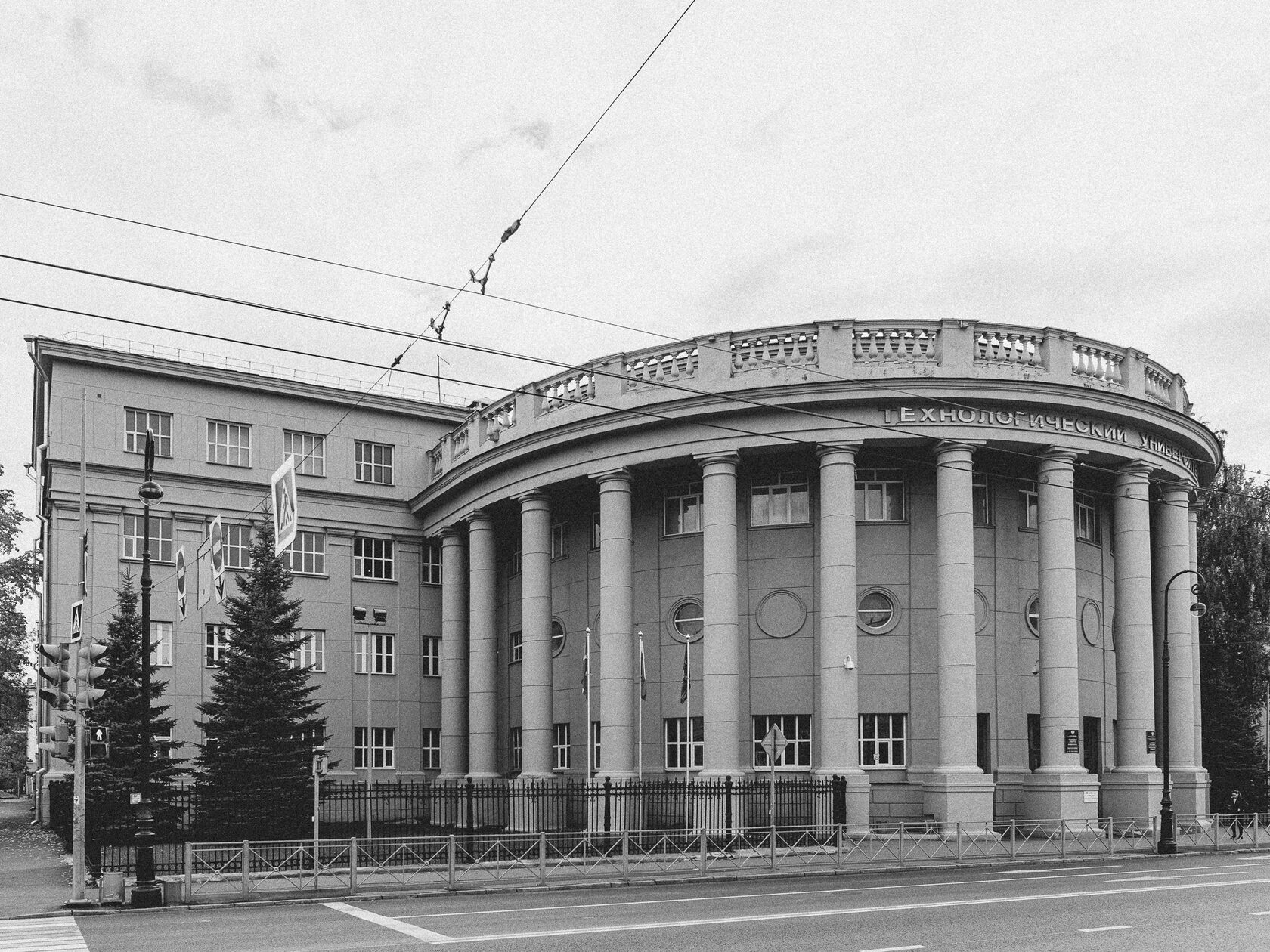
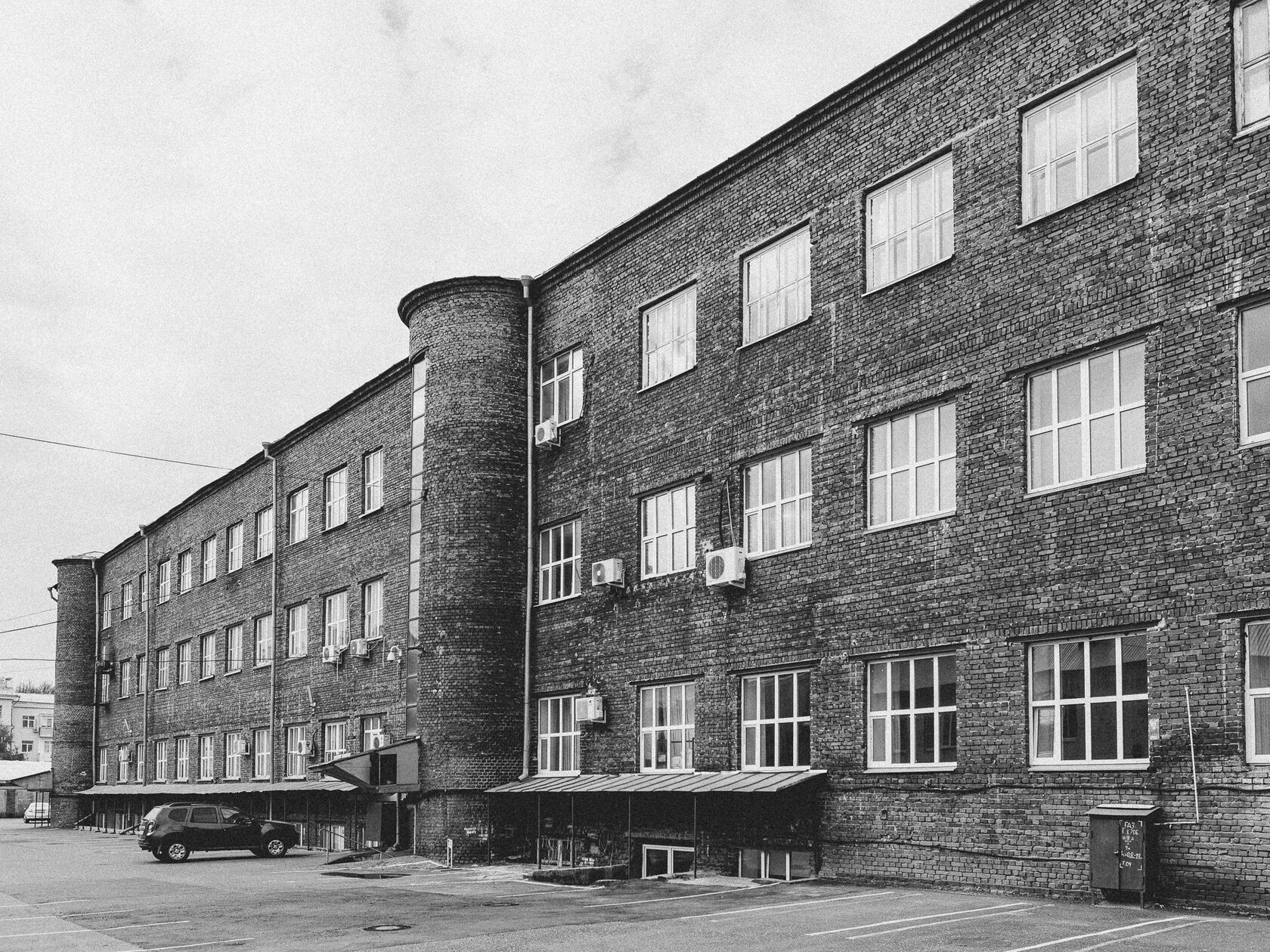
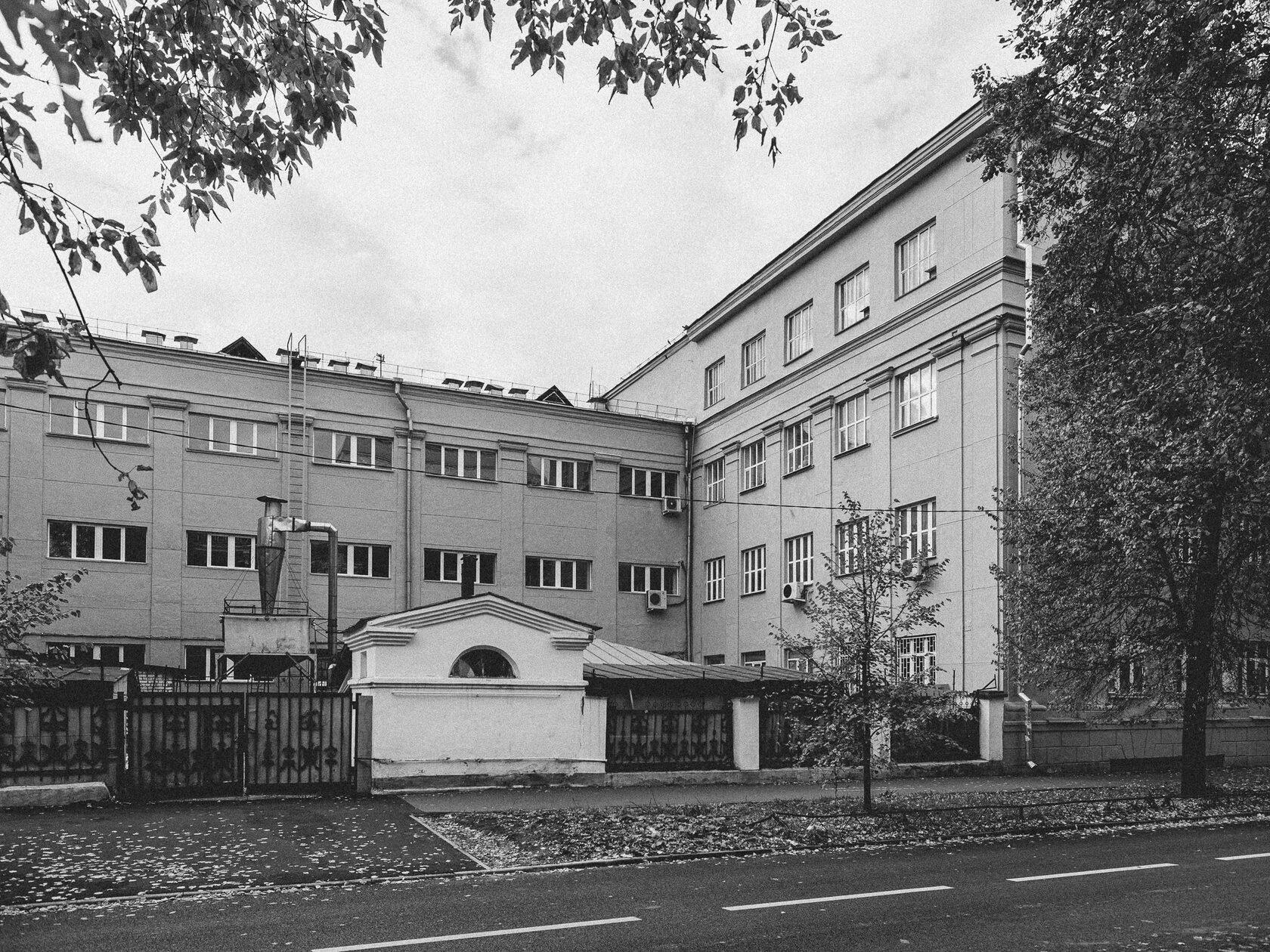
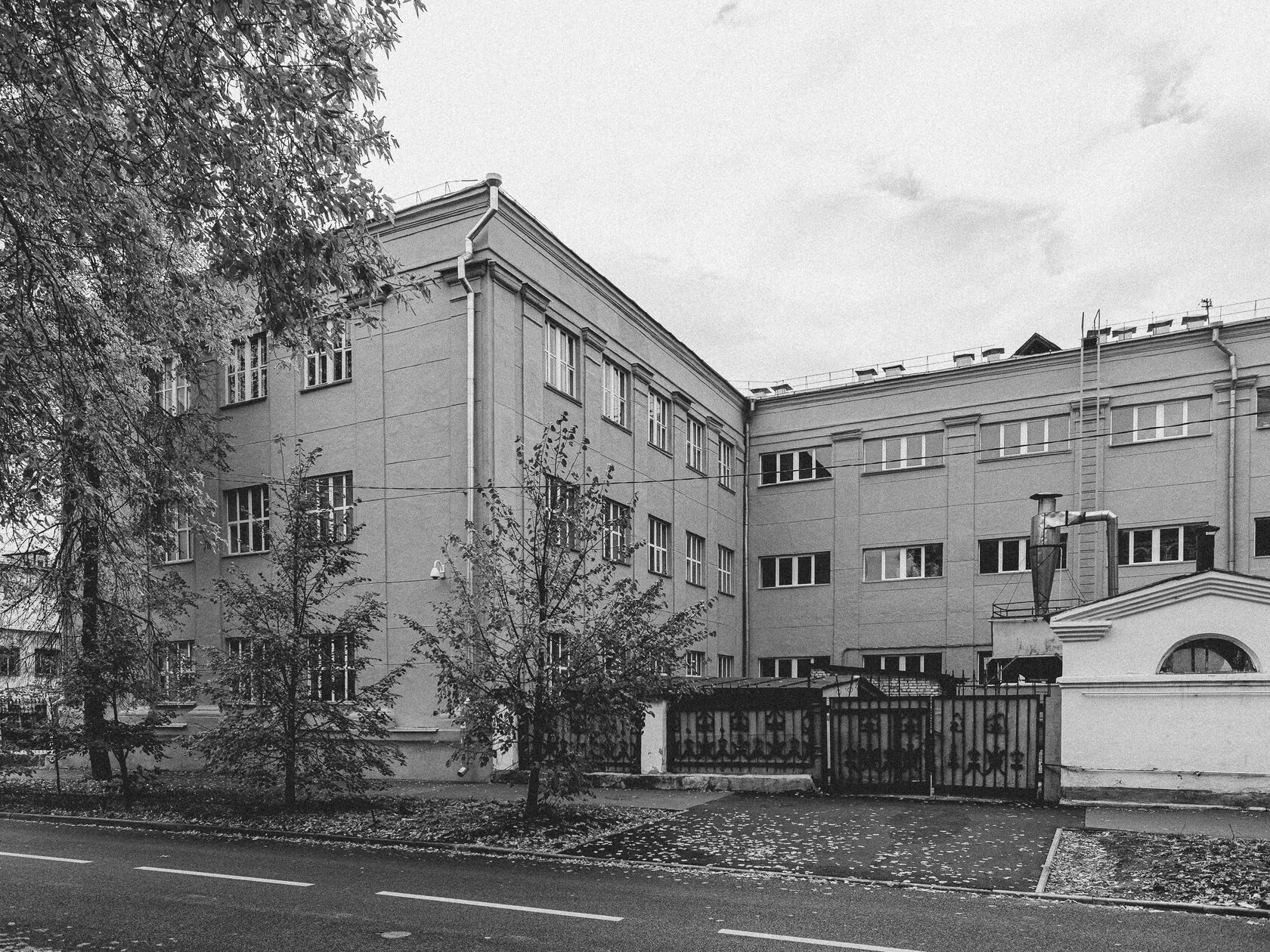
HouseДом住宅HausMaisonCasaCasa
The object remains in the sequence for the precision of its trace: a facade, a rhythm, a corner, a proportion. It does not need to be spectacular; it works as one more sentence in a larger architectural language.Объект остается в серии благодаря точности следа: фасад, ритм, угол, пропорция. Ему не нужно быть эффектным; он работает как еще одна фраза в большом архитектурном языке.这个对象留在系列中,是因为它的痕迹足够精确:立面、节奏、转角、比例。它不需要壮观;它像更大建筑语言中的又一句话。Das Objekt bleibt wegen der Präzision seiner Spur in der Serie: Fassade, Rhythmus, Ecke, Proportion. Es muss nicht spektakulär sein; es funktioniert als ein weiterer Satz in einer größeren architektonischen Sprache.L'objet demeure dans la série par la précision de sa trace : façade, rythme, angle, proportion. Il n'a pas besoin d'être spectaculaire ; il fonctionne comme une phrase de plus dans un langage architectural plus vaste.El objeto permanece en la serie por la precisión de su huella: fachada, ritmo, esquina, proporción. No necesita ser espectacular; funciona como una frase más dentro de un lenguaje arquitectónico mayor.O objeto permanece na série pela precisão de seu vestígio: fachada, ritmo, esquina, proporção. Não precisa ser espetacular; funciona como mais uma frase dentro de uma linguagem arquitetônica maior.
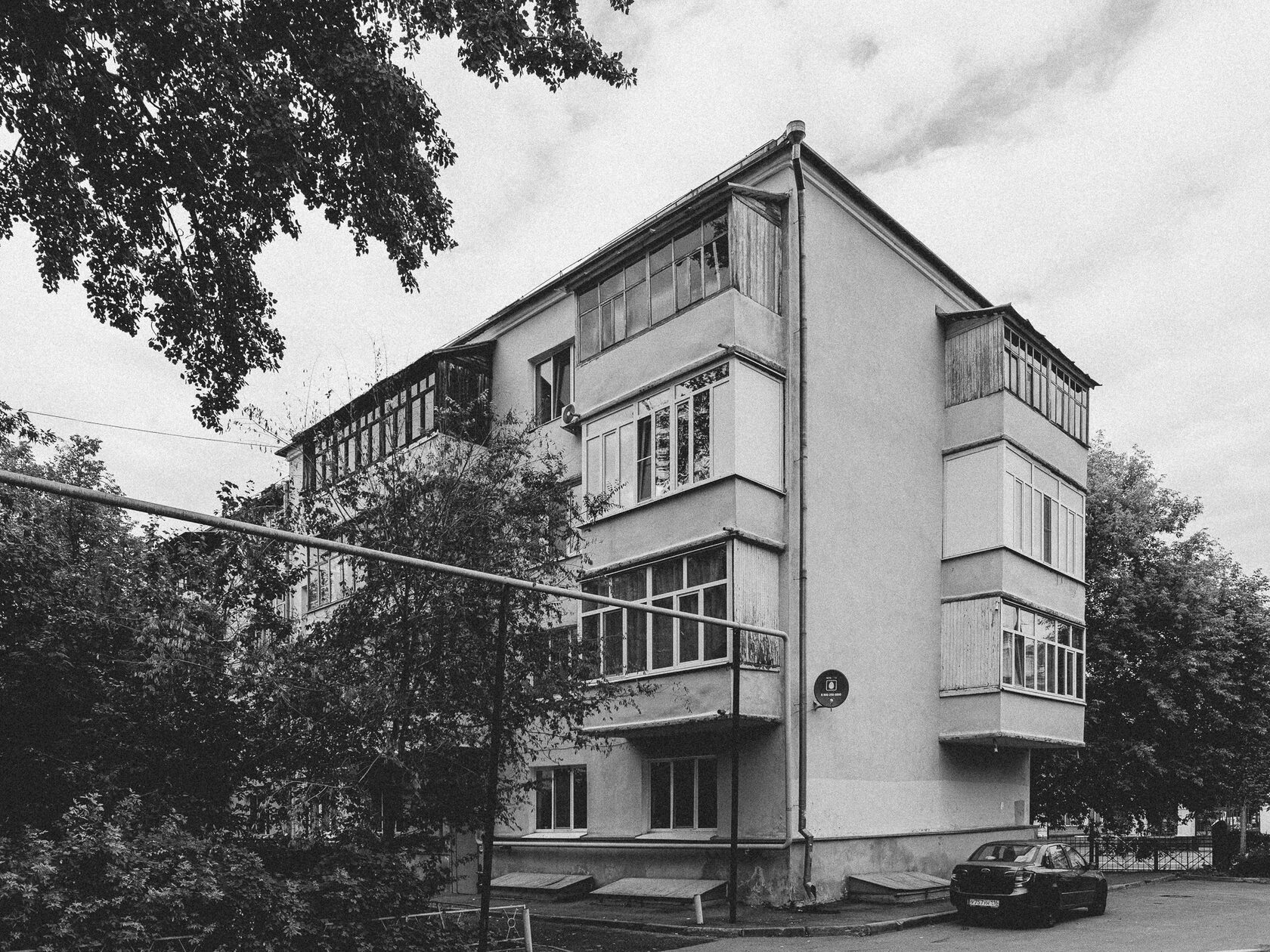
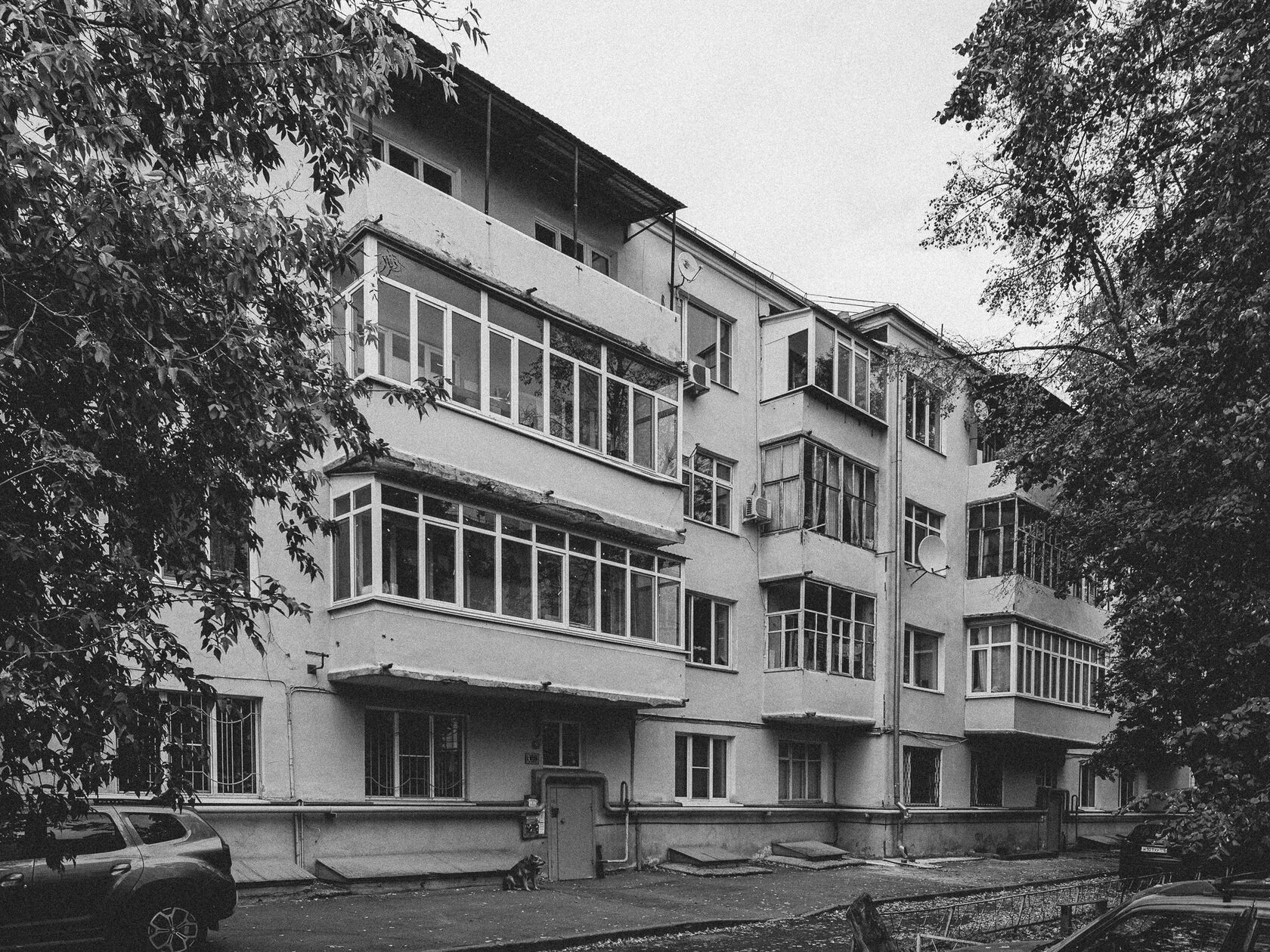
Bath number 3Баня № 3第 3 浴场Badehaus Nr. 3Bains n° 3Baños n.º 3Banho público n.º 3
This is the social body seen through architecture. Health, hygiene, care, and discipline are not private matters here, but a spatial program: corridors, volumes, entrances, and surfaces arranged for collective maintenance.Это социальное тело, увиденное через архитектуру. Здоровье, гигиена, уход и дисциплина здесь не частное дело, а пространственная программа: коридоры, объемы, входы и поверхности, выстроенные для коллективного обслуживания жизни.这是通过建筑看到的社会身体。健康、卫生、照护和纪律在这里不是私人事务,而是一套空间程序:走廊、体量、入口和表面被组织起来,服务于集体生活的维护。Hier wird der soziale Körper durch Architektur sichtbar. Gesundheit, Hygiene, Fürsorge und Disziplin sind keine privaten Angelegenheiten, sondern ein räumliches Programm: Korridore, Volumen, Eingänge und Oberflächen für kollektive Erhaltung.C'est le corps social vu à travers l'architecture. Santé, hygiène, soin et discipline ne sont pas ici des affaires privées, mais un programme spatial : couloirs, volumes, entrées et surfaces organisés pour l'entretien collectif de la vie.Es el cuerpo social visto a través de la arquitectura. Salud, higiene, cuidado y disciplina no son aquí asuntos privados, sino un programa espacial: pasillos, volúmenes, entradas y superficies organizados para el mantenimiento colectivo de la vida.É o corpo social visto pela arquitetura. Saúde, higiene, cuidado e disciplina não são aqui questões privadas, mas um programa espacial: corredores, volumes, entradas e superfícies organizados para a manutenção coletiva da vida.
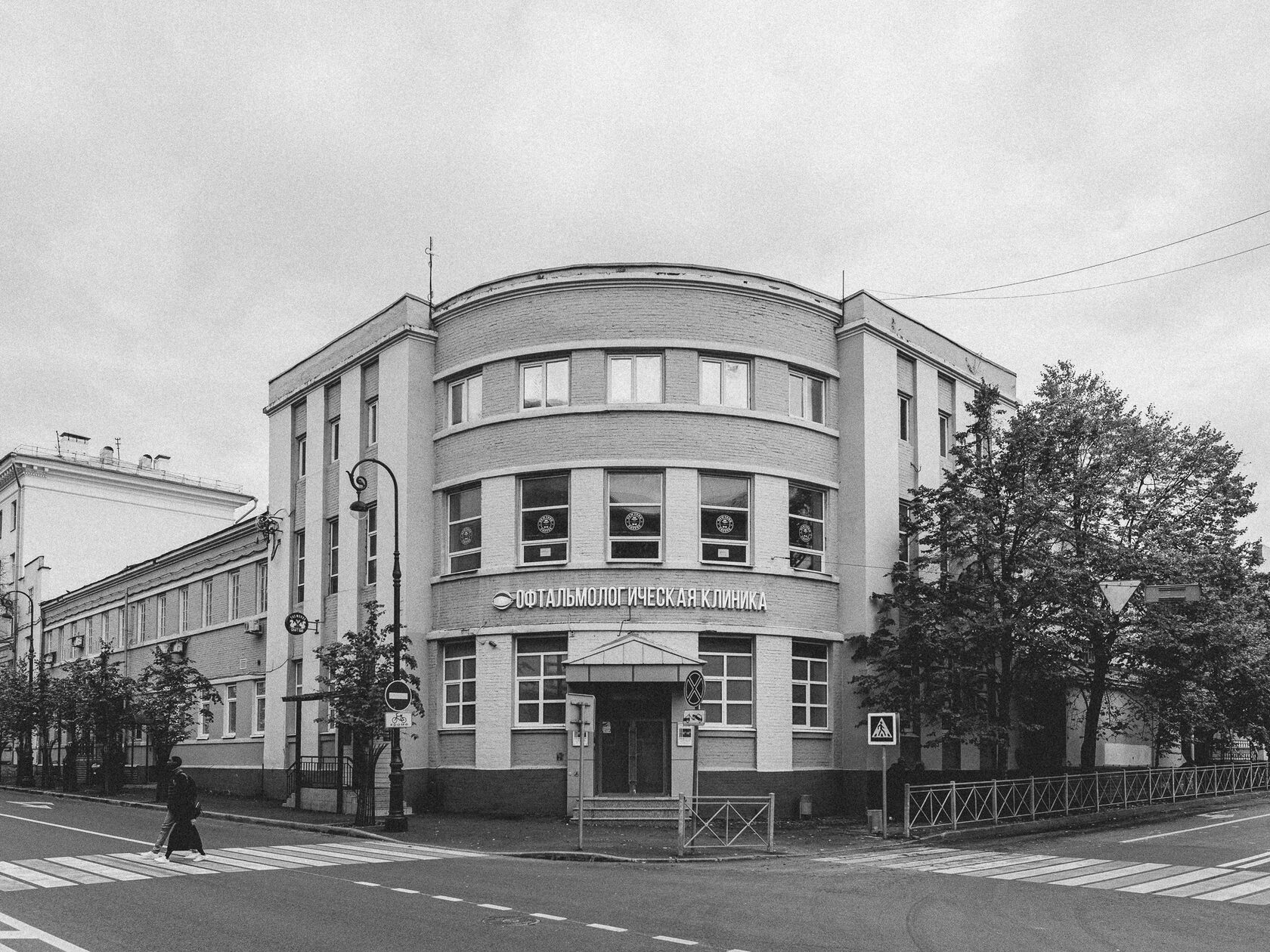
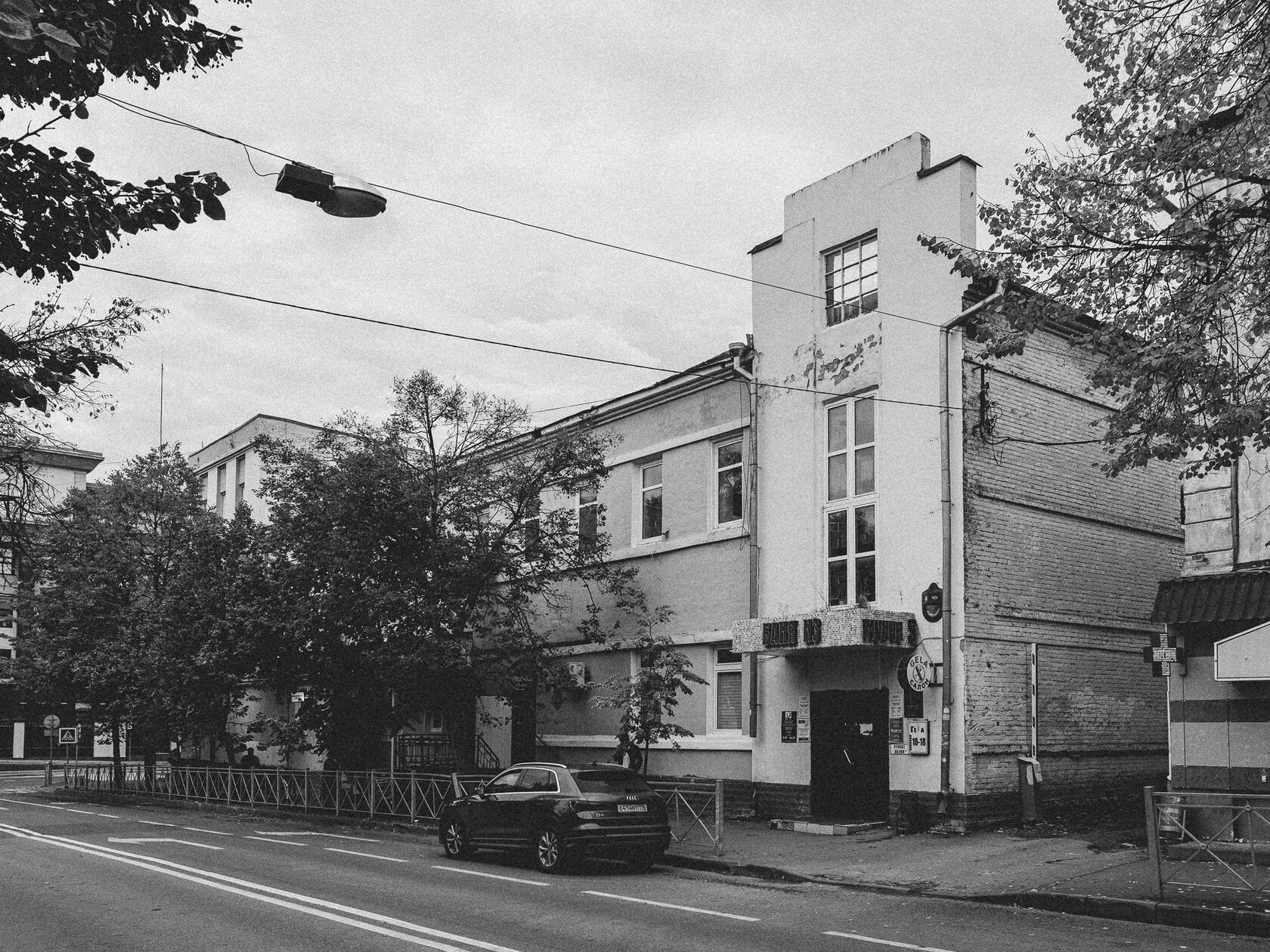
Residential building of NKVD employees of the Tatar ASSRЖилой дом сотрудников НКВД Татарской АССР鞑靼自治苏维埃社会主义共和国 NKVD 员工住宅Wohnhaus der NKWD-Mitarbeiter der Tatarischen ASSRImmeuble des employés du NKVD de la RSSA tatareEdificio residencial de empleados del NKVD de la RSSA tártaraEdifício residencial dos funcionários do NKVD da RSSA Tártara
The image keeps the central constructivist question close to the ground: how should people live together? Balconies, entrances, shared edges, and later alterations show where an old social model meets private use.Кадр удерживает главный бытовой вопрос конструктивизма: как людям жить вместе? Балконы, входы, общие границы и поздние изменения показывают место, где старая социальная модель сталкивается с частным использованием.画面把建构主义最日常的问题拉回地面:人们该如何共同生活?阳台、入口、共享边界和后来的改动,显示出旧的社会模型如何与私人使用相遇。Das Bild hält die zentrale Alltagsfrage des Konstruktivismus nahe am Boden: Wie sollen Menschen zusammenleben? Balkone, Eingänge, gemeinsame Kanten und spätere Veränderungen zeigen, wo ein altes Sozialmodell auf private Nutzung trifft.L'image garde au ras du sol la question centrale du constructivisme : comment vivre ensemble ? Balcons, entrées, limites partagées et transformations ultérieures montrent l'endroit où un ancien modèle social rencontre l'usage privé.La imagen mantiene cerca del suelo la pregunta central del constructivismo: ¿cómo deben vivir juntas las personas? Balcones, entradas, bordes compartidos y alteraciones posteriores muestran dónde un viejo modelo social se encuentra con el uso privado.A imagem mantém rente ao chão a pergunta central do construtivismo: como as pessoas devem viver juntas? Varandas, entradas, limites compartilhados e alterações posteriores mostram onde um antigo modelo social encontra o uso privado.
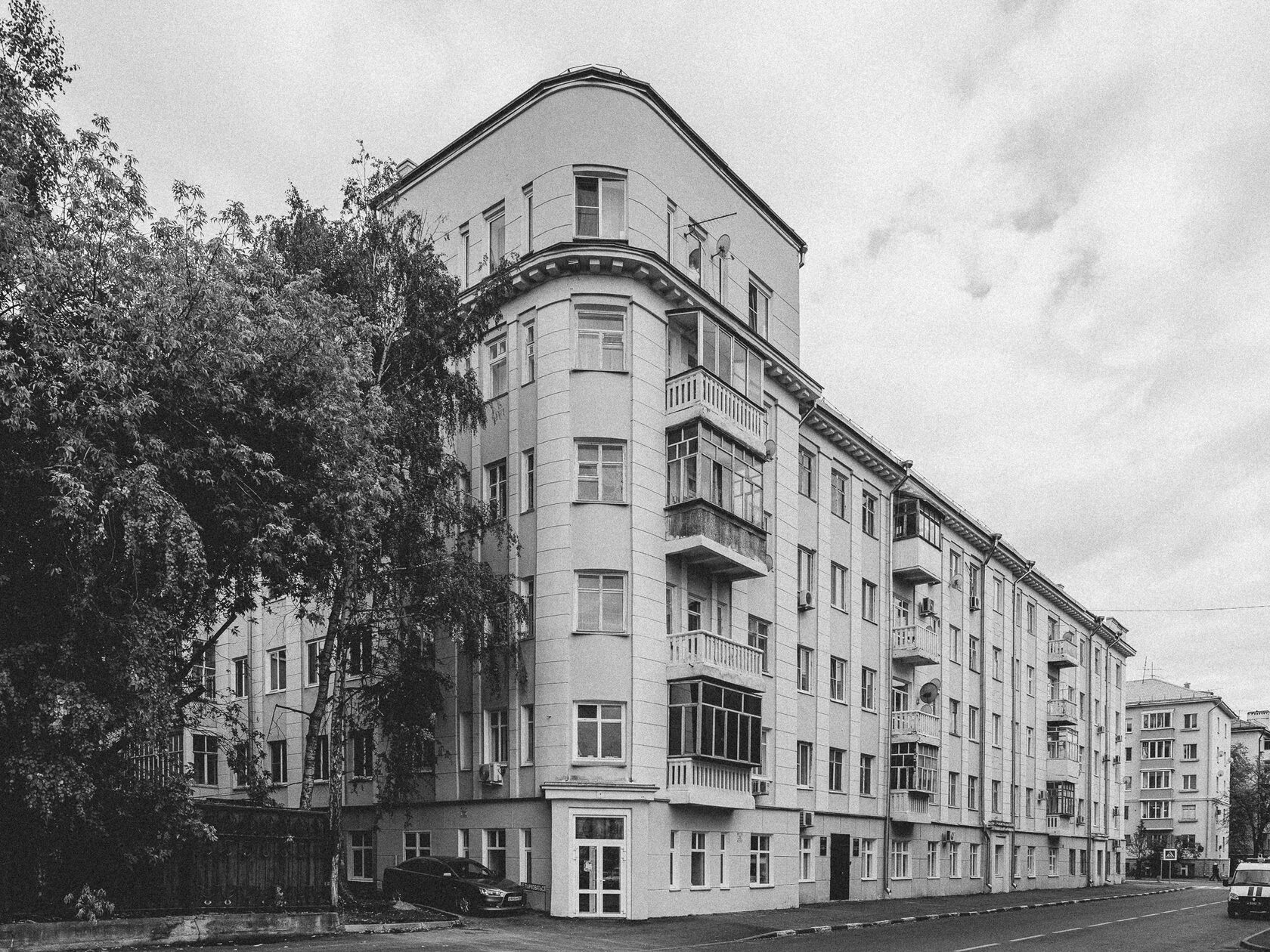
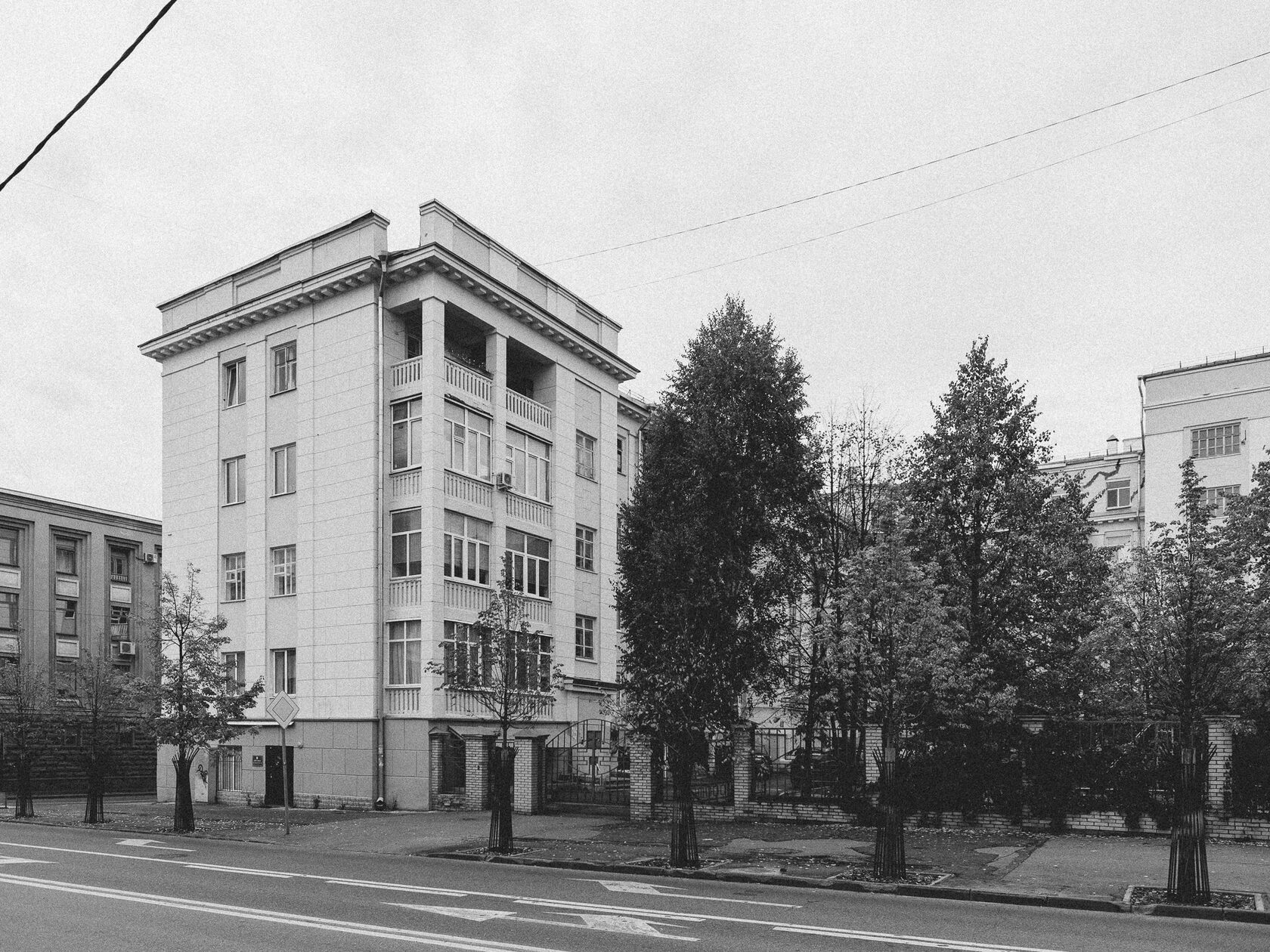
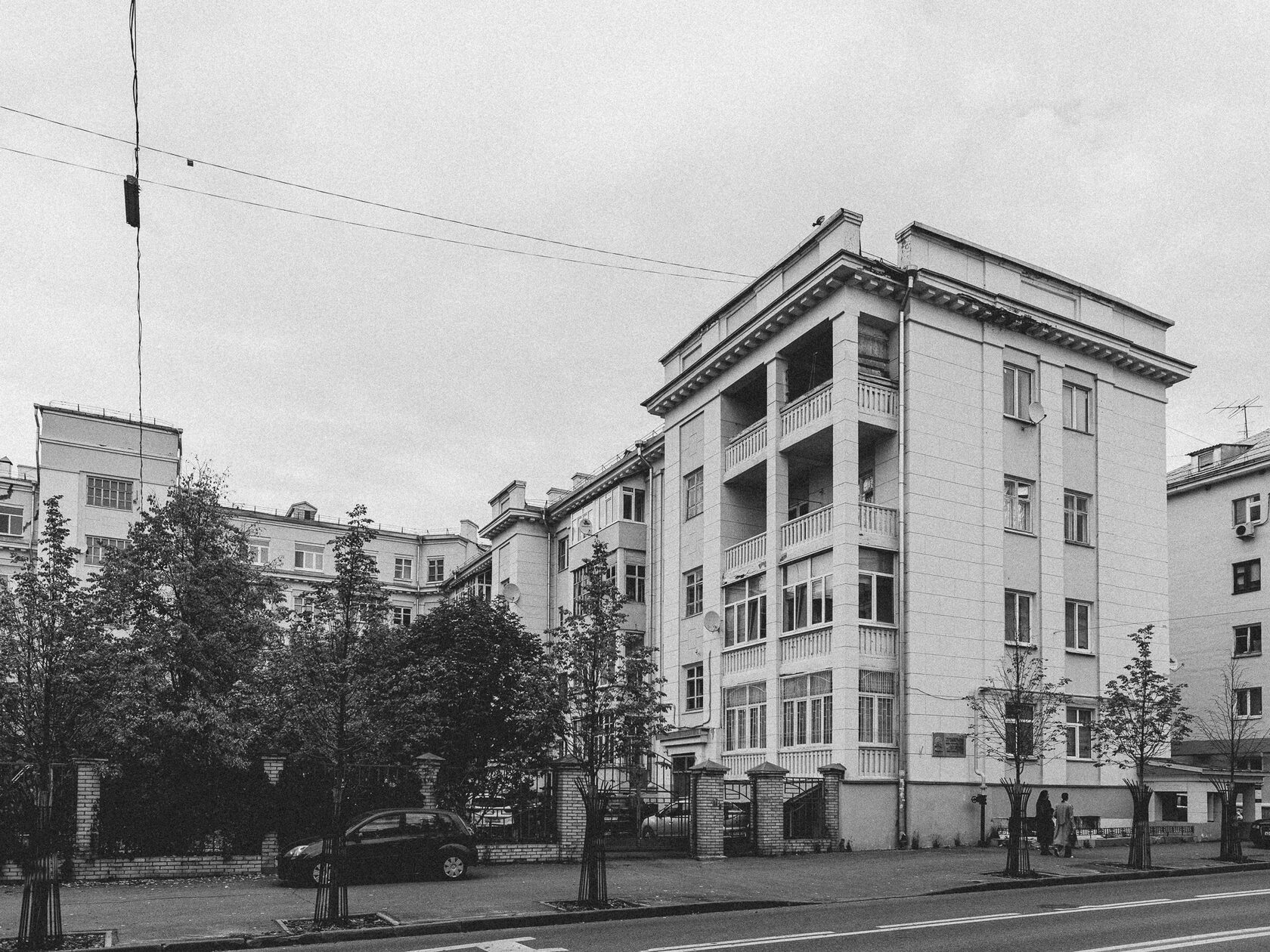
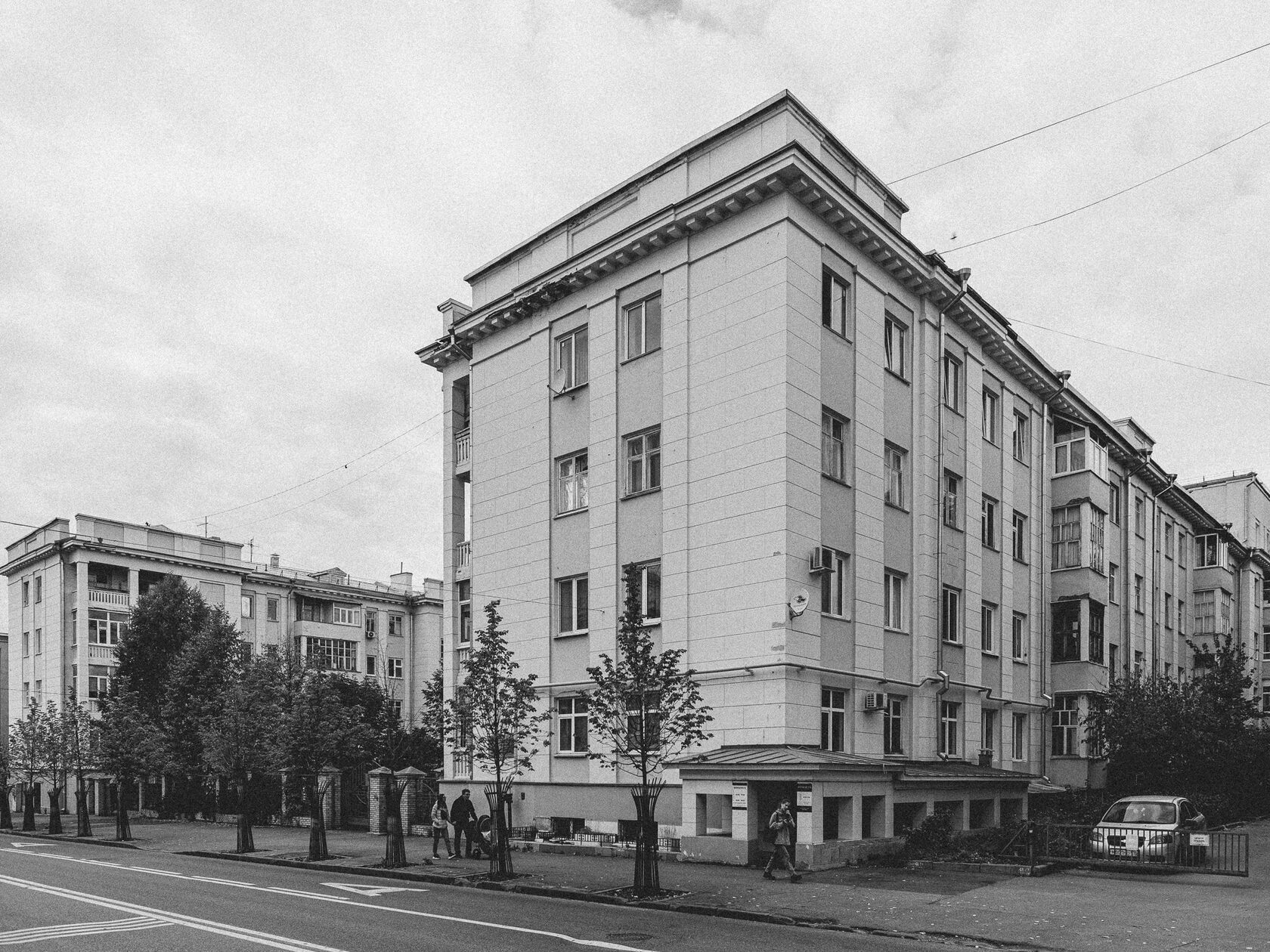
Mergasovsky houseМергасовский дом梅尔加索夫住宅Mergasowski-HausMaison MergasovskyCasa MergasovskyCasa Mergasovsky
The image keeps the central constructivist question close to the ground: how should people live together? Balconies, entrances, shared edges, and later alterations show where an old social model meets private use.Кадр удерживает главный бытовой вопрос конструктивизма: как людям жить вместе? Балконы, входы, общие границы и поздние изменения показывают место, где старая социальная модель сталкивается с частным использованием.画面把建构主义最日常的问题拉回地面:人们该如何共同生活?阳台、入口、共享边界和后来的改动,显示出旧的社会模型如何与私人使用相遇。Das Bild hält die zentrale Alltagsfrage des Konstruktivismus nahe am Boden: Wie sollen Menschen zusammenleben? Balkone, Eingänge, gemeinsame Kanten und spätere Veränderungen zeigen, wo ein altes Sozialmodell auf private Nutzung trifft.L'image garde au ras du sol la question centrale du constructivisme : comment vivre ensemble ? Balcons, entrées, limites partagées et transformations ultérieures montrent l'endroit où un ancien modèle social rencontre l'usage privé.La imagen mantiene cerca del suelo la pregunta central del constructivismo: ¿cómo deben vivir juntas las personas? Balcones, entradas, bordes compartidos y alteraciones posteriores muestran dónde un viejo modelo social se encuentra con el uso privado.A imagem mantém rente ao chão a pergunta central do construtivismo: como as pessoas devem viver juntas? Varandas, entradas, limites compartilhados e alterações posteriores mostram onde um antigo modelo social encontra o uso privado.
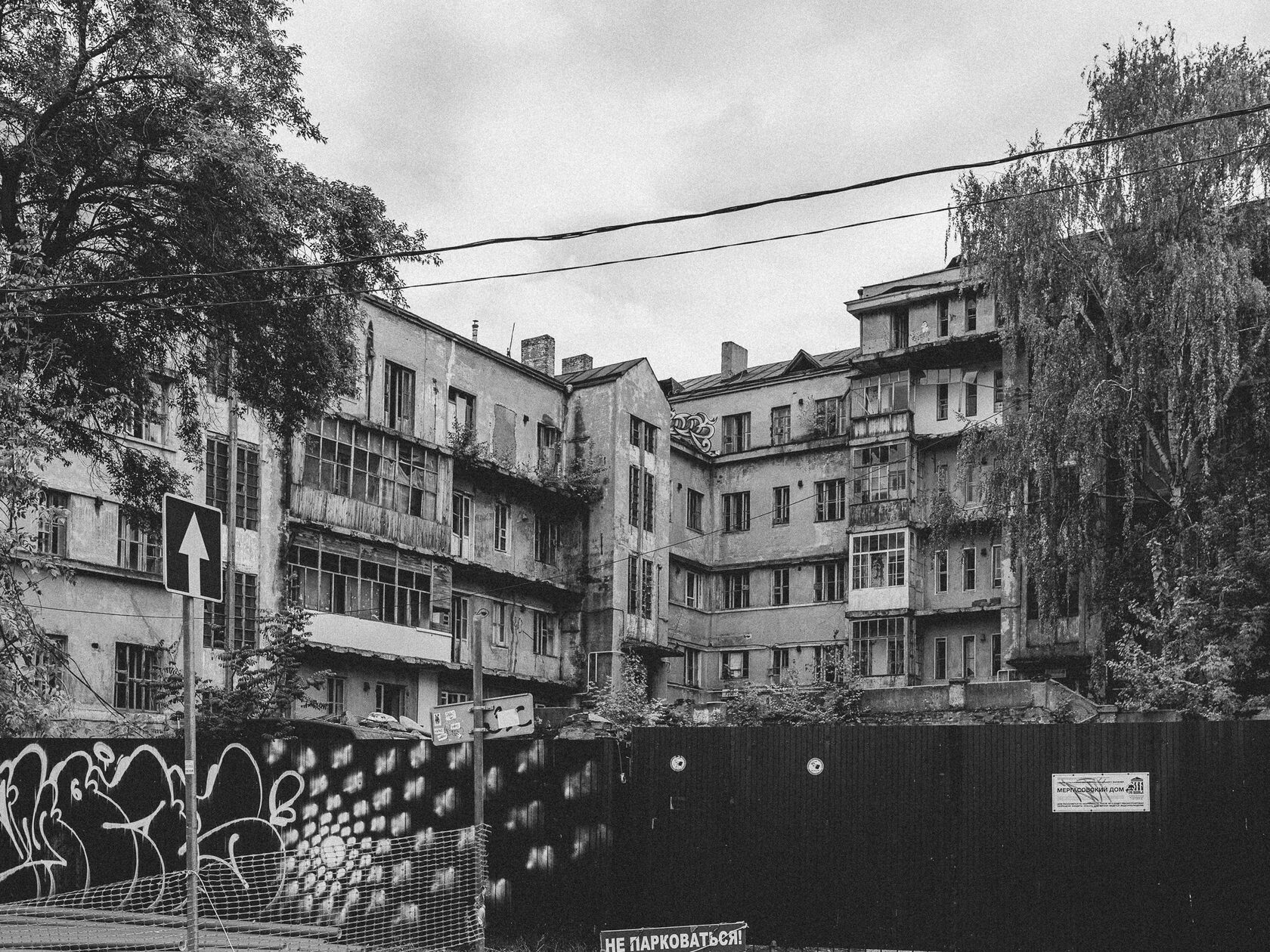
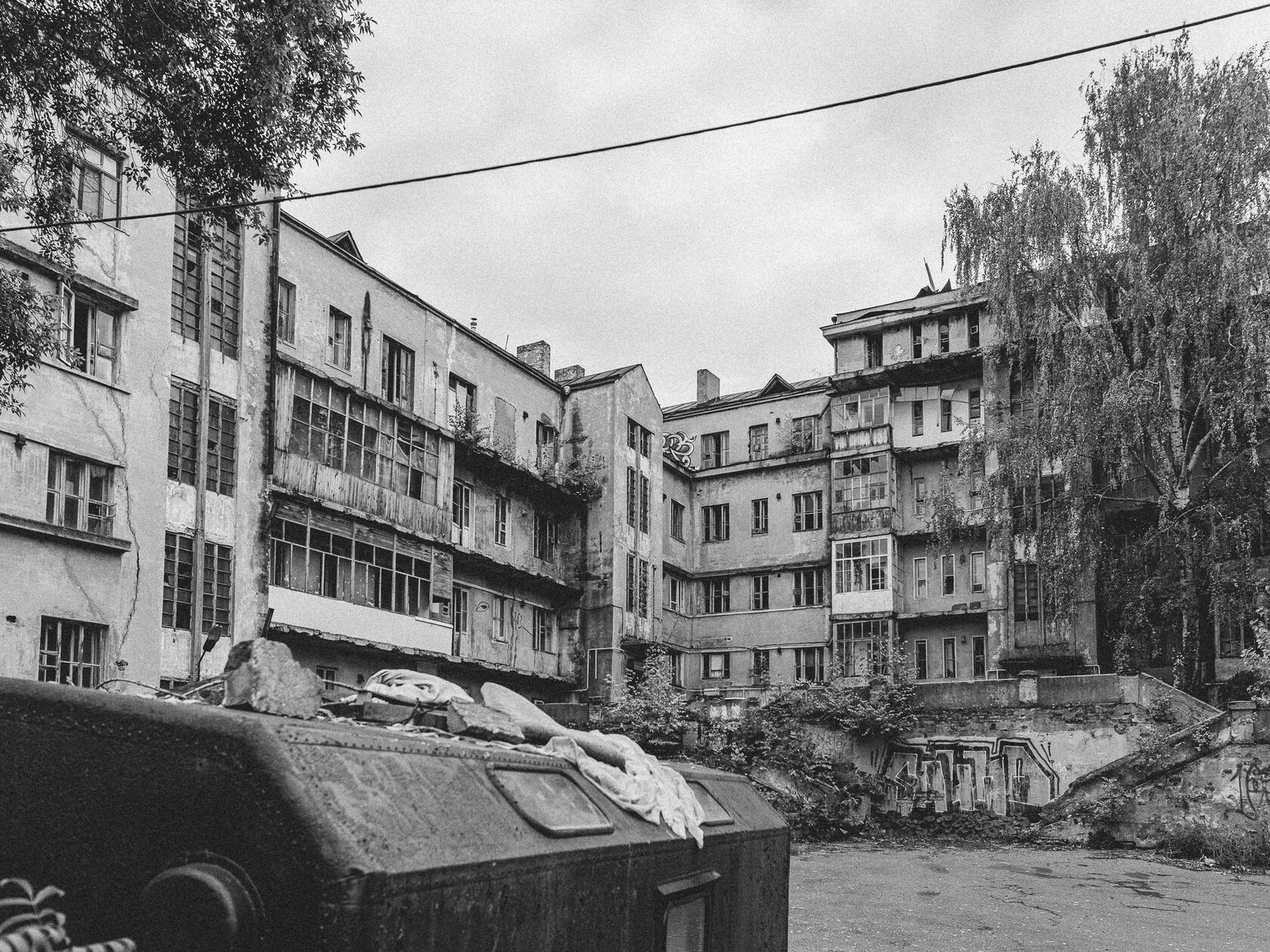
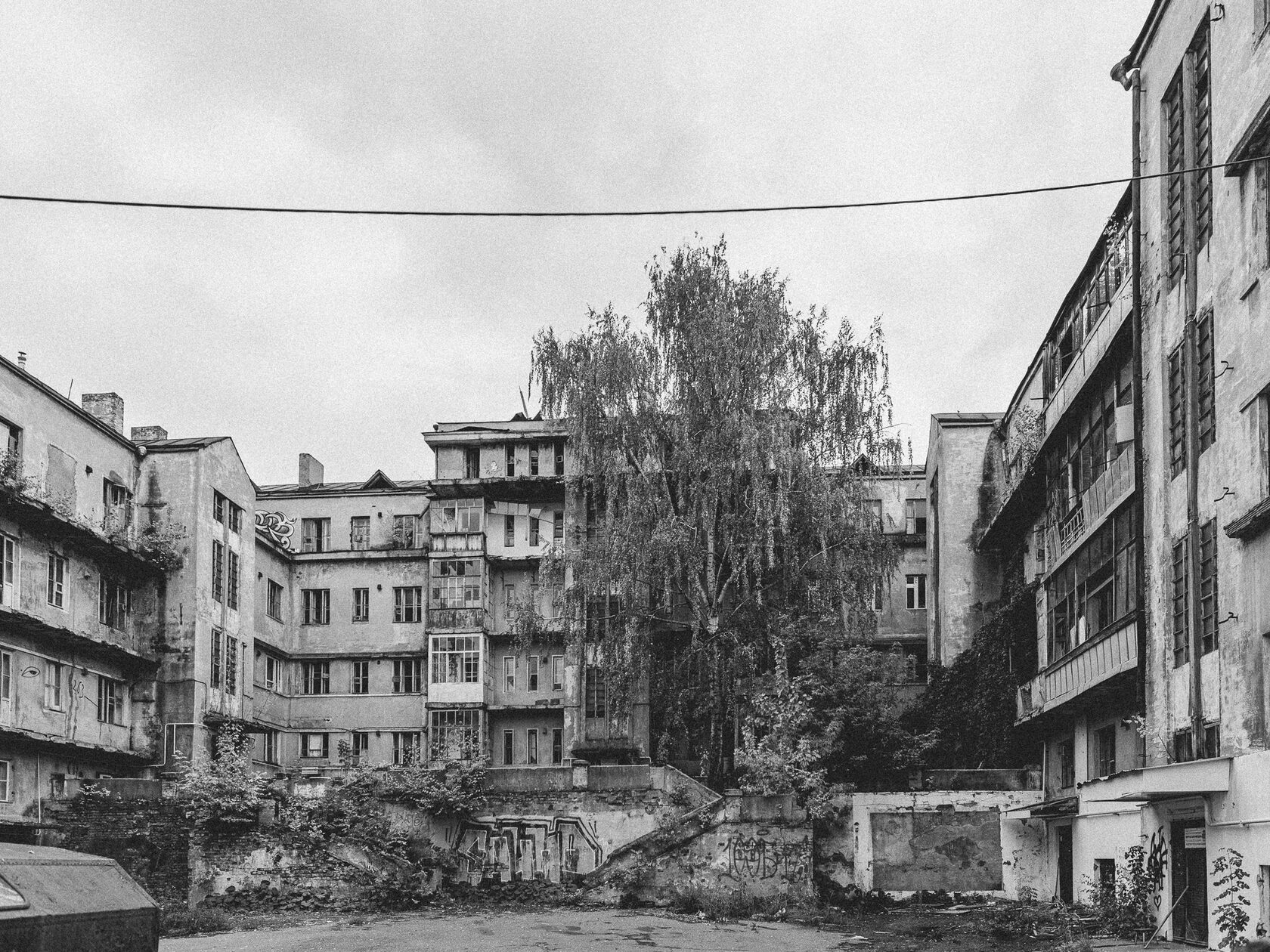
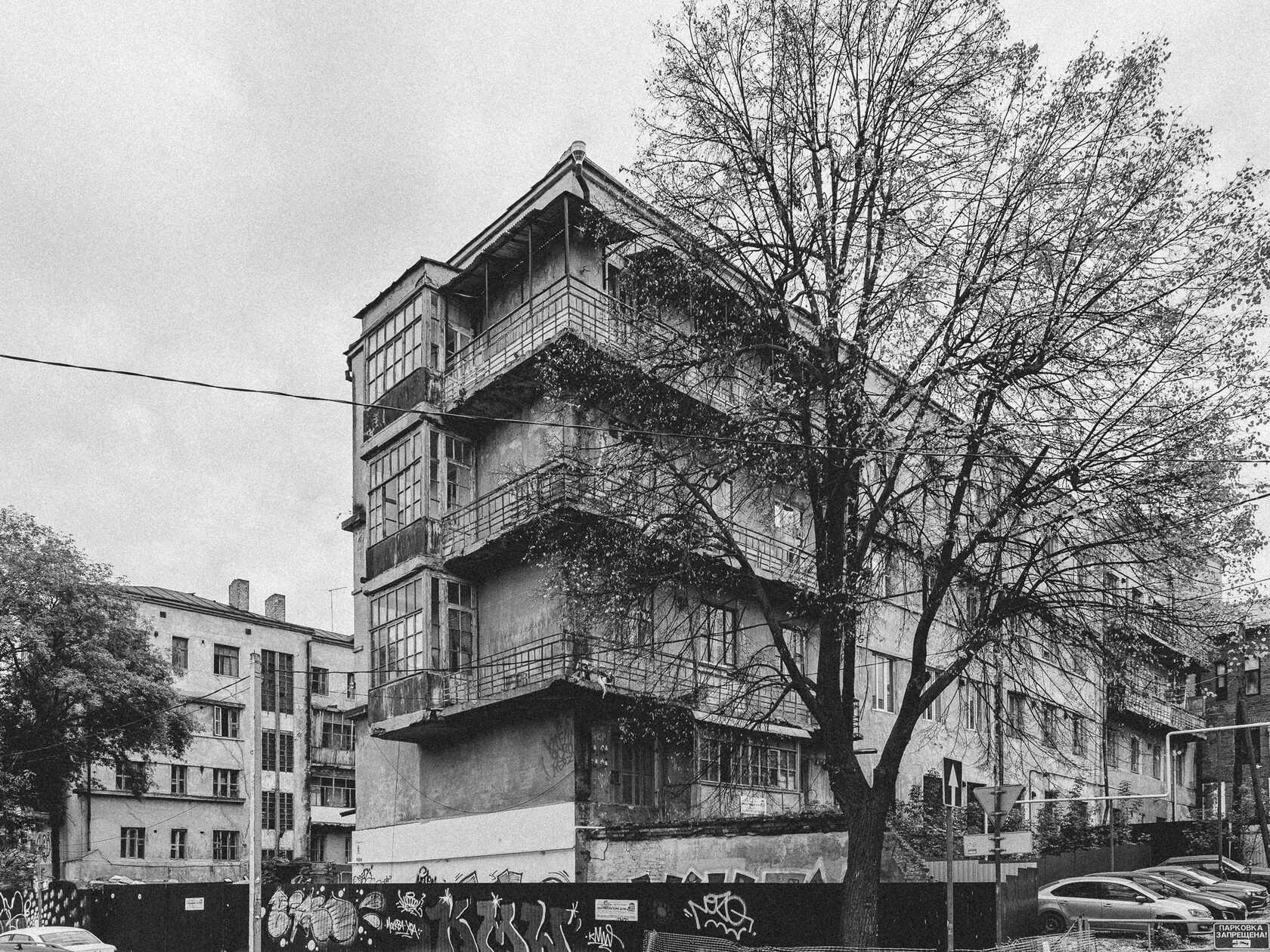
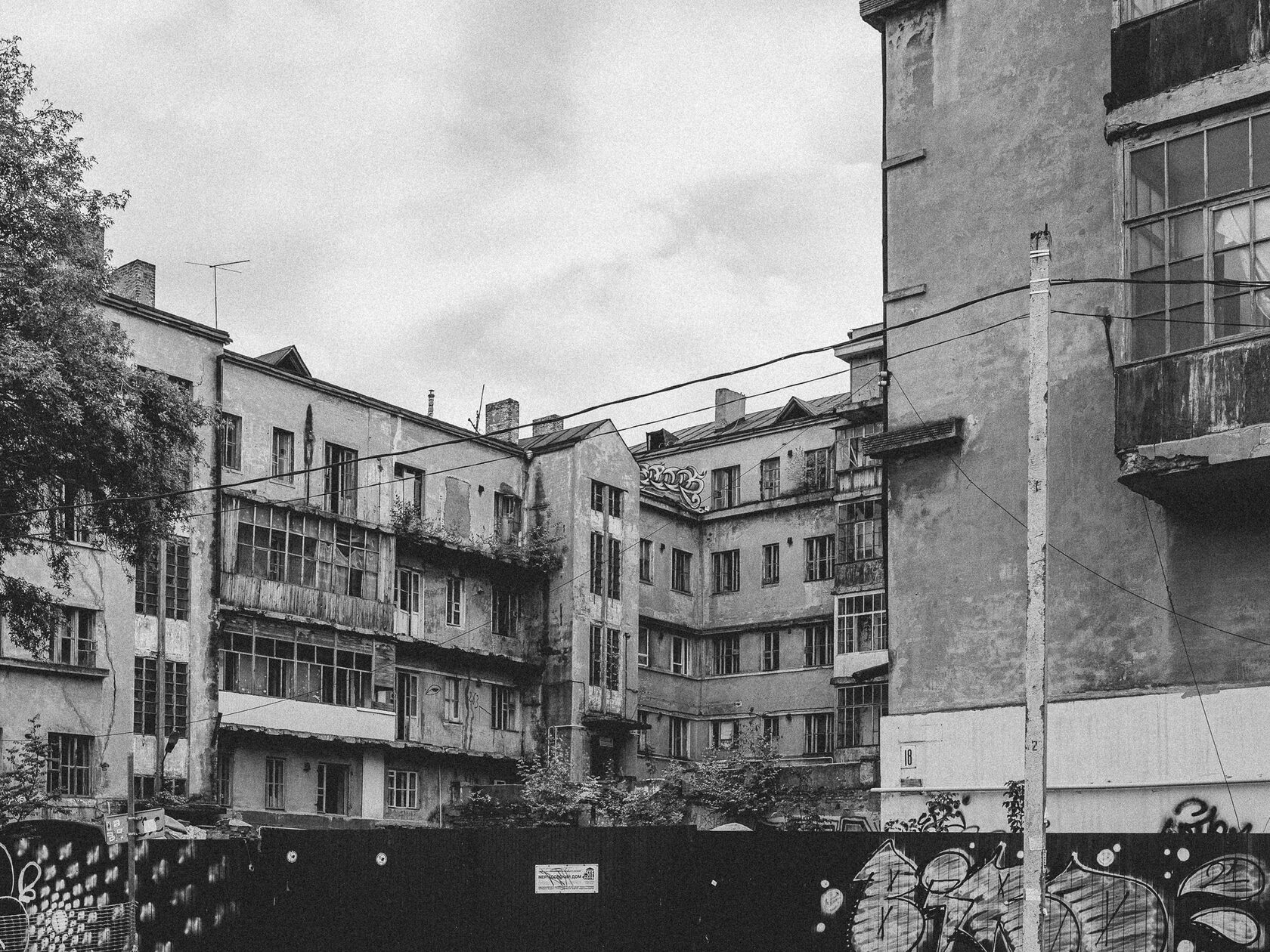
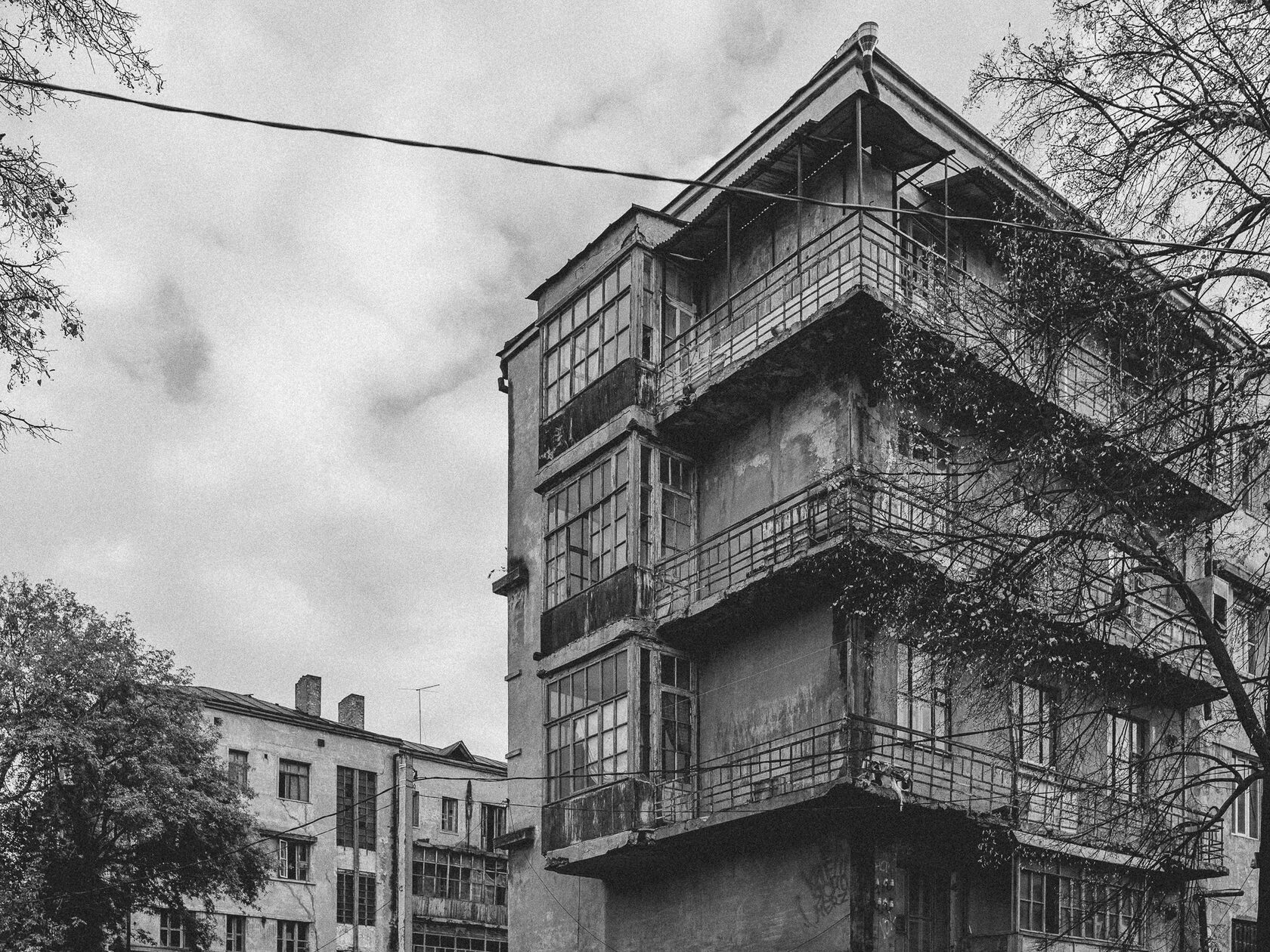
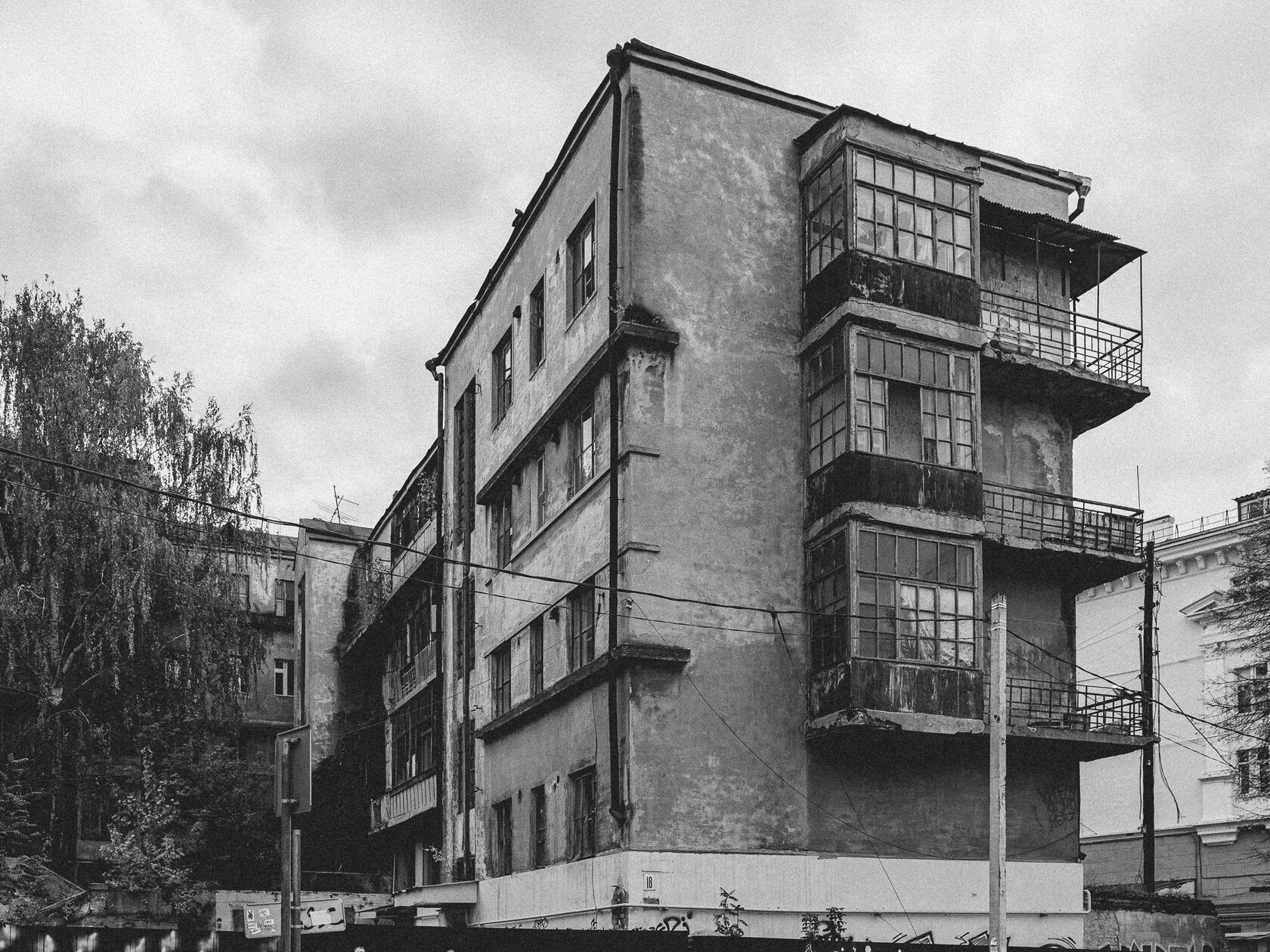
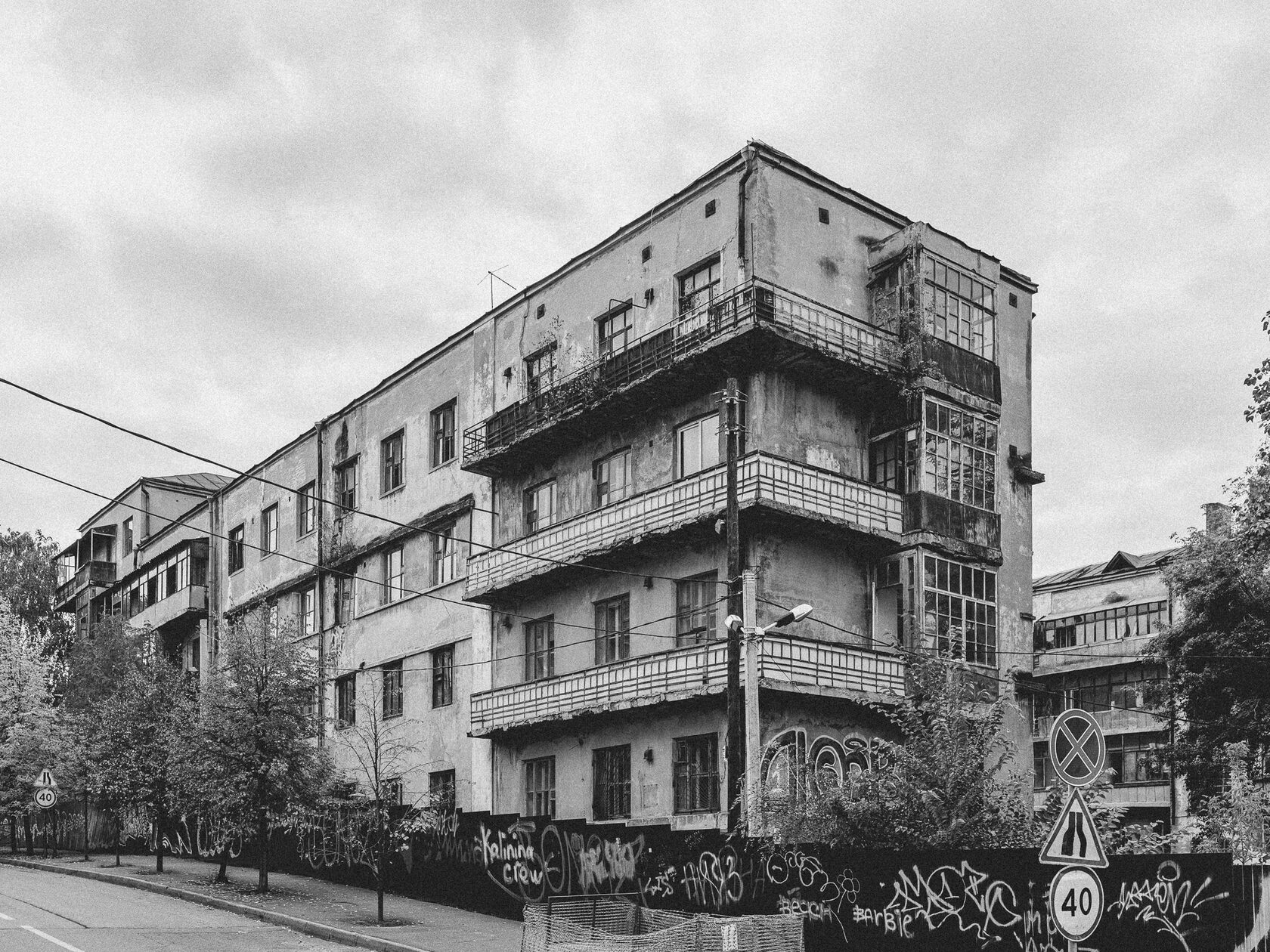
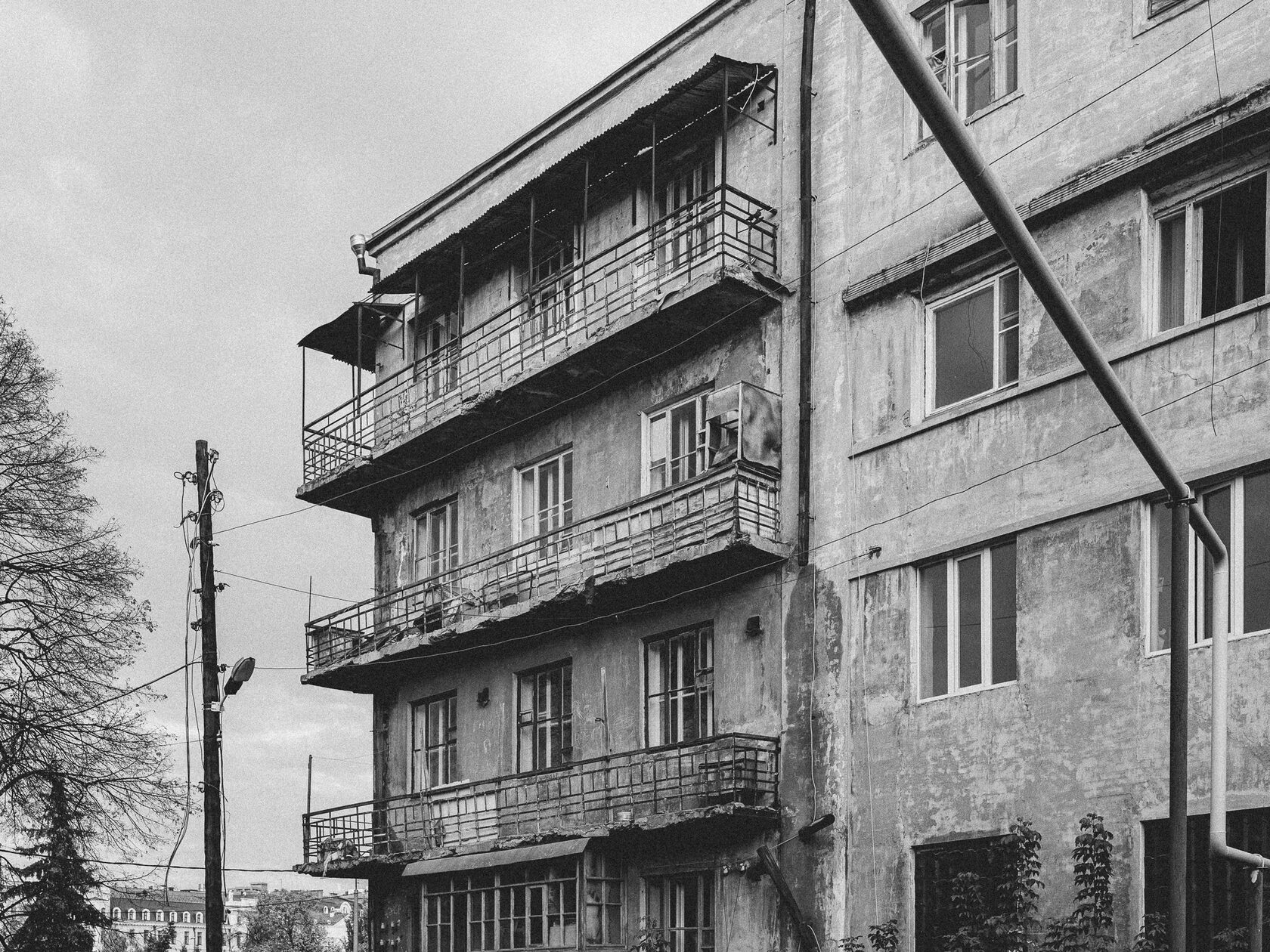
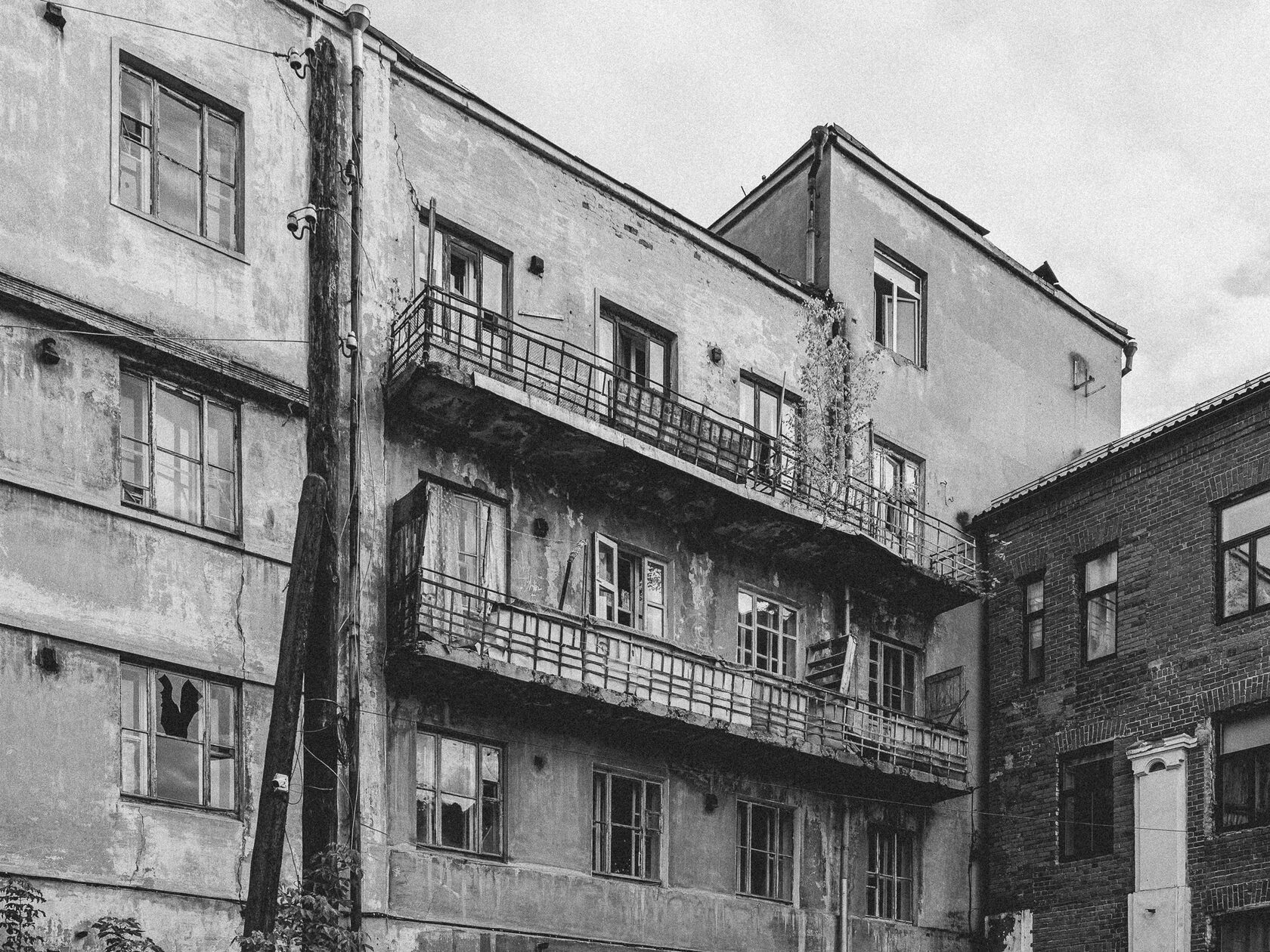
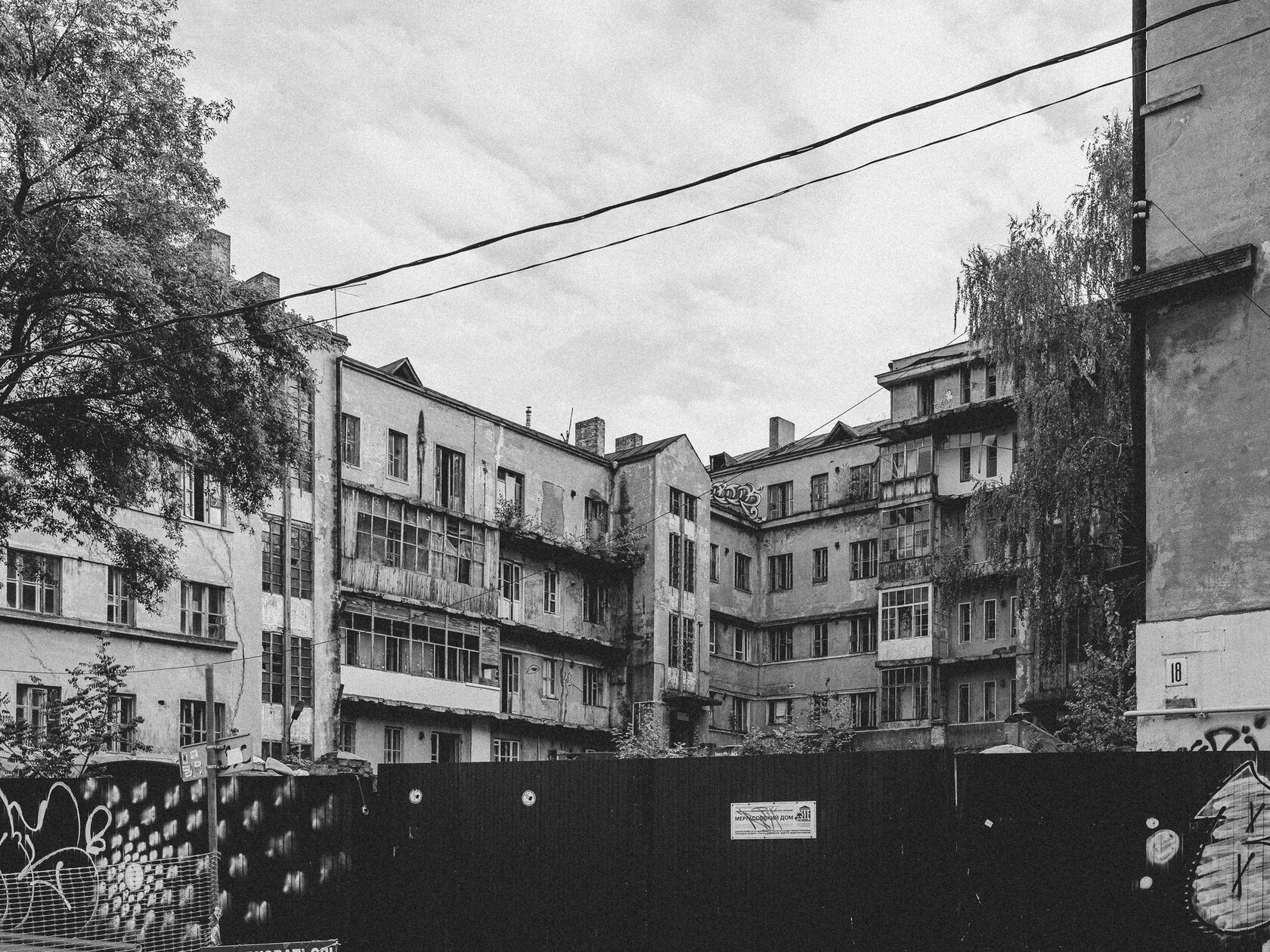
Checkpoint of the wagon train parts plantПроходная завода обозных деталей车辆零件厂门岗Kontrollpunkt des WagenzugteilewerksPoste d'entrée de l'usine de pièces de chariotsPuesto de control de la fábrica de piezas de carrosPortaria da fábrica de peças de carros
The building is read through movement: arrival, departure, service, waiting, repair. It is less an object than a pause inside a larger route, a place where modern life briefly becomes visible as logistics.Здание читается через движение: прибытие, отправление, обслуживание, ожидание, ремонт. Это не столько объект, сколько остановка внутри большого маршрута, место, где современная жизнь на мгновение становится видимой как логистика.这座建筑通过移动来阅读:抵达、出发、服务、等待、修理。它与其说是一个对象,不如说是更大路线中的一次停顿,一个现代生活短暂显现为物流的地点。Das Gebäude wird durch Bewegung gelesen: Ankunft, Abfahrt, Service, Warten, Reparatur. Es ist weniger ein Objekt als eine Pause in einer größeren Route, ein Ort, an dem modernes Leben kurz als Logistik sichtbar wird.Le bâtiment se lit par le mouvement : arrivée, départ, service, attente, réparation. C'est moins un objet qu'une pause dans un trajet plus vaste, un lieu où la vie moderne devient brièvement visible comme logistique.El edificio se lee a través del movimiento: llegada, salida, servicio, espera, reparación. Es menos un objeto que una pausa dentro de una ruta mayor, un lugar donde la vida moderna se vuelve visible por un momento como logística.O edifício é lido pelo movimento: chegada, partida, serviço, espera, reparo. É menos um objeto do que uma pausa dentro de uma rota maior, um lugar onde a vida moderna se torna brevemente visível como logística.
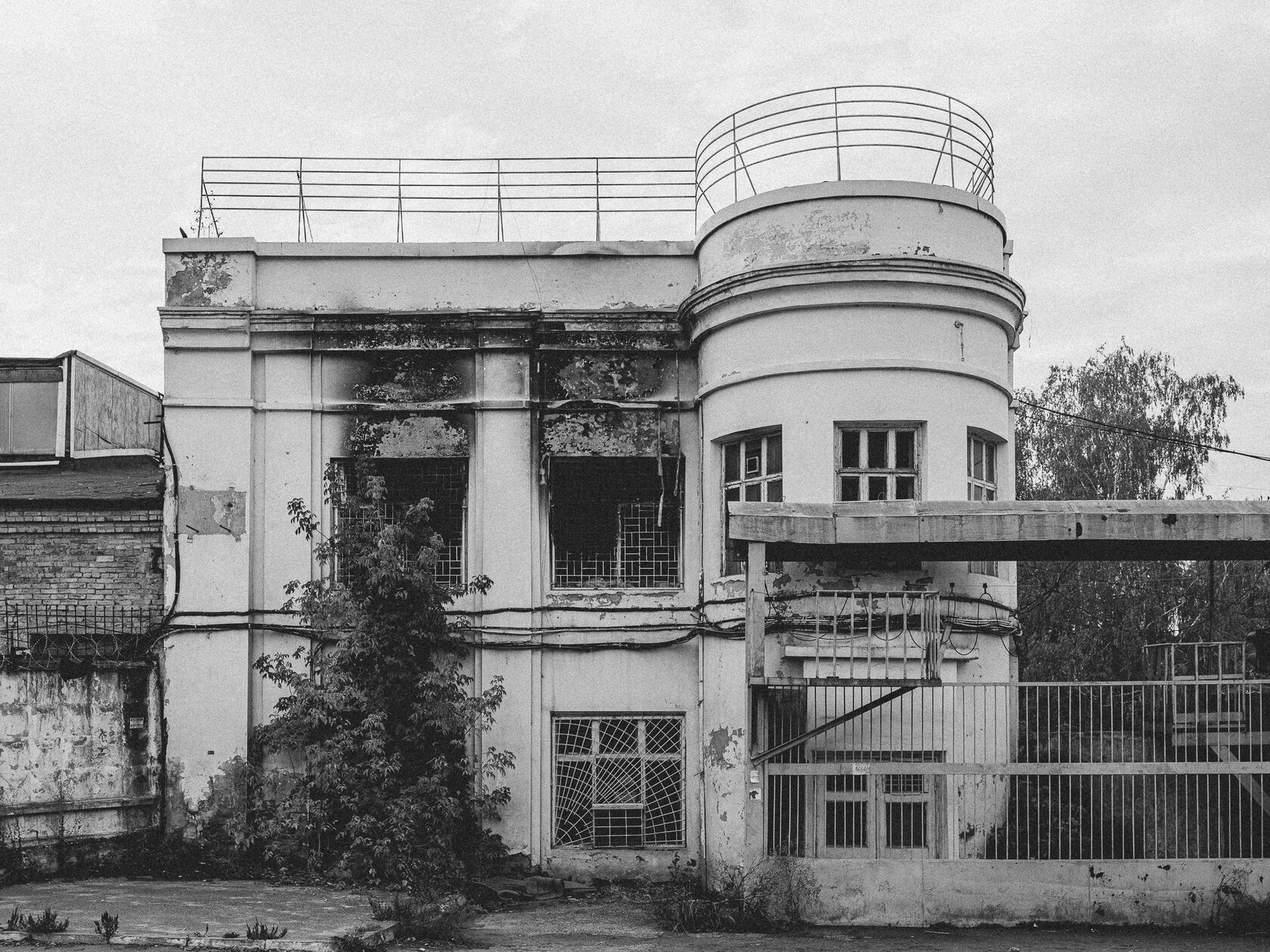
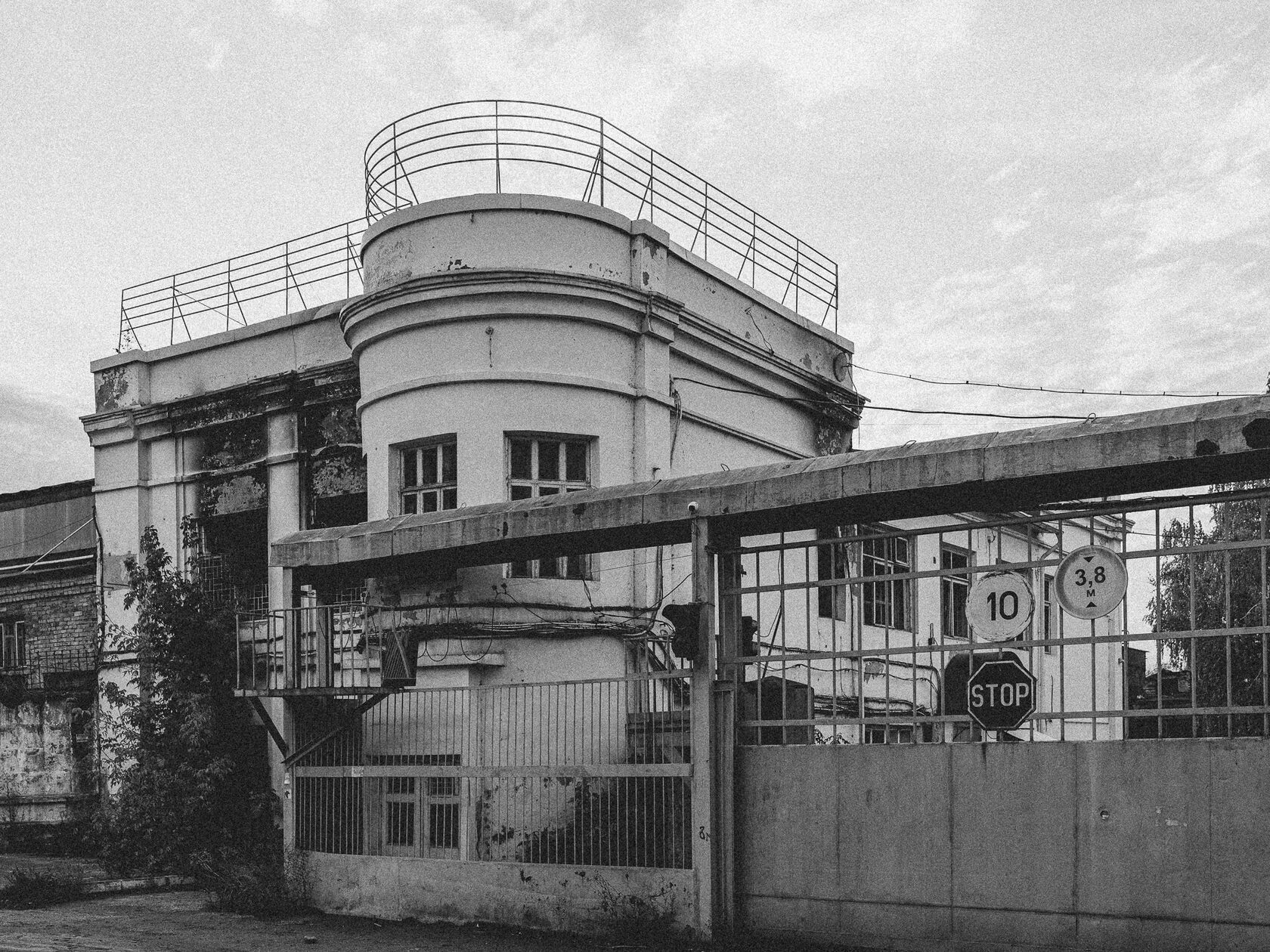
Dormitory of the wagon train parts plantОбщежитие завода обозных деталей车辆零件厂宿舍Wohnheim des WagenzugteilewerksFoyer de l'usine de pièces de chariotsResidencia de la fábrica de piezas de carrosAlojamento da fábrica de peças de carros
The image keeps the central constructivist question close to the ground: how should people live together? Balconies, entrances, shared edges, and later alterations show where an old social model meets private use.Кадр удерживает главный бытовой вопрос конструктивизма: как людям жить вместе? Балконы, входы, общие границы и поздние изменения показывают место, где старая социальная модель сталкивается с частным использованием.画面把建构主义最日常的问题拉回地面:人们该如何共同生活?阳台、入口、共享边界和后来的改动,显示出旧的社会模型如何与私人使用相遇。Das Bild hält die zentrale Alltagsfrage des Konstruktivismus nahe am Boden: Wie sollen Menschen zusammenleben? Balkone, Eingänge, gemeinsame Kanten und spätere Veränderungen zeigen, wo ein altes Sozialmodell auf private Nutzung trifft.L'image garde au ras du sol la question centrale du constructivisme : comment vivre ensemble ? Balcons, entrées, limites partagées et transformations ultérieures montrent l'endroit où un ancien modèle social rencontre l'usage privé.La imagen mantiene cerca del suelo la pregunta central del constructivismo: ¿cómo deben vivir juntas las personas? Balcones, entradas, bordes compartidos y alteraciones posteriores muestran dónde un viejo modelo social se encuentra con el uso privado.A imagem mantém rente ao chão a pergunta central do construtivismo: como as pessoas devem viver juntas? Varandas, entradas, limites compartilhados e alterações posteriores mostram onde um antigo modelo social encontra o uso privado.
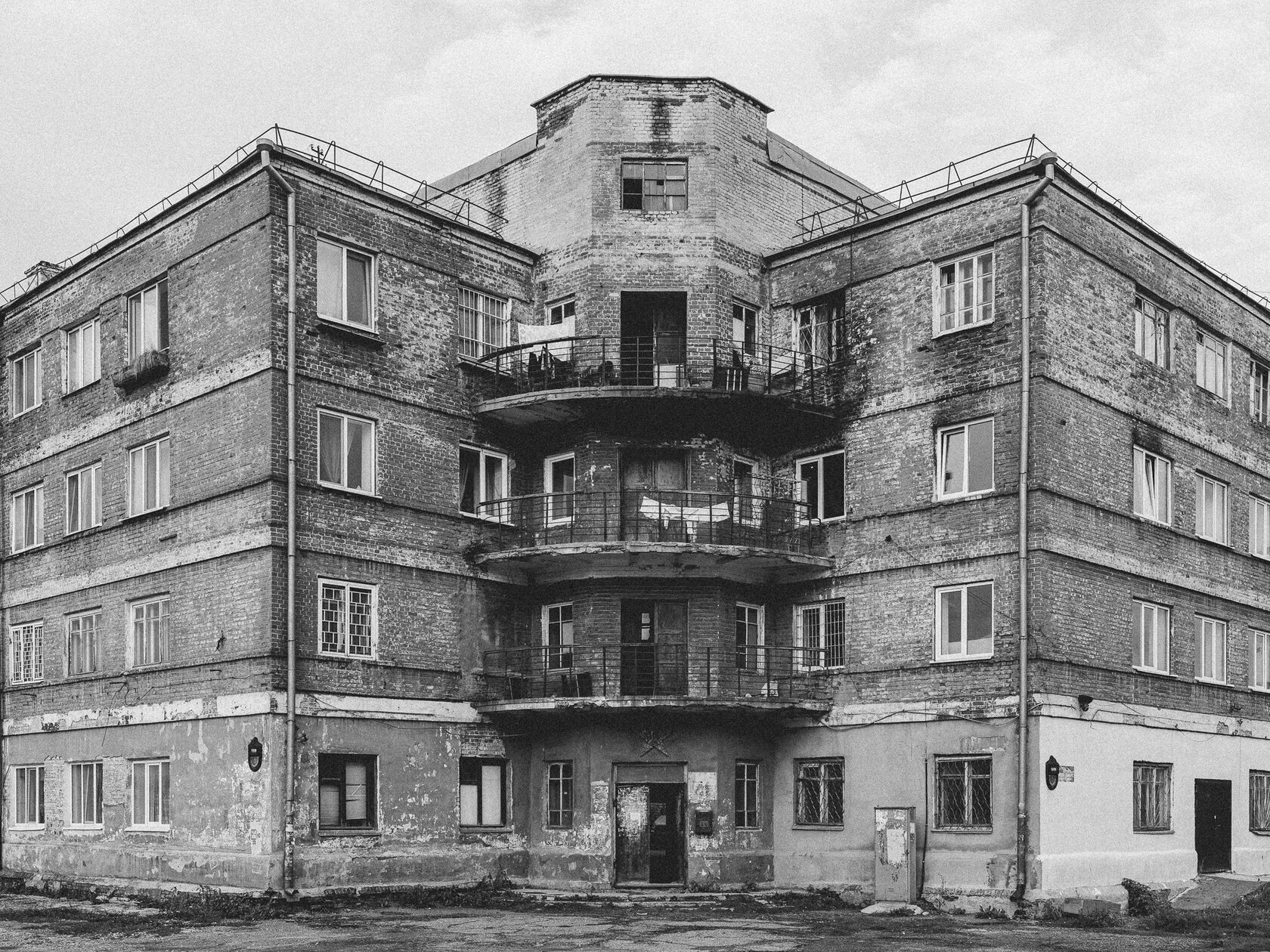
Fire station of the wagon train parts plantПожарная часть завода обозных деталей车辆零件厂消防站Feuerwehrhaus des WagenzugteilewerksCaserne de pompiers de l'usine de pièces de chariotsEstación de bomberos de la fábrica de piezas de carrosCorpo de bombeiros da fábrica de peças de carros
The building is read through movement: arrival, departure, service, waiting, repair. It is less an object than a pause inside a larger route, a place where modern life briefly becomes visible as logistics.Здание читается через движение: прибытие, отправление, обслуживание, ожидание, ремонт. Это не столько объект, сколько остановка внутри большого маршрута, место, где современная жизнь на мгновение становится видимой как логистика.这座建筑通过移动来阅读:抵达、出发、服务、等待、修理。它与其说是一个对象,不如说是更大路线中的一次停顿,一个现代生活短暂显现为物流的地点。Das Gebäude wird durch Bewegung gelesen: Ankunft, Abfahrt, Service, Warten, Reparatur. Es ist weniger ein Objekt als eine Pause in einer größeren Route, ein Ort, an dem modernes Leben kurz als Logistik sichtbar wird.Le bâtiment se lit par le mouvement : arrivée, départ, service, attente, réparation. C'est moins un objet qu'une pause dans un trajet plus vaste, un lieu où la vie moderne devient brièvement visible comme logistique.El edificio se lee a través del movimiento: llegada, salida, servicio, espera, reparación. Es menos un objeto que una pausa dentro de una ruta mayor, un lugar donde la vida moderna se vuelve visible por un momento como logística.O edifício é lido pelo movimento: chegada, partida, serviço, espera, reparo. É menos um objeto do que uma pausa dentro de uma rota maior, um lugar onde a vida moderna se torna brevemente visível como logística.
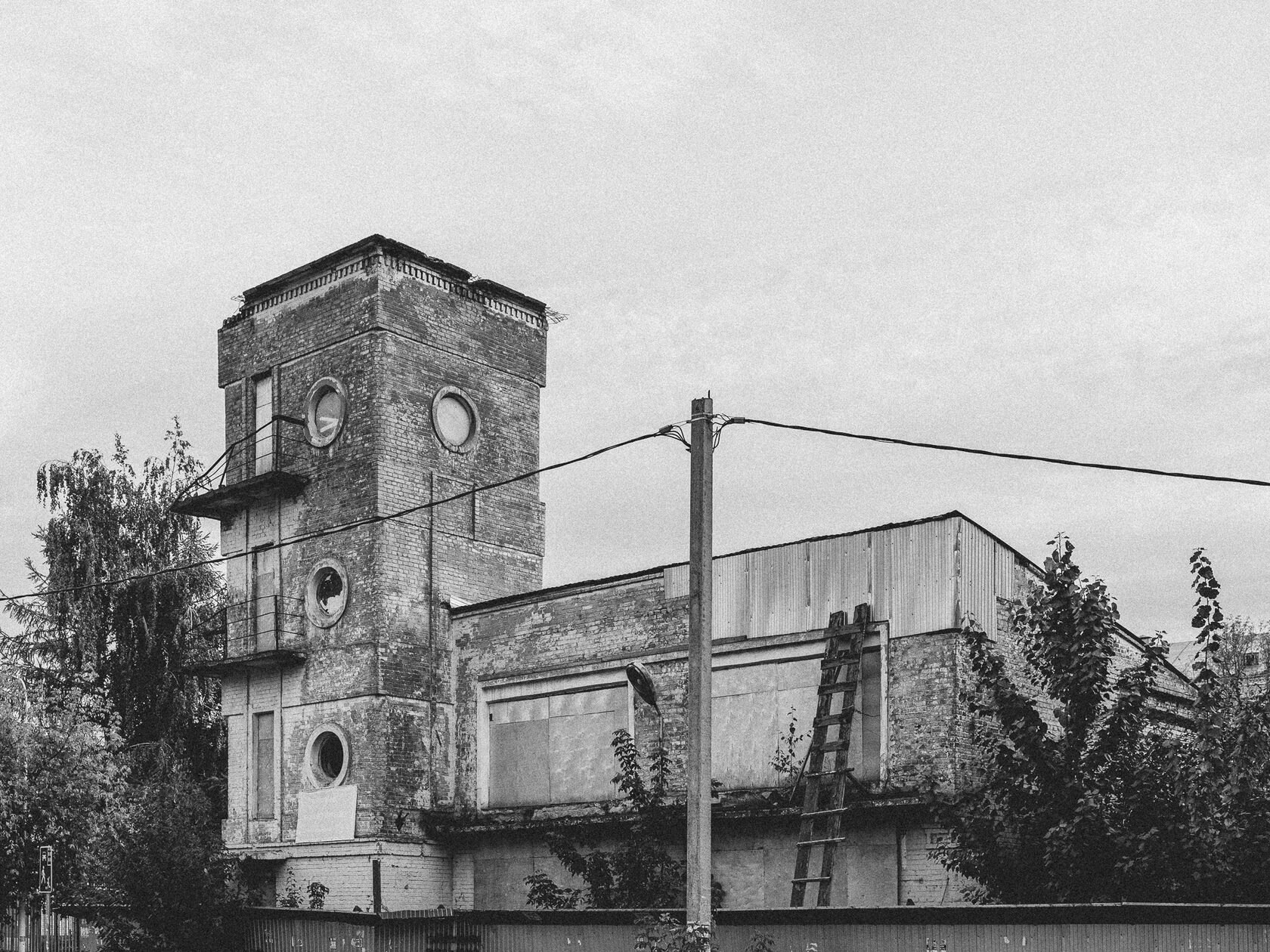
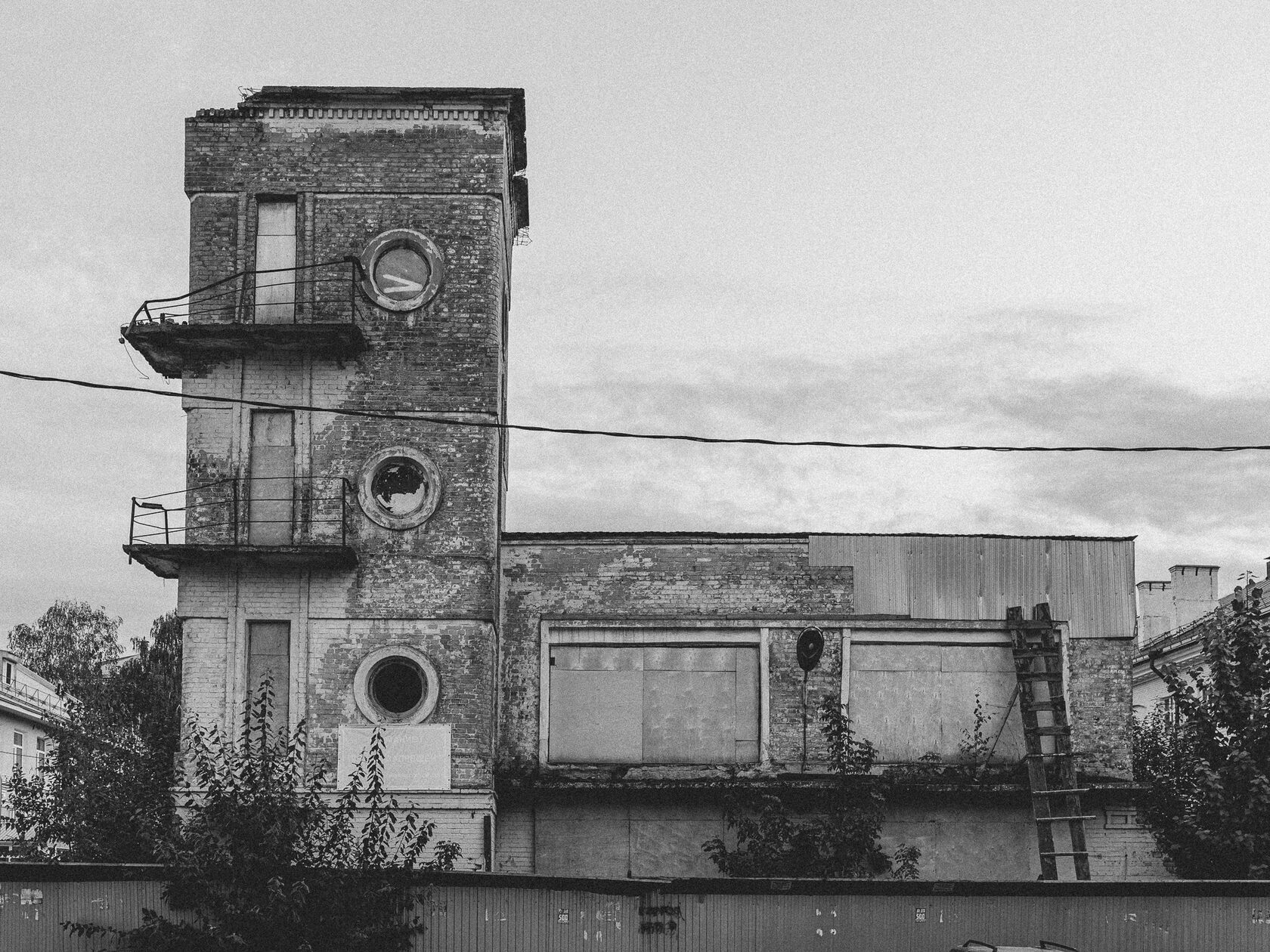
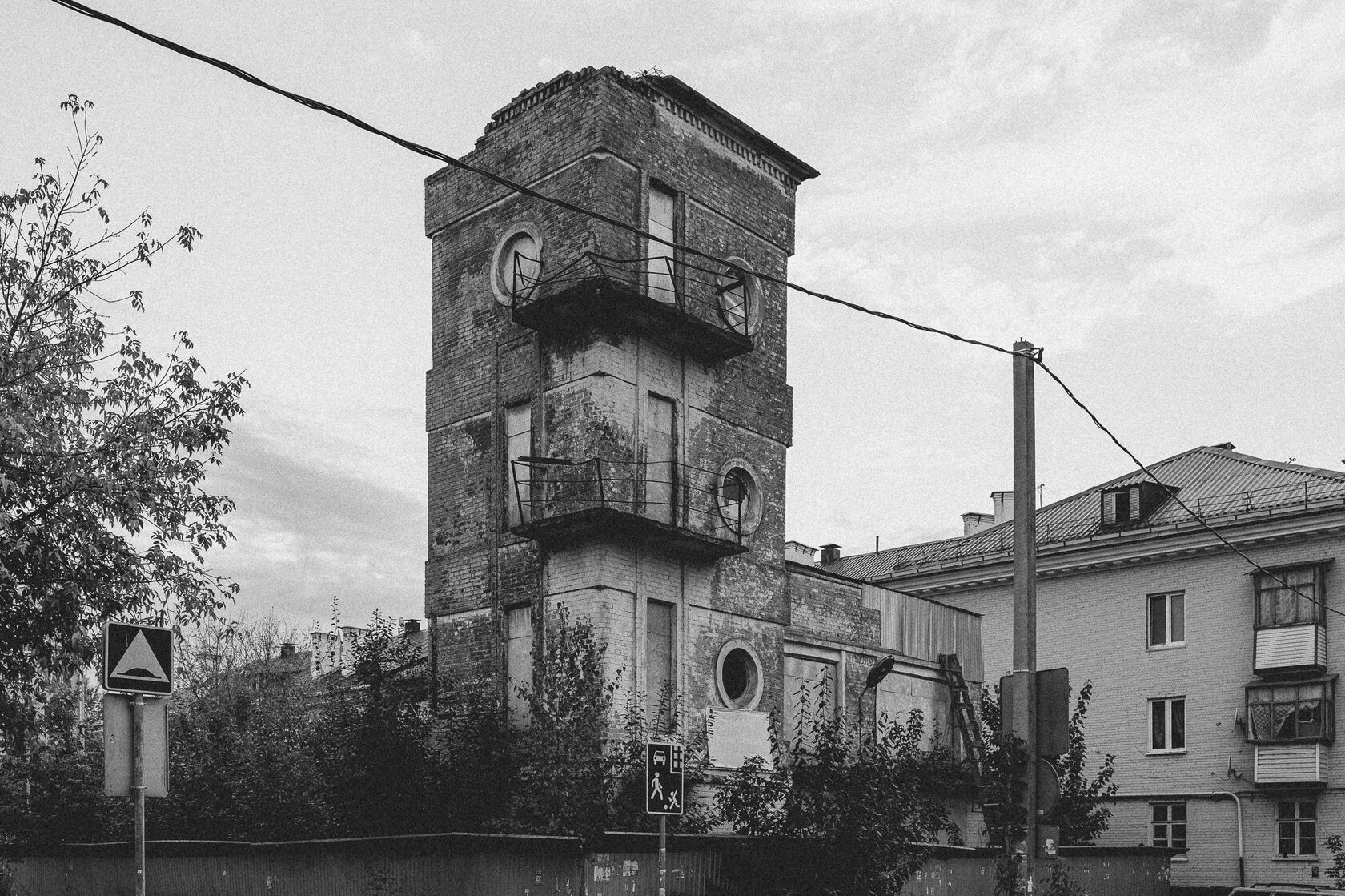
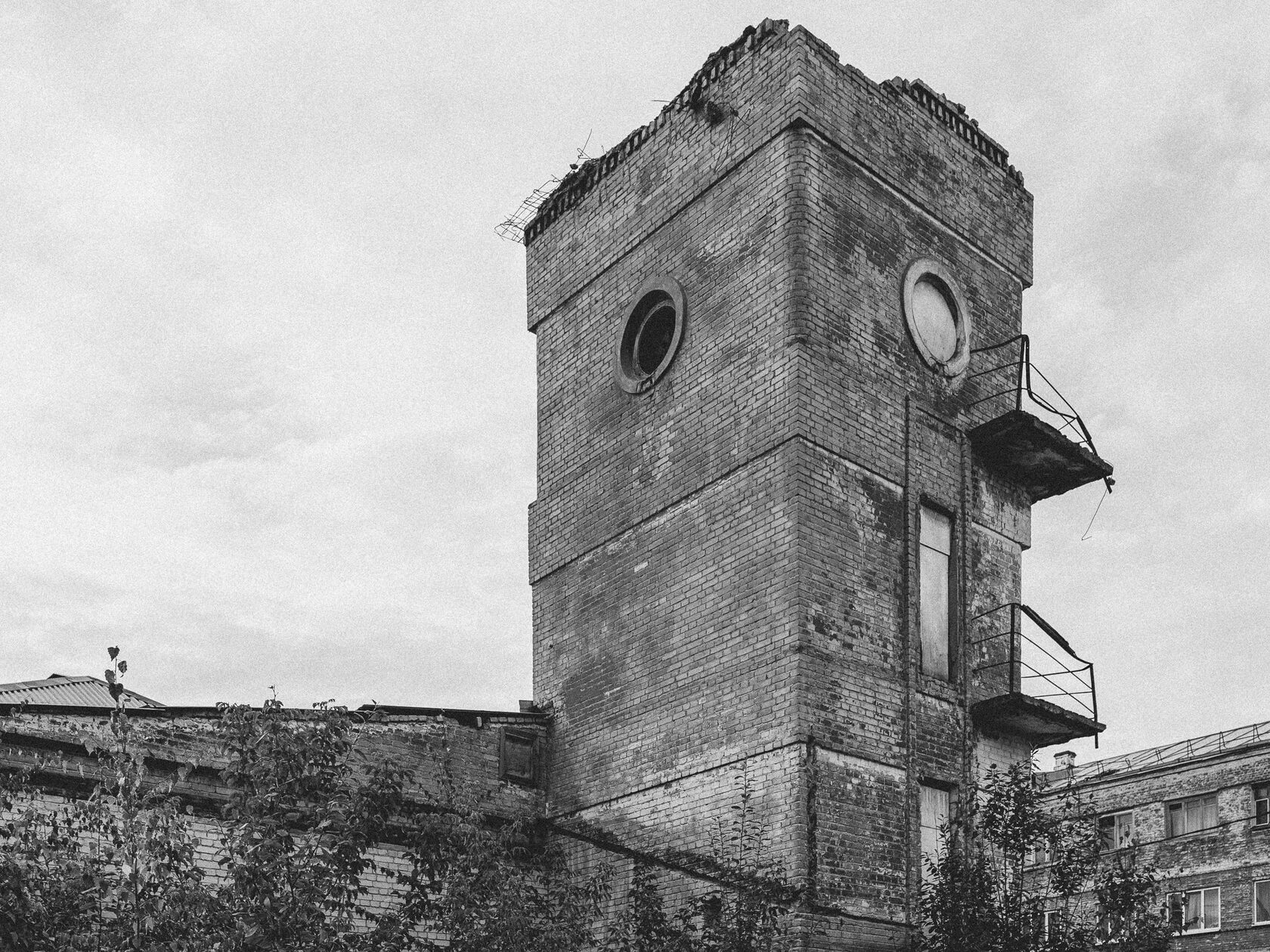
Construction on Clara Zetkin StreetПостройка на улице Клары Цеткин克拉拉·蔡特金街建筑Bau an der Clara-Zetkin-StraßeConstruction rue Clara ZetkinConstrucción en la calle Clara ZetkinConstrução na rua Clara Zetkin
The object remains in the sequence for the precision of its trace: a facade, a rhythm, a corner, a proportion. It does not need to be spectacular; it works as one more sentence in a larger architectural language.Объект остается в серии благодаря точности следа: фасад, ритм, угол, пропорция. Ему не нужно быть эффектным; он работает как еще одна фраза в большом архитектурном языке.这个对象留在系列中,是因为它的痕迹足够精确:立面、节奏、转角、比例。它不需要壮观;它像更大建筑语言中的又一句话。Das Objekt bleibt wegen der Präzision seiner Spur in der Serie: Fassade, Rhythmus, Ecke, Proportion. Es muss nicht spektakulär sein; es funktioniert als ein weiterer Satz in einer größeren architektonischen Sprache.L'objet demeure dans la série par la précision de sa trace : façade, rythme, angle, proportion. Il n'a pas besoin d'être spectaculaire ; il fonctionne comme une phrase de plus dans un langage architectural plus vaste.El objeto permanece en la serie por la precisión de su huella: fachada, ritmo, esquina, proporción. No necesita ser espectacular; funciona como una frase más dentro de un lenguaje arquitectónico mayor.O objeto permanece na série pela precisão de seu vestígio: fachada, ritmo, esquina, proporção. Não precisa ser espetacular; funciona como mais uma frase dentro de uma linguagem arquitetônica maior.
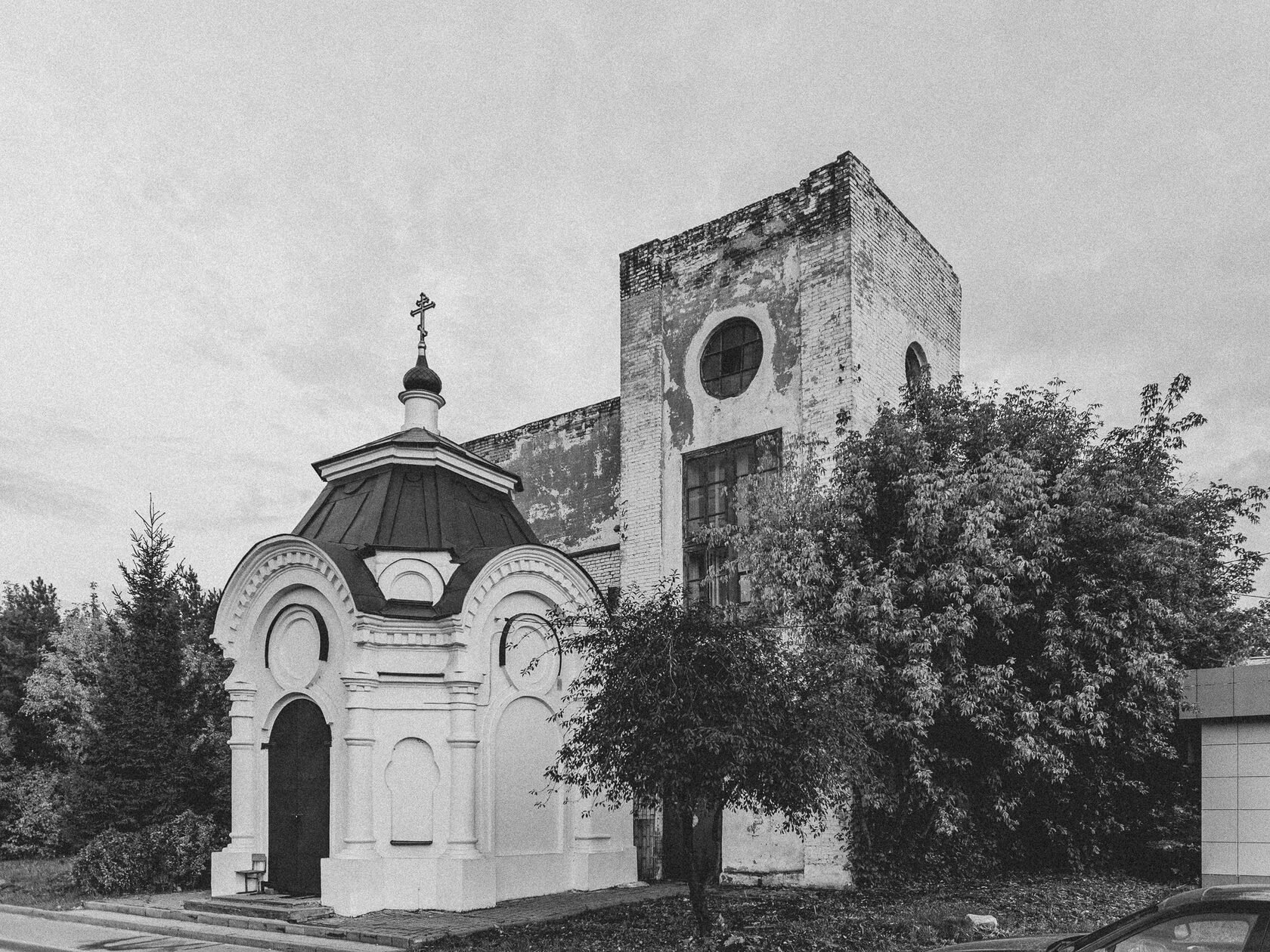
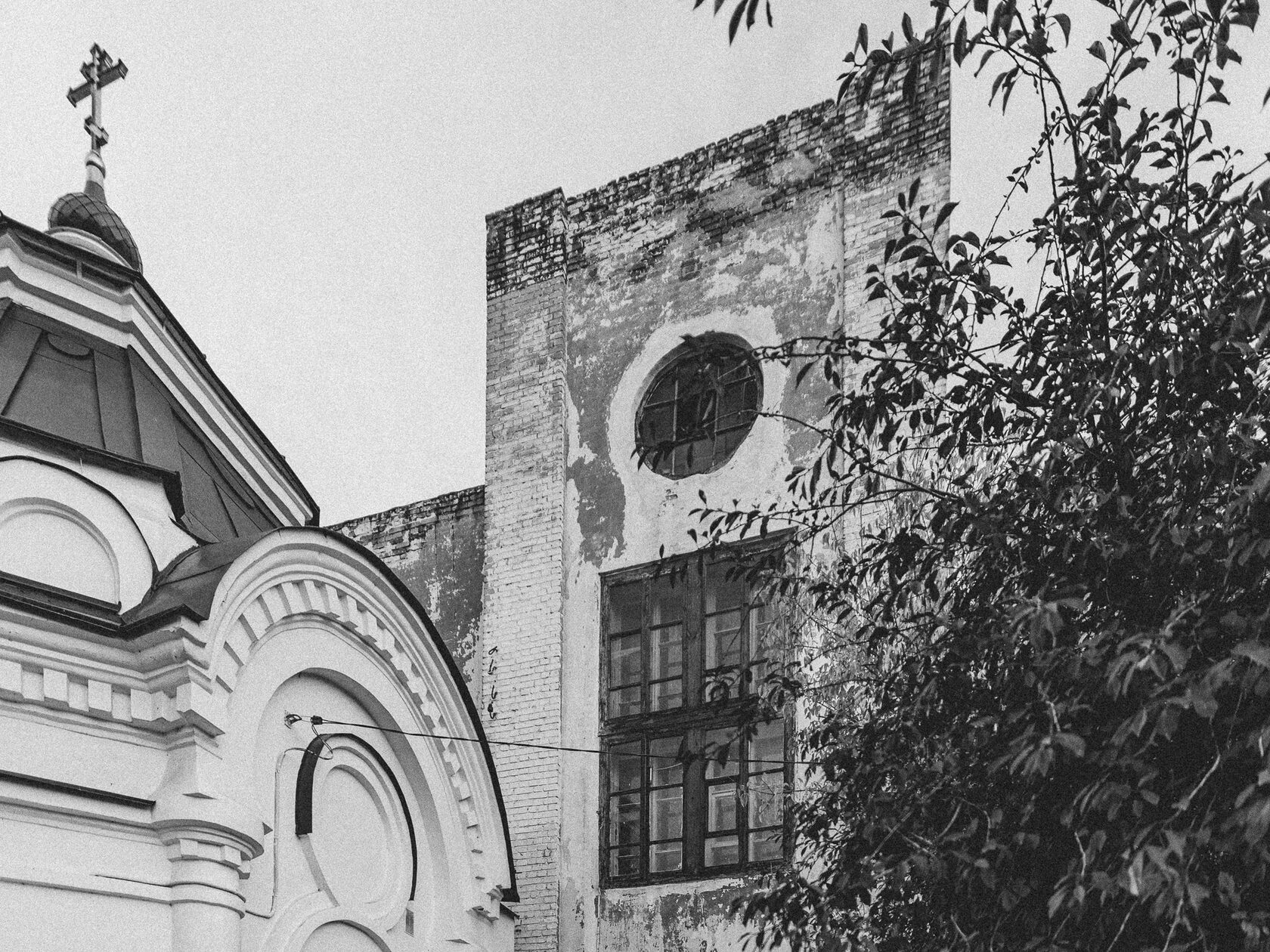
Saint PetersburgСанкт-Петербург圣彼得堡Sankt PetersburgSaint-PétersbourgSan PetersburgoSão Petersburgo
Buildings in Saint PetersburgЗдания: Санкт-Петербург建筑: 圣彼得堡Bauten in Sankt PetersburgBâtiments à Saint-PétersbourgEdificios en San PetersburgoEdifícios em São Petersburgo
Factory-kitchen of the Vasileostrovsky districtФабрика-кухня Василеостровского района瓦西里岛区工厂厨房Fabrikküche des Bezirks VasileostrovskyFabrique-cuisine du district VasileostrovskyFábrica-cocina del distrito VasileostrovskyFábrica-cozinha do distrito Vasileostrovsky
The building belongs to the constructivist everyday: food, purchase, production, distribution. Such architecture matters because it does not separate ideology from routine; it places the future inside ordinary actions.Здание принадлежит конструктивистской повседневности: еда, покупка, производство, распределение. Такая архитектура важна именно потому, что не отделяет идеологию от рутины, а помещает будущее внутрь обычных действий.这座建筑属于建构主义的日常:食物、购买、生产、分配。它重要,正因为它不把意识形态同惯例分开,而是把未来放进普通动作之中。Das Gebäude gehört zum konstruktivistischen Alltag: Essen, Einkauf, Produktion, Verteilung. Solche Architektur ist wichtig, weil sie Ideologie nicht von Routine trennt, sondern die Zukunft in gewöhnliche Handlungen legt.Le bâtiment appartient au quotidien constructiviste : manger, acheter, produire, distribuer. Cette architecture importe précisément parce qu'elle ne sépare pas l'idéologie de la routine ; elle place l'avenir dans les gestes ordinaires.El edificio pertenece a la vida cotidiana constructivista: comida, compra, producción, distribución. Esta arquitectura importa porque no separa ideología y rutina; coloca el futuro dentro de acciones ordinarias.O edifício pertence ao cotidiano construtivista: comida, compra, produção, distribuição. Essa arquitetura importa porque não separa ideologia de rotina; coloca o futuro dentro de ações comuns.
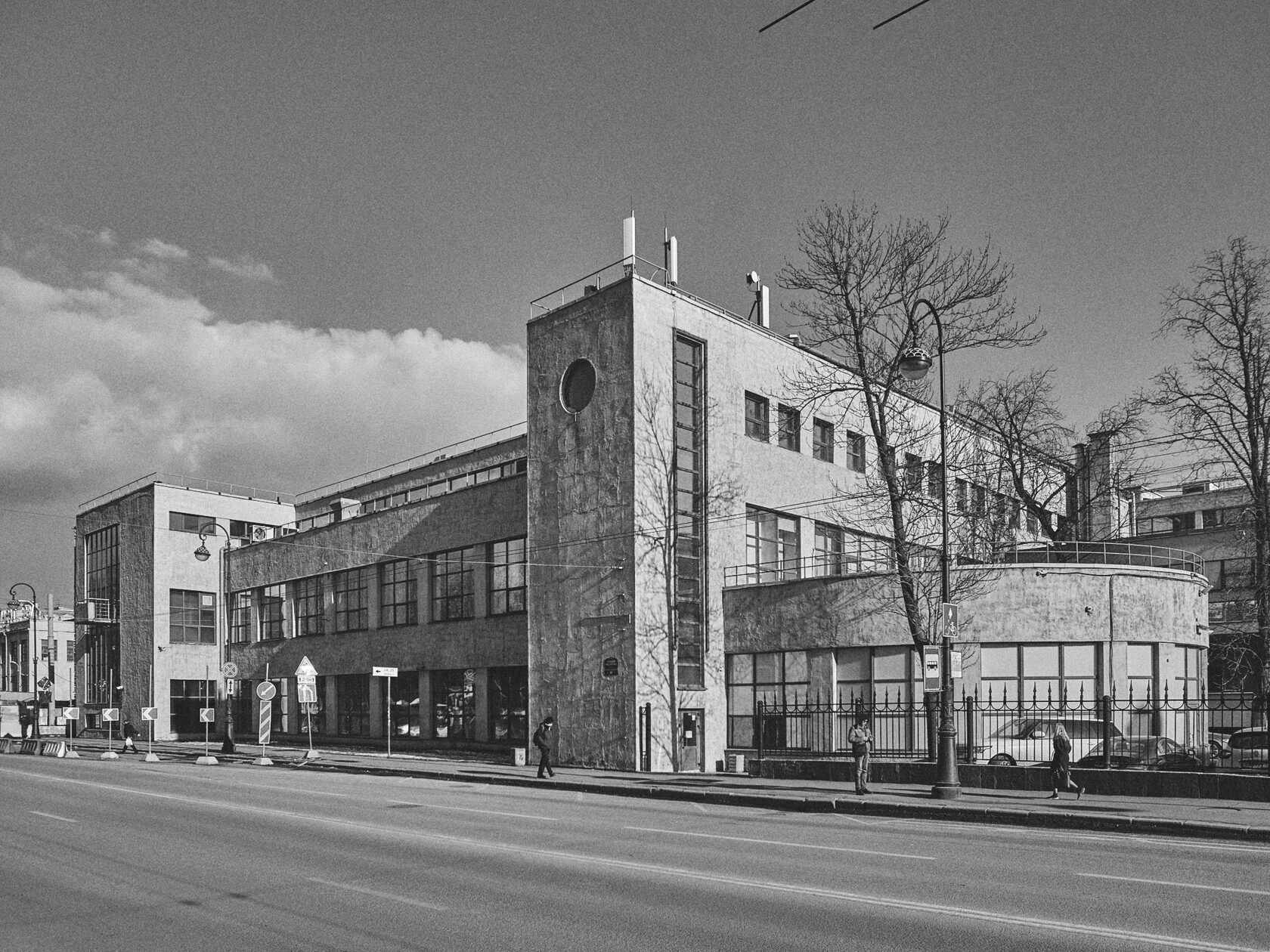
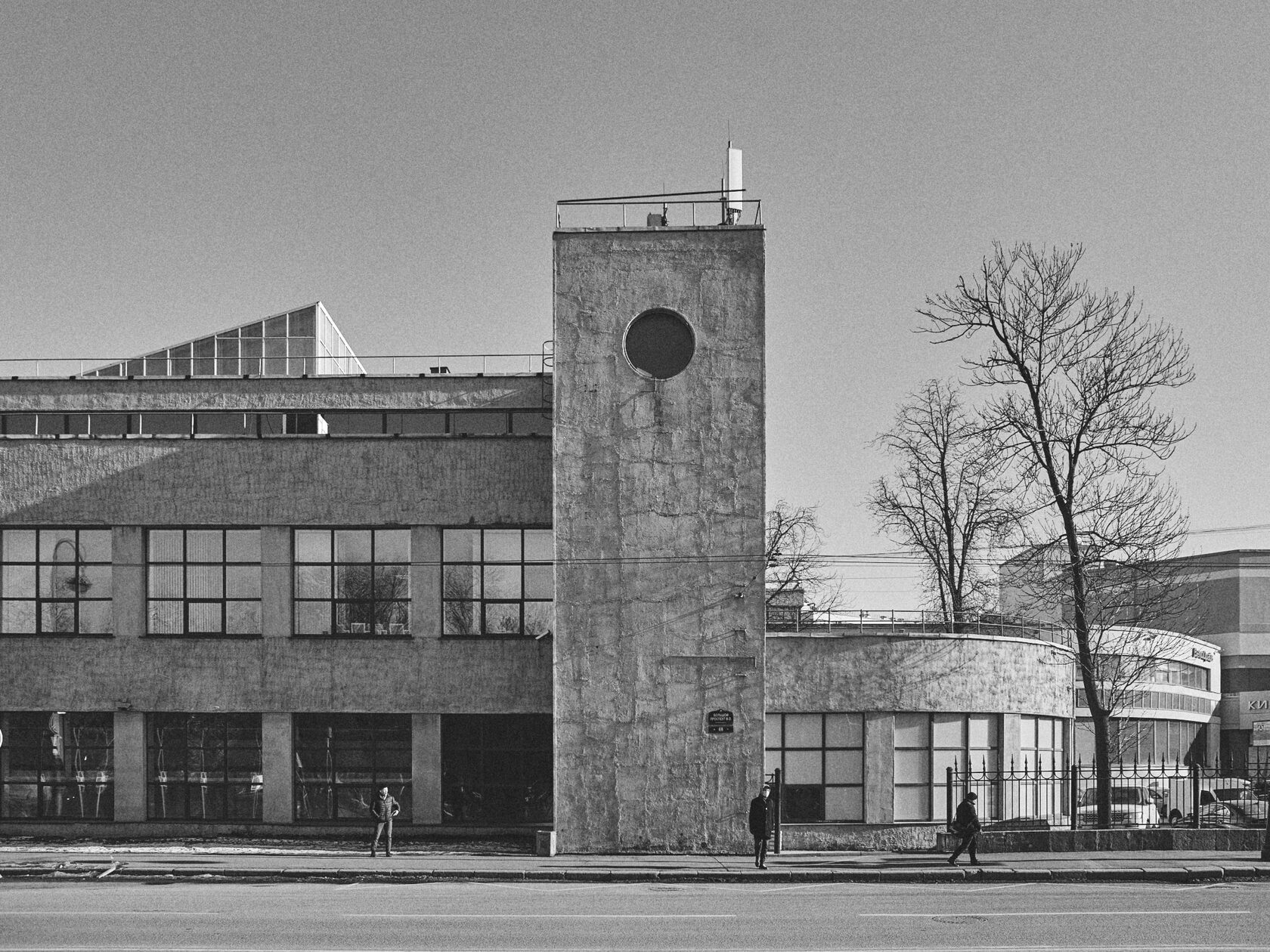
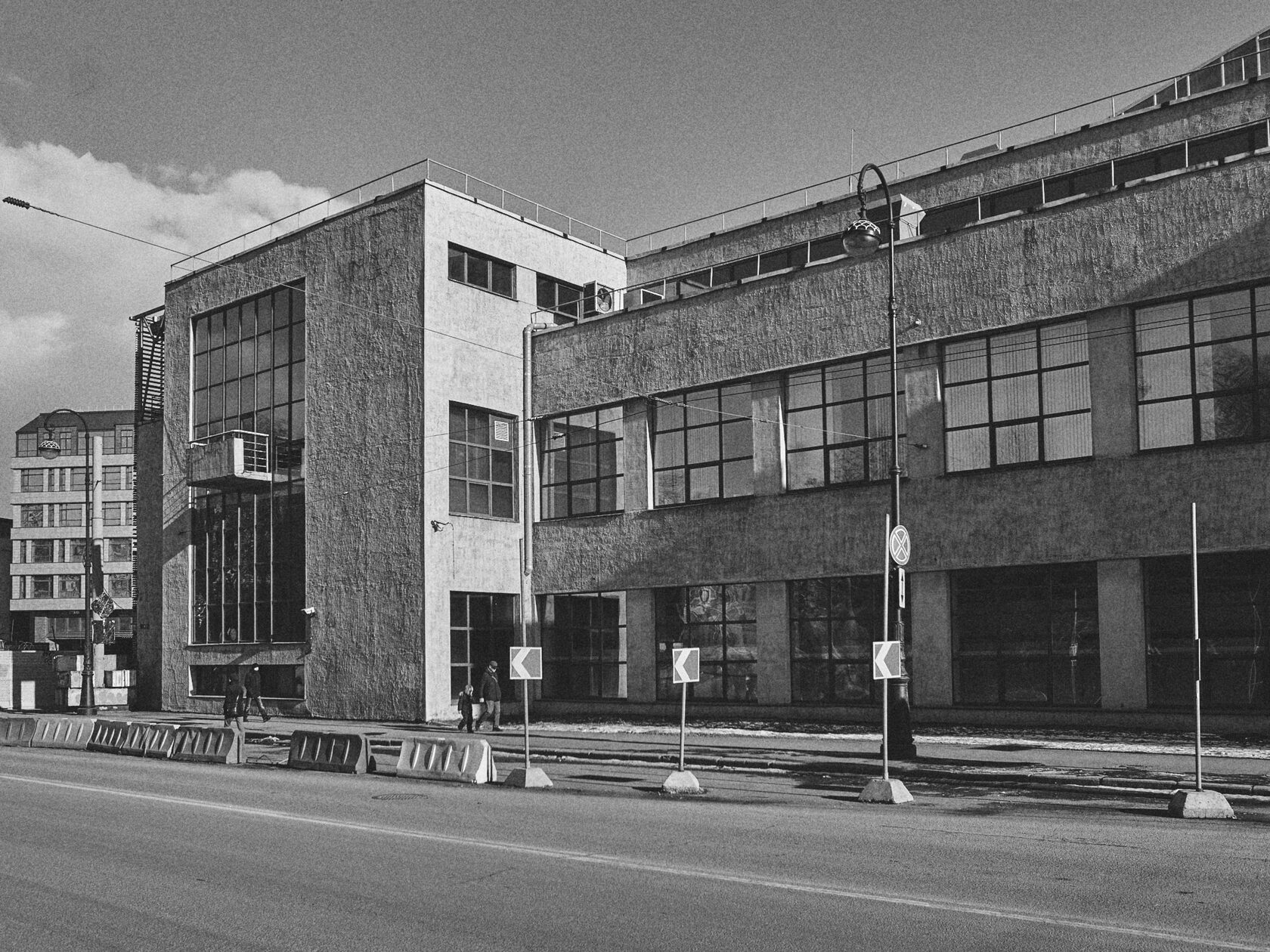
Water tower of the Krasny Gvozdilshchik factoryВодонапорная башня фабрики «Красный гвоздильщик»“红钉工”工厂水塔Wasserturm der Fabrik "Krasny Gvozdilshchik"Château d'eau de l'usine « Krasny Gvozdilshchik »Torre de agua de la fábrica «Krasny Gvozdilshchik»Torre de água da fábrica «Krasny Gvozdilshchik»
This is architecture of transmission. Its form is tied to measuring, broadcasting, watching, or sending: an almost invisible infrastructure made visible through volume, rhythm, and a precise position in the city.Это архитектура передачи. Ее форма связана с измерением, вещанием, наблюдением или сигналом: почти невидимая инфраструктура становится видимой через объем, ритм и точное положение в городе.这是传输的建筑。它的形式与测量、广播、观察或发送有关:几乎不可见的基础设施通过体量、节奏和在城市中的精确位置变得可见。Das ist Architektur der Übertragung. Ihre Form ist mit Messen, Senden, Beobachten oder Signalisieren verbunden: beinahe unsichtbare Infrastruktur wird durch Volumen, Rhythmus und eine präzise Lage in der Stadt sichtbar.C'est une architecture de transmission. Sa forme est liée à la mesure, à la diffusion, à l'observation ou au signal : une infrastructure presque invisible devient visible par le volume, le rythme et une position précise dans la ville.Es arquitectura de transmisión. Su forma se vincula con medir, emitir, observar o enviar: una infraestructura casi invisible se vuelve visible mediante volumen, ritmo y una posición precisa en la ciudad.É arquitetura de transmissão. Sua forma se liga a medir, transmitir, observar ou sinalizar: uma infraestrutura quase invisível torna-se visível por volume, ritmo e posição precisa na cidade.
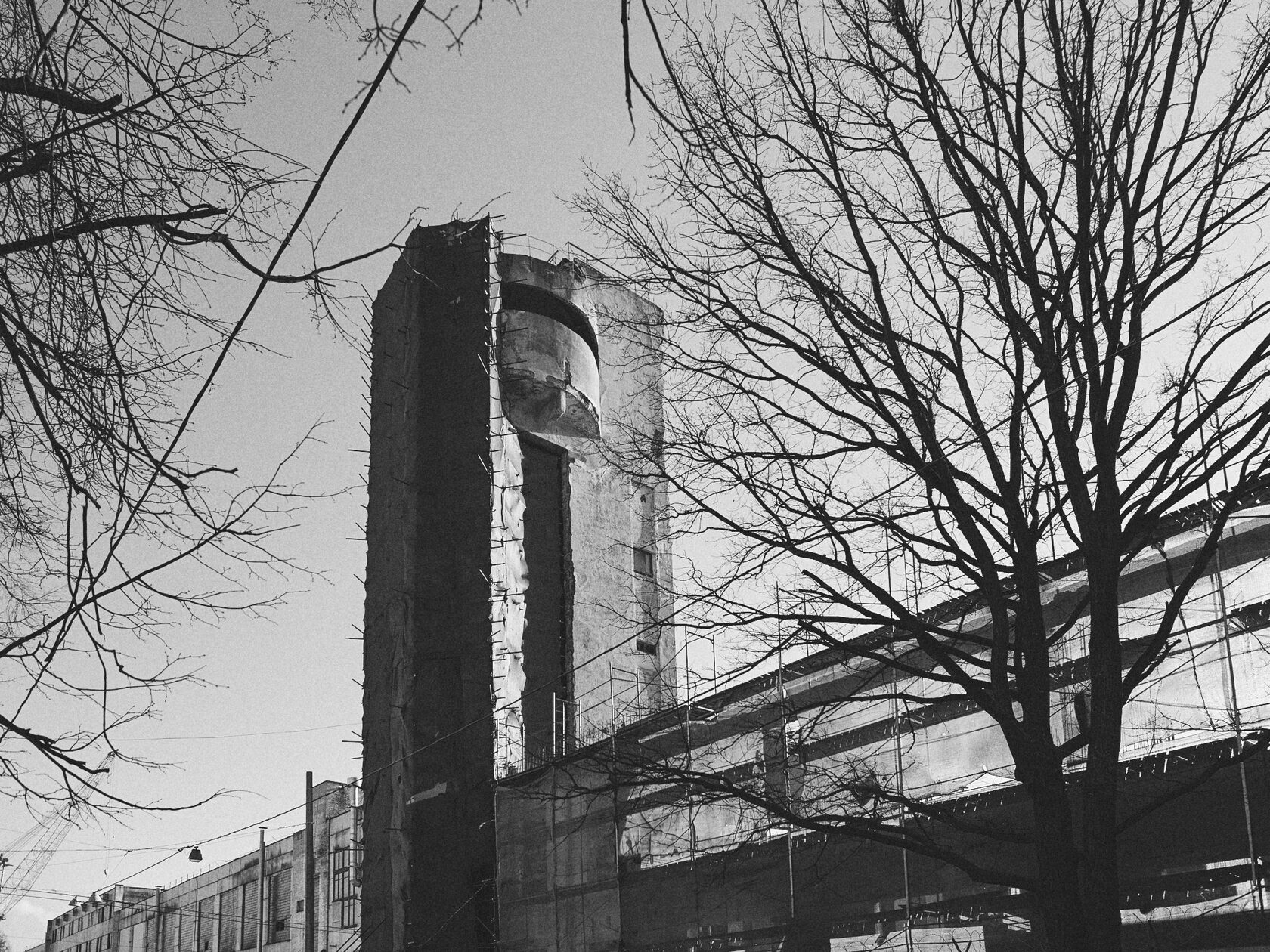
Palace of Culture named after S. M. KirovДворец культуры имени С. М. КироваS. M. 基洛夫文化宫Kulturpalast S. M. KirowPalais de la culture S. M. KirovPalacio de Cultura S. M. KirovPalácio da Cultura S. M. Kirov
The building is photographed as a public interior turned outward. The facade carries the promise of assembly: lectures, rehearsals, meetings, cinema, theatre, music, and the belief that culture could be organized as part of everyday life.Здание снято как общественный интерьер, вывернутый наружу. Фасад удерживает обещание собрания: лекции, репетиции, встречи, кино, театр, музыку и веру в то, что культуру можно встроить в повседневность.这座建筑被拍成向外翻开的公共室内。立面保存着集会的承诺:讲座、排练、会议、电影、戏剧、音乐,以及文化可以被编入日常生活的信念。Das Gebäude wird als nach außen gekehrtes öffentliches Interieur fotografiert. Die Fassade trägt das Versprechen der Versammlung: Vorträge, Proben, Treffen, Kino, Theater, Musik und den Glauben, Kultur könne Teil des Alltags werden.Le bâtiment est photographié comme un intérieur public retourné vers l'extérieur. La façade porte la promesse du rassemblement : conférences, répétitions, réunions, cinéma, théâtre, musique, et la croyance que la culture pouvait être intégrée au quotidien.El edificio se fotografía como un interior público vuelto hacia fuera. La fachada sostiene la promesa de reunión: conferencias, ensayos, encuentros, cine, teatro, música y la creencia de que la cultura podía organizarse dentro de la vida cotidiana.O edifício é fotografado como um interior público virado para fora. A fachada guarda a promessa da reunião: palestras, ensaios, encontros, cinema, teatro, música e a crença de que a cultura podia ser organizada dentro do cotidiano.
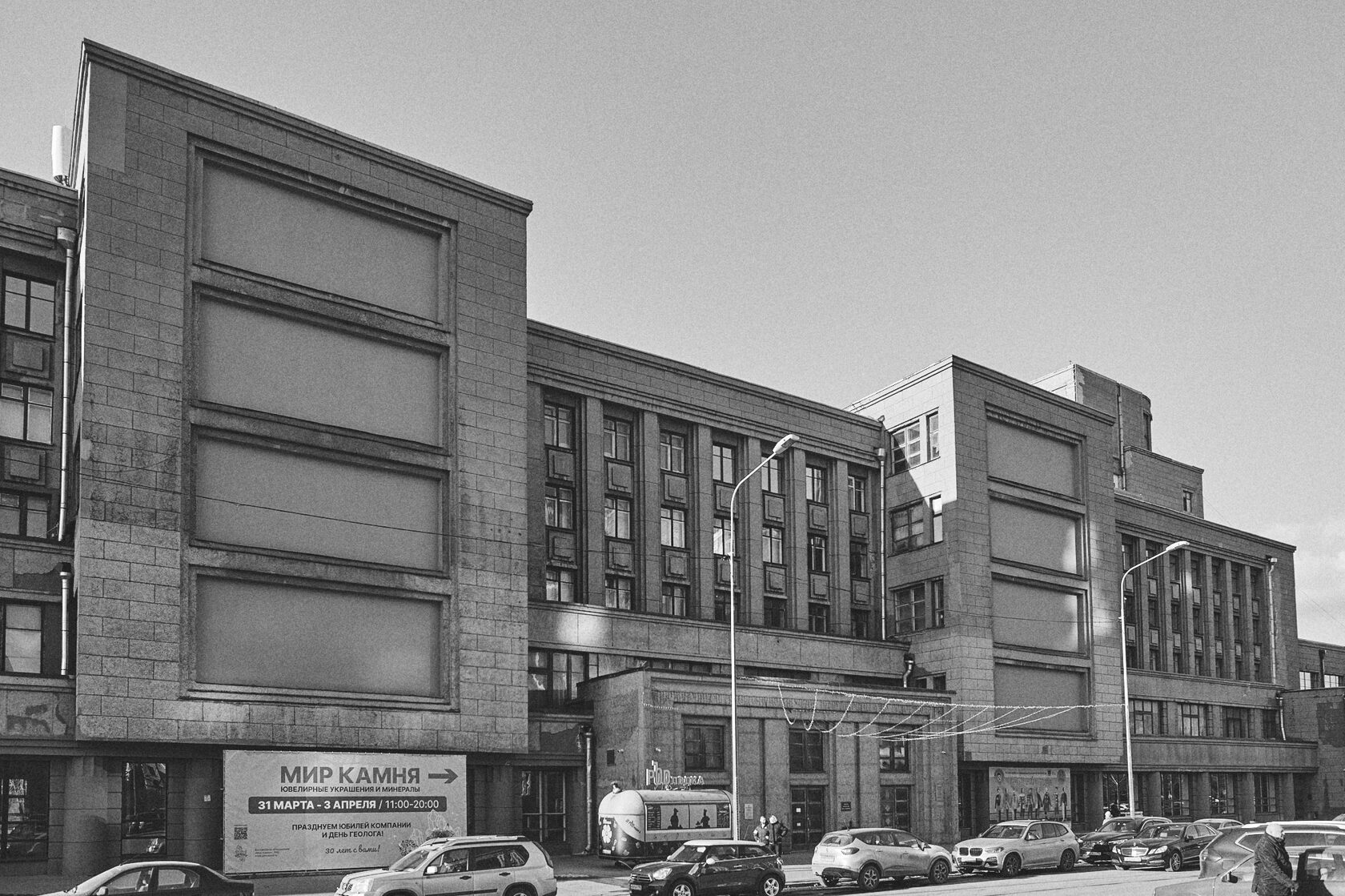
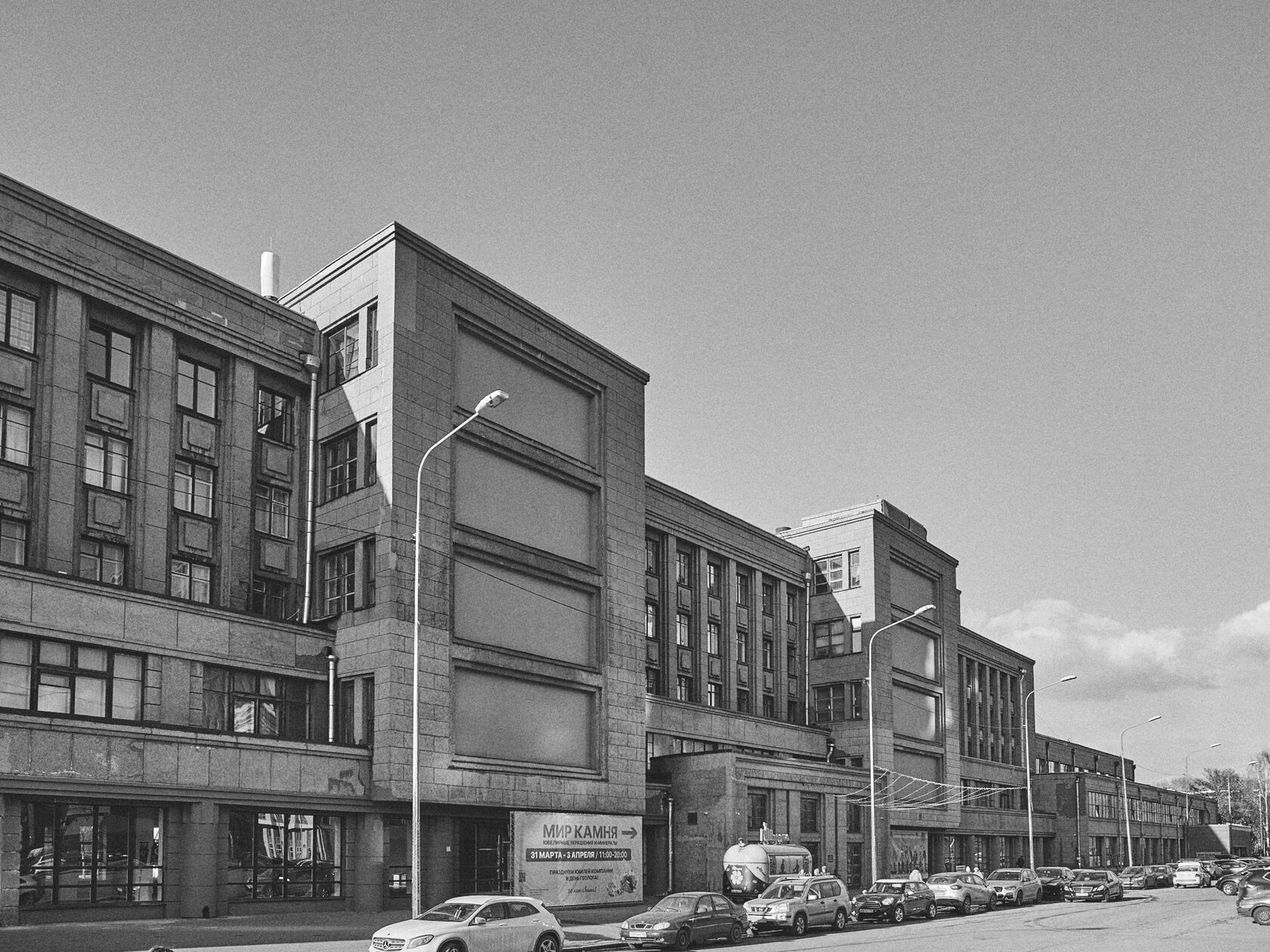
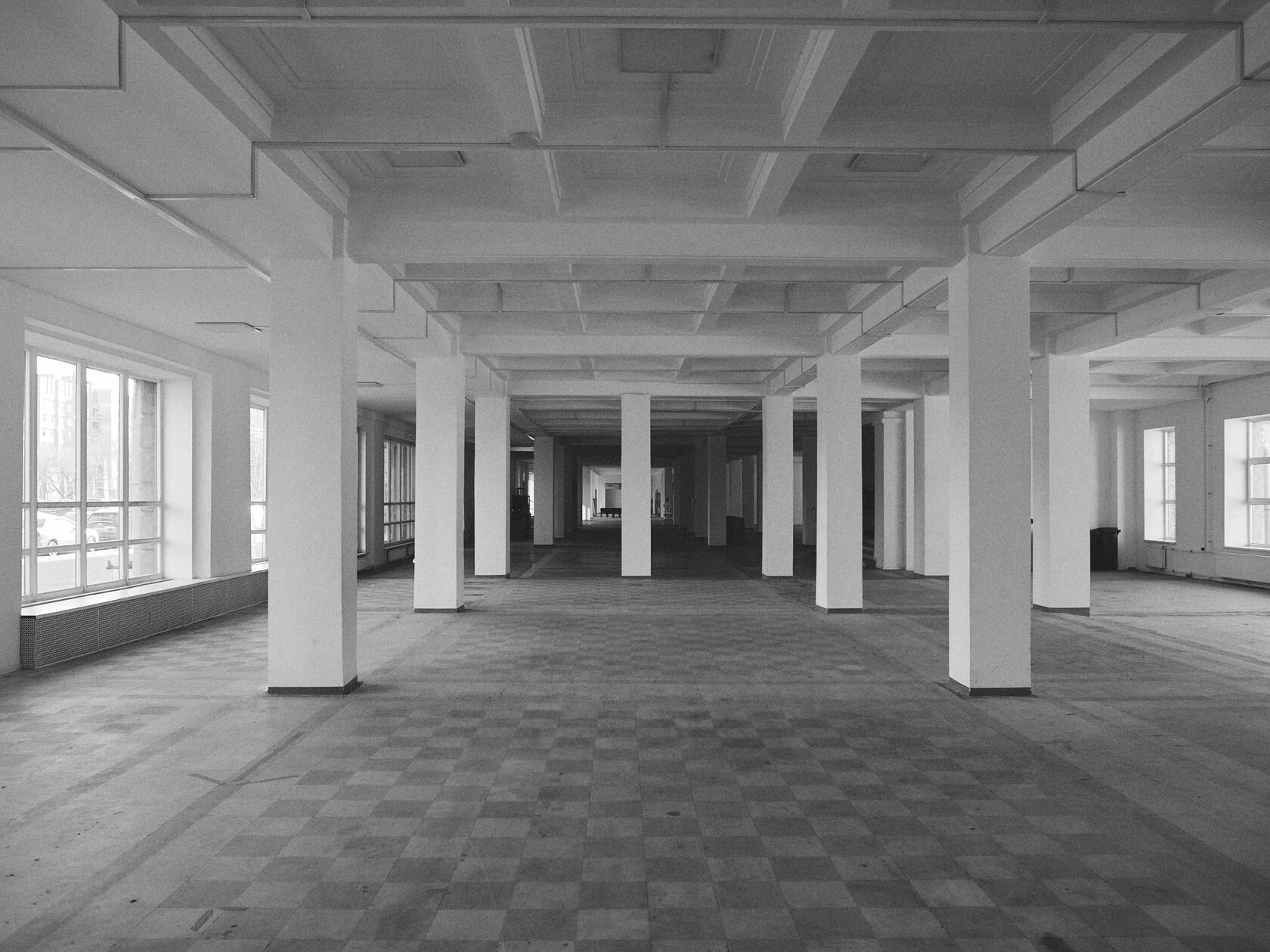
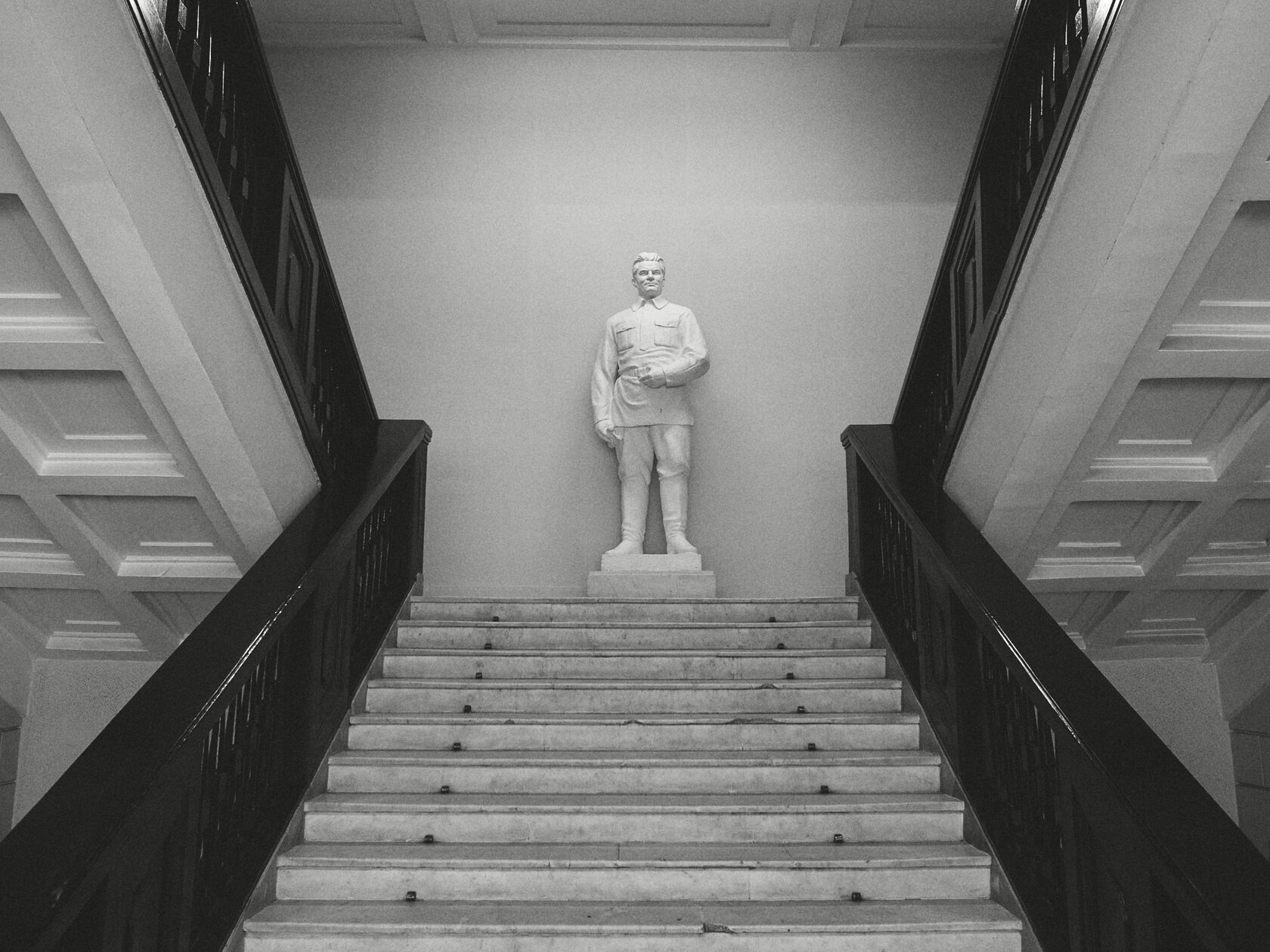
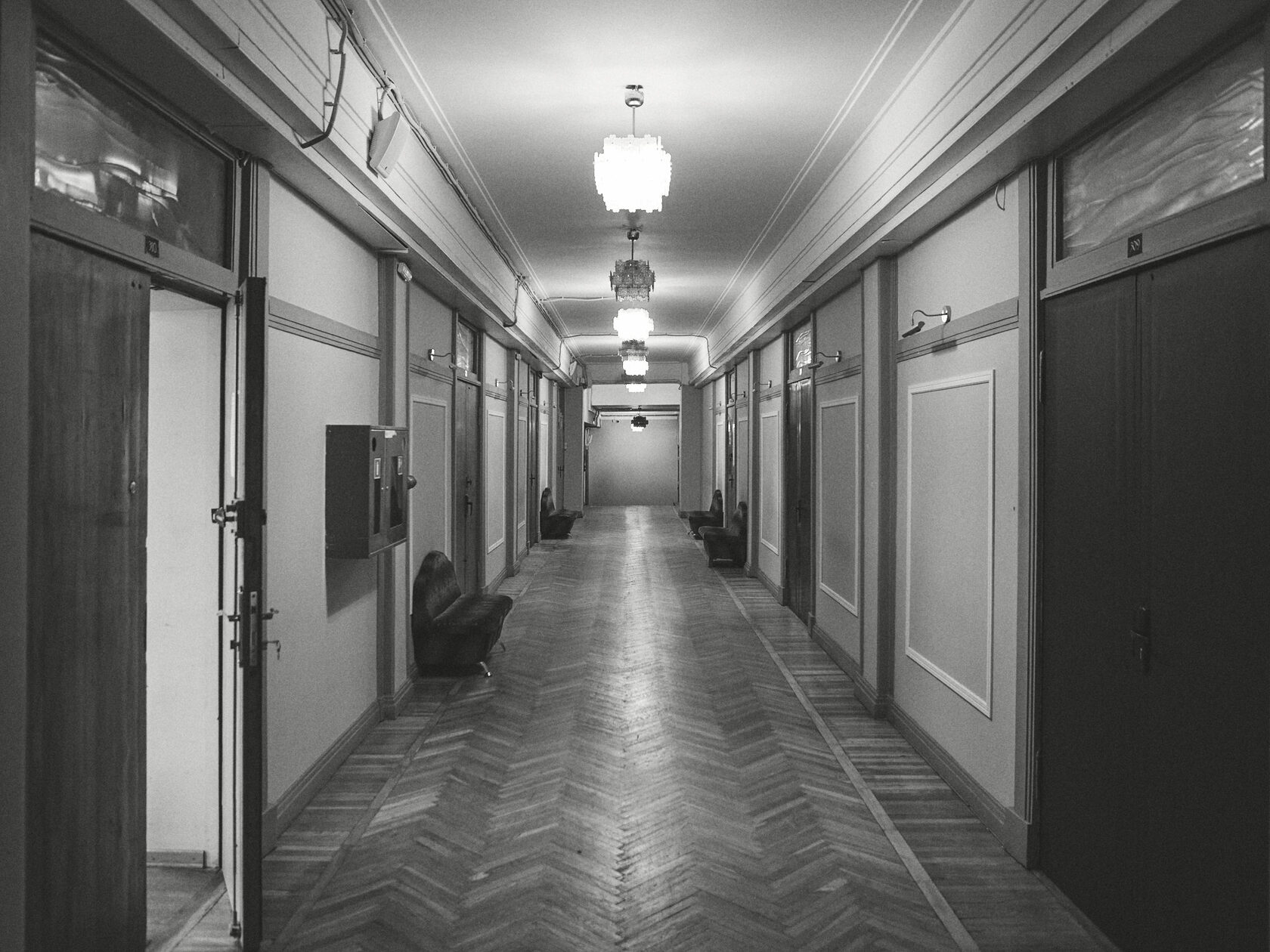
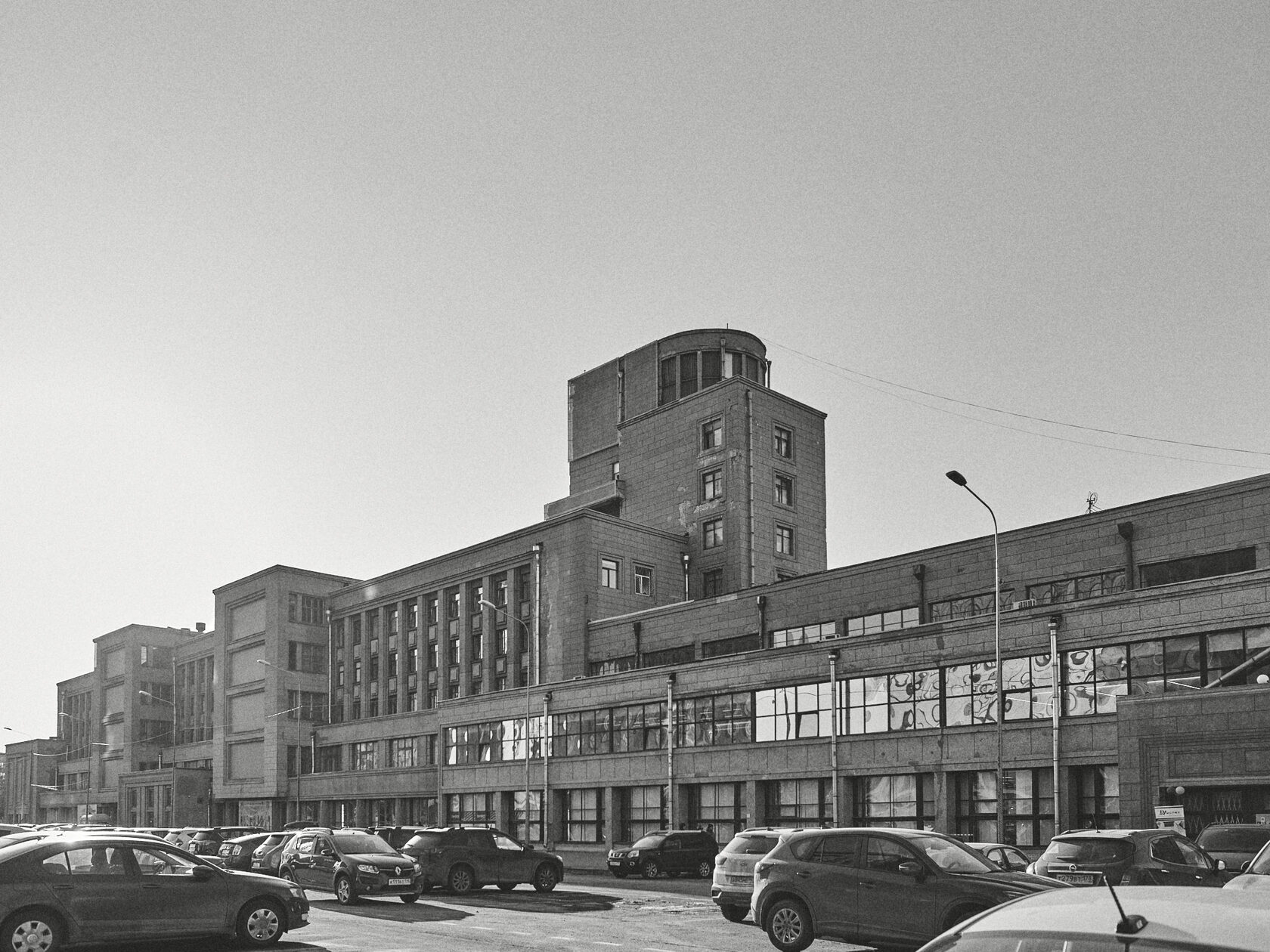
Palace of Culture named after LensovietДворец культуры имени Ленсовета列宁格勒苏维埃文化宫Kulturpalast des LensowjetPalais de la culture du LensovietPalacio de Cultura del LensovietPalácio da Cultura do Lensoviet
The building is photographed as a public interior turned outward. The facade carries the promise of assembly: lectures, rehearsals, meetings, cinema, theatre, music, and the belief that culture could be organized as part of everyday life.Здание снято как общественный интерьер, вывернутый наружу. Фасад удерживает обещание собрания: лекции, репетиции, встречи, кино, театр, музыку и веру в то, что культуру можно встроить в повседневность.这座建筑被拍成向外翻开的公共室内。立面保存着集会的承诺:讲座、排练、会议、电影、戏剧、音乐,以及文化可以被编入日常生活的信念。Das Gebäude wird als nach außen gekehrtes öffentliches Interieur fotografiert. Die Fassade trägt das Versprechen der Versammlung: Vorträge, Proben, Treffen, Kino, Theater, Musik und den Glauben, Kultur könne Teil des Alltags werden.Le bâtiment est photographié comme un intérieur public retourné vers l'extérieur. La façade porte la promesse du rassemblement : conférences, répétitions, réunions, cinéma, théâtre, musique, et la croyance que la culture pouvait être intégrée au quotidien.El edificio se fotografía como un interior público vuelto hacia fuera. La fachada sostiene la promesa de reunión: conferencias, ensayos, encuentros, cine, teatro, música y la creencia de que la cultura podía organizarse dentro de la vida cotidiana.O edifício é fotografado como um interior público virado para fora. A fachada guarda a promessa da reunião: palestras, ensaios, encontros, cinema, teatro, música e a crença de que a cultura podia ser organizada dentro do cotidiano.
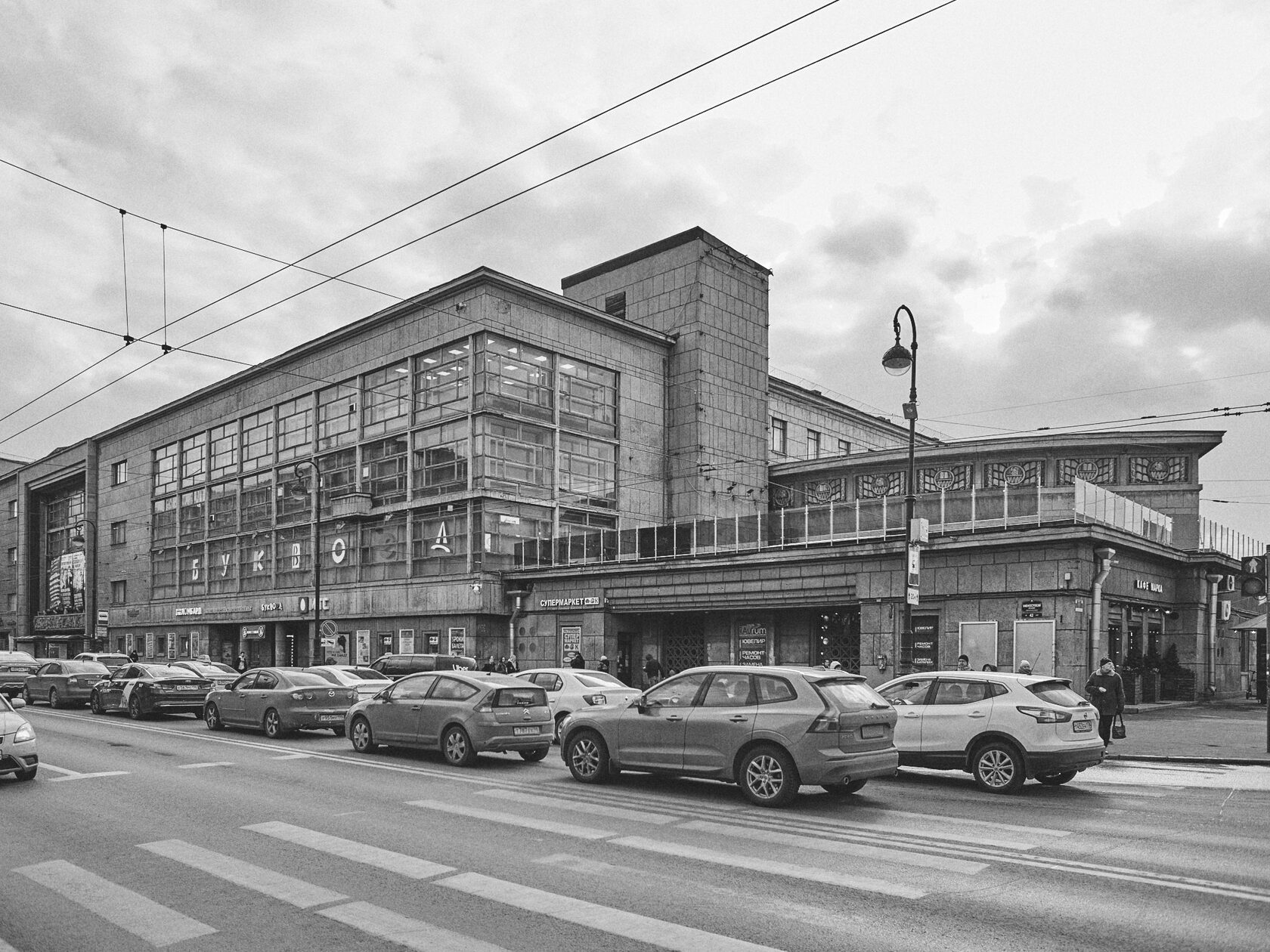
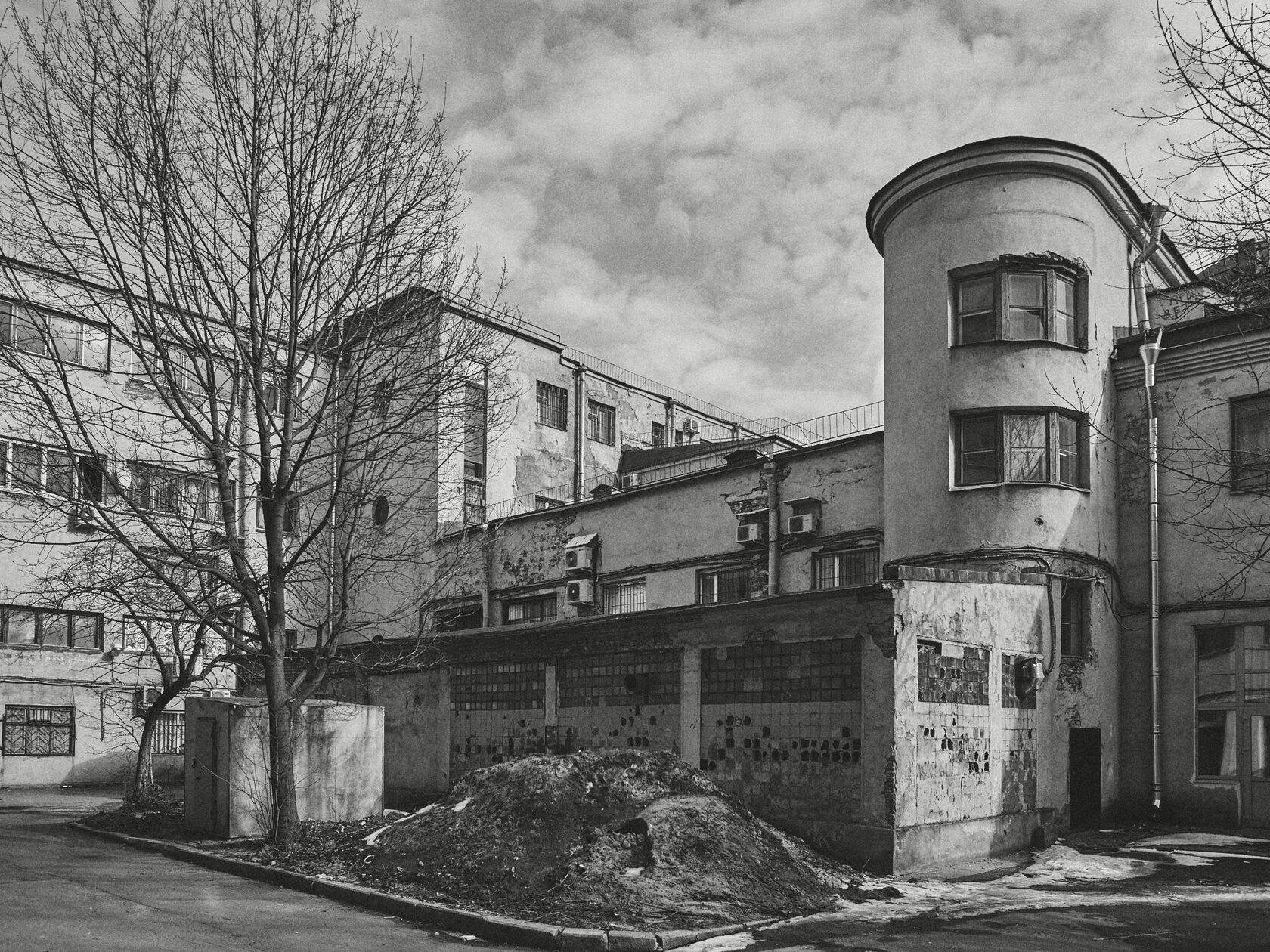
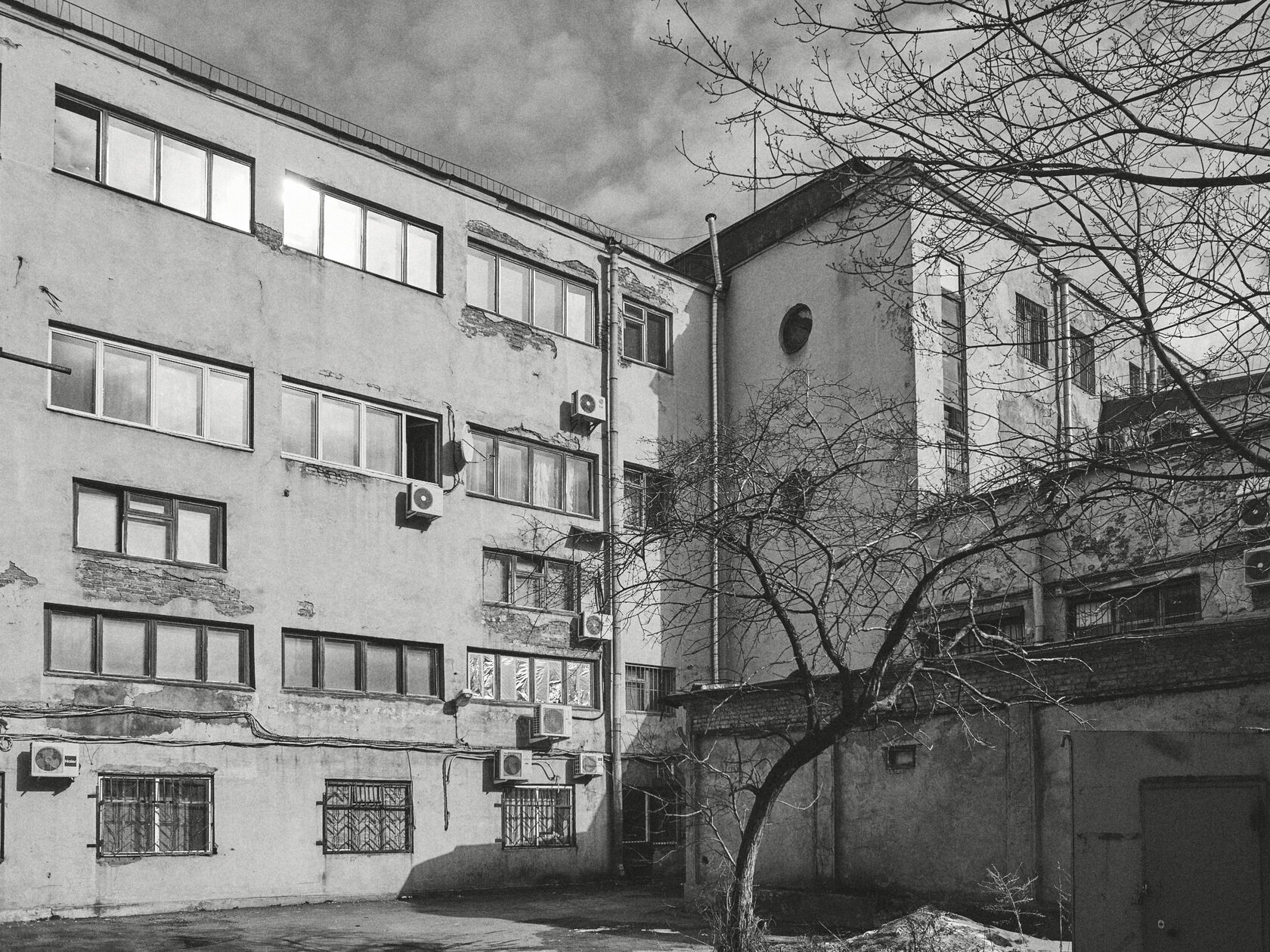
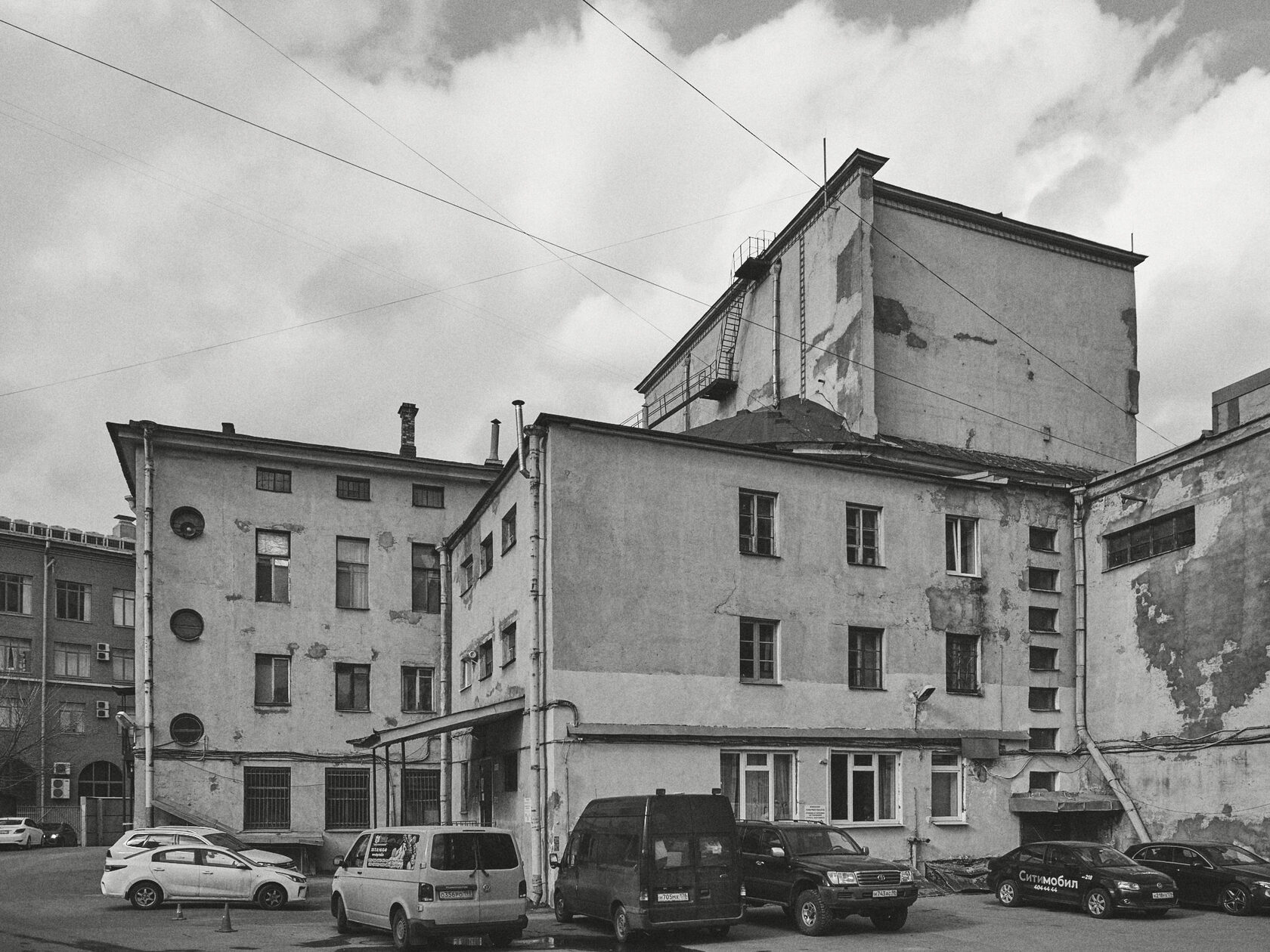
The first residential building of the Leningrad City CouncilПервый жилой дом Ленсовета列宁格勒市苏维埃第一住宅楼Erstes Wohnhaus des Leningrader StadtratsPremier immeuble résidentiel du conseil municipal de LeningradPrimer edificio residencial del Consejo Municipal de LeningradoPrimeiro edifício residencial do Conselho Municipal de Leningrado
The image keeps the central constructivist question close to the ground: how should people live together? Balconies, entrances, shared edges, and later alterations show where an old social model meets private use.Кадр удерживает главный бытовой вопрос конструктивизма: как людям жить вместе? Балконы, входы, общие границы и поздние изменения показывают место, где старая социальная модель сталкивается с частным использованием.画面把建构主义最日常的问题拉回地面:人们该如何共同生活?阳台、入口、共享边界和后来的改动,显示出旧的社会模型如何与私人使用相遇。Das Bild hält die zentrale Alltagsfrage des Konstruktivismus nahe am Boden: Wie sollen Menschen zusammenleben? Balkone, Eingänge, gemeinsame Kanten und spätere Veränderungen zeigen, wo ein altes Sozialmodell auf private Nutzung trifft.L'image garde au ras du sol la question centrale du constructivisme : comment vivre ensemble ? Balcons, entrées, limites partagées et transformations ultérieures montrent l'endroit où un ancien modèle social rencontre l'usage privé.La imagen mantiene cerca del suelo la pregunta central del constructivismo: ¿cómo deben vivir juntas las personas? Balcones, entradas, bordes compartidos y alteraciones posteriores muestran dónde un viejo modelo social se encuentra con el uso privado.A imagem mantém rente ao chão a pergunta central do construtivismo: como as pessoas devem viver juntas? Varandas, entradas, limites compartilhados e alterações posteriores mostram onde um antigo modelo social encontra o uso privado.
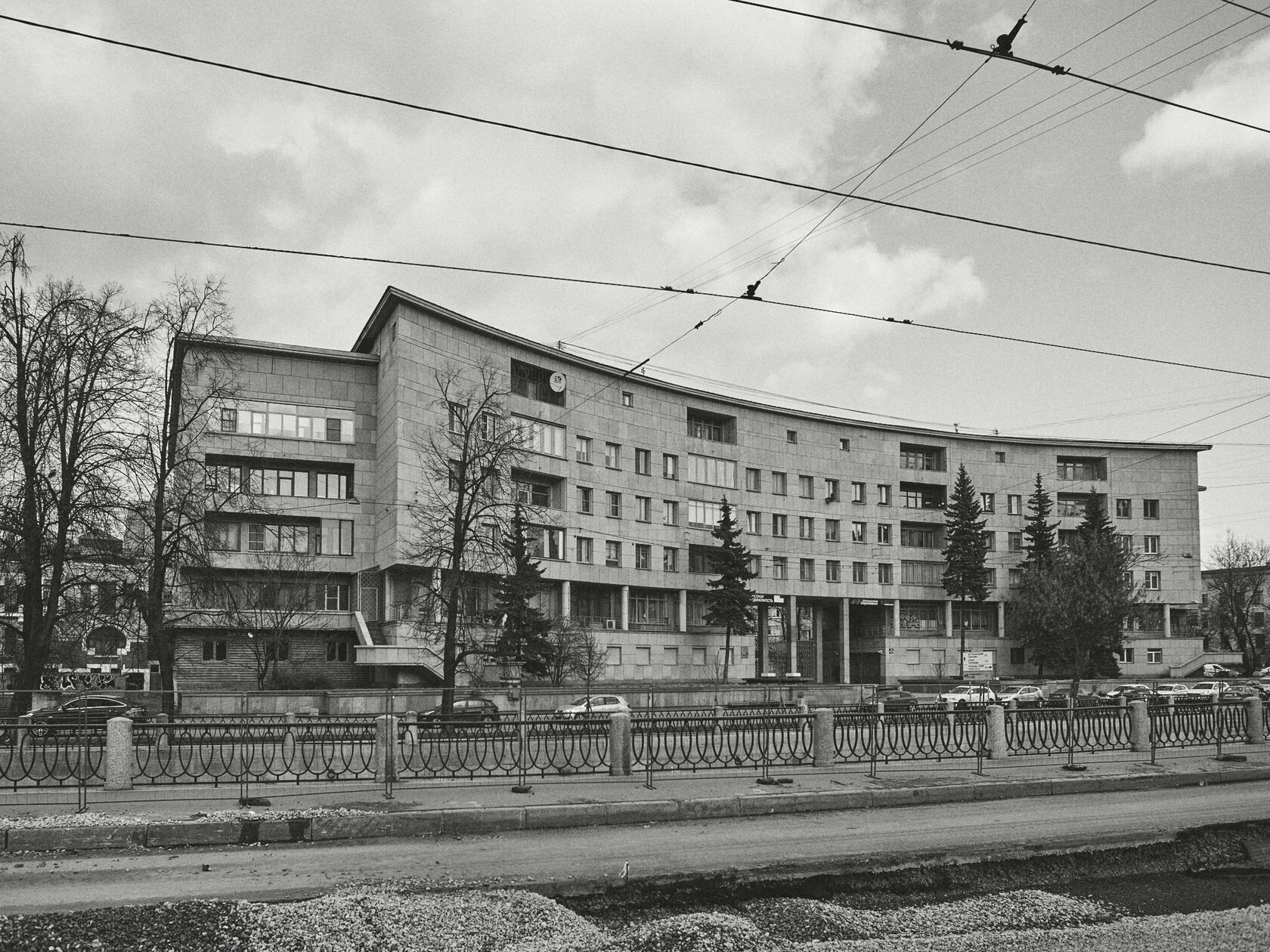
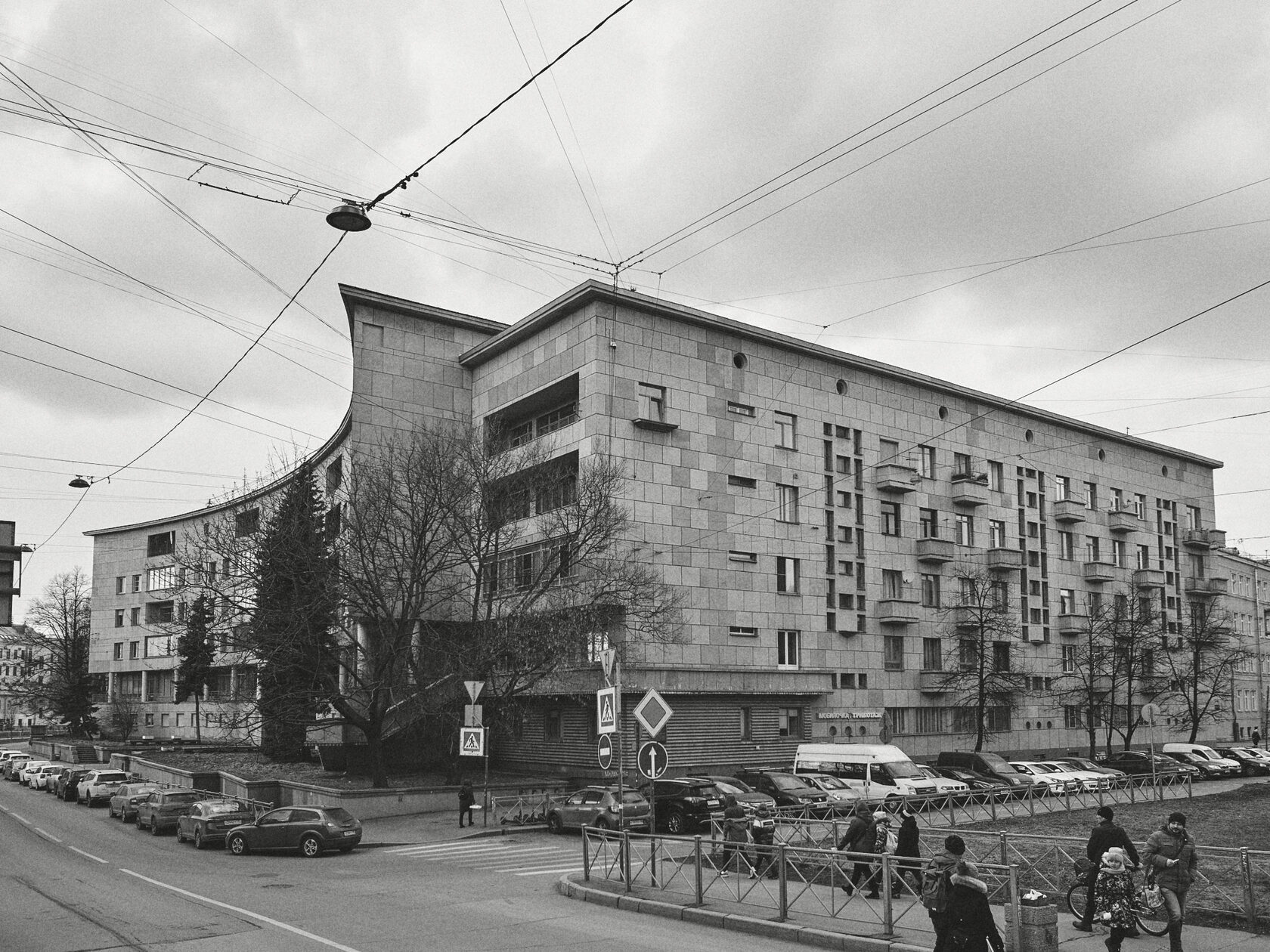
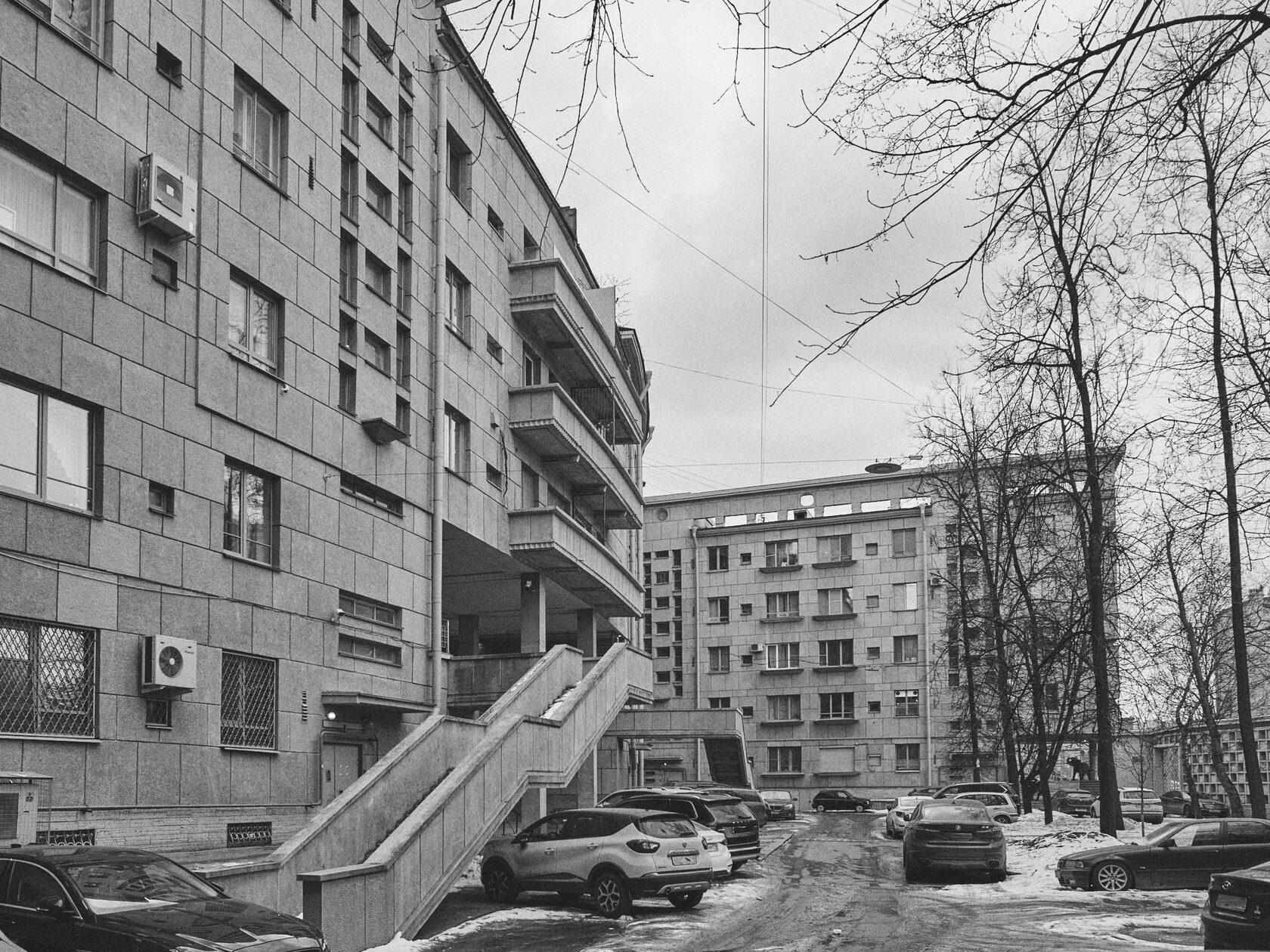
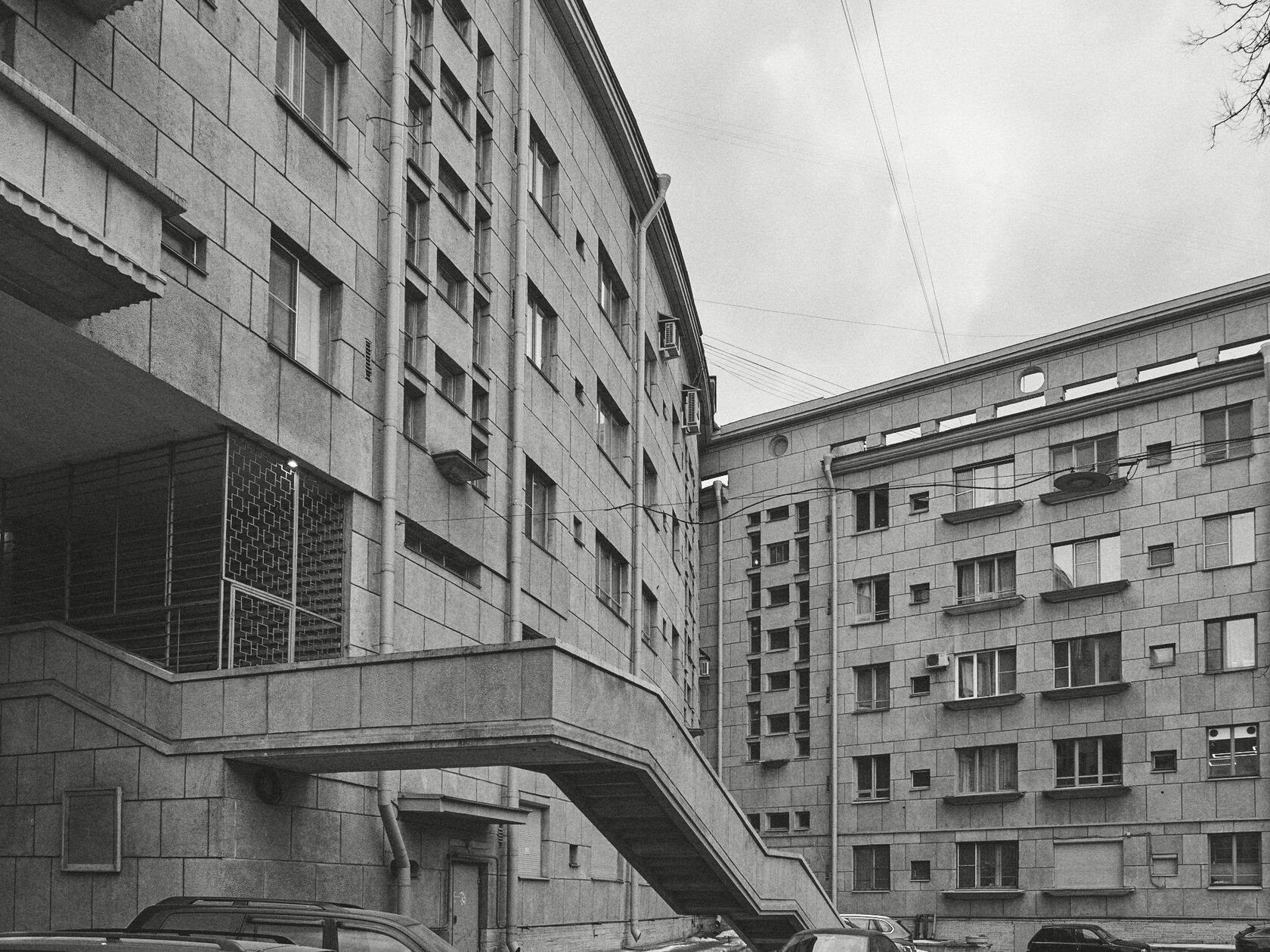
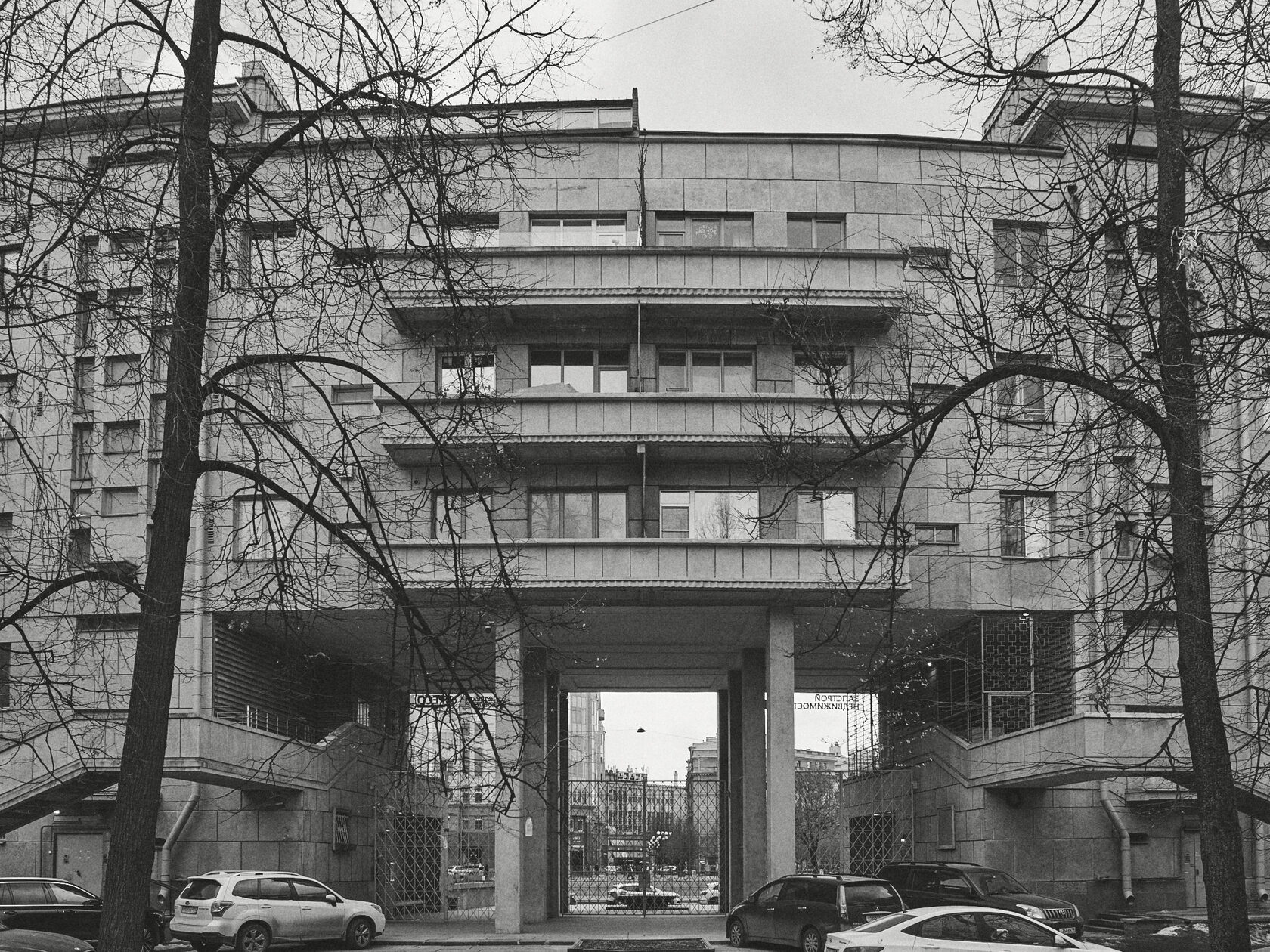
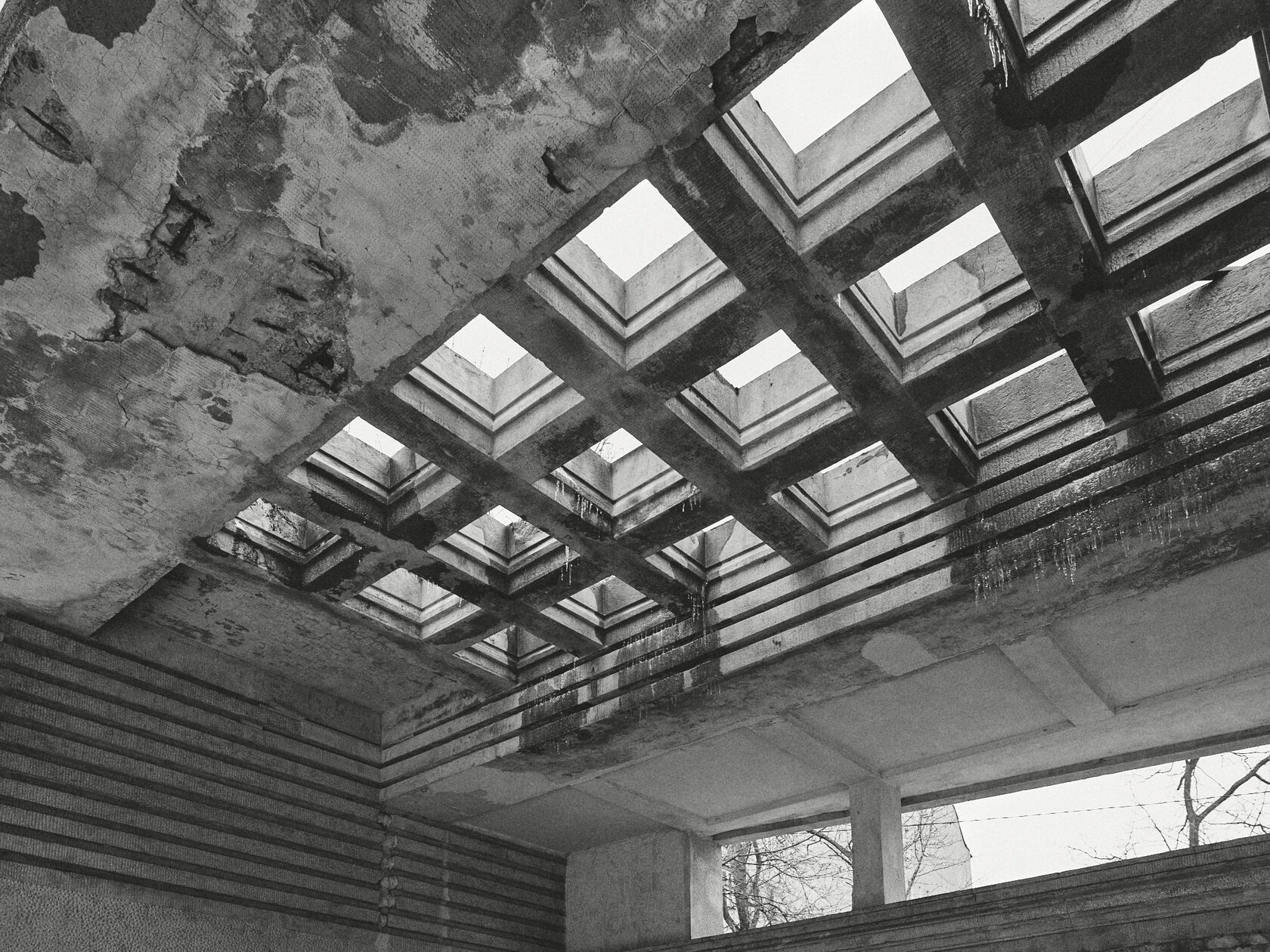
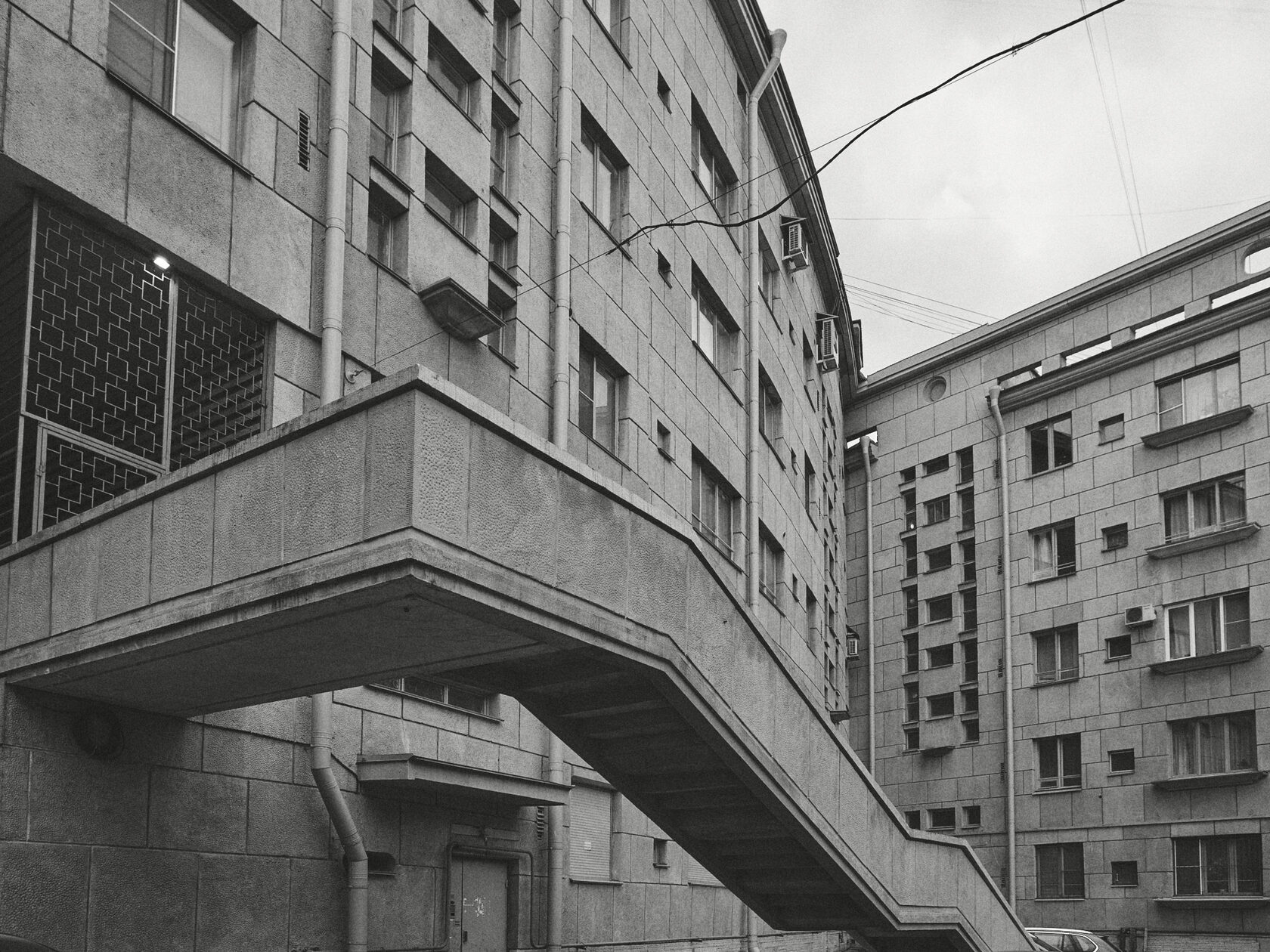
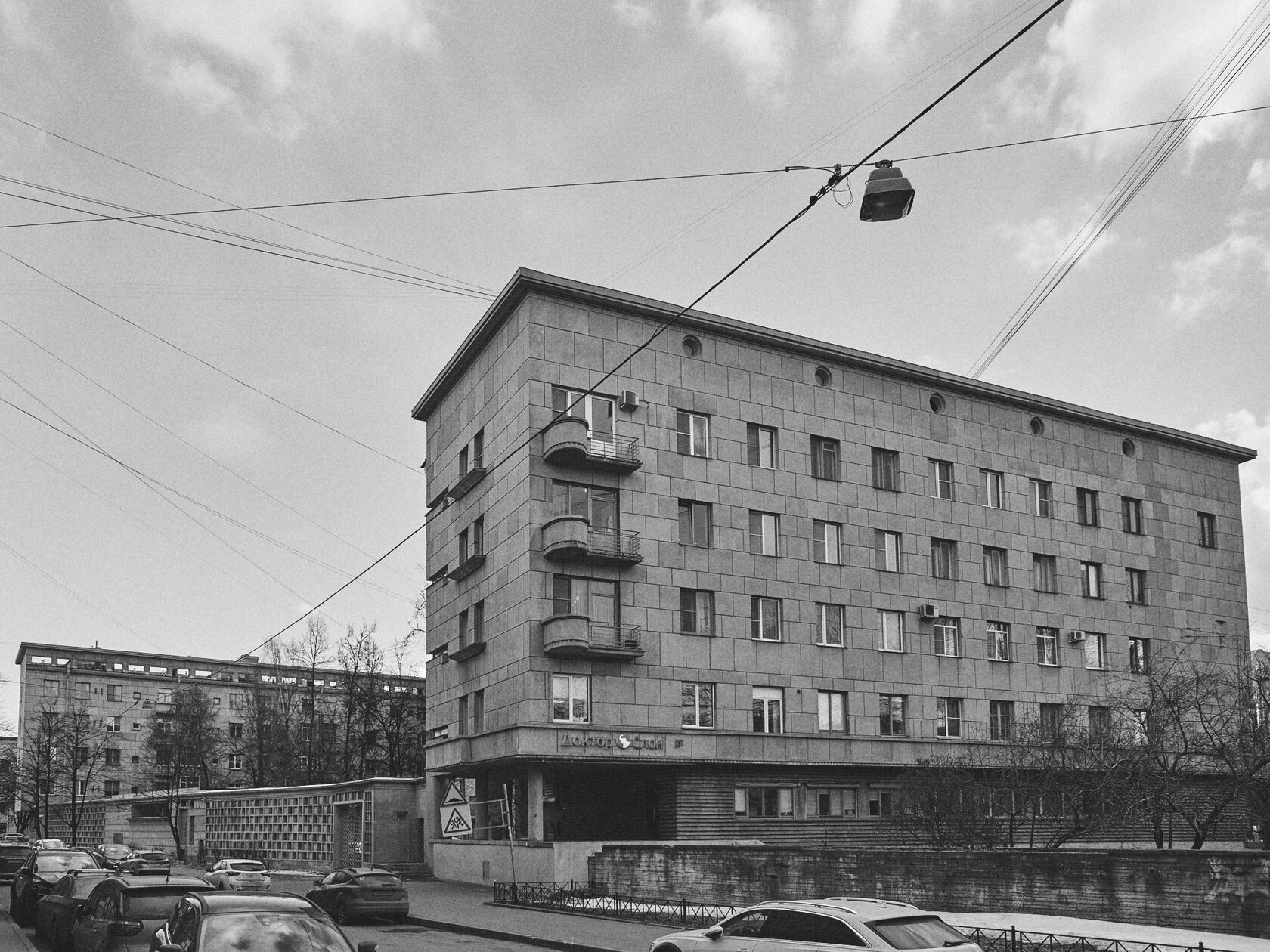
Power station of the Krasnoye Znamya factoryСиловая станция фабрики «Красное знамя»“红旗”工厂动力站Kraftstation der Fabrik "Krasnoye Znamya"Centrale de l'usine « Krasnoye Znamya »Central eléctrica de la fábrica «Krasnoye Znamya»Central de energia da fábrica «Krasnoye Znamya»
The building is read through movement: arrival, departure, service, waiting, repair. It is less an object than a pause inside a larger route, a place where modern life briefly becomes visible as logistics.Здание читается через движение: прибытие, отправление, обслуживание, ожидание, ремонт. Это не столько объект, сколько остановка внутри большого маршрута, место, где современная жизнь на мгновение становится видимой как логистика.这座建筑通过移动来阅读:抵达、出发、服务、等待、修理。它与其说是一个对象,不如说是更大路线中的一次停顿,一个现代生活短暂显现为物流的地点。Das Gebäude wird durch Bewegung gelesen: Ankunft, Abfahrt, Service, Warten, Reparatur. Es ist weniger ein Objekt als eine Pause in einer größeren Route, ein Ort, an dem modernes Leben kurz als Logistik sichtbar wird.Le bâtiment se lit par le mouvement : arrivée, départ, service, attente, réparation. C'est moins un objet qu'une pause dans un trajet plus vaste, un lieu où la vie moderne devient brièvement visible comme logistique.El edificio se lee a través del movimiento: llegada, salida, servicio, espera, reparación. Es menos un objeto que una pausa dentro de una ruta mayor, un lugar donde la vida moderna se vuelve visible por un momento como logística.O edifício é lido pelo movimento: chegada, partida, serviço, espera, reparo. É menos um objeto do que uma pausa dentro de uma rota maior, um lugar onde a vida moderna se torna brevemente visível como logística.
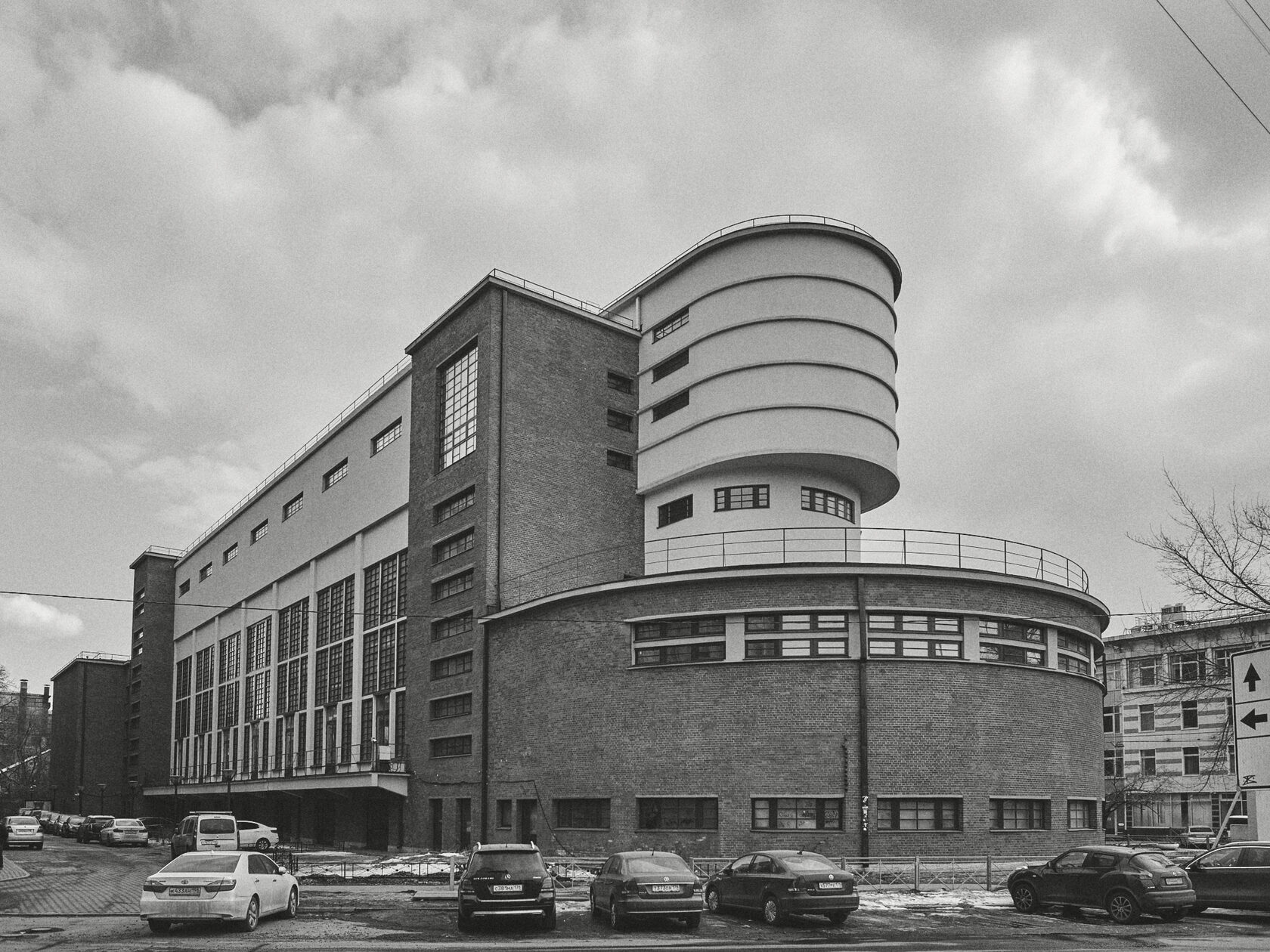
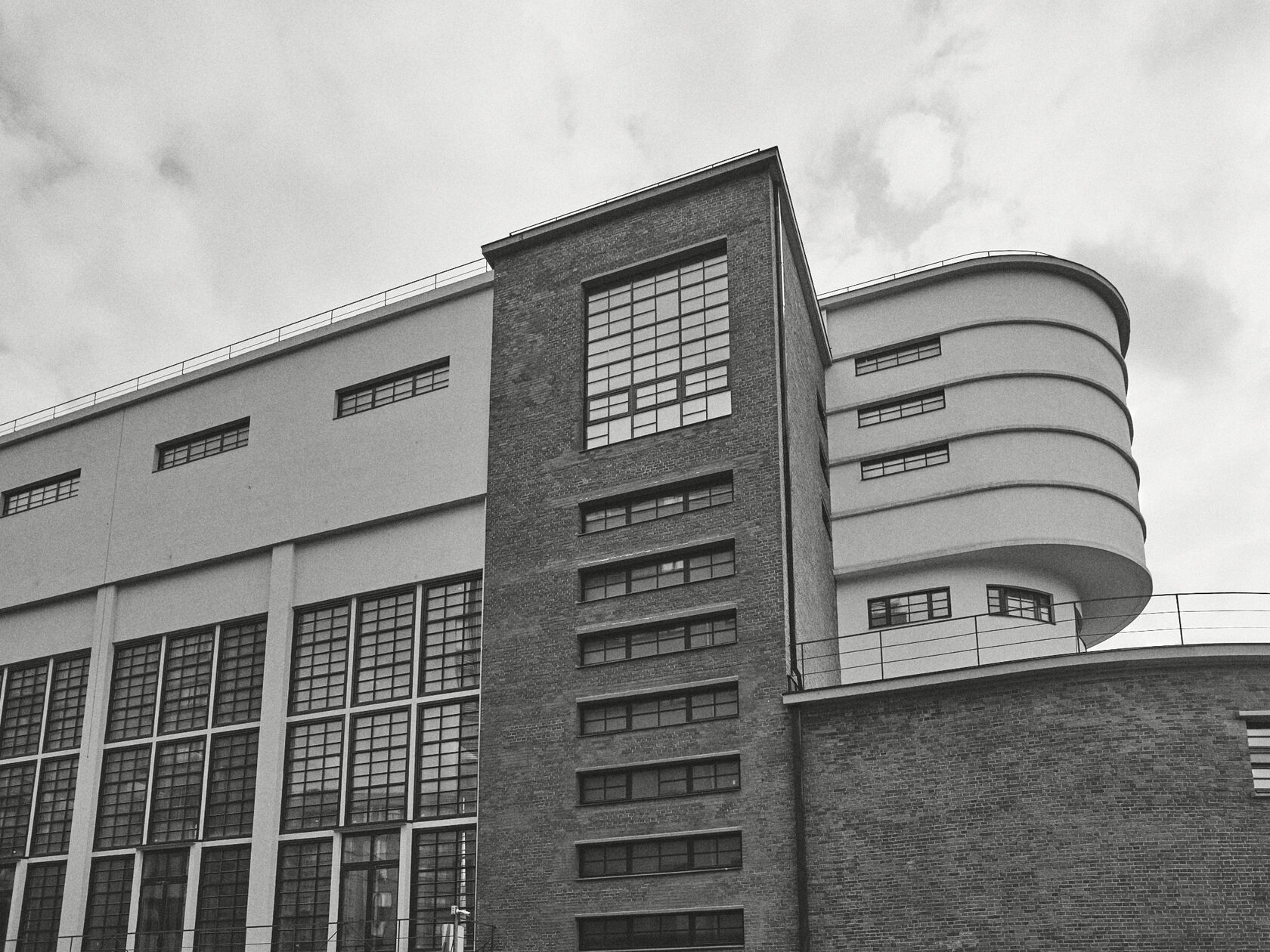
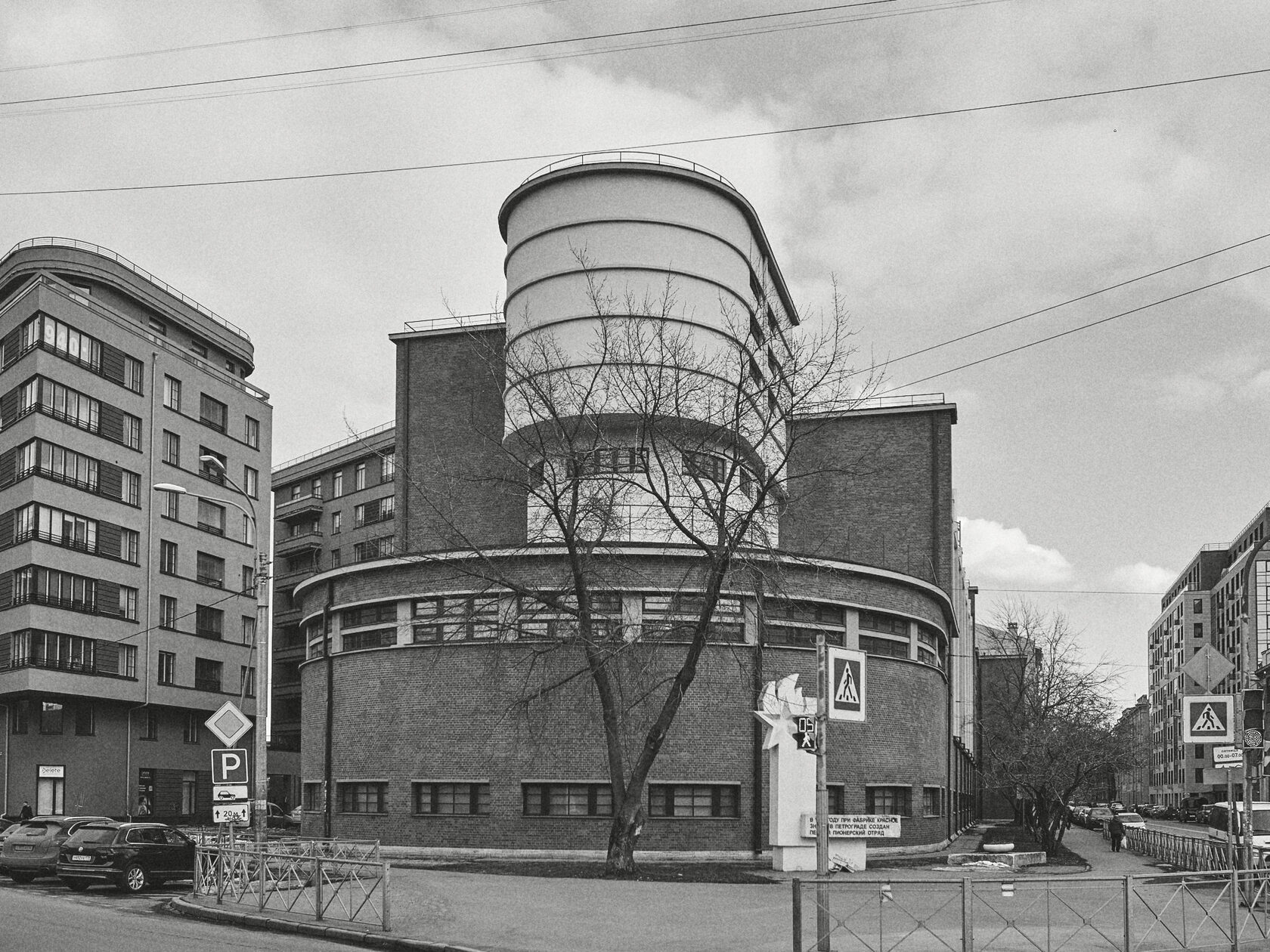
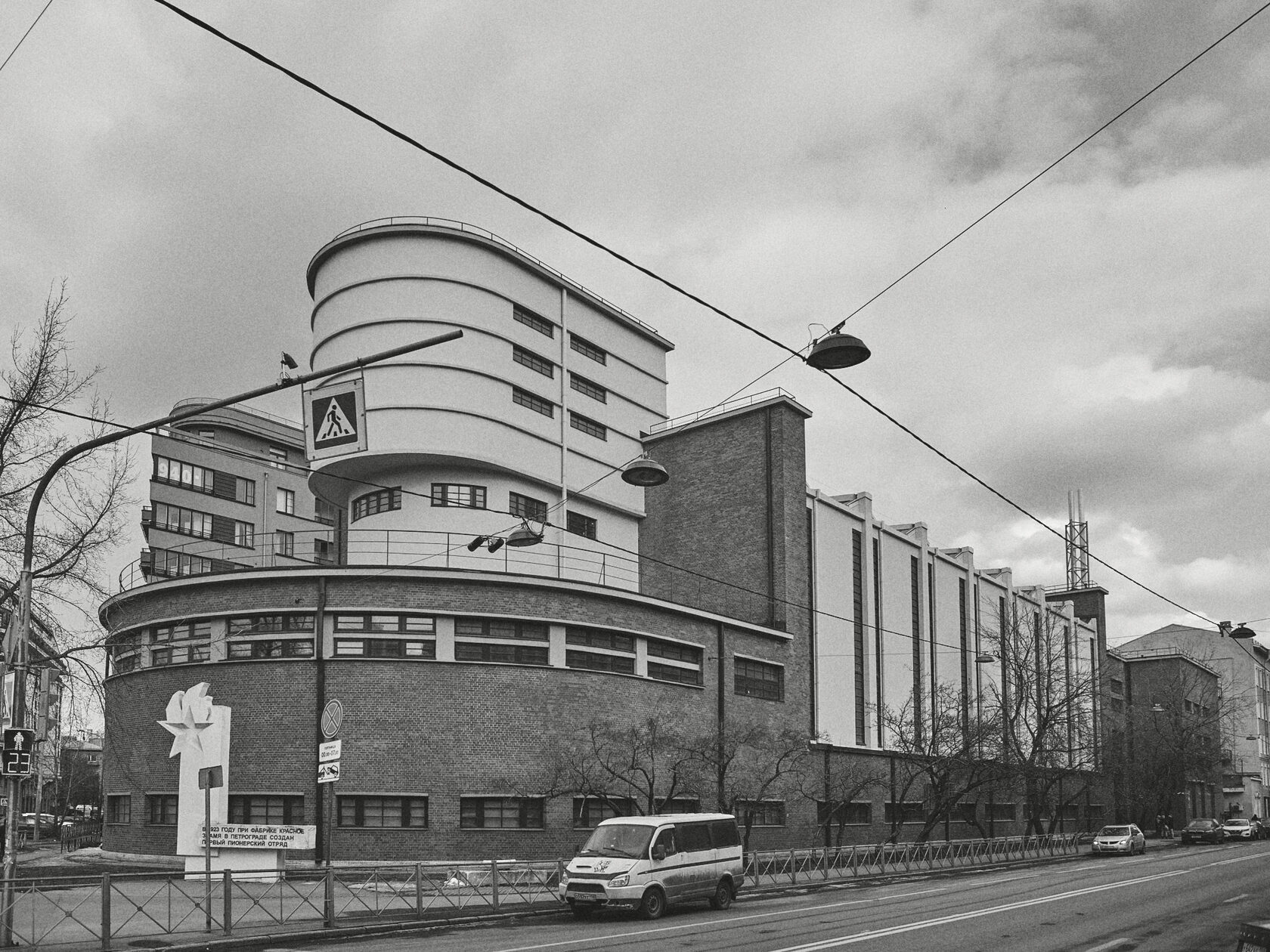
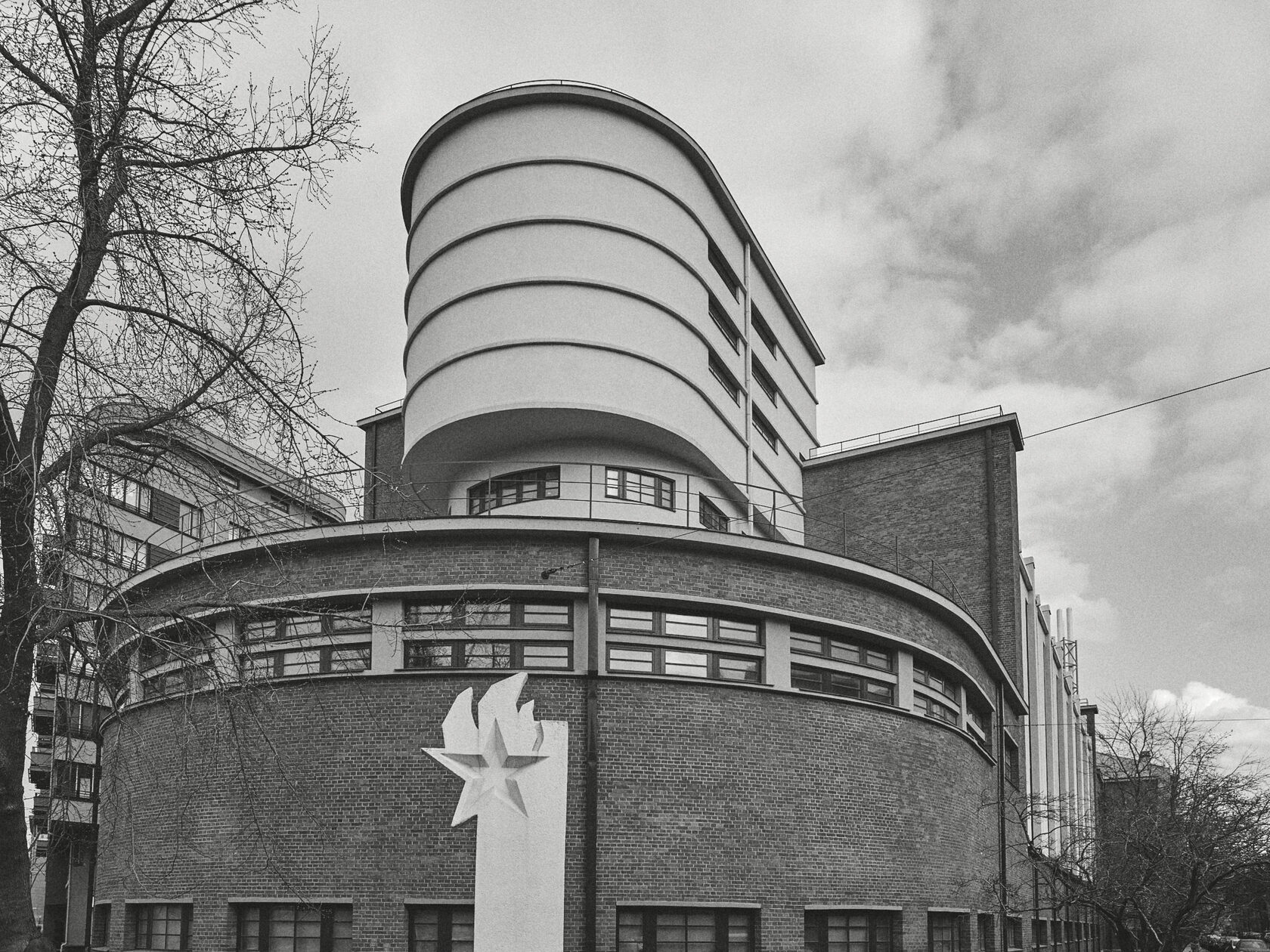
Moscow District CouncilМосковский райсовет莫斯科区苏维埃Moskauer BezirksratConseil de district de MoscouConsejo de distrito de MoscúConselho distrital de Moscou
Here administration becomes form. The geometry is not neutral: it stages authority, planning, and the desire to make a new order visible through walls, windows, and scale.Здесь управление становится формой. Геометрия не нейтральна: она ставит на сцену власть, планирование и желание сделать новый порядок видимым через стены, окна и масштаб.在这里,行政变成了形式。几何并不中立:它把权力、规划以及让新秩序通过墙、窗和尺度变得可见的欲望推上舞台。Hier wird Verwaltung zur Form. Die Geometrie ist nicht neutral: Sie inszeniert Autorität, Planung und den Wunsch, eine neue Ordnung durch Wände, Fenster und Maßstab sichtbar zu machen.Ici, l'administration devient forme. La géométrie n'est pas neutre : elle met en scène l'autorité, la planification et le désir de rendre un nouvel ordre visible par les murs, les fenêtres et l'échelle.Aquí la administración se vuelve forma. La geometría no es neutra: escenifica autoridad, planificación y el deseo de hacer visible un nuevo orden mediante muros, ventanas y escala.Aqui a administração vira forma. A geometria não é neutra: encena autoridade, planejamento e o desejo de tornar uma nova ordem visível por paredes, janelas e escala.
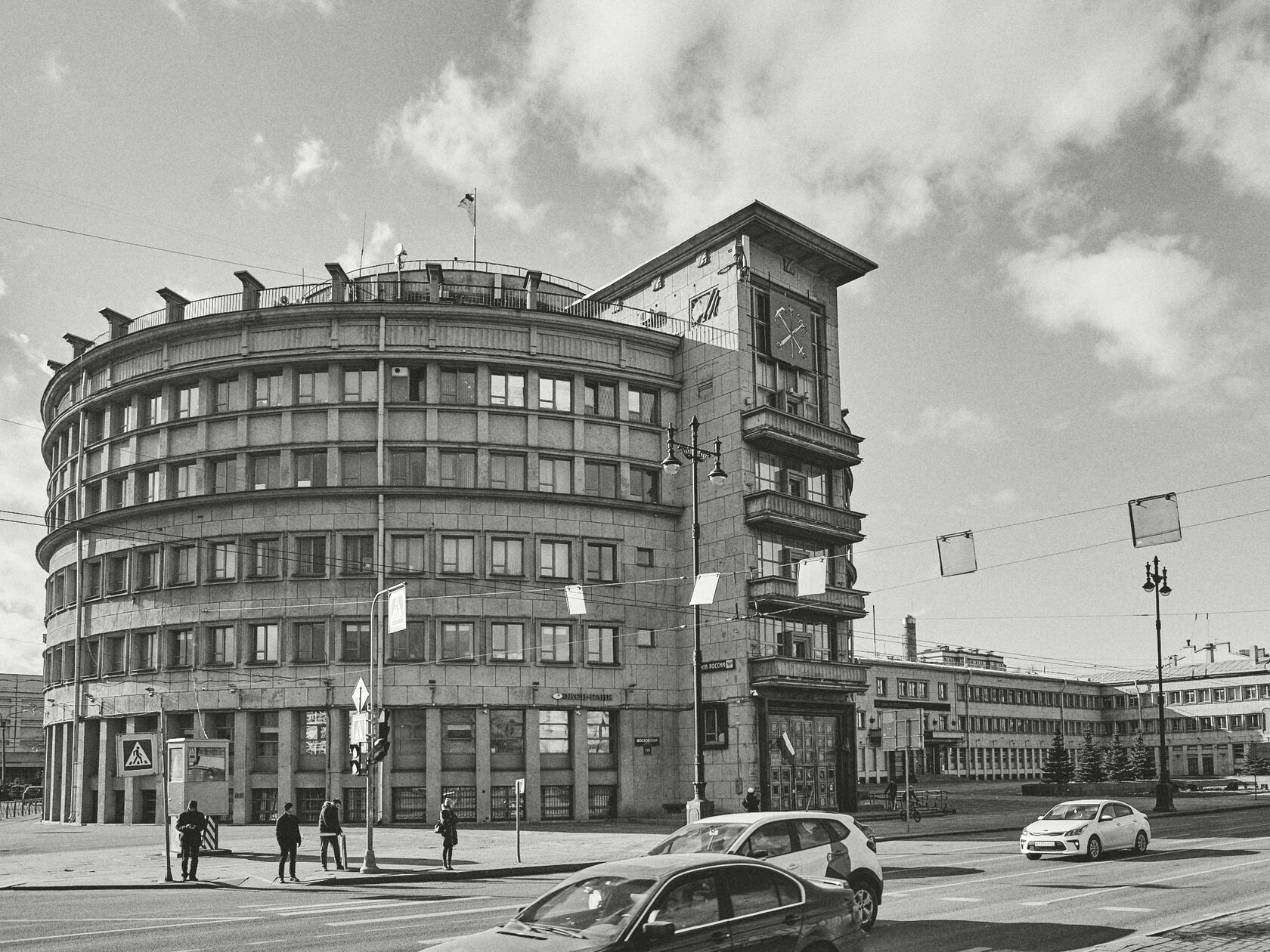
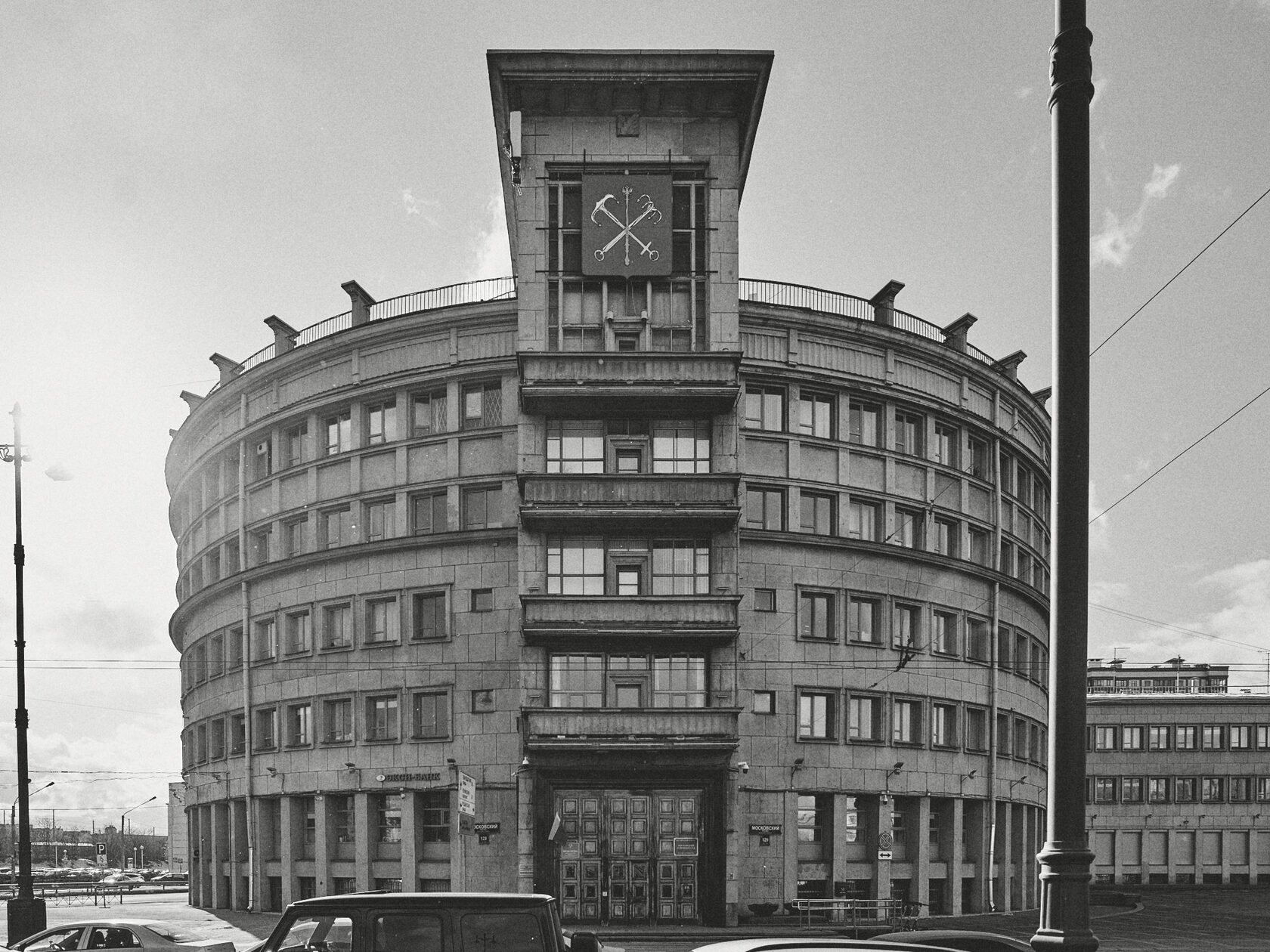
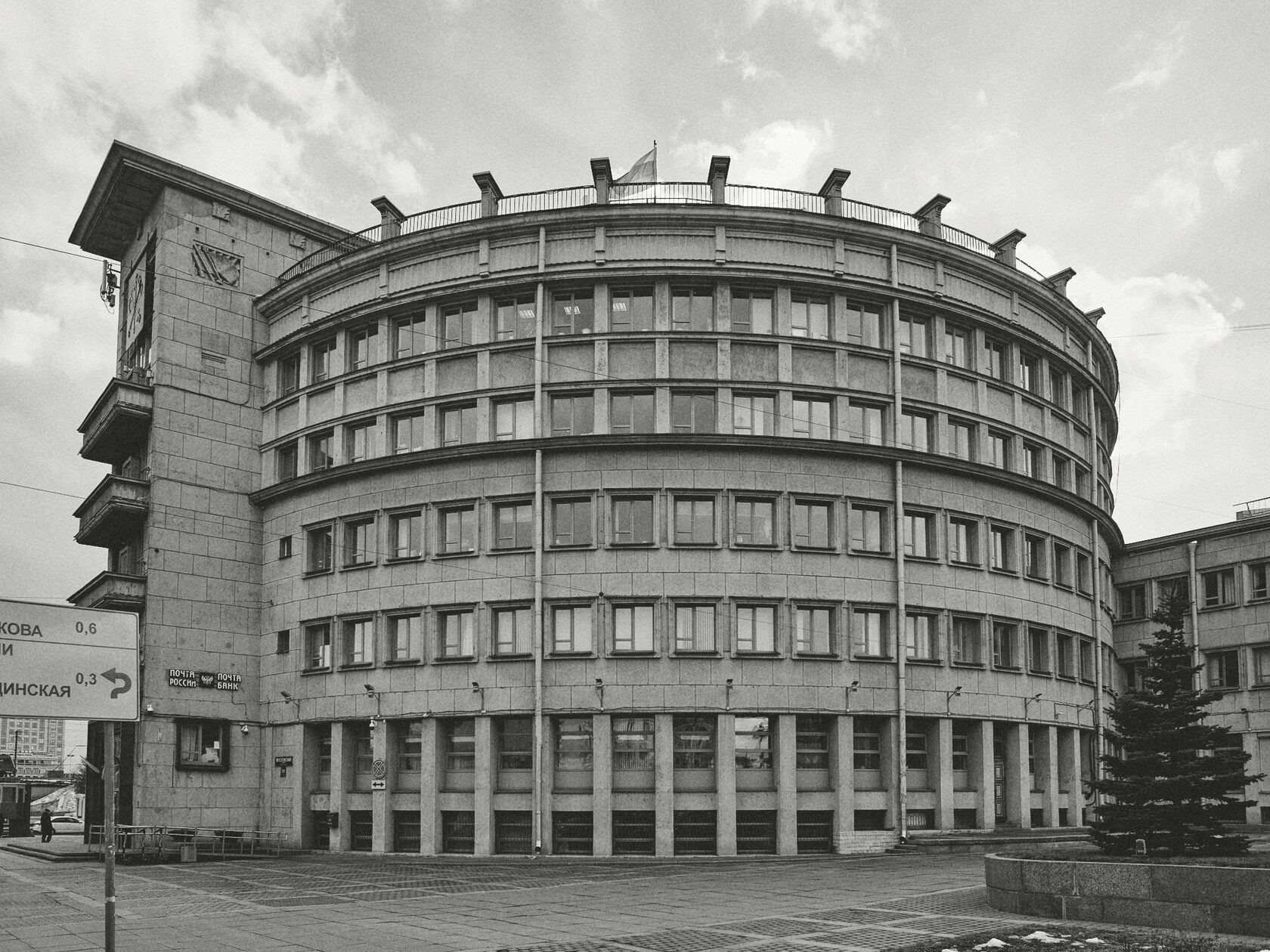
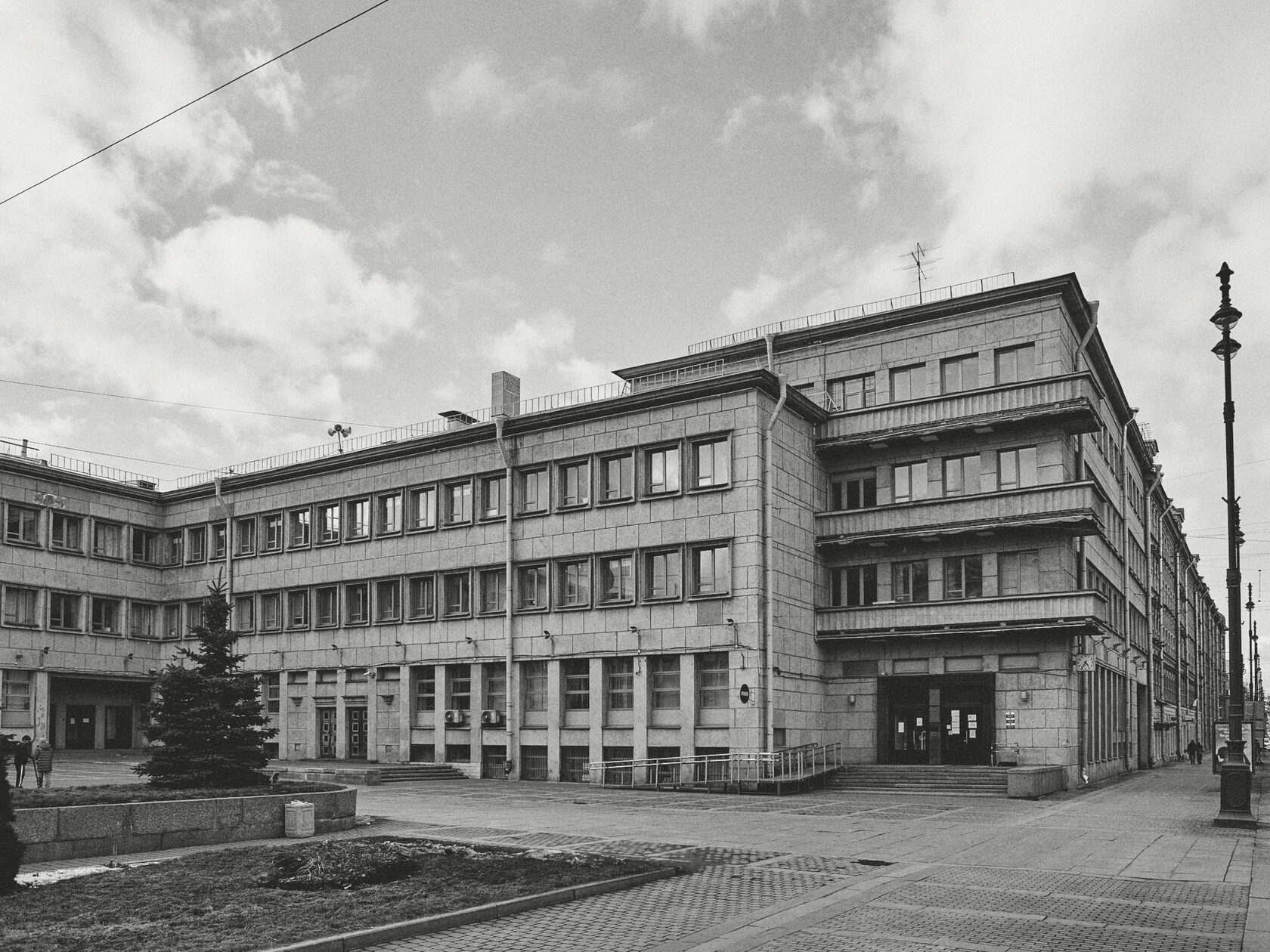
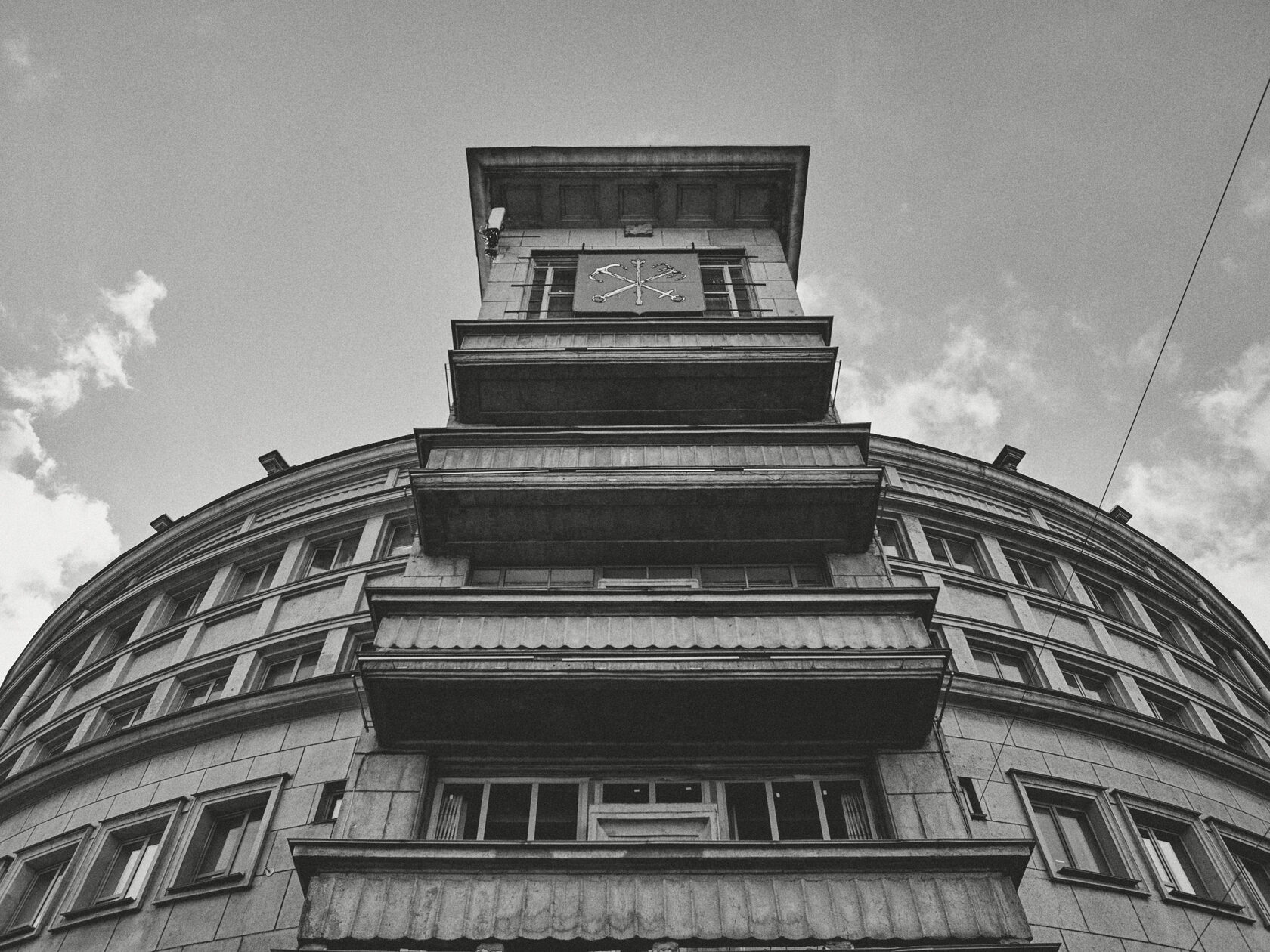
House of Culture named after IlyichДом культуры имени Ильича伊里奇文化宫Haus der Kultur IlyichMaison de la culture IlyichCasa de Cultura IlyichCasa da Cultura Ilyich
The building is photographed as a public interior turned outward. The facade carries the promise of assembly: lectures, rehearsals, meetings, cinema, theatre, music, and the belief that culture could be organized as part of everyday life.Здание снято как общественный интерьер, вывернутый наружу. Фасад удерживает обещание собрания: лекции, репетиции, встречи, кино, театр, музыку и веру в то, что культуру можно встроить в повседневность.这座建筑被拍成向外翻开的公共室内。立面保存着集会的承诺:讲座、排练、会议、电影、戏剧、音乐,以及文化可以被编入日常生活的信念。Das Gebäude wird als nach außen gekehrtes öffentliches Interieur fotografiert. Die Fassade trägt das Versprechen der Versammlung: Vorträge, Proben, Treffen, Kino, Theater, Musik und den Glauben, Kultur könne Teil des Alltags werden.Le bâtiment est photographié comme un intérieur public retourné vers l'extérieur. La façade porte la promesse du rassemblement : conférences, répétitions, réunions, cinéma, théâtre, musique, et la croyance que la culture pouvait être intégrée au quotidien.El edificio se fotografía como un interior público vuelto hacia fuera. La fachada sostiene la promesa de reunión: conferencias, ensayos, encuentros, cine, teatro, música y la creencia de que la cultura podía organizarse dentro de la vida cotidiana.O edifício é fotografado como um interior público virado para fora. A fachada guarda a promessa da reunião: palestras, ensaios, encontros, cinema, teatro, música e a crença de que a cultura podia ser organizada dentro do cotidiano.