2021
ModernismМодернизм现代主义ModernismusModernismeModernismoModernismo
A smaller chapter of the archive: resort architecture, transport, concrete rhythm, and the moment when utopia becomes atmosphere.Небольшая глава архива: курортная архитектура, транспорт, бетонный ритм и момент, когда утопия превращается в атмосферу.档案中较小的一章:度假建筑、交通、混凝土的节奏,以及乌托邦变成氛围的时刻。Ein kleineres Kapitel des Archivs: Kurarchitektur, Verkehr, Betonrhythmus und der Moment, in dem Utopie zu Atmosphäre wird.Un chapitre plus resserré de l'archive : architecture de villégiature, transports, rythme du béton et moment où l'utopie devient atmosphère.Un capítulo más pequeño del archivo: arquitectura de balneario, transporte, ritmo de hormigón y el momento en que la utopía se vuelve atmósfera.Um capítulo menor do arquivo: arquitetura de resort, transporte, ritmo do concreto e o momento em que a utopia vira atmosfera.
Modernism is separated from Constructivism here because the temperature is different, and so is the historical speed. These buildings no longer speak with the sharpness of a manifesto. They organize rest, movement, arrival, shade, scale, maintenance, and the public choreography of the late Soviet city.
This archive is deliberately smaller and more open. Dates work as coordinates after utopia: the 1960s, 1970s, and 1980s, when concrete stops being a promise of new life and becomes climate, infrastructure, a view from a window, a route to the sea or to a bus station.
The chapter remains unfinished. What matters is not only the single building, but the type: slab house, elevated house, station, sanatorium, house of power. Architecture no longer builds the future directly, but it still holds the body of the city.
Модернизм отделен от конструктивизма потому, что у него другая температура и другая историческая скорость. Эти здания уже не говорят резкостью манифеста. Они организуют отдых, движение, прибытие, тень, масштаб, обслуживание и публичную хореографию позднесоветского города.
Здесь архив намеренно меньше и свободнее. Даты работают как координаты после утопии: 1960-е, 1970-е, 1980-е, когда бетон перестает быть обещанием нового быта и становится климатом, инфраструктурой, видом из окна, маршрутом к морю или к остановке.
Эта глава открыта. В ней важны не только отдельные здания, но и типы: дом-пластина, дом на опорах, вокзал, санаторий, дом власти. Архитектура уже не строит будущего впрямую, но продолжает держать тело города.
这里把现代主义同建构主义分开,是因为它有另一种温度,也有另一种历史速度。这些建筑不再以宣言的锋利说话。它们组织休息、移动、抵达、阴影、尺度、维护,以及晚期苏联城市的公共 choreography。
这份档案有意更小,也更开放。日期像乌托邦之后的坐标:1960、1970、1980年代,混凝土不再是新生活的承诺,而成为气候、基础设施、窗外景色、通往海边或车站的路线。
这一章仍然敞开。重要的不只是单个建筑,也包括类型:板式住宅、架空住宅、车站、疗养院、权力之家。建筑不再直接建造未来,但仍然托住城市的身体。
Der Modernismus ist hier vom Konstruktivismus getrennt, weil seine Temperatur eine andere ist, ebenso seine historische Geschwindigkeit. Diese Gebäude sprechen nicht mehr mit der Schärfe eines Manifests. Sie organisieren Erholung, Bewegung, Ankunft, Schatten, Maßstab, Wartung und die öffentliche Choreografie der spätsowjetischen Stadt.
Dieses Archiv ist absichtlich kleiner und offener. Daten funktionieren als Koordinaten nach der Utopie: die 1960er, 1970er und 1980er Jahre, als Beton aufhört, ein Versprechen neuen Lebens zu sein, und zu Klima, Infrastruktur, Aussicht aus dem Fenster, Weg zum Meer oder zur Bushaltestelle wird.
Das Kapitel bleibt offen. Wichtig ist nicht nur das einzelne Gebäude, sondern der Typus: Scheibenhaus, aufgeständertes Haus, Bahnhof, Sanatorium, Haus der Macht. Architektur baut die Zukunft nicht mehr direkt, hält aber weiterhin den Körper der Stadt.
Le modernisme est séparé ici du constructivisme parce que sa température est différente, tout comme sa vitesse historique. Ces bâtiments ne parlent plus avec la netteté d'un manifeste. Ils organisent le repos, le mouvement, l'arrivée, l'ombre, l'échelle, l'entretien et la chorégraphie publique de la ville soviétique tardive.
Cette archive est volontairement plus petite et plus ouverte. Les dates fonctionnent comme des coordonnées après l'utopie : les années 1960, 1970 et 1980, lorsque le béton cesse d'être la promesse d'une vie nouvelle et devient climat, infrastructure, vue depuis une fenêtre, trajet vers la mer ou vers une gare routière.
Le chapitre reste ouvert. Ce qui compte n'est pas seulement le bâtiment isolé, mais le type : immeuble-lame, bâtiment sur pilotis, gare, sanatorium, maison du pouvoir. L'architecture ne construit plus directement l'avenir, mais elle continue de tenir le corps de la ville.
El modernismo se separa aquí del constructivismo porque tiene otra temperatura y otra velocidad histórica. Estos edificios ya no hablan con la nitidez de un manifiesto. Organizan descanso, movimiento, llegada, sombra, escala, mantenimiento y la coreografía pública de la ciudad soviética tardía.
Este archivo es deliberadamente más pequeño y más abierto. Las fechas funcionan como coordenadas después de la utopía: los años sesenta, setenta y ochenta, cuando el hormigón deja de ser una promesa de nueva vida y se convierte en clima, infraestructura, vista desde una ventana, ruta hacia el mar o hacia una estación de autobuses.
El capítulo sigue abierto. Importa no sólo el edificio individual, sino el tipo: bloque laminar, casa elevada, estación, sanatorio, casa del poder. La arquitectura ya no construye el futuro de forma directa, pero todavía sostiene el cuerpo de la ciudad.
O modernismo é separado aqui do construtivismo porque sua temperatura é outra, assim como sua velocidade histórica. Esses edifícios já não falam com a nitidez de um manifesto. Eles organizam descanso, movimento, chegada, sombra, escala, manutenção e a coreografia pública da cidade soviética tardia.
Este arquivo é deliberadamente menor e mais aberto. As datas funcionam como coordenadas depois da utopia: os anos 1960, 1970 e 1980, quando o concreto deixa de ser uma promessa de nova vida e se torna clima, infraestrutura, vista da janela, caminho para o mar ou para uma rodoviária.
O capítulo continua aberto. O que importa não é apenas o edifício isolado, mas o tipo: bloco laminar, casa elevada, estação, sanatório, casa do poder. A arquitetura já não constrói o futuro diretamente, mas ainda sustenta o corpo da cidade.
After The UtopiaПосле утопии乌托邦之后Nach der UtopieAprès l'utopieDespués de la utopíaDepois da utopia
Concrete As WeatherБетон как погода混凝土如天气Beton als WetterLe béton comme météoEl hormigón como climaConcreto como clima
Resort architecture, transport, concrete rhythm.Курортная архитектура, транспорт, бетонный ритм.度假建筑、交通、混凝土的节奏。Kurarchitektur, Verkehr, Betonrhythmus.Architecture de villégiature, transport, rythme du béton.Arquitectura de balneario, transporte, ritmo de hormigón.Arquitetura de resort, transporte, ritmo do concreto. A smaller, open chapter of the architectural archive.Небольшая открытая глава архитектурного архива.建筑档案中较小而开放的一章。Ein kleineres, offenes Kapitel des Architekturarchivs.Un chapitre plus petit et ouvert de l'archive architecturale.Un capítulo más pequeño y abierto del archivo arquitectónico.Um capítulo menor e aberto do arquivo arquitetônico.MoscowМосква莫斯科MoskauMoscouMoscúMoscou
Buildings in MoscowЗдания: Москва建筑: 莫斯科Bauten in MoskauBâtiments à MoscouEdificios en MoscúEdifícios em Moscou
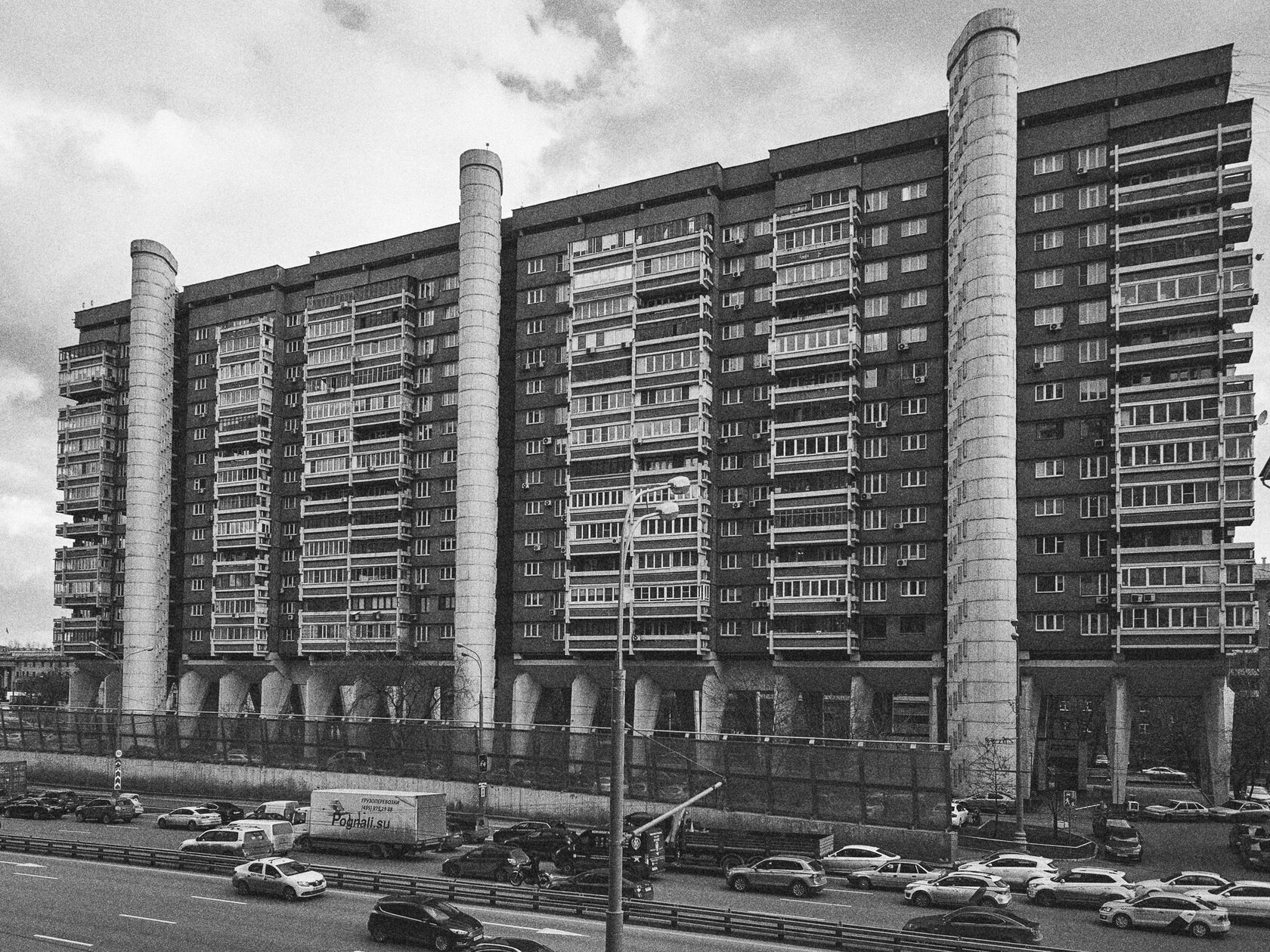
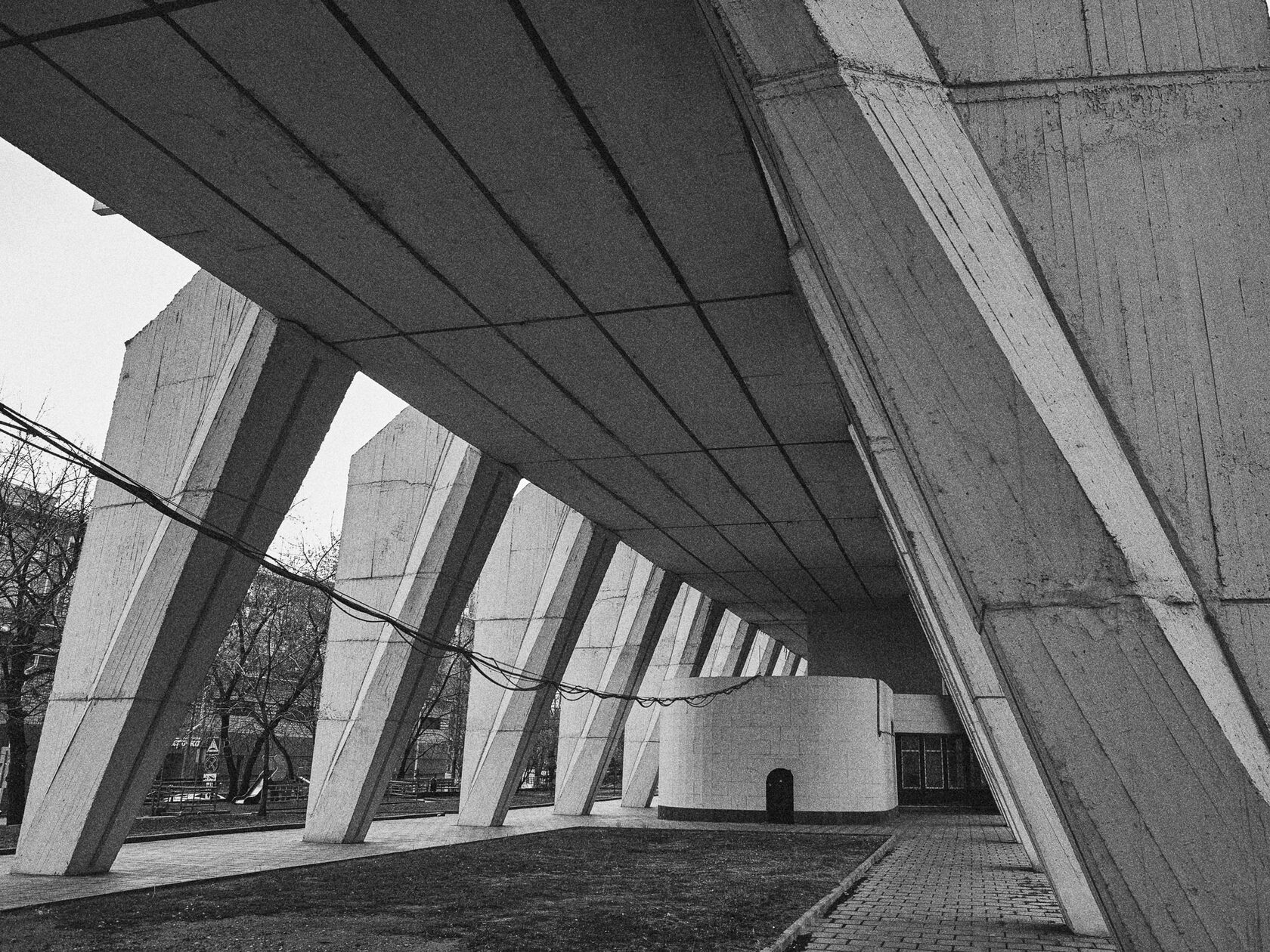
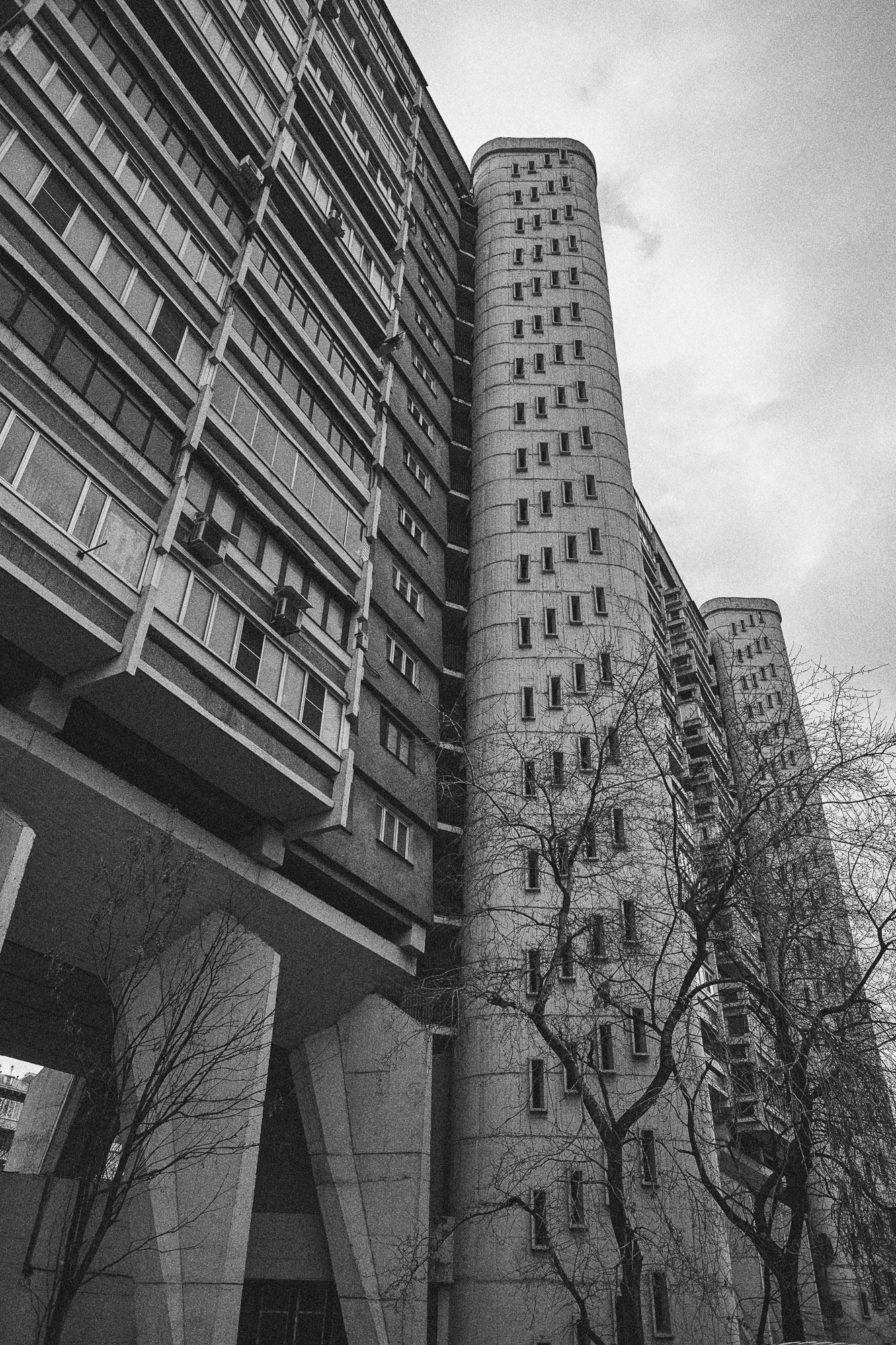
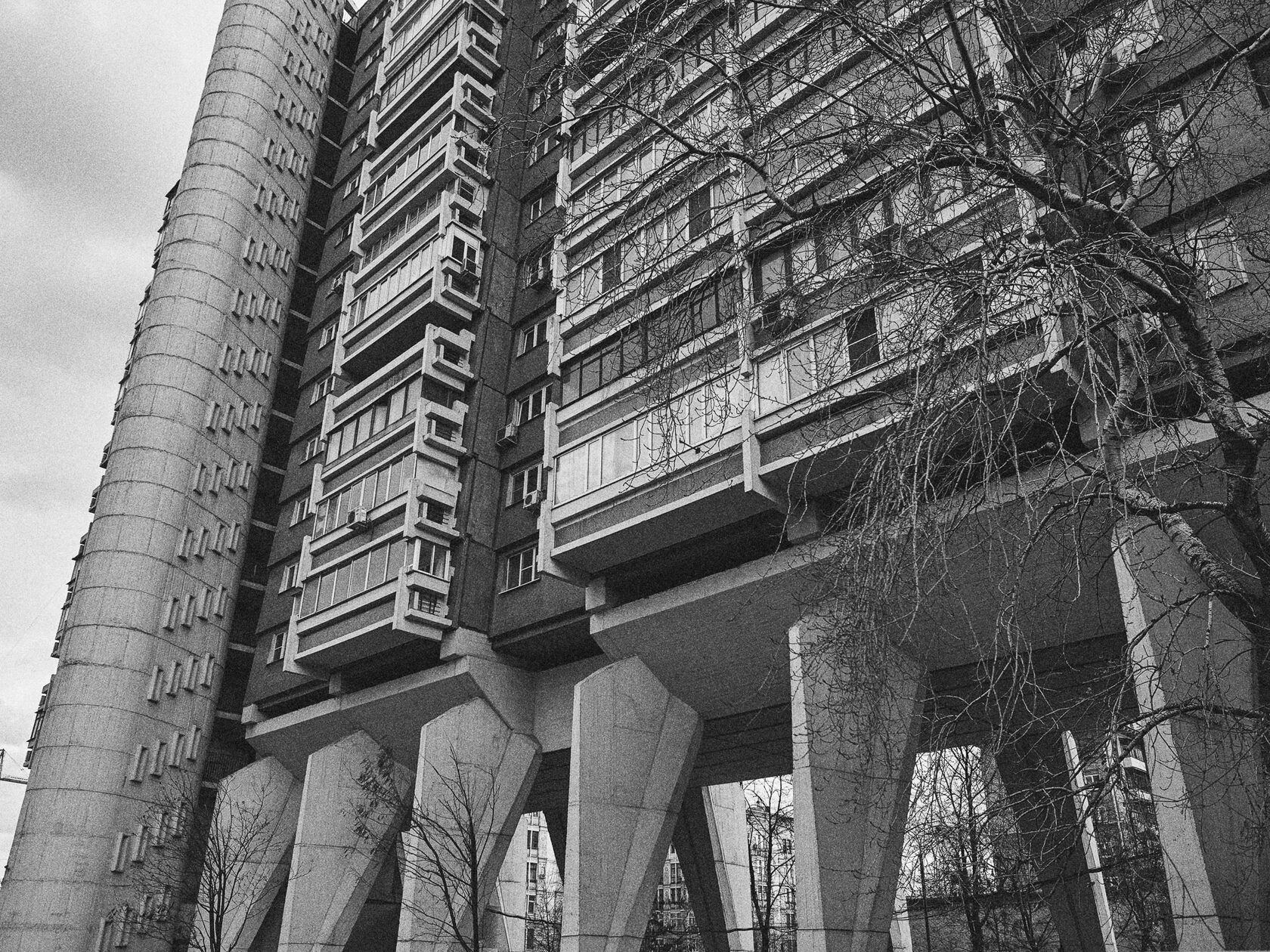
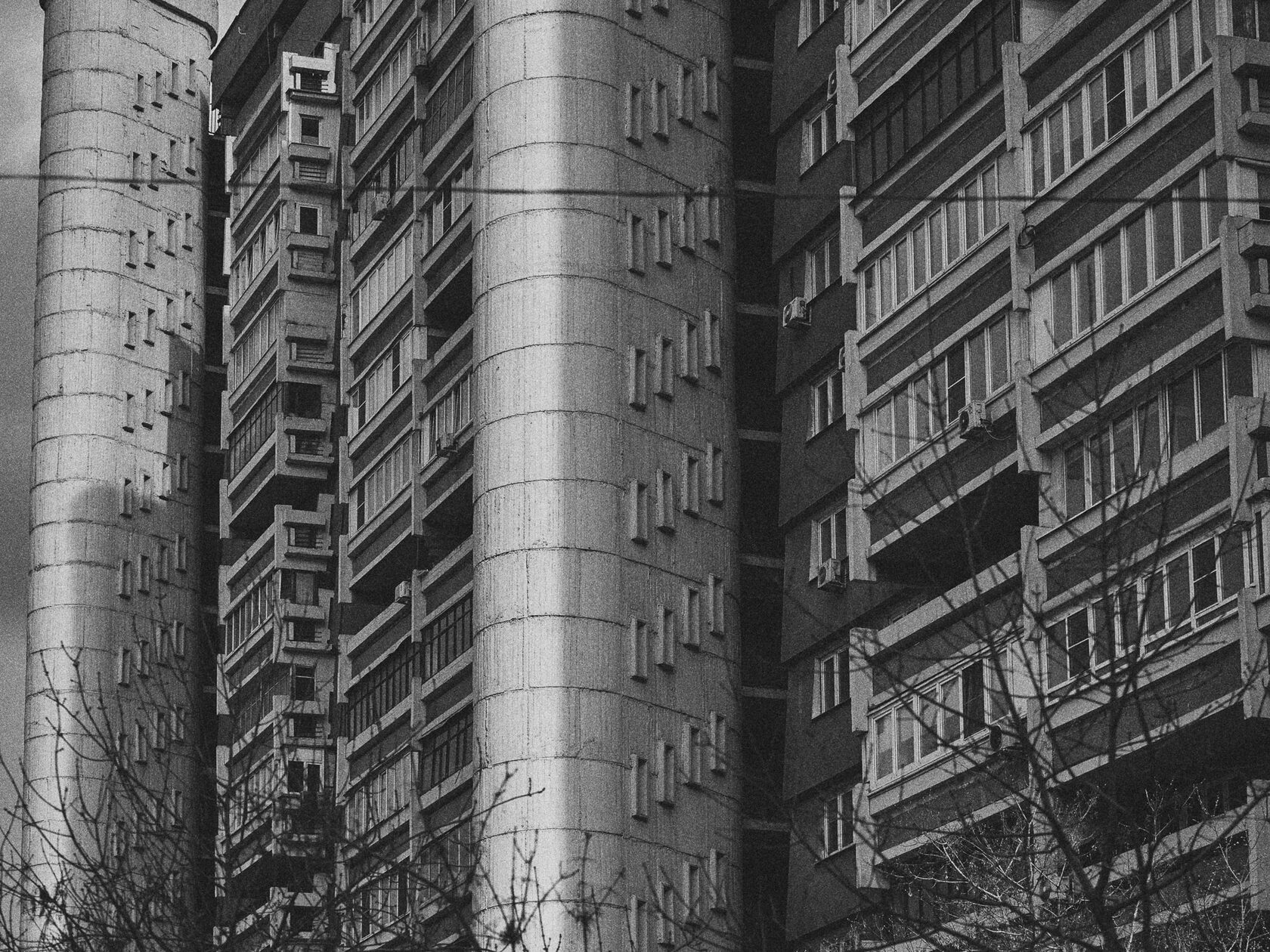
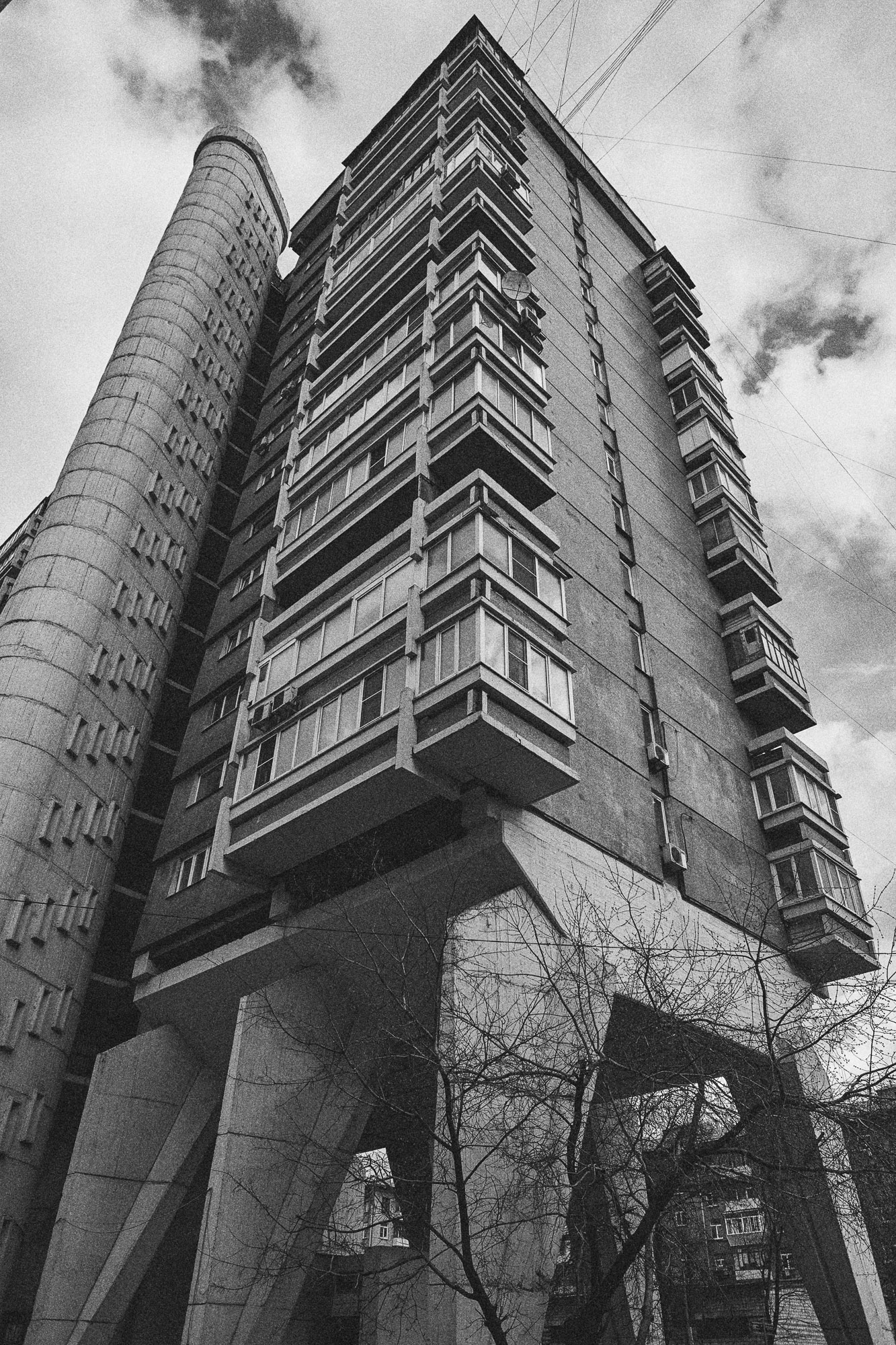
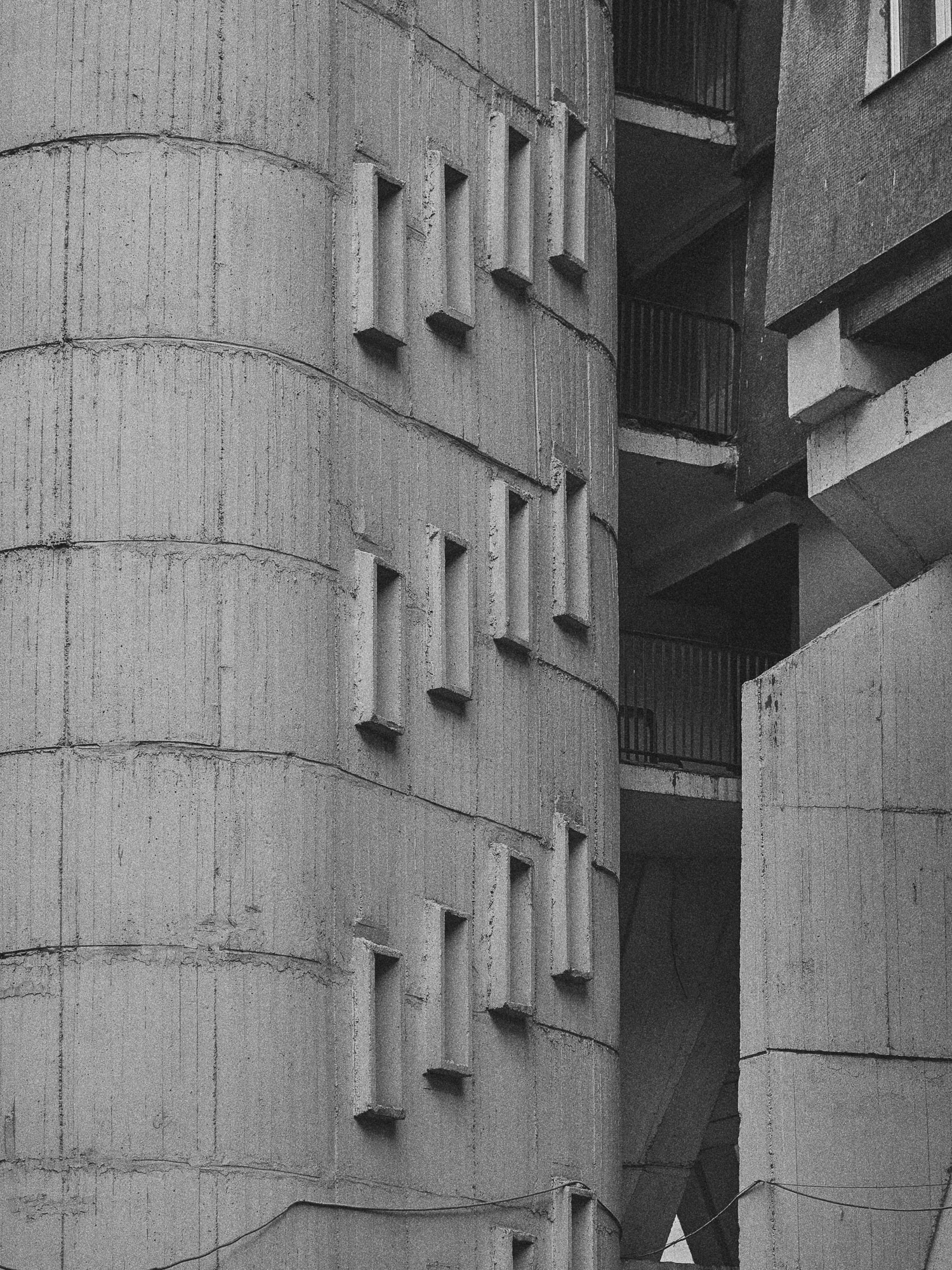
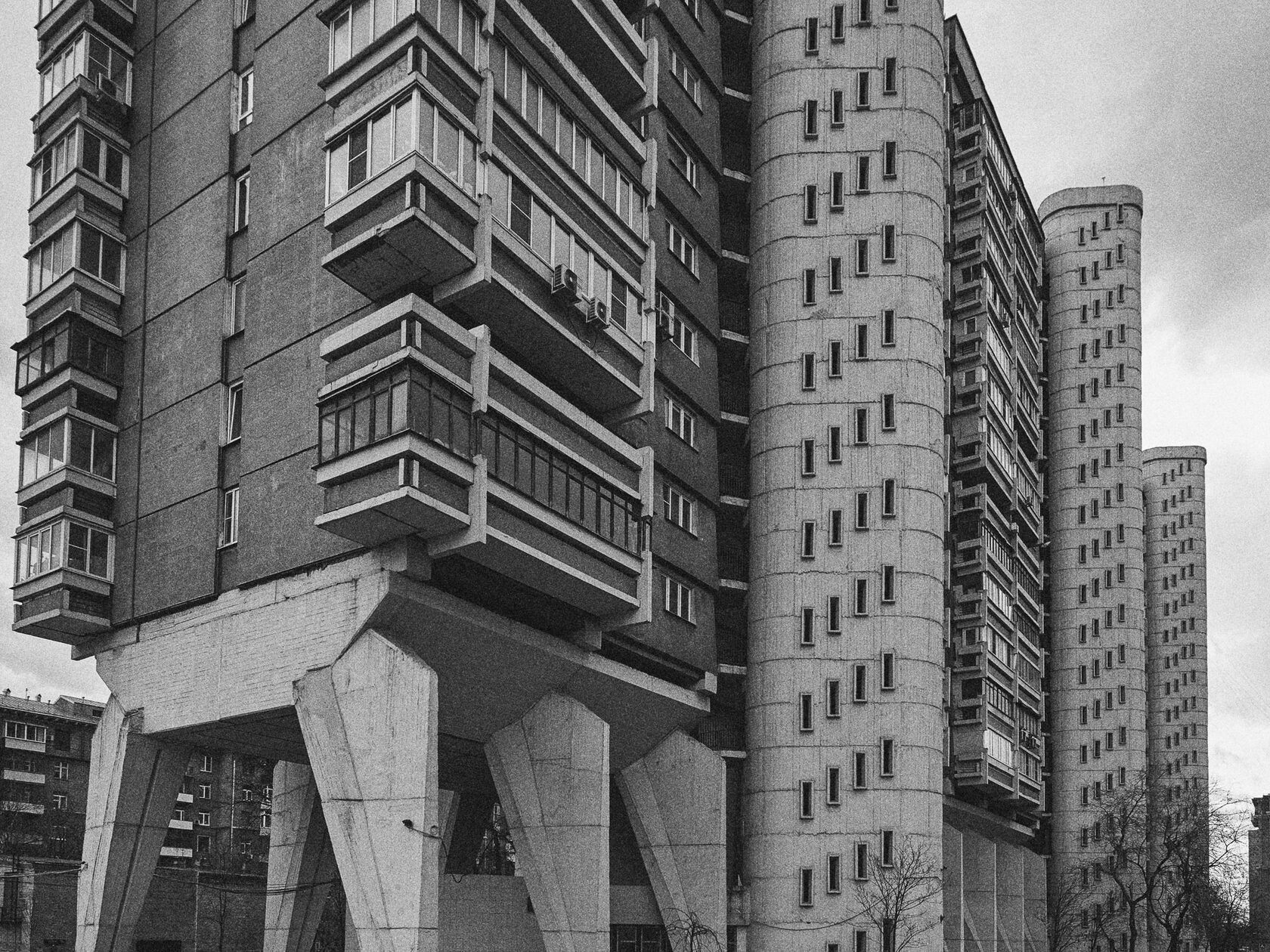
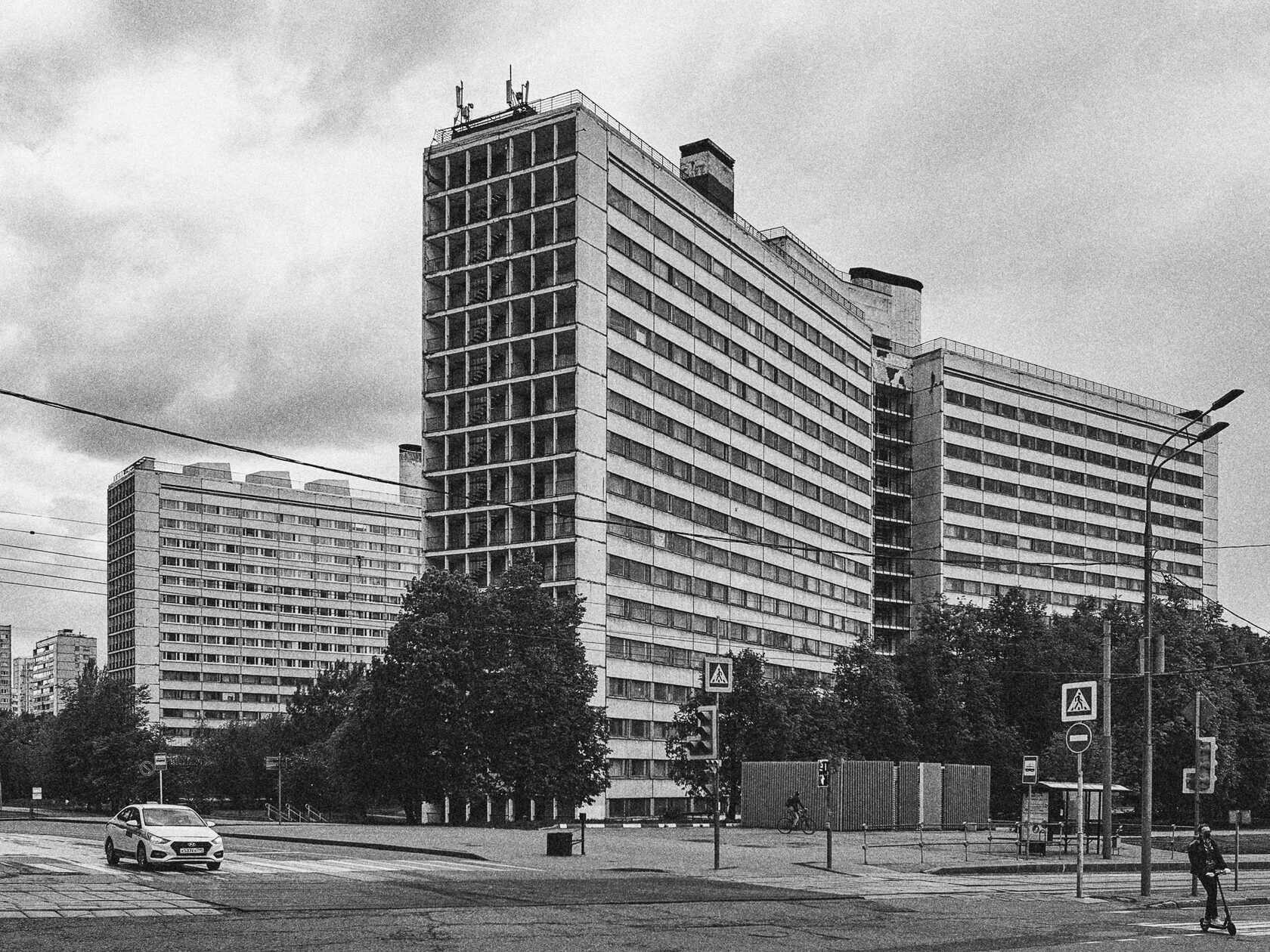
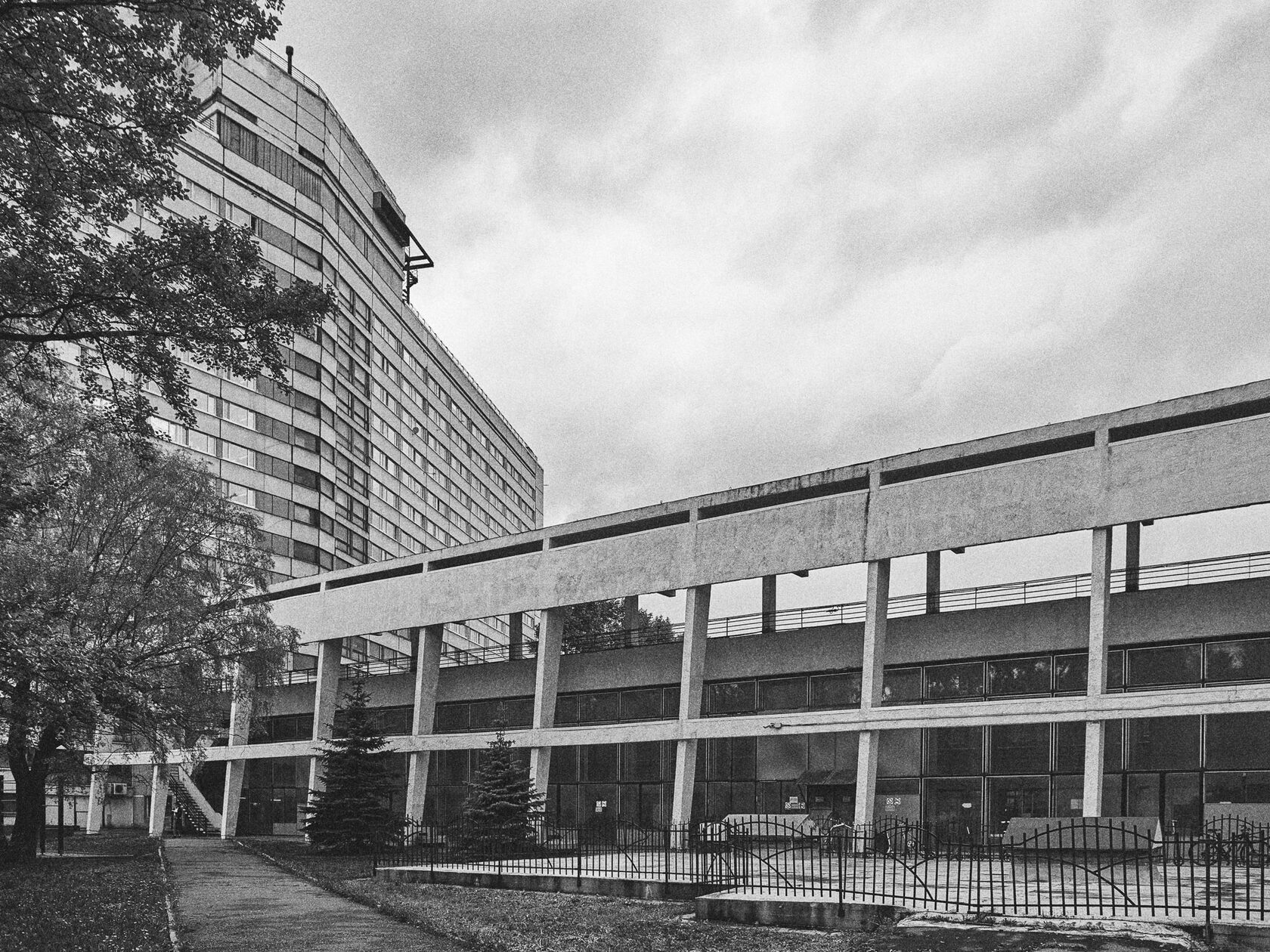
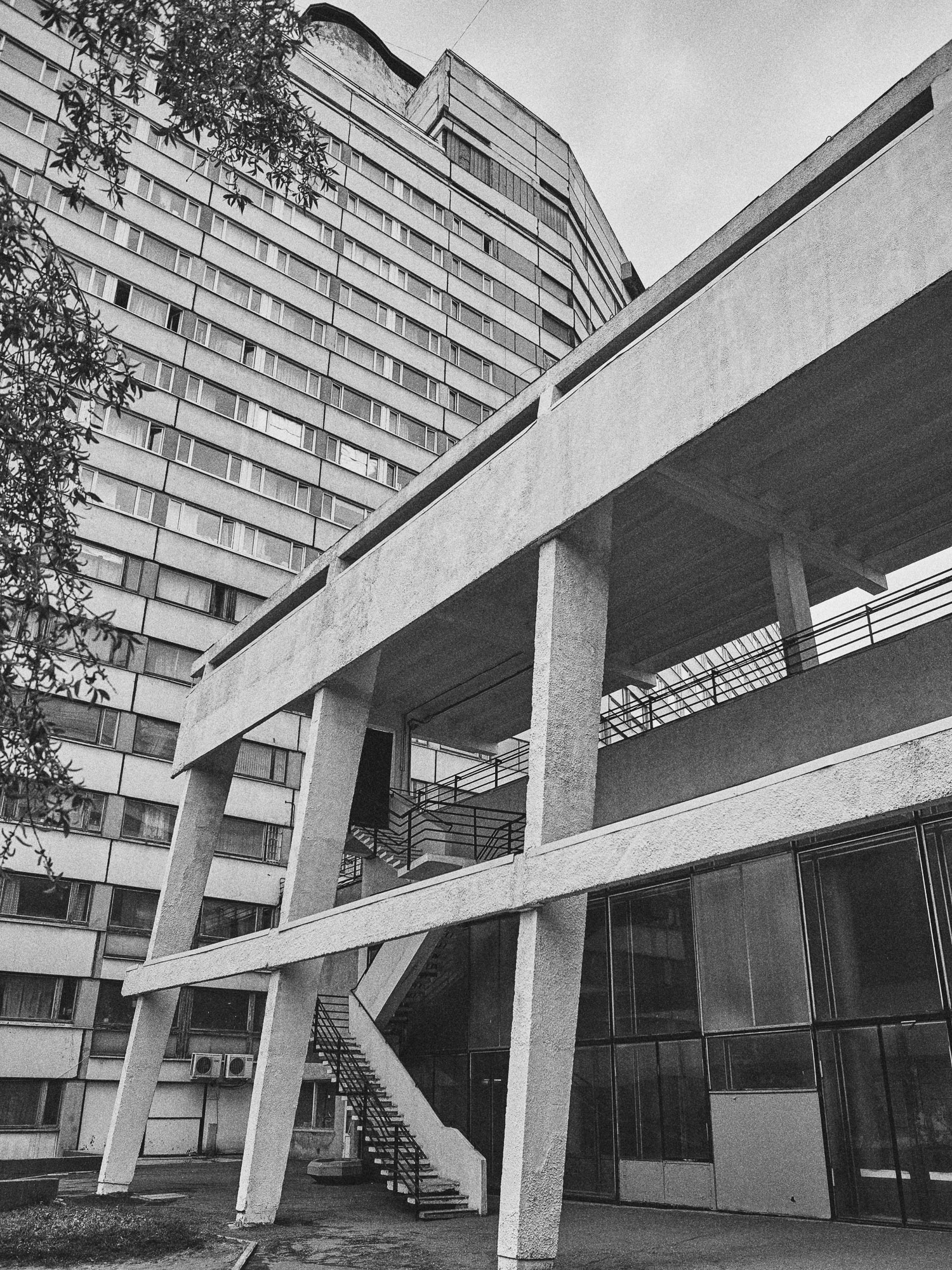
House on legsДом на ножках架空住宅Haus auf StützenMaison sur pilotisCasa sobre pilotesCasa sobre pilotis
The building belongs to modernism because its drama is no longer the early constructivist experiment, but the afterlife of that experiment: height, distance, exposure, and the uneasy poetry of collective living.Здание принадлежит модернизму потому, что его драма уже не в раннем конструктивистском эксперименте, а в послевкусии этого эксперимента: высота, дистанция, открытость и тревожная поэзия коллективного жилья.这座建筑属于现代主义,因为它的戏剧性不再是早期建构主义实验本身,而是那场实验的余生:高度、距离、暴露,以及集体居住不安的诗意。Das Gebäude gehört zum Modernismus, weil sein Drama nicht mehr im frühen konstruktivistischen Experiment liegt, sondern in dessen Nachleben: Höhe, Distanz, Offenheit und die unruhige Poesie kollektiven Wohnens.Le bâtiment appartient au modernisme parce que son drame n'est plus l'expérience constructiviste initiale, mais sa survivance : hauteur, distance, exposition et poésie inquiète de l'habitat collectif.El edificio pertenece al modernismo porque su drama ya no es el experimento constructivista temprano, sino la vida posterior de ese experimento: altura, distancia, exposición y la poesía inquieta de la vivienda colectiva.O edifício pertence ao modernismo porque seu drama já não está no experimento construtivista inicial, mas na vida posterior desse experimento: altura, distância, exposição e a poesia inquieta da habitação coletiva.
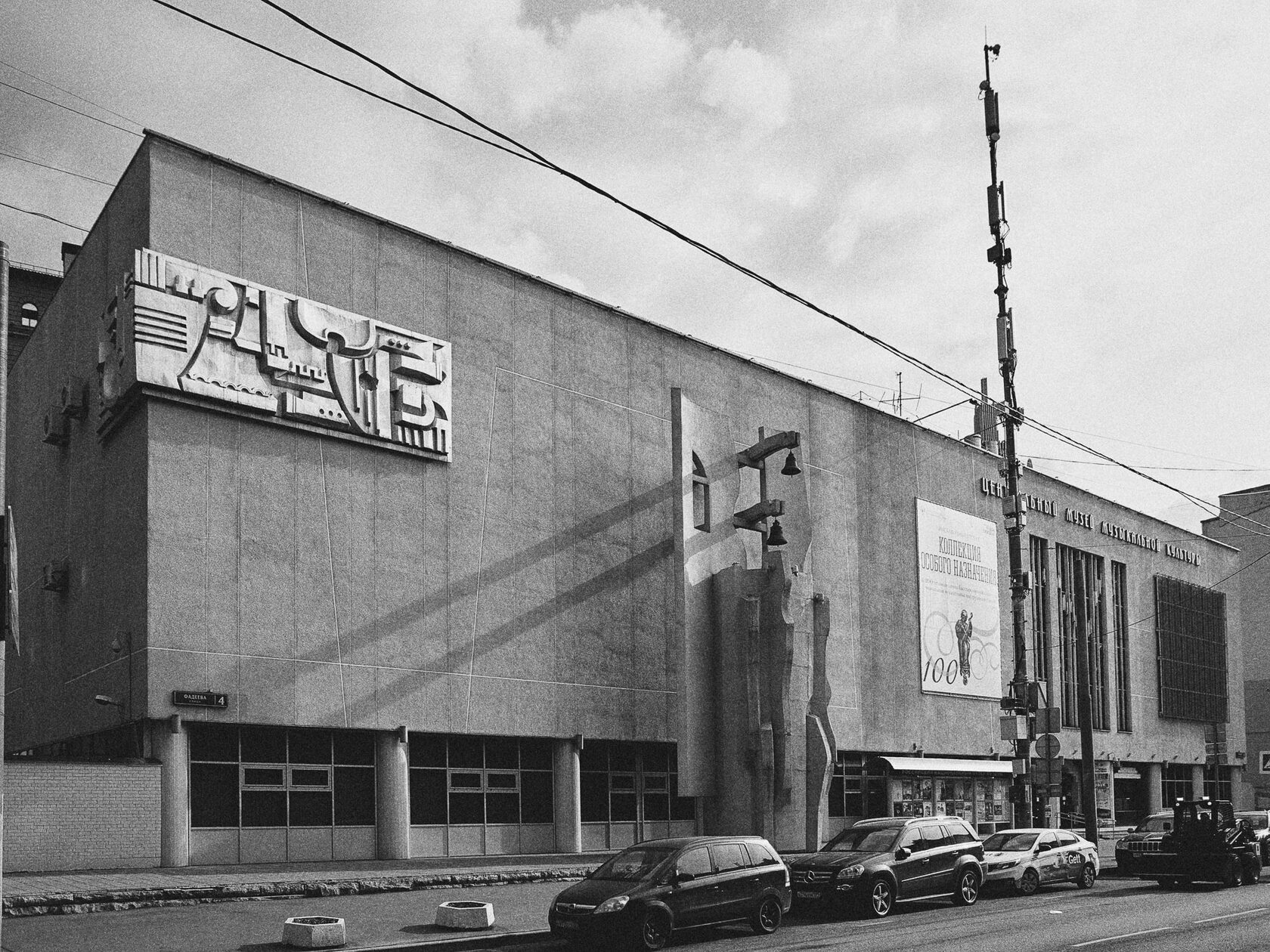
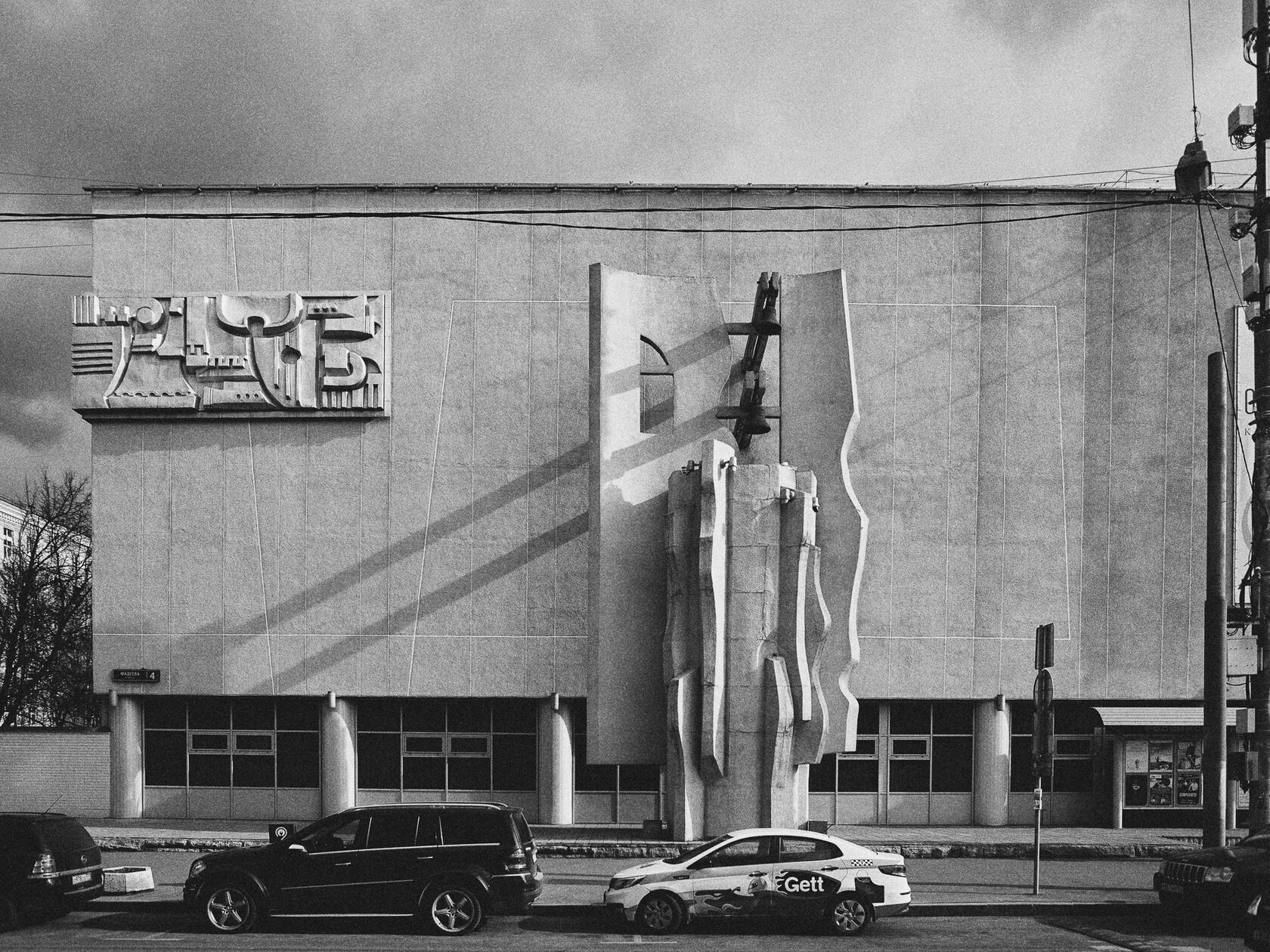
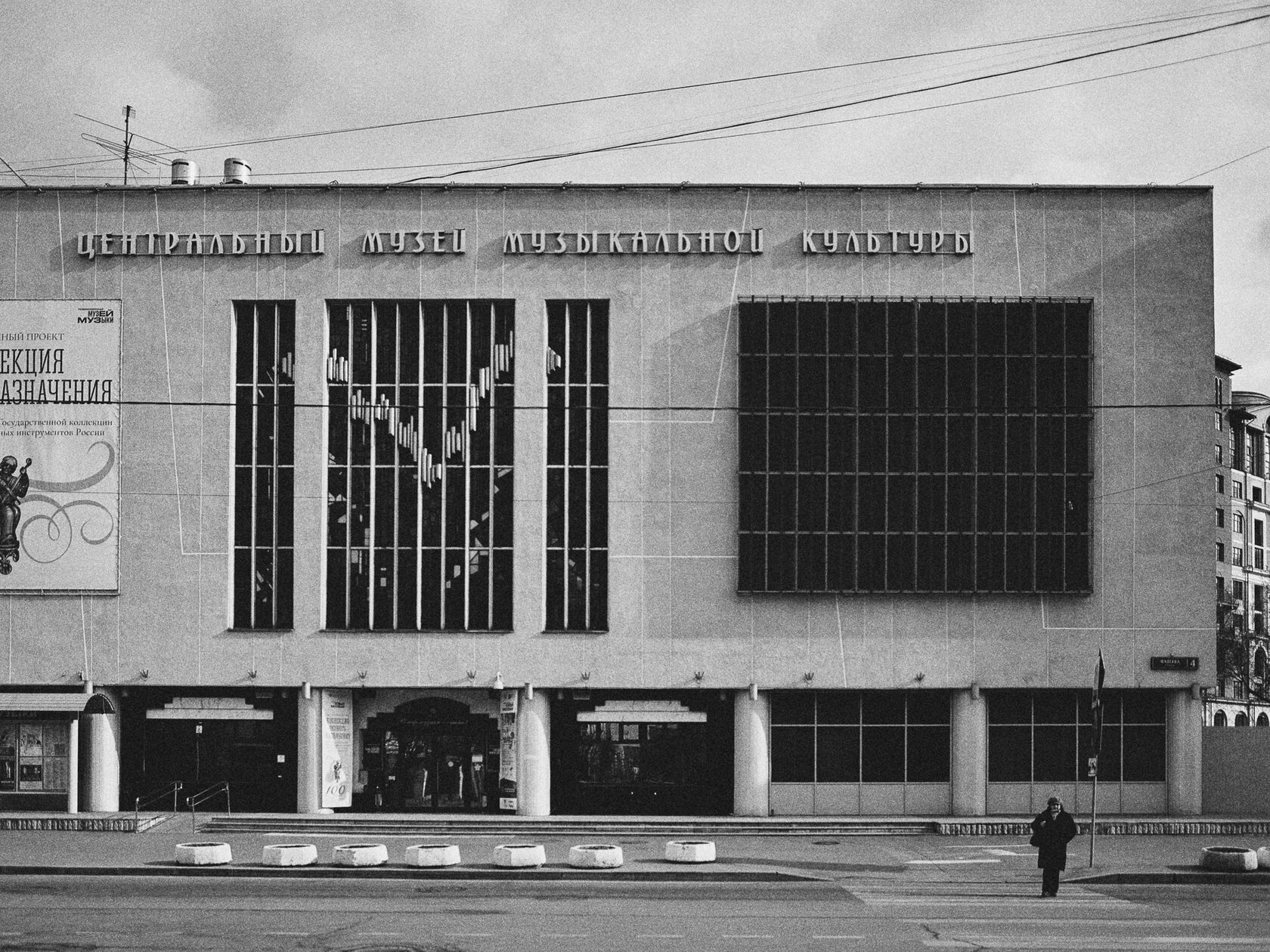
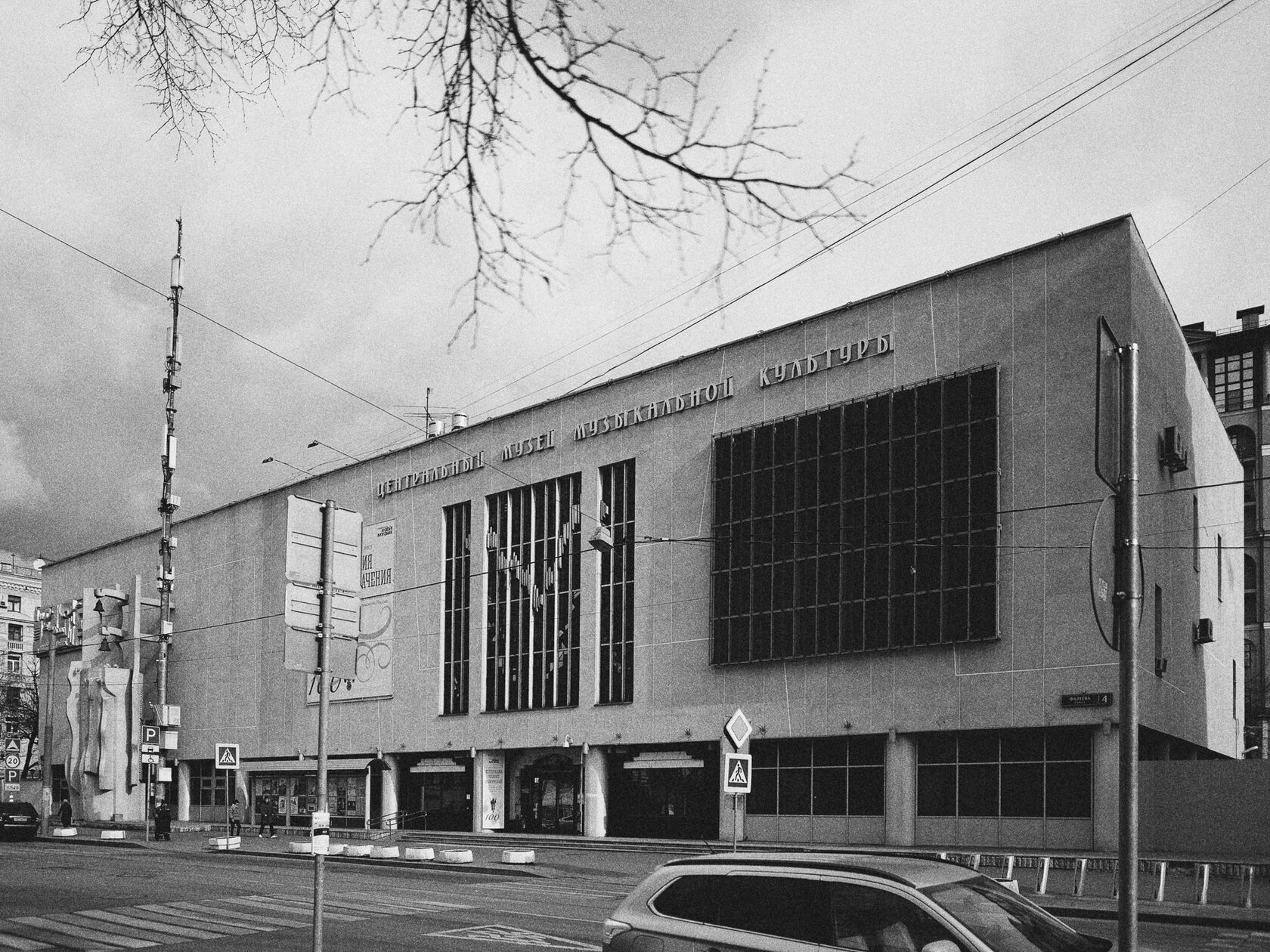
House of MusicДом музыки音乐之家Haus der MusikMaison de la musiqueCasa de la MúsicaCasa da Música
The building belongs to modernism as a public scene. It is not only a container for events, but a way of arranging attention: approach, entrance, hall, facade, and the expectation of shared cultural time.Здание принадлежит модернизму как общественная сцена. Это не только оболочка для событий, но способ организовать внимание: подход, вход, зал, фасад и ожидание общего культурного времени.这座建筑作为公共场景属于现代主义。它不只是容纳事件的容器,而是一种组织注意力的方式:接近、入口、大厅、立面,以及对共同文化时间的期待。Das Gebäude gehört als öffentliche Bühne zum Modernismus. Es ist nicht nur ein Behälter für Ereignisse, sondern eine Art, Aufmerksamkeit zu ordnen: Annäherung, Eingang, Saal, Fassade und die Erwartung gemeinsamer kultureller Zeit.Le bâtiment appartient au modernisme comme scène publique. Il n'est pas seulement un contenant pour des événements, mais une manière d'organiser l'attention : approche, entrée, salle, façade et attente d'un temps culturel partagé.El edificio pertenece al modernismo como escena pública. No es sólo un contenedor de eventos, sino una forma de ordenar la atención: aproximación, entrada, sala, fachada y expectativa de un tiempo cultural compartido.O edifício pertence ao modernismo como cena pública. Não é apenas um recipiente para eventos, mas uma forma de organizar a atenção: aproximação, entrada, salão, fachada e a expectativa de um tempo cultural compartilhado.
Dom Novogo Byta (The House of New Life)Дом нового быта新生活之家Haus des neuen AlltagsMaison du nouveau mode de vieCasa de la nueva vida cotidianaCasa do novo modo de vida
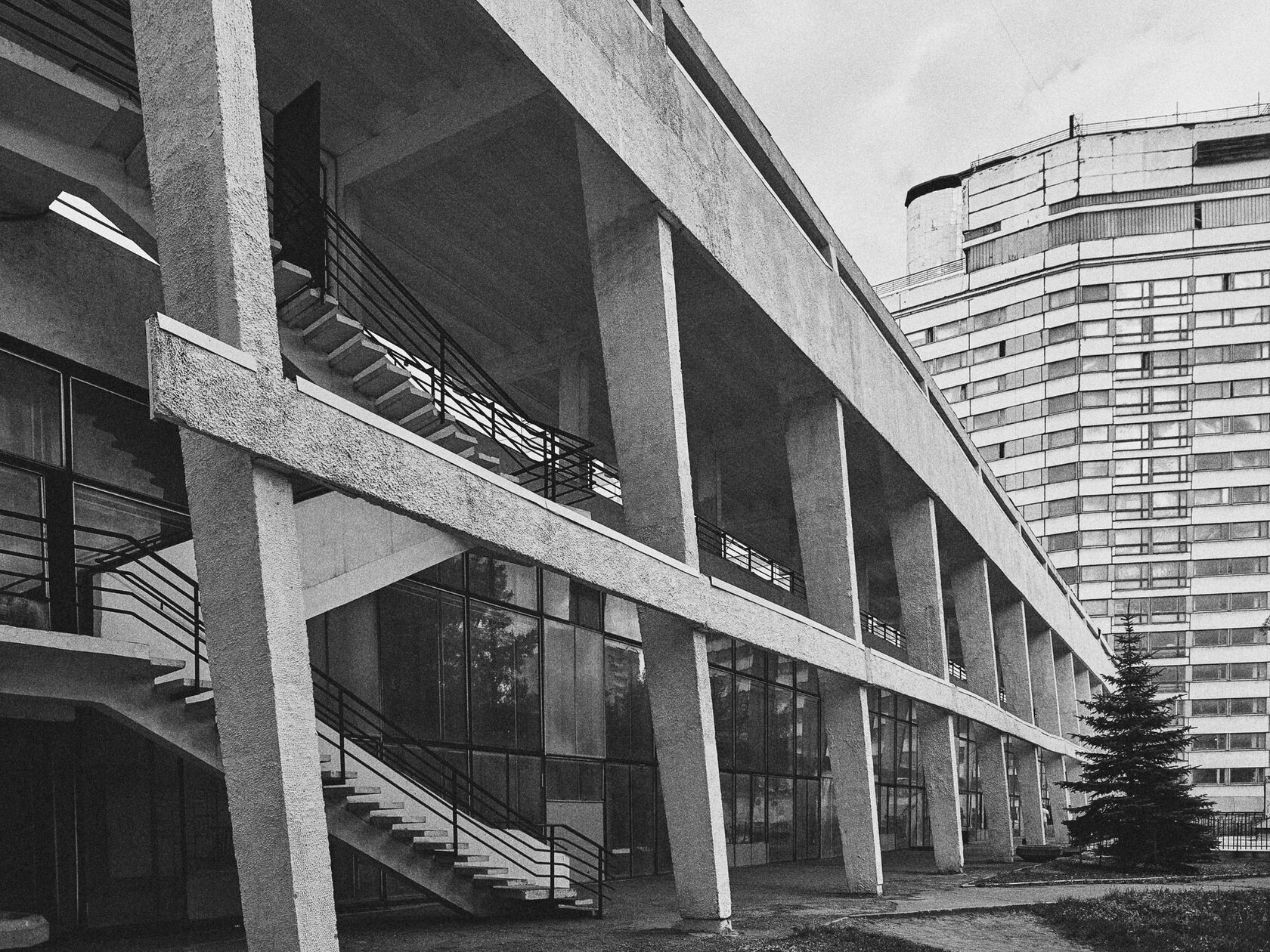
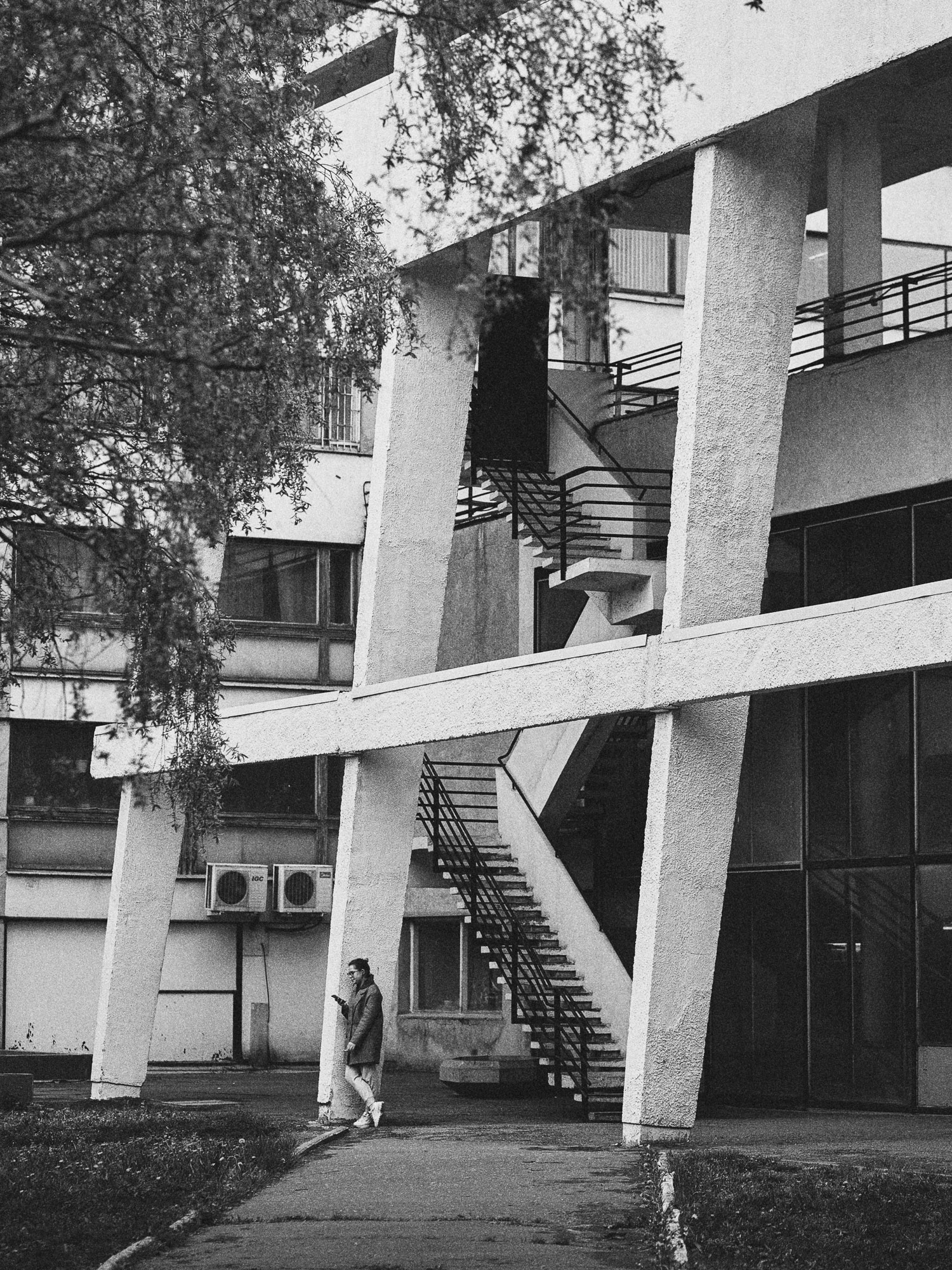
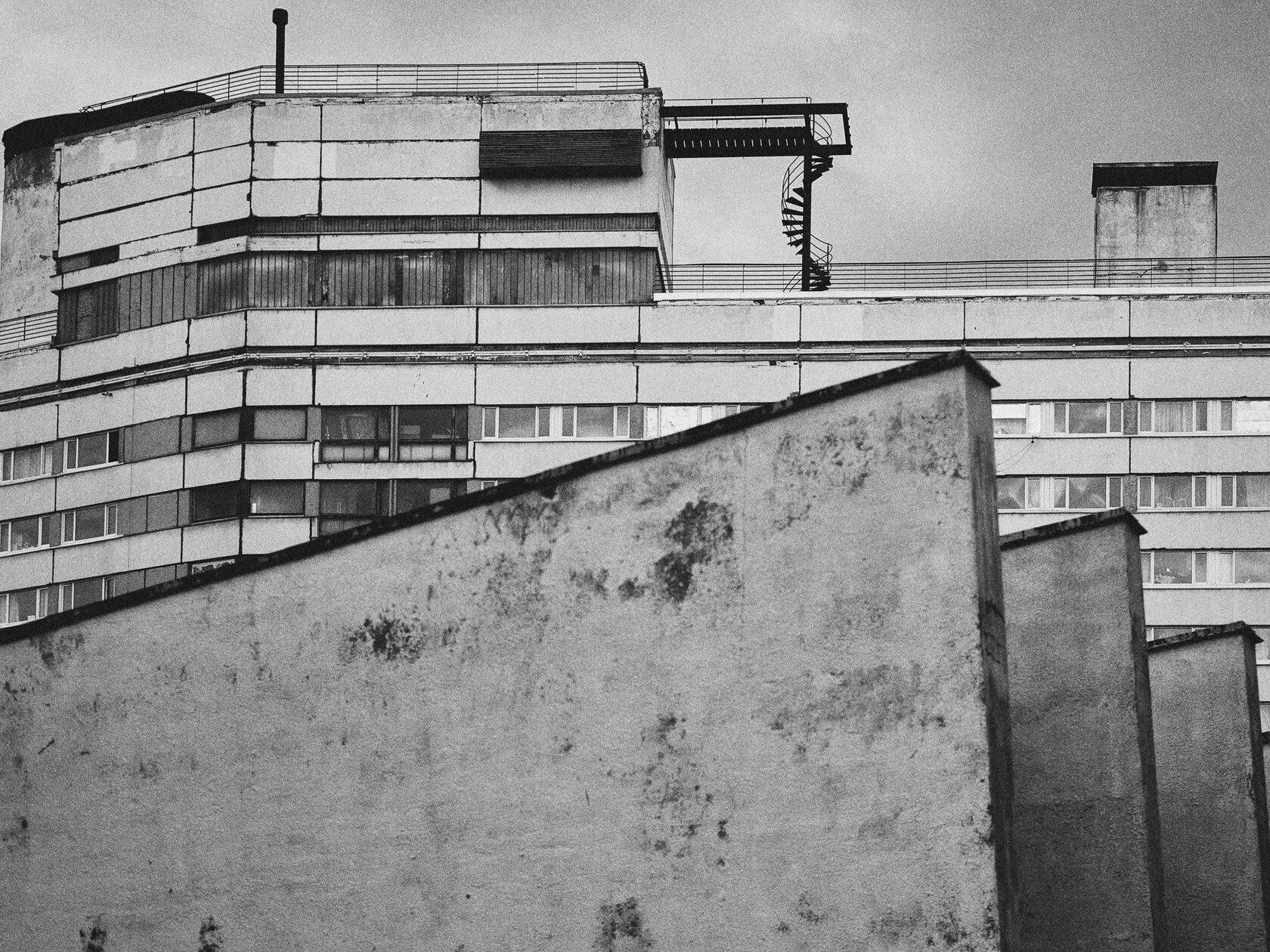
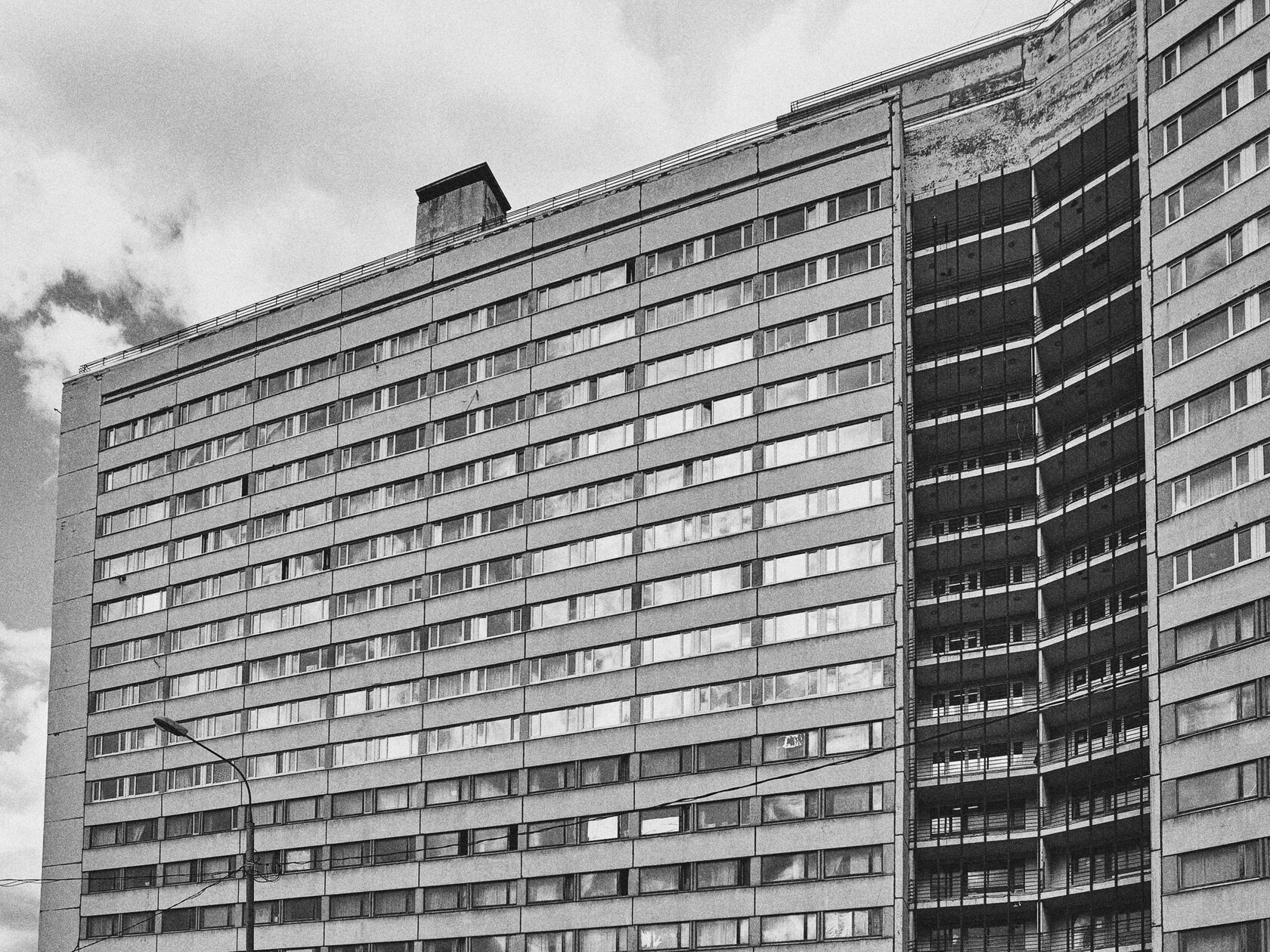
The building belongs to modernism because its drama is no longer the early constructivist experiment, but the afterlife of that experiment: height, distance, exposure, and the uneasy poetry of collective living.Здание принадлежит модернизму потому, что его драма уже не в раннем конструктивистском эксперименте, а в послевкусии этого эксперимента: высота, дистанция, открытость и тревожная поэзия коллективного жилья.这座建筑属于现代主义,因为它的戏剧性不再是早期建构主义实验本身,而是那场实验的余生:高度、距离、暴露,以及集体居住不安的诗意。Das Gebäude gehört zum Modernismus, weil sein Drama nicht mehr im frühen konstruktivistischen Experiment liegt, sondern in dessen Nachleben: Höhe, Distanz, Offenheit und die unruhige Poesie kollektiven Wohnens.Le bâtiment appartient au modernisme parce que son drame n'est plus l'expérience constructiviste initiale, mais sa survivance : hauteur, distance, exposition et poésie inquiète de l'habitat collectif.El edificio pertenece al modernismo porque su drama ya no es el experimento constructivista temprano, sino la vida posterior de ese experimento: altura, distancia, exposición y la poesía inquieta de la vivienda colectiva.O edifício pertence ao modernismo porque seu drama já não está no experimento construtivista inicial, mas na vida posterior desse experimento: altura, distância, exposição e a poesia inquieta da habitação coletiva.
KaliningradКалининград加里宁格勒KaliningradKaliningradKaliningradoKaliningrado
Buildings in KaliningradЗдания: Калининград建筑: 加里宁格勒Bauten in KaliningradBâtiments à KaliningradEdificios en KaliningradoEdifícios em Kaliningrado
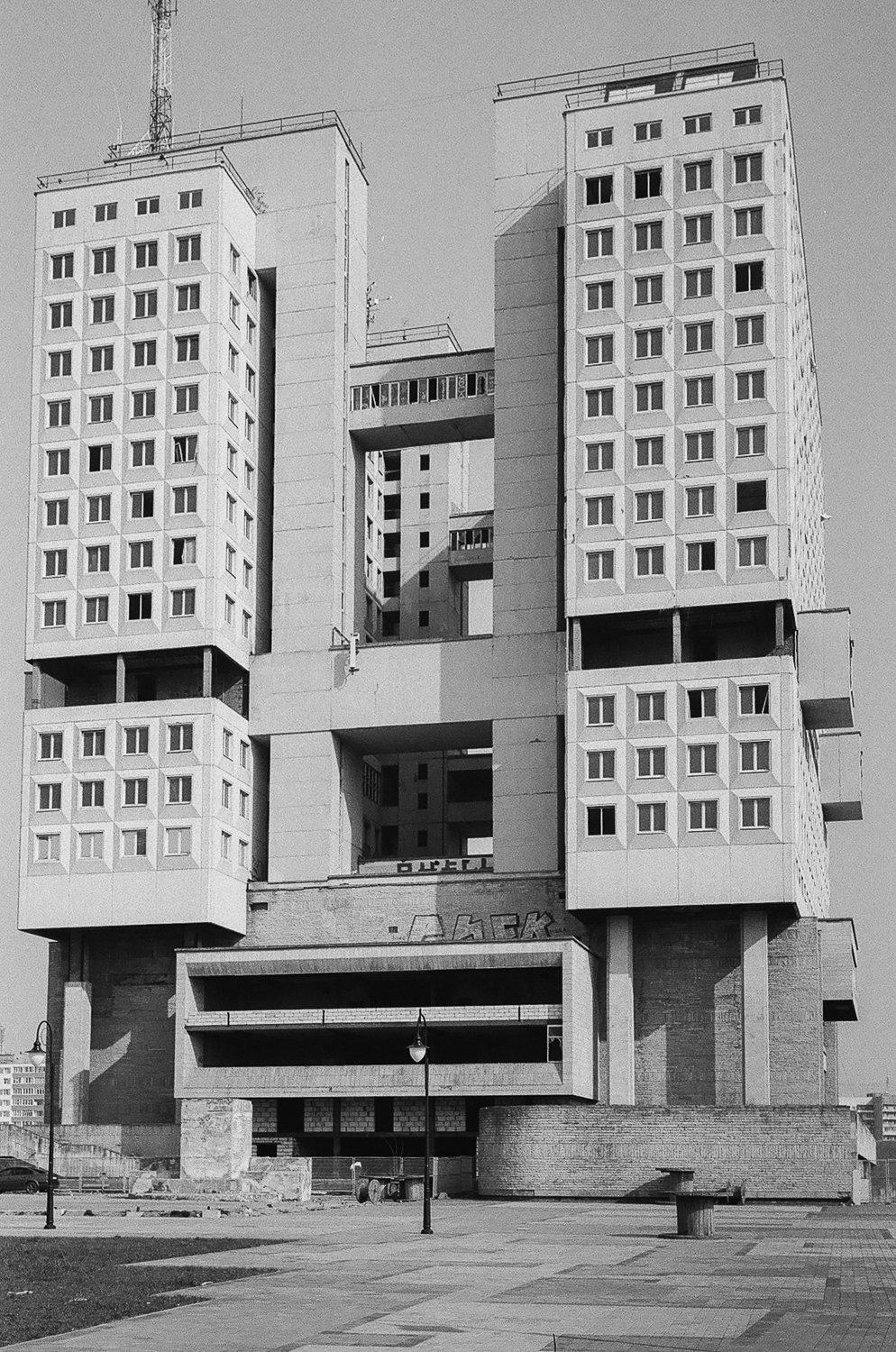
House of SovietsДом Советов苏维埃宫Haus der SowjetsMaison des SovietsCasa de los SovietsCasa dos Sovietes
The building is modernism at the scale of authority. It is monumental, exposed, and strangely unresolved: a civic body that turns power into mass, vacancy, and urban weather.Это модернизм в масштабе власти. Здание монументально, открыто и странно незавершено: гражданское тело, где власть превращается в массу, пустоту и городскую погоду.这是权力尺度上的现代主义。建筑纪念性、暴露,又奇怪地未完成:一个把权力转化为体量、空缺和城市天气的市民身体。Das ist Modernismus im Maßstab der Macht. Das Gebäude ist monumental, exponiert und seltsam ungelöst: ein bürgerlicher Körper, der Macht in Masse, Leere und städtisches Wetter verwandelt.C'est le modernisme à l'échelle du pouvoir. Le bâtiment est monumental, exposé et étrangement inachevé : un corps civique qui transforme le pouvoir en masse, en vide et en météo urbaine.Es modernismo a escala del poder. El edificio es monumental, expuesto y extrañamente inconcluso: un cuerpo cívico que convierte el poder en masa, vacío y clima urbano.É modernismo na escala do poder. O edifício é monumental, exposto e estranhamente inacabado: um corpo cívico que transforma poder em massa, vazio e clima urbano.
SochiСочи索契SotschiSotchiSochiSochi
Buildings in SochiЗдания: Сочи建筑: 索契Bauten in SotschiBâtiments à SotchiEdificios en SochiEdifícios em Sochi
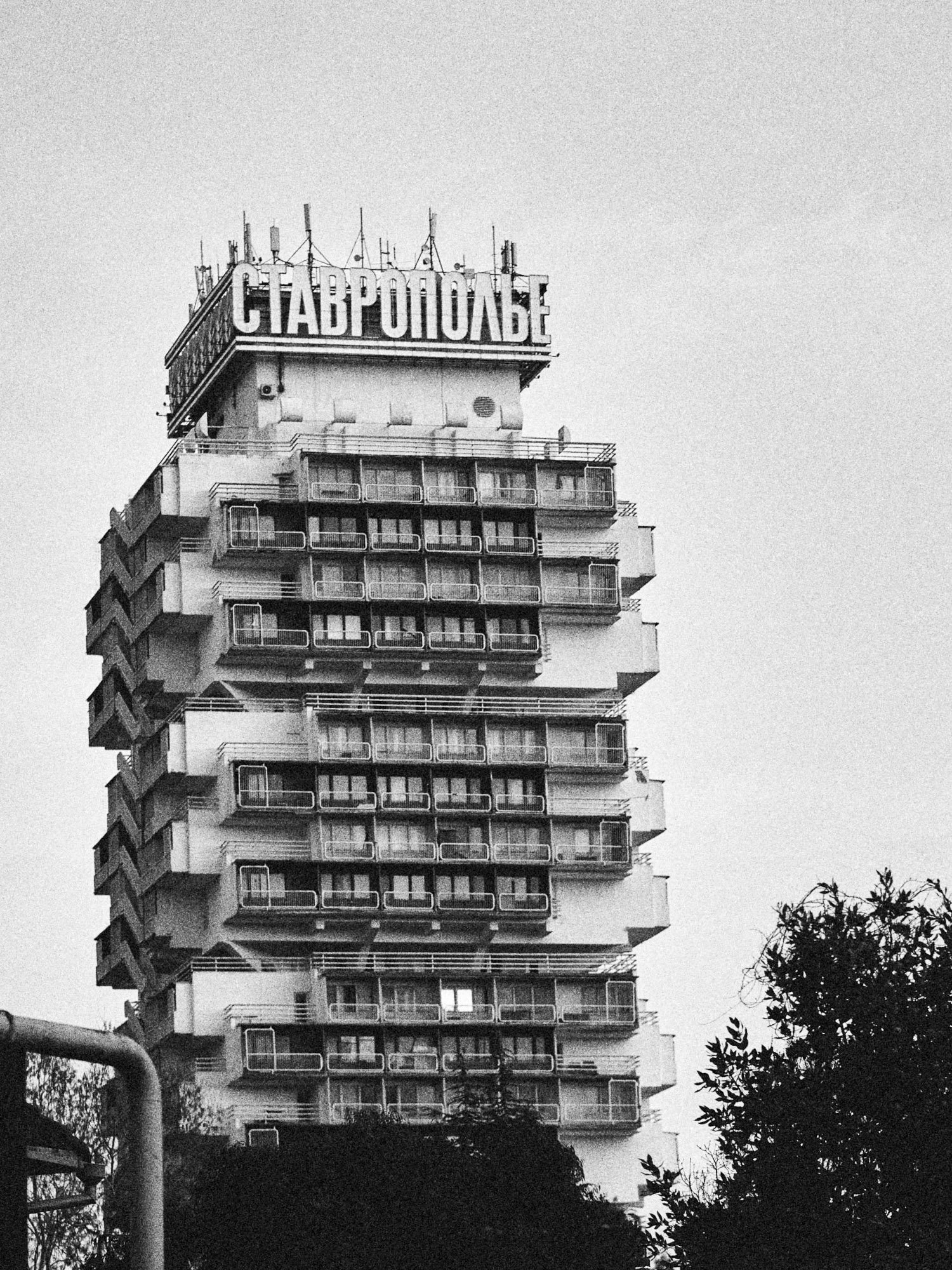
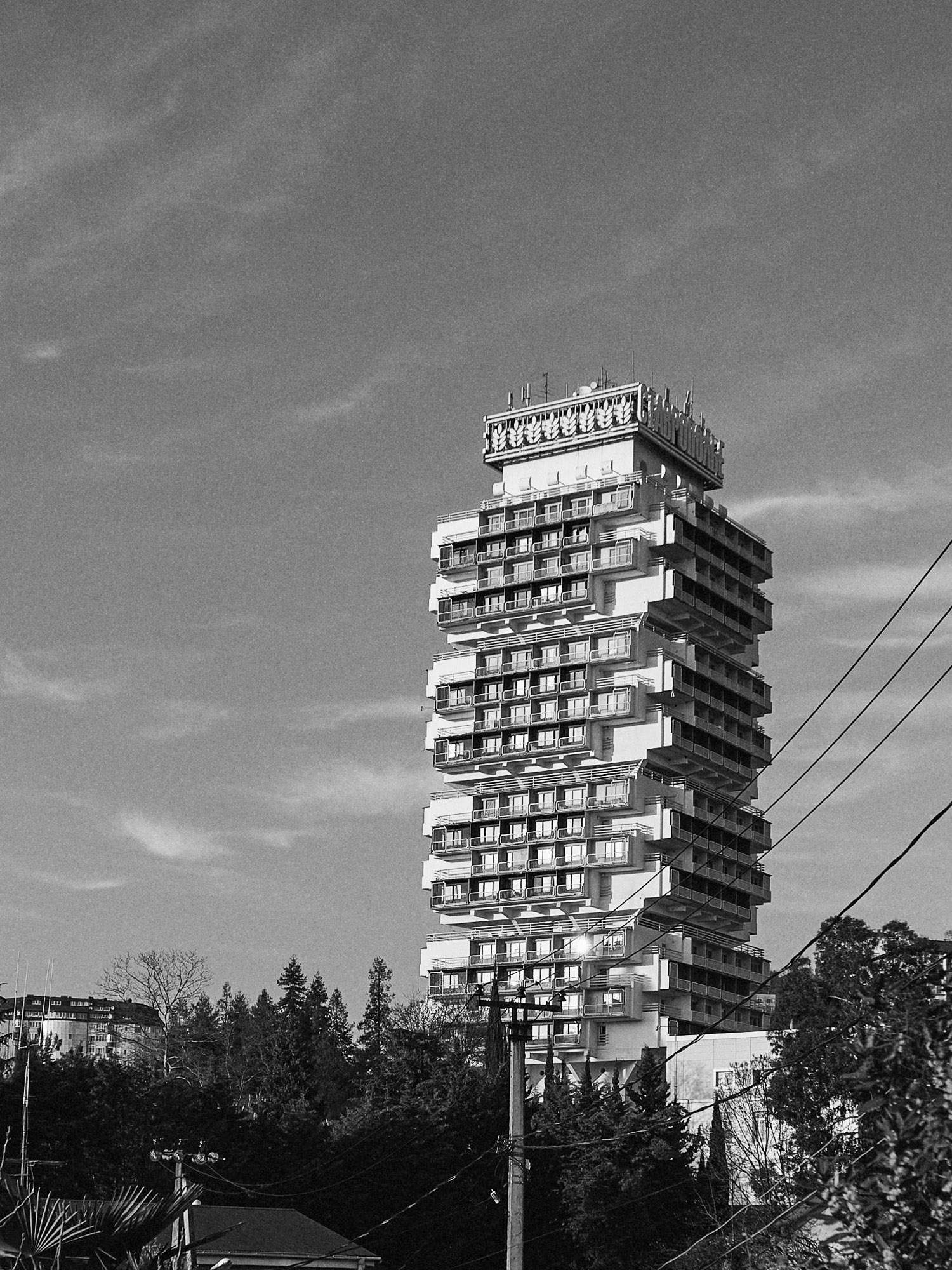
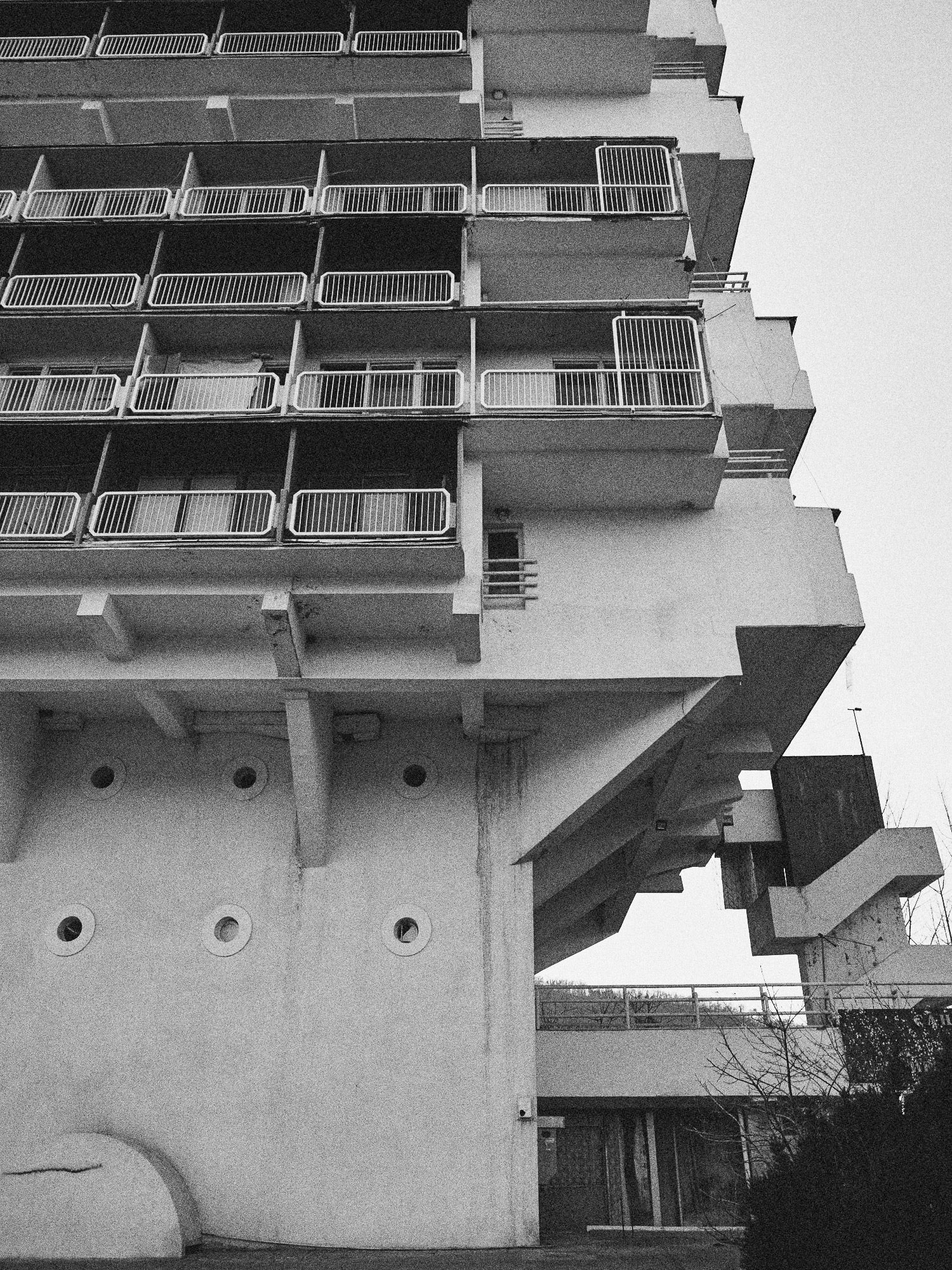
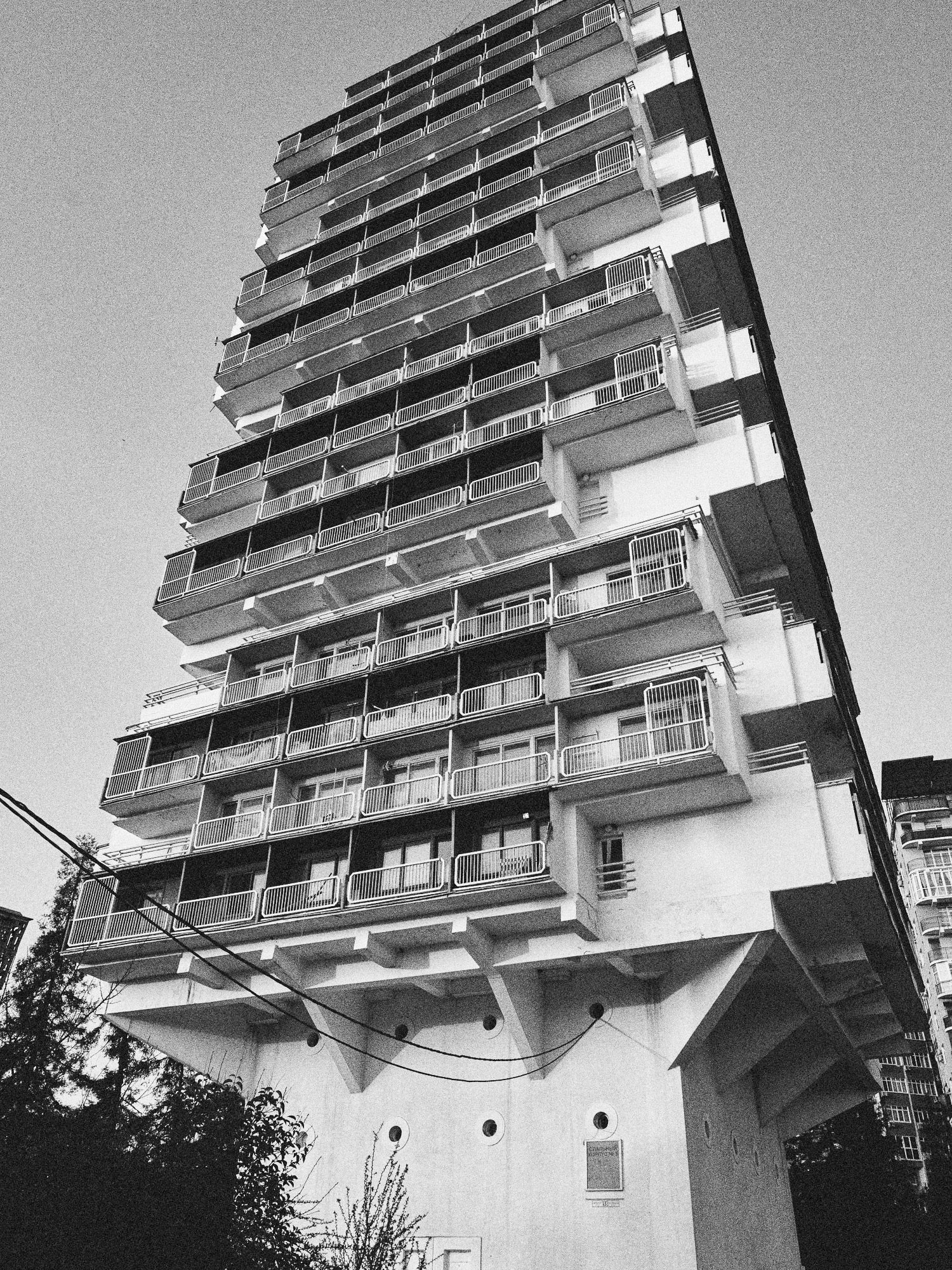
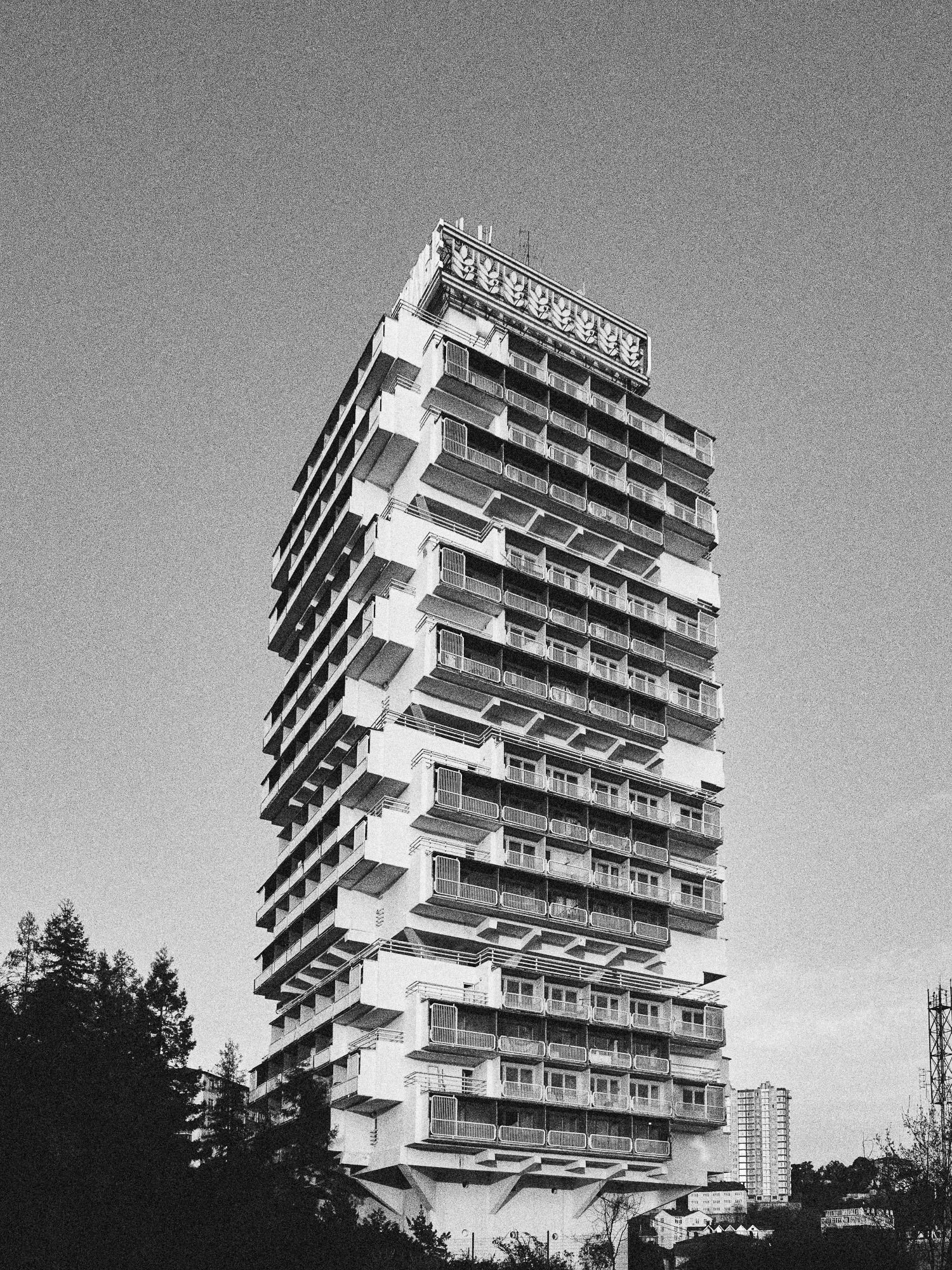
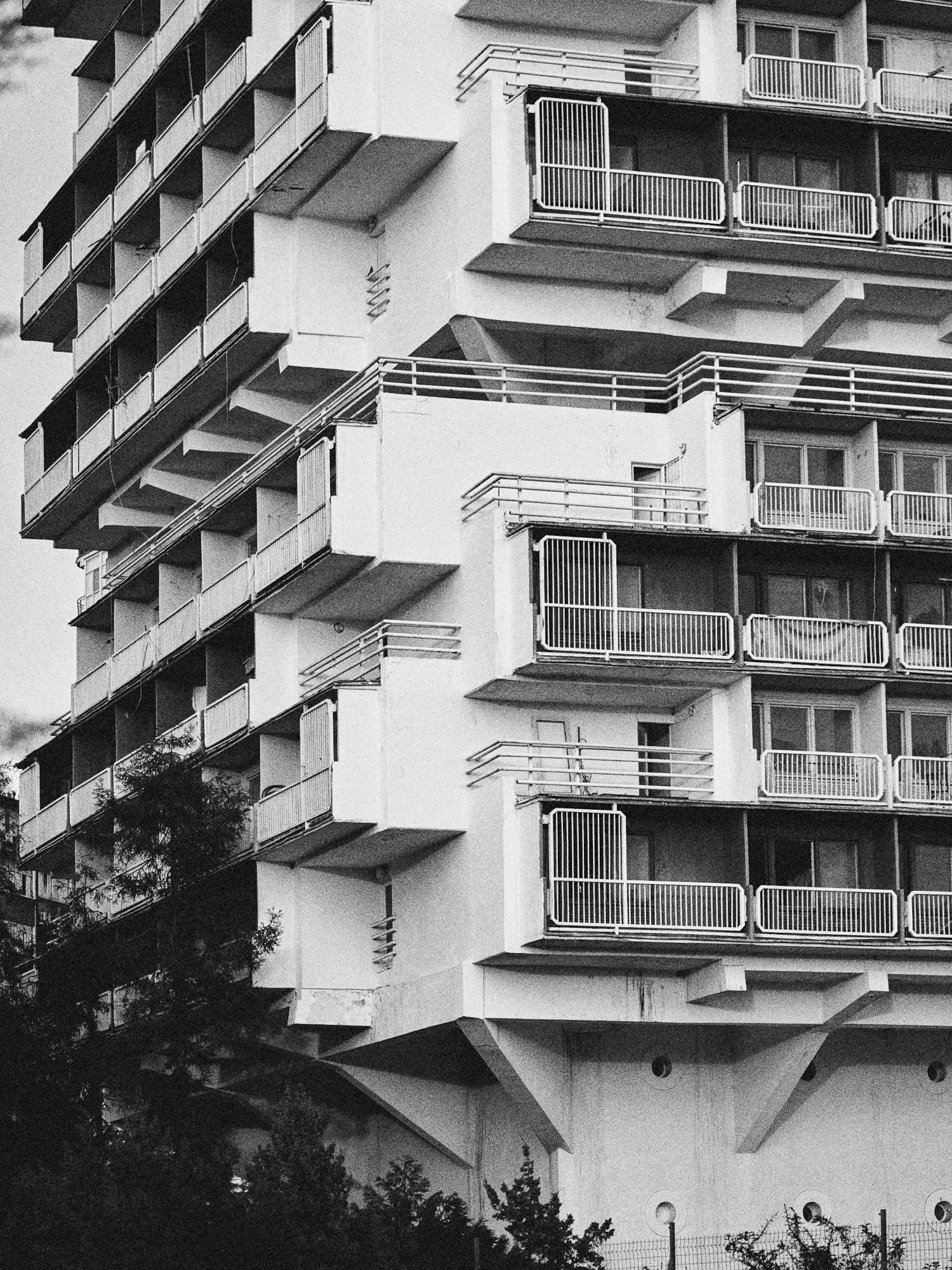
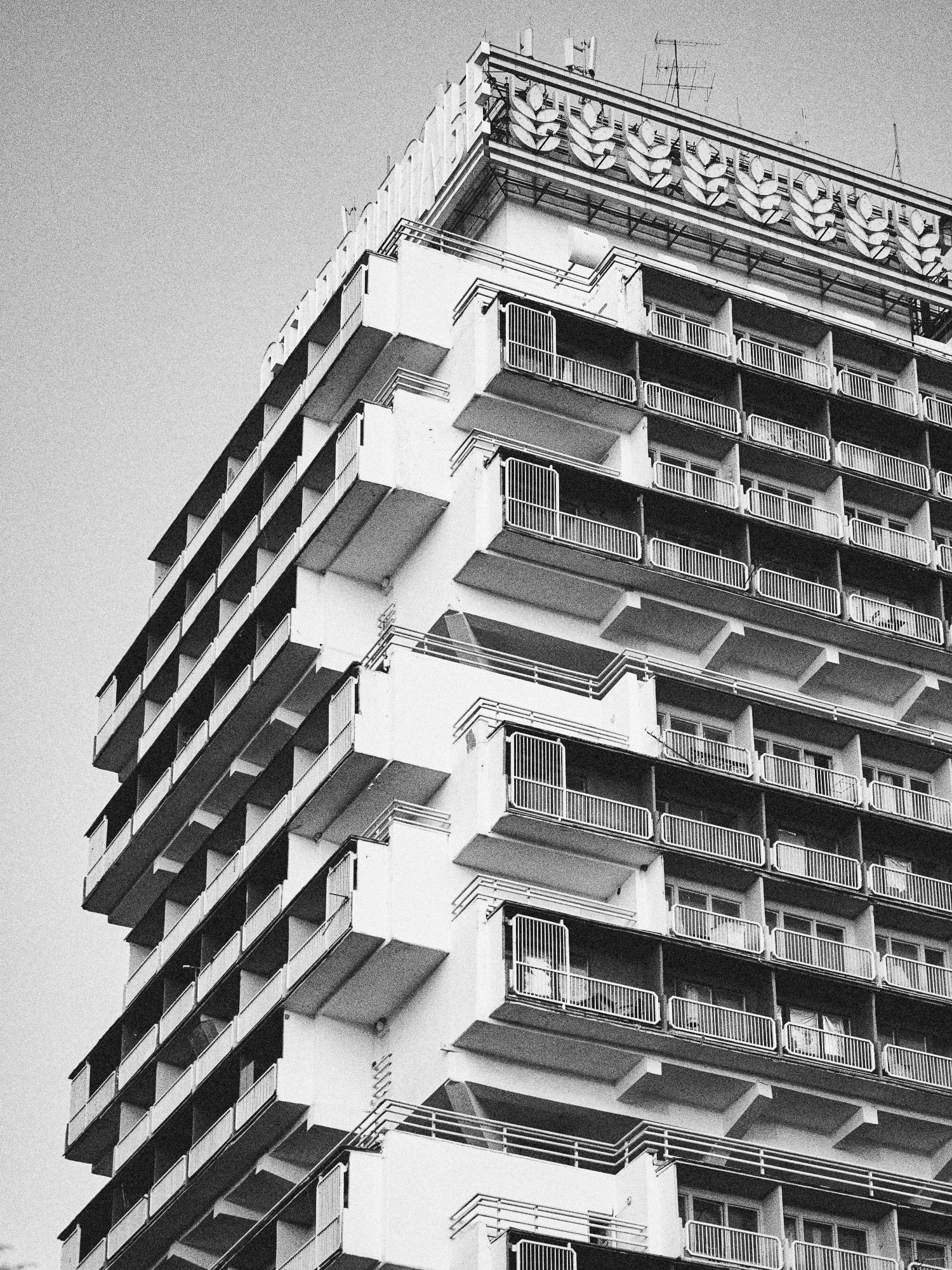
Stavropolye sanatorium complex (Corn)Санаторный комплекс «Ставрополье» / «Кукуруза»斯塔夫罗波利耶疗养院建筑群(玉米)Sanatoriumskomplex Stavropolye (Maiskolben)Complexe sanatorial Stavropolye (Maïs)Complejo sanatorial Stavropolye (Maíz)Complexo sanatorial Stavropolye (Milho)
This is resort modernism: leisure, maintenance, repetition, and a body moving through climate. The architecture no longer promises a new world; it arranges a temporary one.Это курортный модернизм: отдых, обслуживание, повтор и тело, движущееся через климат. Архитектура уже не обещает новый мир; она устраивает временный.这是度假现代主义:休闲、维护、重复,以及穿过气候的身体。建筑不再承诺一个新世界;它安排一个临时的世界。Das ist Kurmodernismus: Freizeit, Wartung, Wiederholung und ein Körper, der sich durch Klima bewegt. Die Architektur verspricht keine neue Welt mehr; sie arrangiert eine vorübergehende.C'est le modernisme de villégiature : loisir, entretien, répétition et corps traversant un climat. L'architecture ne promet plus un monde nouveau ; elle en organise un temporaire.Es modernismo de balneario: ocio, mantenimiento, repetición y un cuerpo moviéndose a través del clima. La arquitectura ya no promete un mundo nuevo; organiza uno temporal.É modernismo de resort: lazer, manutenção, repetição e um corpo atravessando o clima. A arquitetura já não promete um mundo novo; organiza um mundo temporário.
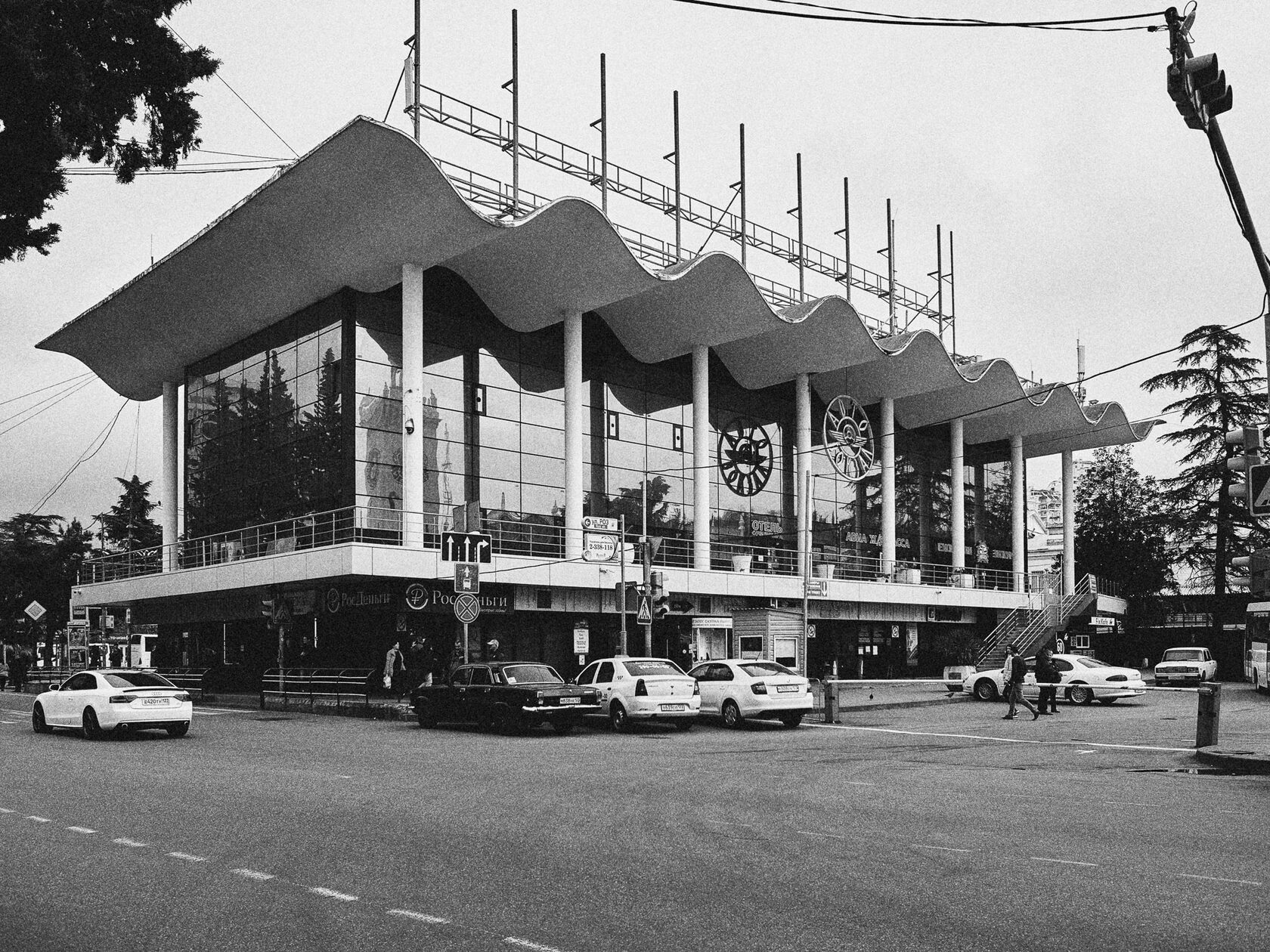
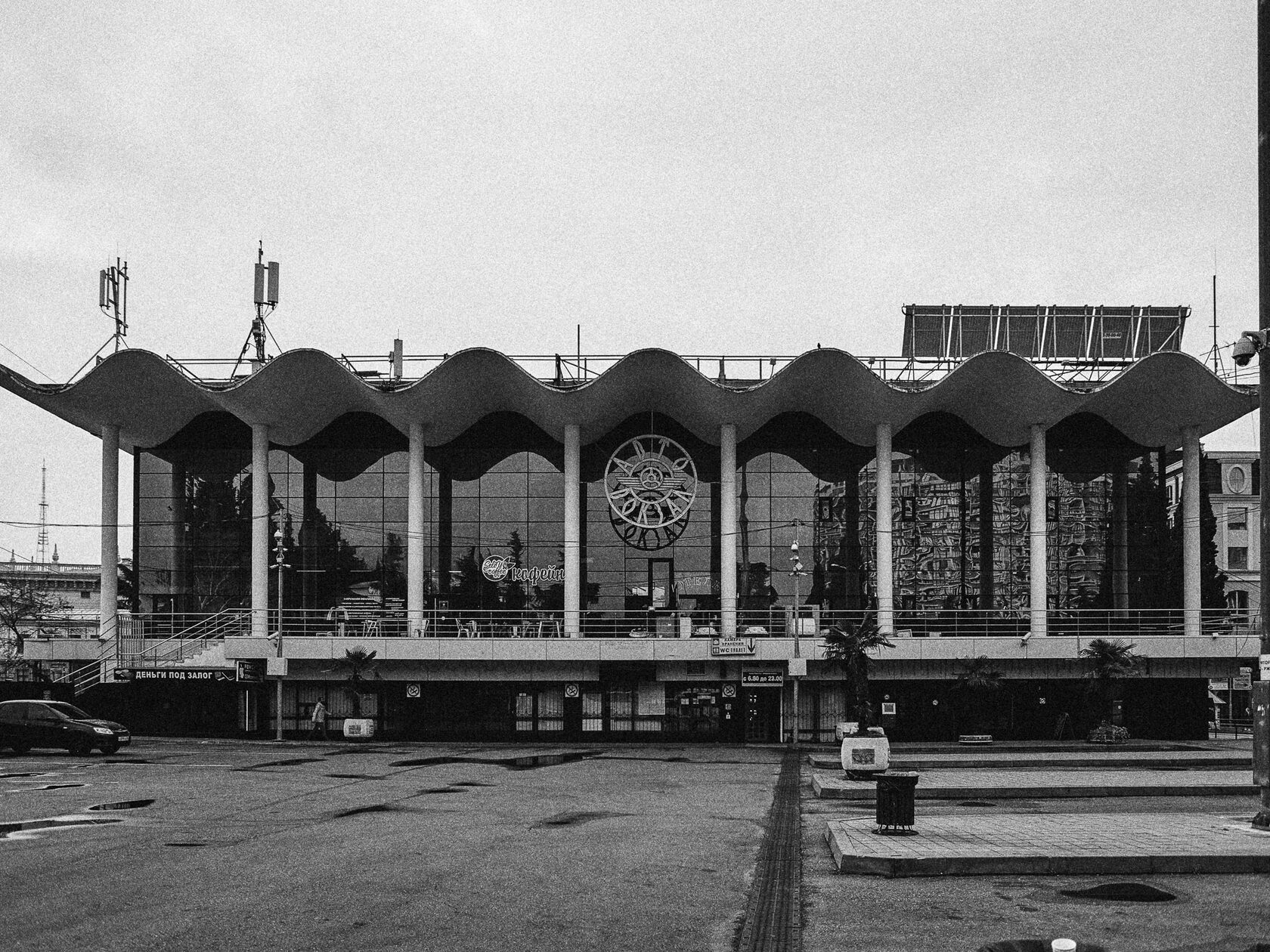
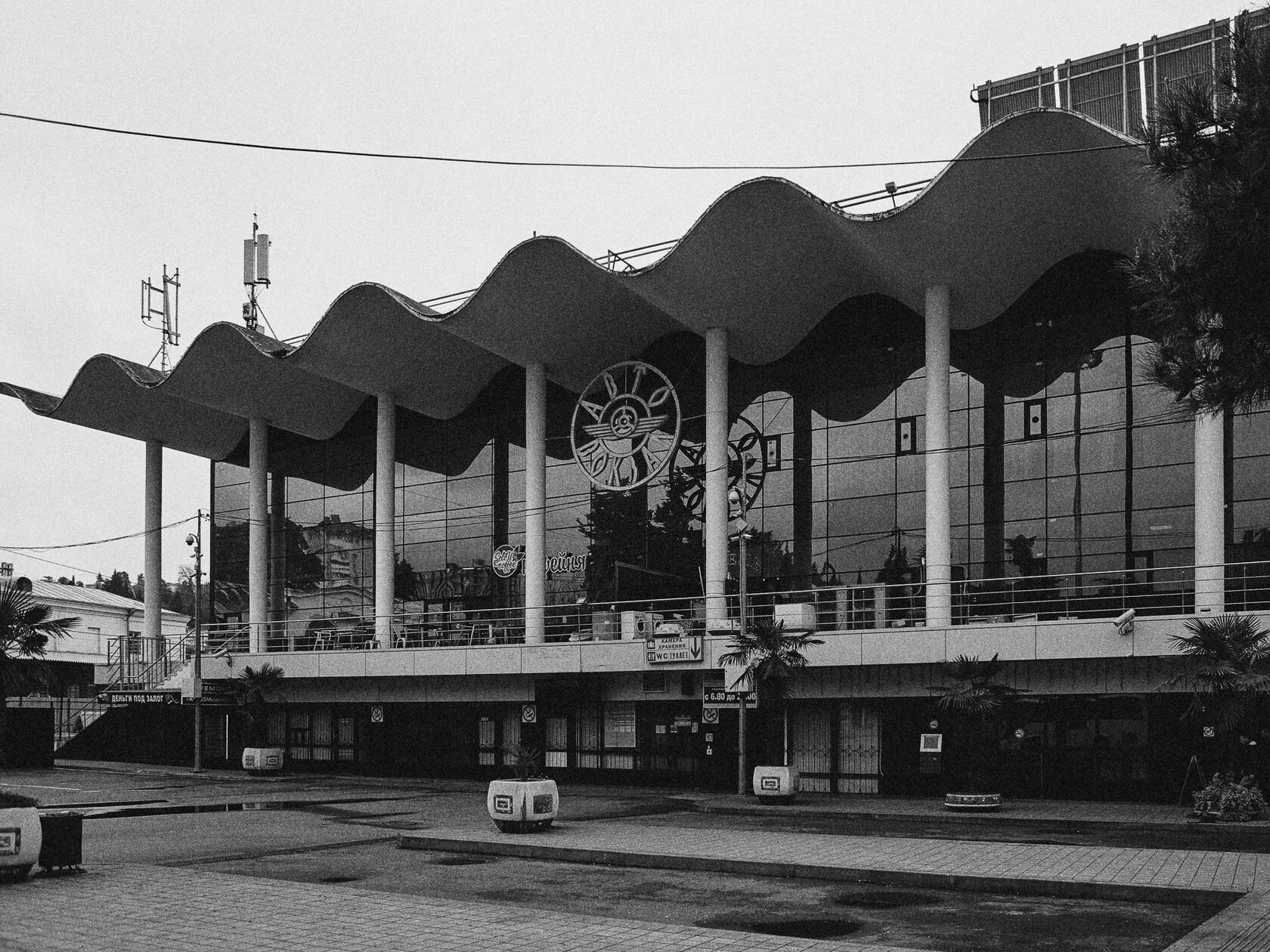
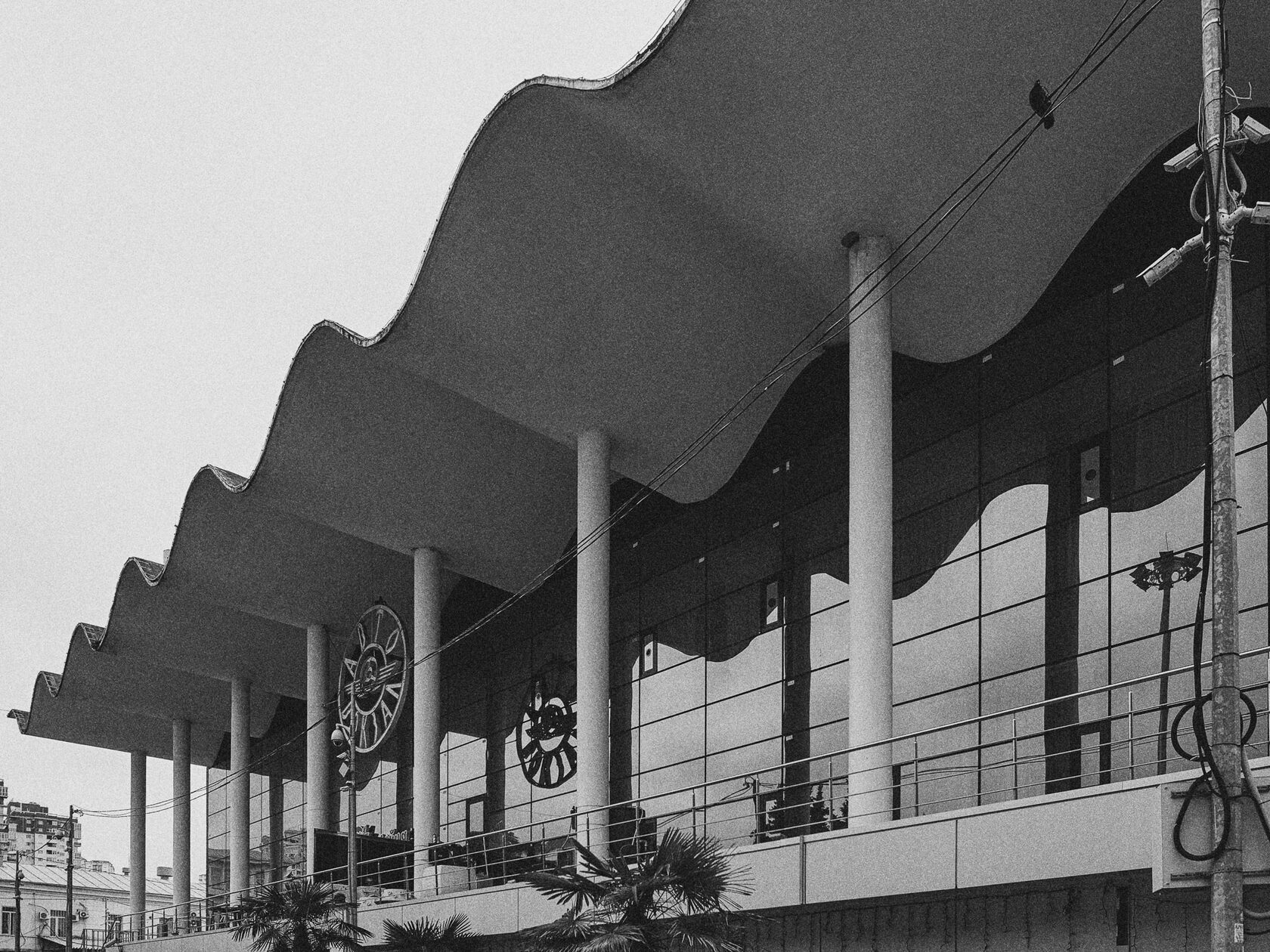
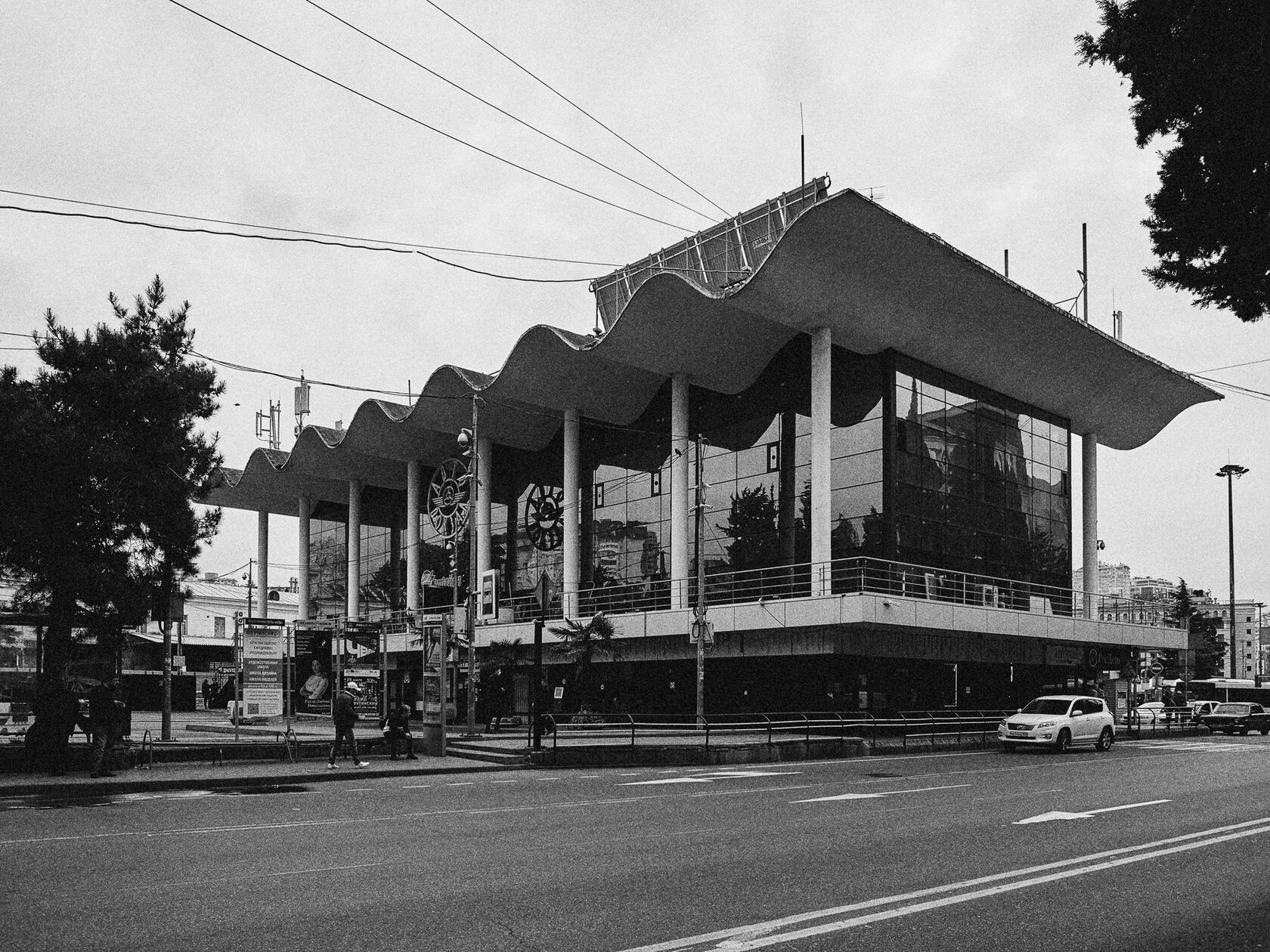
Sochi bus stationСочинский автовокзал索契汽车站Busbahnhof SotschiGare routière de SotchiEstación de autobuses de SochiRodoviária de Sochi
This is architecture as transit. The building organizes waiting, arrival, departure, and the slow choreography of passengers; concrete and glass become part of a public rhythm rather than a heroic statement.Это архитектура транзита. Здание организует ожидание, прибытие, отправление и медленную хореографию пассажиров; бетон и стекло становятся частью общественного ритма, а не героическим жестом.这是作为转运的建筑。建筑组织等待、抵达、出发和乘客缓慢的 choreography;混凝土与玻璃成为公共节奏的一部分,而不是英雄式姿态。Das ist Architektur als Transit. Das Gebäude organisiert Warten, Ankommen, Abfahren und die langsame Choreografie der Passagiere; Beton und Glas werden Teil eines öffentlichen Rhythmus statt einer heroischen Geste.C'est l'architecture comme transit. Le bâtiment organise l'attente, l'arrivée, le départ et la lente chorégraphie des passagers ; le béton et le verre deviennent partie d'un rythme public plutôt qu'un geste héroïque.Es arquitectura como tránsito. El edificio organiza espera, llegada, salida y la lenta coreografía de los pasajeros; hormigón y vidrio se vuelven parte de un ritmo público más que un gesto heroico.É arquitetura como trânsito. O edifício organiza espera, chegada, partida e a lenta coreografia dos passageiros; concreto e vidro tornam-se parte de um ritmo público, não de um gesto heroico.